Episode Transcript
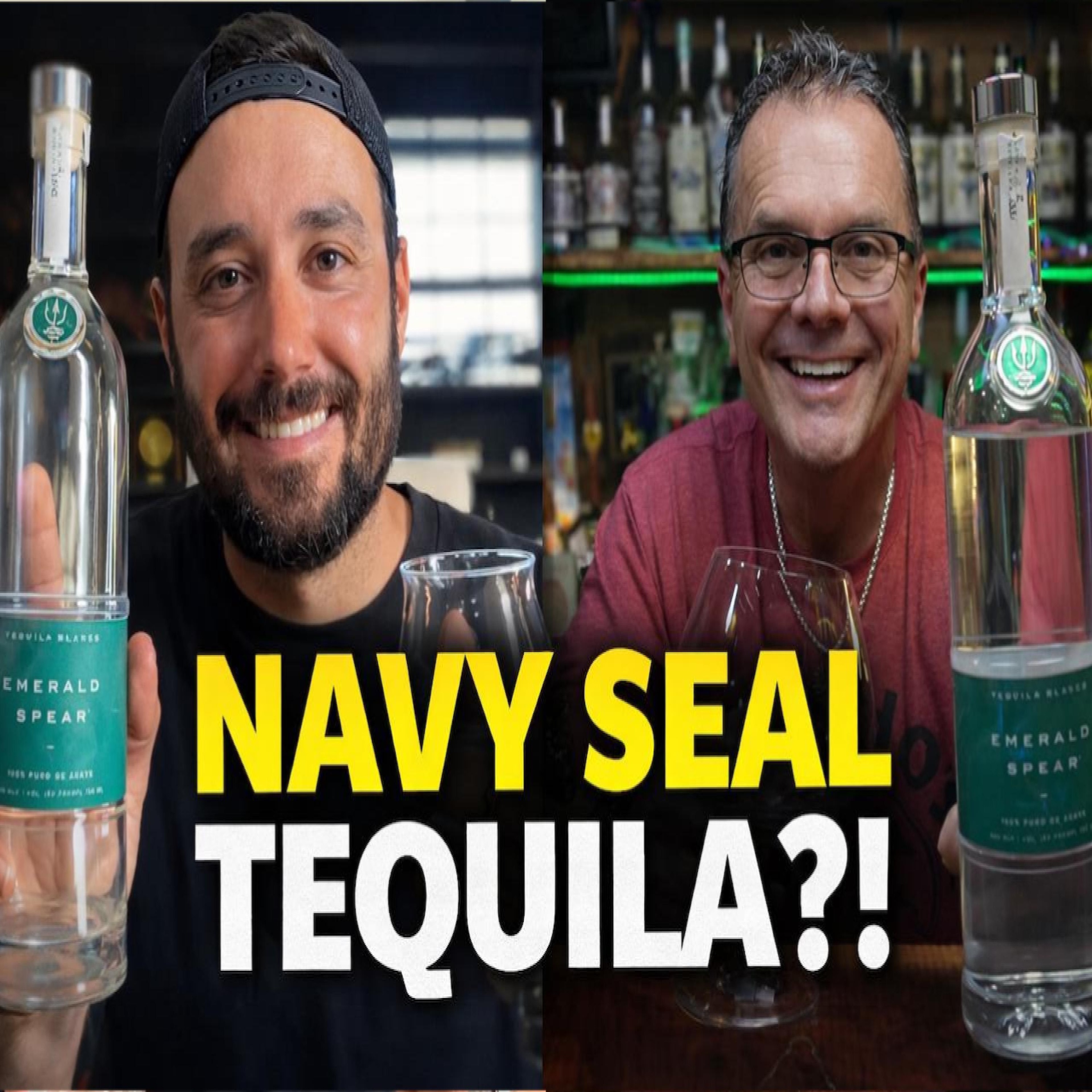
[00:00:00] Speaker A: Navy SEALs and an army sniper. And Emerald Spear Tequila. Tonight you're going to learn all about this brand and the people behind it. This one is really fun. Check it out, it's tasting tequila with bread.
All right, guys, this is going to be a great interview. I'm fired up to be here with Nick Betts. Not only a guy who served our country and a badass, but he makes a phenomenal tequila. How you doing tonight, Nate?
[00:00:31] Speaker B: Good, man. How you doing, Brad?
[00:00:32] Speaker A: I'm doing great. I look forward to talking to you and learning about your brand and about yourself. So tell everybody a little bit about who you are.
[00:00:41] Speaker B: So myself, you know, everybody behind Emerald Superior, you know, we, we have a military service background. We're a Navy seal, founded and veteran owned. I myself started out in the army in 2005, went all the way up to 2013 with multiple deployments both through Iraq and Afghanistan, serving primarily as a sniper and in a recon unit.
Got out, decided to move to San Diego, which I'm originally from Orange county and I was doing personal security work for celebrities. And then I went to Blackwater route for private military contractor over with the agency and the State Department.
And then I really just kind of got tired of hearing a gun and being away from home, so decided to go to college and get my degree from LA Film in graphic design. And my wife and I since have started our own media and marketing production company based here in San Diego. And. And we really kind of specialize in this realm of the military as well as military owned brands. So Emerald Spear, we've shook hands quite a bit and decided that it would be a great partnership, starting to work together and we've been with them ever since and it's been phenomenal. We're new, but our product doesn't suck. And working with everybody within the company is incredible.
[00:01:54] Speaker A: Yeah, the product is phenomenal. You know, anytime you have a product that is coming out of nom 1414 made by our friend Sergio Cruz, you're not going to go wrong. And I was fortunate enough to get to drink this for the first time at his bar, at his house. And he was very proud of it and proud of you guys. I'm going to go ahead and pour a glass since I don't have any in my glass.
[00:02:16] Speaker B: Yeah, yeah, I think that's necessary.
[00:02:18] Speaker A: I have a big glass because I'm a fan of big pores.
[00:02:20] Speaker B: You also get the good aroma in it. You know, if you treat a fine spirit kind of like a good wine, then you're going to reap the benefits 100%.
[00:02:30] Speaker A: And that smells good from here. Like, golly, that's great. Okay, so tell me a little bit about how you got into enjoying tequila. Everybody has, you know, that. That story that ruined them for tequila. And obviously you probably have that story, but you. You survived. So tell me. Tell me your tequila journey.
[00:02:50] Speaker B: I do, actually. So my. My personal one is I was going to high school in Tucson, Arizona. So we're super closely located to Nogales, Mexico, and where everybody from either Arizona State or U of A loves to go during spring break is down to Mexico, which we call Rocky Point. Rocky Point's not known for anything other than just being insanely debauch and kind of like a college party town. And that is where I got ruined on tequila. And my parents always had great taste in alcohol.
I was one of the kids, you know, in high school that would pour out a bunch and fill the rest with water and kind of mark the line on there with the. With a Sharpie and then wipe it off as soon as I met the cut line.
And then my parents couldn't figure out why they was crushing a whole bottle of tequila at night. And they weren't getting drunk because 50% of it was water. But that's where I found the terrible tequilas. The ones with all the additives, the ones with all the preservatives and all the sugars and all that nonsense, not to mention everything else that it's mixed with. And when you're, you know, 16, 17, 18, and like I said, we're going down, going down south. So we were able to kind of get by with it. Never cared for it, never really wanted to have anything to do with it. So upon my separation from the army, I, like I said, moved back here to San Diego. And with our colocation to Tijuana, the Baja peninsula, and then how easy it is to navigate over to the mainland, we ended up making really good friends with a lot of awesome bartenders here in San Diego. And with this being such a tequila hub, the. That's where I got introduced to Fortaleza, which is known down there as Los Abuelos, and then Don Fulano and then Arete. And we were invited to a Halloween event there at the Fortaleza headquarters, where you're doing tastings, you're harvesting the pina, and you're really getting a good understanding of what the process takes of producing tequila. And that's where I had. I went to college, actually. I feel like it was college, you know, because you're Half inebriated, but you're also still trying to garner an education. And that's, that's exactly what this was. Except luckily there's no grades. Just as long as you're still standing and not throwing up, then you're good to go. So I had that privilege of going down there and meeting all those individuals. And that's where my love for tequila really grew. And also I love alcohol with flavor. A good bourbon, a good scotch, a good tequila. Vodka was never really my thing. I feel like that's for the younger generation that just wants to dilute it so that way they don't taste anything. But that's my own personal opinion. And so then fast forward, I mean, shoot, eight years. That's when we were introduced to Emerald Spear. And my wife and I are working for another Navy SEAL founded organization. And Emerald Spear was one of our vendors. And with us being on the island and me having as many friends from the SEAL teams as I did, it just seemed like a perfect fit.
[00:05:37] Speaker A: That's fantastic. So who originally started Emerald Spear?
[00:05:41] Speaker B: So there's four of them, three of which I'm gonna just kind of leave their names out for reasons of operational security because all of our founding members are actually activ duty Navy Seals. And so it was three of our active duty SEAL founders and then one other gentleman by the name of Sean Volmer. And Sean has the inability to drink any alcohol due to allergens except for tequila. And so tequila is his one go to.
[00:06:05] Speaker A: Right.
[00:06:06] Speaker B: And so they're playing on North Island Coronado, which is a military only golf course. Used to be for officers only until they realized that, you know, younger enlisted can play golf. And so it was all kind of founded on the golf course. And so they were all drinking tequila, playing golf, as I think everybody kind of does in San Diego.
And Sean said, how about we start a tequila company? And all the other three were fully on board. And so that's kind of how it all came about. So we were founded on a golf course and due out of necessity and then also love for, you know, the agave spirit.
[00:06:36] Speaker A: So what was their process in finding and landing at nom? 1414.
[00:06:41] Speaker B: You know, I'm, I failed to understand why they wanted to take on such a, a diligent and, and difficult job of starting a liquor company. I feel like there's so many different avenues you could go through if you wanted to be an entre.
But like I said, Emerald Spirit is born out of necessity. So there was a good year, probably 12 to 15 month process of going down to Tequila and then up to the highlands in Arandas and trying to find the appropriate nom and also trying to find the nom that wanted to work with us. So when you have a minimal budget, and I'm not trying to throw shade at anybody, but we're not coming in with the investment margins that say Casamigos is, so you're kind of relinquished to whom you want to whom you can work with, and then also who wants to put their name on you. So this is definitely a two way street. So Emerald Spear working with Nom. 14, 14, 14, 14 Nom. And Sergio Cruz also has to want to work with Emerald Spear. And so we were fortunate with that introduction. And luckily we do have enough connections, I guess. But that doesn't negate the fact of just a really good friendship. So we ended up building a really great friendship with Sergio Cruz and multiple, multiple trips down there in order to try to find our best blanco that we could possibly find. And I really think we hit the nail on the head.
[00:07:54] Speaker A: Yeah, I totally agree. And that, you know, Sergio makes a lot of brands, right. And we were at his bar, at his house, and all of those brands are there. And the one that he was so fired up to give me to taste was this, the very first one he pulled out. And we drank it and talked about it and he just talked about how proud he was of it. So I know that he has a good connection with you guys as well. I know that when it comes to Sergio, Ivanka, when, when there's a good story and there's a good reason behind a brand, they get behind that brand as well. So you guys obviously brought such a great story and such a great group of people that it was something that I'm sure they were excited about right away.
[00:08:28] Speaker B: That's pretty co. Yeah. I feel like in such a saturated market, and you might even know the percentage better than I do, But I believe that the tequila industry has grown some 280% in the past five years, at least here in the southwestern United States, whether it be Arizona, New Mexico, Vegas or California. But you have to have a why, right? I mean, you can have a good product, but if there's no reason to buy into it, then no one's going to buy into it. And you have all these celebrity endorsements that have worked highly successfully in the past with regards to monetization. And so we had to figure out what our angle is going to be. And you know what, if you're a patriot or if you're A fan of the SEAL teams, then we wanted to make sure that we didn't want to put our name behind anything and then have a terrible product and so making sure that that matches. But that's kind of our niche. Right. And then also, you know, San Diego and Coronado, it's not like it's a bunch of Navy seals trying to start a tequila company based out of Kansas because that would kind of be a. The square peg in the circle hole. I personally feel like so being so closely located to not only Mexico, but also where Naval Special Warfare is at, it seemed like our, our kind of niche or our unique selling proposition.
[00:09:40] Speaker A: So tell me where the name Emerald Spear comes from.
[00:09:43] Speaker B: Yes. So Emerald Coronado island itself, where all the West Coast Navy SEALs are, is also known as the Emerald Island. It's kind of like a nickname that's harrowed back all the way to the 1920s during Prohibition, which was a prohibition as the 30s. But still hotel Del Coronado is, is well regarded as kind of the Prohibition Mecca at the time for celebrities from LA to include presidents coming down and still partaking in libations.
It's a very discreetly. And so we wanted to pay homage to Coronado and the Emerald island and then Spear paying homage to the Navy seals and then the trident kind of being something that they're really known for and the whole maritime aspect of that. So we decided on Emerald Spear. And then if you look the topographical lines that are label, that is actually a direct topographical map which shows the undulations and highs and lows of our underwater ocean right outside the coast.
[00:10:41] Speaker A: Wow, that's really cool. You know, I didn't notice that until you said that and now I see it. That is very cool. And it's kind of on. It's kind of on here too.
[00:10:49] Speaker B: Yeah. Yep. And then, you know, having Poseidon's trident and then the golf ball marker on top of the bottle, that also, you know, is kind of based off of our, our founding and where we were founded and then throwing the E in there in order to kind of annotate the emerald.
You know, I mean, I wish that I could take credit for, for that branding, but when my wife and I stepped in and started working with, with Emerald Spear and, and becoming family members essentially, I mean, there was, there was no turd to polish like it was just walking into, to perfection. And all we needed to do is just add, add lifetime experience and insight and just really help perpetuate the brand.
[00:11:24] Speaker A: And in case anybody missed it, yes, this is a Ball marker. You know, take a little. Take a little knife there and you peel it off. And then now you have a golf ball marker right on the bottom.
[00:11:36] Speaker B: Let me see if I can illustrate how easy this is. There you go. So I just push that. It just comes right off there.
[00:11:42] Speaker A: Look at that.
[00:11:43] Speaker B: Now you have your golf ball marker.
And actually the glue is so sticky, too, that if you really wanted to, if you want to show it off, you could just press it right back on. It's good to go.
[00:11:51] Speaker A: It's so cool. So do they put those on at the distillery or is that coming on the bottom?
[00:11:56] Speaker B: They do, yeah, yeah, yeah, they put them on down there. And then same with the labels. And we have just a really good process, too. And then also on the underside of the bottle, you can see here where it's going to be reversed with the webcam, but it has two tridents and then it says lltb, which stands for Long Live the Brotherhood. And Long Live the Brotherhood is a huge seal stain saying. And yeah, we just kind of wanted to pay homage to those of us.
[00:12:23] Speaker A: That is very cool. And then to go back to, you know, the hands that it takes to make tequila, people don'. Realize it because they've never. If they haven't been there, but there's a person that is putting on this label by hand, that's gluing these on by hand, that's sealing the caps by hand. Like, it. It isn't a process like we would see in a Coca Cola factory in America, where it's all done by machines.
[00:12:44] Speaker B: Yeah, I couldn't agree with that more. And that was something that I noticed when visiting the Fortaleza distillery. And we went through the whole packaging and label and got to see all their family members of every employee. You know, they're all gainfully employed with also their family, and they're all working on the same product, and they have the same level of pride, and they know that they're nationally distributed. And yeah, it's really awesome to see how essentially families and a community kind of come behind building this product.
[00:13:12] Speaker A: This makes what you're doing pretty cool because you work with an elite community, a really strong group of people that are. I mean, I'm assuming that if somebody that's a Navy SEAL shows up someplace and there's another Navy seal, even if they don't know each other in different.
Different times and different groups, they're still invited into that room. And I'm sure you being in the army is the same. Like, you can go somewhere and Somebody tells you what infantry they were in and you instantly know that and have this connection without actually knowing the person. And I feel like in the tequila world it's like that very much as well. It's very much a community. From distillery to distillery to the workers in there and then all of the crazy fans that love this stuff. It's all like a really cool community.
[00:13:58] Speaker B: Yeah, Yeah, I couldn't agree more. And we even noticed other, other people, for instance, one time ponied up at a bar at one of the places that carried us. I asked a bartender specifically for Emerald Spear because how dare I not, right? And somebody, somebody next to me said, oh, do you know about them? And wanted to give me the full rundown on Emerald Spirit because he was that much, you know, bought into the brand and loved our product.
And I kind of let him go with it for a little bit just because I wanted to hear his sales pitch on our product. And he did a bang up job, which means at some point in time we articulated the brand well enough to him and to the consumer so little be known to him. We ended up taking up his bar tab and thanked him for being a supporter.
[00:14:40] Speaker A: That's, that's fantastic. It is amazing how us nerdy people at a bar will talk about tequila that we like. I love it.
[00:14:47] Speaker B: Yeah, for sure.
[00:14:48] Speaker A: We are the best guides inside of a Total Wine. And we're lingering there and that unsuspecting person that's coming to pick out the tequila happens to walk into Brad's Tequila School at Total Wine. You probably do that too though, right?
[00:15:05] Speaker B: I mean, I do it pretty much everywhere I go, whether that be watches or tequila or firearms or, you know, whatever it may be like, it's kind of which one of our branding kind of statements is for those who know. And you feel like you're in an exclusive club when somebody next to you is telling the bar tender about your bottle and how we have a golf ball marker on top of our bottle and there's just kind of the nuances of education and followership.
[00:15:30] Speaker A: Yeah, that's very cool. So since, since you've gotten involved in this journey, what, what's the thing about tequila and, and working with the brand that surprised you the most that you really didn't expect?
[00:15:42] Speaker B: Oh, man, that's a good question. I would say to, to be blunt, Frank, I think it's probably how difficult licensing and permits and distribution and all that stuff is. And in a saturated industry, it's kind of hard to, you know, get anyone's ear for longer than a couple minutes and be taken seriously. But the caveat to that is also the overwhelming support that we have with individuals when we show up at all the events that we do and we do, I mean, at least 100 plus events a year and seeing just how instantaneously people are kind of turned on to the brand after we're just allowed a four minute voice, introducing ourselves, just being nice. And also, I mean, I'm not sure what the entire public perception Is in Navy SEALs, but we have active duty Navy SEALs that work behind our booth when we're at events. And so for people to kind of get to meet a SEAL for the first time, whereas 99% of the time no one's going to tell you that they're a seal. And if they do, then they're not a seal. So to have that, that conversation and then also, you know, for to see a team guys speak upon brand loyalty and something that they created and they're proud of, we, we turn customers over right away and, and people become loyalists and that's probably the most rewarding of it. But early on, you know, to the point, it's just, it's hard to get that conversation unless you, you know, pay a boat, boatload of money in order to just get somebody's ear. Because if you send an email and you send a pamphlet and you send brochures, you know, sit in line, so it's really the good face to face in the community that, that we've garnered.
[00:17:15] Speaker A: So have you got to work a lot alongside of Sergio as they were making the brand or did they already have the brand like in place when you came, came along?
[00:17:23] Speaker B: No, not at all. Well, they did have the brand in place when, when I personally came along, yes. However, I'm super fortunate right now to be at the tip of the Spear for our Reposado development program. We had just wrapped up the labels, just wrapped up the kind of bottle configuration, and now we're actually getting ready to start packing our bags and head back down there and go link up with Sergio and go through a full master class on our reposado. And what this is going to come out with, having the conversations with Sergio and that this is like he's putting his foot down saying this is the best reposado that he's ever made. I feel honored to kind of be at the next step of growth with Emerald Spear and having these conversations and just seeing how enthusiastic Sergio is about working with us. The videos that we shoot when we go down there. I mean, I'm the camera guy. So micing him up and having these interviews, it's just the level of enthusiasm is. It's incredible.
[00:18:20] Speaker A: Yeah, I seen that firsthand. So I know he's so excited. And his English is getting better, so hopefully he keeps doing his English. English school. So when he calls me, he speaks English a little bit more. It's pretty awesome.
[00:18:31] Speaker B: Yeah. Good.
[00:18:32] Speaker A: When's that repo going to land? Do you have, like, an idea of when it'll be here?
[00:18:36] Speaker B: Yeah, we're guesstimating. So our birthday, as far as emerald spear is Cinco de Mayo. That's when we officially launched. And, I mean, I could not think of a better birth date. Even though, you know, typical Mexicans don't really celebrate Cinco de Mayo, but, you know, us as Americans close to the border, we'll. We'll take it. So we're looking at around May is going to be our reposado launch. Everything else is pretty much done. Our labels are done, bottles are orders placed. All we needed to do is go down there now and kind of taste test everything that Sergio has for us and really just kind of isolate which one we want to go with. But other than that, everything's full steam ahead. Definitely full steam ahead. The workload's been heavy in order to kind of get this out and get it out to the public and kind of throw bottle number two under. Under our quiver.
[00:19:19] Speaker A: How many batches have you done of the blanco so far?
[00:19:22] Speaker B: We've only done two different batches. So we have wave one and wave two. Wave one, I believe, did not come with the bottle marker. Correct. And wave two is with the bottle markers. So if you have one of our early bottles without the bottle marker, that's our wave one, which I believe tends to have more of smoky notes on it and a little bit more spice, whereas I think that wave two, you get a little bit more of those earthy tones and a little bit more floral, and you get more of the blue Weber and a little bit of a finer touch. In my personal opinion, this is always kind of team internal as far as which ones we prefer, but wave two, I think, is kind of here to stay.
[00:19:56] Speaker A: All right, so since. Since this has been going kind of had all of these experiences, is there anything that you see in the tequila business that you just wish was different, that you know, maybe a wall that you've had or something that you wish worked a little bit smoother?
[00:20:11] Speaker B: Man, that's a really good question. Right. So my understanding, as it goes, and we have a lot of years down in Mexico and down in the Guadalajara and Oaxaca region, whether it be between mezcals and tequilas, and then also in tequila, supply and demand has, has started to become a big issue. Issue. Right. And one of the things that I think is a big detriment is I've. I've recently been told through the grapevine that Casamigos is being sued due to being closer to rum than it is to tequila due to all the additives. And you and I know both better than anybody that there's white label tequila and then there's non white label tequila. And for the listeners, white label tequila is the same farm, necessarily the same batch. You get to kind of throw in your additives, for lack of a better term, in order to try to get the blend that you want that is going to be the most consumable tequila that you can probably find. But there's no passion in that. There's no love in that. There's no family really particularly behind that. And so I wish that the white label nuances that are celebrity owned would probably kind of slow down or at least be regulated a lot more than what they currently are.
And then the other thing, I mean, the tariffs probably, they haven't helped us as far as distribution, printing and this, this awesome transaction between Mexico and the United States with the product that is just so highly sought after. And then other than that, I think that a lot of individuals, and especially depending on what part of the country you're in, are ignorant purists where they, they have a nom. And because a nom took them somewhere or paid them something and it's what their bar tells them to do, that is the only nom that matters to them. And I think that, you know, we should could open our eyes and, and maybe kind of try something from everywhere. And you know, there might be a nice little hidden distillery or hidden nom that is producing something that is incredible that we should also give support to and kind of bring up the underdog.
[00:22:08] Speaker A: You know, that's a good point. I fall into that trap a lot of having my favorite, you know, noms, and somebody says, oh, this tequila is made here, you know, I'm like, okay, well, I'll try it. You know, it's not made at 1414 or 1123 or 1579. Right. We get sucked into this place. Know, all these tequilas are great. And you know, I have found some really gems in some single noms, some places that I didn't expect good tequila to come from. There's one that comes from, you know, one of the biggest white label houses out there, but they control their own process. And I, I think you're right. People need to be open to trying them and really learning about them and then supporting the ones that are great. That's a really good comment.
[00:22:48] Speaker B: Yeah. I think one of the best stories that I have here recently is my father in law, he's, he's Canadian, went to Cancun on, on vacation and purchased a bunch of tequila. He's a big tequila fan. Right. Like this guy loves tequila and I love loving tequila with him. You know, like it's a great bonding experiment where we're, we're sipping me with the appropriate and then we're making margaritas for, for dinner and just kind of, you know, pulling out these notes and it's awesome working with him on this. And so he ended up bringing back a bunch of bottles that he bought on an all inclusive and just because they're in a fancy bottle, you know, they were purchased and they were taken.
And so my wife went out there to go visit her family and her being very well read in tequila at this point, tasted every single one of them. It's just like these are terrible. And I think the only solution or only statement that I would have behind that flaw which has been, you know, perpetuating itself for 50 plus years is, you know, maybe take pride in your tequila like this is your country's liquid and stop selling shit just for revenue and help educate your tourists. Like if you had a proper tasting food pairing night at your all inclusive resort, which is, you know, supported and you're drinking tequilas from all these great noms, then people would have a better love and appreciation and respect for tequila then taking back home some nonsense is just going to give them a solid headache in the morning.
[00:24:11] Speaker A: Yeah. You know, we're kind of guilty of it though. The Americans are the ones who have asked for this sweeter palate. And you know, so I think a lot of times the, the distilleries are just bending to give them, give America what they know they'll drink.
[00:24:24] Speaker B: Right.
[00:24:24] Speaker A: Like Casamigos didn't come out and say we're going to be a crappy tequila. Casamigos came out and said we're going to make a flavor that people are going to enjoy. You know, so I, I don't, I don't drink them, but I don't hate on them a whole lot be. And I say it because of this reason. If you're sitting at the bar and you're only drinking bourbon, or you're only drinking gin, or you're only drinking vodka. It's harder for me to talk to you about tequila, but if you pick up amigos or Class Azul or one of these tequilas that get you into the tequila, and you. You. You're now in the room drinking tequila. Now, I can talk to you about this. I can. I can tell you about the differences. I live in bourbon country, and it's really hard to talk some of these bourbon bros into drinking something that'll make them feel better and taste better. But I also don't want the bourbon bros in here because then they'll find these bottles that are a little harder to get, that are 50 bucks on the shelf and drive the price up to 150 bucks.
[00:25:15] Speaker B: So, yeah, then we're gonna find our version of the Pappy Van Winkle of tequila.
[00:25:20] Speaker A: Right? Which I've had Pappy in a blind. I had a buffalo trace Weller, 12 Pappy, 15, and a Blanton's. The Blanton's gold all in a blind. So I had no idea what they were. It was, well, or 12 Buffalo Trace Blantons and Pappy's last. And I thought, you know, the $35 bourbon almost won the whole thing.
[00:25:39] Speaker B: Yeah, yeah. I've noticed the same thing in wine. And. And to your point, I am guilty of essentially the. The whitewashed tequila, because early on, I mean, one of my favorite tequilas was a Don Julio Setente or Don Julio 70. And I'm like, dang, this is good. You know, I mean, and it is good, but we all know what's. What's added to it in order to make it so good. But, yeah, I am guilty of it. And still now, if somebody offers me a taste of Don Julio 70, I'm gonna say yes. Yeah, I'm gonna put my reputation on. Hell, no. But. No, no, but I'll drink it.
[00:26:12] Speaker A: Well, I came to the tequila world in early 2000 by drinking the original Cabo elbow at Sammy's Bar. Sammy Hagar's bar. And it was the old ceramic bottle made at El Vijito, right? So it was made by Eduardo before Katrina Rojas took over as master distiller. And that was awesome tequila. And I drank it all the way to the blue bottle when it was made at 14:26. And then he sold it, and the bottle changed color, and the tequila became horrible. And I didn't know why. Like, that was long enough ago that I wasn't in this. This part of the journey. And so I, I slipped into bourbon and other, Other. Other drinks and drank class. Azul and Casamigos. That's what got me back in the room at least. And then I found, you know, the tequilas that I drink today that, you know, remind me of that original Cabo Wabo, which was, you know, stone oven, roller mill, highland open, you know, wild fermentation. Like it was what we drink today. So I like to invite everybody into the room if they can. If we can get them here to talk about it, we'll get them drinking the good stuff. I think that's the most important thing.
[00:27:18] Speaker B: Yeah, I, I got a two part question for you, if I can. What was the first tequila that really opened your eyes to how good it can be and the process of it all?
[00:27:28] Speaker A: So, you know, the first was really Cabo Wabo in 2003. Like, that was the first tequila that I went, okay, I can drink tequila. And I'm. I can't tell you that I had a, a horrible bad tequila experience in my youth. I had a bad peppermint schns experience. I clearly remember that one. But tequila wasn't something that we really messed around with as kids. It was, you know, Old Milwaukee and Southern Comfort. Those are. I have some bad Southern Comfort stories. So the, the tequila at Cabo Wabo was the first time that I went, ooh, I really like this. So then when I, when it went away and I couldn't find that anymore, it was Oo that brought me back. And it was from a bullet.
So I joined this Facebook group called All Things Tequila. And I posted in there about something that I was drinking and a thousand bullies, you know, just tore me to pieces for drinking this bad tequila. And I got, I was frustrated at the group and I, I finally just quit the group. Like, I'm out of here. These people are jerks. But the last guy didn't say anything mean. He just said, try ochre Ocho.
[00:28:31] Speaker B: Oh.
[00:28:32] Speaker A: As I quit the group to, to banish those people from my life, I seen Ocho at the grocery store. So I bought a bottle of Ocho and I brought it home and went, that kind of tastes like. That kind of tastes like tea that I used to like. And so that, that started this, this rabbit hole of going back to learn about the tequilas, of where they're made, how they're made, why it tastes, the way that it tastes. And Ocho brought me to Fortaleza and at the Soto and Papillo and, you know, all of these tequilas yeah, hopefully
[00:29:02] Speaker B: the world gets a little bit nicer on the Internet. I've, you know, run into podcasts and social channels. I just, I stay out of there. I, I take Joe Rogan's words and just leave the comments alone because nothing good comes out of it.
[00:29:13] Speaker A: Nothing good comes out of it. Yeah. So tell everybody about your podcast.
[00:29:17] Speaker B: Oh, man. So me and two other Navy SEAL veterans decided to start a podcast because we're regularly going on, on just kind of family trips together with our spouses and sitting around a campfire and drinking tequila and smoking cigars and just telling funny ass stories from anytime. It doesn't matter whether it be the service or not. We have non service members on and we have service members on. We have, you know, people that were on the bin Laden grade all the way up to guys that were scuba diving in Shark Week. So it kind of spans the limit. But we just love hearing these crazy stories that most people aren't really privy to unless you're in, you know, the appropriate circles. So originally the whole concept kind of started as a potential book idea of just all of our friends submitting these funny stories. But, you know, book kind of lives and, and kind of dies off and, you know, with this day and age and, and me being so heavily into media and marketing, we decided to go with a podcast. And so it's called the Liberty Risk Podcast. So for those in the Navy, if you go on liberty, it means that you have like a 24, 48, 72 hour pass wherever your naval ship is docked. But if you're deemed a liberty risk, I mean, you probably screwed up enough in order to have a super funny story. And so those are the stories we want to listen to. So we sit around the couch and we have a guest on. We release one every week. We're on every single streaming platform to include YouTube. Everything's filmed as well. And we just tell crazy, crazy stories. And it has been wildly successful. I can't still to this day can't fathom how successful it's been to the point where I'm getting recognized on the street, street or at a bar or at a restaurant at any point in time here in San Diego. And, and it's, it's crazy. So I, I love the guys that I get to meet too, are legends in and of themselves. And not to mention the level of networking and benefits that they can provide me and I can provide them.
A lot of them have become clients too, that, you know, my wife and I can work with and, and help build their brand. And create imagery and tell stories. So yeah, it's been incredible. And I, I never in my life thought that this is going to be, be a medium that I wanted to lean into. But now it's, it's, I'm fully in.
[00:31:23] Speaker A: That's so cool. I, I agree. I, I look back at this, you know, and what's going on here and how it's happened and think that everything. I'd be 57 years old talking on YouTube.
[00:31:33] Speaker B: No, especially coming from mortgage too.
[00:31:37] Speaker A: Yeah, I mean, as a mortgage guy, I, you know, I was pushed into doing videos because you kind of had to at the time. And this is a blast. And it, it is, it's, it's a lot of fun. One question, so how. I, I've talked to a lot of successful people that come from the military and I, I asked this question a lot because I, in, in my other podcast as well, I, I like to hear the perspective. What is it that the military does that trains you to be able to be successful after the military? And how do those things that they teach you translate into building a business?
[00:32:13] Speaker B: Oh man. Unbeknownst to you, and no knocking on you. That's, that's a twofold loaded question and I'll explain. So there's, there's the veteran suicide epidemic that we deal with. Right. And I think a byproduct of that epidemic is because somebody has left their small town, that they're from something that they're trying to escape a small town, things of that nature. And then you get thrown headfirst into a war, into a certain level of camaraderie, a high level of operational experience and as a fallback and is in a safe plan. And these guys and gals end up going back to that same environment that they were trying to run away from. So you were already different enough back then that you wanted to leave. Now think of how different you are after 15 years of life experience and war and fellowship and brotherhood or sisterhood. And so that is half of the scope of kind of why we're dealing with, you know, a great issue in depression. However, the other aspect, those that aren't friends without here and those that I, I work with to include myself, it's, I think the military decision making process is very similar to the business development process.
Right. So what you don't want is. And what we don't have in the military is what we call paralysis by analysis.
[00:33:32] Speaker A: Right.
[00:33:32] Speaker B: So you analyze something to death to where you're too scared to pull the trigger and move forward.
Well, in the military, and especially in special operations or combat arms, you have to make a decision, right? There's no sitting on the X. There's no trying to figure out is, do I do this or do I not do this? You have to make a decision. Whether it's the right one or the wrong one, you have to make a decision. And so I think that in the military decision making process, we also pick out what's the most likely course of action and what's the worst course of action by making this decision, right? And so we try to have answers for the worst, worst course of action, and then we can supplement the best course of action. So if we decide to become an entrepreneur and start a company, we're like, all right, in the event that we don't get sales in this, what do I need to restructure and how do I need to do this? And that thought is, is what has turned a lot of guys very, very successful, right? Because we've essentially a b tested all the pros and cons of starting a new venture, of starting a tequila company, of becoming a real estate agent, and then also just not failing. And like, if, if things hurt, if they suck, if you're not seeing fruition to success, then, okay, how do we redirect this? That doesn't mean your idea is bad. It just means that now we need to change the process of going about structuring this company or finding revenue stream. And I think overwhelmingly that's. That's what's helped me, is even though I get kicked in the face, I'm like, all right, well, I don't like getting kicked in the face, but I made a decision that resulted in me getting kicked in the face. So I only learned. I only need to learn a mistake once. So then I go about another avenue of opportunity and try to figure out, okay, I'm going to try to make this successful and in this manner, and then if I don't get kicked in the face, then stay on that track. And so that's, that's kind of what I've seen across the board with my other veteran entrepreneur friends. And, and I just think the wherewithal and understanding, like, you're not always going to win, but that doesn't mean you failed.
[00:35:29] Speaker A: That's a great perspective. I've had a lot of different answers to that question. There's usually one thread to that question that is common with each person is you never stop that you take action. Whether the action is right or wrong, you take action. And as long as you're falling forward. Forward. It's okay to fall down and fall forward. So the idea of that you guys have multiple plans of action in there with a B testing and knowing that, okay, if this fails, I'm going to do this. No one's ever brought that into the perspective. That's, that's very cool.
[00:36:00] Speaker B: Yeah, it just kind of helps you, you know. Well, I mean, I think my biggest piece of advice is you're always going to be the new guy again.
[00:36:07] Speaker A: Right.
[00:36:07] Speaker B: And we could be a senior level special operations guy in the military. Military. But when we exit from the military, we're a new guy again. A lot of us don't have college. A lot of us don't have anything to put on a resume other than Navy SEAL or sniper Special Forces. And that's not a very transferable job skill. And that's a hard pill for a lot of us to swallow. Whereas in our military career, everybody said yes to us all the time and we had the right answers. But now we're in a world where no one gives a damn damn about what our military experience was. And so now, by building a great network of highly successful individuals, surrounding yourself by people that can provide insight will only help nurture and grow your, your career field and explore opportunities and options. You don't know what I didn't, wasn't going to be able to tell you I was going to go to college for graphic design and run a media company, but I couldn't be happier doing it.
[00:37:00] Speaker A: And you know, people who are business owners, like, for me, if I'm taking, if I'm looking to hire somebody and I get a resume that has that, they're in the military, they're going to move right up the rank of who I'm going to hire. You learn a whole lot more in the military than you learn in college. In my eyes, that's somebody that's, you know, should be hired because of what they've done. And I hate to hear that companies don't think that way. But, you know, there's a lot of people that don't always think the way we want them to. Right?
[00:37:27] Speaker B: A lot of them don't, man. I mean, I've had various conversations in various social groups with HR managers and I asked them if they had two qualified individuals, one had military background and one had college, which one did they pick? And not one of them ever said that they would pick somebody with a military background.
[00:37:42] Speaker A: Are you serious?
[00:37:43] Speaker B: Yeah. And their, their justification was due to potential discourse within the office, potential mental head case risk of liability, fear of PTSD or disabilities of hearing migraines, whatever that may be. So it's pretty unfortunate.
[00:38:00] Speaker A: Yeah. Considering the kid that just graduated from college is going to call in sick 14 times and not well and he
[00:38:06] Speaker B: also got his degree using AI and chat GPT.
[00:38:08] Speaker A: Yeah, that, that just made me angry.
[00:38:13] Speaker B: Yeah. Yeah, so it's made me angry. It's made a lot of my friends angry and that's, you know, it kind of boils down to what you were saying earlier where I just, I don't take no for an answer and I just, I buckle down and man, I tried for years and years just trying to get my foot in the door in marketing at any point in time. And sure I started off as a social media manager, but come to up the CMO was also one of my close friends. Highly, highly successful entrepreneur and coach, teach and mentored me all throughout this very early phase of, of my post military development career. And it's taken me a long way. I just, I was a fly on the wall. Sat in a corner and listened to everything and took notes.
[00:38:52] Speaker A: That's awesome. That's a key too. Anybody didn't hear that? That was a, that was a big a nugget you just dropped. People should, I should get a bell. When people say things that you know, they need to have heard, heard Ding, ding, ding. That was one of them.
People like to blame everybody else instead of looking at what they should have done and listening and being a sponge and finding a mentor is so important in every, every business, every industry.
[00:39:16] Speaker B: So yeah, facts.
[00:39:20] Speaker A: All right, let's, let's swing it back to Emerald Spears. So we got the repo coming out. Do we have any other products that are going to be coming out?
[00:39:27] Speaker B: We have designed the new label for our name.
The delivery date on that's definitely tbd. However, we are going to really lean into our, our apparel and also kind of like hard goods. One of our investors is Chef Jet Tillip who's on Food Network. You can find him on a lot of Guy Fieri's TV shows. Chef Jet is one of the most impactful people I've ever met. Super kind and one of the most talented chefs as well. So we're thinking about, about, you know, kind of doing maybe a kitchen knife series in collaboration with him and Leucadia Knives and then coming out with new kind of apparel designs. Some good tequila glasses. Here's actually one of them right here.
So we're kind of testing out these and just kind of having something that people want to believe in. And you know, me having worked in the industry as long as we have, you know, you can be an apparel company as well. You can sell tequila and tequila is a great consumable. But we love people that rock our swag. And I would say honestly we probably sell as many hats as we do bott and it's awesome seeing somebody with one of our hats on. And if you see, if I see you at a, at a bar with one of our hats on, I'm. I'm buying you a drink.
[00:40:37] Speaker A: No, that's super cool. So Anejo, is there any future of maybe a high proof ever in your guys ideas?
[00:40:43] Speaker B: That's a great question, man. I don't know. I think if I had my own idea or a thought and I haven't even brought this to the team yet, so this is only exclusive to us and, and don't hold me to it, but I think we have some really, really good connections down in Oaxaca and I think that if we could, could come out with a great mezcal, that would be something I'm really interested in. But that's only me personally. I can't speak on behalf of Emerald Spear as an organization, but a high proof, I don't know. I think we need to put all of our eggs in the basket of building the brand and based off of our current kind of spirit as opposed to trying to separate ourselves because we're already a small team. I mean one of our founders right now is still actively deployed overseas.
We have another one that's kind of deploying shortly after he comes back. So trying to get the whole team together at any point in time really just kind of makes it difficult. But we make it work. We make it work really efficiently. But yeah, I don't want to string ourselves too thin. I think if we just focus on our Blanco and Anejo, I think our next big goal is national distribution. It's a lot more difficult to process than I ever thought it would be. And me now working in the spirit world which that actually kind of has a double entendre. But we're looking at Arizona, we're looking at Texas, we're looking at Florida. Looking at, I mean the numbers are pretty easy to pull as far as high consuming tequila states and I think that there's a lot of growth there and so mainly working on that.
[00:42:08] Speaker A: So what states are you available in now?
[00:42:10] Speaker B: We're only available in California right now.
[00:42:12] Speaker A: Okay.
[00:42:13] Speaker B: However that is going to change. I don't want to give away too much, but we are working on distribution. We also brought on a new sales team. Another thing I want to bring up too, that's awesome is we have gone in and collaborated directly with the Navy SEAL foundation foundation and probably the most well known of the 501 C3s within Naval Special Warfare. And so we're doing a custom collaboration with them. We just came out the labels and the bottles and Navy SEAL foundation has their arms all across the country and have great support. So we're super honored to work with them. And I can't wait to show everybody the bottle that, that we're coming out with and that's going to be sold at all of their events, all the fundraising events. You can also buy it online. And we're where we're really trying to lean into that partnership and help support them and love that they even reach out to us and want to work together.
[00:43:07] Speaker A: Wow, that's really cool. That's a very special thing.
[00:43:10] Speaker B: Yeah. And that's going to be a custom bottle too. We're only coming out with a thousand of them.
[00:43:15] Speaker A: Okay.
[00:43:16] Speaker B: So we'll definitely make sure that you get one. Obviously we got to hook you up and especially for having me on. But yeah, there's only going to be a thousand of those bottles and it's going to be sold exclusively on Navy SEAL foundation website.
[00:43:27] Speaker A: That's really cool. What's the timeframe for that one?
[00:43:30] Speaker B: That should be around the May timeframe as well.
[00:43:32] Speaker A: Wow. You guys have a lot of stuff happening all at the same time.
[00:43:35] Speaker B: Yeah, I mean it's funny, my wife and I were, we're traveling quite a bit and all of a sudden we, we had our weekly phone call with all the directors at the company and next thing I know our to do list went from 5 to 50.
[00:43:47] Speaker A: Yeah.
[00:43:48] Speaker B: But we, we got it knocked out and we're, we're super honored.
[00:43:51] Speaker A: So does, does Emerald Spread a website with the direct to consumer. Can people purchase from the website? Website, yes.
[00:43:57] Speaker B: And we ship TO I believe 45 out of the 50 states.
There's, there's some nuances there, but it's emerald spirit tequila.com wife and I actually just rebuilt our website and so would be super honored for any feedback there. We have all of our swag on there as well.
And then yeah, the price point's going to be 5960 on E Commerce.
And then I believe if you buy $250 more than shipping's free which you know, with a heavy bottle and liquids it definitely helps out. And I promise you actually here's here's kind of a funny theory that I have that I learned in the wine world is you always buy liquor in numbers of three, so there's one to save. This doesn't necessarily apply to tequila, but one to age and then one to drink right away.
What I would say with regards to tequila is there's one is saved for forever or however long you deem necessary, one to share with really close friends, and then one to pound that night. And so, yeah, if. If you order in threes or more, then, yeah, you're gonna be saving quite a bit.
[00:45:01] Speaker A: I probably need to add, like, I'm always a buy one and buy a backup, and I'm always disappointed when the one is gone and only my backup is left. And that's.
[00:45:11] Speaker B: That's why it's threes.
[00:45:12] Speaker A: Yeah. I've told my wife multiple times, like, I. I need to start ordering them in case cases and just get six at a time so I have them around. But she does point out that there is a. A lot of tequila cure and that maybe I really don't need to do that, is what she always says.
[00:45:28] Speaker B: Well, I'd start at three, and you can work up to six.
[00:45:31] Speaker A: Yeah, there you go. I'll move to three. Well, dude, I want to say thanks for taking your time to do this. I. I especially want to say thank you for your service. I. I so deeply appreciate the people that put themselves behind, find their own personal needs and support and protect our country. I've always thought that was amazing, and I just appreciate the people that do that. And thank you so much for doing that.
[00:45:53] Speaker B: Yeah, Brad, I love it, man. And thank you so much for having me on. And thank you. I mean, my service goes down. It doesn't define me, but it made me the person that I am, and I could not be more thankful for it. And I could not be more proud to have served my country and in the capacities that I did. And now I thank every individual that supports our endeavors into entrepreneurship, viewership, and start a new chapter in life. You know, having great neighbors and just becoming a good person.
[00:46:19] Speaker A: Well, and having great tequila. So I want to say cheers to that and thanks for being on tonight, my friend, Lud Ben.
[00:46:25] Speaker B: Thank you.
[00:46:26] Speaker A: Cheers.