Episode Transcript
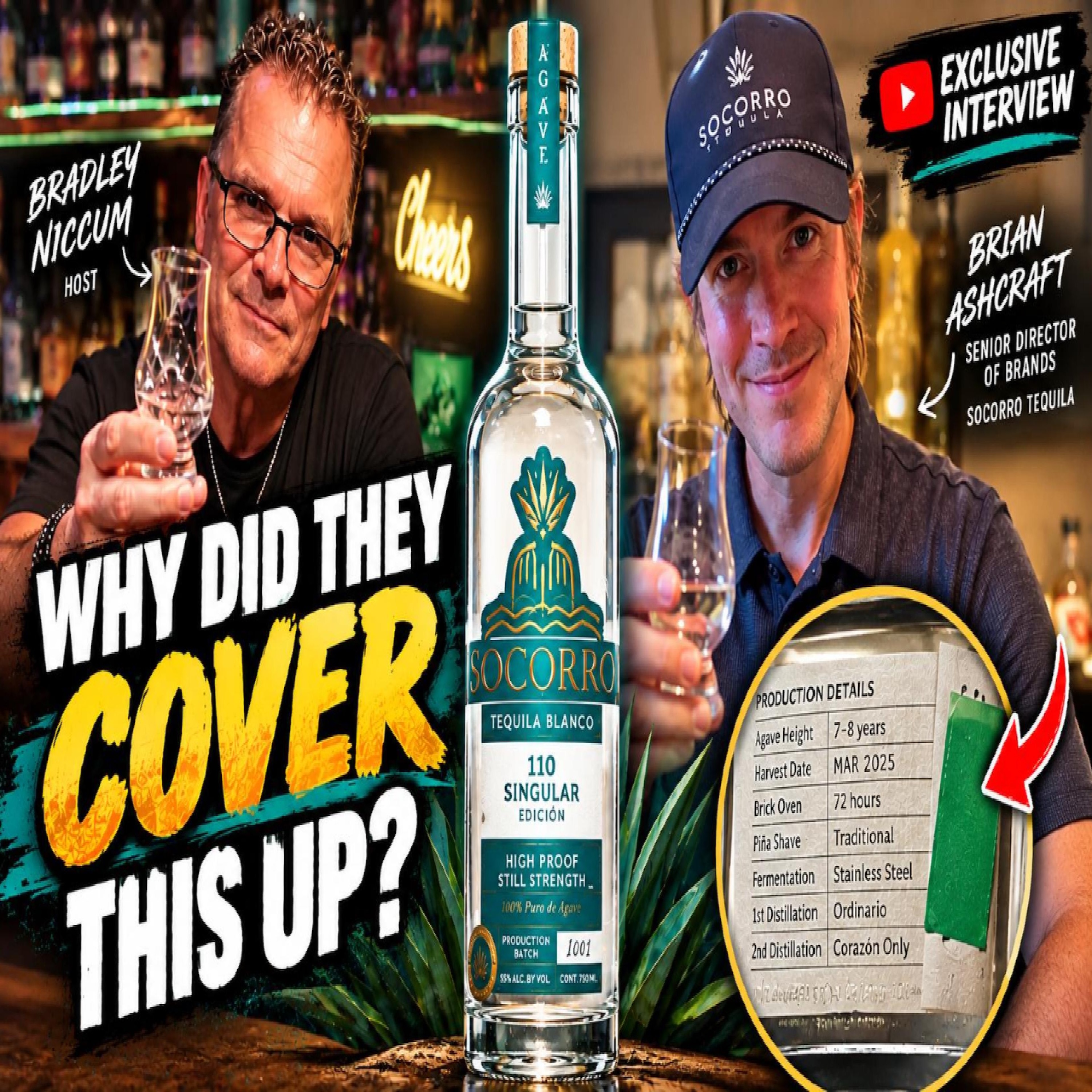
[00:00:00] Speaker A: Tonight you're going to meet Brian Ashcroft with Socorro Tequila. And one of the things we're going to talk about is what is this green sticker on the back of the bottle? Stick around to find out the answer. It's tasting tequila with bread.
All right, guys, we got a lot to talk about in this one, and we get to sit down with Brian Ashcroft from Socorro Tequila. And we're going to talk about this bad boy right here and all the stuff going on. Brian, how you doing? Night, my friend.
[00:00:32] Speaker B: I am great. I'm amazing. Thank you so much for having me on. Brad, it's great to finally see you.
We've chatted online a bit, so it's great to connect.
[00:00:41] Speaker A: Yeah, it's great to connect for me as well. And I'm excited about you being a part of this brand. Tell us about how that came about and what your current role is with Socorro.
[00:00:51] Speaker B: Okay, so I am the senior director of brands at Ina Agave Spirits, and I've been with Socorro about a year and some change now. My, My background is in media. So that's how I. I met Pablo and Josh, our co founders. I. I had interviewed them for an article that I was writing.
And I'd been in media at that point almost, I guess, over 20 years.
And I started out, geez, early on, I was, like, writing about drinks, among other things. So one of the first. First big articles I ever did, print articles I ever did was in 2005 for Wired magazine, and it helped absinthe become legalized in the United States.
So.
And so I. That's kind of interesting. It was really interesting. A lot of fun. And then during my time, I wrote a book on Japanese sake, and I did a book on Japanese whiskey as well. So why did I do books on, you know, Japanese sake? Why did I do books on Japanese whiskey? I'd lived in Japan for over 20 years.
[00:01:48] Speaker A: Oh, wow.
[00:01:48] Speaker B: Yeah. So. And those were great because those were kind of like getting a PhD and Drix.
And you probably, Brad, you've experienced this as well, because you interview a lot of people, you talk to a lot of people.
You. You've been to a bunch of different distilleries. So you learn a lot about how drinks are made. In this case, tequila. And so for me, doing the book on sake was basically a masterclass in fermentation. I learned every single thing you could. You could think of. Imagine knowing about yeast and about. I learned a lot about rice and grain and kind of the impact of soil and all that kind of thing. And then for Japanese whiskey, that was like a masterclass in distillation and so. And then maturation. So I learned a ton about wood as well. Different kind of barrels, how. How they impact the spirit and things like that. And for me, the really interesting thing was then when I came back from Japan, when I came to Texas, back, you know, to where I'm from, and then, you know, had the good fortune of. Of. Of meeting Josh and Pablo and getting involved in this industry kind of. For me, the really big epiphany is that tequila is really the greatest distilled, you know, spirit there is, without a doubt. And I say this is. Somebody's written a book on. On whiskey as well. It's just the amount that can be expressed with agave is. Is incredible.
Just the range of expressions that we have is. Is incredible as well.
And to me, it's just. Just a truly, truly amazing spirit. Just the, The. The. Just so much that we can do with tequila, you really, really can't do with any other spirit. And it. It's just fantastic to.
To get involved in this industry. And it's. It's been an utter joy.
[00:03:20] Speaker A: So that's awesome. So where would you say tequila compares with what you've learned about sake and what you learned about whiskey?
[00:03:28] Speaker B: So that's a really good question. For, you know, for sake, obviously, we're dealing with rice and many, many different brands of rice. And then for. We're also dealing with a wide variety of yeast as well. And we can be very expressive, and we can even be expressive with rice, but not to the same extent that I think that we can be expressive with agave. So for me, I think that the elements of fermentation in tequila production don't. I don't. They're. The fermentations are totally different between sake and for. For tequila. But the way. Just the way that we can express things through fermentation is something that we can't really do to the same extent in or even through the raw material itself through whiskey. Whiskey is going to be more about the distillation, the maturation. So we can express so much through fermentation. We can express so much through the. The. The raw material through tequila and then agave spirits writ large. So in that regard, there are certain parallels in that. There's certain parallels with the industry itself, where you have these. These families that own these big, you know, rice farms and fields and stuff like that. And then that's how they got into sake brewing. So there's those Kind of historical parallels as well, that exist, which are interesting. But the fermentation side, they're totally.
Are totally different. But there are some really interesting ways that you can express the raw material through fermentation in tequila, which I think is really great. And then through distillation, you know, we're using stainless steel and we're using copper, copper pots and.
And then you can use the. There's a bunch of different methods that we can use in tequila as well. So there's a range of tools that distillers have at their disposal. And then for maturation, obviously, we can use a range of barrels we can use as bourbon. We can use, you know, virgin American oak, like we do. But for me, I think one of the kind of. The secret kind of stealth moves of tequila is the way that we can blend.
And that is something that we don't have that same degree of freedom that we do in tequila that we would have in. In whiskey.
And like, you know, you have to. You're dealing with spirits of a certain age for whiskey, but for. For tequila, you can take brand new blanco and you can blend it in with something that's, you know, 10, 15 years old. I mean, that's possible. That's just not quite possible in whiskey. So all of these different kind of different things, the way they combine to me are utterly fascinating. And then I would say, I remember I was at the Kirin distillery, which is outside Mount Fuji, and I was talking to the master distiller there, and he was saying that the alcohol industry is kind of runs on inverse trends. So when brown spirits are up, white spirits are down, and white spirits are up, brown spirits are up. So it runs on this kind of inverse kind of relationship. Well, tequila has both and has both at exceptionally high levels. And so for me, it was really like, tequila is the greatest spirit there is. I mean, it's not even.
And I'm saying this is somebody who's written a book on whiskey, somebody loves whiskey, but tequila is actually just a truly, truly incredible spirit, agave spirits as well. And we're just very, very lucky to be in this industry.
[00:06:37] Speaker A: You know, I've never put that parallel in my head that we have brown spirits, you know, are up and clear spirits are down and that we have brown spirits in. In tequila. Like that. Out of all of the conversations and all of the years of drinking tequila, you just put a thought in my head that I hadn't had before. Yeah, you know, I. I was a whiskey winter drinker and a tequila summer drinker.
[00:07:00] Speaker B: Got it.
[00:07:00] Speaker A: But even in the summer, I would drink a repo or maybe an anejo. Not thinking about the fact that those whiskey drinkers, they don't have to switch from tequila in the summertime back to whiskey in the winter. They can have some extra anejos and old fashions made out of tequila and just only have tequila as a brown spirit. And there you, you put that in my head. That's pretty cool. Because you're right. When one's up, the other's up. When one's down, the other's down.
[00:07:26] Speaker B: That's.
[00:07:26] Speaker A: That's pretty cool.
[00:07:27] Speaker B: Yeah. And it's. And the, obviously the through line through all of them on the case of tequila is going to be the agave. And so just that you can have that, that DNA through all of these different types of expressions expressed in different ways is fascinating. And so for me, that's. That's just truly the great appeal of tequila and why, I think, why tequila is so magical. There's a lot of romance obviously in tequila and how it's made its history and all these kind of things. And when you're in the distillery, but just from a purely technical point of view, even if we're going to just get abstract and just put all the stuff out on paper and roof kind of the romance from it, it's truly amazing. It's truly an incredible spirit. And so again, it's just super, super grateful to be in this business. Super grateful to that it exists. Super grateful to drink it, to enjoy it. So.
[00:08:15] Speaker A: So where did this passion for spirits come from?
[00:08:18] Speaker B: For me, I think it came from art. I studied art history in college.
And the thing that I liked about studying art history is that you were using something else to study something else. So if you're just studying, for example, history, you're just studying history, right? Like the. And it usually instant ends up being like political or social or economic. But if you're studying art history, you can use art to look at how that reflects onto, you know, a larger. Some sort of larger meaning, some sort of larger movement, whatever. And we can do that with spirits as well. And we can do that with bruise as well. We can do that with drinks and we can get great insight into cultures, into people, into places.
And I love that, I love that. Then you can consume it, you can smell it, you can, you can drink it, you can imbibe it. And I love that it, I love that it's not permanent. I love that vanishes it. It. You know, this, this in my glass is, is slowly vanishing into the air. Right? And for me, that's just wonderfully romantic. I love that. I love things that you, that you can buy or, or, or receive that nobody can ever take from you. And one of them is like drinking a great one. It's a great meal. You know, vacations are, are like that as well. But also it's just a, you know, a glass of great tequila. Like, nobody can take that experience from you ever. And so it's just all those kind of combinations, as well as the, the technical and the scientific that really, really just have appealed to me since I first started writing about them. And then being in the industry itself, it just becomes even more interesting.
[00:09:54] Speaker A: Perfect. So let's go to Socorro. Let's talk about this brand. How did you get hooked up with these guys? What was your transition from that to being in your current position?
[00:10:04] Speaker B: So I interviewed, I'd met Josh and Pablo, I guess almost about three or four years ago.
And so I wrote about them and I thought they're really cool, really nice guys.
And Josh called me about maybe about, I want to say about almost like two years ago, and just to pick my brain on stuff, and we just got to talking and then I ended up, you know, working for them, and they brought me on as director of marketing, which, which was great.
And then I started doing other stuff within the company. And so now I do a range of things, but I think in any small business, everybody does a range of things. I don't think that's unique at all.
That's just kind of how it goes when you're, you know, when you're, when you're working for, you know, when you're trying to be entrepreneurial and you're, you're trying to make things happen, you're, you're going to wear many different hats. And maybe about last fall, maybe it was around maybe about a month later. So from now, so I guess it was around November, maybe early December, we had bottles of still strength kicking around in the office.
And I told Pablo, like, these are delicious. We should sell this.
And Pablo was like, yeah, that, that, you know, that might be cool, but let's, let's do more.
And that's one of the really kind of big things for us, is doing more.
And so we really started to think about what, what more could we do? So first we had, we wanted to make an excellent still stream. We wanted to, to make the price on it super duper competitive. You know, we wanted it under $50, and then we wanted to make the most transparent label that had ever been put on a tequila bottle ever. And those were kind of the markers that we set out for ourselves.
And we really wanted to push the bounds of transparency to see how far we could go. And we could have just done a still strength and we could have just, you know, that would have been fine and we could have just charged, you know, under 50 bucks. But I think it was the desire to do something more, to really, really over deliver was the thing that to me really, really was fascinating because we wanted the juice deck to be excellent, we wanted it to be price great. And then we wanted to really kind of break new ground. So we started working on that earlier this year.
And you know, Pablo's working on getting the flavor profile dialed in.
And we wanted it to express, you know, 1:10 through volume, not just come in and be hot. And really when it lands on your palette, you know, have it be round and velvety and really, and really have presence for us was very, very important.
And during that time, I started reaching out to the CRT to figure out what exactly was possible to put on the label. And then that was a process that went on for months, it seemed like so. And the whole thing was just ended up being this really, really incredible journey.
[00:12:59] Speaker A: Well, we have a lot on the label and I really like this. I'm going to have a video just specifically about this bottle and the label coming out. So was it difficult to get them to approve all of the things that you got on the label? Like, was there a lot of pushback before we talk about the green sticker
[00:13:16] Speaker B: from the CRT site? No, there was actually, I mean, there's certain things that going in to talk to them, There are things that, you know, just, they're not, it's just that's a non start. It's just not going to happen.
And for us, you know, we've been, we've been able to get agave water yeast on, on, on the neck label. So it's like, that's fantastic.
And then the other thing, it was just really talking to them and trying to better understand what is, you know, what is possible and what can we put.
And what we found was if you're able to prove it, then, then you can put it on the label within, with, within kind of understood parameters.
And they were even open to, you know, Pablo's like, let's put the most muerto ABV on it. That'd be cool. And the cool thing about Pablo is that he's. The guy's got a gazillion ideas.
And he's always like, this would be cool. Let's do this. This, this, this, this, this, this. And it's like, okay, yeah, that would be cool. I've never seen that. And so they were actually like, okay, you can prove what it is, so you can put it on the bottle. But on the US Side, when we send it over to the US side, they were like, well, you can't have two different abvs on the bottle. That's confusing. So it's like, okay, got it. But that was just, for example, something that they were like, yeah, that's, that's. I mean, so they were willing to play ball on a lot of, like, for me especially, was a matter of how do we put all of this stuff here?
Do you know what I mean? And then there's certain other stuff we need to, like, put here. And we didn't want to use a totally different. We didn't want to use a totally different, like, label. And then it was a matter of, like, what font size can be people read. What, like, for people that are. When they're handwriting it in, what's the size of pen? It's, like, possible that somebody could write, like, so there's all this stuff that went into that that, like, logistically is not very sexy, but it's just, like, so much thought. And so then it was a matter of like, okay, so we're going to do this. And then Pablo was like, hey, let's do, you know, a secondary analytical composition label with, you know, the, the parameters that the CRT uses to confirm tequila. Let's just put that on there. Let's not do a QR code, let's put it on the bottle.
And, you know, we asked the CRT and they were like, yeah, I mean, they, they approved it. They approved that three different times.
And so, yeah, that was. The other thing is that during this whole process, it's. We have it. And then if, if, if there was something that needed to be changed when submitting it on the US Side, then we'd have to send it back to the, the crt. And during that time, I'm just, I'm personally a bit, you know, freaked out. Like, holy shit, this is gonna, we're gonna have to do this all over again. Or this is gonna, you know, they're gonna now not approve this or whatever. And the old time, Pablo's going like, yeah, it'll be fine.
Just totally like, yeah, yeah, this is fine. You know, we'll get it through, don't worry. And Every single time that got approved. But on the US So that's like, you know, the higher alcohols, the fur for all that outlines, all that stuff. And.
And the. The USI Basically where they landed on was you're not allowed to put lab results on it, so that has to be covered up. So for us, it was never something that. That. That decision to me, wasn't frustrating at all. You know, if anything, I personally. Because this is months and months of work, to be honest, I personally was. Was grateful. I was grateful that they were. I mean, there was back and forth on that, and I was grateful that they took it seriously, that they looked at it, and that they then set down kind of a marker. Like, you're not allowed to do this. And for us personally, when we set out, it's like, what is possible? What can we do? How far can we push it? How much can we show? And it was a matter of just wanting to lay all of our cards out on the table and be like, this is it. This is. It's all here, you know, if you want to not. It's all.
Everything's here. And it's. This is very different. And I know this has been done before, and I have a huge amount of respect for the folks that have done this, but it's. It's different from a QR code, you know, putting a QR code on a neck label or something like that. It's actually getting it on the label, and so it's so much more complicated. But it was fat. It's very rewarding. When I look at it, it's like, well, we did it. We wanted to push the boundaries. We wanted to see how far we could go. We did it, you know, so pretty incredible. So. And then I think for me, the other thing is, as this is all going on, you know, Pablo's like, let's. Let's enter it in the agavos.
And again, I'm like, okay, that sounds great.
And I don't want it to get silver, and I don't want it to get gold, because, you know, it's just like, do you know what I mean? You want it to do the best that it can. And then when we came back and won double gold, I was just absolutely elated. So there was just a bunch of moments during this whole process where we're just, you know, rolling the dice and kind of kind of like riverboat gamblers and kind of seeing. Seeing. Seeing what. Where the, you know, what cards we have and stuff like that. But for me, it was Just one hell of a ride. Just truly remarkable journey and just so proud of the tequila that we ended up with. So proud of, you know, the company and just the support from top down that was received from this and just the desire to do something really cool, like we want to do something really, really cool.
And there was just, there was a lot of time and a lot, kind of a lot of chances that were taken and just incredibly fulfilling at the end of it. So huge, huge degree of thanks, obviously to Pablo or CEO Josh Irving, Lindsay, our cso. Just doing the whole processes. Really, really fearless, Absolutely fearless as we were going through it. And it's great. It tastes great. And it tastes great.
[00:19:12] Speaker A: It is, it's delicious. Yeah, yeah. There's a, there's a YouTube video right now where I stuck it in a blind with some other brand new high proofs that just hit the market and it did very well. So I was pretty proud about that. So. So what you're saying technically is this extra green sticker that we have here, this beautiful display of putting green and green.
[00:19:33] Speaker B: Austin, I'm green.
[00:19:36] Speaker A: This is, this is because of the us, not because of Mexico.
[00:19:39] Speaker B: That's not. Yeah, the CRRT approved that. Three separate.
[00:19:42] Speaker A: Something else.
[00:19:44] Speaker B: Yeah. So the interactions that I had with the CRT during this, this process, I was very grateful because they were very forthright on what could be done, you know, and so really appreciate their time and really happy that we were able to get all the stuff that we were so even with, even with this covered, even with the, the level, lovely putting green that we have here. I mean, there's still just an insane amount of other information that just ended up on it, you know, so for that as well, it's just been a tremendous experience.
[00:20:18] Speaker A: Yeah, I love the fact that we have, you know, how many meters high were the agave? What's the actual date of harvest? The brix level, what was the pina shave to like the pinka is, you know, showing that. Like that's a question I have for a lot of people is what was your shave? Because that's going to affect the flavor of the tequila. And then. Yeah, showing your process there and then having the. How you did your first distillation in ordinario and the date and the second distillation, you only used corazon. This. I mean, the only corazon of this decision.
[00:20:52] Speaker B: Yeah, so that was like very cool. So that was like Pablo's, when, early on when we were talking about doing this, he was like, wouldn't it be cool if we like did A complete harp. We'll run it on a smaller batch, but for the second distillation, we'll just do it once so we won't mix anything back into it. It won't be like, in several different runs, it'll just be the pure harp, and then we'll just take the singular harp. And so for me, it just, I was like, wow, that's really, really interesting.
And I, I, I, I was, I was moved by all the different kind of elements to it. You know, it was like, well, the price point's compelling. It's delicious. The transparency is, is really, really pushing, pushing the boundaries there. And then just the concept behind the name, you know, and then doing it 110 because, do you know, it's like we have to, we're letting it rest. We want to keep it at 110. We don't want it to dip below. We have to get it in bottles. And then all this kind of stuff is, is going on with the labels at the same time. And it's really kind of, we distilled it to proof, so it's really kind of like sticking the landing. And so I think probably since this whole process began, I've had really, the first time to, to kind of take a breather and just step back and be like, we did it, we did it. And just really enjoy it with people.
And that's just been absolutely wonderful. You know, my, my background was, was doing book. So you work on a book for a year, two years, and so much of in it, so much of, of you is in it, and then you release it out in the world, and then it becomes other people's stuff. I'd never quite experienced that in other ways. And like, obviously for this, like, I was involved in the process. You know, Pablo's running the show, but, you know, when I just look at the back label, I know, like, how much like, I can remember, like, the, the handwritten drawings that I'd done to show the design, maybe something like, can we do this? You know, and so to send it out in the world, it's just the most incredible experience. And it's, it's truly, truly magical. And then, you know, the thing that's, to me, it's, you know, mentioned this before, it's different from a book is somebody can, you know, obviously read a book, and that information can be part of their thought process or whatever, but then for people to imbibe it and enjoy it in a way that's just incredibly visceral. Visceral is just one of the things that's truly amazing about. About spirits for large and obviously tequila as well. It's incredible. I mean, like, every day I wake up and I'm like, this is. This is the greatest job ever. You know, it's like, it's. It's incredible. I just very, very grateful. I'm grateful that tequila exists. Grateful to Mexico for. For creating this magical spirit, and grateful to. To be able to. To have some part. Some small part, something like this. It's just really, really amazing.
[00:23:43] Speaker A: That's awesome. Every time I. I pour a glass of tequila, I don't just think about the brand that I chose or what I'm drinking that day. I. I truly think about what it takes for this bottle of tequila to end up here at my house. All the way back to. There's a farmer who planted these agaves. There's somebody that harvested these hihuelos in another field before they got planted where they are. They. Yeah, you picture the guys chopping them in half and stacking them in an oven. And yeah, you picture another group of guys putting them on a roller mill. And there's so many hands that are touching every piece of this. And for you to be in a position where you got to create something and. And actually put part of you out there, I'm sure that's got to be very rewarding, because I feel like that's every time a brand brings a tequila to market, they're. They're representing so many people, and you get to do that and. And kind of be the front of the design. That's. And you did a great job. That's very cool.
[00:24:40] Speaker B: We. I mean, we great designers on this. So any. Any part of input I had on was. Was just, like, very crude. You know, like, I studied art history, not art, Brad, So it's like, I'm not this. Not an amazing artist by any mean at all. But. But yeah, it's. It's. It's truly. It's truly amazing.
And for. For us, one of the big things that we wanted to do was when we set out to do this, we wanted it to have a direct connection to a regular blanco. So this whole kind of process starts, and then we start looking at. At our regular blanco. And last year, we had also won. This year, we won double gold at San Francisco World Spirits Challenge, which is great, and we won it last year. But we were thinking about how that batch that won was amazing. That batch that won last year was amazing. And then the batches after that were really, really great.
But we were Kind of thinking about maybe we can do something to make something even better. Right? And for us, just as a company, we always. That's the thing that we really, really push ourselves is how can we do better? How can we improve? How can we make better tequila? How can we better be better personally? Like, how can I be better at my own job? And so we really even started looking at the blanco itself and it wasn't like, oh, it's done. It's great. You know, it was like, how can we make this better? So we went through and changed our yeast.
And then when we started getting the, you know, the 1:10 versions of this kind of the early prototypes, it's like, it's like, wow, that's delicious. That drinks really, really well.
And for us. Brad, are you a. Are you a car guy?
[00:26:19] Speaker A: I mean, I drive them, but I'm not like, real knowledgeable.
[00:26:23] Speaker B: Okay.
I, like you said, I drive them. That's awesome.
[00:26:28] Speaker A: I don't, I don't work on them. I, I couldn't change the oil in my vehicles if you held a gun to my head. Well, I could, I could, I could get them over to Land Rover and get the oil changed. I know how to get the oil changed. I don't.
[00:26:41] Speaker B: So we, we, we really were thinking about, like, if we have the 110 version here, the connective tissue to our classic blanco should be there. Like, this shouldn't exist in isolation. You should be able to drink the 110 next to the, the classic 40 and understand it better and vice versa, right? Understand the flavors in the other one and you understand these flavors and then really have a greater appreciation of both. And so for me, like, I always kind of viewed it as like, you know, this is like the, the AMG version of the, you know, the Mercedes. Like the, the 110 is going to be the a, like the really kind of tuned out version. But if you're driving around in like a S class or E class or whatever, you would still like it. It would still have the same DNA, right? It would still. That. That connective tissue would still be there. So for me, that was, at least intellectually that was one of the really, really important things that I hoped that it would express. Especially if you're drinking it side by side with the 40. We, we didn't want to just go off and do some sort of abstract, abstract exercise, right? And it's like, oh, we made this. And then it's like not connected to anything else that we did. We wanted it all very pointed, very connected. Very, very intentional. So that was one of the really exciting things about it. And then we, we've done a few tequila club events recently and they've been absolutely great. And then just drinking them with people side by side, they're like, oh, I can understand this better. I can understand that. I see these flavors that, that are, are much more concentrated here and then they're, they're different over here. But I can still kind of get that same experience here. For me, that was like fascinating to really, really push it that way. I know in the world of drinks, cause I've written about em for a while, companies will come off and do like one offs and like this version of that or this, you know, barrel finish or whatever. And sometimes some of that can seem a little abstract, you know, like it's not really related to anything. It's cool, it's cool.
But we really wanted to make sure everything was directly connected.
[00:28:37] Speaker A: I'm glad you said that because that was going to be one of my questions is because you know, when we see single edition and special editions, my thought goes to, that they did something not only a higher proof, but maybe they did something different to make this. And I like that this is your blanco just at a higher proof. And I think that's good because sometimes we get caught up in this high proof that is something special and then you go back to the brand and you can't identify what that DNA was.
[00:29:03] Speaker B: Right, right.
[00:29:03] Speaker A: So that, that's very cool.
[00:29:05] Speaker B: Yeah, it, it, it's, it becomes like a stunt, you know, it's like, like, or a magic trick. It's like, you know, it's like, okay, great. But for us one of the big things was there are differences. There are, there are clear differences on production that we had to do to.
Because just we're dealing with a different proof. I'll give you a good example of that. We, we were pulling different samples and really kind of looking at the filtering and so it was like what if we didn't filter it at all, you know, or like just like just kind of ran it through a mesh, you know. And then when we tasted it, it didn't taste like it did in the distillery because a lot of the lipids would kind of come together and it just ended up having this kind of like much. It wasn't, it wasn't, it just didn't taste the same. And so I was trying to think about like this is a very inelegant example, Brad. So please forgive me. It's the difference between when you go to McDonald's and you get the french fries just cooked and when you bring em home, you know, it just like, it's just doesn't. Doesn't have it. So we had to do. We did a super light filter on it. But you know, obviously if you're dealing with different proofs and stuff like that, you have to just kind of approach things slightly different. The production on it. Like all of this is the same. I mean that's just, that's how we make our blanco. And so just to get it on a label and be like, how do you, how do y' all roll? How do y' all make stuff? It's like, well, this. That's how we do it. And so for me, that, that's just really, really cool.
[00:30:31] Speaker A: Now, do you foresee more information on your regular blanco label in the future to try to match up to what you did with your high proof?
[00:30:40] Speaker B: That is a very good question. And it's something that I've, what batch is that, Brad?
[00:30:45] Speaker A: I don't know. I'll have to look here in a second. This is an older lot. I know that because I, I used this one against one of the other ones.
Production batch. It says 1022. But I know there's a lot number as I had two of these. There's only, only have one of these left. This one's 10:30. But I thought there's a lot number on it somewhere.
[00:31:07] Speaker B: Yeah, there'd be there. There'll be production bat numbers. I'll send you like a batch that I would want you to drink with singular.
[00:31:15] Speaker A: It is down here. So this one is 5126 lot 10 number 1 lot 1030. And then this one doesn't have it on there. So this was the earlier batch.
[00:31:26] Speaker B: Yeah, yeah.
[00:31:26] Speaker A: Which I, I've enjoyed both. I already, I drained one of these bottles already and then I, I had the earlier lot to kind of compare that.
[00:31:33] Speaker B: Yeah, yeah, it's. It's something kind of. We talked about internally. The, the handwritten element of it is, is, is very taxing.
So, so there's that. But yeah, it would be, it would be great. The, the thing about the. For the classic 40 would be also that we also want to make sure that people are aware of the brand story. So that does take up a kind of a space on, on the label as well.
[00:32:01] Speaker A: Yeah, that takes up a big chunk.
[00:32:03] Speaker B: Yeah. So I mean that's always like the
[00:32:06] Speaker A: ridiculous government warnings, like we have to be warned.
[00:32:09] Speaker B: Yeah. So that's, that's why we did it. Here in a clear plastic.
[00:32:12] Speaker A: So yeah, I like that better.
Yeah, that way I don't have to read it.
[00:32:20] Speaker B: Read it, Brad though.
[00:32:21] Speaker A: I get to read all the good stuff and make my own decisions.
[00:32:25] Speaker B: Yeah, yeah, that is, that's what life is about.
[00:32:27] Speaker A: So here's a, here's a question for you. Any of this going into a barrel?
[00:32:30] Speaker B: That's a very good question, Brad. That would be amazing. That would be amazing.
[00:32:35] Speaker A: Wouldn't that be amazing?
[00:32:36] Speaker B: That would be amazing. That would be amazing.
Yeah, that would be amazing.
[00:32:40] Speaker A: I have a gut feeling there's some in a barrel.
[00:32:43] Speaker B: That would be amazing. That would be amazing. But yeah, it's that, that there, there are.
Speaking of barrels, there are things that are coming.
Things that are coming soon that are very exciting. I was, you know, when we got on this call, I was like, you'll want to talk to Pablo soon. And that's the kind of all I will say. But there, there's a lot of really cool stuff coming. Stuff that I'm really excited, excited about. Most of it I unfortunately cannot talk about. But I will say this. I'm not one of those people that doesn't. That, that will tease stuff that's not cool. You know, I remember when I worked in, in media and I'd get like a kind of a message or phone call from Sony or whoever and they'd be like, oh, we're doing X, Y or Z. And you're like, oh, it's going to be really cool. And sometimes it was and sometimes like that's not. And it's like, okay, you know what I mean? So we do have some legit really, really cool stuff, really exciting stuff coming over the next few months. So I can' wait to share all of that. So I'm really, really excited.
[00:33:40] Speaker A: So I know this is a kind of a one time thing for this release, but is this something that we're going to see maybe seasonal or we'll bring it back once it's sold out to do it again with a new batch.
[00:33:52] Speaker B: I would say that the reception on it has been really, really good.
And it is something that I personally feel very strong about. And Pablo would tell you the same thing. Like, you know this a lot, a lot of blood, sweat and tears went into to each bottle. So it'd be great, it would be great to do it again. I mean, it'd be amazing. It would be amazing. And hopefully more people try it and more people like it and stuff like that. Really, really proud of it. But that would be, that would be delightful. That Would be absolutely delightful if we were able to do that again.
[00:34:25] Speaker A: So how, how many bottles did we have of this one?
[00:34:27] Speaker B: How many have I personally had?
[00:34:28] Speaker A: No, how many did they make? How many total bottles?
[00:34:32] Speaker B: So that's a 1002.
[00:34:34] Speaker A: 1002. And you ended up. You have 800 of them at home.
[00:34:38] Speaker B: 899.99. There you go.
[00:34:43] Speaker A: Where can people, where can people pick this up at?
[00:34:46] Speaker B: People can pick it up. So it said select independents in Texas, in Dallas and Austin, San Antonio, Houston, those markets, and there are some going to Colorado, and the other ones are available online on our website, Socorro Tequila.com so they can be purchased there as well. And for 47.99, which is a crazy price. I still think it's a crazy price. So we were able to do it for that. But yeah, that's where it's available.
[00:35:16] Speaker A: I was just going to ask, are, are they in the market now or is it still kind of on its way in?
[00:35:21] Speaker B: Some of. Yeah, a lot of them are kind of on their way. There's, there's some that are hitting, they've been hitting retail over the past week or so, but yeah, they're, they're, they're making their way out. So the allocations are limited. We don't have a ton of bottles of this, so if you see one, pick it up, because if you don't, I might add to my collection. So I can have 900 bottles. But, but yeah, there, there are, they are making their way out. But yeah, it's the reaction on. It's been really, really, really, really nice. It's been great. Just, just very, very humbled and honored that people are trying it and liking it and obviously saying nice things about it, which is something that really kind of warms our heart because you worked so hard on it and there were, there were times at it where it's like, it's like, I don't know if this is going to get approved, you know, And I was kind of worried. It's like, are we going to make it out in time? Are we going to be able to get it out in time?
And it would just get pushed back and have to go back and back and forth, back and forth.
And like, the whole time Pablo's like, this is, you know, this is going to be great. This is going to be amazing. So really, really appreciate his, his, his endlessly sunny optimism during it, but just delighted that it's out. I'm really, really delighted that it's out.
[00:36:33] Speaker A: Well, I, I want to say thanks for doing something like this. The agave like nerd community that I feel like I'm a part of, we love high proof. We love this agave flavor. But more so we love the transparency and the information when you can sit down with your bottle and know that it had to go through a process to just have this information on it. When people are worried about, am I drinking something that is blended with diffuser product or blended with another product? Well, it can't be if this label's approved and it allows you to go back to something that you know is a core in tequila. I, I know how this is made, so I'm going to taste this and now I may use this in comparison to taste something else. And I can use something that has this kind of information is made this way as a baseline to know this is what current modern day tequila is supposed to taste like. And when this bottle over here tastes so drastically different and they don't have this information on the label, then you can, you can figure that out for yourself. So thanks for doing the work and putting more information than what the average tequila drinker or really the outside of the 1 percenters. Right.
The stuff that 99% of tequila drinkers don't read. Anyway, thanks for doing this because this is really awesome. And working as hard as the team had to get it at 110, I know that a lot of people don't understand how hard 110 is and it's why you see a lot of 108s. Right? So thank you for putting all of that effort there.
[00:38:02] Speaker B: Thank you. I mean, Brad, thank, thank you very much. I really, really appreciate that. The, your remarks there about it being a reference, that's fascinating. I never thought about that. But the idea that it could be used to, as a benchmark to drink against other things because it's all, it's all there. There's no, there's no secrets on that at all.
To me, it's very interesting. And then hitting 110 is, is very much like, you know, sticking the landing really. Like, you know, being able to, to get it there and then when it's resting and then, you know, getting into bottle and all that kind of stuff to make sure that you're getting in there at 110, distilling to proof. So for me, that was always a goal to do 110. That was a goal for Pablo to do 110. It was just something we really, really wanted to hit.
And I'm delighted that we're able to hit it and that it ended up tasting delicious. Because sometimes if you set out to do something and you may have a preconceived idea like we need to do this, this and this. And then you try it and you're like, well, that's not very good. You know what I mean?
So for us, it was just really amazing because it was like there was this idea. It's like, well, we should try to do these things because we want to give, we just want to over deliver. Because even if it was 108, 108 would be great, but we could still do more. So the idea, the whole, the whole, the whole thought behind the whole tequila was let's just over deliver. So if we were at 109, it's like, well, we could have done 110, you know, and if, if, if we hadn't had done this part, you know, the putting green here, it's like, oh, we could have done more. And it's like, well, I don't know. We couldn't have done more. We, we did all that we could. So for me, that, that was just really, really fulfilling. But I love that you said that, that it's a, it's a benchmark. It's really flattering.
[00:39:48] Speaker A: Yeah. Well, I have a couple of tequilas that I use for that purpose. When I get something sent to me to try and they, they tell me how it's made, I have several bottles that I'm like, okay, well, they said it's valley, they said it's stone oven. So I'm going to give you something that I, then I can kind of get some comparisons. Like now you're not going to get. Their yeast is different. Your timing's all different. Your timing, all those things are there, but it gives you a, a baseline, it gives you a baseline to go. There's a flavor there that I don't think is supposed to be there that you could go back and use that. And, and first of all, it has to be a bottle that is made this way and has the information there. So you, that's what I'm going to go taste against. So I think it's very cool. So, yeah, I love all this information. I think it's awesome. The tequila is great. I'd tell anybody, if you see this bottle somewhere, pick it up. Even if you're not a high proof person. It gives you the taste of what tequila is when it's coming off that still and not diluted and giving you that, that depth of flavor and complexity. And yeah, all I could say is, thanks, man, you made a great tequila. And I can't wait to message Pablo. Get this on American Airlines, and then I won't be so mad when their planes don't take off on time.
[00:41:01] Speaker B: American Airlines is amazing.
American Airlines, I agree with you.
[00:41:05] Speaker A: They're fantastic.
[00:41:08] Speaker B: No, great.
[00:41:09] Speaker A: I can drink your tequila.
[00:41:11] Speaker B: Yeah, yeah.
[00:41:12] Speaker A: No.
[00:41:12] Speaker B: Amazing partner for us. Truly, truly honored to work with them. But it's. You'd mentioned something in there about, like, the 1%, and for me, I think that's fascinating because when we set out, it's like, I would consider myself in that 1%. Right. I would very much consider myself in that 1%. But we also wanted people who were in the other 99% as well to be able to drink it. So for me, it was like, how do we, you know, if you have a bullseye, if you ever look at a bullseye, it's actually a circle within a circle, right? And that's what a true, true bullseye is. And it's like, how do we hit that circle within a circle where we get folks that are. That are that 1%, where they would see that and they'd appreciate it and they'd understand it, and they'd be like. They would read like, the fur for all, and they're like, oh, yeah, that's awesome. You know what I mean?
Most people will not care. Most people just not care at all. Yeah, but. But I mean, I'm sure they'll appreciate the links that we went, the transparency, all that kind of stuff. But we still would want them to be able to drink it. We didn't want it to.
[00:42:14] Speaker A: To.
[00:42:14] Speaker B: We wanted it to be. To taste great, to be delicious, to be when it arrives on your palate, to be pleasing and all these other things.
So for us, that was also really, really important just to make something really, really, truly delicious as well.
[00:42:27] Speaker A: Yeah, I think it's drinkable for all drinkers. And I guess when I. And I don't think it's 1% anymore either. I think it's growing. I. When you do a tasting in a liquor store and before you speak to somebody coming in and you see them pick up a bottle, there's. There's that group of people that picks up the lowest one on the shelf that's absolutely cheapest, they don't look at it at all, and they book out the store. But there's becoming more of that group of people that you see them turn the bottle around and they're looking at a NOM number and they're reading what's on the label. That's becoming a lot more than what it was for me, you know, five years ago. There's more educated people, but I do think it's. It's the 1% that gets really nerded out and so excited that, you know, we can see this information. So I think it spills into people reading it and learning about it because they didn't know then that that person that goes, look at this one.
Right?
[00:43:23] Speaker B: Yeah. I've been looking for this forever. Yeah. But those folks are the best. So, you know, much love to them. Much love.
[00:43:30] Speaker A: Well, I want to say thanks for doing this. I'm going to pour a little bit more of this so I can toast you out of the video today. And the blanco is good by itself. I will say I do drink a lot of this tequila on American Airlines, so I'm glad that American Airlines has good tequila. The other airlines do not.
And I'm not going to say that any of the 50 milliliter bottles I have ever end up open on those other airlines, but they probably do. So, Brian, thanks for taking your time today. Tell the team how appreciated we are of them putting all of this work together to make this tequila. And salute to you, my friend. Yeah.
[00:44:05] Speaker B: Cheers.
Cheers.
That's delicious.