Episode Transcript
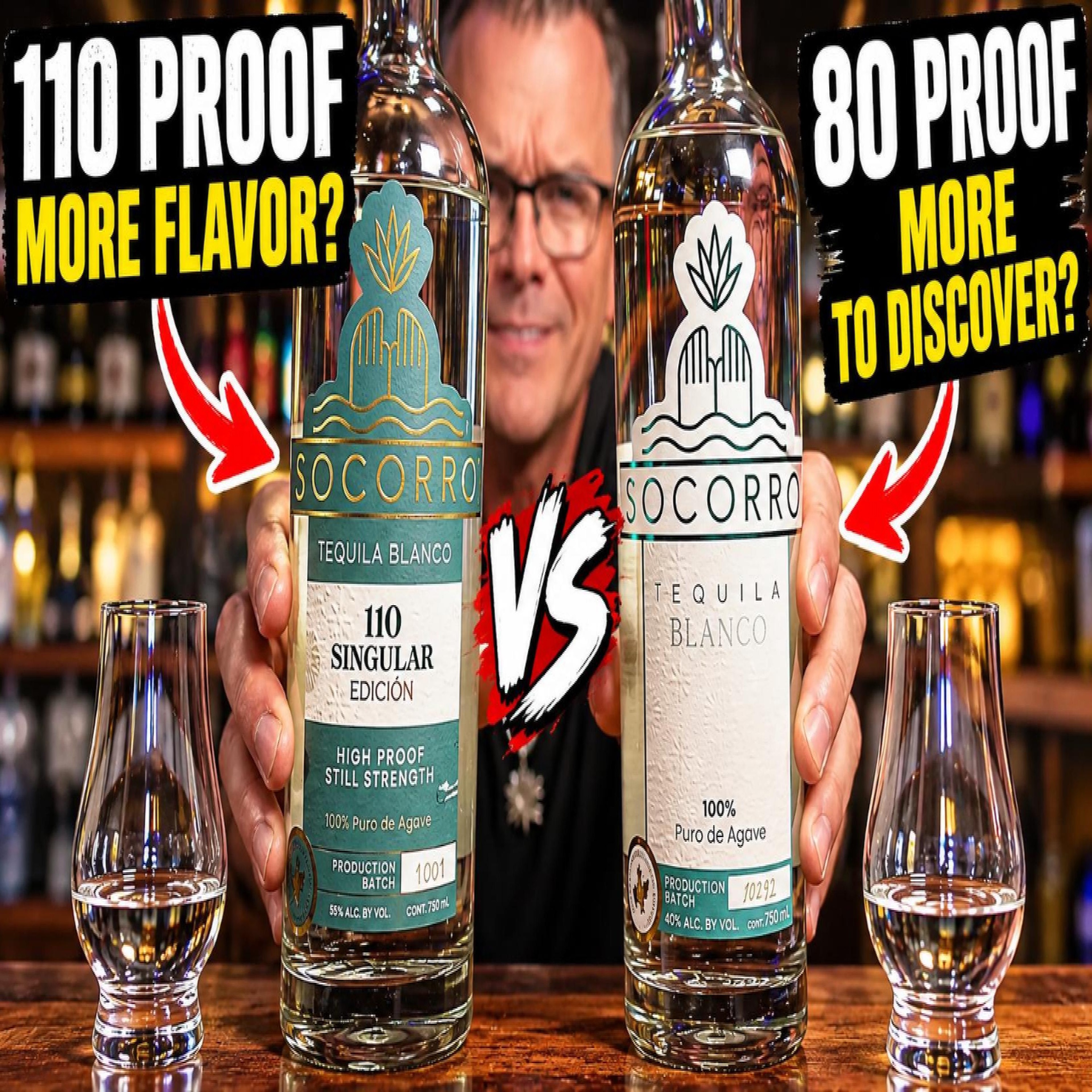
[00:00:00] Does 30 more proof actually make a tequila taste better? Or could adding some water make some flavors easier to discover? Today we're going to find out. I've got a pretty interesting comparison. Because these are two bottles of Socorro Tequila, they have something really important that are in common. The yeast during fermentation. I recently had the opportunity to interview Brian Ashcroft from Socorro Tequila. We spent some time talking about the brand and its production methods and the new Socorro Blanco 110 Singular Addition.
[00:00:27] After the interview, Brian was nice enough to send me the newest lot of the standard 80 proof, specifically because it was produced using the same yeast profile as the 110. And that got me thinking. I spend a lot of time talking about high proof tequila and if you've watched this channel for any length of time, you know I'm a pretty big fan of high proof blancos. But the higher proof, is it automatically better? Does it automatically deliver more flavor? Or does the water used to bring the tequila down to 80% allow some flavors to become more noticeable? That's exactly what we're going to explore today. Before we do that, I want to point out a couple of things. One, I really like this brand Socorro. They are doing some really cool things. Their brand is a brand that gives back to the community. But one thing that I really want to point out is they're always trying to make their tequila better. And if you go back to the early lots of their tequila or where they were produced in another nom, the tequila may not have fit into the aficionados flavor profile or the real traditionalist. As they moved and as they worked on making this process better, Pablo has really focused on making the tequila taste as good as possible. So I'm really excited about tasting this newest lot because the last lot I thought was amazing. So just give it up to the guys for working really hard to make their tequila always taste better. Both of these tequilas that I have in front of me are coming out of NOM 1610 in Arunda Salisco, right in the highlands of tequila country. They're produced using 100% Blue Weber Agave, of course, cooked in traditional masonry ovens, extracted with a roller mill and fermented in in stainless steel tanks without agave fibers. And there's something that I find interesting about Socorro. It's the fermentation process. They're incorporating both a selected yeast and a natural occurring wild yeast. And fermentation there takes approximately 96 hours or four days. Now why is that important? Because fermentation is Responsible for a lot more than just converting sugar into alcohol. During fermentation, yeast produces compounds that can influence the aromas and the flavors you eventually end up experiencing in the finished tequila. You, when talking about those fruity, floral aromas, all those characteristics that gives tequila its personality at different yeast strains, fermentation temperatures, fermentation conditions can produce very different results. That's why I think this particular comparison is interesting. Brian specifically sent me this lot to make sure that I had the same yeast profile. Now, that doesn't mean it came from the exact same fermentation or distillation run, but it gives us an opportunity to see how the shared yeast characteristics present themselves in the tequila. Now, after fermentation, Socorro is distilled twice using stainless steel pot stills with copper components. And that brings us to the new singular addition. Because it isn't just another tequila to high proof. It's bottled at 55% alcohol, or 110, which is the maximum strength allowed under the Mexican standard. In the interview we talked about it, this brand only used the hearts of the second distillation without blending any heads or tails back into the finished spirit. Now, if you're familiar with distillation cuts, when tequila comes off the still, the distiller separates different portions of distillation. The early portion is commonly called the heads. The middle is the heart, and the final portion is the tails. Each portion contains different concentrates of alcohol and flavor compounds. The decisions a distiller makes about those cuts can have a tremendous impact on the finished tequila. Socorro wanted this particular release to be just the hearts of distillation. And here's another interesting detail. Only 1,002 bottles were produced in the initial release, and the suggested retail is only $48. It's a pretty attractive price for a limited edition one, 10 proof. Now, one of the things that's really cool that they did on this, that is really special, is they provided all of the information of the cooking, the where the agave, how, how many meters the agave came from, what the average brix rate was of each agave, how much the pinko was shaved, and then their entire production method. And then they go back here and they tell you the date of the first distillation, date second distillation, and then only the hearts are used. And then you'll see this little green label here that's covered up. And they got this approved by the CRT to be able to put this on here. And what they did was they sent this to the lab and they got all of the Information about what the alcohol contents were in this bottle, showing you everything that's in here. But the United States government didn't like it, so they made them put a green sticker over it. And I was going to uncover it and put it here on the video, but maybe that wasn't a good idea, so I left it on there. But it's kind of crazy that, you know, here in the States, we didn't want them to be completely transparent on the bottle, and they forced them to cover it up. But it's pretty cool to have a brand put all of the information on the bottle. When they're putting it on the label, that has to be what's in the bottle, so they can't be blending or doing something different. So another great thank you to these guys is being so transparent. Okay, let's put these to the test. Let's start smelling and tasting. I've got the regular blanco here and the high proof here. Man, that's got a nice cooked agave note. There's a little bit of citrus. There's a. Almost a little bit of funkiness to it, too. Not, not a negative funkiness, just a nice, like, fermentation funk. A nice minerality. Almost like a, like, I want to say, like a dark chocolate note in there. Now, same funky note, but more cooked agave. Little bit more alcohol. That same citrus, that same fruity. The same funkiness is there. Okay, this is. This was just stronger in the agave nose, and there was a little bit more alcohol. Now when I blew in the glass, I blew some of the alcohol out. I got a little more citrus, a little more floral. Okay, let's. Let's taste them, and let's start with the regular blanco.
[00:05:51] Very floral. Wasn't expecting that from the nose cooked agave. That citrus is there. It's got a really nice sweetness, and there's a nice peppery heat to this. That, like, kind of builds as you taste it. It has a nice mouth feel. I really like the cooked agave and this citrus in the finish. That's got a really nice lime, maybe a lime and a little bit of orange note in there. Okay, let's dive into the high proof.
[00:06:14] Of course, A lot more heat. There's a nice cooked agave, really great sweetness, really strong mouthfeel. That orange that I got here is way more lime in this one. Not quite as floral. There's a what. What I said was a chocolatey note here is more dark, more.
[00:06:30] More cacao type flavor. When you go back to the blanco, it's got a lot of great flavors to it and some flavors that aren't in the high proof, but it almost feels like the watered down high proof version when you go backwards. So I would recommend, if you're going to do this, definitely start with a 41st and experience all those flavors that are there and then go to the high proof because the high proof overpowers it and makes, when you go back to it, makes the flavors not as recognizable. I have to say, I like both of these. I would definitely sip on them anytime. The high proof, I'm going to sip on it a little slower because it's 110 and I don't want to fall asleep at 7 o'. Clock. This one, I probably could have a few more glasses of it before my wife looked at me and said, hey, you've had too much tequila. So what a great experience to kind of taste the same profile back to back and get an idea of what those differences are. I definitely want to say thanks for Brian for sending me out this bottle and giving me the idea of doing this. If you haven't watched my interview with Brian, check it out on my YouTube channel. When it comes to blanco tequila, if you prefer a traditional 80, definitely gravitate towards this one. If you do like these high proof expressions and you can handle the heat and kind of dive into the flavors, definitely pick this one up. Especially at the price that they have it. What a great price for a great tequila. So now I want to hear from you. Have you had either of these? The Socorro, this one is going to be production batch 10292. So look out for that production batch if you want to match that up with this one. And let me know if you've had this super duper still strength tequila. I want to hear what your thoughts are on this one. I think it is absolutely fantastic. Great brand. They're doing a lot of fantastic things. So let me know your thoughts on Socorro. And you know, I just want to say take time to understand what's in your glass. The more you learn about how tequila is made, the more interesting tequila becomes. And I've got a couple tequilas to finish here tonight, so cheers. Thanks for watching.