Episode Transcript
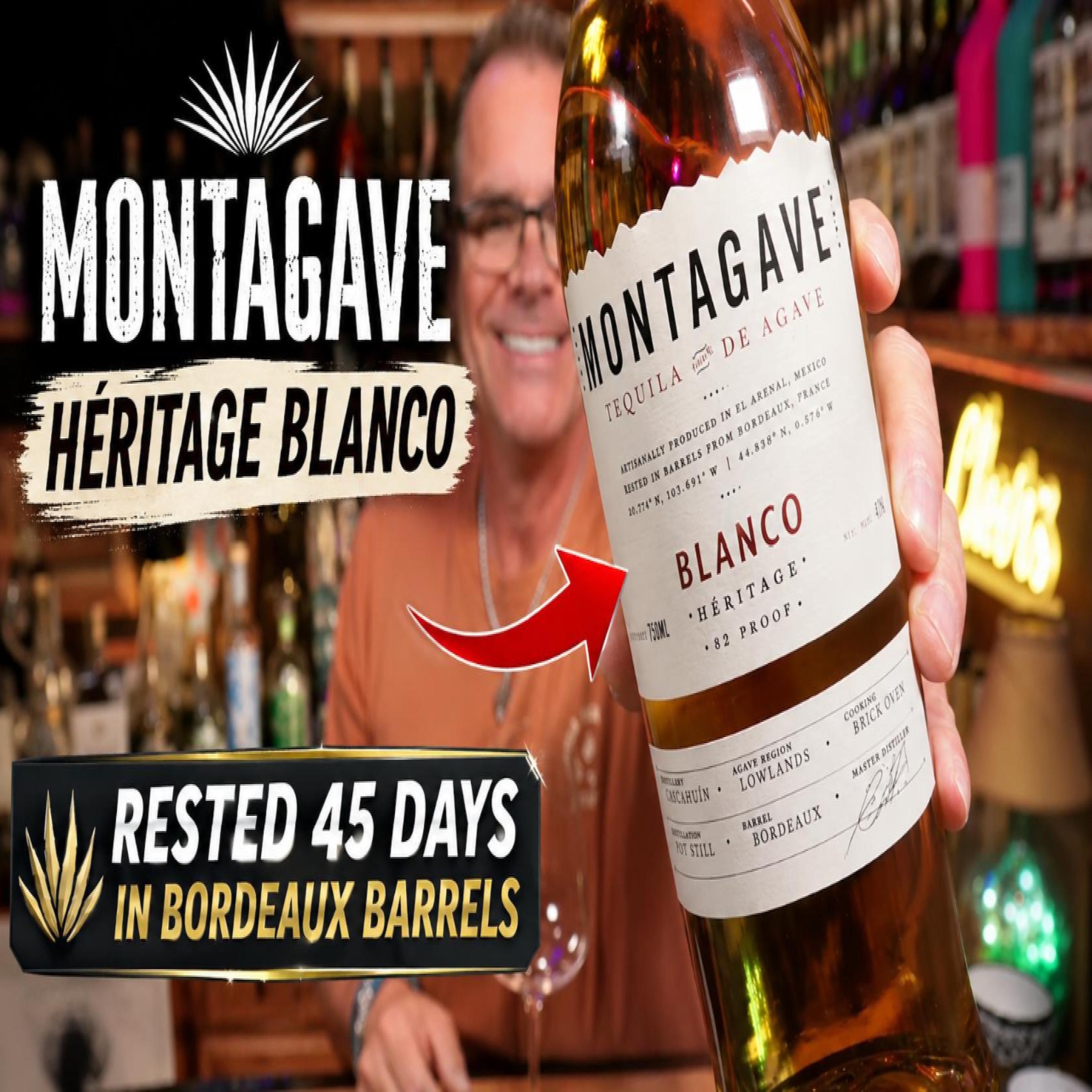
[00:00:00] What happens when you take a tequila that is made at one of my favorite distilleries in Mexico, rest it for 45 days in French oak wine barrels that once held Bordeaux wine? Well, that's exactly what we have with this Montagave Heritage Blanco. And the question I have is, does that wine barrel actually improve the tequila or does it take away from the cooked agave flavor that we're looking for in a really good blanco today? We're going to find out. Now, I actually had the opportunity to sit down and interview John Melvin, who owns Montegave, along with his wife Lucy. She. So if you haven't watched that interview, you really should go check it out because it's pretty interesting how the story even began and how this tequila became a tequila. Now, one of the things I really appreciate about what John and Lucy are doing is where they've chosen to produce their tequila. It comes out of Cascoine nom 1123 El Arenal in Jalisco. And if you've been watching my channel, you know I'm a really big fan of tequila coming out of that distillery. I probably have more tequilas on my shelf from that distillery than any other single distillery in Mexico. The Rosales family has been making tequila for generations, and they've got some pretty incredible production methods. So let's talk about how they're making this one. They're starting with 100% blue Weber agave, all from the valley of Jalisco. Those agaves are cooked in the traditional brick ovens for approximately 72 hours. From there, they go through the roller mill for extraction, followed by open air fermentation without fibers. And then the tequila is twice distilled in stainless steel pots with copper coils. Now, it's pretty traditional stuff. Here's where they get interesting. John and Lucy are sourcing French oak barrels that previously held Bordeaux wine. And. And instead of aging the tequila for months or years, they're only resting this one for 45 days. How's that a blanco, you ask? Well, anything rested under 60 days is still considered blanco. They are using a combination of first fill and second fill barrels. So the first fill barrels are going to contribute more of that wine character, while the second fill should let a little more of that agave come through. Now, there's something else I think is really cool about this bottle. They've actually printed two sets of GPS coordinates on the front. One takes you straight to Arena, Mexico, where Cascawine produces the tequila. And. And the other one takes you to Bardo, France, where those wine barrels come from. I think it's a pretty neat way of connecting the two places that make this tequila what it is. All right, now let's put this tequila in the glass. Now this is a first pop. I'm pretty sure this is going to be a fantastic tequila first pop or not. So there we go. And look at that color there.
[00:02:16] Remember, this is a blanco. So the color is coming from those Bordeaux barrels, and it's kind of a tan almost, a little bit of a pinkish hue in the light. So really great color. This particular bottle is lot 8, hundred and seventy two, and we're bottled at 41% alcohol, so 82 proof. So let's. Let's go ahead and get a nose on this one. Okay. Signature cascoine. Nice minerality, but there is a really nice, fruity floral note to this one. Almost like a stone fruit. There's a little bit of honey there, and I love the minerality. And there's also a light vegetable note as well. Can't wait to taste it. Let's go.
[00:02:51] I'm thinking about the Monte Gave showcase repo that I just reviewed not too long ago, how it's so rich. And this one is a lighter version of that one. All of those cooked agave, stone fruit, red fruit type notes. That honey that I picked up in the nose, it's. It's right there in the flavor, that minerality of Casca Ween. But the. The finish, it just kind of dries out and gives you almost like that tannin wine barrel dryness in the back of the mouth. And the flavors just kind of hang on there. That fruitiness, that coat, agave, that minerality. Little bit of a vegetal. A vegetal note in there as well. This one's pretty complex. I can't wait to let it open up and taste it even more. This. This is a fantastic tequila. One thing I was paying attention to when I went into the flavor is that looking for that wine influence, that Bordeaux wine note, and those tannins. I definitely got it there in the finish. 82 proof. And I gotta tell you, this is like drinking a regular 40. It doesn't seem like it's a little bit higher at all. The alcohol really doesn't have a huge influence. I don't get alcohol in the nose or in the taste. The finish, it's still going on. I haven't had a second taste. And if there's just a little bit of vegetable heat that's just kind of hanging around there, this is one definitely to check out. I really enjoy getting to know John. It's been a long time since I've been talking about tequilas and to finally get to meet him in our interview is really fun. So if you haven't got a chance to watch that, it's pretty cool. Montegave is doing some really, really impressive things with their tequila. They're taking that traditional method and doing some cool things with wine barrels. And for me personally, I think tequila does better in French oak than it does in American oak. In a lot of cases, it really comes down to what you like in your glass. So let me know. Have you tried the Montagave Heritage Blanco? I'd love to know what you think about it, if you have, and what you think about the influence of Bardot barrels versus American oak and old whiskey barrels. And if you want to learn more about Montagave, go check out that interview with John. Cheers. Hope you're having a fantastic night.