Episode Transcript
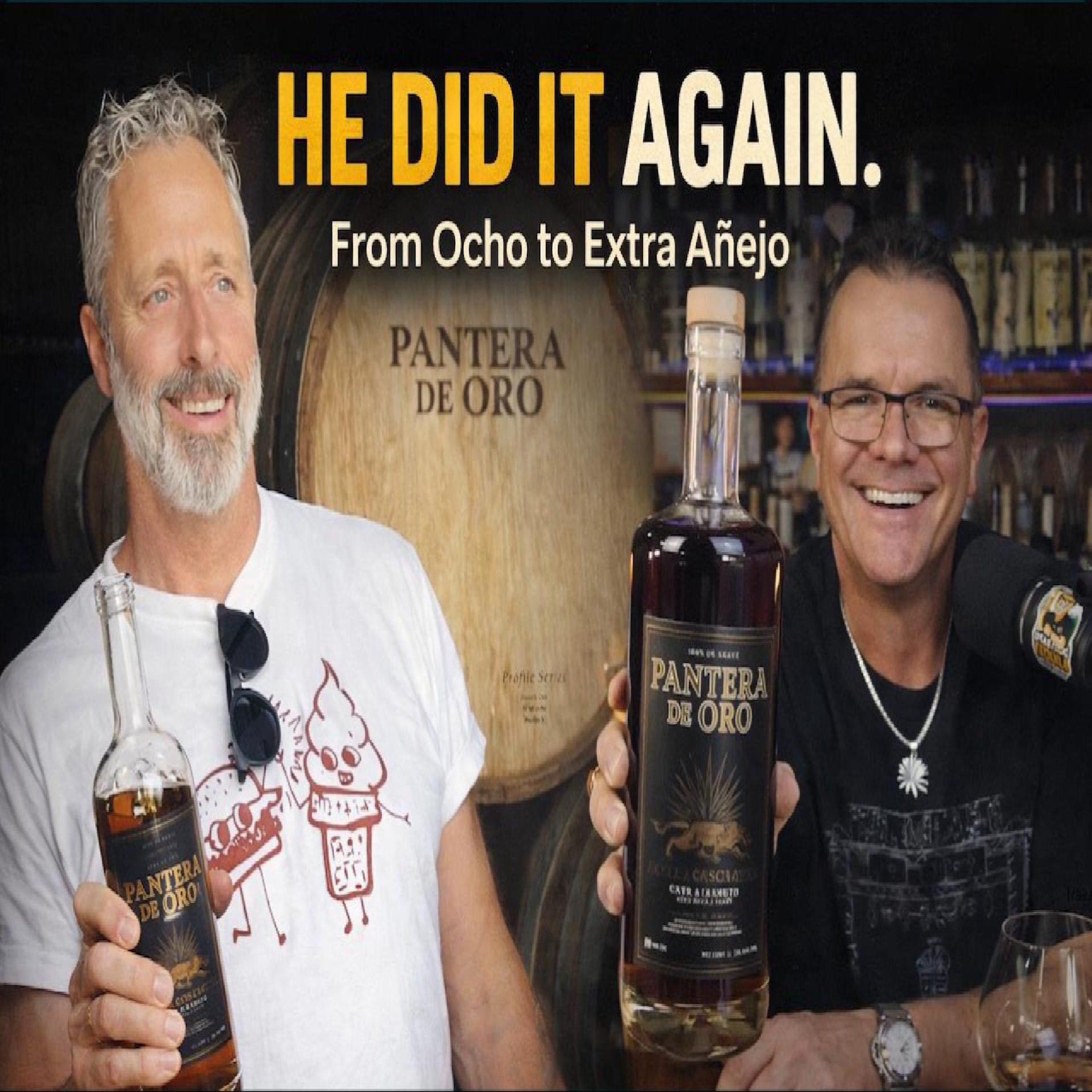
[00:00:00] Speaker A: Today we're going to go on a trip through time with tequila. A little bit here. We're going to talk to Scott Beard, one of the owners of Pantera de Ora Extra Anejo tequila. This scored really high for me in a tequila matchmaker extra anejo blind that we just did. And I didn't know anything about this tequila. And if you don't, you're going to learn about it tonight. Stick around. This is a great interview.
[00:00:22] Speaker B: It's tasting tequila with bread.
[00:00:32] Speaker A: Talk about this new, amazing tequila, Pantera de Ora. And I'm here with Scott. How are you doing this morning?
[00:00:38] Speaker B: It is this morning. I'm great, Brad. How are you?
[00:00:41] Speaker A: I'm doing fantastic. And whenever I get an opportunity to start drinking early in the day, that always makes me happy. Tell everybody who you are so they can get a grip on where we're gonna go in this interview.
[00:00:52] Speaker B: Oh, boy. Let's keep it tight. Who I am. Well, my name is Scott Baird, Bay Area native. I've owned two bars in the Bay Area. Still do own one called Trick Dog. Made my career making very fancy cocktails. Fanciest of the fancy. Got to spend some time doing the world's 50 best sort of situation. It's not a humble brag. It's just the truth. I did. I did get on the World's 50 Best list, and five times I was a bridesmaid at the James Beard Awards. I didn't win, but I got to stand there in a tux and hope for the best. So that was cool for. For my bar, Trick Dog. My very first job in the bar industry was at an amazing place in Berkeley called Cesar. And it's next door to a very famous restaurant called Chez Panisse. So if you don't know that restaurant, you do actually know that restaurant. Like, the reason that there is local farm to table food is that restaurant. Wow.
So I happened to work next door to it at a really great Spanish tapas bar, and the guy that ran it had incredible taste. So back in 2004, this place had maybe the premier spirit selection on the west coast. So lots of bartenders from San Francisco would come in to taste the things we had. And he was a really great educator. And I fell in love with the brand called Altasoro. It was in a round bottle that time with a really nice subtle paper label. I don't know, it just was so much better than all the other tequilas. I just couldn't get enough of it. And then I got my first job in San Francisco. And the guy that hired me was using Altisoro as the house pour in the well.
And it was. I was like, well, this is pretty cool. And I reached out to the Southern wine and spirits guys. This is before Simon Ford, you know, if you know Ford's gin. Simon Ford was maybe the first brand ambassador on the planet that really made a splash. These things didn't exist in San Francisco. And I asked these guys, can I work for El Soro? I just love this tequila so much. All I want to do is go out and tell everybody how great it is. They laughed at me. You're a bartender. You're an idiot. No one's going to hire you to go do that. We all know how that changed. Yeah, so I was ahead of my. My time there. Um, and then, you know, things just snowballed, and I. I went from that restaurant to owning my first bar and then my second bar.
In the interim between my first and my second bar, I had a serious delay because of a terrible landlord, and I had the opportunity to launch Tequila Ocho in the United States on trade. So my partner and I and a couple of ambassadors in select cities started launching Gil Ocho, which, as we all know, is essentially El Tesoro. Right. So same family, same everything, same distillery at that time.
And so I was kind of living my dream. And then at that point, we went from three ambassadors, six ambassadors, to finally 12.
And then I was fortunate enough to get sort of headhunted and picked up, and I helped create a brand called Ancho Reyes with the guys from Casa Lumbre and then helped create the Ancho Reyes, the green version, and then the Alba Solo, the Nixta, worked on the Las California Gin. So I was working in Mexico with frequency. I'm working on Tequila Ocho and I'm working with the Casa Limbre guys on those brands. We're. We're compressing a number of years now and a lot of experience in a short time for a conversation. I was flying to Europe on behalf of Casa Lumbre, and I was educating and doing seminars and cocktails all over Europe for. On behalf of Mexico and Mexican spirits, which was really cool. It was. It was a really good time. And, you know, it's nothing like standing in front of 300 guys in Moscow. And ladies, the Moscow Bar show, and talking about what it is like to be in Mexico, because your average Russian has not been to Mexico. So it was a fun slideshow to show and conversation to have. So that was a huge part of my life. And then, yes, if you fast forward enough, pandemic comes, you know, the world shits the bed and I'm on hold, right? I got, I've got my youngest son at that point. He's a year and a half. I'm not in the bar world at this moment. I'm not going back and forth to Mexico. I just really slowed down and it was, was wonderful. And about a year into the pandemic, I got a phone call from a friend who sells a lot of cheap wine to Costco. Okay? So Costco put out a bid. They wanted to replace their anejo. That's how it started. And this guy who usually sells Costco wine got the chance to bid the tequila. So it's usually only five or six people get the chance to bid. And so he knows and he would admit this. So I'm not outing him. Literally nothing about tequila. It's not his world, but I do. So he asked me if I would help him and I said, great, buy a ticket. Here I go. So I went down to Mexico and started kicking tires on trying to find a large amount of anejo.
I found it, submitted it, didn't win the bid. And then two weeks later, Costco puts out another bid for the Blanco. The Blanco. 600,000 nine liter cases, year one. It's an obscene amount of tequila. This is a different world for me, right? So I'm now going from my good friend Felipe and Carlos Camerona, the little guys, you know, the small guys like Chava, right? Or going down to say what's up to Stephano at Fort Hela, where I'm. I'm in the, in the most craft. Craft distilleries that exist to going to distilleries that do 160,000 liters a day, like incredible volumes of tequila. And they don't know who I am. And I'm not telling them. They just think I'm Scott the tequila broker, not Scott the bartender, craft tequila guy. Because had they known that, they probably wouldn't let me in the door.
[00:06:47] Speaker A: They wouldn't want you to see what's behind the curtain.
[00:06:49] Speaker B: They didn't. They don't want me to see how that sausage is made at all. Definitely not. No, no, no. Because it's not cute. It's not cute at all. It is. It is a. It looks like going to an oil refinery. I mean, they're. They're massive industrial distilleries, right? All the bad words, you know, diffusers, column make all the bad words.
[00:07:08] Speaker A: Yeah.
[00:07:08] Speaker B: So. But that's how you make tequila. For 17.99. For a 1.75, there's no way you can't.
So it's just the game, right? So I'm. I'm being exposed to a whole different side of the business in that process. My friend Sergio, who owns Don Fulano, introduces me to a guy who he grew up with. He's known since like, you know, junior high school. And this guy has helped him broker a decent amount of tequila. So this guy and I go bopping around looking for samples for Costco, but in the process of driving around, because I don't, you know, when I go to Guadalajara, I just rent a car and drive. I don't get a driver. I don't take car. I just do it. So I just drive. So we're on long drives to the highlands or over to Tequila Town or whatever it is, and he plants a bug in my ear. And he shows me a picture of a warehouse full of barrels. And he said, what do you see?
I was like, I see barrels. Tequila in barrels. He's like, no, no, this is a bank. I was like, ah, okay, I get it. I see what you're saying because I. I remember early in my career when I worked at Cesar, the guy that ran the program was Basque, French. And he would always say that. And you know, in France there's not like a. You don't have a retirement plan. You just have barrels of Armagnac. You know, you just stow a barrel every year. And that's the thing you would sell as you got older. So I kind of understood logic. So this guy convinced me to gather resources from 10 of my friends. We put together around $200,000 and we bought Blanco at the height of the agave prices. At that point, I think they were like 34 pesos. For a kilo. So. And we're making this tequila with a combination of autoclave and oven with stainless steel stills.
So that's around 7 pesos on average per liter. Sorry, no, 7 kilos per liter.
Which you can kind of do the math, but it came out around, you know, $7 or so a liter. The good idea was the people that we were buying the tequila from, they were a feeder house to Diageo. Diageo was consuming massive amounts of tequila. We're having a very frank conversation. I'm just calling it telling you like it is. So Diageo's consuming massive amounts of tequila. We're going to sell it to them as in yeho, in one year. It's a great come up. It's a. It's actually a really awesome thing. It's better than bourbon, it's better than scotch, it's better than rum. You know, you put tequila in a barrel and one year later it's in Yahoo. And you sell it bulk and you. You make a pretty nice profit. That was the year that the whole thing fell apart. And the inventories were massive. The pandemic had stopped. People weren't drinking as much. Everything had slowed down. You know, what we know now and what we didn't know then is that Diageo and many other people were cheating, as we know, from the lawsuits, and they were putting a bunch of fake shit in their tequila. And that's why the volumes were so high. But that's a digression. We could talk about that later. Cause I know everything about it. So it goes one year, can't sell it two years, can't sell it three years. You know, we had all put in our money. It wasn't money that we couldn't afford to lose. But I wanted to give my friends their money back. You know, just. I was feeling badly, wanted to get their money back. And so I reached out to a very good friend of mine who, before he left, was about as high as you could get in the third biggest distributor in California, which is saying something, because California is maybe the largest liquor market on the planet. I reached out to him. He's my partner now in Pantera. And Craig and I went down to Mexico and we went to the distillery, Los Valores. And we tasted all the stuff that I'd laid down in barrels. And that evening, we were at my favorite bar in Guadalajara, El Gallo Altinero. And we're hanging out, and we're getting a little buzzed up. And he was like, I can't sell this bulk, but I can sell it if we create a brand.
And I was like, okay. And so he said, give me some names, you know, so top of T0110 and conversation goes. And I wrote down four names, and one of them was Panteradoro. Now, I just thought it was fun, a little bit silly.
Had the ability to kind of fall in. I could immediately see the label. It's not finished, but that's another story. I could see the label in the way that I see the Tapatio label, which is one of my favorite labels. And it's like, if, you know, you know, kind of labels. I love those labels. You know, I don't. I don't need you to tell me your premium because you paid Stranger and Stranger, $150,000 to do your bottle. I kind of love it that you inherited it from your grandparents, but you make a really great product. Like, those are great labels.
I love those labels.
I could kind of see that even in that night, writing it down. So Craig said, great, that's the one. We go home. We knew it was going to be either 49 or 53. Right. Percent alcohol. We knew it was going to be a higher proof. 49 is very good, but the 53 is better, which is what's in front of you right now.
And so we sent out samples.
It's like. It's like dropping bait while trolling. You know, Craig sent it out to eight or nine different large retail outlets. And like, when I say large, I mean like bev. Mo. You know, it's called grocery outlet statewide in California. You know, places like that. Even Trader Joe's got some. You know, when you drop a hook into the water, you don't expect to catch Jaws, right? And you do. And we caught Costco.
[00:12:45] Speaker A: Wow.
[00:12:45] Speaker B: And they put out an order. I was at Tales of the Cocktail. Uh, end of July.
I also have another thing where I. I make a pickle beer. So I was there, you know, handing out pickle beer to everybody at tails, the cocktail and having a good time, and I get a phone call. Costco wants 1600 cases.
Wow.
We have until October 1st.
[00:13:07] Speaker A: That's fantastic.
[00:13:08] Speaker B: Yeah, it's. And. And I. And I just told Craig. I was like, just say yes. I was like, we'll figure it out. Because the logistics on this are. I don't know. They're like Everest at this point. Like, getting that much tequila Mexico, in that short amount of time legally is. That's not going to be an easy task. So then it began. Clock starts ticking, right? We had to find bottles. So we had to find a liter bottle that somebody had in stock. Because right now, glass is still.
It's not the shortage it was during the pandemic, but it's still not as easy to get as you might think. So luckily, Saber Glass, which is a French company, outposts all around the world. They've got factories in Mexico. They have the bottle in front of you. The bottle in front of me. And it's a nice standard operating liter bottle. Nothing special about it, but it holds liquid. It's a liter. It's not anything other than a glass vessel. Right? So that's where we're at. We have to find a closure. We find this cork. We have to find the plastic that goes on the Top. These all seems like trifling things, but they're not. You gotta. You gotta find all of these things and then you gotta get your label done. And so that point, like, we're working on the label, but the label. I hope I don't get in trouble for saying this, but I'm going to say it as delicately as I can. Label process takes a very finite amount of time.
[00:14:24] Speaker A: Yeah.
[00:14:25] Speaker B: Unless you're willing to open up your wallet and facilitate things going faster. Well, can we leave it at that?
[00:14:34] Speaker A: Yep. Yeah, we. I think everybody will pick up what you're putting down.
[00:14:37] Speaker B: In Spanish, there's a word called mordida.
It means little bite. You know, when the police pull you over and ask for your ID and say, you can go if you, you know, facilitate this for me. That's called a morita. Right. So I had to pay a couple of those to get the thing into the tunnel and out of the tunnel. So the label isn't. I would say this label is a draft. It's 65% there, and I'm fine with that, but that's. That's as close as we can get it. We would have chose different paper.
It would have had a different feel to it. This is where we were, and Craig was like, scott, I'm sorry.
I was talking about the front paw on the panther. And he was just like, dude, there's no fucking time right now. We have to get this thing. Yeah. He's like, the paw is fine.
I'm over there articulating the muscles in the forearm of the panther and thinking about all these other really, really fine details. And he said, there's no fucking time, man. We gotta go.
Go, go, go, go. And I'm glad that I listened to him. So we. We did go, go, go. And, I mean, the month of September was maybe one of the most stressful months of my life just going down. I spent more than half of it in Mexico, just making sure that my partners in Mexico could push this thing to the border on time and get it across.
So that happened. We. We made the deadline, and then it hit the airwaves in Costco. And so in the process of getting it there, you know, I'm fortunate enough that, like, you know, my relationships run pretty deep in the tequila community. So we sent out a number of bottles to friends to taste and sample and give their opinions. And, you know, we're not.
We're launching a tequila brand. And there's nothing more in this world that I've wanted to do than launch tequila brand that is mine, that I'm in control of. Sure. Would I have launched a extranejo? No. No, I would not have. No. Everything that's happening right now is about as backwards as it could happen. Everything is in reverse. But this is where I am. And so I'm. I'm doing it, and I'm. I'm enjoying the process. And so I have all these friends all around the planet. They're all excited to taste the tequila. I have great relationships inside of Mexico helping me get this done. And everybody knows that. That knows me knows that, like, you know, this tequila is. Is wonderful. It is a great tequila. Is it what I would have done had I had, you know, a couple hundred thousand dollars? I could have just started from scratch and done it the way I wanted to from the beginning. No, it's not. But you know what? That's the best thing about it. It's like that life doesn't do that. Like you. You get what you get in this world. So this is what I got, and this is what I did. And without Craig, I couldn't have done any of it because he's the one that facilitated us getting it into the world. All I could do was make all the relationships in Mexico happen. I didn't have the power to sell the volume that we just got into the Costco flow. So Tequila now has been touched by a lot of influential people such as yourself, and they're all saying really nice things about it.
And that's been the, I think, for me, the most cool thing, because, you know, there's the next bottling of this, I would say is better. So the tequila actually is going to get. It's going to get better for sure. We were forced when we laid down the first amount of tequila. We're not forced. We were just laying it down. I was looking for used barrels. Like, I. I come from the Camarenas, right? If there's anyone that informed me, it's Carlos and Felipe, and maybe Felipe even more than Carlos, because I've spent a lot of time with that man.
Very nearly was a early owner of G4 and would have launched it in the United States, but our big financial partner backed out. I've been to Pendio since Pandio. Didn't even work. Like it was being built brick by brick. And I was there seeing it. Cheers. Al should join you.
[00:18:28] Speaker A: It's so good.
[00:18:30] Speaker B: I have myself a little 9am tequila perfect over here. This rainstorm in California, so my exposure is to heavily used. Heavily used barrels. And so when we laid down the initial lot, it's equal parts American and French and first and second fill mostly. But as we, you know, after. After the first three, four or five months, we laid down a second half of the tequila and I was able to collect fourth, fifth fill barrels. Kind of like the thing that beat us in that agave matchmaker tasting the alta soil.
[00:19:06] Speaker A: Yep.
[00:19:07] Speaker B: The barrels are used like that, so the color is slightly less dark and the agave is more prevalent. Very much still like this, which, what I love about this is that no shade on American oak, but I prefer French oak. With tequila, I think it's better. I do. I always have. And this is drinking to me a lot like an Armagnac. To go back to that we mentioned earlier, full circle, like. Or a brandy, which it's great because tequila was always called a brandy way back. Way back when. So it does have a brandy like quality, which I, I very much appreciate.
And in the, in the next bottling or, or two, there'll be a little bit more agave and the wood will be a little bit more integrated, but still the same character. So. So that is the story of the Pantera.
[00:19:53] Speaker A: That is fantastic. Let's slide back to that Tequila. The agave matchmaker. Tequila matchmaker blind. Since it went out to a lot of people who are enthusiasts, do you think that all of us seen that super light color and the only one in the tin had one that looked like a very light age repo? We all were skewed to think what that one was, and it ended up rating higher because 100% exists.
[00:20:17] Speaker B: 100%, yes. Yeah, yeah, yeah. 100%. Like, I mean, I, I saw last year's agave matchmaker. It was the tequila matchmaker at that time, the Agavas Awards. I was a judge, you know, I, I'm a judge at the San Francisco Spirits competition. A do this for a living. I, I'm the same as you guys. So if I were to receive that list of 20, I would have done exactly the same thing. And I'm sure that if I had had that tesoro in front of me, I would have known immediately what it was or at least who it came from.
[00:20:45] Speaker A: That's where I was like, okay, this. This is a camarana, and I just don't know which one. And I, I really felt like it wasn't in the G4 family. I, I was kind of leaning towards Carlos and. But not knowing, you know, it could have been an ocho, it could have been an altisoro. Yeah. You know?
[00:21:02] Speaker B: Yeah. And I Haven't tasted that tequila in a minute.
[00:21:06] Speaker A: Yeah.
[00:21:06] Speaker B: Like I would have been right there with all you guys. Right.
100. Like, one of the things that people do say to me is, well, and a lot of color on that. And the thing I could say about it is the, I don't know how many distillers you've been to. I've probably been to about 150 down there.
There's 220 total.
Like 220 roughly. I think I've been to about 150. So everybody's bodegas are different. Right. You know, if you go to Ciate Leguas, they have a cave. It's down, it's cold, it's, it's more humid, it's, it's more climate controlled. If you go to G4, same thing. He's got his stuff down into the ground. But there are a lot of barrels sitting in corrugated metal warehouses that are not climate controlled. And they're just sort of ambient. Ambient. Guadalajara is 85 degrees. Right. Right. If you take the. So in some ways it's like a Caribbean aging where, you know, I, I done, I did some work with rums and I was in Puerto Rico a decent amount working with Don Q Rum and you know, understanding that, you know, three years in a bodega and Puerto Rico might as well be seven years in Kentucky.
[00:22:18] Speaker A: Right.
[00:22:18] Speaker B: And everything's, it's all, it's all happening much faster. So I don't think this is quite that. But it is a much more compressed wood timeline than would be in some of the more climate controlled aging warehouses that I've been to.
[00:22:35] Speaker A: Yeah. So even in that, that, the tasting that we did with the tin, this one stood out so much that it won for me in second in taste, second. Second in nose, first in value. And my score.
[00:22:48] Speaker B: Oh, in value, no one can touch us.
[00:22:50] Speaker A: 2, 750.
[00:22:52] Speaker B: Yes. I, I mean, I don't know. Taste it side by side with the tears of your honor. It, it stands up right there next to it a hundred percent. And, and, and, and honestly, in terms of color and, and wood, they're very comparable, you know, and that's a great tequila. It really is.
We're right there with it. So, you know, this, this is one of those if, you know, if, you know, kind of, kind of situations where I don't think that it'll price like this forever.
[00:23:19] Speaker A: Sure.
[00:23:20] Speaker B: I mean, we'll try and keep it at the value or as close to the value as we can. But you have to remember this tequila was born out of the desire for me to get my friends their money back.
[00:23:32] Speaker A: Right.
[00:23:33] Speaker B: Because I wanted to be a good friend to the people that believed in me and supported me.
And the only thing I was thinking about was getting my friends their money back. Maybe with a little profit. Sure, maybe. But at least getting their money back.
[00:23:46] Speaker A: Right.
[00:23:47] Speaker B: So the driving force was to take what we had, which I think we now all agree is very good. Getting in a package, getting it to market, getting that money from somebody, and then me being able to give that to the people that supported me. And then from that moment, you know, it's like. If you think about it like you're. You're launching a ship, putting something out to sea. Right. I think about this as something that's been put out to sea. There are yachts in this world. There are warships. There are little sailboats. And this is a dinghy in terms of. It's a. It's a very flavorful little dinghy. But this little tiny boat got put out to. Out to sea on the thinnest shoestring you could. And with a lot of good relationships that I have and a lot of goodwill, it's. It's getting well received, which is my favorite thing. And my friends are all stoked on it, which is rad. Like, I've been to a couple of agave showcases, you know, Mexico in a bottle, and we were down at Good Juice in Austin. And the people that I really respect are saying nice things about the tequila. And at that point, I think that I feel Pantera is successful. You know, you saying what you said, you're saying giving us second place and putting us right there at the top of that standing. And that was a blind tasting.
[00:25:01] Speaker A: Yeah.
[00:25:01] Speaker B: You know, I love if you read the. The Matchmakers blog post, blog post, it.
Pantera to who is what he says in the paragraph about, you know, it's like we're, you know, under. It's like a great underdog story, right?
[00:25:18] Speaker A: Yeah.
[00:25:18] Speaker B: Which.
[00:25:19] Speaker A: The guy that came out of nowhere, you know, that's what was kind of cool about it.
But now, hearing your history, you're not the guy that came out of nowhere.
[00:25:28] Speaker B: No, I. I am not the guy that came out of nowhere. I am. I'm definitely in the. In the shadows of the tequila world. I have lots of really, really wonderful friends, and my friends just happen to be the best tequila makers in tequila. So I. I'm pretty lucky, you know, so. And that was the craziest thing about going down for that Costco run is, you know, Under. Under some subterfuge and some camouflage, talking about myself as like a tequila broker, not as the Mr. Fancy Cocktail Tequila guy. Man, I saw some shit. Like, I've seen it. I have seen it. I mean, four years ago, my conversations, like, my, My conversational Spanish is pretty good. Like, well, I'm not gonna. I'm. I'm gonna have a translator if there's a contract involved, but I'm. I can hold my own.
[00:26:12] Speaker A: Sure.
[00:26:14] Speaker B: Lots of evenings sitting around drinking and having tacos and talking about the state of tequila.
You know, Diageo, I know you're scary, scary company, but you can go. And. Because you have been lying and cheating your way through so many different things for so long.
And, you know, I've known about that for four years.
Like, it's not. It wasn't a surprise to any of us.
It was just. It was just finally somebody, which I love. It was like a bartender and a shop owner and a restaurant owner that had the balls to throw that lawsuit into the world. The first one.
[00:26:46] Speaker A: Yeah.
[00:26:47] Speaker B: Like, they were. They're kind of my heroes. I got to meet these guys because, you know, Diageo, they're old school gangsters. They're not cool. They don't do good business, and they've done bad things for tequila. Right. And they caused the agave crash. The reason the prices crashed is because they falsified how much agave they were buying. And then the growers grew more than was necessary and now the growers are pissed. So nothing scarier to me than a pissed off Mexican farmer. They are going to, like, those guys are not happy and they're. They're out for some blood right now. They. They take it real serious. So my, My experiences in this whole tequila world have been so deep and I've been, you know, I haven't. It's just. It's just like. It's just a part of my life, you know? Like, I suppose if I was. If I had more ambition like you, I. I would. I would maybe have a bigger presence. Like, I would have a wall of tequila behind me and I would stand on a camera and talk about it. Because I do like talking about tequila skill. I love it. But it's just, you know, I just kind of hang and do the thing that I do, you know, I'm lucky enough that I.
I'm on the. I'm on the inside with, with I think the cool kids.
[00:27:58] Speaker A: Yeah.
[00:27:59] Speaker B: And I, I'm. I'm pretty keen to. What's going on, you know, I know that My friends in the industry are, are rooting for me on this. They know the story, they all know that. Like, right now I'm in the process of going to go down and making a, making a blanco this winter.
[00:28:14] Speaker A: Okay.
[00:28:15] Speaker B: And that was going to be the.
[00:28:16] Speaker A: Questions I was going to go next is, are, are we going, are you going backwards in this business? Are we going to go, yo.
[00:28:22] Speaker B: Yes.
No, I am.
[00:28:25] Speaker A: Love it.
[00:28:26] Speaker B: Yes. You know, I am. So. And it'll be simple. Like, it'll be added to free, period. It'll be from the best agaves I could source, period. Like, we'll go, we'll work off of, of bricks and terroir on that. And then it will be either still strength or barrel strength, depending.
[00:28:45] Speaker A: Right.
[00:28:45] Speaker B: Those are, those will be the, the values of the brand. Right. I've always liked the barrel and the still strength teals the most. I mean, if you go to Felipe's house and you're hanging out with him, his personal repo that you're going to drink at his house that he pulls out, that's his favorite, that he keeps for himself, there'll be barrel selections that he pulls between 107 and 110.
[00:29:07] Speaker A: Wow.
[00:29:08] Speaker B: And that's the best tequila I've ever had in my life. It's. It been in a bottle commercially, never. It's the best tequila I've ever had. And I've known for a very long time that higher proof tequilas are where it's at. It's just, you know, proof tax being what it is. And then there's just sort of the industry standard, so people kind of just all follow the, the, the herd in a lot of ways, toe the line. Like, they don't want to step too far outside of it. But it's happening now. And so we won't be unique in that at this point. I mean, I would have loved to have been two years ahead because I think we would have been more unique. But now I'm really happy that you know that that's what's happening.
[00:29:45] Speaker A: You're going to stay at the same distillery that you're at now, too.
[00:29:48] Speaker B: That remains to be seen. That remains to be seen. That remains to be seen. I'm very fortunate that I have options. And the thing that I, the thing that I want is, if not total control, at least collaborative control. You know, I don't, I don't need to be tequila master explained. You know, if you take mansplained and turn that into like, yeah, I know how to do this. I understand the process I know what I'm going to want out of my final profile. I know how I'm going to want the production to go. I know, I mean, every single one of the elements. I already see how I'm going to want the. It's going to. From. From the field to the bottle. I know what I'm looking for.
And then inside of that person, the maestro tequila that I end up working with will offer me some refinements, I'm sure. But.
But I have my recipe.
[00:30:36] Speaker A: Right.
[00:30:36] Speaker B: I have my.
My marching orders personally, from what I know and what I've seen and what I understand. I mean, you know, if you get to go to Casca Wien and Fortaleza and Cieta Leguas and Altena and see what everybody else is doing, those guys are all doing.
[00:30:53] Speaker A: Yep.
[00:30:54] Speaker B: And then you can absorb that and synthesize that and process that in your brain, you've got a pretty good blueprint for making good tequila.
[00:31:02] Speaker A: Yeah. And I've been to each one of those, and, you know, each one's uniquely different, but also you can find a lot of the same within that. Uniquely different. Yep. So as a. As a real tequila enthusiast and connoisseur, if you were going to pick a tequila and you were going to pick it by production method to drink, what. What tequila production method gives you the best flavor for what you like?
[00:31:26] Speaker B: Well, all right, so enough for me personally, it's highland agave. It's in that Camarena ripeness where it's starting to get bruisy and purple and sometimes even fermenty in the fields. It's going to get a tahona. It's going to ferment in open wood tanks with natural yeast. It's going to get distilled slowly. It's going to have.
For the water, I mean, you know, talk about Felipe and his rainwater, and it's amazing, but it's just a good, clean. Well, you know, a good, clean, volcanic, deep highland well is going to give you a wonderful water source.
And then, you know, copper stills.
Don't.
Don't rush it.
You know, you want some. Want some good refraction so that there's. It's sort of working into itself and developing the flavor. And there's. There's a slightly wider cut, which the Camarenas do, which I like. That's why their tequila is so agave forward, because, you know, we're talking about percentages that are single digits, but allowing a little bit more heads and a little bit more tails into the final cut. You End up with so much more expression of the agave. I would work into that. I would lean into that. So you know your standard, no offense to the basic bitches of the world, but you're.
[00:32:42] Speaker A: You're.
[00:32:43] Speaker B: Your basic bitch is not going to necessarily love my tequila, but you are.
[00:32:47] Speaker A: Yeah, I was going to say you're.
[00:32:48] Speaker B: Going to love my tea.
[00:32:48] Speaker A: Where can I get that bottle?
[00:32:51] Speaker B: Yeah, you're going to love it. And it's going to be. Right, it's going to be somewhere between 107 and 110 proof. And it's going to be. When you crack it and you pour into the glass, it's going to be exploding. There'll be a lot of olfactory. And then you're going to taste it, and it's going to. You know, for me, I taste. It's. I have a funny thing where I have synesthesia, where I see colors when I taste.
But my favorite. My favorite, favorite, favorite blancos end up having, like. The best way I can describe them is they taste like the color fuchsia. It's just rich and round and bright and, like beyond rosy into, like, that. That blushing, almost purple fullness. And it's.
[00:33:31] Speaker A: It's just.
It's.
[00:33:33] Speaker B: It's like. It's an alto, it's not a bass. You know, it's like singing up here.
I had a really good friend many years ago who. He was an Israeli guy who didn't know anything about spirits, but he knew this, and it was very interesting. He was just like, when you taste it, when it's really good, it immediately goes up. When it's bad, it goes down.
And it was just like that. Just keep that in mind. Like, taste. Anything you taste, if it's good, takes you up. If it's bad, it'll take you down. And with everything I taste now, and you're welcome for that, you'll notice the good stuff always does and the bad stuff always does. It's like a good universal rule that.
I mean, I found it, like, when I do the San Francisco spirits competition and we're tasting. I mean, sometimes we taste like 300 things in a day, but all you need to do is, like, you can smell it and you know immediately if it's good or bad. But then when you taste it, you really know, and immediately just. If it goes up into your sinuses and carries into your face, it's. It's a quality product. Whether you like it or not is different, but it's of at least quality. And then if it goes, boop, it falls right off the edge. It's. There's something in the process, in the manufacturing of it that's flawed. Either it's just really poorly made or it's got some stuff in it.
[00:34:53] Speaker A: Sure.
[00:34:53] Speaker B: And it's like the nose knows. It really does.
[00:34:56] Speaker A: I mean, I love when I crack a bottle and can smell it as you're pouring it in the glass. Like, even before you pick the glass up, you can smell it going in. Those are the ones where I know, oh my gosh, this one's going to be a banger, you know, and that's. There's several that do that, then there's others that don't. So I completely see what you're saying. Thanks for putting that.
[00:35:14] Speaker B: Not to take any shine away from the Pantera, my sweet little baby, but is there anything that you've been drinking lately that you really like? Like something like, is there a new brand that's coming to the world that you're. You're stoked on?
[00:35:26] Speaker A: There's a couple that are. I get so many new ones to taste all the time that I get confused on. Okay. Is that. Is that really a favor or. I just fired up about the way that one tasted today.
I would say the one thing that's really caught my eye is the yayo. The Yayo Rosa is okay.
[00:35:43] Speaker B: I've been have that.
[00:35:44] Speaker A: Oh, it's incredibly drinkable for me right now. It's one where I just. I keep going back to that bottle. It's. It's almost dessert, like, you know, so when it's an evening time, that's when I usually grab an anejo or an extra on Yeho. I've been grabbing that one quite a bit.
I'm looking over there because of some of the newest ones I've gotten are over there on the show. I love Valar tequila. I don't know if you've ever had valar. It's made at 1599.
[00:36:11] Speaker B: So.
[00:36:12] Speaker A: V.
Yeah, V, A L. No, I. Yeah, it's.
[00:36:16] Speaker B: Oh, yeah, yeah, yeah, yeah, I've had that. I had it. I. I met the lady as she was launching and I was.
Yeah, it's great.
[00:36:22] Speaker A: I love that, that.
It's upio.
[00:36:27] Speaker B: Guys are amazing.
[00:36:28] Speaker A: The funkiness that. That.
[00:36:32] Speaker B: Yeah.
[00:36:33] Speaker A: The funk in the nose and the creaminess in the taste. Those are ones that, you know, I really like that. Yeah, I really.
[00:36:40] Speaker B: Does that go through malolactic, do you know?
[00:36:42] Speaker A: Yeah, they're doing nuts.
[00:36:44] Speaker B: Yeah.
[00:36:44] Speaker A: I love.
There's some bacteria that's there too that like cascanes who's no longer there said one of the things they haven't been able to replicate. Yeah, you know, that same cheesiness. That's a little.
[00:36:56] Speaker B: Have you been to Atanasio?
[00:36:58] Speaker A: I have many, many talks.
[00:36:59] Speaker B: Yeah.
[00:37:00] Speaker A: That's one of my.
Renee become good friends. So I've been to all of the, all of the regulars that you mentioned. I've been to most of those of bigger.
[00:37:10] Speaker B: No. Yeah, yeah, no, those bigger ones, there's nothing to see. It's like there's not even a tasting room. You know, you end up in some office that, you know, that's a very industrial process. You're not, you're not in the. There's nothing boutique or there's nothing cute about it.
[00:37:25] Speaker A: Right.
[00:37:25] Speaker B: It is purely industrial produced alcohol and the sugar source happens to be agave. But the way they're extracting it, these agaves are three or four years old. You know, they're tiny.
They're like basketballs sometimes. Like, it's not a, it's not cute, you know, it's just. But like, you know, every single, let's not kid ourselves, by the way, every single type of distilled spirit has its version of that 100. There's the really, really good stuff and then there's the trash and grown up alcohol. Yeah, that's exactly right. Yeah. Yeah, that's exactly right.
[00:38:03] Speaker A: So. So right now you're only available in California. Costco's is.
[00:38:07] Speaker B: They're going California, Costco's, LA Basin and Northern California. I think we're in, I think a grand total of 70 stores.
You know, and I Costco, I love you, but I don't think if I had to do over, I'd launch a brand at Costco ever again. Because, you know, you go into a Costco, the clientele there is looking for things they recognize. Sure, right.
[00:38:30] Speaker A: Yep.
[00:38:31] Speaker B: And so this is not something they recognize. But there's 1942 on the shelf in a liter, all tall and skinny and pretty. It's a beautiful bottle for $139.
And you got the homies coming over. Are you going to buy the thing that you recognize? Are you going to buy this thing with a panther on it? And a bottle that's like a very generic bottle with what is kind of a generic label. So it's. Now we're in the if you know, you know, thing for 89.95, which such a steal. But then if you stand there long enough and you look to the left or the right, the Costco Kirkland Extra and Yahoo is on the shelf for 39.95.
I think that it goes without saying we all know what that is, right?
Whether Costco likes it or not, selling tequila at that point. So you were between a rock and a hard place, you know, so it's, you know, doing the tequila shows and seeing the blogs and getting people out there in the world. Like it's doing better in Los Angeles county than it is in Northern California. But it is, it is getting its momentum at this point. Now my good friend Roman has Old Town Tequila in San Diego, which is the legendary shop. He just ordered more. So like I said, the little boat, the little dinghy sailboat is on the water and we're out there and we're weathering it. And it's great. It's so great. To the point that I'm, you know, going down to Guadalajara next month after the holidays and working through producing a blanco and getting that out. The goal is to get a blanco and a repo in the world by Cinco de Mayo. I mean, it's, it's like an arbitrary date, but it, it is a sort of a tequila relevant date.
[00:40:09] Speaker A: Sure.
[00:40:09] Speaker B: So we'd like to get some product out in the world and, you know, I'm going to Arizona cocktail week, see some pals and teach a, do a little class with Grover talking about tequila. We're gonna do a seminar and we'll get Pantera into Arizona for that. But then it's in Arizona, I gotta go do something in Texas. And so we're gonna get it into Texas so I can do that. So by virtue of the stuff that I do, travel wise and conversationally in the tequila world, I get to drag Pantera with me. And once it gets into the market, you know, then the hard work really starts. But at least it's in the market. We're just trying to open some doors. And, you know, right now it's also direct to consumer. So anywhere you are in the United States, if you go to the Pantera, Dora, Pantera, d', Oro, tequila dot com, we got you. You know, if you sign up for the thing. And I'm, I'm the most technologically backwards person on the planet, if you sign up for the thing, you get 10% off. And if you buy two bottles, the shipping is free. Craig always wants me to see. Craig likes it when I say all these things.
[00:41:10] Speaker A: Okay, I have a, I have another question for you because I think this answer is going to be cool. I ask people all the time that are brand owners, you know, this is kind of your baby. This is something that you've brought to market. If you could sit down and share a glass of it in the story with absolutely anybody ever in history, alive, dead famous, not famous. Who do you want to sit down, pour a glass of this with and share the story of this tequila?
[00:41:35] Speaker B: Dennis Lapuyad. Okay, taking it full circle. Dennis Lapuyad is the guy that I got hired by Ed Bar Cesar next door to Chez Panisse.
[00:41:44] Speaker A: The.
[00:41:45] Speaker B: The Basque French guy who is a James Joyce and scholar. He's very droll. Winning and earning his respect is not easy, to say the least. And so he. I mean, he's a master Somalia. He pushed me to know a lot about wine and know how to use my nose and use my mouth, you know, like, Del Maguet didn't exist in the United States. The very first place to carry Del Maguet in California was Cesar. Wow. I've been drinking that shit since 2003. Like, it's like we were, I think, his first placement in California.
Dennis, if he listens to this ever, I think he'll think it's funny. Like, I don't think he really liked me in the beginning because I was a pretty cocky young man who just wanted to bartend. But I did want to do right by him. And he taught me more than anyone's ever taught me about anything as it pertains to spirits and how to think about spirits wine, how to taste. Literally just how to even taste food. Just how to really experience things through your mouth and your nose and your eyes. And then also the. The work that you have to do, the research you have to do, the reading you have to do, and then, then, then just go there, because you don't really know what a thing is until you've been there. Like, it's fine to taste wine. Go to the winery if you can. Like, I love Loire white wine. I love Chenin Blanc from France. It tastes great in California. It tastes way better in the Loire. And it's like. And it also makes a lot more sense when you're there and you're. You're eating the cheese that goes with the wine and eating, you know, the way they cook the meats that goes with the wine. Like, when you get the whole thing. No, I know I wouldn't be who I am today without that man completely created the way that I think about tasting things. And so I think he would think this story is hilarious. You know, he is. He's living in Switzerland now.
He. He's writing the book on Swiss wine, it sounds like. And he's golfing and he's having a great life. He's older and retired.
Yeah. Dennis is the dude, and I'd love him to taste it and hear the story because I know he would poke fun at me and he'd laugh and, you know, he would also, his eyes would pop out when I told him about all the. The monster distilleries I saw on the way to getting to the Costco thing. And, like, you know, the bribes that I might have paid, might not have paid. We'll just leave that in the gray area.
Just the, the, you know, the joke that Craig and I have is that the Pantera d' Oro story could be a Netflix tequila novella. Like a little bit of a soap opera.
[00:44:10] Speaker A: Yeah.
[00:44:10] Speaker B: We wanted it to be because, like, the shit that's happened to get this thing across the line, it's laughable now. But you. If you called me mid September, there were some moments where I was. Heads will roll, like, angry. Like, this is. Oh, it was. It was dramatic. Say the least.
[00:44:27] Speaker A: You did it in a mesmerizing timeframe. I mean, I talked to so many brand owners that spent a year getting their name and their label approved, you know, with their tequila.
[00:44:35] Speaker B: Yeah.
[00:44:36] Speaker A: Sitting in, you know, stainless steel tanks, waiting.
[00:44:39] Speaker B: Well, you know, I. Back to that 10 plus years working in Mexico, I wasn't going into this blind. Like, I. I knew the routes, I knew the people to call. I knew. I knew what had to get done and I knew how to do it. But even. Even then, it was a bit of a blinding timeline.
[00:44:54] Speaker A: I asked a lot of people how they came up with their name, and a lot of times it's the third or fourth name. First name was taken, second name was taken. You know, I just put some letters together and made that word up.
[00:45:06] Speaker B: Yeah, I like those. I mean, like, we. We can all like. Lalo is maybe one of the best names to come through the business in a long time because it's. It's so simple, it's so phonetic. It resonates with the.
You know, the thing you have to always think about with a name for your Mexican spirit brand. To all of you people that are out there naming your Mexican spirits, if my opinion matters at all, make it pronounceable for some jerk off in middle America that cannot speak Spanish. Right. Gotta make it so anybody could say the name, like, sorry, my. My. My redneck brethren. But you, you know, if you make it so unpronounceable, that's why Casamigos is done. Well, right, like you, you make it, and I hate to say it, like if you make it with too much heritage or too much Mexican personality, it doesn't translate well to the United States. Then reality is 80% of the tequila that's sold in the United, in the world is sold in the United States. We consume all that agave juice. That's us. So you got to make it accessible to the U.S. yeah, that's so true.
[00:46:11] Speaker A: So many brands, people can't they make up a name because they can't pronounce it anyway?
[00:46:15] Speaker B: Yeah, I mean, you know, I, I gave Grover my recipe for a Sazerac. Huh. You know, I mean, I kind of glossed over it, but my bar was, you know, on the World's 50 Best Bar list for seven years straight. And I, I was really fortunate where I was one of those bartenders that was going to guest bartend in Barcelona and in Mexico City and Moscow and Paris and London. And I got to see a good chunk of the world and make cocktails for people all over, all over the planet. Good. I'm good at making drinks. It's a thing that really, you know, I'm a chef, but my guy, I have a restaurant now and I'm the chef at the restaurant and it's all food and there's no cocktails at all. But the way that I started was chefing out cocktails because it paid better than cooking in the kitchen, Right. And it was like more fun. Like it's how I get to meet my wife because I get to flirt with her over the bar instead of being stuck in the back sweating it out with all the cooks. You know, I didn't know a thing or two about making drinks. And so I make this. As soon as I tasted the Pantera, I said to Craig, the obvious thing that I think your standard person is say, oh, it's going to make good old fashioned because everybody's got that bourbon familiarity. But this makes the best Sazerac I have ever had in my life because it's got the heat. It's got the heat. It's got the French oak, it holds up to the sugar and the bitters and the absinthe. It just makes for a really beautiful drink.
[00:47:35] Speaker A: So I, I, this is a question I, I have for you because you, you know a lot about the world of tequila, but since you started it as a brand, well, I guess you probably haven't done a lot of things different than what you did already. But what, what's something that kind of shocked you as A brand owner bringing this to market that you didn't experience as a brand ambassador.
[00:47:54] Speaker B: Shocked is a, that's a, that's not answer that one, man. I guess the answer, the honest answer is nothing really shocked me.
I kind of knew what I was in for, you know?
[00:48:02] Speaker A: Sure.
[00:48:03] Speaker B: Like, I, I, we were so close to, to taking G4 and, and being the first ones to bring it to market in the United States. And our, our big financial partner. We'll keep this nondescript. Had issues with, with Felipe sometimes because Felipe is very. Felipe. Right?
[00:48:20] Speaker A: Yeah.
[00:48:21] Speaker B: Felipe was a little too Felipe for this guy. I get along swimmingly with Felipe, and I would, I wish we could have done that. And I think that maybe then I would have had some things that shocked me. But because of the things that I've seen and done now in the last 10 years, you know, that process being one of them, I'm just eyes wide open. I've seen it, you know, I know how hard this is. I have lots of very good friends, like, you know, the, my friends from Volon's. When I talk to those guys about their process and their trials, tribulations, like, you know, they're doing an amazing job given how the, given the game. Right. You know, if you've got, if you've got one of five producers making your tequila, you're already leagues ahead. You've already, you've already won the, you know, like the Roman gladiator crowd, you've won the crowd. And if we're the crowd, you got one of these five producers, you're, you're already, you're already there. So, no, nothing has shocked me. You know, the thing that shocks me the most and, like, Craig is gonna probably be pissed about this. The crt, the CRT and their hypocrisy.
I would, I came up in the game being taught that they were, you know, the, the, the gold standard. Like, you know, aoc, Doc, French, Italian law. I was like, these guys are, they are here to protect the integrity of tequila. And I do not believe that to be true anymore. I do not believe the CRT has any interest in protecting the integrity of tequila. And that's going to put a big target on my back saying it, but it is the truth. They are corrupt.
[00:49:54] Speaker A: Do you think there'll be a departure from the crt?
[00:49:56] Speaker B: I really think that a lot is going to be like, it'll be seen in the next year, two years. And it's like, you know, what little I know about gigantic corporations and lawsuits. You know, if you look at what big pharma is able to do to slow things down. There's no reason. Big alcohol can't slow things down and hide things. But I do think that there will be a departure on some level. I think that there will be more Des gave, you know, people making things that are like, fuck it. I don't need you to call me tequila. I know enough. Like, I have a. Enough of a pulpit. Like, I've considered it. Like, trust me, I'm considering it for the blanco. Do I know enough people like, enough versions of you where you don't care? I know you don't care. If I tell you that this stuff is made the same the way that it's supposed to be made, and it's. You know, it's like, there's a lot of declassified French wines that we don't see much of over here in the United States. I. I happen to be a Francophile for my wine. I love French wine above all the other wines. Being a Northern California boy that lives in a wine valley, French wine is the best. And there are a lot of wines that are made by winemakers who don't really like the game. They don't want to play it. They think that there are flaws in it, which there are in every. In every governmental system. Their flaws. That's a. I think that's a. A universal given. Right? And so if you want to play the game, you play the game. If you don't want to play the game, you can try and exist outside of the rules, and then you're existing purely on your own integrity. And then your ability to communicate what you are as a brand to the people that care about what you are as a brand. So if you can pull that off, then who fucking cares if it says tequila on the bottle? You know what I'm saying?
[00:51:29] Speaker A: You get freedom to do other things, too.
[00:51:31] Speaker B: Yeah. Look at Caballito Serero. Like, we all know what that is.
[00:51:35] Speaker A: Yeah.
[00:51:35] Speaker B: We all love it. It's phenomenal. Nobody gives a shit. We love cracking that bottle and sharing with our friends and telling the story. Like, that's. So there's a. In my opinion, there's a lot of meat on that bone that I think a number of people. Because there's. There's a. I know I'm not. I'm not unique. There's a lot of me out there, and there were a lot of versions of me out there trying scrapping to get something to market and do something. You know, Right now, agave is cheap, right? Like, grapes are Cheap. It's. It's a good time to produce a tequila. If you know how to do it and you know people that are good at it and you're able to get it to market, it's a good time to do it. Will there be a lot of shloky? Will there be some absolute diamonds hiding in that field? Oh, my God, yeah. I mean, I've tasted some things that are, you know, like last night I was drinking the Alta canto high proof blanco. Oh, dude, it is, it is so good. It is so good. Or the Trujillo 56. You had that one.
[00:52:31] Speaker A: Yeah, it's delicious.
[00:52:32] Speaker B: Yeah, there you go. It's so good.
[00:52:36] Speaker A: Yeah. So, okay, you, you said earlier five producers, you said the. There's the top. Who are your top five producers, would you say?
[00:52:44] Speaker B: I mean, all right, if you're ripping off the top, you got the camarenas, you have Fortaleza, you have Cascafine, you.
You have Sergio Cruz. Just crushing it. Yeah. And then, and then from there, from there it's like personal. I think it's Sergio Fulano and, and his uncle. Like, I think that that would probably round out my, like my, my NBA best five starting of all time. Like, that's probably who I would look at. And, and no shade on anybody else. There are other producers that are also really great. But, you know, it's like, ah, I love C Leguas. I love it. I love the guys from Arete. But if those are my five, I think that's my five for different reasons too. They're all, they're all, they're all very different.
Like, once you get to know those, those individuals pretty intimately, they like, I love tequilano a lot. Nothing like. So, I mean, I was very fortunate that I launched Tequila. Ocho Tomas Estes. Tomas Estes. And I got to go all over the planet together. Tom, you know, I, I called him my abuelo and he, he called me escos, like, which means Scottish, essentially, because there's no translation for Scott and in Spanish. And Tom and I had a real good time hanging out and talking stories. Like, I, I miss him so much. We would talk at least once a month, if not more. And his introduction for me to Tequileno and how excited he got about the Batanga and going to Tequileno. And we walked around the corner. We were at Fortaleza, we walked around the corner and he was like, counting back. He's like, you ready? I'm gonna count back. 10, nine. Hey. And we got around the corner and he went Zero. Do you smell it? And I was like. And then he said, pencil shavings and graphite and hit my face. And I don't know what it is about that distillery, but that, like, the depth of that perfect olfactory note and Tom counting it off, to me, like, I love tequila. I love that distillery a lot. It's. I mean, it's definitely up there for me too. So. But if the big five are the big five, it's. It's Fulano, Fortaleza, Cascahuin, and then both sides of the Camarena clan.
[00:54:48] Speaker A: Yeah, that's a great. And Sergio Cruz in there, he. He is just doing some amazing stuff. And every time, yeah, it's like, holy cow.
[00:54:58] Speaker B: No, dude, he's. He's just. He's ripping. Like, he is. He is definitely the most adventuresome in terms of, like, playing with process.
Playing with. He's just like. He's like, pushing and pulling all the levers. You know, he's. He's got yeast, he's got style of fermentation, he's got temperature, he's got a gaba. He's just really. I mean, he's around and finding out in the best way, like, and I love it. Like, it.
[00:55:21] Speaker A: It.
[00:55:22] Speaker B: Yeah. His. His process is the most chefy, it seems like, of all of them. And. And he's not afraid. And, like, I'm sure that he has some probably massive failures. I haven't had them, but I'm sure that there are some things down there in tanks that are not great because you can't make the great stuff without making bad stuff. You kind of, you know, you got to break eggs right to big cake.
[00:55:42] Speaker A: He told me that a master distiller never makes a mistake. They just make a new profile. Oh. And he said, no, it may not be a good profile.
[00:55:51] Speaker B: Right. Yeah, no, that's a. That's a very funny master distiller thing to say. Yeah, that's, you know, like, do you have. Do you have a desert island bottle? I do have one. What? That is like, if you could only have one tequila for the rest of your life.
[00:56:03] Speaker A: So you got one tequila for the rest of my life on a. On a desert island.
[00:56:06] Speaker B: Only one of all the things you've tasted up until now, is there one that you would be like, that's it.
[00:56:11] Speaker A: It's the one Costco Plata 48.
[00:56:15] Speaker B: Okay.
[00:56:15] Speaker A: Yeah, I just.
[00:56:16] Speaker B: Wonderful Tequila.
[00:56:17] Speaker A: It's just. It's.
It's just. It's tequila. I mean, it's what it's supposed to taste like.
That's, that's probably what I would. That's probably what I would pick. If I was on a desert island, okay, I'd rather have three, but if one was all I could have, good one I'd have. What about you?
[00:56:36] Speaker B: Yeah, yeah, yeah.
Tapatio reposado all day.
[00:56:39] Speaker A: So I was. I was teetering between Costcoine Plata 48 and Tapatio 110.
[00:56:46] Speaker B: Because Tapatio 110 is incredible.
So good that, that resposadas, as they say, is, you know, they drink more reposado and Mexico than they do blanco. Right. There is something about the perfect integration of oak and agave where if you get that thing right, it doesn't take much of it. That's the beauty of it. Like, it's a little bit like you get that thing right. And for me, I think I've just been.
I've been just so close to, you know, Altessoro being my first love, really.
I think tapatio is just, you know, it's. I just imagine myself playing pool, drinking tacos. People are smoking. All the signs are hand painted. I'm in the middle of a ronda and it's. I'm drinking Tapatio and it's great.
It just hits me.
[00:57:38] Speaker A: How do you feel about the bottle change that's happening?
[00:57:41] Speaker B: I don't want to talk about it.
[00:57:42] Speaker A: I know I'm a little heartbroken.
[00:57:45] Speaker B: A little heartbroken.
[00:57:46] Speaker A: Can and stock up on them.
[00:57:49] Speaker B: Accelerate as much as you can. Yeah, I'm. I'm bummed. I understand it. Yep, I do. But I don't like it. Nothing. I don't. What I assume is.
[00:57:59] Speaker A: I don't.
[00:58:00] Speaker B: I don't think it'll change in Mexico. I think it'll stay. I haven't, I haven't talked to the clan to find out what's going to happen. I put a call in, but I. I hope that they, you know, it's like, you know, the Ocho bottle in Europe is different, Right. And if you get Ocho down in Mexico, you usually get the European bottle. So there's those, Those differences exist. So I'm hoping that it'll just stay the same. Like, you know, I don't think the town of Arundis wants it to change. Call me crazy, but I. I think that they would like to keep it the way that it is. I think it's so beautiful and so. And it's. And it's like rustic simplicity.
You know, it's like when my grandpa was a Wild turkey drinker and that old simple Paper. Wild Turkey label before it got fancy. It's just what I see in my head. It's like, you know, some things don't need to be modernized or premiumized, you know?
[00:58:48] Speaker A: Yeah. Alone.
Yeah.
[00:58:50] Speaker B: Can of Budweiser. She looked like a can of Budweiser. Don't fuck with that.
[00:58:54] Speaker A: I figured I'll just use a funnel and I'll refill all of my old Tapatio bottles when I can't find them anymore. That's. That was going to be my goal.
[00:59:02] Speaker B: Yeah, I'm. I mean, I. I have. I can't imagine a world where the profile will change. I really am. You know, so as long as that sticks, then we're good.
[00:59:10] Speaker A: Yeah, I agree.
[00:59:11] Speaker B: And then. Then we're good. So. Yeah.
[00:59:13] Speaker A: Scott, I want to say thanks so much for doing this with me. Thanks for the bottle of tequila, the wealth of information. I feel like we need to make a. Like a monthly series with you to just get all of these nuggets out of your head.
[00:59:26] Speaker B: That would be. Man, I've been thinking about doing a hot takes. Like I. My mouth writes some checks that my butt doesn't want to cash, but I've seen a lot of shit and like, there's a lot of things that Grover's like, don't say that. Don't. Just don't say it. And. Yeah, you know what? Like, I don't know. I think that. I think that there's. What frustrates me and it makes me sad is that there's so much information out there that people don't have. And if they had it in being informed, I think they would enjoy agave spirits more. And also I think that they would be probably a little angry. And that's okay because there are some things that are happening that you should be angry about right now in the world of agave spirits. There are some injustices happening to something that I care very much about, like beyond care. There's nothing I care more about in the spirits world than agape spirits. So the integrity of them means the world to me and being able to speak honestly and maybe act as a, you know, California born ambassador to this. I take it serious. But I. I would love to. Yeah, you want to. You want to shoot the. Every month, man, I'm down.
[01:00:32] Speaker A: Yeah, let's go. You got to put that together.
[01:00:35] Speaker B: Yeah. If you want to come down and make the blanco, you should come down and check it out. It'll be a fun. It'll be a fun thing for you to see.
[01:00:40] Speaker A: Okay, done. I'm actually going to be in Mexico in January, too, so.
[01:00:44] Speaker B: Oh, really? Well, let's. Let's stay in touch about that. Cause I definitely will be down there in January for at least a week. Perfect.
[01:00:49] Speaker A: Well, I want to say thanks a lot. Thanks for doing this. I appreciate you. And I appreciate you bringing such an amazing tequila.
[01:00:54] Speaker B: My pleasure.
[01:00:55] Speaker A: This is awesome.
[01:00:56] Speaker B: Yeah, I'll. I'll ping you a Sazerac recipe so you can make one with that.
[01:01:01] Speaker A: Absolutely.
[01:01:01] Speaker B: Enjoy it.
[01:01:02] Speaker A: Cheers, my friend.
[01:01:03] Speaker B: Right on. Cheers, bud. Cheers. Have a great day.