Episode Transcript
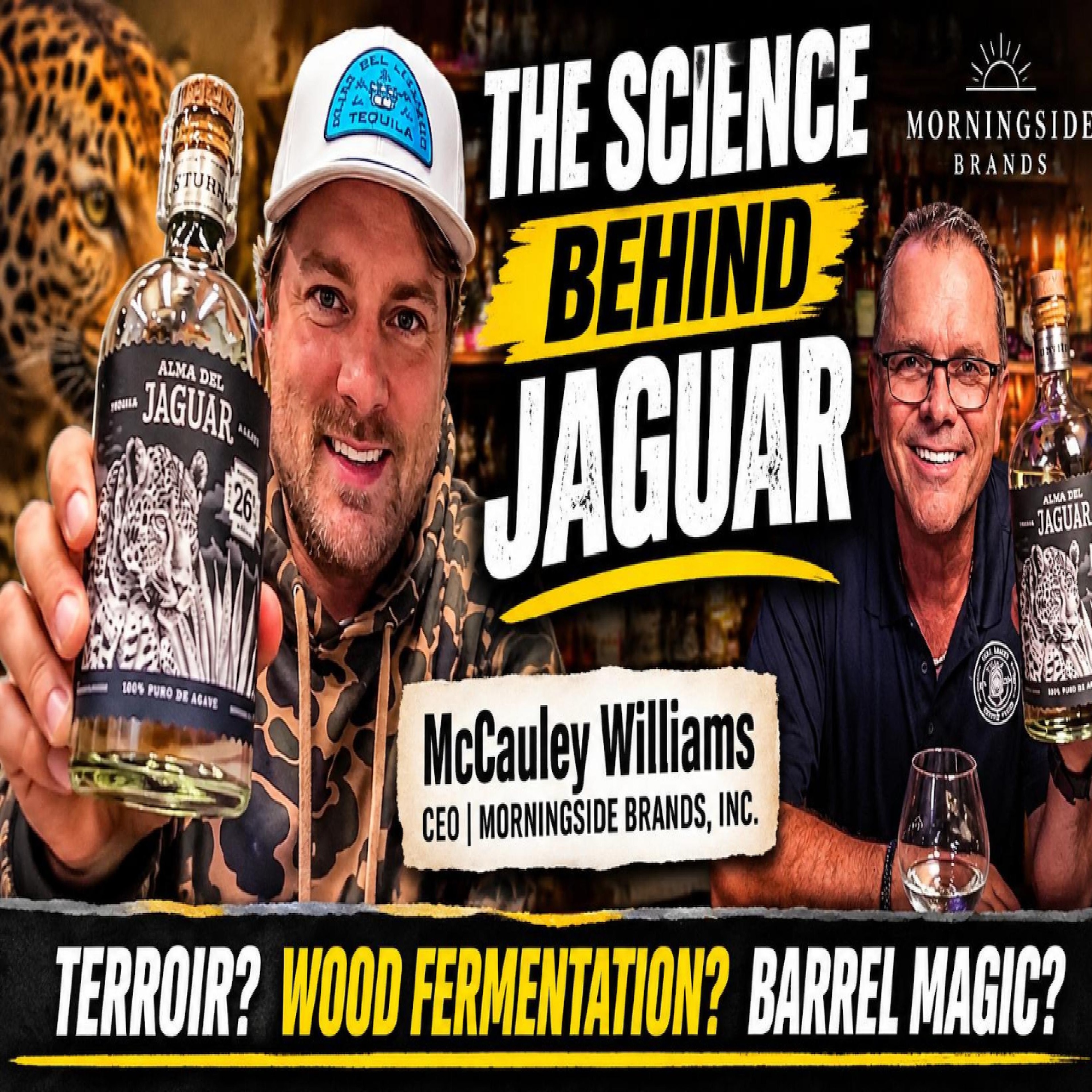
[00:00:00] Speaker A: Tonight you're in for a great ride. We're going to talk about this brand new 2026 Spring Nocturna with the founder, the owner, the creator, Macaulay Williams. This is a fantastic interview. We talk about all the new things he's got coming out and a little Duck Club bourbon. Stick around for this one. It's tasting tequila with bread.
All right, guys, I've been waiting for this one ever since I started doing videos. One of my favorite brands, this one right here. I am so excited to have Macaulay here with me tonight to talk about the brand. Macaulay Williams, how are you freaking doing today?
[00:00:40] Speaker B: I'm doing great, Brad. Thanks for having me on, man.
[00:00:42] Speaker A: Well, I'm excited. You've said you've had a couple nights of some crazy nights promoting some of your brands, so cheers. Let's start it off with a little sip here of the 26 and see how today goes.
[00:01:02] Speaker B: Tell me that's not badass.
[00:01:03] Speaker A: Oh, that is amazing. A lot of people have been waiting for another one of these. For me, I was like holding my breath of when another one of these were coming out. Then all of a sudden you posted it. I was like, awesome. So
[00:01:14] Speaker B: you're one of
[00:01:14] Speaker A: the
[00:01:15] Speaker B: first people to get a. You're one of the first people I'm aware of that has the bottle, to be honest. Oh,
[00:01:19] Speaker A: no
[00:01:19] Speaker B: kidding.
[00:01:20] Speaker A: Well,
[00:01:20] Speaker B: yeah.
[00:01:21] Speaker A: Thank you very much. Well, let's talk about it.
[00:01:22] Speaker B: Selling it, to my knowledge, but we don't keep track of like, that specific batch and where it went.
Let it go out to the wild.
[00:01:30] Speaker A: Well, tell us about this batch. What's. What's the. What's the secret sauce behind this one?
[00:01:33] Speaker B: Yeah, so just to be clear, we're talking about Nocturna or High Proof Blanco, 101 proof, featuring the black and white label. We call it Nocturna because jaguars are nocturnal hunters. And so on the reserve in Sonora that my uncle founded, the Northern Jaguar Reserve, all of the jaguars are tracked with motion triggered trail cams. And jaguars are nocturnal and much more active at night. So a lot of the images actually look like this on the cameras compared to our normal labels. So a nod to the science, a nod to all of that. But just to recap, with nocturna, we showcase 100% wild fermentation. So wild yeast, no cultivated yeast whatsoever, added in the tanks. We add back fibers into the tanks and we also add fibers into the still. A lot of people don't know that part, which is kind of wild. I honestly didn't know we could do that until we got into this project with Sergio Cruz. But so far, under the nocturnal label, we have released two batches. In 2024, we did a spring and a fall 2024 release.
And this one is our spring 2026. If you're wondering where you can find it, uh, it's on the back of the next strip. Uh, it'll say the year and the season. And the reason we do it biannually or se seasonally like that is because it showcases seasonality's impact on wild fermentation. And one thing we realized early on in this tequila journey, which it's definitely been a journey and a full learning experience, was that the batches we were making of our core products in the spring and fall tasted different.
And that's because we use 80% wild fermentation in our core items. And we noticed that it had to do with the water content both in the agaves impacting the brix level as well, as well as just the naturally occurring yeast in the air seemed to change seasonally. Now we're not studying what strain or wild variant it is. We just noticed that spring and fall are yielding different profiles. And that's because spring and fall showcase some of the most drastic changes in Los altos of humidity and water in both the air and in the soil. And so you have the really dry spring compared to the wet, damp, cooler fall. And it really impacts the profile. And the goal with this one is it's going to take us, you know, like a decade to get a bunch of these batches out over the years showcasing seasonality to. We'll be able to come back and identify common things from a certain vintage or a lot that we produced.
So this is, this is sort of us getting a little nerdy and playing around and trying to build up, you know, enough expressions from the different seasons in different years, and we'll go back and look at what made that spring or fall unique. You know, this is a lot of the talk, as I say in tequila sounds an awful lot like winemakers and wine production because seasonality, soil, rainfall, all those things that the wine guys talk about impact, well made agave spirits too, because we're really the most terroir driven spirit out there. Agave spirits. Now, Mezcal is super terroir driven as well, But a properly made tequila really has that terroir component and you get it in spades with nocturna.
[00:04:46] Speaker A: So what I'm hearing you say is don't get one bottle of this because you're Going to drink it and finish it, but get multiple bottles. So over the years, you can go back and taste all of these different vintages, if you will. Yes. Bottles and compare them. Because I. I have a real problem. I. I don't collect this stuff. I drink this stuff.
So I need to get more bottles so I can have them as a vintage to go back years later and compare the two. That. That's freaking. I'm
[00:05:13] Speaker B: even bad at doing that at the office of keeping it because we'll eventually either drink it or give it away. So I, I suffer from that same problem.
But if you do find multiples and maybe you just don't finish them, now, we know oxygenation is going to impact that spirit left in there for a while, but you'll still be able to go back and, and see what's going on. And this is an exploratory series. This and our Arborega series are all about exploration, study.
You know, it's really easy to have a hypothesis in what something's gonna. You know, how it's gonna play out. But science is not just the hypothesis. Right. It's the hypothesis plus the test and then measuring the results. And so some of the things we found in just this simple little experiment have been counterintuitive, which is really interesting.
[00:06:00] Speaker A: I love it. Now, I want to. I want to have you get into a little bit about your. Your history, but one of the questions I want to ask is you. You came from really, the. The bourbon world, and how much more fun has it been exploring the terroir of agave spirits versus, you know, the maturation of ground spirits and whiskey spirits.
[00:06:22] Speaker B: Yeah. So bourbon, you know, from. I'm. I'm from Tennessee, so I'm in the heart of whiskey country, if you will. That journey, and I have another bourbon brand now, is really fun because it's the. The exploration and study of American history. Really, when you start studying bourbon history, it just tracks with every chapter of American history.
And it's very regionally significant to Tennessee and Kentucky, which, you know, I obviously find interesting being from here, and that's awesome. But tequila is a whole different game, like, what you're getting to. So, one, there's a sense of exoticism, of, like, leaving my country, dusting off my old Spanish, and going to Jalisco and going to Mexico. Like, that creates a whole other level of adventure. Just from the start, it's hard to. It's hard to. I think anybody, even you, you would admit that's like a part of this is, is the sense of adventure that you get going to Leisco, exploring, trying things that you're not going to get in Indiana or Tennessee. Like, that's just fundamentals. That kind of immediately is a paradigm shift right there. But within the actual spirit itself, what I find is that the flavor wheel of agave spirits is considerably larger than whiskey. So if you looked at it in either one of the traditional tasting wheels, or if you thought about it more traditionally in like a bell curve of the distribution of all the results of flavor of every tequila brand in a bell curve, in every bourbon brand in a bell curve, the bourbons are going to have a tighter curve where. Which means the data is going to be more clustered around a common profile in this analogy, Whereas in agave spirits and tequila, you're going to have a much flatter curve, meaning that the distribution of data is spread out further, meaning there's just more variance in the data results.
And I find that to be so fascinating in tequila of how broad the flavor spectrum is. And I had no idea just how broad, broad it was until I really got into this. And I think that's clearly something you've identified based on all those bottles and why you're into this. And also here's what I'd like to remind people too, is every spirit other than agave spirits are distilled the same way. So some people don't talk about enough. So people say tequila is an upper or it makes me feel different. And my response to that is, I don't know that to be true. But what I do know is it's distilled backwards. And so that to me is evidence of something chemically and fundamentally different. I've never heard anybody explain why. But in every other form of distillation anywhere else in the world, grain, cane, grape, you name it. When you distill it, it is the heads that will make you go blind and the tails that you can save. And you redistill the tails. In tequila, it's the exact opposite. It's the tails have the bad out methanols and alcohol and you redistill the heads. So the distillation process and the cuts that are occurring is, as we say in Tennessee, ass backwards. You know, it's just like dumb value. When I first was there, I kept thinking like they were mistaken. On my first ever tequila tours, I thought they were mistaken when they were describing what they were doing.
Until I went to more and they kept saying it. And finally I was like, wait a minute, like I gotta ask some questions. This is not how normal Distillation works. And so to me that's evidence of a chemical difference between agave and the other plants that we distill alcohol from. What that difference is, I can't tell you. But it's on a fundamental level, if it's distilled backwards,
[00:09:43] Speaker A: that is that, I mean, that's fascinating. Out of all of the
[00:09:46] Speaker B: right
[00:09:47] Speaker A: things I've spent learning, all of my knowledge and training and teaching has come in the tequila world. I haven't done any learning outside of that other than, you know, a pisco is only single distilled to proof which that, that blew me away that it was 40 proof until I realized pisco's musto is, is a wine. So it's going to be maybe 12, 20 alcohol going into that first distillation. So easy to get the 42 similar to like a Kachasa. But I, I've never heard that explanation of the difference between heads and tails. That, that's, that that's gonna make me sign up for Sergio Cruz's International Tequila Academy distillation class to learn a little bit more about that. Because that, that's completely different than what I ever knew. That, that's pretty, you'll
[00:10:32] Speaker B: read about once you start looking into it. I haven't found any explanation as to why but like European, like Scott or American whiskey distillers or somebody from a long way away going to Jalisco and being completely dumbfounded and confused. And myth. This isn't possible because like distillation is taught like in school to be a certain way. And in Mexico it's backwards, which again is totally kind of not to nerd out on too much, but that's, that's nuts to me. So with that backdrop, tequila is a much more delicate spirit than whiskey in bourbon. It's really about how much can you smack it over the face with oak. More oak, more tannin, more barrel influence, more or less yields a better product when it comes to your, your whiskeys and your bourbons. Not always. But for a rule of thumb, not, not the case at all in tequila. Tequila can be entirely overwhelmed by oak to where it can turn into, you know, an agave whiskey. We've all tried some of those samples which are, they're cool, but it's just not, not necessarily what you're looking for. So its interaction with barrel maturations in your aged, in your age categories of tequila is much, much more nuanced. And then you have some other X factors like elevation, you know, the Los Altos region. You're looking at, you know, 6800-7200ft above sea level, that, that changes the way the spirit interacts with the wood. Also, the temperature, it's traditionally hotter and it's drier than a lot of your, like, say, you know, traditional whiskey making areas in the US So the way the spirit's gonna interact with the barrels under those circumstances can be very different than, say, in Tennessee or Kentucky. And then there's a whole other wildcard in tequila. You can reuse the barrels. In bourbon, we can't reuse the barrels. And so every time you reuse the barrel, it adds a different layer of nuance because there's two main pillars to barrel maturation. You have extraction and oxygenation. Extraction is the color and flavor being leached from the wood. Oxygenation refers to the barrel literally breathing and expanding in the heat, contracting in the cold. And there's a magic balance there of like the, the ratio of extraction to oxygenation to get good profiles. And tequila is much more nuanced and much more delicate. And it's really, really, really hard to get consistency in tequila in, well, even in your blanco, especially when we do it. So craft the way we do. And we kind of tell the consumer from the jump, like, it's going to vary slightly batch to batch. It's all going to be within 5% of the same quality and more or less 5% of the same flavor, but it will vary slightly. And that's part of craftsmanship and just small batch artisanal production. But within the aged categories of repo and yayo, it is so hard to get them to taste the same and then to have the same color. You really, when you start producing this stuff, you really realize why the big guys were like, hey, we need to use additives like you. It's very clear to me the problem they're solving for.
And it probably started off with, like, good intentions, and then over time, like, so many things has been taken advantage of and manipulated. But I sympathize at least with if I, you know, pretend like I was sitting around the table like 50 years ago. And whenever they started using the additives, I sympathize with what they were trying to solve with it. I don't sympathize with kind of the end results of where it's gotten to today. But it makes a lot of sense why they did it, because the color variation, batch to batch, on rep own and yo is nuts. And then the flavors too. So we find, I believe there's very natural ways to achieve everything the additives do. There's ways through oxygenation to achieve the mouth feel. There's ways through fermentation and distillation to achieve that same mouthfeel that you would get from a glycerin. There's ways through using staves or natural pieces of wood to enhance color. That's just oak if you need to color correct a batch. There's also ways through toasting, charring, or lack thereof to dial up or down the van, the vandolin that's naturally in oak or the caramel flavors. So like I said, there's, there's a way to do it all naturally. But anyways, it's just, I would say in some Tequila is a lot more complex and much more nuanced and definitely seems to be more of an art.
[00:14:38] Speaker A: Yeah. To me, the wheel of flavor is so much larger and, and mainly because we, we drink this right here. We drink the raw product. None of us drink a White Dog whiskey to talk about the nuance of what it tastes like before it goes into the barrel, that it's the barrel that's giving that it's flavor. And I think that's one piece that I sell to like my neighbor who's a bourbon guy. It's like I, I pulled out some White Dog makers, mark and said, here you want to taste like what whiskey tastes like before the barrel gave it all of its flavor.
[00:15:08] Speaker B: It's interesting. It's not good.
[00:15:10] Speaker A: It's. It's interesting to taste,
[00:15:13] Speaker B: but it's not good. And that, that's a really good point. In tequila, you really get under one brand. You really get the core three. With your blanco, repo and ano, you really get three, three different spirits. And I like to say with tequila we can compete when we go like pitch cocktails, we can compete against vodka and gin with our blanco in the cocktail world because those blanco tequila can be substituted for either gin or tequila, depending on the recipe. Reposado can compete against rum. It can compete against cognac and other kind of more rested, lighter, lighter, aged spirits, even some scotches, depending on your profile. And then your anejo can compete against scotch, your age drums, your cognacs and your bourbons. So with one brand, you kind of run the gamut of the flavor spectrum from the traditional cocktail profile, which is also so fun about tequila.
[00:16:02] Speaker A: Yeah. In a recent interview, the, the brand guy that I was talking to brought up the fact that, you know, white spirits are stronger in the summertime, brown spirits are stronger in the wintertime. And, and I concur with that because I used to drink tequila all, all summer and then, you know, when it got really cold out, I'd switch to drinking, you know, either bourbon neat or old fashioned. And he pointed out, well we have both white spirits and brown spirits within our category. And like a dork who's been a tequila fan for 20 years, for some reason I never put that together in my head that you're right, I can make a tequila old fashioned or a tequila Manhattan and enjoy a dark spirit in the wintertime. Now in my to give myself a little credit, I quit doing that switch back and forth many years ago and only drink tequila year round. But I never really put the brown spirit sales part together of okay look, maybe more blanco sells in the summertime, but at least we have repo anejo and extra anejo to still present and sell in the wintertime against those brown spirits
[00:17:00] Speaker B: for sure. And we call that so there's, there's of course seasonality within the spirits industry. There's also consumption occasion and sometimes consumption occasion is linked directly to seasonality, other times not. But like one consumption occasion would be like at the beach, the pool or the lake. Those are going to be your spring and summer time occasions. And then the winter you have like sitting by the fire as a very classic consumption occasion. And the type of cocktail that pairs in massive for those occasions is going to be very different. Just like the the spirit. Like there's no question that bourbon's time to shine is in the colder months and its consumption occasion is like around the fire. Like that is where bourbon wins and there's no question that tequila wins. Like this is regardless of our opinion, this is like this in the most people consume tequila unquestionably wins. The pool, the beach, the lake, hot next to water. You know it, it kind of mirror it mirrors in wine, you know, like rose white wines crushing in those spring summer consumption seasons and consumption occasions. Then your bolder reds coming out a lot more in the colder months.
[00:18:07] Speaker A: Yeah. Okay, so we, you, you obviously have shown in the entrance of this video that you have a ton of information and knowledge and I, I, I dropped a word I was going to use in there just to make it family friendly. So tell everybody how you got your start in this whole spirits world. Give a little history lesson of Macaulay Williams.
[00:18:28] Speaker B: I'll be quick. So I've told this quite a few times, but I started off as a mergers and acquisitions and securities attorney, a corporate attorney at a very large law firm. A friend of mine had a Vodka distillery. That was a passion project and we thought it was gonna be this big thing. Unfortunately, it didn't work out. I represented them through a liquidation, fell in love with the concept. I started like a lot of side hustle businesses, ended up building a new business plan with him to raise new capital into that business. Shifting from vodka to whiskey.
We focused on investing and trading barrels of bourbon on the secondary market. I quit my job at the law firm to go run this new venture, raise the money, and then a year or so in, we launched a brand. We scaled that. I ended up getting forced out of my company in 2022 and went to Mexico to figure out how to do tequila. Because my one tequila was popular. The data supported that. It made sense in terms of a category to look at. I was drinking more Tequil Gila personally on the side chose my wife. But my uncle has lived in Mexico almost my entire life studying wild jaguars. So I saw it kind of in this soul searching period of like, what am I going to do next?
As a really fun way to connect with, with him and to kind of champion his life's work through this new brand.
And it's been a crazy journey ever since. We've. I've also launched a couple of spirit brands at my company since then. We have a gin called Waymar and a bourbon called Duck Club in addition to Jaguar in our portfolio at Morningside. I named my company Morningside Brands because I grew up on Morningside street in Memphis, Tennessee and I thought it had a good ring to it for a new beginning and a time when I needed a new start. Back in 2022.
[00:20:10] Speaker A: That's very awesome.
[00:20:10] Speaker B: That's the quick, the quick, the abridged version.
[00:20:14] Speaker A: There's some great stories that Macaulay has told about his history. I would recommend jumping over to Agave Social Club if you want, like an in depth story of how he got started. Doug's done a great interview, kind of talking about those early years, so definitely go check that out if you want more about Macaulay Williams. But let's, let's dive into Doug Club Bourbon because that, that's kind of a cool brand for me. Back in 2016, I was playing guitar at this local party. I was playing with a local guy named Colton Chapman. We opened up for a band that played and then this guy kind of walked up and set up his own gear. His name was Riley Green and O'Reilly had some great songs. And when we finished up that night, like the good guy that he is, he helped pack up everybody's Gear, put everything away. And he said to me, hey, what are you doing tomorrow? And I was like, well, riley, it's the 4th of July tomorrow. And he said, you want to come up play guitar with me at Bub City in Chicago? And I was like, yep. So drove up to Chicago, played with Riley at Bub City and really created a really fun relationship. And we used to travel around in our motorhome and wherever he was parking his prevost, we would get parked right next to him and hang out and party with them. And I was so excited to see when you launched Duck Club. I sent, I think I sent you Instagram saying you should like, you should call like Riley Green because Riley's the duck man. And then you were like, well, so how did that
[00:21:34] Speaker B: think alike, Brad?
[00:21:35] Speaker A: Oh yeah, that's fantastic. So tell me what that's been like.
[00:21:39] Speaker B: It's been crazy. Yeah. So Riley's my business partner and co founder in Duck Club Bourbon, which is our bourbon brand. We launched it on opening day of duck season in Little Rock, Arkansas last year to a sold out arena for a show that Riley and we threw benefiting Ducks unlimited, where over $100,000 was raised for Ducks Unlimited, which is the largest wetland conservation group in the world.
And it's been in. And we met backstage at that show Sarah Huckaby Sanders, the governor of Arkansas, and got her, gave her a drink of bourbon. She liked it. And we convinced her to go on stage with Riley and to announce Duck Club and to do a shot with him and his band in the middle of the show. And I didn't think it was to happen and almost fell out of my seat when she did it.
[00:22:28] Speaker A: That's awesome.
[00:22:29] Speaker B: Just totally nuts. I was like, what? What is happening? I was already blown away by this arena, like the Riley Green effect. And you have a governor of a state like endorsing your product or whatever, you know, politics aside is just cool. Like it's like, holy cow, somebody that important is acknowledging our brand. That's crazy. But it's been totally nuts ever since, man. It's been off to the races. It really speaks to our target demographic, which is duck hunters, country music, bourbon, consumers in the southeast and Midwest. It's really, it's really interesting that like with our tequila, I would say our audience, if you, if you do have to put it on a political spectrum, skews more liberal. And then with our Bourbon, our audience skews more conservative. But both are tied together in wildlife and land conservation missions and both have the same ethos or philosophy of always over delivering on quality relative to price, thinking about the consumer first. So it's been kind of interesting to build brands, I think this very common theme, but then our audiences are actually a little bit different. But that keeps it really fun here for the team that we're able to switch hats back and forth. There's a little bit of whiplash going from the marketing and sales meetings between the two brands, but Rally's been amazing. He is, like, blown up since we launched a little less than a year ago. His star just continues to climb. He had a, you know, insane tour this year. We did activations at, like, every show. It's hard to keep up with. The dude plays like four nights a week all over the country. It's crazy.
Yeah. A light week for him is three concerts, and then he was cast on CBS's Marshalls, which broke the record for most viewers. It was like the most watched show on television in the last 12 years or something crazy. Which is hard to believe, to be honest.
And then now he's a judge on the Voice. And somehow, I guess if you. If you know Riley, it's not surprising, but he's, like, turned the Voice into the Riley Green Show. He's like the star of the show, which is just totally crazy to see.
And we designed some merch for him for the brand, and he's been wearing it all over his stages. He's been wearing it on the Voice on major TV shows, and it's been nuts. The brand, though, like I like to say, it has a different. We have kind of three different target consumers within our Venn diagram of our consumers. You have the. The Riley Green and country music people, and you have also the hardcore duck hunter people.
There's actually four. The. Then there are the whiskey enthusiasts who really appreciate our quality relative to price because we're very aggressive on pr. And then there's what I call the aspirational outdoorsman. So there's a lot more people that think the hunting is cool than actually go hunting on a regular basis. And I use yeti as a good example for this of what an aspirational outdoorsman is. Think how many yeti tumblers and coolers and stickers on the back of trucks and yeti merch. You see, out there, almost no one needs a yeti unless you're like a hunting or fishing guide. You don't need a yeti cooler. I have a yeti cooler. I have multiple of them. Every time I lug the thing in the back of my truck, I'm like, do I really need that? This thing is heavy as hell. Do I really need to keep ice for three weeks? Probably, probably not. We're just going to the lake for a day, you know, but everybody bought into it because of what it means. Like, it's. You're an aspirational, you want to be outdoorsy and more tough and just all of that ethos than you actually are. And they've done a really good job of playing on that. And that's aspirational marketing. And there's definitely a component of that within our target consumer base product club. And it's been really powerful. It's.
It's gotta be one of the fastest bourbon launches of all time, to be honest. Like, our sales, it's. It has in within nine months, it's surpassed our tequila sales, which we did not predict because the tequila does pretty well. And so it's just been like a rocket ship, which is just such a blessing and amazing to have. But it definitely has presented its own other challenges of like, how in the world do we keep up with it and just hanging on like, like doing so. We have the gin brand. The gin brand is amazing quality gin. It's a small gin brand, but it's more of like a traditional craft gin brand launch. It's just not a huge volume deal. And then Jaguar has been pretty explosive onto the tequila scene and we're building kind of a lifestyle component to it. And Duck Club's also a lifestyle brand. And it's been a lot to do both of these at the same time.
And I think we've neglected, unfortunately, our tequila a little bit during this launch period. But it's more just. We've just been overwhelmed by everything going on. But we're finally kind of coming up from air and we got a lot of new exciting things for the tequila that we're going to roll out in 27. So what it's allowed me to do though, is build out my team considerably more just because there's more opportunity and just for a bigger company with a second brand that's that powerful. And so I've been able to expand my sales team, expand our in house accounting team, our marketing team, our operations team, to where we now have 24 people on our team and growing and starting to become, as I like to say, air quotes, a real company, not just a startup. I started this company with a cell phone and a laptop at like a public coffee shop. That's where I'd go every day. It's like I paused because it's Like a, it's called the crosstown concourse here in Memphis. And it's, it's not like a co working area, but it's a big, huge public open space where they encourage people to come in and break out the laptop or take meetings and do whatever, just hang out and it's just like a public space. And I launched my company for about like the first 15 months was just me going there every day just to get out of the house and getting a coffee and working. Now it's kind of crazy. Just three and a half years later, I guess there was a whole year of building. So it'll be, it'll be, it's four, four and a half years in that we have a team of 24 and we're selling in over 30 states and we just sold product, both Duck Club and Tequila to Canada. So it's our first international sale.
It's been an absolute grind, we'll say, not for the faint of heart.
[00:28:34] Speaker A: Well,
[00:28:34] Speaker B: ask any, ask any of these guys that have, or gals that have started one of these spirit brands and it looks a lot cooler from the outside looking in. I promise it's a graph.
[00:28:42] Speaker A: Well, I have, I have to say thank you to guys like you and John and other guys that when I started doing content, you know, my aspirations have been to own a Tequila brand. I've been a Tequila fan, you know, for 20 plus years and y' all have talked me out of it. Y' all have said it, it's, it's not what you think it's going to be. I'm not going to wake up tomorrow and be Sammy Hagar with a brand that just blows up all over the world. So this has been more fun for me, getting to meet the people behind the brand, learning, you know, so much about tequila and how it's made and now Mezcal and all these other agave spirits. What a wormhole to go down. So thanks for being the example of the people that put so much work in and so much like of your life into creating something that all of us agave nerds absolutely love because we do love it. So thank you for doing that.
[00:29:30] Speaker B: I appreciate it. I think the way to do it would be to have a small brand that you did purely as a passion play and not for a business like. And there, there are quite a few of those out there where like the, the founders have their day job still. I guess it comes in a couple ways. There's some that are purely just the passion project rich person starts a brand because they Want to.
Then there's another that, that's a very common motif or theme. And another one is start the brands like a side hustle, keep the day job. But I'm like a raw entrepreneur like this. I have every single dollar to my name plus my house pledged to this company.
And it's like a full on business. And our goal is to scale our brands and build lasting legacy brands from them, which is a little aggressive of the, of an objective. And this creates this all or nothing mentality and it's makes it a lot more intense and I don't know if that's necessarily a good thing.
[00:30:28] Speaker A: Well, serial entrepreneur, multiple businesses. I dive 100% into something I'm excited about, you know. And my son started racing motocross. So what do we do? We started a Axis sports clothing company, we opened a motocross track, we became a distributor company. Like, let's go. But this, this doing this content and learning about the brands and sharing this information has been a lot of fun. It's not something that I charge any money for. It's not a business. It's not something I want to monetize. I want to keep this in the way that we're doing it today and I love that. But getting to meet everybody and you know, dive into a spirit that I love and the people around it have been so fulfilling that it's weird. Like a business. To me, the fulfillment comes from the success of the business. And this has been different for me. The fulfillment has come from the friendships, the, the people that I've met. Like the information that I have when I, when I go to. Around us and Sergio throws me his car keys and keys to an apartment and says, this is all your casa su casa, my friend. Like that. That's like, it's crazy how cool it's become. Yeah. And I will say getting to do some, some single barrels and doing that all for charity has been a place for me to put a thumbprint maybe of the tequila that I like and create something that we give back to Mexico. That first one coming out, I see so many more in the future and I think I, I have an idea that just popped in my head while you were talking. What was the name of the coffee shop that you were at
[00:31:53] Speaker B: called Crosstown.
[00:31:54] Speaker A: Crosstown. So I think your first extra on Yeho should be a single barrel Crosstown barrel honoree. The very first place that you started. And I would wait till that's it. At least four years old, right? Like a four year old extra on Yeho. And release that honoring that place that you very first started. I think that'd be really cool.
[00:32:14] Speaker B: That could be super cool. I like that.
[00:32:16] Speaker A: Yeah. So now you have a. I, I know you need another project.
[00:32:21] Speaker B: We got a bunch, we got a bunch of projects in the hopper too. Don't worry, we got all kinds of stuff. I'm working on a number of new expressions that are really cool for both the club and Jaguar. So
[00:32:31] Speaker A: let's talk about the new things you have coming out for Jaguar. What are, what are some of the upcoming projects you got coming
[00:32:36] Speaker B: out? Well, first off, you again. We, as we're drinking it now, super excited to release a new edition of our nocturna. I think this spring 2026 may be the best of all of, of the three. It's pretty amazing. It's pretty amazing. Honestly. I was kind of floored when I got the samples. And you actually put in the work by the agave, run the process, but you never really know exactly what it's going to taste like. And with this one, there's a significant variance batch to batch. So it was kind of floored. When I tried it, I actually called Sergio and was like, dude, how do you keep making it better?
How does it keep getting better? I don't, I don't understand.
And you know, he's like, we just got lucky on this one, you know, but we'll take it. So one thing that I'm exploring is a, you know, what if we did a high proof reposado?
I don't want to show my cards too much on that one because there's kind of an exciting there. We are going to play around with the tojona and wood fermentation. And I got a really cool idea for a Baricas blanco. So my Barika series is all exotic casks, so that would be really, really cool. That one's still just an ideation, which is us just like whiteboarding out. Like, wouldn't this be badass?
And that's the first step. Then we kind of if it, if it still sounds badass a couple of weeks later, it's like, all right, let's, let's go explore that a little further. Or sometimes you have an idea and you're like, no, that was cool in the moment. But it's. Yeah. Or it's just. Or it's too much or it's too gimmicky or something sort of. But I think, I think I have a really cool concept for that one.
[00:34:07] Speaker A: So can I ask you a question there? So when you Say Barrica's blanco. Are you thinking of almost doing like a pachuga where you're gonna put something in distillation, or are you going to do that more towards aging in a blanco?
[00:34:20] Speaker B: Well, under the Barica series, I guess to keep it the same. It needs. It's going to touch some wood, but. Okay. A really special idea that comes from Japan and it's not my Mizunara and we already did the Mizunar first ever to do that in an Yeho form. But so I mean, to be blocking, right, it would have to be less than 60 days.
[00:34:38] Speaker A: Sure.
[00:34:39] Speaker B: But I just think that this particular wood coming out of Japan could be really, really cool. And I don't know anybody having done it before. And I think the profile works. It's not just cool because again, some of the stuff sounds cool and then it's like actually doesn't.
[00:34:52] Speaker A: Yeah, doesn't come
[00:34:53] Speaker B: out. I have some Ukrainian ice vine casks that come from the conflict region of Ukraine. The part that Russia has taken or however you describe what's occurred. I guess that's how I would describe it. I think now Ukraine may be letting them, I don't know. But the conflict region that Russia took, which is wild, that these barrels were able to get out of that region during the middle of this war. And ice vine is where you let the grapes freeze on the vine and it creates like a sweetness. It's similar to the noble rot in Tokai, where the rotting of the grape, if you will, the molding creates a sweetness. But this happens through ice. Sounds so cool, right? We got tequila in those barrels and I still think there's a lot of potential for them. But so far, year end, I'm not. I'm not feeling it. I'm just like, we actually were going to release that in this baricas and we had to hold it back. I just didn't. Didn't do it for me or anybody that tasted it.
So that's a example like so badass of an idea, but just didn't turn out in the results. We do have a really cool new addition to the baricas family that we kind of started teasing on social media called ensemble or we're calling it the Baricas blend and it will be referred to as Baricus Blend is the skew title. And then ensemble. Uno, dos, tres, guestros, inco etc 1234through however many blends we do. And under the ensemble, I'm blending three different age classes of Tequila, XA and Yejo and Reposado. And bottling it as a reposado because it has to be once you blend in a little bit of reposado with an XA or an will take the lowest, the youngest category. But to show some really wild juxtapositions of flavor like this, this batch that we're doing is 50% XA, 25% Anejo and 25% repo. And the baricas blend label is black, so it stands out from the rest of the barricas.
And it's just gonna, each blend is gonna be entirely unique. This first one is showcasing the three categories. Later ones may be blends of some of the exotics and just gives us a skew to really have fun and play with some stuff. But yeah, the, the, the, the juxtaposition of like the, the heavy maple almost like notes coming from our XA that we blended with like the very agave citrus forward notes of our four month repo coming together in this blender. Really, really cool because your, your, your palate goes on that roller coaster journey and it's pretty fun. Like it, it, it starts with like the blanco and the agave and then goes through this whole roller coaster and ends in this like crazy maple heavy caramel vanilla finish. And then at the very end the beginning comes back.
So it's really, it's, it's, it's really fun. And so I want to start pushing the limits there, doing more, more blends. We're showcasing the percentages of what we've done just to come out with, you know, let's expand the flavor wheel even further. Let's find new, new profiles. So those are just a few of the things we're working on.
[00:37:56] Speaker A: How fun has that been since in the bourbon world you were so confined to what you aged your grain spirited to now be able to go find some of the most exotic woods from all over the world and be able to put these things together. Has that, has that just increased your like mind of what flavors can taste like?
[00:38:15] Speaker B: Well, that's, that's common in the bourbon world. Within the craft bourbon is to do exotic cask finishing and that's
[00:38:20] Speaker A: where
[00:38:21] Speaker B: I got that knowledge. But it's been fun to bring that to tequila and try to push the limits a little bit.
And the results have been fascinating. But there's a pretty big financial risk. Like we're buying stuff that no one's done before. Like very few people have in certain instances and others never before done. You don't really know what's going to happen, but you still Paid a lot of money for these girls. Like, I mean I spent a hundred thousand dollars on our missing or a casks, just the wood from Japan. So it's a pretty big gamble not knowing what the result was going to be. And they took so long, I thought our money had been stolen. It was like a couple of years before they showed up in Mexico. It's crazy.
And so there's some big risk there. And if you know, you never know. Like sometimes it just doesn't turn out or the barrels could have a flaw or could get damaged or. So with each experiment there's definitely some risk, but it's getting fun. We're getting to a scale where we can now be much more creative and continue to do cool stuff.
[00:39:18] Speaker A: So for the person that doesn't know like how many barrels is that like when, when you're going to release this? One of my favorites that you done is the, the apple. The Calvados is like such amazing flavor. You know, in the. The layperson that doesn't know the production side or never been to a barrel house, you know, in their mind, is that a thousand barrels? Is it 20 barrels? Like what's it
[00:39:41] Speaker B: really? I mean, for that Calvados release, I think we did like, I think it was like 12 barrels. So that was super limited. The Missingara, we have 20 of them, 100 grand for 20 of them. It's crazy. Wow, those things are really expensive.
We've now got the pear. I think we only did like four or five of the first pair release, but this time we've got that up to doing like 15, I think pair casks because that one was really popular. And we're the first group to ever use these pear wood barrels in a commercialized spirit, much less tequila. So we didn't know what was going to happen. Like we literally didn't know they were going to be able to hold liquid. You know, there's a reason why oak is used to make barrels is because oak will. Will swell to become liquid tight and won't leak out. Like you go make a barrel out of pine wood or something.
Forget what it's going to taste like. There's nothing, nothing to taste. It's going to all leak right out. And other. So other woods either will leak where the staves meet because they won't swell to become liquid tight. In some woods it'll just seep straight out through the wood itself.
And the pear would became. Did work, became liquid tight. We had a good amount of loss to leakage because it's not Oak. But it worked well enough for us to produce more of them. And get those are those. We get those made on the border of France and Switzerland. And the guy that's making them has a permit to harvest wild pear trees in the mountains of Jura, France. Permit from the government. And he was making furniture out of them out of pear wood. And then he also is a cooper, and he's like, I'm going to try to make barrels out of these. I was talking to him, you know, I'm in. You know, I love doing crazy stuff, and those turned out really, really well, but they don't always work out. Like I said, with the. We've had a number of experiments where you're like, okay, table that. That didn't work. Put that in the back of the warehouse. We'll figure out something to do with it later.
[00:41:29] Speaker A: Okay, so what's a barrel sitting in the back of the warehouse that just has not come to a flavor yet? What's one that you just, you know, it's back there and you hope that it comes to life?
[00:41:37] Speaker B: Well, I can't share all of our secrets, Brad. I will say
[00:41:40] Speaker A: there's got to be one. You can say,
[00:41:42] Speaker B: well, I will say this, that didn't. It's not that it didn't come to fruition. I will say this is. I did sock away four of our missing aura cast from the original release that are turning XA next month that we're just gonna let keep going for a little bit. So there's. There's some that are not, like, they weren't bad. They were actually really good. And we're just putting them in the back to keep doing something so we can do something really special with that, you know, super limited release. But to your point, again with tequila, like, this is all barrel talk. Like, we can do all kinds of crazy stuff with barrels, but then there's a whole different frontier on the blanco, the fermentation technique.
You know, I don't know personally how much the tahona. I'm not sure that I've ever been able to identify a real difference from just the tohono versus the roller mill, because there's so many other variables, but there is a dramatic difference when it comes to wood fermentation versus stainless. And I love the really interesting notes that come from wood fermentation. So I'm really fired up to start playing around with that and then might as well do the tohona, too, and just make it as artisanal as possible. But I never really understood the the tahona and then into the stainless fermenter, it seems to strip out some of the nuance, but the tohona into the wood fermenters, I think you can get some really bold notes, and it brings out this, like, creaminess in. In. In the spirit that I find so fascinating. Back to. Back to what makes tequila so cool is how awesome and how much flavor can be in a white spirit. I mean, you think of your other white spirits, your vodkas, of course, gin and rum. And in vodka and rum, they're more or less trying to strip out all the flavor when it comes to a white rum or a vodka, because they're distilled in the column still. It's designed to go in a cocktail and be kind of, you know, vodka's definition. Colorless, odorless, flavorless.
Now, in gin, you can get some really cool flavors. I've had some really badass, like, African gins that were just totally crazy, but that's because of. I won't use. It's not an additive, but it's because of the. The gin basket and whatever they're distilling it through, like a pachuga. It's an outside influence on the flavor. Right. Whereas in agave spirits, traditionally, you're. It's just how you process the agave can yield this crazy complex white spirit, which I don't know of any other.
There's no. There's not another white spirit category like agave spirits.
[00:44:00] Speaker A: No. I. I've had some great conversations with Jimmy Salsa, Oscar Vazquez, Anna Marie. We just recently did a video together, and we. We talked about the fact that. Is it the hona that is the thing that makes the flavor difference or is process? So do we romance the stone or is it the process around it? The fact that we're using agaves where we haven't extracted all the sugars with talona, so we're going to put those into fermentation. We're usually pine fermentation. So now you have wood that's touching agave fibers in fermentation. You're laying to be wild. And. And I've gotten different things, right? Like, Jimmy's like, nah, it's not the tona at all. Oscar's like, oh, it's a combination of the both. Anna was like, no, it's this minerality imparted by the stone that then is also leaving an essence in the agave that's going into fermentation. And Anna was probably more of a full, rounded conversation of how it affects fermentation. And gosh, she's been doing it a long time, so I really had trouble disagreeing with her comments. But, you know, when we talk about tohono, we are talking about lots of different elements. You know, the agave takes longer to crush. So is fermentation starting in that tona, you know, while we're. While we're crushing it, and then,
[00:45:21] Speaker B: yeah,
[00:45:22] Speaker A: taking those and taking the sugars that weren't extracted and letting that interact and make different flavors within fermentation. I think there's a lot there.
[00:45:30] Speaker B: So we play around with that, too, in our core items in an octurna based on the mill speeds of the roller mill. So I hear the minerality thing and I hear the fermentation points. I. I don't know. I'm not saying, like, those are incorrect. I'm saying I don't believe them.
Okay. Based on. Based. Based on my knowledge. But I'm not saying I'm right. It's just where I'm at in my learning cycle. And I could. I could have an epiphany that changes my opinion. So I'm not saying hard and fast, but I don't necessarily believe that's. That's what's going on. I understand it to be the pressure and how much of the fiber you're crushing and not like, because you can crank up the roller mill to. You can. You know, you can literally toggle the speed and the pressure on it to where it's fully grinding and chopping up everything. Or it can be like a slow press and we have our set to a. A slower speed to be gentler on the agave, to not break up those fibers, because the fibers contain a lot of the bitter. Uh, and that's what a tona does kind of naturally is it doesn't grind up the fiber in it. It just presses the juice out.
Cuz, like, look at Felipe's tona at Pandio. You know, it's not even made of stone. They replicated those at Ocho. You know, it's the straight line. Felipe Stein to Hono, but I think it has to do with the milling speed and the pressure relative to it crushing or not crushing the fibers. I think that's. Now, there may be a little bit going on with some other stuff, but I think that's like, the majority of the difference. I
[00:46:59] Speaker A: don't. I don't disagree with you. It's why I started conversating with people. Like, are we just romancing the stone? Like, is this big giant rock so romantic that that's where we think the flavor comes from. And I, I can't wait to get a conversation with Sergio to talk about it with him. And I'm really excited about having a conversation with Choppa and really getting his perspective as well. Because, you know, I, I, I've thought all along it's process, not romance. But, you know, I, I will say there's a lot of Tohona tequilas that when I sit down and go, okay, this, this tequila, I really like it. Over some others, the Viva Mexico Stahona was one of the best Mexico tequilas I've ever had. But then
[00:47:43] Speaker B: they did wood ferment on that too.
[00:47:44] Speaker A: Yeah. And then when Cesar gave me the Moderna, right. Which I, I don't know. It's too high up to grab it, but he gave me that Madeira one, and I tasted it, and I was like, oh, man. It's hard to say which one of these is better, right? Because that was just wood fermentation roller mills.
[00:47:57] Speaker B: The first batch or two of the. I, I can't remember the first batch or the second batch ever of the G4 Madera. That really opened my eyes to wood fermentation. And I said, okay, like, let's. I'm gonna try to find more and learn about what's going on here, because. Because it got my attention fast. Like, that was fucking badass.
[00:48:17] Speaker A: It's one thing in a blind that can make you think you're potentially tasting a reposado, but the wood is coming from fermentation instead of maturation. Like,
[00:48:26] Speaker B: yeah, it adds this creaminess and mouthfeel. It's very, very interesting. And so in, in bourbon in Scotland, you know, traditionally, you know, a long time ago, pre Prohibition, there weren't stainless steel tanks and groups like Buffalo Trace, but Maker's Mark's, one of the big ones that still has their old wood fermenters that they still use to this day, which is really cool. And, you know, I always thought that was kind of BS until the tequila kind of epiphany. I was like, maybe there's something to this. This. This is. I don't. I have no idea what's even actually occurring there, but it is. It. I do know what
[00:49:02] Speaker A: the
[00:49:02] Speaker B: flavor impact is. I think it's more complex than just the ferment being impact. It's the way the yeast is interacting with the sugars in the wood context, I think is really interesting.
[00:49:14] Speaker A: And, and do you think some of it's how the yeast has been impacted inside of the wood for the next fermentation? Like, do you think there's a reintroduction? Because you can't clean that and sterilize it in a way that you removed everything.
[00:49:27] Speaker B: You have that. But then also on the stainless. So, you know, steel is going to conduct. You know, it's metal, it's going to conduct heat in a different way. And one of,
[00:49:35] Speaker A: like,
[00:49:35] Speaker B: there's two main byproducts from fermentation, or there's three. The one we want, which is ethanol, and the other two byproducts are CO2 and heat.
And that's why all the stainless steel ones have cooling coils, which is to cool them. There are not any cooling coils on the wood fermenters because of woods not transferring the heat in the same way. So there's definitely something occurring relative to the transfer of heat in the wood that is creating a more natural. Natural meaning. Like it's literally because it's a wood versus stainless steel. Like, it's creating a more organic profile.
And I think some. I don't know, it's just really fascinating to me. Super fascinating, in fact. That's why. That's why I do this for living.
[00:50:19] Speaker A: Yeah. I mean, fermentation. Jimmy Salsa referred it to me as the flavor factory. That's where it all comes from. Like, so many things happen.
So one of the things that I really like in tequila in fermentation is a malolactic fermentation. So do any whiskeys or bourbons play around with a full, like, mallow fermentation like we do in tequila and agave spirits?
[00:50:43] Speaker B: I'm sure, especially if we went across the pond to Scotland, which I'm not very super. Like, yeah, I know the basics, but I'm not super well versed in scotch.
But typically in bourbon, they. The fermenters. Not typically, but a lot of the fermenters are fully enclosed. Now, a number of other groups do open air too, but they're. A lot of the industry does fully enclosed fermentation, which I think is interesting and just something that's just going to yield a totally different profile.
[00:51:10] Speaker A: But in tequila, you do that because you want to create a.
A replicated process of flavor. You're really wanting to make sure that you have this consistency in fermentation. So you're going to control key, you're going to control your yeast.
But have you played around with any, like, true mallow forms of alma to see what, what, how. How far you could push that mallow boundary to make another profile?
[00:51:36] Speaker B: I don't, but it sounds like we might need to Play with it.
[00:51:38] Speaker A: I mean, I think mallow tequilas are that funky nose with that creamy mouth feel. Like malolactic. Tequilas, I think, are fantastic. I know it's a thing in wine. Like, you talk about a mallow wine, which. It's a common process there. There's a few tequilas that are really knocking it out of the park with that cheesy, creamy feel in tequila.
[00:51:58] Speaker B: I think that could be really fun. And I think you get that in the wood fermenters. I think that's
[00:52:02] Speaker A: 100%. Yeah.
[00:52:04] Speaker B: I think. I don't know. I think we could, like, really push the limits of that. I think the CM Prey project, I think, was really cool. Playing around the ferment. It's definitely the flavor factory. And then the distillation process we've found is the flavor enhancer or remover or converter. So you can convert flavors that are there through different distillation techniques into a derivative flavor. Think of it like combining blue and yellow to create green. Like, you can take flavors that are. Would naturally be there and through different distillation techniques, create derivative flavors from it. Which has been fascinating.
And like on our core items, we just. In nocturna, we distill to a pretty high abv. As high as we can go on the stills, which is not high for co. It's. It's not high in distillation because it's. They're pot stills and not columns. But we find that a lot of the earthy notes turn into more citrus, floral, brighter notes when you go higher abv that if we had just gone at a lower distillation, would have been much more earthy vegetal forward.
But through distillation, that those can convert from vegetable type or in earthy notes into citrus and floral notes, which I find really fascinating. Which, like derivative notes of. And it's like when you look on the flavor wheel, when you taste wines, there's like the inner circles or the base flavors. And out from those branch, the different flavors. And through distillation, you can go through those conversions from what was naturally there from fermentation. And I find that to be really fascinating. Fascinating.
[00:53:45] Speaker A: And. And. And not just in cuts, but in. In temperature distillation, too. Right. Where you slow, maybe lower temperature and then. Then use cuts there or raise temperature and do your cuts different there.
[00:53:55] Speaker B: Exactly. Both. Yeah. How. How. And that's where, like, I describe what Sergio Cruz does. Running the. The distillery is like playing the organ. It's just an immensely complex instrument that he is.
Because the Art distillery is not very big. I mean it's not teeny tiny, but it's not very big. And he's playing it like true art form. Like an organ player pulling all these levers and different things and adjusting temperatures on the cook, adjusting speeds and pressure on the mills and different degrees of cooling in the cooling coils and then all the stuff going on distill. And it's really cool. It's really an art. Whereas like the industrial distilleries, it's really just a science.
[00:54:35] Speaker A: Right.
[00:54:35] Speaker B: And he's blended science and art in a way that's pretty incredible.
[00:54:39] Speaker A: Yeah, I, I'm, I gotta say, I, I personally love the dude. He, he calls me little brother. He. He still hasn't gathered the understanding that I'm older than him. He's just become like this really cool friend, which is really amazing. And then also a great asset to what I do of answering questions and saying how the hell does this happen? You know. And he'll get into these really technical explanations of how things happen. And I think he's a true, true scientist, an artist and just an amazing guy who. I started this at a really young age and just shows you how somebody can take a passion and turn it into so much knowledge and become such a genius at what he does because of the passion that he has behind it. And he's so smart and he's so incredible. And it's an honor for me to be able to say he's a friend and be able to talk to him as much as I, I do. So I can't imagine how awesome it is for you to be able to hang out with him all the time.
[00:55:36] Speaker B: Well, I just got back from a really fun trip. Yeah. But there's like, in really good tequila, of which, you know, there's only a couple of distilleries or you know, a metaphorical couple. There's not very many distilleries in tequila producing high quality tequila. So I, I first, I was really into mezcal at one point and went to the, the depths of Oaxaca. Like, I'm talking like, like distilleries where they said I was the first white person they'd ever seen. Like, and I talked like nine hours each way down dirt roads where you have to go so slow to get back there because the road's so messed up.
And absolutely incredible adventure. But now I know there's some really, really amazing mezcals. Cause I've had them, you know, but hot take. People aren't going to like this one. But a lot of it's nothing more than moonshine. Like, it really isn't. I've been to dozens upon dozens upon dozens of them, and it's interesting, but it's rudimentary and crude and not very good, to be honest, because it's interesting to taste it. But it's like so is some of the moonshines in east Tennessee. But like, in like the really good mezcals and then obviously in the really good tequilas, there's like a true art. It's like a wine. It's like beautiful what they've created. And it's not through accident, you know, it's through very much intention, which. Which is why I love it so much.
[00:56:53] Speaker A: Well, I will say you have a good friend of mine that now I think is working with you on t tasting and helping you work your way through some of these barrel tastings. My buddy Max.
I was excited. Max
[00:57:05] Speaker B: worked
[00:57:05] Speaker A: with us
[00:57:05] Speaker B: on our ensemble project.
[00:57:07] Speaker A: Yeah, he's the best dude. He's so cool.
[00:57:09] Speaker B: Well, I think Max has taken a new job with another group. I'm really excited for him. He was a friend and was helping us a little bit on the side, and he helped run the first ever baricus blend, the ensemble numero uno. And it's been a real pleasure to get to know Max and to work with him and excited to see where he goes in the industry. I think he's got a fun lot of. Of potential.
[00:57:29] Speaker A: Well, he's as good looking as a Riley Green, so I figured he's someone to stick on a bottle for you, so.
[00:57:34] Speaker B: Right. He's a former actor.
[00:57:36] Speaker A: He is a former actor. I love his. His Dan and yogurt commercials. They're amazing.
I want to say thanks for doing this tonight. I know it's been a long time coming. I've been a big fan of everything that you have going on and absolutely huge fan of your tequila. You live on a shelf right up here just above screen all the time. In my normal video, you can see it. I. I've drank, I think, just about everything you've made except for the couple baraka series that I couldn't find anywhere. And I just really appreciate you taking your time tonight. And thanks. Thanks for doing this.
[00:58:08] Speaker B: Absolutely. We couldn't do this. We entrepreneurs, craft brand owners couldn't do without folks like you helping amplify our voice and get it out there to a larger audience. So as always, say thank you so much for your passion and for helping be the conduit of spreading information.
[00:58:22] Speaker A: Well, no worries, man. You're making great stuff, and I love to drink it. So I got to pour some because I drank the whole glass.
This was amazing. And I got to try not to drink this all before the next year comes out. So I want to say cheers to you, my friend. Thanks for coming on tonight and doing this.
[00:58:37] Speaker B: Cheers. Salud.
[00:58:38] Speaker A: Salud.