Episode Transcript
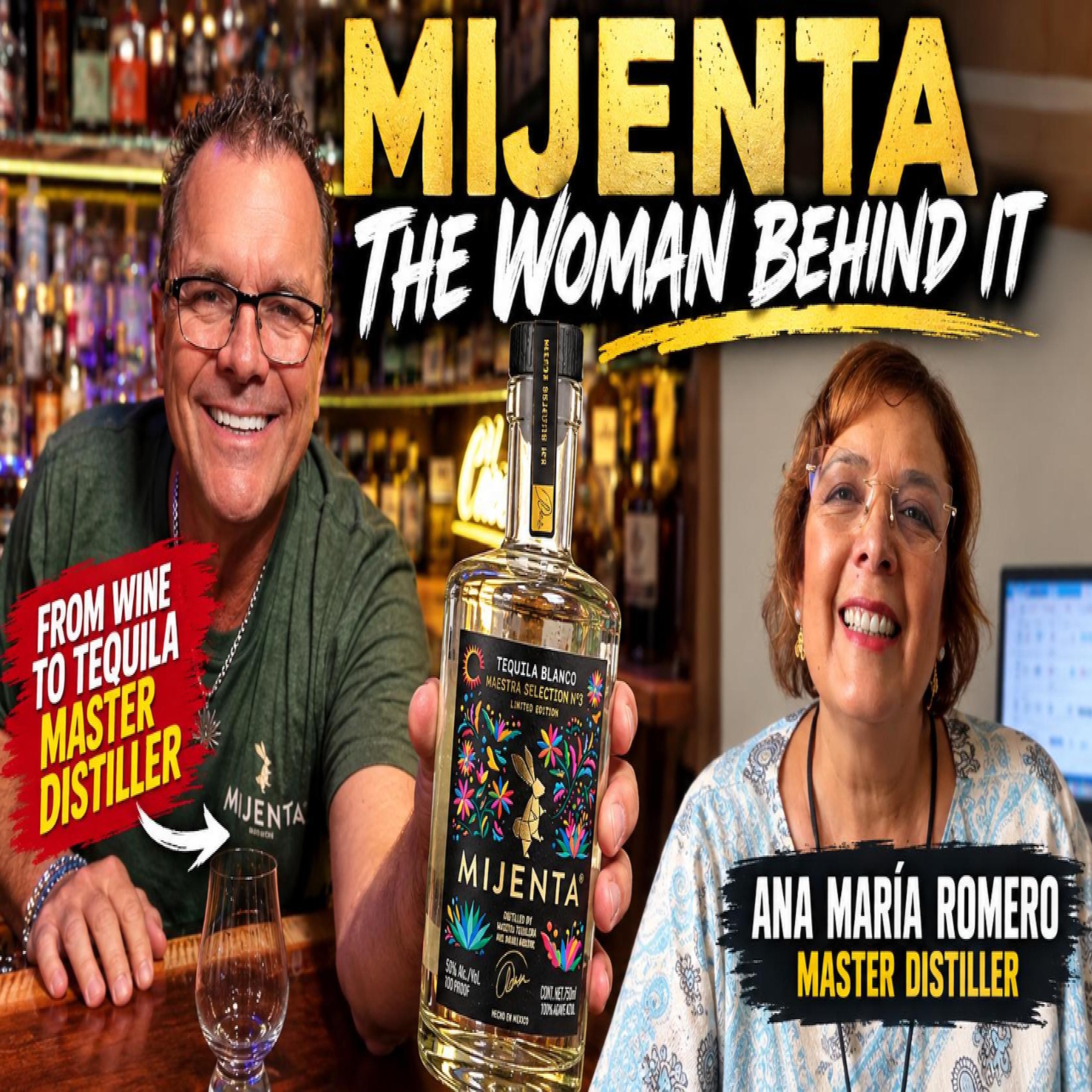
[00:00:00] Speaker A: Tonight's interview is incredible. Tonight you're going to meet Ana Maria Romero and you're going to learn about Mi Hinta and her story of becoming one of those amazing master distillers in all of tequila. So stick around. This one's pretty cool. It's tasting tequila with bread.
All right, guys, this is an interview that I've been waiting for for a long time. I. I'm so excited to have one of the most famous people in tequila that I've ever got to talk to. Anna Marie, how are you doing today?
[00:00:34] Speaker B: Hello.
Hello. This is very important day for me. When Bradley told me we are going to make an interview with you. This is for me a great honor because I follow your reviews and I love it that your passion by tequila. Thank you.
[00:00:51] Speaker A: Well, I appreciate that. I appreciate that very much. So. Okay, the first thing I want to do is take everybody to the beginning. How did you first get into tequila?
[00:01:01] Speaker B: My first love was the way the wines. I think always the wine educate my mind and my sense. But when I was stolen tequila, 10 years left to was stolen wines. And I'm working in the reward of the wines. I discovered an award. I discovered my roots like a Mexican woman.
For me was amazing all the processes. Because I always. I try to compare between the cognac and tequila. And it's a very, very wisdom about. On my past time, in my pre Hispanics time, the people how to discover the agave, how many the processes cooking the agave choose the best minorities of agave. For me was a new world.
When I start started my career in the tequila. I was thinking in the tequila chamber. We have one room, testing room. The descriptors of tequila 30 years ago.
We don't have nothing about these characteristic with the primary aromas of tequila or the aromas secondary aromas of the processes. What's happening the bares for me was a research because I was visiting all the distilleries in the. In this time and was interviews with the owners. For example, Julio Gonzalez. Well, I remember. I don't remember a lot more. A long time in this moment. But for me was a very interesting view these people, the past times and now the new people about the vision of tequila in this town. We don't have crt, for example, only we have a tequila chamber. And all the processes, all the how do you tasting tequila? The people don't know, don't knew. In this, in this moment, in these times. For me was a start, a new world, a new way to understand tequila.
I was tasting all the distilleries, all the tequilas. In this time. I tried to understand the vision for the vision of the tequila.
And my first question is how you make tequila this way? Because my father and my grandfather made this way. And what happened is you move this, for example, the yeast or you move the processes of fermentation. The people in this moment don't have the tools to understand the new puno of made tequila in this moment. For me it was amazing. And in this moment only try to understand the processes of tequila and design the wheel of the aromas that you maybe do you know about this wheel. And we have all the processes and all the aromas. And we are going to design that develop in the process of tequila. If you try to compare the cognac. The cognac well, is. Wine is very natural. Wine don't smell and all things. And the components aromaticas developed in the. In the processes of Cognac is only 300. However, in the tequila we have six component aromatics. Our plan or whereverage is the most complexity is complexity is wow.
[00:04:22] Speaker A: So as you were discovering this, did you ever see this as okay, this is going to be my career. I'm going to be a person that makes tequila in this moment.
[00:04:33] Speaker B: No, I don't. I didn't know if it's my passion, but when past the time I was training. Because what happened with this information? I met at one seminar. I am going to the distilleries and I have working by Salsa, by Cuevo, by Herradura, by Setteleguas, by Casa San Matias. I was working one almost distilleries in this moment. And I made the tasted panels by the quality of tequila. I was working in this. I write one book. The name is Los Aromas del tequila. And in 2720. 2027, I start with one brand and I made my first tequila. The name was Susurrus in English is whispers.
And for me was amazing. I have this opportunity. I discovered my passion about you use your sense and discover what happened in the Hema. And discover what happened in the cooking and the fermentation and the distillation and the aging.
It's amazing what happens. You move, for example, in the fermentation. We have three very important points to control of our quality. The first one is how we are going to transform the sugar in alcohol. What kind of yeast are you using the control of temperature. Very important because in this. In these processes you get the silkiness of the or the ferocity of the tequila. Because we have between 28 or 32 degrees. I choose 22 or 32. Excuse me, 32 degrees. We have a very standard control of fermentation. And you have a one tequila in your mouth is very sickness. Because you with this temperature develop glycerol. And the glycerol develop the serosity in the tequila. For this reason, when I understand the very important function in every part of processes. I decide I want to design tequila and start with this, my first brand. The name is.
[00:06:46] Speaker A: Is that brand still around today?
[00:06:49] Speaker B: The owner of the distillery now is the president of the tequila chamber. And in this moment he developed tequila. And now he said sugar of agave.
[00:07:02] Speaker A: What was your process of becoming a master distiller and working with mi genta?
[00:07:06] Speaker B: For me, when I started with mi genta, I am very happy because I have all the freedom to design tequila. Since start. We choose one terroir. We have in. In this moment, we in this time, we have highlands and lowlands. I was in my trajectory. I was studying every terra. For me, the highlands for the weather is fresh. We have a more fresh in the weather.
And the red soil. The plant developed. The agave plant developed more water and less fiber. And this water in the processes is transformed in fruity notes. For the reason when Juan Coronado invited me to the project, he told me I want a tequila gastronomy tequila. Very delicate tequila. And with minerality in the palette of the flavors. And the first step was what kind of yeast we are going to use to increase the flavor of the Thailand. And we choose one yeast. And this I cannot say what kind of this is because it's our top secret. However, this yeast increase of the flavor of the terroir. For us, the first thing we choose the yeast. The second is how we are going to make the processes. When I was in my vision about mi gente tequila. I was a tequila very modern, very contemporary tequila. And very softness, very with a us smell flowers. You must feel in the mouth flowers. This is for me the most important thing. And I was thinking when we are going to design this tequila. The second was the time of the cooking. We have autoclave autoclave in our processes, steel stand ovens, tea. And I decide I added more time in the cooking and lower pressure of the autoclave. With this we have a caramelization. And when you smell our tequila, you can find a little quantity of caramel on vanilla. Because in the cooking we have a caramel sale. And we have this kind of aromas. Our cooking was the induced trebleage in autoclave oven have eight hours in our processes we have 14 hours for the cooking more time. Other reason we choose the highlands is the quality of the water. It's very important for me. We don't have a high quantity of mineral. Minerals minerality for. For me it's very important for the process of fermentation. And our fermentation is open. If you. When you visit our distillery, you do. You do see that it's open our fermentation tanks. And however we try to control with air around the tank and then water very hot with this down of the temperature. And we have controlling it between 32 degrees Celsius for our fermentation. And we have 19 hours in our processes. I love it when the transformation is slow because when I was walking between the taps, I smell for example mangoes, pineapples, fruity notes like Cheers pears.
When it's still ready to guide the fermentation. And for this reason we choose this. The last step is the distillation. For me it's very important take the temperature inside of the alembic and where I want to transfer this liquid in steam. And the second temperature very important for me is when I want to transform steam in liquid. We need in the. In a car we have 19 Celsius degrees. And another when. When we are going to transform steam in liquid, we have 25 degrees. This result you can smell very, very nice flavors. And they could source fermentation in the heads and the tails. We have a control when for example, I take one sample of the juice alpha agave and metachromatography. I made a micro distillation and made a chromatography and decide well how many quantity halves of methanols super alcohols. Depends these numbers. I choose how many liters we are going to eliminate of the heads and how many degrees alcohol in the taste.
[00:11:41] Speaker A: Wow. Okay, I have a question for you. So when I first started enjoying Mi Genta, it was at nom 1412. And then you guys moved to the distillery you're at today, nom 1499. And you'll think this is funny. One of my friends asked me, why do you Americans always use the number and not the names of the distillery? And my answer is, none of us speak Spanish, so we say them wrong.
So yeah.
So when you were@nom 1412, I believe Hacienda Viejo, I really liked the tequila. And then when I heard that it moved to. To Tequila de Arandas, I was afraid the flavor was going to be different, but it wasn't. So how difficult was it to take A brand from one place go to a different distillery and be able to recreate the similar tequila in the process.
[00:12:38] Speaker B: It's very important question. For this reason the people don't should move the distillery. But however we have the most important for the processes of tequila. The first one is agave, but the second is water. If you want to decide every bottle of tequila I use 20 liters per liter of tequila of water.
The quality of water is very important. When I try to equal equal between one distillery and another.
I ask one sample of the water and go to the laboratory and try to equate by osmosis or different processes equal the water. And you don't feel the difference between all the distillery because the first one is the water and the second is the yeast. You always use at the same yeast you is very very hard or very.
I don't know how do you say that you have a very big difference between every distillery. You may. Because of the processes. Because.
[00:13:42] Speaker A: Because of the. The ambient yeast that's in the air at each distillery is different.
[00:13:46] Speaker B: It's the same yeast always. For example, if you go to the room of fermentation and you left of the distillery of the fermentation free. You don't add nothing. You have a good profile. But however you. You get to try the next batch and the. The. The both will be similar.
If you don't, don't be similar. Because we have a difference bacteria and different different gist in the processes make change very important in the profile. If you use you have your unique yeast and you add it in the processes. The style of Mi genta tequila always will be the same.
[00:14:31] Speaker A: That makes sense.
[00:14:33] Speaker B: Yes.
[00:14:33] Speaker A: I was concerned since it was open fermentation that maybe some of the ambient yeast at the new distillery would affect flavor from the ambient yeast that was at the other distillery. And am it didn't. It was very similar in flavor. I thought that was very impressive.
[00:14:48] Speaker B: Yes. It's for. It's for. For this we clean very well all the b.
Because we need to eliminate all this kind of. Of.
I don't know how you say in English. Every distillery have in the fermentation rule the print of tequila. Because every time repeat the processes. If you don't clean you they say the sale of the the woods you have no clay. You have everywhere every time the same profile. But if you clean very well you trying to equal the water and you use the same yeast. You have the similar process, the similar aromas.
[00:15:27] Speaker A: Fantastic. So what do you think the most important part of the process is? In making tequila, some people talk about that the the Hema. Some people talk about the cooking. Some people talk about distillation and fermentation. I have a feeling your answer is going to be fermentation.
[00:15:45] Speaker B: I say something. Every part of process is very important. If you have for example a good agave with with high richness of sugars, you cooking very bad. You have a very bad processes. Or you don't have control in fermentation. You you have about about efficiency, about profile. Every part of processes for me is important.
I don't have a one is this is determinant? No, because for example, if you have a good belly product and the final you goes to the bottling. This is you for example, use no alcoholic characteristic as part two. Transfer to two two.
Take the tequila pass for this and goes to the to the Every bottle you have contamination a plastic a tequila smell of plastic. Because you don't have a good tool to make your processes. For this reason every make tequila is not only agave. It's not only a good cooking. Good fermentation and good distillation is all every valuable. You have a very quality control. But because you have a good product is is a reason for me every part is important. I pay attention in all part of processes.
[00:17:07] Speaker A: Okay, so I have another question for you. So you came into this from wine and now you have all of this knowledge on how to make tequila. Who are some of the people that helped teach you along the way for you to be such a great master distiller today?
[00:17:24] Speaker B: Well, in this time when I started the wine, I I. I speak about the wine and goes to the tequila. My tutor mentor was Hans Bakoff of Monte Chanique in Mexico. I was living in the. In. In the world of the wines. I was in the.
In the harvest of the. Of the wines of the grapes. I was participating in the fermentation in the crushing of the grapes. All the processes. I was and he invite to study in the Davis UC Davis in California. Because very important to to develop your sense but your your vocabulary about of. Of wines. How to say is clean is everything every variable. And for me was a very important that that to try to understand the earth of the way the of the processes in the agricultural part is very important like to make wine. And what happened if you go to the winery and you see how is the processes of fermentation. You taste in the process of fermentation. You tasting the grapes every time is very important. And in this for this. I think that the white teaching my sense of but to understand another processes. And when I. When I start in the world of tequila, I don't have one mentor because he's a very the man. The man is the most people in this time that's the leader of the. Of the every distillery.
With my study, my knowledge about the processes, I start to understand how is the processes of tequila. And I don't have a one teacher in the. In the world of tequila.
[00:19:15] Speaker A: Well, I have to say I know you were a groundbreaker by being one of the first female master distillers. And I have several friends that really talk so highly about you. People like I Liana Partida and Meli and Shah Seed Carranza. They. They are actually working in this industry because of what you did. And thank you for stepping up and doing what you did to really open doors to so many people. I think is just very impressive.
[00:19:45] Speaker B: When. When you. Thank you for this word. When. When the people tell me this I made only my passion.
I try to the people when. When smell or taste I want tequila. Try with tequila. Think. Wow. It's amazing. Make Tequila amazing. We have transmit this legacy for all Mexico and the world. For me, this woman I have the opportunity to work with everyone. For me was amazing. The interchange our ideas, our vision of tequila. The follow the processes. For me the most the reason to make tequila and develop the senses Woman amazing woman. For me was. Was great because I don't have another people behind me for this. For this way or for this. No, I don't have this. It's for me very, very for me sa when I share about all knowledge of Tequila.
[00:20:45] Speaker A: That's awesome. Okay, I want to ask you about some of these special programs that you do. You have these special releases. How do you come up with the ideas like going back to this one and. And starting with making a product from seed. Where. Where did this inspiration come from to make this first batch?
[00:21:06] Speaker B: When I was working in Volcano M when I was visiting the Hima. Always every time I was take a lunch with the Jimadores and this Himadores.
The old man told me in the past time we. We made tequila with the agave of the seeds. We have take the ch. We have the flowers and we are going to develop all this kind of agaves.
The tequila was amazing. People told me in this time past the time I was thinking what happened if I was to return this idea. This Idea was born 10 years ago. When I was thinking about this and I say okay, I am going to try to. To. To look for the agavero Sharing my idea, I discovered one. And this one, the name is Victor Camacho. This tequila agave Tequila. He. He was a big idea about these processes. And she told me, yes, we can make. We are going to develop. We are going to develop. Choose the best models. We're going to weigh the ton. We're going to. We need eight years to take the agave of the seeds. Okay. We have waiting for the time how put in the nursery these seeds. And how to grow the alimentation that we made by the drops. All the processes.
When we are ready to use, we are going to put in the agave field. And we are going to wait that this plant develop the best. The best agent to harvest. But at the same time, I was taking a seminary with the agave. And the teacher says, if you see the agave now, it's very different 20 years ago. Because in this part we don't have agave fields. We have the wild way to the agave. This is sometime maybe 30 years ago when the people tell me this. And the most important is the genetic material of the agave. Because as you see, the sprout is a clone of the mother. And you see the seeds. We have a material genetic. I always thinking in the agave isn't designed to make tequila with the sprouts every time. Because we have the plant. We don't have a defense to the insects, to the mothro. It's sickness. You are going to use the seeds of agave. We have a good material genetic. And we have to transform the idea to make tequila. Not only of the sprouts. We need to use the hijuelos. The seeds. Excuse me, the seeds. For me it's very important that the people have understand the compromise. And the second question is the flavor will be different, will be similar. What happened with these processes in the pro. In the processes. I understand and learned that it's very complexity, very complex. Was too easy to work in the distillation. The this kind of seeds. Because develop less fiber the plant. And the methanols is less in the processes. For this reason, I believe we take care with our environment.
We take care this plant agave tequilana. Because it's our first raw material for native.
[00:24:49] Speaker A: Wow. So on this one you did from seed as well. But you did a different process. This one is tohona crushed. Correct.
[00:24:58] Speaker B: The number one is seeds of agave. What happened is you made one tequila with this. The third is the process agave. Where to cook in a oven stone of the popoca Tepel rocks The ta we use taona for this. We made a fermentation in moose tanks and the destination was in cooper. And the stabilization made only 50 days, 15, 50 days in claim clay pot. This is a homage to the old processes. After all the conquest in Mexico. Because before we have the underground ovens crushing with stones. In the pre Hispanic times, we don't have tahona. And the fermentation was in pot, in the tanks, inside, on the ground, in the rocks, we have fermentation and the distillation was in clay pot.
[00:25:53] Speaker A: Okay, so I've had this discussion with a couple of master distiller friends of mine. So I want to have this discussion with you because I want to hear your thoughts and opinions on this. So we talk about tona crushed and people get really excited going that tequila is crushed with a ton. And my question is, do you think that it's the tona that really makes all of the difference in flavors? Or is it really the process that we do with tohona that creates these different flavors and we're really just kind of being romantic about the tona wheel itself, or is it more of the process that you do when you do tona crushing?
[00:26:34] Speaker B: What happened in the roller Miller, you have the fiber and you meaning the crushing the agave. And you have. You don't broken the fiber in these processes. In the taona, when you crushing and crushing by to get the use of agave, you broken the fiber of agave. And the difference between joler ville, this is the mi genta blanco, for example, you didn't smell for example tons of thyme aromas like flowers, like citrus, like orange blossoms. Because this kind of aroma is when you crush with a stone and you break the fiber and you develop this kind of components in the processes. The people maybe see. Nice. Very romantic. No happen. We have a difference. Sensor, sensorial difference. If you. If you try to. To tasting mijenta blanco and you try to compare with manesta selection number three, you can find the difference very important.
[00:27:36] Speaker A: Okay, so really it's not the tona stone imparting flavors. It's more about what the stone does to the agave to create those flavors.
[00:27:47] Speaker B: Yes. While you're crushing you broken and you made a little difference and added minerality. Because this croching less minerality of the. Of the stone. And every kind of stone made different aromas of the tequila. Because our stone is a different kind of stone procedure of the stones.
[00:28:14] Speaker A: When you did fermentation on this, did you do fermentation with fibers in the Tank or without?
[00:28:19] Speaker B: Yes. No, no, no. With fibers of the tank. And we moving with oxygenation in our distillery. This is the reason we have three distilleries. In the third distillery we have.
We have scientific controls. We have.
How you say is scientific processes and artisanal processes. Handcraft process between. How for this reason we have our tank of wolf or jamaic wolf and we have inside a one serpentine. I don't know how to say. Check circle. No, I don't know. One of these.
When we have inside one coil. Coil, yes, coil this coil.
Pass water co. Cause. And we have a control of fermentation and we have a little quantity of oxygenation because we need to move the fiber. If you. If you put the fiber and you don't move, you don't have fermentation, you have another contamination and we have a very bad fermentation. For this reason and for this reason we made a control. If you taste our tequila, it's very thickness because the control of temperature and all the. All the contact with the fabric made aromas. Maybe in USME you can find a little quantity of woody of wood is for this and maybe honey beans.
[00:29:42] Speaker A: Gotcha. I haven't tasted this one yet. I got a video coming up to taste that one. So I'm very excited.
I'm excited about the whole process.
[00:29:51] Speaker B: Wow.
[00:29:51] Speaker A: Should. Should I taste it today? Should I taste it today with you?
[00:29:55] Speaker B: Okay. I don't have. Now let me. Let me ask, may I. One moment. I don't smoke for my. My cheers.
[00:30:01] Speaker A: Anna, I got this in front of me, so I want to ask you.
So I like this kind of glass for the nose then. Then a flute. What's your thought on what. What do you feel the best type of glass to use to drink tequila?
[00:30:19] Speaker B: For tequila blanco, this is the best shape because it's very straight to the middle of the. Of the.
Of the mouth and you don't see very well of the agave, all the citrus notes, all the things in this shape that you have.
It's better to repo or anejo because the shape made the tequila goes to the. To the sides of the mouth and you feel different.
For tequila blanco for me is better this shape.
[00:30:47] Speaker A: Okay, what's your thought on these type of glasses?
[00:30:51] Speaker B: This one. This is better this for. For blanco.
[00:30:53] Speaker A: Okay, well, I'm going to switch it up. Sometimes my sinuses aren't really great and I the bigger pore in that big glass. Sometimes I smell more than what I do. But today my sinuses are doing well. So I should be good.
[00:31:08] Speaker B: Okay.
[00:31:09] Speaker A: Wow, what a great nose. This is very nice.
[00:31:12] Speaker B: You found the first impression.
[00:31:15] Speaker A: 100%. 100% cook agave.
[00:31:17] Speaker B: Very intensive.
Very, very intensive.
[00:31:21] Speaker A: There is a. A really nice minerality to this that you don't get in normal. Mi hinta. I will. I do notice that.
[00:31:29] Speaker B: No, this, this is more. Because we have the T and the oven stone for this reason. You found more minerality.
[00:31:37] Speaker A: There's also a little bit more of a.
More of a pepper note in this as well.
[00:31:42] Speaker B: It's fine. This is fermentation.
[00:31:45] Speaker A: Okay, so pepper comes from fermentation.
[00:31:47] Speaker B: Yes. Maybe you can find honeybee between six and nine. Did you smell?
You can find honeybee and fruity notes like Napoleon guava.
[00:31:58] Speaker A: Yeah. There's also like the rind of a grapefruit. Like a little bit of a grapefruit notes.
[00:32:04] Speaker B: Yes. The grapefruit is because the tahona.
[00:32:08] Speaker A: Okay.
[00:32:09] Speaker B: So this agave. This agave is like.
And we have a very fresh weather. And this citrus note, when you move, when you crushing the fiber, you take one component. The name is Delimonen and Delimone develop this kind of aroma. Grapefruit. Lemon too.
[00:32:28] Speaker A: Yeah. As soon as you said lemon, I smelled lemon.
[00:32:31] Speaker B: Perfect.
[00:32:32] Speaker A: Okay. Salud.
[00:32:33] Speaker B: Salud. How do you feel the balance between aromas and alcohol? You. When the first impression. Alcohol, aromas.
[00:32:42] Speaker A: I didn't even get. I didn't get an alcohol at all. I got cooked agave.
[00:32:46] Speaker B: Is you moving this way.
[00:32:47] Speaker A: I feel like I'm getting a master class.
[00:32:49] Speaker B: Yes. Maybe when you. When you want time. When you have time, tell me. Yes, of course. Okay.
[00:32:56] Speaker A: I will meet you. I will meet you in Arama.
[00:33:00] Speaker B: Perfect.
[00:33:03] Speaker A: Okay. Salud.
[00:33:05] Speaker B: Salud.
[00:33:17] Speaker A: Great cooked agave.
And that citrus note shows up there as well. That. I'm going to say a little more lemon than what it was grapefruit, but. Or. But you still get that grapefruit a little bit. There's a really nice minerality and a nice pepper note to it too. And it. It drinks. It drinks softer than what I thought it would.
[00:33:35] Speaker B: Okay. And you must to feel the claim. The claim is like a earthy. You.
[00:33:41] Speaker A: You feel this like a clay.
[00:33:43] Speaker B: Huh? Is the claim is like earthy. Earthy tones.
[00:33:48] Speaker A: Yeah, that. That minerality turns into an earthy. An earthy note. Not quite like a petrichor, but like a. Like. Like a earth.
[00:33:57] Speaker B: Yes.
[00:33:57] Speaker A: I like the heat. There's a nice heat that comes in. In the finish on your tongue. A little bit on the sides, but really nice on the tongue. Like a. Almost like a jalapeno. Type heat with a pepper flavor. That's really good.
[00:34:11] Speaker B: Thank you. We have a.
A wall of possibilities. We have. We. We want. We want to play with processes. We have a lot of profile.
[00:34:25] Speaker A: So you've been doing this for at least 25 years. What is something that you still discover today that surprises you?
[00:34:34] Speaker B: The tequila always surprised me because maybe the earthy, the terroirs. When I was. When I was working in the second project, the five earths for me was a very high discovery because we have different. The same plant with different steroids. We have five profiles very different. For me was a big discover this because we have only one plant. Did you move the only with the earth? You have another problem.
[00:35:07] Speaker A: Has there ever been a thought of releasing each one to be able to taste them independently?
[00:35:12] Speaker B: No. I was always tasting, but I don't.
It's for me only.
[00:35:19] Speaker A: So out of each state was there one by itself that was your favorite?
[00:35:23] Speaker B: It's like your sons. It's like your kids. Every. Every one a very special characteristic for me.
Every project I was learning, I put science in my mind. I put a challenge in my. In my.
My career. Because every processes we have different challenge like make this decision and mainly different. The people live the difference. Every bottle is different.
[00:35:53] Speaker A: So we've talked about blancos a lot. But you do some amazing things with aging. So do you make the choices and do the blending of the barrel the barreled selections that you do or do you have somebody that works with you on the barreling part of your you
[00:36:11] Speaker B: for make the repo and anejo. I have a.
When I was talking why how will be my idea of repo and my first idea was when you smell our tequila, you can find the first. The cucagave. You don't lose the raw material. You must to be enjoy the agave. All the characteristics of fermentation. I like flying. We have the vanilla caramel and the penze kind of vanilla. And I was playing with different Americano, French oak, acacia cherry. And I know that we have playing with Hungarian. We have played with the Russian barrels and choose this because we have the best profile by the idea of mijenta and was always pleasant.
[00:37:03] Speaker A: The anejo that you guys have that blend of barrels and that flavor to me is it's. It is a tequila that is a dessert for me. I still get cooked agave, but there's just so many nice sweet flavors that come from those barrels that you use that it is. It's an anejo that I go to Kind of on a regular basis. It's a nice sipper for me. So not to get controversial, but what's your true thoughts about crystallinos?
[00:37:33] Speaker B: It's a challenge because.
Because we left all the aromas and we went we need to move remove the color. And we was working with different kind of chair code. We was a very. Maybe have 50. 50 proofs, 50 tests and with different charcoals. I choose the time of contact or the quality of the charcoal bar made tequila. And I choose the Symphony Barrel. Because the Symphony Barrel I love the. The match made with the tequila because it's Americano, but different forest, the same aging, the same toast, the same dryer.
However, we have vanillas, caramels, coconuts, maples. When passed by the church. I try to respect this how is impossible to get the same aroma because we need to eliminate the material organica with the charcoal. And if you try to smell the crystallino, it's very vanilla, caramel, coconut and cuca Cabe. And for me it's a challenge. I don't know. Agree. I don't like me made crystallinos. However, for me it's a challenge by my. Challenge by my sense of. By my creativity.
[00:38:53] Speaker A: Well, I did like the crystalino that you have with mi genta. So that says a lot because I don't drink a lot of crystalinos. So here's a question. When you are ready to grab a glass of tequila all on your own, not working just at home. What is your go to category Are you drinking blanco Repo What? What's your normal everyday type drinker?
[00:39:18] Speaker B: This depend the meal, the dessert. Always I try to a little the blanco before the meal and the second. I try to make the pairing with the best flavor with the best tequila. And maybe try three tequilas in this day.
Maybe if I when I come back to the distillery I am sometimes tired. Maybe I take a little sip of repo it. Depend, depend.
And I want to make a cocktail and try to make a different flavor with mi genta tequila. With my parring.
Always I was cooking. I loved cooking in the weekend. And I try to make the pairings with me genta with. With the best aroma with the best. For example, the Oaxaca is the issues with the.
You try to the. For example, a salad with cheese of goat with the strawberries with tequila blanco. And always I was trying my sense and I tried to working with tequila. And I love it to drink wine too. Depends the animals. Depends the moment depends.
[00:40:45] Speaker A: Okay, so you make a lot of great brands. Like I have some of them lined up behind me. Inspiro, casa, Mexico, mijenta. So this. This answer can't be one of the brands that you make. What is. What is a tequila brand out there that if you see it, you go, I love that tequila, too, and I'm going to drink that today. What's a go to Tequila that. That you like?
[00:41:11] Speaker B: It's a dependent day. Depend, for example, if you have a new batch. I drinking this new batch because I try to look for the difference or it's equal or made a new product.
I try to. To drink. It's a pen. I don't have a one. The unique fabric. All my favorite.
[00:41:31] Speaker A: You have a very similar answer to me. My answer is always my favorite is whatever one I picked up and decided to drink today because there's so many great tequilas and so many people making great tequila.
Well, I want to say thank you. Thank you for taking your time out of your workday today to sit and sip some tequila and share your knowledge and information. And it was amazing to meet you here today. I can't wait to meet you in person. So I want to say cheers and thank you so much. So much.
[00:42:01] Speaker B: Cheers. Thank you for your time. Thank you for your questions, and it's an honor. Thank you, Brad.
[00:42:07] Speaker A: Thank you. The honor is all mine. Cheers.
[00:42:10] Speaker B: Cheers.