Episode Transcript
[00:00:00] Speaker A: Hey, guys. Welcome back for another interview tonight. I'm excited you're going to meet Alvarado Gonzalez, Jr. The owner, founder of Kabul Tequila. And I'm going to tell you, I've met a lot of amazing people, and I'm really blessed that I get to do this and talk to these brand owners and master distillers. But today, I think I've met one of the wisest, most amazing young men in doing these interviews. So you're going to have to stick around and check this one out. This one is really awesome.
All right, guys, I'm excited for this one. Tonight we're gonna talk about a great tequila and get to speak with Everardo Gonzalez Jr. How you doing tonight, buddy?
[00:00:48] Speaker B: I'm doing well, my friend. Thank you, Brad, for having me on.
Really excited to finally get to meet you face to face, even albeit through a screen. But this is awesome, man. I'm excited to get into it.
[00:01:00] Speaker A: Well, next time we'll do it in person. I can't wait to meet out of Mexico sometime.
[00:01:05] Speaker B: Yeah.
[00:01:05] Speaker A: All right. Tell everybody about Cabal Tequila and who you are and how you got started in the tequila world.
[00:01:14] Speaker B: Yeah. So. Well, my name is Everardo Gonzalez Jr. I started this brand pretty much around. I started the entire process around 2012, and it took me around seven and a half years to pretty much launch the brand. And launched it in. What we're pretty much known for is the. The hors head bottle, and called it Cabal.
It's a little bit different name in Mexico because we had an issue with a wine company, but Cabal in Spanish, when something's perfect, something's just right, it is exact, it is precise, it is thorough. It is Cabal. If you consider what a caballero is. Yeah, it is. Has to do with horses, but also a caballero has to do with how you carry yourself and being thorough, precise, exact, and intentful.
And I needed a name that actually exemplified what it means to make tequila the way we make it, what it means for me to do it the way that we have done it.
And I needed a name that really kind of brought together, personified the way I was raised and the way my dad was raised. And, you know, it's a lot of the principles and ethics and ideals that have built our culture, even the subculture there in Los Altos de Jalisco and Jalisco itself.
And that was important to me. This is very much a legacy brand, something that I built, you know, alongside with my father in many ways, although he wasn't as involved in all the day to day and all these things, I still made him a partner because of what he. All the effort and what his sacrifices were to build something where I can set this platform up. My family's been growing agave for over 100 years in Los Altos. And through marriage, I became close to. Not my marriage. Through a marriage of an aunt, I became close with the Montes family. And the Montes family are actually the first family to ever make an organic tequila. We had then planned to open a new distillery and they invited us to be the first brand and we were the first brand to actually distill at that new distillery, NOM 1646.
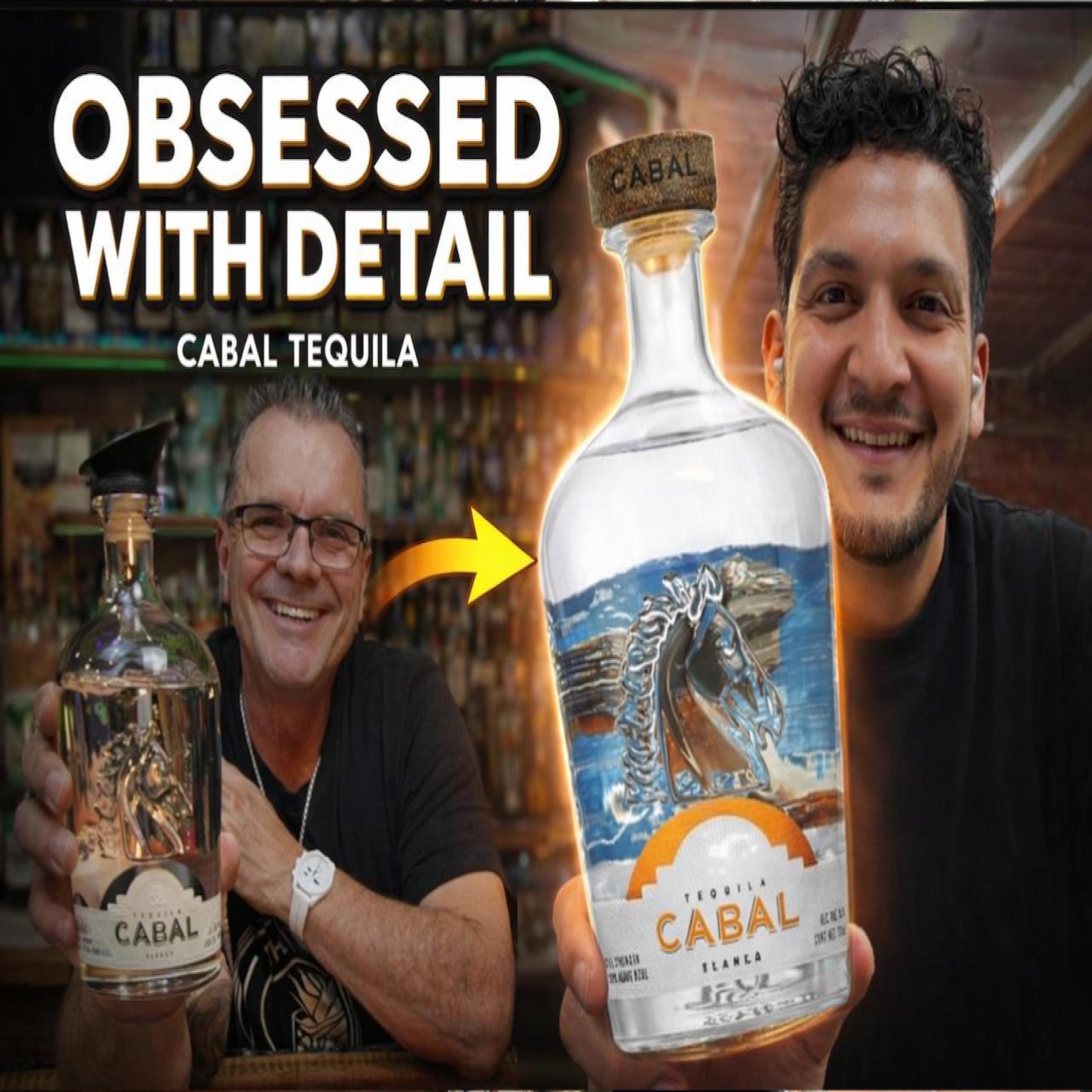
And then I transitioned it from our Horsehead bottle to the bottle that you see in front of you.
The shape, everything is very much intentional. The shape is meant to mimic a clay pot distillation that existed in the pre Hispanic era.
They had similar clay pot dist.
Some of my favorite mezcals are clay pot distilled.
And then on the bottom of the bottle it says de los buenos que de amos pocos.
There are a few of us good ones left. And that's also sort of a testament to.
I put it on the bottom of it because it's a testament to our foundation, of what it means to us to be in this industry doing the way that we do it. I think there's very few of us left.
And also it's a testament to holding ourselves to a certain standard of scarcity, where if you hold yourself to a certain standard of scarcity, you understand that if there's few of you left, that each of your decisions, micro and micro, greatly influence, you know, everything that you want to produce and want to bring about or want to give life to. So it's a reminder that that's our foundation, you know, there's few of us good ones left and. And to make the most of every decision that we do.
And this top actually is a saddle horn, so it's actually a Swiss wood from Switzerland. Sustainable and it's recycled glass.
These arches on the front are the arches into my dad's hometown in Jalasutitlan, Mexico. And now finally, I have the real estate on the back. I actually give you the vintage, I give you the elevation, the coordinates, the water source, the yeast, the fermentation time, and the name of the plot. And I think it's kind of interesting to be able to essentially Google in all the coordinates and be looking at the actual piece of land where this agave that's in this bottle came from.
I'm still working on more transparency throughout. Be attaching NFC chip to each bottle down the line, so that way you can really keep it, keep track of it. And I like to nerd out about these things. And even my age expressions will have the original source vintage blanco that went into the barrels. So that can kind of trace it all the way through.
[00:05:27] Speaker A: That's awesome. I like that you're putting all that information on there now. Has that caused you a little more issue with the crt?
[00:05:34] Speaker B: No, actually we have a great relationship with them. We understand.
Since we have all the paperwork and everything being single estate and a lot of the stuff is. Well, actually everything is from our family's estate.
We have records and everything. And the bioagrit, which is our organic governing body, is very, very regimented and very, very strict. So we have all the paperwork in hand. So all it is is planning things out. You know, we've planned out several plots ahead of time so we know where we're going to harvest for the next plot. We already have all the. So it's just. It really is. As long as you have things planned out and all the paperwork lined up, they're pretty, you know, they're busy people. They kind of let you do your own thing. Sometimes they get a little bit, you know, ridiculous. Some people are more chill, some are less chill, depending on who you get as your verifier. But it's.
It's all right. I'm not. Can't complain about. There's other issues that we. We deal with.
[00:06:33] Speaker A: Sure.
Now, I know the Horsehead bottle is very famous. Is that something that's going to stick around too? Are those being phased out?
[00:06:40] Speaker B: They're phased out as a standard. That's why I brought actually this one. This is a Horsehead bottle that is. We know it as a cabal caddy. So now it will be reserved exclusively for single barrels. So if you see. Single barrels are special edition.
If you see something like this, then it means it's a special edition or a limited edition.
But that's what the horse set is reserved for. Now we have a Year of the Horse bottle that we're putting in a few at the end of the month. And that's something that it's less of a Year of the Horse, it's more of the bottle released in the Year of the Horse, but of the same kind of ideals. But yeah, that's. The horse head will still be around. It'll just be limited.
[00:07:23] Speaker A: Very cool. I know. They're so cool looking like every time I've ever seen.
[00:07:26] Speaker B: Thanks.
Yeah. And it's. It's all the colors will never be repeated. So if you see a colorway, I won't repeat the colorway. At the bottom of the bottles, it says Rancho Portisuelo, which is where we keep our horses. We have around 20 to 30 horses that are ranch at any given time.
And I tell people it takes a lot of time, love, and passion to raise a noble seed. Time, love and passion to raise a noble spirit. And I needed the vessel that carries the spirit of Jalisco, which is tequila, to also embody and carry the spirit of my culture and what it means to do things the right way. You may sip this, or somebody might sip this. You might get a bottle without a label on the back, you might do something. And we do a lot of things that you might never know sipping it. And we do it anyway, because that's the right way to do things.
One of the monikers that I founded, the ethics and kind of the morals of the company, is Japanese proverb, which goes like this. It says, righteous is the old man who plants a tree whose shade he'll never enjoy.
That is what true nobility means to me, and that's what it means to me to be kabal, planting the seed, whether I'm here for the shade or not. Doing things the right way, regardless of the buzz around it, what people say, all these things, you just. You could only do your best. You could only do what you think is right and correct and proper and to the best of your ability and accept all kinds of criticism and move on and. And be better and, you know, feel. I still feel like I'm just getting started, and I've been doing this, you know, going on 15 years.
[00:08:59] Speaker A: Wow. So you don't look like you've been doing this for 15 years. So how old were you when you started this company?
[00:09:07] Speaker B: I was.
When I knew I wanted to do this, I was about 20, 21 years old. I'm 36 now. I bootstrapped all of it.
The beginning, I was door dashing to pay for the mold on top of my work, on top of. I grew up in the garment industry as well. This is actually one of the shirts that I made. It's one of my designs, and I actually have the.
All the information on the back, and I was doing production management for that.
Growing up in the garment industry, it was really important, and it influenced about why it's, quote unquote, a pretty bottle when I was going out or to the buying Clothes or whatever. My dad would always say whenever I wanted to buy clothes, he would grab the T shirt, jacket, whatever it was, turn it inside out, look at, check the seams, check the way it's made, check everything. He's like, you're just buying the label. You're not really buying quality. So for me, it was always part of every. Anything that I did that I had to be made as well as it looked, and it had to look as well as it was made. That's not a knock on anyone or anything. That's just a personal thing to me that it was important. It would be dishonest to me if I didn't try to present the product to be as presentable as the effort that went into making it.
That's why it was very important to me to do both. And our factory still holds half of its clothing, half of its tequila. We still make jackets for NASA there. So all the jackets that they're flying to the Artemis project, to the moon, we're making other jackets for them. If you ever seen Ford vs Ferrari, the movie, we made all the jackets for that. And we outfitted Christian Bale with his suit. So we still work in the clothing industry. And that's something that I kind of grew up in. And to me, it all goes kind of first circle of doing things essentially the right way.
And I want. It took me a long time to design the mold and all these other things.
That's why it took me that long, and that's why I've been in this for such a long time. Because I. I don't even know how to look for investors. That wasn't even a thing in my. In. In my head. It was just like, I just gotta do it.
[00:11:08] Speaker A: So what was the thing that made you go tequila? Like, what's your history with the spirit of tequila?
[00:11:15] Speaker B: I grew up in the garment, in the garment industry, but I also. My family's been growing Agave for over 100 years.
So Agave has always been in my.
My family. We use right now, the Montes family agaves for all of our state stuff. But my family still grows and plants a lot of agaves and Los Altos de Jalisco. So it was always something I grew up around.
It was always something there.
As far as working with a Montes family, that's something that always.
I didn't shop around to distilleries. I didn't start a brand, realized it didn't work out, and then hopped to another distillery.
It was never an option for me. It was Always work with family, essentially.
And tequila greatly represented the spirit of aliso. And it's very nuanced, you know, and I, I felt when I used to have. See people engage with it, obviously things have changed in a more positive direction. But growing up, the way people engage with it was not the same way that my. My ancestors and my, my dad and my family engaged with it. They wouldn't, you know, shoot it in the way sometimes some of them had, you know, lime and whatnot. But that was kind of like a personal choice of a flavor to kind of like.
So instead of a cocktail, they would have, you know, their lime there and then every once in a while suck on it, just because they enjoyed that, that kind of repetition. And it was a different thing. It wasn't necessarily meant to mask the flavor as it, you know, was recently used.
So, you know, there was a great disrespect towards the spirit that offended me.
I didn't realize. I used to get a knot in my throat when people would just. And I was like, well, what about that scotch? You have all this respect for that scotch, but you're just, you know, And I'm like, what it takes to make this? You know, this is a seven year plant, eight year plant. Like, it's a single grain. Yeah, cool. You put in a barrel. Okay, awesome. But like, we, we do that. Plus, it was just always kind of. So to me, I realized I had a lot to say. And I think the spirit and the nuances and the complexity of developing a tequila the way we made it. This is a brand new yeast, a yeast from scratch from one of our own plants I developed here at ucla and I took it back to Mexico. We isolated the yeast strain, tested for alcohol against temperatures and a bunch of other things. And we isolated the esters and the yeast that provided the esters that we wanted for our profile and determined the distillation times and the fermentation. I've been tweaking here and there. This last sample that you have is the final form of the fermentation. But it's pretty interesting because you can harvest and do things a certain way and the product will still vary. And that's why, to me, it was important to have a vintage in my tequila because it is a bottling of that life, of that moment.
And I see it as a parallel to our own lives, our own life. We mature, and at the end of our life, we're bottled by the memories of our loved ones. And they open them up when they get together with people and share it across and pour out these stories for everyone to hear. And to me, there was a lot of romance in that. And there's a lot of things that made having a vintage tequila very necessary for me.
And so far, it's been well received in many senses, and I like it. So I will always try to be better, and I always try to listen to things that can be better. But, you know, we're here now.
[00:14:47] Speaker A: Yeah, that. Wow. Like, how did you think of making the yeast that way and coming up with propagating your own yeast?
[00:14:54] Speaker B: Well, it's actually a funny story.
I knew that I had to develop a new yeast when we were moving to a new distillery.
I worked in a background also. I had a bunch of things to help fund this, but I was doing real estate as well, commercial real estate. And I have my broker's license. And I ended up finding a small property for my dad to exchange into. Did a 1031 exchange, and he exchanged into another property that I found for him. And one of the tenants was a company called California Mountain Bakery, and they are owned by the Padillas. The Padillas, their ancestors, Ufrado Padilla was one of the four founders that, along with Don Julio that founded Tres Magueyz and founded Don Julio and his grandfather, Padilla's grandfather, Ufrada Padilla Grande, worked for the Don Julio family for over 20 years as their yeast expert. And that's why they went to California. Mountain Baker here in California has won the best pie three years in a row. They make their own bread, yeast and all this stuff, and it's honestly phenomenal. And I. We were talking about it, and he told me, and I met with his father there, who also worked with Don Julio and his. His prodigy, his protege, sorry, there in Atotonilco, Mexico.
So I started speaking with him, and I said, hey, look, I'm trying to develop a yeast. It's like, oh, what? You should do it the way the old Don Julio was done.
And he was very attentive to his fields. Don Julio, he always spent his time in his fields and always took care of the plants, got rid of the melissas, did extra care for the plants. Everyone who was told that his plants were always amongst the most beautiful plants out there. And he always swore that it was his best form to making the best form of tequila. And they said that they actually found the old ways were to grab these pencas. And there's a whole process of exposing the yeast from this pencas.
And it made sense to me, because if you're going to find yeast that are already attracted and live amongst the plants. There's going to be a cohesion versus buying them from the lab. The oldest families that are in tequilas did it this way. This was the way to do it.
Some of the families, you know, obviously use some of the other stuff that's kind of blended in, and they concocted their own versions. But, you know, some of the most respected families, at least for me, did it, did it this way.
And in my mind, this was the right way to do things.
And how could I have a company that is cabal that means the right way to do things if I don't try to do the right way to do it?
So. So, you know, I didn't. I'm not a biochemist. I don't. I don't know, you know, but I learned pretty quick. So I took it to a friend at ucla and she helped isolate three different yeast strains. I have pictures of it I can share. I smuggled it all the. My aguamiel, my pencas, and the mosto, which is the dead awaniel. I smuggled it. I actually, from Mexico, I shipped it overnight to the border of Tijuana in a lunch pail.
I drove across the border, I put it in the back of my truck, and then I bought a bunch of tortillas and chips and a bunch of stuff. And when I got to the border, I told the border engine. I was like, oh, yeah, I'm just throwing a party. Bunch of stuff. And he just didn't take notice of anything else. And I brought it in that way and ended up smuggling it back into Mexico through.
Through other ways on the airplane.
I'd rather not say, but it's. We were able to get it back, and this is something that we were working on for quite a bit, and it ended up working out great. And the final product is what you have in front of you.
[00:18:39] Speaker A: All of the smuggling may or may not have happened for anybody.
[00:18:42] Speaker B: Correct? Correct. This is for dramatic effect.
[00:18:47] Speaker A: Yeah, exactly.
[00:18:48] Speaker B: Well, what I have in front of
[00:18:49] Speaker A: me as a blanco, you know, you. You said what I always say to. To start and judge a tequila by the blanco. And it's got a great nose on it. It's got a great citrus hit to it. There's a nice minerality to it.
I also get, like, a really nice vegetal note that I can't really put my thumb on it, but it's got, like, a herbal vegetal type note. There's a nice citrus, like a lime Zest that I pick up in the, in the flavor. Flavor. There's a nice vegetal heat to it.
This has got a lot going on. This is really nice.
[00:19:24] Speaker B: Yeah, it's a little bit of a.
I mean, it's just. It really has to do with our pans. I get that note is a bit of an artichoke note for me. That's what I get. Like buttered artichoke a little bit. But I get some zest. I get some mango appeal in there. I get a coconut.
Little bit of toasted coconut, too. But the fermentation that we do is, you know, pretty unique. And we, we, we all. I have an open air fermentation and that, you know, we have olive trees, so, you know, everything kind of changes, even the acceleration. If the olive trees are in bloom, it actually ferments a little bit faster. We get to our 0.4, which is practically dead pretty, pretty, pretty quickly.
[00:20:08] Speaker A: I think the vegetal note that I pick up is almost like a. Like a cut agave. The smell.
[00:20:13] Speaker B: Yeah, yeah. Before they're cooked and in the morning when they cut it in half.
[00:20:19] Speaker A: Exactly. When you're right. It's kind of a combo. I said this the other day, that when you're standing by the oven, so you're smelling cooked agave, but you're also smelling them as they just came off the truck and they're cutting them. And I always relate that to like celery has a smell, but when you break celery, there's. Yeah, it blows up those smells. So. Yeah, like smelling cooked agave while they're cutting the fresh agave.
And then I. I get in the flavor.
You said pineapple, and I was trying to kind of. It's almost like a not quite ripe yet pineapple. Like just an under ripe, light pineapple. I get that in there.
It's nice.
[00:20:59] Speaker B: Yeah.
[00:20:59] Speaker A: This is.
[00:21:00] Speaker B: No, thank you. Thank you, thank you. Yeah, yeah. And it should have.
To me, my focus is a lot on the finish.
Even though it's at 40%, I do want it to have a big mid palate and a strong fish finish and have a very pleasant retro hail and a lingering sort of like mineral. I think the thing that sticks around the most is the minerality on your tongue and as you blow out.
Right. And to me, that's, I judge, also a spirit. And this is all spirits by their third. Third by how long they last. Because that's the most difficult thing to do.
I can make a quote unquote smooth, good tasting tequila. I think I do that with. With a potro in many ways. But, like, I don't like to use smooth for sake of conversation. Something clean, something easy, something approachable, something simple, if you will.
But to do it so that it has a lingering flavor. Like, this is why I have. You can't see it from your angle, but I have probably almost 2,000 bottles here of different brands, of different things that. Of.
Yeah, let's have a lot.
I'm a big fan of the Spirit. This is my Library from the 70s to.
To recent stuff, from discontinued brands to unicorns to not ones and all kinds of stuff that I have here. I've. I've tried everything because that's how I learn. And this is something that's, you know, pretty important to me, so. And I realized that I personally enjoyed the ones that had the longer finish.
Some repos, like right now, my favorite repo, but probably still be the. The Artenomf. It's one of my favorite repos out there.
Also. Cayo and Teatres makes a pretty good repo too. But my blancos, I'm. I'm the old.
I like the old Altania Tapatio. I mean, not Tapatio Villalobos, if you. Yeah. If you're familiar, it's a discontinued brand, but I really like that long profile that they have.
Obviously, I love Tapatio.
There's a lot of great brands that I. I really enjoy, but the ones I realized would be Mezcal or whatnot is the ones that had the finish. So I really wanted to focus on the finish for this and long, like you said.
[00:23:32] Speaker A: It's funny that you brought up Arte nom 14 14. Cause 1 of the things that makes that special for other tequilas made at 1414 is they propagated the yeast by picking pinkas in a certain field and created the yeast from those pinkas, which is the way Sergio Vovanka's family did it. And that's what they did to make the nom different. And I was thinking that when you were talking about. I'm like, okay, there's. There's a family tradition that's doing the same thing with that ticket.
[00:24:01] Speaker B: Yeah, yeah. The Gonzalez family for Citadellegos did that too. So it's, as I said, it's the old school way. A lot of brands right now, you know, when they mention champagne yeast and whatnot, it's like, okay, great. But it's.
It's really hard to go like, mess up when you're using champagne yeast. It's. You get a good Product, you get like a Lalo. It's a good, solid product. It's. It's simple. It has its own flavor, whatnot. But you. I don't think you get the complexity that you would get from, like, for example, the Arts and Nome or the Citadellegos or, you know, even if I say cabal, I just. I just don't. And it's not a knock. I. There's different. We all have a bunch of tequilas for different reasons, right? Because we enjoy different flavors at different times. And, yeah, I think, to me, that was important. And, yeah, it doesn't surprise me that they did that for that, because I think that's a big difference.
[00:24:52] Speaker A: Yeah, for sure. I think it's a big difference, too. So when you're using the yeast that you're using and you're going into fermentation, are you going straight to, like, stainless steel tanks, or are you using any type of wood?
[00:25:04] Speaker B: No, stainless steel. Yeah, wood. Wood is awesome. It just depends on who built it, how it was built, why it was built. Like I said, everything I try to do is intentional. I have another project that I'm working on for a different vessel to hold the yeast.
It's based on the volcanic rock that we have from underneath our distillery. That's actually why it's called La Rocca. Do you have the high proof in front of you?
I do.
[00:25:27] Speaker A: I'm gonna pour it.
[00:25:28] Speaker B: Yeah. So the high proof it should have. I think you still have the one with the rock top.
So that's actually volcanic rock from underneath our own distillery.
So that's a limited edition one too. And we don't. We won't repeat. We had a very small amount, and we just put them until they ran out.
But that's actually a piece from our floor underneath our distillery.
So if you look at that rock, it's very porous. It's very. So I'm working on a project to incorporate that minerality, that rock into a vessel for future fermentation.
[00:26:03] Speaker A: Oh, wow.
[00:26:04] Speaker B: Because I think that'll actually impart flavors. Having something just for the sake of something like, for example, Atona. If I were to make a toner right now, I think it would minimalize. It would greatly reduce my output, but it would also minimalize the actual impact of flavor in many senses. Until you have something like Costcoine has, which is.
There's micro fermentation in the pour. There's all these things from the. The patina of flavors that are in crude over time. Just like Felipe Camarena's Frankenstein and all kinds of other famous tonas that been around for a long time. So they have that flavor. I would. If I were to have a tona, I wouldn't see something significant until like maybe 10, 12 years from now of constant use. It's a sell point, but I don't care to do things for a sell point. It has to have an impact on the experience.
[00:26:55] Speaker A: I totally agree. I think we romanticize the tohona a little bit.
Yeah, I think it definitely has.
[00:27:02] Speaker B: It's awesome. If it's been in your family forever and you have that, you're using it. Wow, that's unique. Cool. Like, that's. I can't wait to try it. But for me, I don't have generations of a tona, you know, at my disposal. So it would be not authentic to, you know, to me and what I'm trying to do just be to placate to some kind of marketing thing.
[00:27:24] Speaker A: Yeah, I. I agree. I mean, I. I get excited when I see it tona. I. I do like some of the minerality you get with the tona. Sometimes you get a different sweetness. But you're right. When you talk about a tohona like fortalezes or siete leguas, you've got such a. And of course, la tania, you got such a old use of a great tojona that I think there is a difference.
[00:27:43] Speaker B: And it's elemental too. Yeah, exactly. It's elemental. Like, for example, the Cieto de la Guas, they have two distilleries. The old distillery is called El Centenario. And they had a horse drawn tona there. And there's actually a little bit of a divot there because they. The horses used to walk so much on it, and the horses would poop and. And that poop would carry on like those. It would start micro fermenting from the juices even.
All that has to do with the final flavor. And that is so cool and so unique. And you can't really fake that. You. You can't really engineer for that. Rather you just kind of have it. Have the magic have happened. So I'll. I'll focus not just capital, but I'll focus my efforts on something that is more authentic to me and my situation and how I want to do things. But yeah, like I said, it's not a knock on people using tonus because, I mean, it's a whole different flavor profile. But I think after time. After time is in, it really starts grabbing a whole. Its own kind of identity.
[00:28:41] Speaker A: So. So you've learned all of this and you've put this together. Are you your master distiller or do you have a master distiller? I'm.
[00:28:48] Speaker B: I wouldn't say I'm a master distiller yet. I am, you know, gonna be taking classes at the university there in Guadalajara for and to be officially licensed as a master's dealer.
You know, I've been doing this and I'm very hands on. I'm there for every distillation, every harvest, everything.
Very hands on. I pick the, you know, I, I do all the things that I feel like are necessary to be able to give you what I consider the best possible product that I can physically give you.
But I still work. Right now I was working with Ector Davalos, which is the master distiller behind Cayobe, Titres and Criollo.
So I was working with him for a bit. And then now I'm working with Alvaro Monte's son, which is Garbian Montes, who worked for Eldura for a very long time. And, you know, he's running a plant there, larocca.
So, you know, I'm learning from that. I still got a lot ways to learn. I am not my master distiller. I do want to be my master distiller one day.
And regardless of all the decisions that I make and all the things that I kind of experiment on it as a master distiller would, I'm, you know, I hold that position such a high respect and high regard that I, I wouldn't until I have probably five or six years of kind of doing it in my own way. Exactly. Then I'll be able to entertain that title.
[00:30:27] Speaker A: That's pretty cool. You speak with such a knowledge point that that's what made me think, okay, you're probably, you're probably the guy in there doing it. So that's pretty awesome.
[00:30:37] Speaker B: I mean, I'm just a student of the game, if you will. So I, I just, I love, I love learning about this, man. I, I absolutely do. And I'm a big fan of the Spirit and I think that's what it really takes. It's almost like I still get excited about little things, small things I get really excited about. I get all giddy and like a little kid kind of. I feel like sometimes. And we're like, oh, what about this? And you know, what about that? And if I didn't have that spark in me still, which I don't think will run out, then I wouldn't be doing this. I geek out over other tequilas and other stuff all the time. Whenever I'm in front of people that are making tequilas and estradas, I'm asking the most questions and I just. I don't know, I'm always curious.
[00:31:18] Speaker A: I'm the same way. I geek out about so many different brands and I'm. I'm fortunate that I don't have a brand so I can just always be experimenting and learning about all these new brands.
The hardest question I get though, is people will be like, well, what's your favorite brand? And it changes every day. Like every day I get to taste something new. And, you know, so I'm always like evolving that. So I always say, go to's, you know, or these are ones I'm excited about today.
[00:31:45] Speaker B: That's what I. Yeah, yeah, yeah. That's what I say too. And even about my own brand, I will always say, my, my, mine is the second best tequila.
And whenever someone says, okay, well, what's the best tequila? I'm like, whichever one you're drinking, whichever one you like.
Because, you know, one can never say that about their own product. At least I. I think you can just do your absolute effing best and let the chips fall where they may. Let the people tell you what they feel and accept it and listen.
And if you can find something to do it better, then do it better. Like, I was always impacted by.
But it was Andrew Carnegie who developed the Bessemer process to develop steel.
And he had this whole engineers develop this whole contraption that produced such amount of tons per hour. And then at the end, one engineer said, hey, if we make these, these changes, we can save something relatively small, but 15, 20 cents or something like that per ton or something like that.
He took it all down and redid it to do it that way.
And that always impacted me because whether he saved whatever he saved or whatever he did, that mentality is what was important for me. And having that mentality of like, if you can do it better than do it better.
He listened. He listened to what they told him and he's like, okay, let's do it.
So that's, that's what still gets me excited about it. Just like, oh, what about this? And discovering things like we've done with some of our barrel programs and whatnot. Discovering stuff as we stay very curious.
[00:33:30] Speaker A: You are a wise man, my friend. I can tell.
[00:33:33] Speaker B: Oh, thank you.
I appreciate you saying that.
[00:33:37] Speaker A: So I think you and I have read a lot of the same books, but I didn't, I didn't get through them. By the time I was 30 something, I'm still going at 50 something. So you moved to the barrelings. Let's talk about some of your age products. Yeah, so you have a reposado. Let's talk about your repo.
[00:33:54] Speaker B: Yeah, I have the repo here.
This is actually the Viscareno blanco.
So this is a different blanco that was used. This is our lot 2 blanco that was used. And this is our most recent repo is a blend of French oak barrels.
But it was very unique. I studied languages also growing up, and one of my majors was French. Because of that, I got into a little bit of the old world wine world.
And there's a couple of wines that I like. My favorite varietal is a Bordeaux. Never right over my favorite region of wine is Bordeaux. And I found a cooperage that makes these barrels exclusively for grand cruise wineries in the Bordeaux and Medoc region of France.
And I was fascinated by how they develop their barrels.
And I was like, I gotta. I gotta have some of these. So I ended up calling them. I was able to. The French helped and whatnot. And I was able to kind of get a really cool perspective on what they were working on. And the barrels that we actually use instead of fire, they use. They have a proprietary or like actually patented technology where they use ceramics, make plates instead of fire to heat, and they attach it to wires and they able to see and how and measure the toast to an exact science. So I got different grain styles, different finishes. I got a bunch of different. I get finishes of barrels and I just ordered 22 barrels of them. And to put into perspective, you know, and this is other brands, like, I love what Felipe Cavareno does. He uses very exhausted barrels because he wants just a touch of the wood. And it's like a tea of the wood. And that's awesome. I think they're phenomenal products.
But to me, I'll have the blanco. And if I'm doing something with a barrel, then I want to do what I think is the best version of what I think the barrel can do.
Not just to do a reposado for the sake of reposado, but that. So I ended up buying those. Any other barrels around 70, 80 to $120 for a reused barrel. These are $1,400, $1,100, $1,200.
Yeah. Plus the shipping and all this other stuff.
But I. I found it a necessary investment of what I believe was the future of French oak and the future of barreling. I've since discovered there's another things that I want to do and I won't get the same size barrels.
But we can go into that a little bit further. But this is a four different styles of French oak.
Seven different styles, actually a French oak, all the ones that I got blended in different proportions. But this is a blend of a French oak, virgin French oak barrels that are meant for different regions of the Bordeaux regions, East Bank, west bank and the Medoc regions.
So that's what's in this one. And it's a nine month repo. I taste every month or so, depending, depending on what that I tell you. The first, the first two months, first three months is when I try it. Okay. You know what? This has a long ways to go. But essentially I set it up where later on Dustin and I, which we blend together. Who's my business partner. We then decided to start blending once we had it pretty much around this, actually a month before this was pulled out. But we realized that's where we wanted. We just needed a little bit more. One more month. And that's where the sweet spot that we felt was was correct. And this is where we landed at.
We still got a lot more barrels. But I always change the type of barreling depending on where I'm harvesting from.
Lower elevation will give you more minerally, a little bit more earthiness. Higher elevation will give you a little bit more sweetness, a little bit more of natural sweet coconut.
So I've changed the blending and the barreling depending on where we're harvesting from. You know where if it's a little bit more higher elevation, I might throw in a rye barrel. We've been using the Russell's reserve rye barrels and I like what they do at Wild Turkey.
[00:38:20] Speaker A: Yeah.
[00:38:21] Speaker B: Depending if it's lower elevation, I might do an Elijah Craig because I like their finishing on their mash bill for their bourbons and other whiskies and whatnot and.
And Buffalo Trace has worked out pretty good in a lot of stuff. And we actually have a Willett purple top barrel, special barrel there. And we have a couple of other pretty special ones, Blanton's and some stuff, you know, in the works. But it's its own thing too. And we do all of our blending well.
[00:38:52] Speaker A: If you ever need someone to come taste with you, I'm available once a month. Mike's a guarantee.
And I like that you said that your room of bottles there is kind of your library of tequila. I want to figure out how do I get a library card? Do I have to Move out there and live in the county.
[00:39:09] Speaker B: If you visit us in la, I'll invite you and you can try whatever you want.
[00:39:14] Speaker A: I only have around 600 bottles, so I'm way short compared to you.
[00:39:19] Speaker B: Oh, man.
Yeah. It's not all here too, but we.
[00:39:25] Speaker A: Yeah.
[00:39:25] Speaker B: Whenever you're in town, please shoot me a text, call me, come in and check it out.
We have a little lounge here.
This is also one of my other businesses that I started with a friend. This specific area.
I like vintage cars and whatnot.
We have a vintage Rolls Royce back here that my dad and I built, which is a very special story for me too. My dad, when he was, you know, trying to date my mom, my mom was saying no a lot. She. To disillusion him. She's like, I'll date you when you have a Rolls Royce, right?
So he's like, all right. Bet he went to a Rolls Royce dealership, but an officially licensed Rolls Royce radio that has the shape of a car.
And he walked up to her, he put a suit on, walked up to her, her parents, her grandparents house. And he's like, okay, we're going out.
And to me. So that's why it was important to kind of.
That story was what made me want to do that with him. And we built one and it's back here. And my business partner also has a couple stuff here and.
Yeah, and we have our vintages, our library here, like I said.
So it's a cool space. We have a bar here as well, and we can try a bunch of different stuff. We have lot one G4S. We have lot. Yeah, we have a lot of stuff.
[00:40:49] Speaker A: And the smuggling we talked about earlier may or may not be placed in the Model T behind you. Is that right?
[00:40:55] Speaker B: Yeah, right. Yeah.
This is actually Jay Leno did a whole thing about this with my business partner. Yeah, it's running and everything. It's not just a display, it's a Model T.
Pretty cool setup. There's an MG back here, the red car back there.
There's an old Jaguar. There's a truck from MASH back here, if you remember the show.
And yeah, that's some cool stuff. And we have some other stuff at the shop, so.
[00:41:22] Speaker A: So knowing you're an Andrew Carnegie fan, do quite a bit about Sir Henry Ford as well by having that.
[00:41:29] Speaker B: Oh, yeah, yeah, yeah, A little bit. All these pioneers, all these titans of. Of Americana and industry and.
And true capitalist. Not the capitalism we see today, in many sense. Not to get into anything. But I think those people were just kind of driven by their dreams more than anything and relentlessness. And I admire that. You know, one of my favorite Henry Ford quotes is, I'm sure you probably know it is whether you think you can or you think you can't, either way, you're right.
That always resonated with me because it's like you have to convince yourself that you can do something to be able to entertain a doing it at all.
Right. And yeah, that's what I've tried to live my life, how I've tried to live my life by.
[00:42:19] Speaker A: The one that I was always told is if you think you can, you can, and if you think you can't, you're halfway there.
[00:42:27] Speaker B: Yeah. Yeah, that's pretty much the same thing, right? Except the halfway there part is, is a little bit more favorable.
I.
I just, I guess I heard the version of if you think you can't, you can't. Because if you're the first person to doubt yourself, then you're done.
You're done.
[00:42:45] Speaker A: So how did you go about learning about all of these Titans and then. And what's the key in the way that they inspired you and. And what would you tell other people to do to get that same inspiration?
[00:43:00] Speaker B: Do what you love.
As stupid or as dumb as it sounds, or as naive or, you know, do what you love.
Start with doing something you like, then hopefully it turns into something you love, and then from there it turns into something that you are completely passionate about and overtaken with.
And I think love is the same way. You can't like, just like somebody.
I think if you're with someone, you know, the love has to be very passionate and absolute and all the way through. And that's how I live my life. And I feel like I've always been that person. And that's why when I've heard the history in school, when they touched on this, sometimes people, they learned whatever they need to learn and moved on. I didn't, I.
I was so impacted. I love history. I really do love history and world.
I studied international business studies in French and had a minor in Italian film because I love the history of people and the history of ways of thinking. We are but a speck in a moment of time. And if we have. If we think that we're the first time of thinking, whatever idea we have, the first time it's happened, it's not the case. People have thought about all these things. People have suffered, cried, lived, joyed, had all these things happen for over a millennia. So I think history is what really got me into learning about these titans, as you call them, and we've called them.
And I think the inspiration are like learning about them and learning about the Outliers. There's actually a book called the Outlier Jordan.
Jordan, that actor, he actually started a production company called Outliers because of that book.
[00:44:54] Speaker A: Book.
[00:44:56] Speaker B: Michael B. Jordan.
[00:44:57] Speaker A: Yeah.
[00:44:58] Speaker B: And so that book was also pretty cool for me. And, you know, I still read a lot. And yeah, I think, you know, all these people gave their entire life, living their life to the best if. And the information's there, we all have access to it.
So, you know, they, they say that I at least try to be. But they say that a wise man learns from the examples of others. Right. From others. Mistakes. They say an intelligent man learns from his own mistakes. A wise man learns from the mistakes of others.
So that's always something that kind of stuck with me too. And I try to find the wisest people I know and what they did and why they did it and how it worked and why it worked and see if it applies to anything that I'm doing.
Wow.
[00:45:43] Speaker A: Yeah. When I said you were a wise man, I, I, I meant that.
I appreciate that the way that I was always told it was mistakes are the best way to learn as long as there's somebody else as mistakes.
[00:45:54] Speaker B: I thought that that's, yeah, that's, that's, that's awesome. That's, that is, I mean, that's, that's perfectly true.
And you know, there's a whole saying now like, fail fast. You fail fast. You know, learn, Learn to fall. Learn to get up. Learn. You know, who cares?
Make it exist, then make it great.
[00:46:12] Speaker A: Yeah, that's a good one. Fail. Fail fast and fall forward.
[00:46:16] Speaker B: Yeah, yeah, yeah, that's it.
[00:46:18] Speaker A: Yeah.
[00:46:18] Speaker B: Fail fast and fall. Exactly.
[00:46:20] Speaker A: Yeah. Because, yeah, you're at least going the right direction. That's, that's awesome. So, okay, we're gonna, we're gonna, we're gonna switch back to your age because we jumped through the reposado. But what about Anejo?
[00:46:31] Speaker B: So Anejo. I'm working on the Ano, the last inejeko that we have in the market. We're sold out completely. We've been sold out for a while. So whatever's out there is out there.
It's the Nieko 44, as we like to call it.
There's a couple 44s on the market now. And I'm not just saying that because of, but I had not seen a 44 out there now. And now there' I think tuscolin has a 44%.
There's a couple 44. But it was not just because of the cool what that number represents and steadfastness and resilience and hard work. So 44 represents as a numerology, but also that proof is very special. It provides a very great balance.
We were always making at 40%.
And ASRA I was tasting down, we got to 44, I'm like, I don't care what we need to do.
I'm gonna have to register again with the ttb. I'm gonna register again with the crt. I have to make new labels. I don't care. We're doing this at 44.
Like, I just. I like this. And it was the first time we incorporated the French oak, different French oak cooperage, but the French oak nonetheless, a virgin oak. So our currently the Niejo that is out there in the world right now. Most recent one is Woodford Reserve Finish. In all forest barrels, Buffalo Trace barrels, and one third neutral French oak.
[00:47:50] Speaker A: Okay.
[00:47:52] Speaker B: And it's at 44%. Mev. It was the last thing that we did, our old distillery, which in the last lot of blanco, last couple lots of blanco, I was toying with some.
[00:48:01] Speaker A: Some.
[00:48:02] Speaker B: Some yeast that I was.
That I was gathering from a lab and we were kind of doing our own yeast a little by little. So the last couple loss that we did at our old distillery were kind of still testing some stuff until we fully got to our most recent distillery, where we completely did everything from scratch, practically.
So, yeah.
[00:48:24] Speaker A: Will there be another coming out?
[00:48:27] Speaker B: Yeah, actually, we just finished blending it. So in a month and a half it should be. Or maybe sooner should be stateside and it'll be in this bottle again and it'll have the original Blanco vintage on the back label. So that way you can. If you find our lot 1 Blanco, you'll be able to try the blanco, the repo and the Anejo of that same lot set, which I think is interesting.
And I would love to see that in other brands because I would love to see the progress. Okay. That blanco tastes like this. I'm getting minerali. I try the repo. Okay. Do I still do those notes still carry from that Blanco into this. It's the thing most Aniekos, you don't know what blanco went in there, right? It just says an.
I want to know.
Maybe it doesn't really matter if I like it, I like it if it's not. But I'm just curious about it.
So, yeah, that's. That's our Neo, and it's also one third French oak, and it's 44%.
And it's the. It's like the other one turned to the max volume.
[00:49:34] Speaker A: Gotcha.
[00:49:34] Speaker B: And we got a lot of flavors from it. And we're also releasing a hoven with three different types of barrel blends. 34%, 33% Anejo, and then the rest blanco. And I'm extremely happy with that hoven. Pepe from La Tequila Club helped us blend that one. Too hyper excited for people to try that, because I think that's one of our most special products we've ever released. It's completely unique, at least for us. It's just unique to us. A profile that I've never tasted before.
And any tequila, not saying it's good or bad or better or anything like that, I just haven't had that flavor. And that, to me, is what's interesting to me. As long as my brain and my palate is not bored, that's what's important. Also, I don't like to taste something where I just get bored.
That's kind of why I don't drink white wines. It's just so boring to me.
[00:50:30] Speaker A: I'm not a wine guy, so I pretty much really drink Moscatos. I think so.
[00:50:35] Speaker B: Oh, nice.
[00:50:36] Speaker A: Okay. If I'm gonna drink, I'm gonna drink tequila.
[00:50:39] Speaker B: Yeah.
[00:50:40] Speaker A: Yeah. Hovens are lately becoming one of my more go to categories. Like, me too. Yeah, It's. It's weird how I'll come out and go, you know, I think I want to get a hoven and because there's
[00:50:52] Speaker B: more complexity, man, there's deeper, it's longer, there's more going up. There's more layers. There's. There's a lot more going on than just a repo. A repo is a little bit more homogenized flavor profiles, where some of the things are compact, some of the flavor notes are compacted and a bit more streamlined. The Hoban, you're able to almost like. It's almost like that, but stretched out. And you're able to, like, follow the entire notes process as you. As you sip it. And it lasts a little bit longer, and it feels like there's a more graduation of flavors.
I freaking love hovens, man. I think they're the future.
[00:51:26] Speaker A: I agree with that explanation. And it kind of goes back to what we talked about earlier. To me, it's almost what the Camarenas are trying to do with their barrels is leave the agave so forward and just frame it with this little thin frame of barrel. And that's what a Hoven does for me. It gives you this thickness of this really nice aged product, but then throws the agave back in there, bringing it all down.
[00:51:50] Speaker B: Yeah. And, yeah, the Comarenas, they famously do that on purpose because they just want the flavor of the agave and just have a slight pint of something else. It's like what we call in Mexico a Pintado.
When you make a cocktail, something like us, and you just drop like a little bit of squirt, a little bit of coke or whatever, and it just gets a little bit and kind of dribbles down. It's a pintado.
It's the same thing. But however, I think a hoven is much more complex than even what they're doing. And the reason is because the molecules in the anejo or repo or whatever it is you're using for the age product have homogenized and sort of binded and have. Have already created a sort of, like, balanced profile. The resting of the barrels kind of fuses a lot of molecules, and they find partners in homes and everything starts binding in a certain way. So when you introduce that into a blanco that's already been. Have its own variations of molecules that have been binded, then you introduce a thicker profile that has a whole different forms of binding versus just an infusion of the wood, albeit light, but an infusion of the wood particles that linger through the blanco, which is what the camarenas do. It, however, that introducing a balanced and kind of like, settled, if you will, aniejo into a blanco creates a whole different layer gap into it. And it's not just an infusion of it. It's an actual blend, and it's an actual kind of, like, parallel. Like, it's almost like it really feels like it's stacked, and you just taste a bunch of, like, flavors, like, stacked, which I think is so interesting and so cool. And there's a couple brands out there.
I don't know if you have the. You have a. Do you have the cholo Squinkly, but there's a couple of brands.
Yeah, their Hoven is really, really cool. Good, too. Lot one Cascane is. Hoven is probably like.
I consider that the lot one is probably like a. I think a Mona Lisa of the Hovens in many ways.
Oh, yeah, yeah. And I like what Lost lore. I like what he's doing. I've actually gotten a chance to meet him, and although they use, you know, some of the standard, like, Bivanko product. He makes it a point to make it stand out and be unique and doing with the stuff that he does with the barrels.
He's also very intentional and I think it's really cool that what they're doing there too.
And yeah, that Hoven, which I've had, I've had a. I've had their Hoven before and like I said, it's just. It's just more interesting. And I prefer their Hoven over. Over their Reposado because, like, for the same reason, I just find it more interesting.
[00:54:31] Speaker A: Yeah, I totally agree that. And I've noticed enthusiasts are talk about hovens more than just about anything else. We all geek out over special single barrels and special releases, and we're all kind of kooky for high proofs as well. But Hoven seems to be the one that a lot of people just keep going back to. Have you tried this Hoven or that Hoven or.
[00:54:50] Speaker B: Yeah.
[00:54:51] Speaker A: Even sometimes blending your own at home, taking.
[00:54:54] Speaker B: I do that all the time, man.
[00:54:56] Speaker A: I do too.
[00:54:57] Speaker B: And I recommend everybody doing it with my product, with their products, with products of the same distillery. You. You want to keep it. Products of the same distillery at least so that released the same sort of yeast strain because that's how it makes it interesting. But, man, yeah, I've done Hovinds with. With Fortaleza, I've done Horman's with my stuff just at home. And that's how I came up on. I was like, dude, I like, I like these way more.
[00:55:23] Speaker A: Right.
[00:55:23] Speaker B: You know, I was. I was. I found myself remaking the same Hoven for myself. And I'm like, dude,
[00:55:31] Speaker A: I. I gotta say, the best one I had so far is I did a blind of four different Hovens.
[00:55:37] Speaker B: Yeah.
[00:55:38] Speaker A: And one thing that I do at the end of every blind. And my wife will do these blinds with me too. She always agrees. We take whatever's left from the blind and we blend them all together in one glass.
[00:55:49] Speaker B: That's awesome. I do that too.
[00:55:50] Speaker A: Yeah, it always tastes better than the one that won, right? Like.
[00:55:53] Speaker B: Yeah, yeah.
[00:55:54] Speaker A: And I did a blind of all the Hovens and I poured them all together and went in the house and was like, this is the best hoven of Hovens I've ever had.
[00:56:01] Speaker B: It was. Yeah. This is the best thing I've ever had. Like, and I just have this much of it.
[00:56:07] Speaker A: Exactly.
[00:56:08] Speaker B: No, it's because it's. It's that it's all these layers. Because the thing is, they're all settled in. Sometimes when you blend or introduce barrels. Like, the, the molecules fight these. They're, they're not even fighting. They're just kind of like sitting next to each other, just kind of like, you know, carrying. So then when you try it, you're just trying all these things all at once, and your, your brain's going, what's going on? There's all this flavor going on.
Um, and yeah, that's, I mean, that's why we sip. Right. For that experience.
So, yeah, it makes total sense. I, I'm excited for you to try our hoven once, Once it's out, as I think it's.
I was really happy with it. I enjoyed it. Regardless of whatever people rate it, regardless of whatever does. I don't really pay attention to that. My business partners and everybody else looks at all the matchmaker ratings and all that stuff. I'm like, what. As long as I like what's in my glass and that the chips fall where they may. But I, I enjoyed it. I had a lot of fun, and I have a lot of fun sipping it. It's, it's.
Yeah, well, I, I can't wait to try it.
[00:57:08] Speaker A: I'm on the, I'm on the hunt for that repo now, too. I can't wait to try that as well. So that's, that's pretty awesome.
[00:57:13] Speaker B: Oh, yeah, Yeah. I, I really enjoyed it.
[00:57:17] Speaker A: I asked this question to everybody in the videos. I, I, I love to hear everybody's different answers. So now that you've created this, this baby, this, this, this baby of yours, this amazing tequila, if you could sit down and share your favorite batch of your tequila with anybody in the world, alive, dead, famous family, whatever, who would you most want to sit down, pour your favorite glass of your favorite batch and tell the story of your tequila? Who would that person be?
[00:57:50] Speaker B: And that's pretty difficult. There's so many people that I would want to have met for different reasons altogether, but I, I think I'll say for, for impact reasons.
You know, probably, Probably Shakespeare.
Okay.
And, and it would probably be that Hoven and Shakespeare, because I, and this sounds hypocritical, but I'm not the biggest fan of Shakespeare.
But he was so influential and had such a grasp of the human sort of emotion. And he was very explicit on emotional revelation. If you look at Hamlet, you look at all these things and how deeply passionate he brought about some things. There's some deep, deep wounds of, of pain and lust and love and all these things that I would have loved to have his description, after trying my tequila, hear his description.
So I would wonder if he would have a story to tell, if that. If he's inspired by it or not. But that would be a risk that I would have to take for someone that, you know, feels. I felt like he's one of the people in history that have felt the deepest, either that I was between that or Edgar Adam Poe.
[00:59:28] Speaker A: Okay, so you're some of the most intellectual answers I've had of that question ever since.
I appreciate that.
That is very awesome.
[00:59:41] Speaker B: I appreciate you. Thank you.
[00:59:43] Speaker A: I love it. Like, you. You're. You are a deep, romantic, educated, wise person, and I love meeting people like you who take things to a different level than. So many people today are just about whatever they clicked on on social media and going through their. Their day in their life and the rut that they're in.
And to meet somebody special like you that has a deep, complex thought and an excitement of what you do is very impressive. And that. That translates into why your tequila tastes like it does and why your business is.
[01:00:23] Speaker B: Oh, thank you, Brad. That. That means a lot to me and thank you for your compliments. I.
I just try to be depressed person that my father raised me to be, so that means a lot. Thank you. Thank you for that. And yeah, thank you for your time. And I. I think
[01:00:41] Speaker A: I'm.
[01:00:42] Speaker B: I do this because.
And partly because of. Of you and. And. And people like yourself that are also passionate about it, because how boring would it be to create something that you think is interesting with. With and not be able to share it with other people that want to think retrospectively and introspectively about it too, and have these conversations that we're having, like, right now.
I think that that's what gives length to our lives and gives meaning to our mortality. And, you know, that's the reason we're here.
And, you know, I'm really grateful for opportunity to share this with. With. With you and your friends and family and your audience. Whoever listens. Appreciate you guys. Thank you guys for. If you happen to pick up a bottle or get samples or whatever it is, you know, feel free to send out your. Your comments, commentaries, criticisms, all that. I really appreciate it and, you know, I'm really grateful for the opportunity to share my story.
[01:01:38] Speaker A: Well, I appreciate you taking the time and sending me these bottles. Let's get the. Let's get the business part out of the way. Where can people find your tequila? What states are you available in?
[01:01:48] Speaker B: So we're in 11 states now. We've just got picked up by Skrnik, which is A distributor at New York, New Jersey, Connecticut, Florida, Arizona. But online you could find us, you know, we have a couple partners that we're really happy with that have done a really good job. One of them is Shop Corked, like the cork bottle shopcorked.com and then we just signed on. All our stuff is at Sip Tequila.
They have some great deals right now, so that's pretty much everywhere.
So I really recommend hopping over to Sip Tequila, our website. We're working on a whole different revamp version of it. I'm going to eventually do some.
Some cool merchandise, rather, since I grew up in the garment industry. I'm going to have some small releases of limited jackets and shirts from vintage fabrics and stuff like that that have, like, cabal influence. They're not going to be overly branded, but I'll be doing stuff like that. We'll have a little shop online, but yeah, you'll be able to find us online or Total Wines or Vallarta Markets if you're here in California.
[01:02:50] Speaker A: And I can throw a plug for sip.com siptaquito.com they're amazing.
[01:02:55] Speaker B: They are fast.
[01:02:56] Speaker A: It's. It's always packed perfectly.
[01:02:58] Speaker B: They reply on time. I bought a bunch of stuff from them, too, so I, Yeah, I can't say enough good things about them.
[01:03:04] Speaker A: They do a great job. All right, well, I'll put some information in the description for people to find you and all of your social media will put in there, too. And I want to say thanks and I want to give you a big cheers for doing this tonight. I appreciate you very much.
Cheers.
[01:03:17] Speaker B: Cheers. And like I said once, may the spirit in your glass be only matched by the spirit of your company.
[01:03:25] Speaker A: Oh, wow.
Thank you, my friend. You are phenomenal.
[01:03:31] Speaker B: Thank you.
So are you, my friend. Thank you. Appreciate it. Appreciate the time.