Episode Transcript
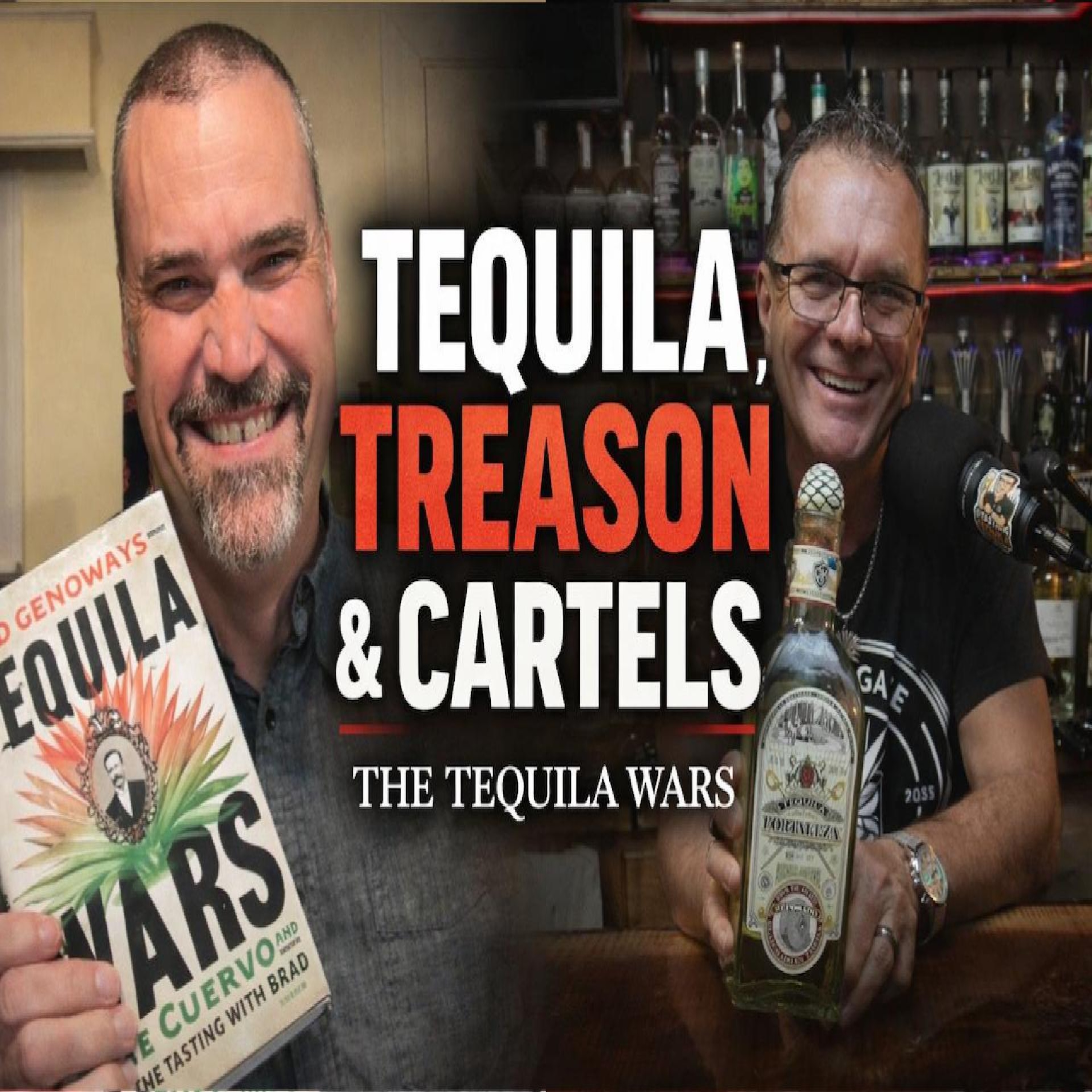
[00:00:00] Speaker A: If you haven't heard of the Tequila wars book, you have been hiding under a rock. I am so excited about this interview tonight and it turned out to be one of the best ones I've ever done. Tonight we're going to sit down with Ted Genaways and he's going to tell us the story about creating the book the Tequila Wars.
Stick around. This one is full of all kinds of crazy awesome information.
It's tasting tequila with bread.
Okay, today guys, we're going to talk about tequila, but we're going to talk about it in a way that you never thought I would have on the show without a brand or a master distiller. Today we're going to go deep. I'm joined today by Ted Genoese, an award winning journalist and an author of the Tequila wars, one of the most eye opening books I've ever read or listened to about tequila. How you doing tonight, Ted?
[00:00:57] Speaker B: I'm doing great. It's great to be here. I'm really excited to talk.
[00:01:01] Speaker A: I'm stoked. And to think I was sitting in a pool a few days ago at the top of Gloria Agave.
Funny enough, some people that worked for Cuervo in the pool with us and here you come walking onto the rooftop and I was like, dude, that was so exciting for me.
[00:01:23] Speaker B: Well, it's wonderful. I mean, I'm so excited for, for this. And it meant so much to me not to tell your story for you. But it was really nice that you not only called me over, but then said that you had been listening to the book and kind of gave me that scene of sitting and listening to the book every night on the porch and having a little to drink and kind of making your way through it and we'll talk about all of this. But I spent 12 years working on this book and a lot of that time in total isolation and archives and sort of piecing things together little by little and at times kind of wondering if this was all going to make sense and become a book that I wanted it to be.
So to hear stories of people reading the book, listening to the book, enjoying it, responding to it the way that you have it really means the world.
[00:02:27] Speaker A: Well, it's a special book.
It gives you an insight to some things that I never knew about. Right.
And it was not just me listening to it. Every night on the porch, my wife and I would sit out there with our dog. We watched the Amazon trucks drive by our house and usually we just listen to music or something. And I started the book in the car And I'm like, tony, you have to listen to this.
This is incredible. I, I said, this is like having Jimmy Salza like right here in the room with this telling stories, because, you know, he's always been the one that tells us these great stories. So it was really cool to hear the whole thing. And not only have I listened to it once, but I, I just finished it a second time.
[00:03:12] Speaker B: Amazing. That's so great.
[00:03:14] Speaker A: It's so cool. It's so cool. So before we, like, dive into the whole thing, I want to ask one of the questions up front to kind of set the tone a little bit. What's the most shocking thing you learned about tequila while doing this research?
[00:03:28] Speaker B: Well, so that's actually kind of hard to narrow down, I have to say. I bet, you know, when I started working on this book, you know, I. I had thought that I would focus on the contemporary tequila industry and, you know, do a book that was a kind of survey and, and looking at it at a. At what seemed to me an interesting moment. And that, as I said, that was 12 years ago. So a moment when, you know, the industry was starting to think more about sustainability and environmental impact. But at the same time, you know, Fortaleza, which you are enjoying, was new on the scene at the time.
And the idea of, of a Tohona made product was, was fairly unusual at that moment. And, and so I just thought that I would, I would talk about, you know, an industry that, that had experienced major growth and was now kind of reckoning with its past and reaching to its past to, to kind of reinvent itself.
The thing that ended up happening is that I, I would ask tequila makers about their family's histories and about what they knew of the history of the industry.
And again and again, people said there are some scattered stories. There's a little bit that we know from what we heard from the old folks, but that history doesn't really exist.
And the, the thing that I especially heard was it was destroyed during the Mexican Revolution.
And after the revolution, those records were often not kept like land records and business records as a way of avoiding more trouble with the government as it kept sort of changing in the decades after the revolution.
And so I, I believed that I took that at face value, but I also suspected that, that there, there had to be some records scattered around.
When I started looking at the academic literature, there were a few things that kind of made mention of different archives.
And I saw that, you know, that the city of Tequila had gotten a grant from the federal government to preserve its archives.
So I started, started there, but, but you know, at the time I knew that the Cuervo families and the Salsa family were, were real families, but I had never really thought about Jose Cuervo as, as a, as a guy.
[00:06:13] Speaker A: Yeah.
[00:06:14] Speaker B: And, and again, like I, I was aware of Sausa's product Tres Generaciones.
And so I kind of knew the, the faces on the bottle and I knew then from meeting Guillermo as the, as the fifth generation that, you know, he's got the initials around the, the neck label on, on his bottle.
And so I knew the names Senobio Sousa and Eladio Souza and Francisco Javier Salza, but that was it. I mean, I, I just knew them as names.
And so to come all the way back to your question, what I, what I hadn't ever expected, I mean, I barely knew that these were real people.
What I hadn't suspected was that they were so incredibly central not just to the history of the industry, but to the history of Mexico. Yeah. And in many ways central to the, to the sort of cross border relationship that existed between the US and Mexico and, and, and kind of set the dynamic that still exists today.
And within that sort of broader story, I mean, that the Cuervo family was central to the, to the rise of Porfirio Diaz in the 1870s, who becomes maybe the central figure in Mexican history.
And then Senobio Sauza battles with the Cuervos to have as much influence as possible with Diaz.
And then when Diaz is eventually ousted, both families are central in the middle of the revolution.
I mean, just in the most sort of highlight kind of way. I mean, Jose Cuervo himself stood trial as an enemy of the revolution.
And after that trial was over, was called to a meeting held by Pancho Villa where he was threatened with death.
You know, the Sauces stood trial for trying to assassinate Alvaro Rogon when he was president.
I mean, these are not tangential people in Mexican history. This is. And so the exciting thing to me was to be able to talk about this industry and the spirit that I'm so in love with, but also to piece together this, how central this, this industry had been to Mexican history and hopefully give some of that history back to the families.
And you know, maybe most importantly, I just want to be sure not to forget to say, I mean, the Guillermo, you know, I think has what is the largest and most important manuscript archive of materials from the tequila industry.
Guillermo Erickson Sousa at Fortaleza. And Guillermo gave me access to that material, not knowing himself entirely what was in there. The material had been collected and to some degree, organized in the 1950s and 60s, but it hadn't really been thoroughly cataloged, and Guillermo didn't know himself what was there.
And so, to me, a real act of bravery to say, go into those archives, see what's there, use whatever you find. And.
And, you know, Guillermo himself is enough of a. A fan of history that. That, you know, I mean, the best times putting this book together were a couple of big chunks of time that I spent in his archive, spending all day long going through manuscript materials and then going to see Guillermo at the end of the day to sit and drink one of those bottles like you have in front of you and then talk about what had come out of the research that day.
And so that's been an amazing thing.
And since then, to talk to the size Cuervo family at Tequilano, to talk to Juan Domingo Beckman at Cuervo, you know, these are all people who are directly descended from the main characters in this book. And to be able to put copies of the book in their hands and to tell them some things about their own family history that they didn't know has been just a thrill of a lifetime, truly.
[00:10:46] Speaker A: I bet. Now, did the Beckman family also have archives to go through as well?
[00:10:51] Speaker B: Yeah. So the Beckman collection, it's a different sort of collection.
[00:10:57] Speaker A: They.
[00:10:57] Speaker B: They have great objects from. From Cuervo's time, Jose Cuervo's time running the company, and some of extremely cool. I mean, you know, medals from. From the. The international expositions and diplomas from Porfirio Diaz for, you know, the. The. The tequila that he was making. But it's a different kind of collection. And. And I think that to some degree, what. What's going on, I mean, the. The Cuervo family, especially the line that is descended through one of Cuervo's brothers, Luis Cuervo, kind of the unofficial family historian. He had some manuscript materials, had some letters among Jose Cuervo and his brothers and sisters, but even there, you know, and had some company records from the time during the revolution that were really helpful and important, but it's just a different scale.
You know, I will never forget the first day getting into Guillermo's collection. And I mean, it's in. I think, you know, it was at the time, it was in 12 or so file cabinets.
And, you know, we had to have a locksmith come in to open the file cabinets and all of this sort of thing.
We got the first one open and pulled the drawer out and it just so happened that it was some of the stuff that was nicely organized.
And, and the first folder that that is, is in the drawer is marked 1714.
[00:12:30] Speaker A: Wow.
[00:12:31] Speaker B: And, you know, and it's just, you know, manuscript material going back 300 years.
And that's, that's an incredible treasure. It's also, you know, one of those things where, where the wealth of material becomes its own sort of problem because it's like, well, okay, now there are thousands of documents.
What are we doing with this?
[00:12:54] Speaker A: Right?
[00:12:54] Speaker B: And, you know, I.
I made the decision at a certain point that I thought that, that the history that, that made the most sense to tell was the, the history where. Where more of the lives of the people involved could be filled in, really at the moment that Jose Cuervo's father and uncle found the Cuervo Empire as we know it today.
And almost exactly at the same time, Cenobio Souza founds the Sauza Empire.
And so to start with, these two names, these most famous names in the industry made sense to me. And it also made it so that the story essentially begins in the 1870s rather than 150 years before.
So it just became a challenge at that point of like, you know, what. What is the stuff and how do we, how do we piece all of this together?
And people frequently, when I tell them that this took 12 years to do, people frequently ask, like, you know, how you keep going over something like that span of time.
And to me, the thing that kept it fresh, kept it exciting, was that every new discovery seemed to contain its own set of questions, new things that had to be pieced together.
But it also kind of presented new research possibilities.
You discover that Jose Cuervo, as I've mentioned before, he stands trial for. For treason.
Okay, so there have to be records somewhere, right? I mean, you would think, well, the transcripts of the, of the. The trial were burned as part of the revolution and the change over the city and this kind of thing.
But it turns out that there. That there was a military bulletin that was produced in Guadalajara during that time that included, you know, significant pieces of the transcript in the paper.
Well, there's one copy of that newspaper that's in one archive in Guadalajara. And so that became a trip to go and, and try to get those materials and then see what comes out of that.
And it became this kind of scavenger hunt where, where one thing led to the next. And it was. It was always enough that I just.
I felt encouraged. I couldn't stop.
[00:15:30] Speaker A: I have to say, the book Ended too early for me. Like, it could have been another. I listened to it because I don't have a lot of time to read, so. But it could have been another, like, seven hours longer, and I would have been very happy.
[00:15:42] Speaker B: And you may be more patient than most people.
[00:15:45] Speaker A: Well, it was it, you know, So I picture you going through things and at some point, grabbing a piece of paper and running out to your wife going, you're not going to believe what I just found. Because that's what I would do when I was listening to the book. I'd run to Tony and go, you got to listen to this. And then there was enough of that that she's like, okay, you have to start it over. I want to listen to the whole book. So.
[00:16:04] Speaker B: Right.
[00:16:05] Speaker A: It is such a deep history of, you know, not, like you said, not just tequila, but Mexico. I felt like I learned a lot of Mexican history as a tequila fan and to see how rooted, you know, tequila is in their country. But also when you go back to tequila and Guadalajara and randas and, you know, Jesus Maria, you see a different level of wealth than what I've seen any place else in Mexico. And now that makes sense. It's like going back to Washington, D.C. and seeing some of the homes and the buildings going, huh, that makes sense. You know, so it filled in some blanks of things, really, that I'd never spent time thinking about.
[00:16:48] Speaker B: Well, and one of the things I didn't think about until even, like, a few years into the research was that that it wasn't coincidence that that these guys and these families were at the center of power so much of the way, you know, that the colonial history of Mexico was such that, you know, first the. The Spaniards were extracting wealth from. From the country.
The French invaded in the 1860s and did the same.
And that weakened the country to the point that, you know, it became susceptible to dictatorship.
And Porfirio Diaz, when he took over, I mean, his. Essentially, what he did was set up a colonial model, except where the money was coming to him and to his circle of friends, and he would connect his friends to wealthy European and American interests. But that meant that if you had land where there was oil or. Or where there was iron ore or anything of value, the government was going to come in and take it, and they were going to give a share of that wealth of that land to a foreign interest that would come in and develop it.
And one of the very few places where you could control the. The whole process without that kind of foreign interference was in the Liquor industry and the wine industry.
It was agricultural. So you, you know, you own the land, you plant the agave in this case, but you can also produce the finished product at a fairly, you know, low cost and do it yourself. You don't need to have oil refineries or the kind of equipment that you need for mining.
Now, the one thing that ended up happening to Jose Cuervo eventually is he got big enough was that he did run into some problems of modernization, that you need electricity, you need railroads, you need to be able to communicate by telegraph and telephone.
And he's the guy who brought those developments into the industry.
But it was already a center of wealth, exactly as you say. I mean, everywhere you go in Guadalajara, the old families have a very clear presence. These magnificent homes that were. That were built by the tequila industry. And it's not just the homes. I mean, the, the government palace on the main plaza, the University of Guadalajara. I mean, those things were built with tax dollars from the tequila industry, right?
[00:19:22] Speaker A: And, man, they did love to tax them, didn't they?
[00:19:25] Speaker B: Yes, they certainly did. They.
Yeah. You know, the bad news for the tequila makers was that anytime there was a change of government, that the. The new. The way you're going to rebuild is by taxing the tequila industry almost to death.
[00:19:39] Speaker A: Yes.
So I, I learned a couple years ago that Pancho Villa wasn't really a drinker. And this crazy drunk that America makes him out to be, he was a prohibitionist. And I, I think I read that he's only drank, like, only drink one time that's actually known in public.
[00:19:53] Speaker B: Right.
[00:19:53] Speaker A: And you've got Pancho Villa all over different tequila things, you know, through the years.
[00:19:58] Speaker B: Right.
[00:19:59] Speaker A: But to hear how much they taxed them and stole from them, wanted them to succeed, yet hated them at the same time, like it was a. It had to be one of the most frustrating things to walk into a room and go, nope, you're going to pay another 3,000 pesos, and you're going to pay 5,000 pesos. And to hear that and have them just go, okay, we'll do it again,
[00:20:23] Speaker B: you know, and that's the thing. I mean, it's fascinating. I mean, Cuervo's years running the, the company, it's bas. It's almost exactly 20 years, and it, it divides almost evenly.
Precisely that he spends the first 10 years trying to build his company and build the industry, as I said, bringing the railroad and electricity, building, you know, dams on Lake Chapala for, For hydroelectric power. And I mean, he's. He's. An industrialist in every way, and he's making political inroads and all that sort of thing.
And then the next 10 years is spent just trying to hold on to what he had, right? And, you know, it seems like via. And certainly, you know, all the sort of local revolutionaries under him, everybody's favorite move was to blow up the railroad. You know, at any time, anytime you're trying to disrupt the movement of the other side, you show up and blow up the railroad tracks. You cut the power lines, you cut the telegraph lines. And, man, if your business is dependent on all of those things, that's kind of a disaster every time.
But, you know, the thing that I love about Cuervo, and that, to me, in the end, made him the central figure for the book. I mean, he was the one who was most politically involved, so he was most public. Even though he was extremely shy and reluctant to talk about himself, he was also, you know, writing political tracts and talking about, you know, things the way that he thought that the industry should be regulated. And so he's out in the public eye.
But, you know, the. The thing that. That, to me, made him most fascinating was that he was building all of these things and defending all of these things in order to just kind of keep the business going.
And yet he's also finding opportunities for innovation, finding opportunities to get business advantage.
And there's a moment kind of early on that in the time that the revolution has come to. To Jalisco, where Pancho Villa has taken over everything and is blowing up the railroad tracks so often and burning the fields in the Tequila Valley, that Cuervo finally shuts everything down as the do the other tequila makers when he reopens, more than two years later, the tequila that he had left in barrels in the barrel room underneath the distillery.
He opens that up, sees that it has aged, has got a nice, dark, rich color now, and announces that he's releasing what he calls a tequila anejo. And it becomes the industry's first anejo.
And that kind of thing, I just think is. Is fascinating that. That there are a bunch of the things that we think of as being the kind of cornerstones of the industry now that what they really were were responses to crisis at the. At this time during the revolution and immediately after.
And, you know, maybe the most, you know, sort of flashy example of that is that, you know, at a time when the distilleries had been cannonaded and burned and looted and fields burned, that a number of the tequila makers, four of the Big families banded together and agreed to pool resources. You know, if you've got agave and I've got a distillery, we'll work together.
And cuervo and salsa. And then the Rosales family, that was. That was behind Aradura, and then the Martinez family, that was Buta de Martinez.
Those four families formed what they called a cartel. Yeah. And their cooperation and seeing the opportunity also to rebuild the industry at the end of the revolution by selling to the US At a time when national prohibition was just coming into place, that was a really kind of daring innovation in itself.
And so, you know, as I say, in many ways, the industry, the history of the industry explains a lot about Mexican history and about U.S. mexico relations to this day.
[00:25:24] Speaker A: Yeah. I think it was genius how, okay, they're going to make all liquor illegal in America. We need to make sure that we have tequila along the entire border.
[00:25:33] Speaker B: That's right.
[00:25:34] Speaker A: And they're like, we're not going to illegally take it in.
[00:25:36] Speaker B: That's right.
[00:25:36] Speaker A: But we're going to make sure it's available.
[00:25:38] Speaker B: Yeah. Way too much risk to smuggle, but. Yeah, but if you have huge warehouses where your product is available to anyone who walks across and wants to buy it.
[00:25:48] Speaker A: Right.
It seems like Jose must have been. And I'm going to say Sabono as well. They had to be great negotiators because everything they were in was some stressful time. I mean, from.
[00:26:01] Speaker B: For sure.
[00:26:02] Speaker A: From their kids shooting each other to probably their kids marrying each other and the. The hatred behind it. Yeah. We got to join together in business.
And then also, I want to. I want a train car, and you're probably not gonna let me have one, so I'm also going to bring you a whole bunch of wheat while everybody is starving, because I also make wh. Like, there's this constant give that. A lot of the negotiations sounded like that really was because he had a plan, but he knew how to negotiate those things. Negotiation is, I think, the key to so many things.
[00:26:34] Speaker B: Yeah. Well, I. One of my very favorite moments, just, you know, because humor is always something that. That tends not to be preserved in
[00:26:43] Speaker A: the book of war.
In a book of war.
[00:26:47] Speaker B: Well, yeah.
And. But when. When they're trying to get the railroad to come, and there's all of the sort of argument about whose land is it going to cross? And, you know, which route is it going to take?
And it eventually boils down to this question of, like, okay, well, we're going to have to refill the boilers of the. Of the steam engines. In order to get back to Guadalajara from tequila, and you know whose water is going to be pumped out. And, of course, water's at a premium. You need the water for the. The distilleries, and there's an argument about that.
And Synopio Salza finally says, I will fill the boilers of the locomotive with my own tequila if it will get this railroad built. That he's just like. He's so fed up that he's like, man, whatever you need, can we just get this deal done?
And. And you see this often, like the. The there. It's clear that they. They got deals done with careful negotiation. They got it done with force sometimes.
But. But, you know, the reason that we know those Cuervo and Salsa names is because they were the ones who figured out what the. What the moment required and got it done.
[00:28:03] Speaker A: So did you get to visit any of, like, the sites that are in the book, not like La Rohena that you can go to today, but some of the distilleries that are no more and some of the historic places that you talked about?
[00:28:17] Speaker B: Yeah, definitely.
So it's interesting. Even some place like La Rohena, which is still a functioning distillery and so is not intended to be preserved as a museum, but the cava under La Rohena, that has been restored to the way that it was when Jose Cuervo was there.
And the ovens, the adobe and brick ovens are the ovens that Jose Cuervo installed when he was running La Rohena.
So there are some traces of that kind of history, but then, yeah, I mean, sometimes that history is really hidden in plain sight, too.
You know, the.
The museum that. That Guillermo is in the midst of renovating there at. At called the. The museum. It's El Museo Los Abuelos right on the square in. In Tequila. That's. That's the. The last house where Sanobio Sousa lived. The bandstand that sits right outside that door is the bandstand that Jose Cuervo built. Oh, wow. And, you know, to this day, you know, there's the clock in the bell tower of. Of the. The parish church and this really unique parquet flooring that's in the church.
And, you know, those were installed by Jose Cuervo in 1909 as part of the renovation of. Of the city.
And so there's all of that. And then, yes, there. There's. You know, it's like Hacienda El Carmen, which was the. The. Where the distillery was, that was run by Florentino Cuervo Jose Cuervo's uncle and his father then worked there as well, working for his brother.
That place has been beautifully preserved and just south of the, of the volcano.
It was wonderful to visit there and, and see, you know, the, the old Tohona pit has been filled in and is a, is a fountain now. And what had been the still room is like a wedding space. But you can still see on the adobe walls on the interior, you can see the numbers painted for the numbers of the still inside that space. And so that sort of thing to me was amazing.
And you know, Jose Cuervo's home in Tequila is still there.
It's now La Cueva de Don Cenobio, the restaurant that's owned by Sausa. Cuervo's home in Guadalajara is still there. It is now unfortunately a place where people go to pay their taxes in Guadalajara, but seems appropriate sometimes.
[00:31:12] Speaker A: And so he's gotta be mad about that.
[00:31:18] Speaker B: But it is remarkable to me, you know, they don't necessarily look the way that they did, you know, kind of at first blush, but it's, it is amazing once you kind of get oriented to see, oh, here's Jose Cuervo's house. And the cafe that's across the street was Manuel Cuesta Gallardo's home, who was his most important political ally.
And then what's now a hotel was the home of some of Cuervo's in laws.
And you know, you can actually stand on that particular plaza that what had been the gardens of Aranza Sioux and in, in Guadalajara you could still stand there and see not only Cuervo's former home, but all of his neighbors and get a sense of just how tight knit that world was. And so, yeah, for me, seeing those, those physical spaces was really important because it, it helped just sort of cement in my mind how local the story was in a lot of ways. And you know, the train station was two blocks away, which was great for Cuervo when he was trying to ship his tequila out to Mexico City or to the United States.
It was not so great when Pancho Villa's revolutionaries were riding in on those trains.
And the first place that they see when they got off the train is Cuervo's house.
So you start to see just the landscape of all of this and how some of those manuscript materials fit together in the real world.
[00:33:00] Speaker A: I can't imagine how long it took to get from Guadalajara to Tequila back then because it takes forever with highways today.
[00:33:07] Speaker B: Yeah, it was a day long trek back at that time for sure.
[00:33:12] Speaker A: Pretty incredible.
So in doing this, I'm going to think that you've met some really incredible people on both sides of those families. You've mentioned Guillermo, did you get to spend some time with Jimmy Salsa as well?
[00:33:27] Speaker B: Yeah, definitely. And interesting how, you know, just little pieces of things that the family members have, you know, that he's got Senobio's will and has the, you know, some of the other manuscript materials that were. That were important in that way.
That part of it too was such a joy because often people had, you know, here's a few materials that I've got that have been handed down to me, and they, they're important, but I don't know. I don't know how they fit in with everything else.
And so as I was finding things in archives and kind of piecing them together with newspaper records or with business records and all of that sort of thing, and, you know, certainly all of the tax records ended up being great in that way. You knew how much everybody was producing at all times.
But to get things from the family where somebody says, you know, here's a letter that Jose Cuervo sent to his brother, or, you know, here are letters that Sonobio Salsa sent to his son.
There's just, there's a way in which that that whole thing comes to life when it's not just. I mean, those letters between Cenobio and his son Luis are a great example.
I knew full well that there was an agave blight that they were dealing with and that the government was taxing them as if the agave was healthy and producing at full volume. But that wasn't the case.
And seeing, you know, the, the, the government case that was brought against them for non payment was one thing, but seeing Senobio and Luis talking to each other in this kind of increasing panic over being taxed more than. Than they could pay made the whole thing much more kind of visceral and real.
And I should also say, like, one of. One of the absolutely key things in making this whole thing possible was that Jose Cuervo's niece, who he and his wife essentially adopted after they discovered that they couldn't have children of their own.
Their niece, Lupe Gallardo, was a kind of obsessive diary keeper when she was young.
And thankfully, at the end of her life, she took some of those memories and put them together into these really kind of esoteric books of, of like mini essays looking back on her whole life.
And some of them are not terribly helpful recollections. Of the parish priest or recollections of, you know, this neighbor or that. But then there was also stuff there about the revolution and about the days when neighbors were arrested and taken out and put in front of firing squads. And Lupe really provided that. That window into the Cuervo household. And she's a really important figure in her own right. You know, the book ends when. When Jose Cuervo dies, essentially. I mean, there's a. There's an epilogue that runs through the rest of that history in the centuries since.
But Lupe, you know, took over and ran the company through World War II and into the 1950s.
And she was the one who created Centenario.
And, you know, that she was not only running Cuervo, but was. Was the founder of that brand.
And so to have her recollections of. Of how she grew up in the Cuervo household, you know, was. Was a really sort of precious commodity. And that, maybe more than anything else, was the reason that Jose Cuervo became the central figure, because he was the one person, through Lupe's eyes, that we could see motivation and we could see the dynamic between him and his wife and the way that they protected their niece and some of her siblings.
And the whole thing just felt really vivid. Through Lupe's recollections, It seemed like she
[00:37:52] Speaker A: had a really deep admiration for him as well. Like father figure or even more so.
[00:38:00] Speaker B: Yeah.
And yet also there's this kind of amazing. I mean, Lupe. So her father, Luciano Gallardo, had been heir to one of the other large tequila empires. The Gallardo empire was significant, and through her, it merges with the Cuervo empire. But, you know, when you go to tequila today and see La Rohena on one side of the street, on the other side, you know, it's now the Beckman Cultural center and Centenario, the estate. But tucked within all of that is the ruins of the Gallardo distillery that sat right across the street from La Rohena.
And so Lupe's perspective on everything is just.
It's tremendously important. But she. Her description of everything.
I mean, you're exactly right, she has this admiration for Cuervo, but she's also. You know, she was essentially given up by her father, who didn't have any interest in trying to raise her himself after her mother died in childbirth.
And then Cuervo was very important to her in early life. But then as the industry grew and his political commitments grew and then the revolution hit, he became this kind of shadowy figure to Her, I mean, he was hardly around in the way that he had been when she was really young.
And Lupe's such a wonderful writer. I love the moment when she describes when they move from one household to another, moving to be into the house that was close to the train station, and they decide that they're going to take one last family portrait in the parlor of the, of the old house.
And it takes forever, getting all of Anna, his wife's sisters and their kids and everybody positioned.
And by the time everyone is finally in their place and ready to be photographed, Cuervo has disappeared. He himself is gone. He's just lost patience with it and vanished without saying anything to anyone.
But Lupe says, you know, that, that, you know, years later, looking back at that photo, that she realized that that was really the moment that he kind of disappeared from her life too, that once they made it to the new house, now he was, he was the leader of the industry and before long was, you know, involved in, in politics, helping get Cuesta Gallardo elected governor and himself named speaker of the House, and then defending the family and the business against all of the forces of the revolution.
And so she saw in this photo where he's not there, she sees his absence. She reads that absence as a kind of indicative of everything that will come after yet.
[00:41:11] Speaker A: And that is such the story of the hard working, wealthy business person that's. To that level, that, that their work and their politics takes over everything. And. And what? You'd look at this really successful family and think, oh, they've got to be so happy that, I mean, there goes the story of so many extremely successful people where they're absent because of that business that got them there. So unfortunately, that's just the truth. Right. But it's pretty neat that you could see that perspective from her.
[00:41:46] Speaker B: Yeah, agreed.
[00:41:47] Speaker A: I could even imagine the time, though. You think of how, you know, a couple days ago, you and I were in Guadalajara. We were, we were speaking to each other not over a telegraph or through the mail or pony express or even a telephone. We were just talking through a social media app. And right.
30 minutes later, we got a system set up to talk all the way across the country after one of the biggest snowstorms in years. And, you know, to think those guys were like, we're gonna ride to the store. We'll be back tomorrow.
[00:42:17] Speaker B: Yeah, if all goes well.
[00:42:18] Speaker A: Yeah, right. It's insane. So, so, so what's next? What's the next thing? Well, before we go there, I want to ask you this Question, because I know there's going to be a cool answer. I don't know what it is, but I know it's gonna be cool. But so did you already have an appreciation and some form of attraction to tequila? Like, are you a tequila drinker?
[00:42:42] Speaker B: Yeah. So this is an interesting thing.
My dad is a biologist, a bat biologist, and he, in the 1960s, did a lot of work in Jalisco, putting together a book that he published right after I was born that was just called the Bats of Jalisco.
And one of the things that I was interested in doing, I was writing a magazine story all these years ago right as the bat friendly program was starting to get off the ground.
And Rodrigo Medellin, who's been at the forefront of that movement, was sort of the protege of one of the Mexican biologists that my dad worked with in the 60s.
So I, from a kind of intellectual standpoint, had this connection that I was that to the place that I was interested in, trying to see where it was going.
But I also have to say that through my childhood, when those Mexican biologists would come to visit, they would arrive the bottle of tequila or two, and they would all sit around telling stories about netting bats in the agave fields at night. And I just wanted to go see it. And I, and part of that journey was starting to drink tequila in a different kind of way. I think we all drank tequila in one kind of way when we were in college.
[00:44:19] Speaker A: It wasn't the way we're doing it today,
[00:44:24] Speaker B: but I started to think of it as something a different kind of thing and being interested in the culture around it and the history of it.
And so, yeah, I was a tequila drinker, but I have to tell you, the first trip that I took where I was going to go do a story just kind of on sustainability and the changing industry for Bloomberg Businessweek.
On that trip, in order to kind of hit a whole range of places in, in short order, I, I went with Clayton Check, who was, you know, running Experience Tequila at the time.
And we, we went to Fortaleza and Arete and to, to see Don Filano. We went to see Alkemia in the highlands. We went to, you know, to Tapatio and Tesoro. We went to G4.
And in this like one week trip, I, I, I mean, you've had this experience recently. I mean, my mind was blown. I was like, this is not only is this like, amazing to see the family tradition and the, the, the history and the, and the culture around all of this, but There's a kind of qualitative difference that's going on here.
And I have to say that one of the things that I think is super exciting right now is that a brand like Fortaleza has had such an effect on the overall industry that you see something like that when Salsa decides that they're going to do a special release of Tres Generaciones for the anniversary, that they have that product produced at Cascawian.
And maybe more revolutionary and exciting to my mind is to see what's happening right now with Jose Cuervo and with some of the affiliated brands in. Dobel has a new Tojona product out and they are building a Tohona distillery around Amatitan.
That's unreal. I mean, the Cuervos were last using a Tona in 1887. You know, that, that's amazing to me to see what's happened in the industry.
And, you know, we also tasted together the, the. The product you see over my shoulder, the end right here, the, The Jose Cuervo 1908 Blanco that is based on how Cuervo himself was making tequila in, in the days right up to the arrival of the, of the railroad.
And again, to see, to. To be able to talk to somebody like Alejandro Coronado, who's worked at Cuervo for more than 30 years and is kind of important in tequila history in his own way, but to hear him talk about the conversations that he had with Juan Domingo Beckman about where the industry is going, where consumer tastes are going, and making some decisions, like we're going to do open fermentation, we're going to do distillation only in copper. And you know, see, you know, and that, that's, that's not going to be the, the, the totality of their line, but to see that, that even the biggest companies are, are recognizing that there's a kind of market for a consumer who cares about how the agave is grown. You know, all those are organic products.
You know, they care about how the product is made and who the people are who are involved.
That has really all unfolded over the last decade or so, and it's really exciting to see that transformation.
[00:48:26] Speaker A: Yeah, I agree. You know, as a person who's drank tequila for 25 plus years, to get into, you know, this. What first became the additive free movement, right, that really kind of spurred, I think, a lot of it to really start those conversations. And I don't really talk about additives a lot anymore. I talk about the difference more between industrial and traditional. And you Know, we look at column stills like it's something new. But you talk about column stills in the 1800s and Jimmy Salza at sitting at the ranch outside of San Martin looked at me and thought, if you don't think they were using column stills back then, you don't understand that. Yeah, maybe the, not the tequila that you like, but it's a great way to produce tequila quickly, to see the big brands making a conscious decision to go, hey, we're not going to quit making what we make, right? But let's offer this segment and show everybody that we can make that and produce that traditional style, clean tasting tequila that all of us tequila nerds are running all over trying to find.
So I drank that bottle.
I was going to bring it home, but I finished it while we were there.
And then I couldn't remember where you said I could find it and I didn't have time to go look.
[00:49:45] Speaker B: It's only at La Rohena. It's a distillery only release. Right now.
There's just a small batch of it that's available.
[00:49:53] Speaker A: And we went to the back store, you know, the, the Doble store and then the other store that had like 1800 and all those in it.
[00:50:01] Speaker B: Okay. Yeah, this, this was, this is in. Right, right. Facing out onto the street, like right
[00:50:07] Speaker A: past the crow, the close store that we didn't go to.
We were, we were pinched on time in between, you know, Arete and Fortaleza. And you know how it gets when you're there.
The Mexican clock works differently and time is not a thing that kind of works like it does here in the States. Right. We're too much in a hurry.
We're usually too focused on ourselves and we don't spend enough time. And in Mexico, sometimes I get there and I feel like it's just been unplugged a little bit and you kind of just roll with it. And I love that about going there. But yeah, I'll be back. And now I know where to go to find it. But yeah, I want to do a review and talk about it. It was a good, to me, a good tasting Cuervo. The first Cuervo I've had in that in a long time. Like, I had some bottles sent to me that were like 70s bottles. I have a 1976 Don Julio and they're like, oh, this is, this tastes good, right? So, yeah, so it's good to see them making those kind of moves. I did read about the. I guess they're doing one inside of Salza too, that they're building a facility inside that's going to have a traditionally made product as well.
[00:51:17] Speaker B: Yeah. And, and I, I love this, I love this trend, you know, and, and it's, it's a, it's a market trend and a production trend. But I also, you know, one of the things that I just is one of my favorite developments of, of recent months is, you know, that, that to some degree with the, the research that I was doing and asking questions and putting some people together, you know, the, the Guillermo at Fortaleza first got to be, you know, first of all friends with the, the folks the size Cuervo family at Tequilano.
But then just a couple months ago, Juan Domingo Beckman, the CEO at, at Cuervo, who, you know, is the great grandson of one of the, the characters in the book, he went to, to Fort Alesa to, and spent the day with Guillermo. And I, you know, I think that this is, it's, it's a really interesting moment where a lot of these places that have been run as kind of run as businesses that, that there's a recognition all of a sudden that really what they are is families.
[00:52:29] Speaker A: Right.
[00:52:30] Speaker B: And, and you know, Juan Domingo Beckman told me just recently said that, you know, that there are thousands of brands now and you know, they're European owned or Japanese owned or American owned, and a bunch of them are celebrity brands and all that sort of thing. But he said, you know, there's only about a dozen brands that were founded by families that have been run by those families through all of this time, got through times like the revolution and through World War II and are still in operation.
And the Beckman family and the Cuervos associated with them and the Sausa family, the Ordines, the Martinez family, the Rosales family, you know, that's connected to everybody from Cascawine to Eradura to, you know, you name it, but those, those families and certainly, you know, the Camarena families like you, you really are. When you boil it all down, you're talking about maybe a dozen families that have been at this for 150 years. Yeah. And I just think there's something really special about that. There's and, and special about the, the various ways that they're, they're reconnecting with that history. Both the, the, the family history, but also the history of, of, you know, how their ancestors made this amazing product.
[00:53:56] Speaker A: Yeah, there's so many of these distilleries you go to, they're not, they're, they're high producing production facilities. But when you walk into Cascawine, like you said, it's like walking into a museum of how they make tequila. And God bless Dave Sorrow there, David Sorrow, for having the thought to make ancestral there and throwing in the, the, the old.
[00:54:21] Speaker B: Yeah, the in ground ovens. Right?
[00:54:22] Speaker A: Yeah. And to go look at that. We were there, you know, and like, oh, it's cooking on its seventh day. You know, you're like, that's just incredible. So to, to see that. And I think when Americans go, that are just the average tequila person and they show up and go on these tours, I know the first time for me, I, I talked to a lot of people, their first time is like, I thought this would be a big factory, you know, and they're at Fortaleza going, this would fit in my backyard.
[00:54:46] Speaker B: Thank you.
That. It's just a few stills and.
[00:54:49] Speaker A: Yeah.
[00:54:50] Speaker B: You know, and it's all there in one room. It's. Yeah, it's really, it's remarkable.
[00:54:54] Speaker A: Yeah. And it's great to see some brands doing. Coming back to their roots. I, I know that the enthusiasts, the, the con. Not necessarily the content creators, but the people that watch a lot of the videos, they throw a lot of hate. As soon as you say, I, you know, I had a, I had a Jose Cuervo that was good. I liked it. And they're just like, oh, he's getting paid. It's like, no, I just tasted it in a pool and it tasted good, you know, so.
[00:55:18] Speaker B: Yeah, no, I mean, and, and, and look, they, I, I would say the people at Cuervo are, are, you know, they are aware of, of who their, their audience is, but they are, they are also, you know, they're aware of. Of what people are saying on social media, and they're, they're trying to change some minds. And, and I, you know, I hope that the, the, the 1908 will get a wider distribution. The, The Dobel Tejona is already getting wide distribution at least in four or five states now.
And I think it will change minds and it'll take some time, for sure. Yeah. But to me, it's, it, it's an exciting moment. I mean, I told Guillermo when, When, you know, the Dobel Tejona came out, I was like, man, this is. This feels like a real victory for everybody. You know, when, when Guillermo started making Fortaleza, it was basically, you know, him and Altesoro that, that were using at Dahona, and there, There weren't very many other places where, where that was happening. And now it's become a Trend, it's become a thing that is just part of, you know, it's one way that you can make tequila and you get a different kind of flavor profile.
And as you say, like, you know, it may not become the whole identity, but it's. I think it's great for places like Salsa and Cuervo to be making high quality products and doing, you know, some. Using some traditional methods and paying attention as, as they certainly are to, you know, to sustainability and to environmental impact.
I mean, all those things are great for everybody when, when you know that, that they've been kind of pulled along into on some of those trends. It's. It's been great.
[00:57:13] Speaker A: Yeah, it's awesome. Okay, what is next? What's going to happen next?
[00:57:19] Speaker B: Well, I don't, I don't want to jinx myself on anything, but yeah, there's. So there's.
I'm. I'm working with a great documentary filmmaker named Bernardo Ruiz on, on a documentary film that, that we're producing with support from Jose Cuervo. Wow.
I hope that that will turn into something more than just the short doc that we're making right now.
And like I said, I don't want to jinx myself, but there's. Things are looking kind of exciting on the scripted series side, so that's exciting to see.
I've also been talking with the folks at Cuervo about doing some sort of a coffee table book or something along those lines that would make use of the materials that they have in their collections, maybe pull some manuscript materials from Guillermo's archive.
So much of this stuff is just incredibly cool to see, you know, not just, you know, the old labels, which are great and that sort of thing, but, you know, the letterheads of these companies and the, you know, the old family photographs. And there's just some really visually stunning stuff there that I would love to include in a different kind of treatment on the same history.
So we'll see. Those things are all in the offing. And it's an exciting moment because there seems to be a moment where there's some excitement that's been generated out of the book and I hope that will open some other doors and that I can keep going down to Tequila and running into people in the pool.
And not just in the pool, but then in the restaurant and on the street headed to.
[00:59:21] Speaker A: I think we've seen you everywhere we went.
[00:59:26] Speaker B: Yeah.
[00:59:26] Speaker A: So it was fantastic.
[00:59:28] Speaker B: Yes.
[00:59:29] Speaker A: That, you know, I, I, like I, I told you this when we were there. This, this, this such a great information and it should be a movie, but it, it can't be a movie. It can't be a couple hours long. You know, it, it can't even be an Avatar that. What was that? Three and a half hours long. This needs to be like a Taylor Sheridan series for the next like 10 years because.
[00:59:50] Speaker B: Well, I couldn't agree more. I.
There's.
[00:59:54] Speaker A: The book is so intriguing. Like, so many things happen and they happen so fast and, and the, the tide changed, you know, from, from one, you know, Cuervo's on top, the top of the world. The next thing you know is, you know, the family's losing everything and Celsius on top of the world. And next thing you know, they're both like trying to work together and like, and to see that put together.
And Guillermo has to have a cameo somewhere as Guillermo, because I agree with that. He's like one of the greatest characters ever.
So, I don't know, I think a documentary would be really awesome, but I think a really cool series behind it would be very cool as well.
[01:00:34] Speaker B: Yeah.
[01:00:36] Speaker A: So here's a question. So now that you've done this, you've learned this whole tequila world, and it's probably changed the way you drink. It's probably changed the way you think about the whole spirit. If you could sit down with anybody and pour them a glass of tequila and talk to them and share what you've learned and be able to kind of see what their reaction is. And I mean alive, dead, famous family, anybody. Who would you most want to sit down with and crack a glass of tequila and have a conversation with him?
[01:01:08] Speaker B: Yeah, well, this is probably not too surprising, but I would want to talk to the man himself. I would want to talk to Jose Cuervo. I've got a lot of questions for him.
[01:01:17] Speaker A: I bet you do.
[01:01:20] Speaker B: I feel like I got to know a lot. But there are also still a lot of mysteries remaining.
And among them, he published an interesting tract that was sort of like his stance on how tequila sort of shouldn't be made and lobbying against people who were essentially, you know, making counterfeit tequila and.
But what we don't really get is beyond his contention that it needs to be an agave made product for it to be authentically tequila and needs to be in the growing region and all that.
We don't get anything of what his philosophy is, like what, what, what the flavor is that he was going for. And, and I, I would, I would certainly start there. But you know, I also have more probing questions. So the more we drank, the more the more I would want to know, I think.
[01:02:26] Speaker A: I mean, that's such a great answer, you know, knowing what you've done for the last 12 years to put this together and, and I think it would be awesome, like, you know, to.
You read about him, but you really don't know what that personality is, is right. You can read about somebody or you can watch somebody on TV and even have a presumed idea of what their personality is, but hanging out with a person shows you who that person is. And I think it'd be so cool to get in the depths of that. So that's great. Well, I want to say thanks for a few things. One, thanks for doing this with me tonight. This was awesome. And then the other thing is, thanks for doing this work. Like, to find this and bring it to everybody is like, this is amazing.
[01:03:10] Speaker B: Well, as I, as I say, I mean, hearing you talk about the way that you took the book in, you know, a little at a time and having a drink and, you know, that's fantastic. I mean, to me it means so much that this history is kind of making its way out there. And, and I guess as I said, I spent a lot of time wondering if this book was ever going to be done, if I was ever going to find certain key pieces that I needed.
And so now to hear you react to one part of the book or another and remember it took me years to find that piece of information, to find that document.
It. It. It really means the world. So, you know, I, It. The. The research was nothing but, but pure pleasure. But, you know, the, the. The most fun has been this process of, of getting to share it with people and, and getting to hear people's reactions. And I think it's, it's like tequila itself. Like, you know, we.
Maybe the biggest lesson that I've learned over the years is that, you know, we, we all have these treasure bottles that we're all on the lookout for and, and covet and, and you know, want to sort of hoard and keep.
But the tequila always tastes best when it's opened and shared with friends, and they may be old friends or friends that are foraged over. Over that drink, and that's. That. That has definitely been the case with all of this research. You know, I think I've loved the process, but getting to share it with the families so that they have that history recovered for them, but then getting to share it with drinkers in general so that, that it's, it's something that informs that every, every shot that they pour, that's that's really what it's all about.
[01:05:17] Speaker A: Well, you've, you've affected the Tequila community for sure. I don't know a single one of my peer group in the content world that hasn't listened to the book or read the book multiple times. We have. I had a conversation today with Drew of the Whiskey Tequila podcast, if you've ever listened to the Whiskey Tequila Friday's podcast. And I told Drew, I said, well, tonight I get to talk to Ted about. He's like, no. Like, he was so excited. So we ended up, we talked about parts of the book and like there's so many of my friends that it is like such an eye opener to another level of what we already love about Tequila and it's the stories and the history. So thank you so much for putting it out. I appreciate it. I really do.
[01:06:02] Speaker B: Thanks for reading and listening and thanks for talking about this. It's been great.
[01:06:09] Speaker A: That's awesome.