Episode Transcript
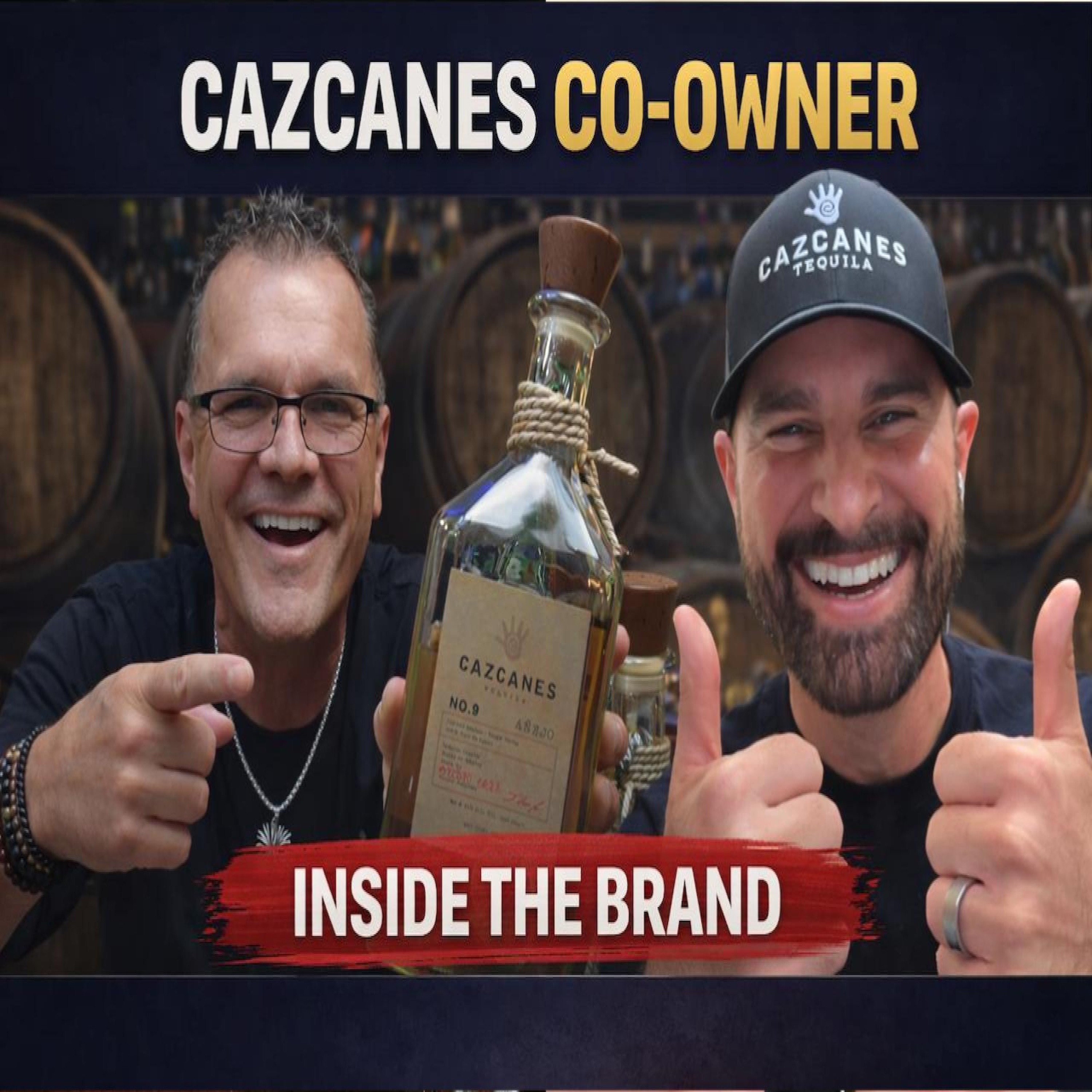
[00:00:00] Speaker A: All right, guys, you guys asked for this one. Tonight we're gonna sit down with John Paul Fortinati and we're gonna talk about this brand right here, Cascanes. Don't miss this one. It's got a lot of information in it.
All right, guys, I got a great one for you. Tonight we're hanging out with John Paul Fortunati talking about Cascanes. How you doing tonight, John?
[00:00:28] Speaker B: I'm great. How you doing, Brad?
[00:00:29] Speaker A: Man, I'm great. I was better than last time I seen you though, because we were actually in Amatan and Guadalajara hanging out and that was a lot of fun.
[00:00:36] Speaker B: It was a blast. Yeah, it was good to, Good to hang out and get to. Get to know you. So, yeah. Appreciate you coming down.
[00:00:42] Speaker A: Well, I appreciate you having me and learning about the brand and getting an inside peek of everything that you do is so awesome. And that's why I wanted to have you on, to share some of those things that I got to see that maybe the average person hasn't got the chance to see. So tell everybody who you are and how you found tequila before the brand came along.
[00:01:03] Speaker B: Before the brand came along. I mean, I think many of us had those same, same experiences, you know, drinking tequila as a college student. Right. But I really didn't really fall in love with tequila until this project started, right. And then I was exposed to better tequilas. I mean, now I think I probably have. I think we talked about this. I have over 400 something bottles of tequila now and it continues to grow. But I mean, it's kind of a hobby that you just, it, it bites you and you know, every time you see something else comes out that looks cool, you want to grab it. So. And, and for me, it's like a little bit of like research, you know, and development, right. That I can go out there and try other people's products and appreciate them and kind of see what they're doing different. And yeah, you know, I'm. I'm a, I'm an eternal student of the, the tequila journey, I guess is. Is how I would put it. But this whole thing like started for me probably back in, I think probably 2004, 15 or something like that. But two of my brother in law started the brand. So one of my brother in law's name's Colin, he is a winemaker. He grows his own graves, makes his own wine from scratch. And it was mostly for hobby and gifts and things like that. But he also, like, I don't know, it was probably five, six, seven years ago. He started working with a small wine producer up in Napa and he helps them with their wine. I think it was 2013 when he went down to Mexico for the first time.
He got connected to. You met Jose, right? So Jose is one of my business partners. He's the one that lives in Mexico and handles all of our Mexican operations.
My brother, my other brother in law had met Jose's cousin and they were discussing. So my brother in law, Chris, was discussing with Jose's cousin about agave and tequila in general and everything and saying that there was some interest there because Colin, his brother and him had talked about agave plants and things like that. And so when it came up in this conversation, he says, oh, my cousin lives in Mexico. If you ever want to go down there, he can give you, you know, drive you around, translate for you and kind of show you, show you, show you around Mexico. So Colin went down to Mexico, met with Jose and you know, they, this is an exploratory thing. I don't know if they necessarily had anything and, you know, any great plans. It was more Colin's curiosity and him wanting to learn about agave distillates and tequila in general because of his love for wine and other spirits. I mean, he's, he's made whiskeys, he makes gins. I mean, he's, he's just an eternal student of, of life, right? So, I mean, and he, and he's just, he's a musician, he's got an amazing palate, he likes to cook. I mean, so he's just, he's always learning. So this was a trip that, you know, kind of to continue that. And when he was down there with Jose, they were going around to a lot of the distilleries and quickly was going, this is, this is how you make tequila. I mean, if this is it, you know, it was all the industrialized stuff, right? And you know, and you know, some of the places were saying, oh, we can make your own tequila for you, and giving them worksheets and, you know, having them check boxes. Do you want highland agave, Lola and agave? Do you, you know what kind of flavor profile you're looking for? And he says, this isn't for me. If this is how you make tequila, I'm out my. He wasn't going to be involved in the process and put his creative energy towards something. He just wasn't interested. They were in a small town of Magdalena, which actually the corporation's name is Agave. La Magdalena was named after that town because it's central to our whole story. But they were there and Jose and Colin went to a taco stand, taco vendor there, late at night. And they see this American guy there. And it's, it's a rural town. I mean, you saw some of these towns, right? Like, I mean, when you went to osa, it's very similar to Osta. You don't see a lot of Americans if you don't, if any, right? So he stands like, like a sore thumb. And they said, what is this, what's this American doing here? He said, oh, well, we're trying to learn about tequila, but we're not finding anything we like. And he said, that's because you, you need to find the stuff that's made the old way, the natural way, without additives. Like everything here has additives. You know, you gotta, you gotta find the good stuff. And he said, I can, I can take you to a guy. If you're interested, meet me here early in the morning and I'll take you there. And part of it, you, you actually went and you met Umberto. So this is. So they, they got there early in the morning, the taco vendor, and true to his word, he took them to Umberto's place. And they were driving through those bumpy, rough roads that, that you, you experienced. And they started wondering, you know, I mean, it was kind of a, kind of a journey, right? You recall, right? And so they started wondering, where's this guy taking us or we're getting kidnapped. I mean, is this, is this really for real? And after they cross through the river, because we, we. There's two ways to go and both ways you have to cross the river. I think you, you went through one, one direction and there's a different way, but pass through the river and then you get to that small town of Las Nieces, which is like eight families live there. And they ended up meeting Umberto. And so Umberto is, he's a third generation master distiller making agave distillates based on a centuries old recipe that his family's been using.
And Colin and him hit it off, right? So they, they started like, like they, they tried the, the tequila or the agave distillate, it's not technically a tequila. And they were like amazed, right? They were like, this, this is phenomenal. I've never tasted anything like this. And so Colin brought back samples, he let all the family try it. I mean, everybody was just blown away saying, this is tequila. Why is it so much better than anything we've ever tried or been exposed to. And so Colin actually started going back and forth between the states and Mexico and learning apprenticing under Umberto how to make tequila. And a lot of this was just for Colin's, like, personal knowledge and his experience and everything. But then they started thinking, like, hey, is there something here? Is the more people that tried it, the more people that were like. Like, amazed by it, and they're saying, okay, maybe there is something here. Maybe we can actually produce this. So they. We're going to get his facility certified by the CRT and then have him make tequila there. Tequila is that word is controlled by the crt. I mean, as you know. So you can't just call something tequila unless the CRT certifies it. But the situation with that location, again, it's so remote, the it. And they didn't even have electricity until a few years ago. So back in the two, like, 2013, ish. 14, 15, whatever, there was no electricity. And the CRT said, you can't produce tequila here.
[00:07:05] Speaker A: Where's your lab?
[00:07:06] Speaker B: Yeah, yeah, yeah. Where's. Where's anything?
Where's your sinks? Where's any. I mean, there's nothing there, right? And there's a sink, but, like, you know, it's. It's. You saw how rudimentary it is, so they were kind of discouraged. But then that's when they ended up meeting with Don Chico, who's our current master distiller, and taking the teachings that they learned from the jungle. We call it the jungle, as you saw. Why, it's. It's very dense foliage because there's so much water. And that. That was the reason why Umberto chose that location and was. Because there's a natural spring right there. And as one of the many teachings from Umberto was, of course, agave matters, right? So you have to start with good quality agave, and then the water is paramount. Right. I mean, if you don't have the right water, you're not going to have good fermentation, and then overall, the flavor profile won't be right. So Umberto, like the forefathers before him, realized that location was great because it had the natural spring. And as you saw, that was the site of the original Salza distillery also. So they built it there because they also had that excellent water source. Now that's in ruins. You saw the. The old chimney sack and all that there.
[00:08:09] Speaker A: Yeah, I'm excited to see that. That was the San Martin distillery that is talked about even in the book Tequila wars, you know?
[00:08:16] Speaker B: Yeah, yeah. I just Started. I started reading that book a little bit. Yeah, it's got. It talks about Osotipakilo in there a lot too. Interesting. Yeah, that's pretty awesome. Basically, though, the water was important. And knowing now, okay, water and agave, two big teachings. They knew they couldn't produce the tequila there, so they had to find a different water source. And Jose's hometown has an incredible natural spring. It's a volcanic natural spring. It's called Navichi Springs. And so Jose went to back to the town and asked the mayor, is it, could we use the water in our tequila production here? And because they were kind of. Jose grew up there. He knows everybody. They knew he was involved in this project.
And he says, we'll pay for the water. And, you know, and so they said, sure, you know, as long as the town doesn't need it and, you know, you're not putting us in a situation, you know, like if there was a drought, let's. There hasn't been, thankfully. But, you know, as long as the town comes first, then yeah, sure. As long as there's water, you can have it. So that's. We started getting water from them, and then that's when we started producing tequila with Don Chico. So we took what we learned from the jungle then that's when we connected with Don Chico. And at that time, it was familia Landeros. And Colin and Don Chico hit it off and taking what they learned and the flavor profile from the jungle and then trying to adapt that to a more realized facility. And as you know, Milan Deos is a very small distillery. It was great for the time, but it's a micro distillery. So we.
We needed to. Eventually, as. As production went on, we needed to find somewhere else. And that's where we are now. It moved now to tequila tap. The tequila tap. So 1614. But. But they had proof of concept, right, From Familiaros, because that was in 2017, was the first batch we produced with the CRT's approval, right? So they have to watch you produce a batch from start to. From start to finish. And that batch that was produced got a double gold from San Francisco World Spirits Award. And then in 2018, we entered it again. It got another. Another double gold best tequila, best unaged spirit, best in show, right? And they're like, oh, wow, okay, so maybe we have something here, right? So then fast forward a few years. That's when we move to take a little tap. And that took us almost a year, right. Of refining. Like, you see, you've seen this with Other brands, when they move distilleries, it's usually a disaster. Right? They, because most of them have never. They're not really involved in the product, the production. They're not involved in the process. So how do you take a recipe that you don't even know with to some other kitchen, Right? I mean, how's that supposed to work? Right? But since we were intimately involved in the whole process from the beginning, we were able to transition. And even then, even with the exact recipe, even with the same master distiller, even with the same chemist, it still took us almost a year to get it. Right. Right. Because there's so many variables involved. But once we got it, we were like, okay, this product is as good, if not better than our previous product. And the. That's kind of like where, where we are now. And that's given us a lot of flexibility because they have way more barrels. So we have a. I think we have over 1400 barrels filled now. We have different tools, right. So we have the autoclaves that we, we like to use. We learned to use that from Umberto because he has an autoclave. Right. And so we continue to use that low and slow. We do open air fermentation, but we use our own proprietary yeast, as you saw it t tap. We have autoclaves, we have ornos. There's a tona, there's roller mill, and then there's that full copper pot still. Now, I mean, we use a stainless steel with copper coils, but there's a new one that they've installed that's full copper. So we're hoping to use that sometime in the future here on a, on a. Some special release, something like that. We like to be innovative and experiment and try things. So. And I think you like, I think you're drinking the, the Rosa Anejo, right? So that's.
[00:11:56] Speaker A: Yeah, I'm drinking an experiment right here.
[00:11:58] Speaker B: Yeah, yeah, that's what. That's one. Well, yeah, yeah, that, that was a fun one. Yeah. So that, I mean, we'd released some Rosas in the past, right. So we did with. Through Collins Wine project, the one I would mention up in Napa, we had gotten a couple of the barrels from them a few years ago. This was our first Rosa. So that's very small production wine. I think we have three barrels that we do. We rotate. So we had two barrels that we could use filled those. We did a Rosa Blanco and a Rosa Reposado. Those sold out immediately. Then the following year we did a larger batch and then we did the again a blanco and a reposado. And then what you're drinking, there is some that we left in to go to lajo. And then when again we age to taste, not time. I mean, I think we've told you, you know this. But for everybody else listening, so we don't have a formula on any particular timeline or a timeline formulas like a reposado can be two months to a year. But for us, every barrel is different. Every barrel has its own unique fingerprint, its own DNA. So if you don't go through and taste every barrel, how do you know what you're blending? Right. So if you, some brands may say, okay, we're six month reposado and then you just take everything, empty it and just hope for the best. Right? I guess. But if you have a, a bad barrel in the, in the batch that's getting put in there, it's like you're making an apple pie. It's just one rotten apple, whatever.
[00:13:16] Speaker A: Right?
[00:13:16] Speaker B: Yeah, it's just. But, but for us, we need, we taste every single barrel and we'll go through two. Now it's up to 400, sometimes two to 400 barrels, taste every single one to come out with a 40 barrel blend, maybe an 80 barrel blend depending. So a lot of barrels are tasted and we're only pulling the ones that we feel are giving us the correct flavor profile we're looking for in that whether that's a repo, nejo, extranejo, whatever we're doing and what flavor profile we're looking for. So in a repo, for example, we may have some younger barrels in there to like boost up the bright agave flavor. And then we had a lot of times we may even introduce some anejo into there to get some more of that. The color and the oak characteristics and things like that that we would pull from, from a more aged te. Right. So there's no formula that even for that. Right. So sometimes it could be a lot of 8 month, 10 month, could be, you know, 11 and 7.
Every batch is different. But we're all, we're looking to get the same flavor profile. Right. So it's not McDonald's, but we, we are abing it against previous batches and trying to keep consistency. But we're doing that very intentionally and by tasting all these barrels to create the blend. And then when we do something like the Rosa and Yeho there, that was all aged in Ex Napa Cab barrels. And then as we were going through that, we thought, okay, so there's a Lot of oak character on here because, you know, it'd been in there for. I forgot how long it was now obviously over a year. I think that was closer to close to three years on that. And then so we wanted to like kind of tamper that, like just, just not, not be so tannic. Right. I mean, because you know, you can get like some of the tannins from the wine and then the French oak. So we kept going through barrels and then we found a Four Roses barrel. Four Roses tend to give us a little bit more sweetness, a little more balance on that. So we blended that in. So it's two of the Napa Cab barrels and then one of the, the Four Roses barrel that's in there. And we thought it made an excellent balance and so that's, that's why we put that together. But there were only 600 bottles of that made, so.
Yeah. And they're all gone. Yeah, they sold out in a couple days.
[00:15:16] Speaker A: It's kind of cool the way you're choosing your barrels. It goes all the way back to how you harvest agave. You don't harvest just a whole field of agave. You're going to look for the ones that are ready to go. You're going to pick the best agave out of that field.
So after you've gone through your harvest and picked the best agave to harvest and left the ones that maybe weren't ready yet there, or the ones that weren't good enough, you left them there, you come back, you make the tequila and then you're doing that same process in your barrel of going to harvest the, the best barrel at that time. That, that's a really great concept.
[00:15:49] Speaker B: Yeah. Correct. Yeah. And, and, and again it's it, that barrel is probably perfectly fine. It's just not ready now, you know when we're going to it, right. So like we, so we'll. And then the other thing we do too, and we're, we're testing all those barrel or tasting all those barrels is we are marking them for potential single barrel candidates. Right. So you can go through, we call them kind of veins, right. Like, you know, like if you're mining, right, you know, you have a, A, a gold vein or now we have a tequila vein. So we, we'll go through and you'll have a bunch of barrels where maybe you, you know, they're very similar, right. If they're all aged around filled the same time, you're like, okay, boom, boom, boom, boom, boom. These are all very much in the same, you know, Flavor vein, let's call it, just for this conversation. And then. Then you'll hit one that'll be so different. You're like, oh, wow, what was that? You know, and then you. You take some notes and then we'll usually star that and then continue to watch it and see how it progresses as a single barrel. So we always have these barrels that we're looking at and watching, see how they progress to see if all of that ultimately releases as a single barrel. So that's another thing that's unique. While we're looking through and tasting through those to find those candidates, that's all that's. That's another fun part of the process. So every time we'll go down, we'll check that again.
[00:17:00] Speaker A: In the bourbon world, where the barrel is sitting in the barrel house also makes it special. Not just the barrel. Right. There's certain brands at certain companies that the. The mash bill inside's the same. But where that bottle.
[00:17:13] Speaker B: Yeah, that usually at the top of the Rick house, I think is usually what they consider like some of the better ones.
[00:17:17] Speaker A: Does that influence of where the barrel is work the same in tequila, do you think? Or is it because it's more temperature controlled? We don't have as much difference.
[00:17:27] Speaker B: Yeah, I haven't. I haven't noticed that. That's. I mean, yes, I'm sure it makes a difference. Right. But I don't usually segregate them based on where they are.
So a lot of those we just have barrel lot numbers. And, you know, we asked Nestor usually to pull all the samples. Right. Because it's. He goes in there and then. I don't know if you saw how the barrels are stacked. So TTAP doesn't let us crawl up and get the barrel because of just liability. So they go in there and they'll pull samples for us. And then what we did, which I think I showed you this, but on the sides of the walls, we added pallet racking specifically for barrels. So because we. And we didn't talk about this yet, but we actually rechar our barrels. So we work with a Cooper Smith named Hoyle. I think you met him. He. He's in Amatitan, which is right across the street from our distillery or just up the road, like where we meet a right to turn into our distillery. You make a left and his place is over there. So, yeah, he's really close. So he will scrape out barrels of ours and then rechar them. And then. So we have light, medium and heavy chars. Just. We call it just for us keep it simple. And that just gives us different, different characteristics that we're. We're looking for. So typically it's not a ton of the heavy because that'll get really dark and it can even, I mean, get really dark. So we just have to be kind of be careful with that. Most of the stuff's going to be light, medium, char. But that gives us, again, as we're doing our blends stuff to work with. You know, there's variations, varieties that help us create blends. We look at all these barrels and the different variations. We call it like our. We call it our spice rack. So it's kind of like, you know, when you're cooking and you're like, okay, well I need something with a little bit more sweetness or something or maybe a little bitterness here to counter. Like maybe this is coming out a little too sweet. Which barrels do we have that are kind of have a little back in bitterness that might complement this? And then. So that's how we'll go through and we create these blends. The.
Those pallet racks allow us to pull the barrels in and out a lot easier. And because if you, if you notice how they're normally stacked, how do you get to that barrel at the bottom? I mean, you can, but it's a lot of work. To keep the barrels in in a more constant rotation. We put the pallet racking on the side. It makes it a lot easier for us to change those out.
[00:19:35] Speaker A: It would be neat to see if you made a map of where your barrels were and then found consistently that a certain place in the barrel house always was a barrel you went, wow at.
[00:19:46] Speaker B: That's a good idea. And actually I'll probably. Now that we're.
You were talking about that, I'll ask Nestor to start marking those and then see if we notice any difference on that.
[00:19:54] Speaker A: It would be really cool to go. You know, this barrel that we filled last time when we had it over here, but now that it's at this spot, for some reason that tastes way better than it did over there. Like.
[00:20:03] Speaker B: Yeah.
[00:20:03] Speaker A: Wonder if there's a place that makes a difference. Like, I mean, if you think of everything we talk about, it's about place, right? The agave is terroir driven. The water is terroir driven. The barrels, you know, where they came from and what they are terroir driven. Now I wonder if where they sit in the barrel house are driven the same way.
[00:20:21] Speaker B: Yeah, it's. It's worth looking at. I mean, you know, you saw Our barrel room is. Is subterranean. Right. So the, the temperature tends to be a little more consistent than you know, something that wasn't and then you would have. And it's always pretty comfortable in there. I mean no matter what time of the year I've gone in there, it's always comfortable. It stays pretty consistent. But yeah, maybe it does have an impact for sure. Maybe less so if it was just like a, you know, like a barn style Rick house in the middle of. Of a field might get really hot up on top versus down below.
[00:20:49] Speaker A: Oh yeah. Have you been to any of the barrel houses like in Kentucky?
[00:20:52] Speaker B: No, that's on my list. I'm doing that.
[00:20:54] Speaker A: Yeah. So you know there's. They're uninsulated, you know, really tall, just barns in many cases. And now they do rotate some of the barrels and move them through the barrel house over different times of the. Its life in those bar in those buildings. But yeah, in a hot Kentucky, you know, August it's humid and 100 degrees, 10 degrees in January in there. Right. So you're going to have a huge fluctuation which causes you know, the barrel to breathe in and breathe out where it doesn't seem like we have as much of that in. In tequila because it's more of a normal temperature there.
[00:21:29] Speaker B: Yeah, exactly. And I think you get less, less angel share loss too. I think too. I mean maybe like I've been in a lot of them in Scotland too. There's variations with, with their Rick houses. I don't know if they call them Rick house.
I don't know barrel rooms, whatever they call them there.
[00:21:42] Speaker A: Yeah, I don't know and I'm not much of a scotch drinker. Like I've tried so many different ones and as long as it tastes close to bourbon, I'm good. But when they're really peded those ones.
[00:21:51] Speaker B: Yeah, I like those for a little while just as just to go down that journey. But I mean now it like just to know what it is. But now I wouldn't reach for a heavily peed one. No.
[00:22:01] Speaker A: When I go to reach for a scotch I always end up with a tequila.
[00:22:05] Speaker B: Right. I don't think you can reach a scotch and you're your bar. I think it's a.
[00:22:09] Speaker A: There's actually no scotch in the building. Actually there's some bourbon, there's some whiskey, but there's no scotch.
Well, so I have a question. How did you guys come up with the idea of the numbering system? The 7, 9 and 10? Was that something you did from the. From the jump from the very beginning, or is it something that evolved?
[00:22:26] Speaker B: I mean it was, it was a. If you look, Colin always has a notebook with him. Like he has, he always has a notebook and he's always writing like meticulous notes. So again, when we're going through barrels, it'll be notes on that particular barrel and its flavor profile.
And you, if it's, if it's with distillation, Distillation, everything, right? So it was one of the recipe numbers and so that our original blanco was a number nine. So that was the Blanco that was our 50%. And it's where he felt that the tequila was the most expressive. He definitely liked it at that higher proof. And that's what we won all the awards with the San Francisco World Spirits. So that was our number nine blanco. It wasn't until later that we came out with the number 7 and the number 10. So we did have a number 7 reposado and an Yeho. Those were our originally we launched for those. Now the, we did some number nine repos very early, very early on. But now our number nine repos and anejos and extra niehos are reserved for single barrels. So those will be our single barrel releases will be a number nine and then also single barrel. So that's what makes it unique. It's not just the fact that it's a single barrel, but it's, it's a higher proof single barrel offering. So they were recipe numbers and then like they've kind of evolved now. So if we have the 7 and 9 were originally part of the recipes, but number 10 was something we added later when we decided to come out with a still strength. We're like, okay, what's the next natural progression? We didn't want to use 8. Ocho has 8, 7, 9 and 10. And then we look at those numbers, right? Especially in the blanco because we have our blancos in always available in 7, 9 and 10. And so we look at it like it's our, as a Goldilocks principle, right? It's sort of like you find something that, you know, it's just right for you. So it just depends on where you are in your, your agave journey. Do you want like a high proof, you know, expression? Are you going to sit and sip on it or do you want something that's sessionable and be able to drink all day long? Go with the number seven or are you mixing it? Maybe you don't want it to get diluted out, you know, so maybe use a higher proof. Let the, you know, the distillate stand up on without dilution.
So we just have a lot of flexibility in the, in the line and let you kind of just find what works for you and what you're using it for.
[00:24:36] Speaker A: Sure. That's awesome. So, so people who don't know when somebody goes into the liquor store and they're going to pick up cascanes and they're. So you're, you're going to have a 7, 9 and a 10 in the blanco, right?
[00:24:47] Speaker B: Correct.
[00:24:48] Speaker A: And then what repos can they find on a regular basis?
[00:24:51] Speaker B: So our core lineup is number 7, 9 and 10 on the blanco, number 7 reposado and number 7 an then we also have now we released recently the number 7 extra nejo.
[00:25:01] Speaker A: Gotcha. And then anything that's a number 9 that's aged is all going to be a special barrel program.
[00:25:07] Speaker B: Correct. We don't. Yeah, we don't release that as a normal skew. That's. If you do see the nine, it's going to be a single barrel that, that somebody has selected the J and Matty. Oh yeah, there you go.
[00:25:17] Speaker A: Yeah, single barrel.
[00:25:18] Speaker B: Perfect.
[00:25:19] Speaker A: And then number 10 aging it at all, doing any age offerings.
[00:25:23] Speaker B: There's a, something we're working on right now. It should be released before the end of the year. So we plan on doing a number 10 extra in Yahoo. Yeah. So that's gonna be pure cask strength. And so we had to select particular casks for this because obviously you may lose some angel share. We fill it 54 to 55%. Right. So you're right at that, right on the line. So if you lose anything, you're, you're, you're. We can't use it as a number 10. Right. So we had to go through and you know, check every barrel that we wanted to use and then make sure that we still had the, the alcohol percentage and then start working on the blend. So that will be released like I said, towards the end of the year. That's going to be a our 10 year anniversary special release.
[00:26:06] Speaker A: That's very cool. So did you go proof higher? Like use different cuts to get a higher proof to go in. So your angel share came down or did you?
[00:26:14] Speaker B: No, we actually, everything we DO is at 54 to 55 coming off the still. And then so we fill at 54 to 55. Now there were times before we filled just like 52 50, but now we just fill everything at pure still strength. And then sometimes you'll lose some alcohol. Sometimes, you know, it doesn't you don't gain it, usually lose it. But so it's that. That. That was why we had to, like, make sure we went through the barrels that we wanted, make sure that the ABV was correct, and then use those to blend for this. We're still working on the final blend on that and maybe some nice special barrel finishes, but that's going to be something very interesting. Yeah, I'm excited for that.
[00:26:53] Speaker A: If you need a taster, I can be in a month of time, like, at a drop of a whiskey.
[00:26:57] Speaker B: Okay.
I may take you up on that.
Love it.
[00:27:02] Speaker A: So let's.
[00:27:02] Speaker B: Let's talk about.
[00:27:03] Speaker A: Let's talk about another release, because we talked about Umberto a little bit. He's right there on the bottle. I want to know was.
Was. Was John Wayne his father or Burt Reynolds?
[00:27:14] Speaker B: I know I heard you say that quote, and I thought that was great. So Umberto has always been part of our story.
And when we couldn't use. When we use his facility, it was kind of like a bummer, right? Because, I mean, we'd learned a lot from him. He was. He's part of our story.
And so it was kind of like one of those things, like, hey, we can't. Can't do anything. But we stayed. We stayed friendship, you know, kept a friendship going with him. So, like, every time I'd go down there, we'd say, hey, we have time. Hey, call Umberto. Is he available? Let's just say what's up. So we would just go over there, drive, say hi to him, and we just kept the connection going. And then when somewhat recently was last year was the year before when we thought that, okay, we have enough distribution, I think we can probably sell a non tequila agave distillate. And then so we went to Umberto and said, hey, Umberto, would you be interested in producing this for us? And he was like, yeah, you know, of course.
[00:28:03] Speaker A: Yeah, absolutely.
[00:28:04] Speaker B: Yeah. So he went to work on that because he can only make. He makes maybe 3 to 600 liters a batch. So it's really small, and it's max, maybe a thousand liters a month. So he got to work on that. So what you have there is a whole year of work, right, that's blended together. And I think that was like, around 7,000 something bottles that he did. And so we had to go through and figure out how to do an agave distillate, right? So we partnered up with somebody in. In Guadalajara that does that. And so that's tested. The interesting thing is that tests it has all the same parameters as a tequila. So a lot of times when you get into mezcals or
[00:28:40] Speaker A: riceas.
[00:28:41] Speaker B: Riceas, anything's like in just standard agave distillates, some of the methanol can be higher. It's still safe. I mean, but it, it. But they can be higher. The, an aldehydes can be higher. All these type of things. Tequila put you in this really narrow bandwidth, which I think they do to kind of keep everybody consistent. And like the guys who are doing it on the, on the larger scale, they tend not to have the expressiveness. So they're a little bit more flat. So they need, they need to keep that bandwidth narrow. And so, and so I think they do did that to the tequila category to keep everybody in that same thing. That's why when you taste something like this, there are some parameters that are a little bit, a little different. But again, like that, like I was telling you, it still tests perfectly fine. But that will. It's way more expressive than a tequila. I mean, it's way more expressive. So I can drink it very often
[00:29:32] Speaker A: because I know again, I can't get it again, but my goodness, this is absolutely delicious.
[00:29:37] Speaker B: Yeah, it's. It's phenomenal. I love that product. And that's was the, you know, like the whole foundation for Cuscon is right. And you can probably taste, you taste some Cuscan is next to that. You can. You taste the similarities. You know, I mean, there, there's, there's some. It's. That's much more rustic, more rough, more, more raw, you know, I mean, so, but, but you get it. You're like, okay, I see, you know,
[00:29:59] Speaker A: your brand has swagger. To me, like it, it stands out on the shelf. It's a great product. It, it looks cool. It is cool. And then you meet Herberto, which I think if you look up cool in the dictionary, there's a, A picture of him standing there with his shirt unbuttoned and his belt buckle. It was, that was a really cool part of the trip. And then to see how it's made and to watch them, you know, literally shooting the agave against the wall and then squeezing the juices out by hand. Like not even a tohona, not even a mallet, just squeezing it by hand. I was like, this was a very impressive trip. And to see how it's made. So then to come home and drink it was even more special, you know, because now you want it be made. And this, this came out, I think it was June of last year. Was that right about that time frame?
[00:30:44] Speaker B: Sounds about right, yeah.
[00:30:45] Speaker A: And it sold out fairly quickly.
[00:30:46] Speaker B: I believe we sold like it left our, all of our warehouses and within two days it was gone. And then there was some stuff like, you know, you might find it in the wild on shelves. But I mean if you find it, I would pick it up.
[00:30:59] Speaker A: Yeah, I have, I've looked for it, I haven't found it. And this one, and I found this one in California and snagged it, you know, because the only place I could find it. So, so since we're on that, let's, let's talk about this one a little bit. This one is not going to be the normal packaging for batch two.
Oh, they've had to back the packaging down.
[00:31:20] Speaker B: Yeah, exactly. That's like, that's our new, our new deal.
[00:31:24] Speaker A: So these guys are working on batch two right now, right?
[00:31:27] Speaker B: Correct, yeah. You saw the second batches. Like I was saying, he can only do, you know, very small batches at a time. So as he produces each batches, we pick, we pick it up and then we take it to the warehouse in Guadalajara and then we keep it there and we actually keep each batch segregated and then we go through and taste every single batch and decide whether or not we want to incorporate those into the total blend.
So thankfully, like he's very consistent. It's amazing like with, with the rudimentary tools that he has.
[00:31:55] Speaker A: I don't see how.
[00:31:56] Speaker B: But oh my gosh, his consistency is like, I mean if there's any variation really it's probably just from slight variations in the agave, but it's very close. I mean we, there's an exercise we do. We taste every batch and then when this. So that'll be our second noises races that's going to come out this year.
There'll be a little bit more produced because he, he actually he's making good money now and he bought a second still before he only had one still that he used for the Oronario and the tequila. Now he, yeah, you saw, he had two stills so he had, that he built, he built a larger still and this is, notice that he, it's all hand laid brick and I mean he built the whole thing and it's wood fired. The autoclave is wood fired. You know, it's like so everything is, is again, they didn't even have electricity there until a few years ago. Right. So it was like everything is done wood fired. They have these pumps that I'm, they probably using generators before to pump the Natural spring water up there. But he's able to produce a little bit more now this year because of the two stills. So again, it's still very small but he's able to produce a smaller amount more. So that, that'll be coming this year. Yeah.
[00:33:02] Speaker A: Well, it was so impressive to see and then to taste such good juice and you know, I've had the opportunity to see a lot of tequila be made and been to places where they make cricia and seen some more traditional, I, I don't know, primitive probably is the better word. More primitive ways of making things. You know, where you go to these little palinques and they're. It's just like what that place was to me, you know, it wasn't like going to even family. Landeris is such a small, you know, non industrial type distillery to where when you go to Fortaleza is bigger but still not industrial, you know. And then you visit some of these that look like an oil refinery and it's a. Oh, different process and it was, it was really cool. And I, I tell everybody about the juice all the time. So if you find it by. Because it's amazing and this, this one has been sipped on by, by several people. And I know you said this was like right in the, the, the hottest part of it.
[00:33:52] Speaker B: Yeah, I was going to say I think you're right in the, in the top. So you're probably at 70%. I think I, I think you got it at the same time Wayne was getting it and Wayne tested his. It was 70%.
[00:34:00] Speaker A: Okay. Yeah, I got mine right after Wayne.
You know like when somebody's like, is it smooth? Oh, no.
[00:34:07] Speaker B: Yeah, not that. Especially not because you got the seven. Yeah, you're right in the, in the top of the. Near the heads.
[00:34:12] Speaker A: Very tasty and it is on fire and it is really good. So I can't, I can't wait to see this come out.
[00:34:17] Speaker B: You have your version of the Puntas right there.
[00:34:19] Speaker A: Yeah, exactly. That's is boot that says I got to get it out of plastic so I'll drink it before it goes bad.
[00:34:25] Speaker B: Yeah, you'll probably drink it before.
It'll be fine in there for a while.
[00:34:29] Speaker A: So you guys are kind of the kings of new products or new special things that you're doing with the Rosa and the single barrels and this product. Is there anything else coming out in the future that people don't know about?
[00:34:39] Speaker B: We're always working on something. Yeah, just different barrel finishes. We got a lot of different barrels coming. I've got Some other stuff. I don't. I can't talk about it yet until. Yeah, but we've got. Yeah, we're always, always putting our. Our brains together and trying to come up with different ideas. And so it's. Yeah, it's exciting. I. I like, I like doing that. I like, you know, experimenting, trying new things, pushing the boundaries, you know, see where, see where, like, we can develop more flavor a completely all naturally. Right. But I mean, like, you know, you probably know, like on that extra niho, we staved it, so we put some staves in. But I mean, we're always doing things that are a little bit different. I mean, I don't know that. I don't know, maybe some people do stay, but I don't know. It's like used, you know, the way we did it. I mean, we staved like a separate batch and then filled, you know, put some back in until we got where we wanted it. I mean, there. And I think we've got some cool barrels that are on their way. I think I might, as soon as I find out they're going to land, I think it should be in the. In the next week or so, fly down to Mexico and inspect those and start filling those and see where those go. But yeah, there's a lot of. A lot of cool stuff that we are always working on.
[00:35:44] Speaker A: Okay, so before you started with Cascades, when you came into the business before this, you. You didn't have anything to do with spirits or tasting spirits or developing spirits. You were doing something completely in a different industry, Correct?
[00:35:59] Speaker B: Correct. Yeah.
[00:36:00] Speaker A: So did you think when you first stepped in with this to do this, that you would be in a position where you were tasting and helping create what. What the product was going to taste like? Did you ever see yourself in that, in that spot?
[00:36:14] Speaker B: Initially, maybe, no, but I mean, I've. I love cooking. I mean, that's kind of my hobby as I cook all the time. I had a restaurant at one point. I mean, so, like, I think I have a decent palate, but I mean, so. So, like, you know, I definitely enjoy it and yeah, it's fun. I mean, so like, what we, you know, there's a lot of us, like will. Will kind of like put our two cents in. So, like, we. We have a multiples of us, like, you know, Don Chico and Colin and myself and Nestor and Jose. And we're. We're always trying the product and then kind of refining it and. Okay, how about if we do this and try this? So it's. It's a team effort, right? I mean, I mean, Colin is like leading the charge on that. He's got an amazing palette, amazing nose and just, I mean, the stuff he can pull out, the stuff that, I mean, it's phenomenal. And you know, I think that comes from his wine background, his wine training. Right. So he definitely utilizes lesson in, in the tequila blending for sure. But yeah, so the answer is no. I didn't see myself originally doing that. But as, as I've gotten into this, I usually dive, you know, I dive in head first. I just go deep, deep, deep, deep. Just keep going. And so I'm always learning. And I love, love that fact and I love how there's always something more to learn. And in this community, people have been so gracious with their knowledge, which I, I mean, I appreciate. Like, I've met so many cool people and learned from so many master distillers and asked them questions. I mean, kind of like, you too? I mean, I love meeting them asking questions. And I think almost all of them, maybe with the exception of one, which I won't mention, but they all have like, totally. Any question I asked, they would answer. And it wasn't like, you know, a sense of, hey, this is just my, you know, my information. And, and they, you know, I'm not going to share it. Everybody's just been so gracious with that. And I mean, and that's helped accelerate my journey and helped me learn a lot. Right. So that, that's where I'm at with it. And I, and I continue to learn every day.
[00:38:06] Speaker A: Yeah, I totally agree. Like, when I started doing this, the people that reached out and talked to me and then, you know, there's, there's master distillers that I, I'll get a bottle of one of their brands and instead of going to research the bottle on the website, I literally shoot that person a message and I get like, information that's not on the website. Yeah, he a medium, you know, like all these like, things like, okay, this is really cool that, you know, they did that. And there's several people that are. It's such a cool community. From brand owners to master distillers to distillery owners. It seems like it's just one big family in most cases, in. Within the brands that, you know, Don Julio is not calling me.
[00:38:45] Speaker B: No, of course not. Yeah, yeah, yeah.
[00:38:46] Speaker A: Big brands aren't in that same ballpark. I have seen and read about some of the big brands that are trying to do some things woo us traditional tequila drinkers that that's kind of cool that the movement that you guys are a big part of and that a lot of brands have been a big part of expressing authentic, traditional, added free tequila has now made the big brands want to act like they're you guys.
[00:39:13] Speaker B: And that's kind of cool, right?
[00:39:14] Speaker A: Because flattery is the best. Right. When somebody's doing what they should be doing, you know, so it's kind of cool to see it doing full circle, right?
[00:39:25] Speaker B: Yeah, it's definitely cool. Yeah. It's not just us. I mean, there's obviously a lot of people in this additive free movement. Right. That I think, you know, are pushing them to do that. That's great. I mean, it's better for all of us. I think that. Because they're not going to change. Some of them, I mean, they're doing the same thing. They're just trying to get on your good side. I mean, so.
[00:39:41] Speaker A: Well, you know, and, and the consumer's. Not all the consumers aren't going to change either. Right. There's. There's that consumer that's going to walk in there and buy the cheapest tequila because they, there's, there's a lot that don't care. Like, I spend a lot of time in liquor stores, you know, talking with, doing tastings and, and sharing different tequilas and that, there's that person that comes in that goes, well, I don't care.
[00:40:03] Speaker B: I just want to get drunk. Yeah.
[00:40:04] Speaker A: Would you want a better hangover? Like, listen to me for a second.
[00:40:11] Speaker B: That's exactly.
[00:40:12] Speaker A: There's always gonna be that consumer, so there's always gonna be that product available. And it, I do see the craft category of buyers getting stronger and stronger. You know, when you go into a liquor store, I'm sure you're like me. You're in a total wine and you walk into the tequila aisle and somebody walks in there, you're probably like me
[00:40:32] Speaker B: going, I do it all the time.
[00:40:33] Speaker A: You like tequila?
[00:40:35] Speaker B: I do it all the time. I think, I think Total Wines asked me a couple times if I wanted a job.
Yeah. You know, it's. I'm like, you know, just helping people.
[00:40:44] Speaker A: No, I can't. I'm not a spirits direct brand. I can't help you a lot. Not that there's some great spirits direct brand, so.
[00:40:51] Speaker B: Yeah.
[00:40:51] Speaker A: But you know, for the most part, it's one of those things where, Yeah, I don't want a job at Total Wine either. But it's so fun to go in there and talk tequila with, especially the people that are trying to learn and they don't know where, they don't know what to get. And I think it's really cool to be able to do that. It's fun.
[00:41:08] Speaker B: And thanks to guys like you, I mean, a lot of these people are becoming pretty well educated. I mean, I find like anybody who's sort of following the movement, like, they're, they know a lot. You know, it's, it's pretty surprising, you know, like you'll, you sit there and then they'll ask, oh, have you tried this one? Tried this one? I'm sure you like the same thing, right? And so it's kind of fun to talk to people like that and just kind of share your passion. And I'm sure that's why you do it, right? I mean, it's kind of one of those things. It's like, hey, I, I was, I was there, I was sitting there staring at the bottles too, you know, so.
And then you can give them some cool. Like you can, you and I both can say like, oh, I was just at this distillery, right. You know, and this is something, this is a cool tidbit, you know, this is something to do that's different or whatever. Because I mean, I love all tequilas, you know, I mean, or all well made tequilas. You know, I'm not just, you know, cascanes. I mean, I, of course I love Cascades, but there's a lot of really well made tequilas out there. And I, you know, like I said, I have over 400 bottles. They're not all Cusco bottles.
So. Yeah, it's, it's, it's. It's a fun. It's a fun. I don't know if you call it a hobby or, or whatever the case is, but yeah, it's, it's great.
[00:42:10] Speaker A: I think this is truly a passion.
I, I have friends that are just absolute bourbon crazy, right? And they're the same way like they see somebody pick up, you know, a liter or a gallon gym beam, and they're like, wait, wait a minute, wait a minute. They're going to this whole, you know, explanation like, you guys are crazy. He's like, shut up and go back to tequila.
[00:42:30] Speaker B: Yeah, exactly.
They're like, you do the same thing, Brad.
[00:42:34] Speaker A: Yeah, well, our stuff better. That's what I always tell.
That's pretty awesome. So I have a question for you. How did you guys get drink with Wayne to come on and be a part and do what drink with Wayne does as a. If I'm not mistaken, is he an national brand ambassador or a Global brand ambassador.
[00:42:55] Speaker B: Global. We've sent him. He's been out of the country. Okay, that's right.
So Wayne, actually, when we first met Wayne, he was a content creator. And I think at the time when we first saw some of his content, I think he had like 2000 followers or something like that. But we just liked his vibe. I mean, he's just a cool guy. You know what I mean? And you could tell he was passionate about what he was doing. He was knowledgeable. It just. I don't know. It's just, you know, sometimes people's personalities kind of come through on the screen. Sometimes they don't, but his did. And he. So we invited him on a brand trip, and at the time, I think he had. He said, oh, well, can I bring my. My friend? And we said, no, we don't do plus ones. You know, this kind of thing. And he said, he can stay with me. He's my videographer type of thing. And this is Jack and I. You. You met Jack, right? And so they come down. They. They did the brand trip with us. And I mean, everybody liked Wayne. I mean, Wayne's just a cool guy.
And then. So Jack was great, too. So then, you know, time went by. We stayed in touch with him, of course, and then I think at some point we asked, like, hey, would you ever be interested in, you know, doing this? And, you know, I don't know if you. He had. He has his own business, and he's got a lot of other stuff going on. And he says, I'm, you know, too busy with this kind of thing. And I guess some things changed with him. And he called and said, hey, is that still available? And we said, we'd love to have you. And then so he came on board, and he's been great, you know, I mean, he's just. I think he's good for.
For tequila in general. Not just the. Not just Cascades, but. And that was part of what we said, too. Hey, just keep doing what you're doing. Like, don't change anything. You know what I mean?
[00:44:27] Speaker A: Like, we.
[00:44:27] Speaker B: You can talk about other brands. Like, it's fine. I mean, you're doing. You do a great job of educating people about tequila in general. And so we just wanted you to kind of keep that up. So that's kind of, you know, with the side of him, you know, he'll travel and do events for us and, you know, like, obviously comes down, like you. The event that you were at. And, you know, we. When we do a.
Like, showcases or anything, like, That. I mean, he does a lot of those events for us and does training, staff trainings, those type of things. Yeah, but Wayne's awesome. Yeah, he's.
[00:44:54] Speaker A: He's a superstar and he has this magnetic personality when you're around him that you just want to be around him. You want to hear what he's going to talk about. And so fun to hang out with. And I was very fortunate. A couple weeks ago, they had the Slingshot meeting here in town.
Wayne and Drake were in town. We all went to dinner together and then did a bottle share afterwards. And I was, like, fired up that they were there. So it was.
[00:45:15] Speaker B: That's cool.
[00:45:17] Speaker A: Drake's like, a lot of fun as well.
[00:45:18] Speaker B: Drake was our first hire. Like. Yeah, yeah. So Drake. Drake's great too. Like, I mean, and Drake is just a wealth of knowledge. I don't know if you ever talked to him about spirits in any spirits. It doesn't have to be tequila. I mean, it can be any spirits. The most obscure spirit. Go find some weird spirit made by an elf under a mushroom or something and. And ask Drake about it and he'll know about it. So it's. But he was the first person we hired. He was a friend of a friend. And then, like, I knew him through that, and at some point we're like, you know, he's. He's got great energy. Like I said, he. He's very knowledgeable, super upbeat. And so we're like, hey, do you want to. Want to do this? We'll do training. And do you know, he was the same thing, was a brand ambassador at the time, and he came on board and he's been with us ever since. Between Drake and Wayne, we've got some. We have some really good people.
[00:46:05] Speaker A: And you have some great folks. Even locally. I did a takeover at a bar, a bar and restaurant called Delivery here in Indianapolis. So you guys on that. Cascade's takeover, and I think she was from Chicago.
[00:46:17] Speaker B: Was it Bjorn?
[00:46:18] Speaker A: Yeah, yeah.
[00:46:18] Speaker B: No, yeah, yeah. Jordan's great, too.
[00:46:20] Speaker A: Yeah, I get to meet her and it was funny. She's like, so what do you know about tequila? And then, you know, then that wormhole happened.
[00:46:27] Speaker B: She's got a great palette, too.
[00:46:28] Speaker A: Yeah, she's awesome.
[00:46:30] Speaker B: Yeah, she. Yeah, I met her early on. She was working for a different distributor when.
When I did a market visit into Illinois is when I met her. And then. So, you know, we. It's kind of was always in the back of my mind, like, she's great. And then. So we brought her on board, I think Last year. Now, last year we started hiring a bunch of people and we've got a really good team now.
[00:46:51] Speaker A: That's awesome. Okay, so I want to. I want to take a couple of steps back. We were talking about the water, and I love it when brands are doing things to give back to the area because I, you know, I'm. I'm just a stupid gringo drinking a lot of tequila. And I feel like I do nothing but take from the region. I just all the time, take, take, take. I take their hospitality, I take their food, I take their great tequila. And you guys are doing something to give back in the town. I think it's in the town of Hostas, right?
[00:47:19] Speaker B: Or Osto Typechio.
[00:47:21] Speaker A: Okay, so you're giving back there and tell everybody what you do. What's. What's the thing you guys do to help people in the town.
[00:47:27] Speaker B: So I'll give you a little bit of background, Ostatipikia, and why that. That town is very near and dear to our hearts. So this is actually the where Jose Santillana, my. You met Jose, my business partner, and again I mentioned, does everything for his town in Mexico. That's where he was born and raised. So it's a small town, about 4,000 people in that town. And then there's a municipality that's a little bit larger, about 8,000 people.
And when we first started this whole project, I mean, early on, if you go back to the 2000, with Colin going down there and then later on with me going down there, and we were broke. I mean, we didn't have no money. We didn't have any money. I mean, like, at some point we were like, worse than broke. We were like completely negative in the whole sweet. We couldn't pay for hotels, we couldn't pay for this kind of stuff. So we, we stayed at Jose's family home. And his parents were gracious and they were just. They'd let us stay there. And so, you know, we all got to be pretty close with the town and the people of the town and like the mayor, I mean, just, you know, there's a lot of different figureheads and stuff, but we would, you know, be in this town just hanging out. And so one of the. I mean, there's been several times, you know, again, I stand out, right? And then, like, kids would come over to me and they're like, hey, mister. You know, like, and I'm using Google Translate to talk to them. And, you know, I'd buy them chips or soda and they're so cute. They would sometimes bring me, like, these little bag of chips and a little soda. Can we have this? I'm like, yeah, yeah. And then, like, the sister or the brother would with the one a little bit bigger. Can I get this one? And I was like, yeah, get the biggest one. I don't care. Whatever you want, you know? And then every time I'd come in, they're like, amigo, amigo. You know, you talk to the kids. And then what I started kind of realizing was that they're. They're really isolated, right? Like, so one of them was, you know, asking why I was there. And I was telling him that Jose was my. My friend and they knew his son. So they said, where is he? Where is he? Because they're. He's their age. And I said, oh, he's in Guadalajara. He's at home in Guadalajara. And they said, where? I said, Guadalajara. And they said, what's that? Yeah. And I was like, well, it's like the largest town about an hour and a half from here or so. Never heard of it. And then you start thinking, okay, well, they're pretty isolated. I mean, they're. They've. They live in this microcosm. Opportunities are. Are minimal, you know. So one of the things we started doing when we were able to is first we started supporting the sports teams. So we started, like, buying jerseys for the soccer teams, the baseball teams, the volleyball teams. Then I think three or four years ago, we started buying about. There's about a thousand plus kids in the. In the town. So we started buying, like, thousand plus presents during Christmas, and we would pass those out. And so we had huge lines of kids. And then sometimes I'd get something and ask if they could swap for something else. And so we would do that, and that was all cool. And Jose and I would talk about that and say, that's really. It's nice that we can do something, but what could we do that's really impactful that can really make a change in someone's life? And one of the things that Jose and I talk about a lot is how we would have never met if he didn't speak English. So. Because when he was, I think, in junior high or so, he came to the States and he was just thrust into a classroom not knowing a word of English, and he had to learn it on his own, right? And so he kind of knows. He's been on both sides, you know, knowing. Not knowing the language and so on and so forth. And now, of course, he speaks English and Spanish that he's Excellent.
That's half the reason why I don't speak Spanish because I have him always by my side. So he's like my instant translator. He's amazing. But people have come to him and say, hey, do you have a job for me? And they see like the brands growing. And he said, well, do you speak English? Nobody in the town, I mean the vast majority, they don't speak English. And so he's off. I'm sorry. No, I don't. Nothing. If anything changes, I'll let you know. So I said, jose, why don't we, why don't we talk to the mayor and see if they can give us a space and then we'll, we'll get the teachers and everything like that. We'll start an English school. And so he thought that was a great idea because again, he wouldn't be where, you know, we wouldn't have connected if he didn't speak English, right? So the mayor agreed. They said, okay, here's, here's a classroom in the cultural center. Jose found a group that they teach English, right? They have a whole system which is really cool. They even bring in people from other countries, let's say from Britain, right? Or they bring people from the UK because they have weird accents, right? They bring people from Australia. They bring people from, you know, I'm, I'm saying with like weird accents, right? So yeah, yeah, yeah. So, so they bring people from all over the world that speak English but have different accents so that they can hear this and understand, you know, that that's still English and you know, like, so it's, it's actually a pretty immersive, comprehensive lesson that they, you know, plan that they have and so they have to like do WhatsApp. They have to read. And it's pretty cool. I've seen some of the homework that they have to do and, and there's some people that are just excelling. You see them just getting better and better every week.
One of, one of the students is Jose's brother in law, Felipe. We work with him all the time. I think you met Felipe. And I see his English getting better and better. So him and I most of the time can communicate without any kind of translating because his English is getting better and my Spanish is getting marginally better. But it's, it's working. But it's kind of, it's pretty cool to see like, that you're potentially making changes that can impact somebody in a very positive way throughout their life. So that's something that we've been Doing and very happy to do that.
[00:52:44] Speaker A: Well, I love that. And we talked about this a little bit when we were down there because I asked if it was a foundation or something other people could actually donate to.
So I said, let's do a single barrel project.
Do so one of these crazy awesome picks that we could do. And then we'll bring the barrel in and sell all of those. And 100% of the profits from that can go right back to that school.
You know, like I said, I. I feel like I do nothing but take. I actually got to do a single barrel that helped fund bringing water to a small town where they had no running water. And we've seen all 71 people now in the town have sustainable running water in a year and a half.
[00:53:24] Speaker B: That's cool.
[00:53:25] Speaker A: Things impact the people that make this product and that are part of this heritage and tradition. I want to help as much as I can.
Let's figure out some single barrel project that we can do and then we can sell that and make 100% of the props go to that school.
[00:53:39] Speaker B: Yeah. That's awesome. Appreciate that. That's really cool.
[00:53:42] Speaker A: And now I get to taste barrels. Yeah.
[00:53:44] Speaker B: Yeah, exactly. Oh, yeah. You'll definitely be involved in the pick on that one.
[00:53:47] Speaker A: Fantastic.
Well, jp, I want to say thanks for doing this, dude. I. I know that you are very, very busy all the time, and for you to take your time out to talk to some kooky guy on the Internet, I really, really deeply appreciate it and I really love what you guys do, and I'm excited to watch you guys grow.
[00:54:04] Speaker B: Cool. Thank you. And I appreciate you having me on. And I don't think you're kooky at all. Brad, I enjoyed hanging out with you. And thanks for having me on. And thanks for doing what you're doing and helping educate people and bringing tequila to the masses now, dude, it's a lot of fun.
[00:54:18] Speaker A: I. I mean, I get. I get to talk on the Internet and drink tequila. I mean, how. It's so much better than my day job. So this is awesome. So, yeah, cheers to you guys. I appreciate you very much.
[00:54:28] Speaker B: Cool. And it's. It's a little earlier for me here than it is for you there, so I don't have any glass here, but it's 9am here.