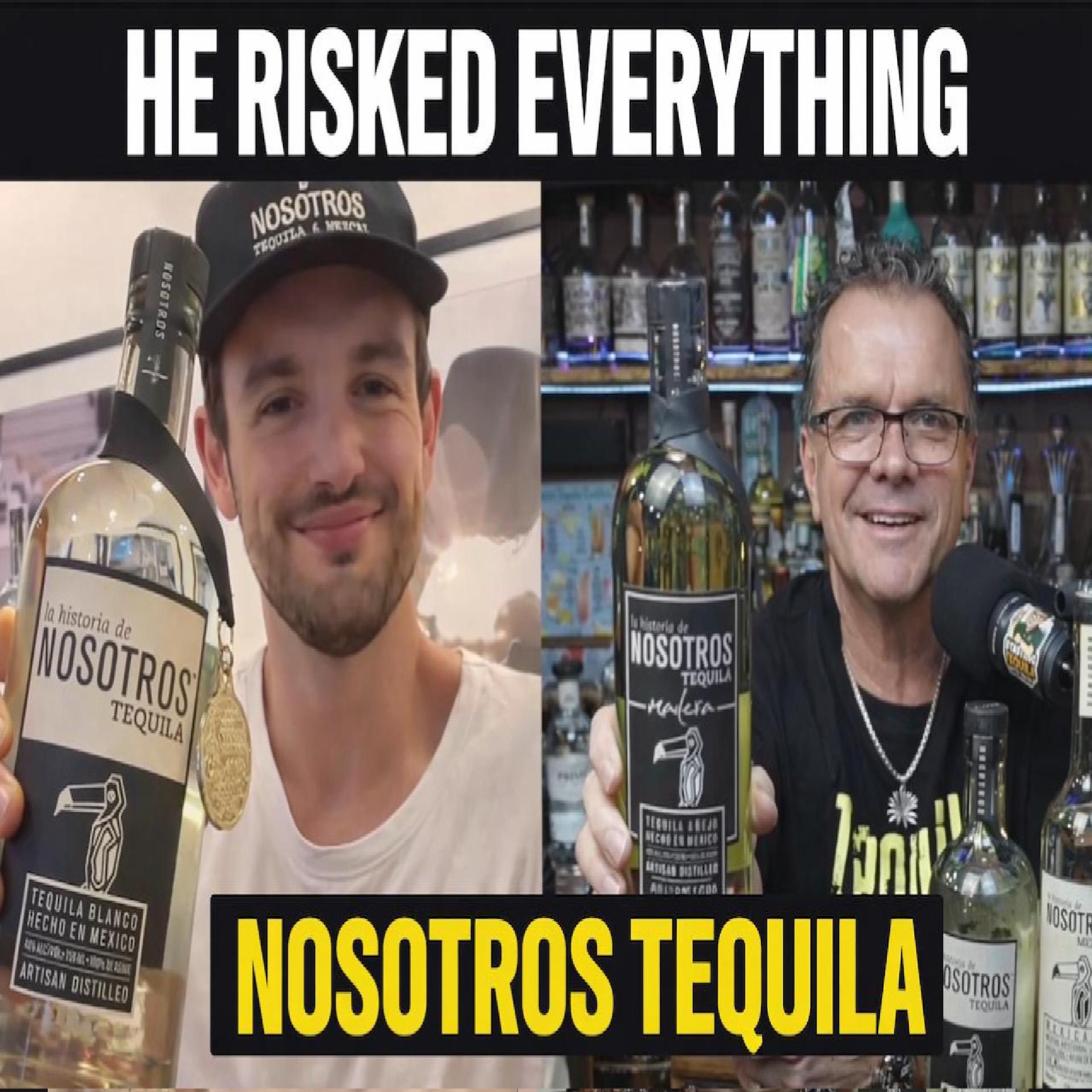
[00:00:00] Speaker A: How about a 22 year old that withdraws all of his money and decides to start a tequila brand based on a professor having him create a business plan? Tonight we're going to talk to Carlos Soto, the owner of Nosotros Tequila and Mezcal, and go through the story of how this brand began, how they've kept the tequila tasting so good and clean at the distillery they're at, and the future of what they have coming up next. This is a pretty awesome interview.
[00:00:27] Speaker B: Stick around.
[00:00:27] Speaker A: It's tasting tequila with bread.
Okay. I am fired up to be here and talk about these bad boys with Carlos. How you doing tonight, my friend?
[00:00:45] Speaker B: Live and well, Brad. How you doing, man?
[00:00:47] Speaker A: I'm excited to talk to you about Tequila. It's my favorite thing to do at night.
[00:00:51] Speaker B: That's the best part of my job, I'll tell you that much.
[00:00:53] Speaker A: So for everybody that doesn't know, tell everybody who you are.
[00:00:57] Speaker B: Yeah, guys, so I'm actually the founder of Nosotros Tequila Mezcal. My name, full name is Carlos Otto. And very, very excited to share a little bit of a just talking shop with you.
[00:01:08] Speaker A: So where are you right now? Where am I talking to you at?
[00:01:11] Speaker B: I am right now in Los Angeles, in la. We have our US Offices in El Segundo in California.
[00:01:19] Speaker A: Fantastic. Well, tell everybody kind of a little bit of your background. How did you fall in love with tequila and what kind of, what did you do before you had a brand?
[00:01:28] Speaker B: Yeah, absolutely.
So I was actually born and raised in Costa Rica. When I was almost 20 years old, I got very lucky. I got a scholarship to come study in the United States and I ended up here in la.
So I came here for college and I studied entrepreneurship.
And funny enough, Nosotros started out as a school project. It was 2015 and I was taking a class that focused a lot on pitching business ideas.
And I remember our professor walked to the front of the room, grabs his phone, throws it on the floor and goes, guys, forget about your phone for a little bit. Look around, you see what's happening. For context, this was 2015. So it was really the year that Uber became a thing. So everyone was pitching, I want to do the Uber for this, Uber for that. But this was on a Friday and we had to pitch something on Monday of next week.
And I remember going to a bar with some friends and I was sitting at the bar and drinking tequila. I've loved tequila for a long time. It was my drink of choice for multiple reasons and mainly because it really made me feel a lot better than beer.
And for the first time I paid attention to how many people were coming up to the bar and ordering tequila on the rocks, a Margherita Paloma, shots of tequila. And I looked at the bar and the main brands you would see would be like Herradura Don Julio and Paul Patron, right? Like that was it 2015, before every celebrity and their mother had a tequila brand. So a very different landscape.
So I looked into the industry. So I have been growing, learned a little bit more about the appellation of origin, how does it work, the difference ins and outs of it. And also read out a lot about the sustainability issues that our industry has. And you know, we can talk a little bit more about that in a bit.
But I ended up pitching the idea of doing a brand that would focus more on sustainability, a really high quality tequila. Just aimed for it for a younger demographic in general, like something with a little bit more value aligned in terms of what the brand would be about. And a couple of weeks went by and I kept on thinking, this can actually be a thing. This can actually be a thing. So I started kind of working on the idea of it in that winter break. Ended up going down to Mexico for about a month. I spent some time just in different areas of Jalisco really trying to understand how does this work? How did it have. Who are the people doing it? Where are the agave farms? And bear in mind, I was a senior college kid and just kind of walking around. Obviously my, my first language is Spanish would help a ton. And I met an awesome family. They've been in the industry for over 80 years. They've been generational distill others they, as a fun fact, they, they held the very, very first nom in Monterrey, which till today is actually the only nom that is allowed to produce out of so very old, old, old distillation family. But I sat down with them and I asked the question to the master distiller at the time, which was, how can we do something different than what everyone else is doing in our industry?
And what came out of that was actually that we ended up playing with agaves from the highlands and the lowlands. And, and you know, I'm sure you know this, but, you know, for anyone listening, the. The highlands tend to be a little sweeter, more floral. The agaves tend to have a little bit more stress. The sun hits them different, the atmospheric pressure is a little bit different. It's usually more like in the Arandas area, the lowlands tend to be a little bit more peppery. More earthy, a little bit more mineral. There's usually more water, more shade in those areas. So the, the agaves tend to have a little bit more rich undertones to it.
And historically speaking, brands kind of choose one or the other to really create their taste profile. What we ended up doing with Nosotos was that we actually blended 50% agaves in the Highlands and 50% in the Lowlands to really create our tequila taste profile. So I brought back some samples of different formulations that we had done, and we did some tastings with friends and professors. And there was one sample that people absolutely loved. That's actually our blanco today. We haven't changed it since.
And by the time I was about to graduate, it really came down to figuring out I kept on working on the brand and all the different little steps to go in that direction.
And it got to the point where I was like, is, can this actually be a business or is this just a pipe dream? One of those moments where you're like, what am I even doing over here?
But I said, fuck it, let's see where this goes. And I went to bank of America and I took a cash advance on my credit cards. At the time, it was $18,000, most I could get, which was just enough to make our first tiny little batch of production in October of 2016.
Meanwhile, I was working on the process of getting my visa in the US which in itself was a full ordeal. And in January 2017, we sold our first bottle.
The first first four or five months of our company's history were absolutely terrible. It really took a while to understand how this works. We started selling here in Los Angeles and then some in Guadalajara too. Here in the U.S. you know, you have the three tier system. You need to find, figure out how the distribution works, how do the restaurants kind of even operate. I started walking into places that I thought they were going to pick it up immediately. And then just, just to find out, like, this is, you know, there's somebody making a decision in a different state that you don't even know about.
So a lot of learning that came with it.
The real moment that kind of, you know, became more of a. More of a real business came at half, halfway through 2017. So I was, I was doing some other stuff to pay my bills on the side. And I kind of like was working on, on nosotus, wherever temporary visa I had at the time was about to expire. I had probably about two to three weeks left. And in May of that year, I ended up submitting our blanket to the San Francisco World spirit competition. Without really knowing much, Our importer record told me about the competition. It was 500 bucks to compete. We had probably about $2,000 left in that bank account. And a couple weeks later we got the results, and we ended up getting a double gold award, which is when all the judges think you're a top of the line product.
We got best tequila blanco of the show. We got best tequila of the show across all categories. Blancos, reposados, anejos, espanos came on top of a lot of big brands. A lot of brands that, you know, you know, today if you go back and look at the results, like, there's so many brands that I respect and love, Whether it's citelleguas, whether it's cascanes, whether it's, you know, the list goes on and on, and El tesoro was part of that.
And it really gave us that outside validation that we needed. We got a big po from total wine and more at the time. I was able to go full time into the business in September of that year from them. You know, we kept on building little brick by brick. We released the reposal about two years after that. Continue working. I've always loved mezcal too. So, you know, we ended up going down to Oaxaca and met an incredible family over there too. And we've been working with them for now, five years, six years almost. But yeah, I think that's kind of like the sparknotes version of the story. That's how Nozotas came to be and where it is today.
[00:08:05] Speaker A: That's incredible. Like, I love hearing when someone's on the brink of not being able to take that next step and they get that break, you know, that thing that happens. And there's a really cool story about FedEx and how FedEx was down to not being able to pay their fuel bill and they were going to go out of business. And the owner flew to Vegas and gambled to make enough money on a blackjack table to pay his fuel bill. And then financing came through.
[00:08:31] Speaker B: Right.
[00:08:32] Speaker A: So it's pretty cool to know that you. You dig in and you want to make it happen and you make it happen. And good things happen to people who put the work in and are good people. Right. So that's awesome. Thanks for sharing that story.
[00:08:44] Speaker B: And with every business, you know, I think that's the part that you. You hear so much of the successes of the business. Right. But there's. It's a very like, step by step by step, and every once In a while, you take a step down and then you got to take another step up. And for every business that makes it, there's, you know, 99 other ones that failed along the way. So now we're, we're very thankful. I absolutely owe it to, you know, Mike, the co founder at Osotros. I owe it to the people that work in the team. I owe it to the. All the bartenders and the bar managers that have believed in us. We built this brand on premise. That's really where we've succeeded first and foremost. We're not in a lot of states in the United States, we're only in seven. But, you know, if it wasn't for the people that gave us a shot to put us in behind the bar, like, we wouldn't be here.
[00:09:27] Speaker A: That's awesome. Well, I haven't tasted this yet, so I'm ready to pop this one open and taste it while we're talking here.
So how did you go about actually finding and picking the distillery that you worked with? Because I know that sometimes is a really difficult process for people.
[00:09:44] Speaker B: A lot of people, man, when, when, when I was down there and, you know, a lot of emails that went unresponded, a lot of phone calls that were.
I was 22 years old and, and not a lot of people were really going to believe in, in, you know, somebody could walking in and be like, hey, I want to start a brand like this isn't that.
We ended up working with the Stiladora Bay at Tequila. They truly gave us an opportunity at the time to come in and sit down and have a conversation with them and really be like, hey, what. What are, what are you looking for? Can't believe the only people that actually believed in me at the time. And, you know, I think that's. That's been a huge reason why we've continued to do business with them for so long. And it's one of those things where, you know, I believe, I believe in loyalty in that sense, and if somebody gave me a shot down the road, like, we were able to really curate our brand inside of their facilities. You know, they've grown a lot since, and it's become a hot topic for a lot of people. But, yeah, it was truly just a really good experience. I'll tell you one thing. One of the operators at the Silorado Valle Tequila, he worked as an engineer in Costa Rica for 10 years, and we had a really good connection with that. And I think that also helped a lot, like, down the road in terms of, like, Building the relationship and the connection that we had. His son was born over there and then he moved back to Guadaha. And you know, we developed a really good friendship.
[00:11:04] Speaker A: As a 22 year old, how did you convey the confidence and show them that you knew that you could make this happen? Because that, that's, that's a young guy, right? You were, you're a young guy. How hard was that to get them to believe in you?
[00:11:19] Speaker B: Yeah. Crazy. It's like almost. It'll be 11 years this year, man. I, I've been lucky that I think throughout my life I've always been a pretty good, think pretty good public speaker, at least in terms of being able to convey ideas and whatnot. And I think I'm definitely an optimist. I think the combination of those two things helped a lot in terms of like sharing what the vision was and where I wanted to take things. It really set the framework though, so for how the entire business was really going to be built. And for those of listening here that don't know, nosotros means us. It's. It's really the idea behind the brand is it's all about relationship making. It's about this, it's about sharing a drink with someone that maybe you didn't know before and you're connecting at a deeper level. And I think the, the real part that happened here was not my business expertise or like my funding or my, you know, marketing knowledge. It was truly just connecting at a, at a personal level first. And then everything else fell along the way, which, you know, it's. At the end of the day, this is a, it's a human experience and it really is about connecting with other humans. And I thoroughly believe that that's. When you're looking, talking a little bit more, more metaphysical. I think that's ultimately the. What we're supposed to be doing here on earth.
Sorry, I went a little, a little different tangent over there.
[00:12:39] Speaker A: No, I totally agree.
[00:12:40] Speaker B: That's.
[00:12:41] Speaker A: That's what makes these so cool is to get to hear, you know, what really is the makeup behind it. Sure, it's cocaabe and it's, it's twice distilled and it's in a pretty bottle. But it's the human connection that not only I think tequila brings to people, but the people bring to their brands. And that's what makes the brand special in a lot of cases. For me to, to know the story behind a bottle makes that bottle just so much more exciting and it's romantic.
[00:13:08] Speaker B: If you will, and that's the coolest part for me, I think, you know, I spend a lot of time down in Mexico now with our. All of our productions, with all the different things that we're doing. We built such a good relationship with the team over there from the production standpoint with C.
Citaliwa, our maestro tequila, one of the few women in all of Jalisco who are actually creating and distilling tequila. And also the people, just every, every part of the people that work in the distillery, you see the impact that what our brand does to their families. And we have these holiday parties just recently and it's always so fun, so fun to connect with that and, and it kind of gives it a little bit more of like, added value to what we're doing because you know that the work you're doing is actually going.
[00:13:53] Speaker A: Places and you've seen a lot of changes in that distillery over the years. I know it's probably what tripled, if not quadrupled in production way.
[00:14:03] Speaker B: Yeah, yeah, yeah. Wait. I think they, you know, for. As a hot topic, I think they, they as a business, they were able to grow substantially. They. When we first sat down with them, there were, I believe, 12 or 13 brands in production there.
We were like the 14th or 15th or most of them home brands. And they were starting to do like these contract distilling deals. Yeah, they were able to grow a ton. The benefit that we had was one, the personal relationship. I think a lot of, A lot of Americans came and started building brands there and, you know, for better or worse, I think that speaking the same language and kind of connecting that in like that Latino way also helps a lot. And we had the benefit that we curated from the start, our own formulation. Right. It wasn't like a, hey, here are our formulas and just pick one. And we're not launched with a Blanco, Reposan and Anejo. Our nejo didn't come until seven years later almost. So it really was a process of a step by step type of thing. When we were able to build it with them on the other side, like, I kind of became like a fun project inside of the distillery. And then they were doing a lot of other money with other brands and, you know, white labels and things like that.
But the facilities are very complete and they have both a oven, traditional brick oven, and then autoclaves. Something that sometimes people ask and like, there's no diffuser on site. Like, that's something that we would never have worked with. I think that's, that's something we stand by and As a fun fact, we're the only brand out of that. That entire nun that has ever been certified additive freeway at Tequila much maker, right?
[00:15:35] Speaker A: Yeah. That's fantastic. And you're involved in pretty much the whole production process, right. You go there and you kind of oversee how they're doing it, and you have a formula and a way that you want it done, and they kind of stick to that.
[00:15:48] Speaker B: And we have. We have a team boots on the ground too, and Guadalajara too, and Jalisco. So it is super important for us that the biggest part of the puzzle, you know, anytime we're producing, we have the formation that we follow. But, you know, I tell people, even our team in the US Every time, like, if you look at our lot, batches and everything, there is variability between batches, and that is a result of the different agaves that we're using. We're not rectifying anything. We're not going on the. Using any additives in any process of it. Right. So it is expected that there will be variability, and that is actually a feature, not a bug. I think that's. That's really something that we. We focus on. On sharing with our. With our team and ultimately with the consumers, too.
[00:16:25] Speaker A: So when you're doing the blend between the vias and the highland agaves, are you creating separate batches and then blending those together? Are you putting those agaves together and then going into the oven from that.
[00:16:38] Speaker B: Point, they're cooked together from the start. Not no cold mixing at all. You know, I think that's the key part of what really creates the taste profile.
The fermentation is another key part of it. We use a German yeast that we've operated with since inception. You know, a lot of times people really focus on the different cooking methods and everything, which I do think plays a huge role. Don't take me wrong. But the fermentation is also super important because that's really where the alcohol is produced. To give you a little bit of my background, I had a lot of.
Throughout my life, I've had different health scares and, like, challenges and things that I've kind of dealt with. So for better or worse, health. Health and wellness is a big part of my life. It seems kind of counterintuitive with running an alcohol brand, but the premise, with no Sotos from the start, too, was let's try to do it as clean as possible. Let's try to do something that, you know, makes me feel better the next day than if I would drink any other thing. And even with our formulation I can't go into, like, the exact temperatures that we do. But if you look at our distillation curve, the way we cut the heads and tails is actually extremely narrow. And that is really a goal that we try to do for. To limit the amount of aldehyde content in our tequila. If you're familiar with the term aldehyde. Right. So it's chemical compound we found in ethanol. But there's a lot of studies in correlation that aldehydes tend to give you a bigger hangover the next day. So our whole goal with. With Nosotros is that truly it can be a product that can be lighter on the body than some other brands out there.
[00:18:04] Speaker A: It has a great flavor.
[00:18:05] Speaker B: I mean, I just taste it. What do you think?
[00:18:07] Speaker A: For the first time, you planted in my head, you know, highland and vias agave. So one of the first things I picked up is really nice sweetness. But I got like a citrus note right off the bat in the flavor. But then I didn't get pepper like I was expecting. I got like a little bit of a vegetal heat, almost like a. Like a jalapeno or a type vegetal warming. That was really nice. And then I also pick up.
I call it funk. But just a little bit of that nice, funky smell on the nose, which to me is always like, ah, yeah, that's really good. Like, I really love that. So, yeah, this. This is really nice. Has a great mouth feel as well. That's a really good tequila.
[00:18:47] Speaker B: I appreciate the word funk, man, because a lot of people take it as a negative thing. But I do think tequila should be funky here and there. Like, there should be something there that kind of showcases the different agaves that you're playing with and like, how, you know, each season there's. There's so many var variables to how you can make it that a little bit of fun could really curates a different taste profile. And I appreciate the notes. Ultimately, the. The goal was to do something that's. It's an isn't. It's an easy sipper, but it has flavor. Because a lot of times, like I've. I've tried a lot of, you know, new brands that have come out and, you know, without calling out names or anything. But there's. There's a lot of ones that grew really quickly because they're so smooth, but then they don't have a lot of flavor to it. So, yeah, the goal was always to find that middle point between what's. What's something that's Tasty, but at the same time, it's easy drinking.
[00:19:34] Speaker A: Yeah, I'm. I'm curious to, like, sip on it for a while and, and get some of the complexity of it, because I think it's probably going to have a lot more. When I get a lot in the beginning, in the first taste of a fresh crack bottle, I know that's going to completely change over the next 15 days of what I taste and what I pick up. So that's really awesome.
So how did you come up with the name?
[00:19:54] Speaker B: How. What was your.
[00:19:55] Speaker A: What was your light bulb moment of, okay, this is a great name.
[00:19:59] Speaker B: The name took a while, man. It was really bouncing back and forth. And I had thought of some terrible names in hindsight, and I'm so glad I didn't go with any of them.
It was, funny enough, it was a late night drinking with some friends, and I was going on and on about this one. Names like, what do you guys think about this one? What do you guys think about that one?
At some point, one of my friends later looked at me and just goes, carlos, it's like, let it go. It'll come to you, man. Let's enjoy the night. Cheers to us. Goes like that. Like, just cheers me, like with the cup and that, and I literally cheers him. And I just held that there and I was like, say that again. He's like, cheers to us. And I was like, oh, it's nosotros. That's. That's it. And funny enough, man, I, like, I looked into the idea. That's where the idea came from. And then I was like, looking at, like, what are words that Americans also learn early in school for Spanish? And I was like, nosotros seems like an easy one. It's not as easy as I thought. We've definitely had some challenges along the way. I think some people struggle to pronounce certain things, but, you know, it is no, no problem with that. Ultimately, I think as. As people learn what it means, it really gives it a little bit of an added value to it.
[00:21:04] Speaker A: Yeah, I think it's very cool when I opened up the boxes today and my wife, she looked at me and goes, hus. That's a really cool name. And I was like, how'd you know that? Like, I'm. I'm desperately working hard on learning Spanish and she's ahead of me a good two years of duolingo. I can understand more than I can speak, but I, when I read it, I didn't know that's what it meant. But cheating right off the bat.
[00:21:26] Speaker B: That's awesome. Yeah. And so people, you know, know it out from. From the get go and whatnot. And then if. If you look at the other part of the bottle, the little toucan, quick, quick rundown over there, it's, you know, obviously something very Latin American.
But then if. If you look at Aztec backstory, it's a totem for storytelling.
And the full name of the brand is La Historia Nosotos. So it kind of showcases lasotos, means the story of us.
So the whole idea with it is that everybody, every bottle is going to have a story.
[00:21:55] Speaker A: That's very cool. Tell me what the open back of.
[00:21:59] Speaker B: This bottle is for. Yeah. The idea with it, the enjoyed buy. That's why I have a Sharpie in my hand at all times, man. Because we're always playing and doodling. A big part of our marketing truly has always been murals and art and activations and things like that. And the back part was, if every bottle is a story, there can be a little open space for people to kind of, you know, jot down who you drank it with, or if you want to, like, play with it, or if you want to, like, just put a little note for a gift or something of that nature. And you're going to see in clubs with like, flares and like that type of stuff. Like, that's. There's plenty of other brands with bigger marketing budgets that can do that, but we want to try and do things that are a little bit more sentimental, if that makes sense.
[00:22:42] Speaker A: Yeah, that personal note, that's a great idea. That's very cool.
Okay, so I recently got the opportunity to work with Flaviar and do a video series for their.
[00:22:54] Speaker B: What was it called?
[00:22:55] Speaker A: La Ruta de Agave.
Yeah, so. And I'm gonna tell you, Honest Abe, the best one out of that whole group was the very Last day, which is your hoven. And that's the first time I had your brand. And it was after you and I talked, and they sent me a box, and they didn't tell me to do anything with it, so I made a video. And then I thought, well, I'm going to drink through some of these. And then I got a call like a week later saying, hey, we would really like you to do a series for us, so can I get your address to send you a box? I was like, you sent me one already? And he's like, we did. And I said, yeah, and I already tried a couple of them. And he's like, that's okay. I'll send you another box. I was like, awesome. I now have two of those Hobins.
Tell me a little bit about that Hoven, because your bottle is a little different. And that was like a really cool special blend for you guys too.
[00:23:46] Speaker B: Yeah. Let me grab a bottle real quick so I can actually show you the notes here. This, this Hoven is actually extremely, extremely special. This is our. It's a collaboration with the Chespirito family.
So let me start with the. What the concept of the brand is first and then we'll go to. To the actual juice itself.
But if you look over here at Chespirito, this is Roberto Gomez Bolanos.
He was basically the Charlie Chaplin of Latin America. He was from Mexico originally, and he had a bunch of different characters and little things that he would do. TV shows. All very heartfelt originally towards kids. You know, the shows were huge all throughout Latin America. My grandparents and had my parents watch it and they watched it too. My parents grew up with it. I grew up with it. Probably my kids one day will also grow up at the shows and they've kept kind of doing them. Our director of sales is his grandson and Roberto Gomez iii.
He. He runs all of our. All of our sales part. And, and I was chatting with him. This was five, six years ago.
Roto Como Bolanos died in almost like seven, eight years, nine years ago. Life goes quickly.
But he was telling me the story of the last time that they actually, they actually saw each other. Last time he saw his grandfather, they were drinking a little tequila and Cancun. This was towards the end of his life. And he was just watching a Real Madrid Barcelona game, struggling a little bit. And the game ended and, and, and then started again, the replay and, and he was super into it. So they just watched it again.
[00:25:18] Speaker A: That's awesome.
[00:25:20] Speaker B: And I told him, I'm like, dude, like, that's such a good, genuine story. Like, we should at some point make a little tribute to him. So this one, the one that you got to try was actually. That's actually a limited time offering. We're not going to have it forever. But we were so happy with the way it came out and we were trying to figure out what we were going to do. We decided to go with a Hoven because of the name. Hoven means young. So it kind of like appeals to like that, that, that, you know, demographic in that sense in terms of like what he used to do. And it's in collaboration with the group of just family. So, you know, there's a percentage of all Sales that goes to them. And they do a lot of incredible work with the youth of Ciudad Mexico. And the hoven is actually 80% reposado, 20% blanco. And we were so happy with the way the, the flavors kind of came to be. With every one of our expressions that we have so far. You have a beginning and an end to the flavors. It kind of like goes this, this, this, and then you have that. With our hoven, for some reason, something that, that just worked so well in the way we formulated that because we played with different, different blends. We played with our anejo with where we landed, and it kind of everything happens all at once. I was doing a tasting with a bar manager in Florida not too long ago, and she literally just starts laughing. I'm going to say something that's going to be terrible, but it's almost like an orgasm in my mouth. And I was like, that's a fantastic thing. I understand where you're coming from because it is truly just a lot of flavors at once. And I think it's really cool because that doesn't happen very often in spirits.
[00:26:48] Speaker A: Yeah, it was delicious. Like, I, I remember, you know, I, I needed to do the video, but I wanted to taste it. Everything first before. And then I was like, holy cow. Like, I'm gonna have to search this one out. Are those bottles still available? Can people buy them?
[00:27:01] Speaker B: Still available. You can buy one on our website. If you're listening from Mexico, you can buy one in Amazon. Mexico.
They're up and running over there. And then we'll, we'll probably run them for about six more months. I think after the World cup we'll, we'll stop making them. I think that's usually the, the time frame that we have. But I'll, I'll make sure to get you one after this.
[00:27:18] Speaker A: Yeah, I'm gonna have to find one of those and have it on the shelf. Cuz that was really cool. Very awesome. So since that has the repo in it, tell me about the repo. What's your aging time? What are you aging in? What's, what's your process there?
[00:27:28] Speaker B: Yeah, so repos. I was aged for six months. I think some of the biggest parts of the, of the puzzle with our aging was we've gone through multiple styles of aging. You know, when we very first started the company, we were actually aging for 11 months in a people and style of aging.
If you've ever heard the term pipon, it's a huge barrel kind of, you know, a larger size, larger size. Barrel that allows you to do a little bit larger in terms of brands, other brands that do that, other than Tequileno, I actually don't really know a lot of brands that kind of do that. So that for us, it kind of fit with the mold of like, how can we do things differently? The reason why we went 11 months to start was because we never had an anejo. Right. We didn't have resources to do the anejo, so we just wanted one that would fit both reposados and anejo drinkers. Eventually, as we started looking at kind of create, adding anejo to our, to our category, to our, to our, to our list of products, we were like, okay, it doesn't really make that much sense to have an 11 month Anejo. It's becoming really expensive.
How can we continue growing things but also doing things different? So we, we switch it to a six month anejo. Sorry, six month reposalo.
What we ended up doing, which is a really fun thing.
Our reposado is six months old and it has a level two char on the barrels. So we want traditional barrels, white oak. Most tequilas in the industry are aged in what's the equivalent of a red oak. So kind of more think of like that Jack Daniels type of bourbony type of taste profile. The reposado uses a new white oak barrel and it really has a very different taste profile. The anejo is aged for 15 months in a same white oak barrel, but with a level one char. So the reposal has a level two char. The anejo has a lighter char level. What came out was a really fun difference between the reposal and the anejo, where the reposado has one style of flavors and then the anejo has a different style of flavors.
[00:29:18] Speaker A: Yeah. With the different char, it's gonna be affected differently by that barrel.
[00:29:21] Speaker B: Exactly.
[00:29:22] Speaker A: Fantastic. And then is there any other products that you currently have out before we talk about the mezcal? Any other tequila products?
[00:29:29] Speaker B: Nothing else from our brand on the, on the tequila side. And we have the Blanco de poisson and the Anejo and then the Hoben, which has been dealt outside of that, we will never do a cristalino. I stand by that. I don't think that's something that I want to have nosotos do at any point.
And you know, some people like it. To each their own. I think it's. I think it's unnecessary what you're doing with the Cristalino over there.
But then on the Mezcal side. We have two expressions. I think I sent you our most recent one, which is our Mexicano.
[00:29:59] Speaker A: I was looking for the type of agave.
[00:30:02] Speaker B: So it's Mexicano. That is the type of.
[00:30:04] Speaker A: Yeah, yeah, yeah, yeah, yeah, I see it. Yeah.
[00:30:06] Speaker B: Yeah.
So I'll. I guess I'll. I'll tell you a little bit of the story on the. On the Mezcal side of things, too.
Do you enjoy Mezcal? Is that something that. Yep, yep.
[00:30:16] Speaker A: More and more recently, like the. I was. I was with Jimmy Salsa and in tequila, and he handed me something and said, I want you to taste this. You know, he does that to me a lot. I don't know what's in the bottle or what's in the glass here.
Too peaty. Like a peaty scotch, you know, And I. I just didn't like that. My wife calls it the band Aid flavor. It's that iodine smoky flavor.
[00:30:37] Speaker B: Right, the broccoli type of, like, weird. Like the diffuser broccoli type of thing. Yeah, exactly.
[00:30:44] Speaker A: And so I really didn't know how to get past that. That smoke in the front and that ricea that I had, like, helped me to find all of the flavors. So now I've gone back to mini Mezcals that I said, you know, had too much smoke, and the better than Mezcal I find, the less smoke there really is there.
[00:31:01] Speaker B: Absolutely.
[00:31:02] Speaker A: And how many more flavors there are, you're not playing with one agave anymore. It's so much different on each one. So, yeah, I've been doing a lot more of them lately.
[00:31:11] Speaker B: I think your journey resembles what a lot of people have grown into Mezcal truly go through, because the Mezcalas in general, and I'll tell you how we got there in a second. But the journey of the category of Mezcal as a whole, you know, you had some big brands that came first, and they created these mass produced Espadin Mezcalis that just had a very potent, in my opinion, fake smoke that kind of was kind of curated to give that smoke taste profile for cocktails. Right. I think that's like, so many times people wanted a Mezcal for cocktails and this and that. In Mezcal, you have over 30 different varieties of 30 different types of agaves, with over almost 100 different varieties of those of those agaves. It's. There's so many options, so many ways of doing things in Mezcal that it truly is the wild West. You can kind of take that in. So Many different areas.
This one is really fun because that type of agave, the agave MexicoNo, it takes 15 years to reach full maturity. It's about the size of a Prius. It's a very big agave, but it's a wild agave, so it only grows in certain areas. You cannot put them next to each other. And because they'll compete for resources after year three or four, and they'll actually end up killing each other.
So it's a very unique bottle.
Most bottles of agave mexicano that you find in the market, they'll retail anywhere between 80 to $150.
We're retailing this one at 45 bucks. And the way we did that is we pre bought three years worth of supply to be able to price it correctly, to be able to create a product that would teach people there's more to Mezcal than just smoke. And here is a beautiful agave that you can actually learn and go through it. So this one, you're going to see notes of tamarind. You're going to see notes of honey on the backside. You're still going to have a little bit of pine and smoke, which is traditional. You know, you expect that with any sort of Mezcal because of the cooking process on a milled open fermentation, no yeast, you get a lot of pine with it. Alembic distillation, twice distilled. And it. It's absolutely fantastic. Sits up 45 alcohol, so a little bit hotter than our tequilas.
But it does have a lot of flavor. And you're going to see a lot of fruit. I get a ton of green apple on the back side of that, so I'm. I'm excited to see what you think.
[00:33:28] Speaker A: I got grape. Like, I get it. A nose rape on the nose.
[00:33:33] Speaker B: Yeah.
[00:33:33] Speaker A: But there's also like a interesting minerality. Like, almost like a. Almost like wet earth, but not quite. Not quite the. Like Pedrichore. This is more like, like a spicy, earthy smell, if you will.
[00:33:47] Speaker B: Yeah, yeah, that's pretty accurate. And we'll go back to that after you try it. Wet dirt.
[00:33:51] Speaker A: I definitely get that mint and that. I always say juniper, but yeah, like a. Like almost like a little bit of a hint that you'd get in a gin.
[00:34:00] Speaker B: A very, very kind of almost like botanical. So I get tamarind, honey and a tiny bit of like mint and green apple on the backside.
[00:34:07] Speaker A: The honey and apple, like, definitely the honey is right there in the finish. Like, that's. That's very nice. And I Don't even pick up any smoke in the finish of that. Honestly, I don't get.
[00:34:17] Speaker B: It's on the front.
Yeah. From the cooking process.
That was good.
[00:34:22] Speaker A: This is really good.
[00:34:24] Speaker B: Our, our Mezcal production is unparalleled, man. It's a. It represents only 10% of our business. So it's obviously a small category and the industry in general is smaller than what Tequila is.
We. Jorge, the owner of the Palenque. So a little bit of backstory. 2018 went down to Oaxaca and we ended up in, in, in. In this beautiful place called Miyahuatlan de Porfirio Diaz. It's about two and a half hours away from Oaxaca City, heading almost to towards like Puerto Escondido. If you take that, that highway that goes there and that area of Miyahuatlang, for anyone that is a, a on the, on the Mezcal side, you'll, you'll know that it's considered the Mecca of agaves. The soil is incredible. You can basically grow any type of agave. Personally, I think way better than we can get in Puebla or any other states in Mexico.
And we ended up working with a family that's been doing this for, again for a really long time.
We started originally working with Alberto Ortiz. Betortiz was a. It's a very. He's a very well known mezcalero. He had some health issues and then had to step away.
And now Octavio Jinhe is our maestro, our mescalero, which is. He's cutting his teeth with us. He's younger, one of the younger Jines of the Jarquin family. Jin family. If you go back to Mezcal Vago, one of the very heritage great Mezcalis of Oaxaca have been there for a long time. But the really fun thing is this area has a very unique agaves that grow and taste a little bit different than where the same variety in a different area would taste like. And I think it comes down to the soil. That soil in that place is just absolutely stunning. Yeah, we have a. On our Instagram, we actually have a great video. I think it's pinned on our Instagram and it showcases kind of the process of how our Mexicano works.
[00:36:10] Speaker A: So how did you, how did you find them? And this, like, what was your process of finding that you wanted to use this agave and picked this, you know, taberna and this family to work with.
[00:36:21] Speaker B: So this, this agave, this bottle that you're tasting is our most recent release product in general that came I think about six Months, seven months ago or so. So that took a while. We were really trying to think, like, how can we bring something that is not espadin to the market, something that is unique, something that kind of creates a different taste profile and something that can be educational for people, but we can price it in a way that people really can discover it and enjoy it. Right. Like, I think that that was ultimately the goal.
A lot of trips, a lot of different tastings. We waited till now because before we had an espali, we had an ensemble as our first of us, our first mezcal. That ensemble was espadin and tola.
The tola is one of my favorite agaves. You know, they call it the king of, king of, king of agaves for a reason. Looks like a crown, but it tastes incredible. That was a 40% tola, 60% espadin ensemble, which most ensembles are either cold mixed afterwards and they have a tiny bit of tola or just a little bit of toila in the cooking process. So back to the whole idea of what we do with tequila, where we cook the 50% of each side from the start.
Same with that ensemble. That was great. But it was also a product that we had because of the toela. We, you know, we retailed anywhere between 65 to 70. So it, it was tough to get, like, really become a mover, at least like a higher velocity at bars. And again, we try to build our brand as best as we can on premise. That's really where our brand thrives.
The goal with this one was really like, let's find something that we can, we can do that is unique and we can actually price it at a fun price. Jorge, that the owner of our palenque that we work with, we have a joint venture with him.
He had a connect with a bunch of farmers that had access to mexicano and they had basically three years of worth of product that we could pre buy at a very reasonable price.
And it gave us the opportunity to bring me to the market at a price that you won't find anywhere else. You go to Total Wine right now and you look it up and you won't be able to find, you know, Mexicano bottles for anywhere near to that.
[00:38:25] Speaker A: It's delicious. And the, the more I set in it, tell me if this is a note that you've picked up. But like, as it's just kind of hung out in my mouth, I get like a dark chocolate note.
[00:38:35] Speaker B: Mm. Yeah.
[00:38:36] Speaker A: So that's like really good. Like, it's almost like, like a. It's Like a bitter dark chocolate that just is, like, hanging there after the fact.
[00:38:46] Speaker B: Right. It's not in the liquid. It's after the fact. Yeah.
[00:38:49] Speaker A: Yeah. It's com. Like after everything's been out of my mouth for the longest time. You know, of a sudden that.
[00:38:55] Speaker B: That.
[00:38:55] Speaker A: That minty juniper disappeared, and it was like. It's like I just finished, like, a dark chocolate bar. Like, just a little taste of dark chocolate. It was really good.
[00:39:05] Speaker B: I almost feel like it's. It's the. The combination of basically the smoke that you get in the front kind of dissipates, and then that's what lingers afterwards. Just the dark chocolate from the smoke.
[00:39:15] Speaker A: Yeah.
[00:39:15] Speaker B: Yeah, that's.
[00:39:16] Speaker A: That's impressive. That's really good.
So. So you just have this one and then one other Mezcal, and that was the only two.
[00:39:23] Speaker B: We have an ensemble. We're probably going to work our way out of that ensemble eventually, I think. So that. That'll. That'll become more of an lto. We might go to a full toilet. I think that's the next step that we're. We're exploring. Doing a full bottle to a promo toilet. It's such an expensive agave. I love it. Don't take me wrong. But it's just such an expensive agave that we're. We're definitely going to have to price that at a premium. But, yeah, ultimately, the goal is to keep. Keep things moving. Just keep just building new things. And if one day we want to try something new, why not?
[00:39:54] Speaker A: My two favorites so far that I can say I like the plant the best is Toba and Tepecate.
[00:40:01] Speaker B: Tepestate slides out. Yeah. Yeah.
[00:40:03] Speaker A: Every time I have one, I'm just like, gosh, that's ridiculous.
[00:40:06] Speaker B: And.
[00:40:07] Speaker A: And every time you taste it, it's. It's just completely different every time. But this one's right up there with it. Like, this is.
[00:40:12] Speaker B: I'm.
[00:40:12] Speaker A: I can't wait to just kind of rest with this a bit and taste on it, because it's really good. That's pretty awesome.
[00:40:17] Speaker B: I'll tell you. I'll tell you a quick story. When we're doing the final tastings for the Mexicano, when we were kind of playing with it. And so Jorge's wife, Flor, she's the president of ama, which is one of the certification councils for Mezcal, Right. And Tequila, you have the crt and that's it. In Mezcal, you have seven different certification entities, one of them being ama. After the CRM disbanded a few years ago, there was a huge deal there with a lot of drama and some Wild west shit.
But she's the president of Alma, and she has such an incredible heart. We sat down just doing this tasting, and before we even talked about anything and like, we thought we're like, this is the one that we're gonna go with. She actually had us go around the table and talked about why Mezcal is such a spiritual drink. And, you know, it's called the spirit for a reason.
It brings memories, it brings different parts. And she grabbed the glass and basically had everyone go around and share. What do these aromas kind of bring back to you? Right? Like, what are, like, the things that you're thinking about? And I love that you mentioned the rain note that you got, like, almost like that wet dirt, because that was something I mentioned when I was going through. Through it growing up. I. My. My grandpa was a. Was a dairy farmer, and the backside of where a lot of the cows would roam, there's a little river. So my cousin and I would always run over there and kind of run into Costa Rica. And it was just wet dirt everywhere. And that smell just reminds me so much of that. And it's like something that every time I sip it, I'm like, man, this is. And that's. That, to me, is what spirits are about. Like, just bringing different memories and being able to share them together and like that. It's kind of cool.
[00:41:53] Speaker A: Yeah, that's very cool. That's very cool.
Okay, so we were talking before we got started that some pretty cool changes are happening with your production method of the Tequila. So tell everybody what's. What's up and coming and what's going on there.
[00:42:08] Speaker B: Yeah, we're. We're very excited, man. We've been working on this for a while indirectly with our. With our. One of our partners over there. And this is strictly for. For the tequila side, but we did a joint investment into our own distillery. So we're very excited about that. We're. We're partnering up with Manolo Macias over there at Casa Macias 1621. So the. The really good thing that's going to come out of this is as we continue to grow, we're going to have a little bit more ownership in our production processes. And. And we're also going to start doing a lot more trips to bring people down to see how we do our process and whatnot. So very excited for this new stage of the business. I think we're going to be able to control a lot more of our own supply chain and by being able to be a little bit more hands on with our production, at least for our timeframes because for better or worse, we had the benefit with the Silora al Bahia that we always had a specific area where we were able to produce. But then we also sometimes needed to pull team members from other parts and if they were busy producing other things, we sometimes would get pushed around here. We're going to be able to have our, our, our own. Our own part. And we're bringing Sidlali Waje, our master distiller with, with us to 1621. So super, super excited. You know, everything very, very.
We did it in a very good way with, with the family that owns the Silayo, the Silo del Valle. We found an agreement that worked for everyone and, and, and yeah, I think that the new stage in the Sotos, we're. Soon you're going to be seeing a little bit of a rebranding too. So very excited to put. Put out there. A little bit of a new sotrus. Yeah, man, that's. It's the next stage of the business. We've been doing this now for almost.
At least not full time, but almost 10 years and I think the next 10 are going to be really fun.
[00:43:47] Speaker A: That's incredible. You've built an incredible business and this is pretty. You're a very impressive person. So I.
[00:43:53] Speaker B: You're too kind, man.
[00:43:54] Speaker A: Having you on the show. No, that's awesome.
[00:43:56] Speaker B: Okay, so we're small, but we work really hard.
[00:43:58] Speaker A: No, it's. That's awesome. Okay, so I have a question. I ask everybody.
So you've created this brand. This is your baby, if you will. Right. You've made this thing happen. And if you could sit down and pick a glass of any of one of your spirits, sit down with somebody with that bottle, alive, dead, famous family, whatever.
Who would you most want to sit down with and share a glass and share the story of what you've created?
[00:44:25] Speaker B: I'll give you two answers, man. The first one would be Jesus because if he did exist, then he's got a lot of explaining to do.
So we gotta. He might be a wine guy, but, you know, we'll. We'll zap it up.
[00:44:37] Speaker A: Turning the water into tequila, you know, agave is a lot more complex than just making some grapes happen, so.
[00:44:43] Speaker B: Right, right. Yeah. I grew up.
I don't practice religion anymore, but I grew up Catholic and obviously there's a lot of connection there with my family and whatnot.
More questions than answers.
I'D say at this point in my life, but no, outside of that.
I've thought about this a lot and I think at some point there's always two people. One's a tricky one, but let me see what the best.
I love a good conversation. I think that, you know, this is the type of, this type of thing that I really enjoy doing in life.
Manuel Harari, who wrote Sapiens, I don't know if you've read that book or heard of it.
He is an incredible author and I think really has a different way of looking at life.
I would love to share a glass with that person because he is, I feel like he looks at life in a very different way. And there's always a lot of, a lot of back and forth there. That could be a few hours of just chatting.
Yeah, I think that would be a fun one. The other one that always comes to mind, I grew up with a lot of reggae. Sorry, I give you three answers now. But he stopped drinking, which was Bob Marley.
If I could bring him back, I think he had a very interesting way of looking at life and it definitely would be an interesting conversation, at least in what our purpose in life is.
[00:46:09] Speaker A: Yeah, that, that would actually be really cool because he had such a different perspective on life and, and a really passion for living. To hear how people can turn that passion for living into their life is really pretty awesome. Most of us get struck just stuck in our work rut and you know, our day to day things and forget what living is really all about.
[00:46:29] Speaker B: Yeah, he did, he didn't drink though, so that, that'd be, that'd be a my. That's what I was saying, like can I share it?
He'll join me with a blunt and.
[00:46:37] Speaker A: Then I'll say you just have to bring some good LA weed. And he'd be happy.
Well, tell everybody. Where can they find you? Where can people pick up this brand? In a store.
[00:46:49] Speaker B: So we're in seven states. If you're outside of.
If you're not in California, Illinois, Wisconsin, Florida, Texas, Arizona or Nevada, your best bet is to go to our
[email protected] and order a bottle there if you want to try it out. If you're in any of those states, we are likely in some store close to you. You know, California, we have a pretty substantial layout. Same with Wisconsin and Illinois. If you're in Texas, total wine or specs are great options along with a lot of little, you know, mom and pop shops that support us.
Florida, there's a great There's a great, there's a great group of people over there called Sip Tequila. They ship to your, to your day, to your, to your door in a couple of days.
So yeah, it's not the easiest to find but we're working on that.
[00:47:34] Speaker A: Awesome. Do you have any states you see that are going to be coming soon?
[00:47:38] Speaker B: Tbd. We're kind of trying to figure that out for this year. You know, I think that the biggest part of the equation with our brand is we're trying to go very deep in the markets that we are in. It seems to have a better effect rather than going super broad when you go very broad. You know, a lot of retailers kind of have really cutthroat.
If you're not selling X amount of bottles per store per week, then you know you're out type of thing. So we're trying to focus a little bit more on like going deep in places.
We are looking at three possible states right now that we might go into. One of them being Washington is a possibility.
We're looking at Colorado, we're looking at Tennessee and also Georgia possibly.
So a little bit of everything.
Yeah, we've. If at some point, if something makes sense and we feel like it's right to pull the trigger, we will.
[00:48:24] Speaker A: Fantastic. Well, I want to say thanks. Do you have a glass handy to.
[00:48:28] Speaker B: Do a cheers here? I literally, I have an empty glass. If I have this one right here, just add a little bit of water in there.
[00:48:35] Speaker A: First of all, I want to say thank you so much for the bottles, the hat. Thank you so much for taking your time tonight and sharing your story with us. And this is very impressive. The mezcal is amazing. The tequila is good. I can't wait to try this on. Yeho, I'll have some great reviews coming up as well. And I want to say to you, cheers my friend. Thank you.
[00:48:54] Speaker B: Thank you for having me Brad. Really appreciate you. Cheers man.