Episode Transcript
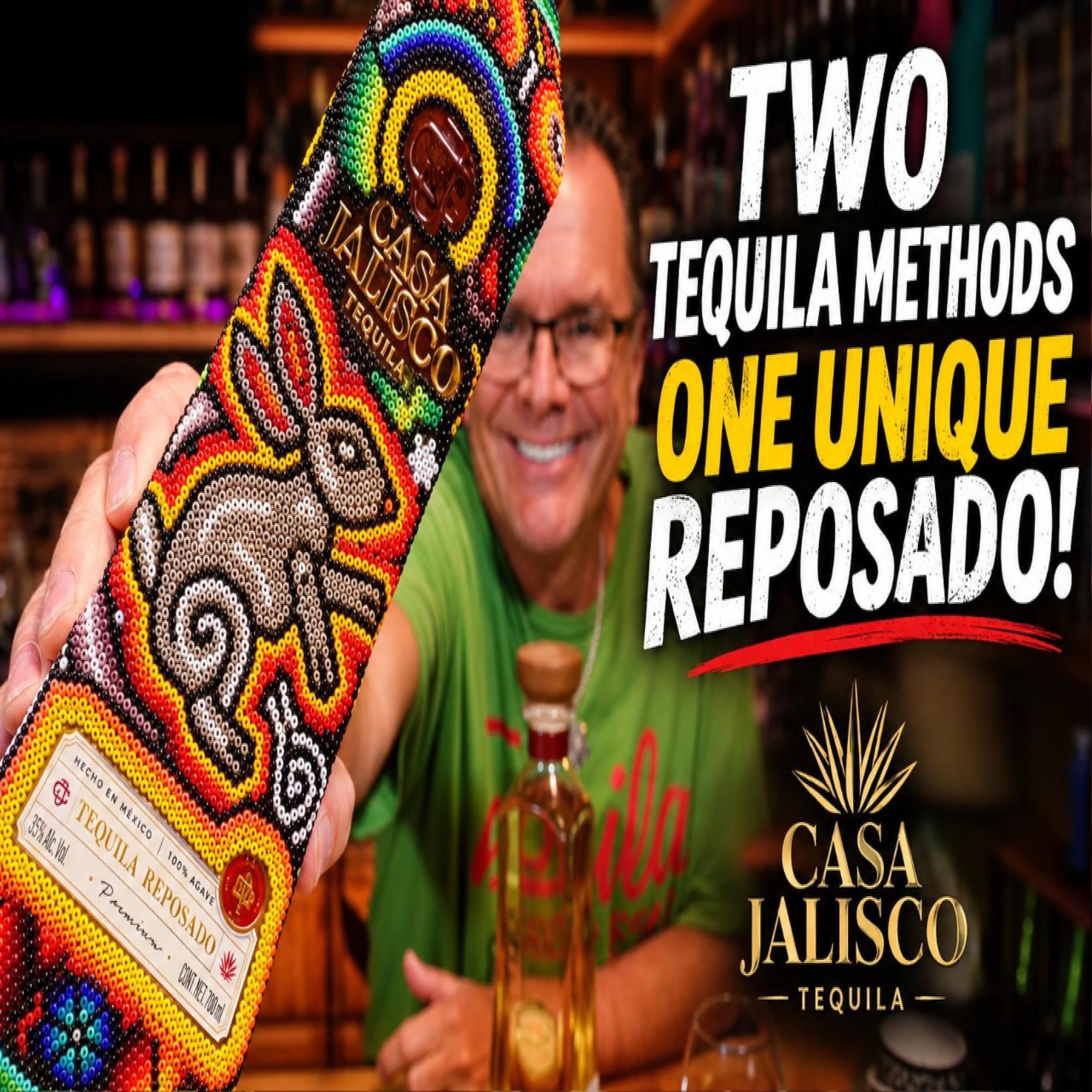
[00:00:00] What happens when you take a tequila made with techniques going back generations, blend it with a tequila made with a more modern method, and then age that tequila in a French oak barrel previously held by red wine? Well, that's exactly what we're going to find out today. This is Casa Jalisco Reposado. Not only is it one of the most beautiful bottles that I've ever had sitting on my bar, but the story behind the tequila is pretty fascinating as well. When I was down in Cabo San Lucas, the folks from Casa Jalisco were kind enough to send me some bottles to try try, including this incredible beaded bottle. And they also sent me this. It's pretty cool. You got to check it out. This knife actually came with my name on it, engraved on one side, and then Casa Jalisco on the other side. They've got a quijote on there and a humidor, and I couldn't believe it. Beautiful hat. Just a great package sent to me in Cabo San Lucas. When I was staying at the hotel, I was actually so scared it wasn't going to show up. It was supposed to come two days before we left, and then there were a lot of storms in Guadalajara and in Puerto Vallarta, and next thing you know, it was delayed a little bit longer, and then it didn't show up the day before we were supposed to leave. And I'm down at the hotel going, look, they said it's delivered. And they're like, it's not here. And the day we were supposed to leave, I went down to the desk and said, can you check one more time? They're like, it just got delivered. So they got me the package, I took some quick pictures, and then off headed home. We have it. So now I'm excited about giving it a try. I have not cracked this yet. I have tasted some of it at Tequila Town and the Tequila House and in Cabo San Lucas. So this is a Mexican release that you can find there if you're hanging out down in Cabo San Lucas and other resort areas throughout Mexico. So I do want to thank Rafael Ontaroras and everyone at Casa Jalisco for sending me these gifts. I really do appreciate it. Now I started talking to Rafael, who's the director of Casa Jalisco. He was kind enough to share some pretty detailed information about the brand, the family, and exactly how they're making this tequila. And I have to tell you, there's a few things that really caught my attention. First off, Casa Jalisco is coming out of a Mafitan and produced at Tequila Selecto di amatan nom. 1459. Rafael and his wife, Estefania Rio Flores, created Casa Jalisco to celebrate their family history, carrying on the tequila making traditions. And here's something I thought was really impressive. Estefania comes from four generations of tequila makers, and Raphael comes from nine generations. Think about that for a second. Nine generations of tequila making. And now they're going to work to pass those traditions on to their children, Anna, Sophia, and and Rafael. One of the things that Raphael told me that really stands out is before their family were tequila makers, they were farmers. Their story starts in the agave fields with land and the people who work it long before any tequila ever reaches a bottle. And their philosophy is built around three words. Tradition, honor, and spirit. Now let's talk about how they're actually making this tequila, because this is where things get really interesting. A little different than most brands, Casa Jalisco uses two completely different production methods. Then they blend those tequilas together to create what they call an ensemble. First is an ancestral process. This one's pretty incredible. They take the agave hearts. They cook them for three days in stone and clay ovens heated by wood fire. Once the agave is cooked, they don't run it through a roller mill or even a tahone. Instead, they crush the agave by hand using wooden mallets inside of a wooden trough called a kanua. From there, the agave goes into wooden vats where it ferments using wild yeast. Then they distill it in copper pot stills that are heated directly by wood fire. Now, think about the amount of work that goes into that process. That's just a crazy lot of work and a lot of attention to detail to get the tequila to really come out the way you want it to. Now the second process, Raphael calls it a contemporary artisanal production. With this method, they're still cooking the agape in traditional masonry ovens, but instead of crushing it by hand, they're using a mechanical roller mill. Extract those juices. Fermentation takes place in stainless steel tanks. Again, wild yeast, so nothing added. The tequila is then distilled in stainless steel pots with copper coils. So now you have two completely different tequilas coming out of the same distillery, made using two completely different methods, and then you bring them together to create one final tequila. Now, of course, the first question I asked was, Rafael, what percentage of each tequila is in the blend? How much ancestral to how much contemporary tequila? Well, he didn't give me an exact percentage, but he did explain something that's pretty interesting. They don't necessarily use the same percentage in every batch because they're working with this artisanal production method. The characteristics of each batch can vary a lot. So instead of following one exact formula every time, they taste the different tequilas and they adjust the portions based on each particular batch's needs. Raphael compared it to cooking. You taste what you're making, and you make adjustments until you get the balance that you're looking for. And that approach applies to all of their expressions. Now we're going to taste the reposado. So the next big thing I wanted to know is what kind of barrels are you using, and how long does the tequila spend in there? Raphael told me they're using French oak barrels, and most of the barrels previously held red wine. Now, interesting because we're not talking of the typical ex bourbon barrels you see in many reposados. We're talking about French oak and red wine influence. And they typically spend around four months in those barrels. Just like the blending of percentages, the aging time isn't necessarily identical in each batch. They taste the tequila throughout that aging process and decide when it's ready. The goal isn't to create tequila that tastes like wood. They want the barrels just to add a layer of complexity, keeping that agave characteristics in their assembly. Up front, here's something else that's particular with this bottle that I want to point out. I. A lot of my friends go to Mexico and they come home and they go, oh, man, the tequila there was so strong. Well, this is Mexican tequila. This is bottled at 35% alcohol by volume or 70 proof. And Casa Jalisco is currently only available in Mexico. In the United States, we have to see our tequila bottled at a minimum of 40. So there's definitely a little difference. And before we open it up, let's talk about this bottle, because, I mean, look at this thing. The amount of detail in the beadwork is incredible. These colorful designs are amazing. The. And the beadwork is so important to Mexican artistic culture. There's also an agave ingrained on the back of this bottle to tribute the plant that makes this all possible. So even the bottle itself is designed to tell a story. It's crazy. So cool. All right, so let's find out what it tastes like. Let's put it in the bottle. Fresh pop, of course.
[00:05:53] And here's a great pour.
[00:05:55] So let's get it on the nose. First of all, I get cooked agave. I also pick up just a little Hint of smoke. It's really nice minerality. I want to say almost like a. Like a limestone note. There's a little bit of a vegetal maybe I'm going to say celery note, a little bit of wood, a little bit of maybe oak. It's not like your normal American oak, where you get like this wood, oaky smell. This is like a lighter, just like barrel note or like a fresh cut wood note. Okay, let's take a taste.
[00:06:26] Okay. First, I want to say I noticed a lighter mouthfeel. It is 35% ABV. I'm used to drinking much higher ABV tequilas. So the mouthfeel is lighter and there's really no hit of alcohol. It's very easy to drink. I. I can drink this with like water, quite honestly. Nice cold.
[00:06:42] Just for me, the right amount of smoke. Smoke is not something that I'm a huge fan of. I even search out mezcals that are light in the smoke. This is just a nice kind of complement of the smokiness, the coat agave, the petrocor, the minerality, that limestone note. And then there's a really cool clove. Not a really nice, like vegetal celery note. For me, I pick up a little bit of pepper, a small amount of like an oaky wood, almost vanilla note. And the finish is kind of soft. You get a little bit of the sweetness in the finish and a very light amount of pepper. Just. Just enough pepper that you know that it's there. This is a very interesting tequila to me. Very easy to drink. One that I. I would have to watch myself because I would probably sit and drink this whole bottle very easily. It's got a lot of flavors. It is very complex for having this low.
[00:07:31] I would love to taste this as a high proof and see how it really pops out of the bottle. Well, there you have it. I want to say thanks to Rafael and his wife Estefania, and the entire Casa Jalisco family for sending me these bottles while I was in Cabo. And the beautiful knife and the hat. I know that it takes a lot of time to put things like this together and then to ship them to somebody. And I just really appreciate the thought that you had behind that and how helpful you've been to me and been so nice to give me information about this. And I really want to honor your family and your tequila. This is an amazing product. When it comes to America, you definitely have to search this out. I will tell you, this is a. I'm going to go to the distillery. I want to bring you some footage so you can see how they're making this. I want you to be able to meet the family, the people, and see the agave fields and the tradition that they're passing down from all their generations of tequila making. This one is very, very exciting to me. So I want to hear from you. Have you had Casa Jalisco? Have you been to the distillery? Because I know some of my friends have. Tell me what you think about the way they're blending these two methods of tequila together to make this flavor. Let me know down in the comments. Until next time. Cheers. Have a great night.