Episode Transcript
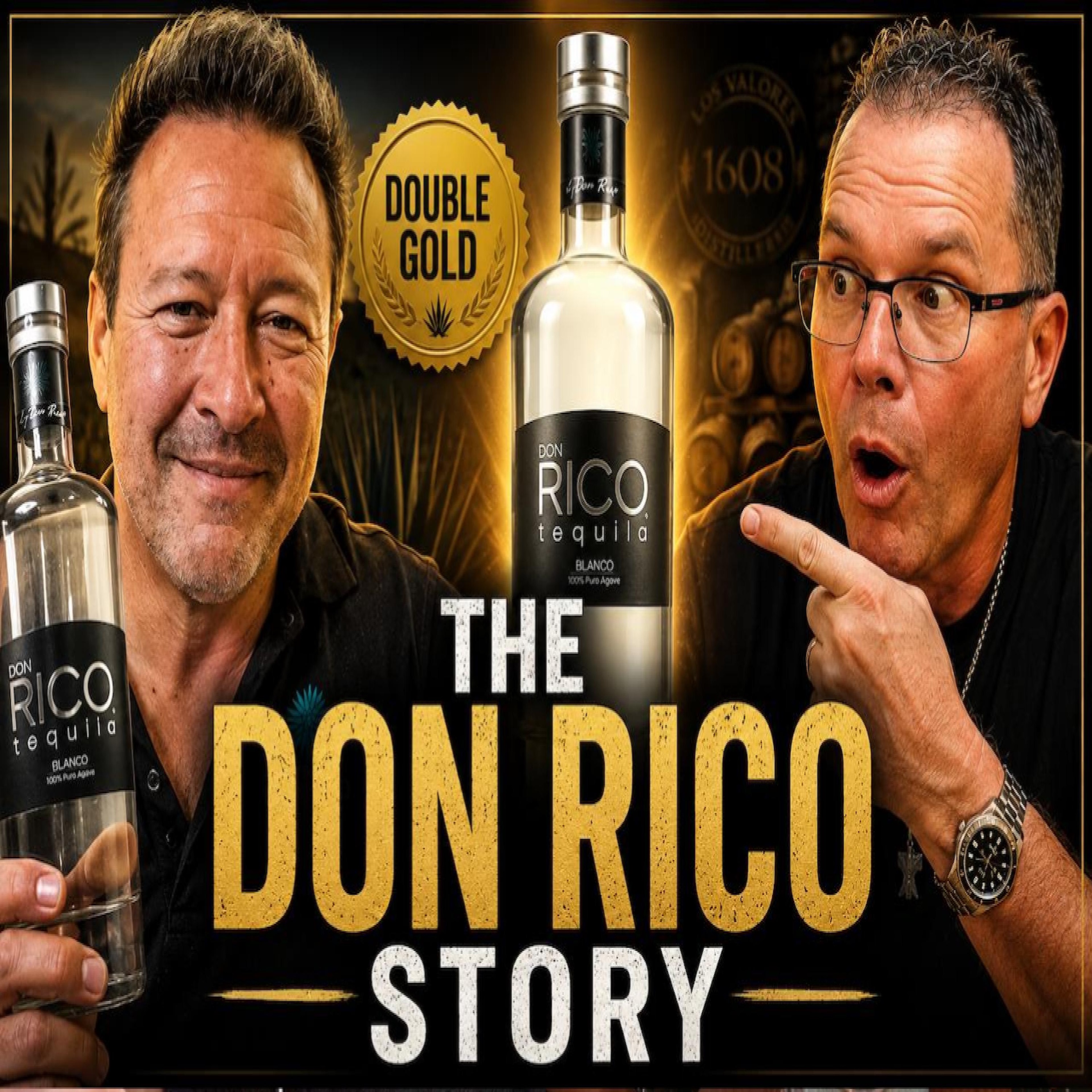
[00:00:00] Speaker A: I say it all the time. These videos get better and better and better. And these interviews get lots more fun every time I get to do one. Tonight you're going to meet Rick, the owner of Don Rico Tequila. You're going to find out about how they came up with the idea, how they came up with the profile, and we're going to talk about this Absolutely unbelievable Anejo and all of the new products that they have coming out. So stick around for this one. Let's learn about Don Rico Tequila together.
Cheers. Hang on. This is a good one. You're going to love it. It's tasting tequila with bread.
Man. I am fired up to be here tonight. We're going to talk about a tequila that just won double gold in the Agavos awards. And we're going to meet the owner and founder of Non Rico Tequila, Rick. How are you doing tonight, Brad?
[00:00:53] Speaker B: Thank you very much. I'm doing wonderful. Thank you for having me. I really appreciate this. And I'm ready to talk some tequila with you, man.
[00:00:59] Speaker A: I'm excited. I know we had to battle through some wonderful technological difficulties. And I'm going to guess that you're probably a little younger than me. I'm 57. As we work through technological difficulties, us old guys can make it happen when we need to, can't we?
[00:01:14] Speaker B: Well, first of all, you're my best friend. I appreciate that. Because two weeks ago, three weeks ago, I just turned 60.
I'm usually really good about technology, but for some reason, this one kind of had us a little stunned in it.
[00:01:25] Speaker A: I gotta say. I am too. Like, I haven't had any issues with all this crazy stuff that I do. And then every once in a while it's like, oh, man. So I appreciate you pushing through there. And, hey, you look good for being older than me. So I appreciate that. It must be drinking tequila for a long time.
[00:01:40] Speaker B: Let me tell you, it helps.
[00:01:43] Speaker A: Well, why don't you tell everybody just kind of who you are? Who is Rick?
[00:01:47] Speaker B: Well, you know, I'm just like everybody else. I'm just that regular guy that had that bad experience a long, long time ago. And I actually went more than 20 years after. I told myself, I'm never going to do this again.
And then I got a job as general counsel for a tequila company. Well, I better learn something about it, right? And that was, what, 18 years ago? And so that's what I did. I just kind of set myself out. You know, back then, you didn't have the Internet like you have it today. You know, there was information, but not so readily available the way it is now. And so I had to go out there and learn. And what. I would write notes. I would write them on a legal pad, right? I would taste a little tequila, and I would write down my notes, and I would save them, and I would kind of archive them just by keeping those notepads.
And I started collecting. I just started thinking, well, let me try this one. Let me try that one. And I started collecting, and then I realized, I like some. I don't like some. And why do I like it? Why don't I like it? And so it was more of a trial and error type of thing. And we're talking, like I said, 18 years ago, this is 2008.
And so I was writing those things down, and I told my wife, someday I. I would like to do my own tequila brand. You know, it's just something that fascinated me. And I looked at it like wine, right? I mean, I enjoyed, you know, good Spanish wine or some California wines. And so that's what I did is I started looking at tequila that way, and I would smell it, and I would do all those things because that's all I knew was wine. And so that's how I treated it. And then you realize that, wait a second, it's every bit the same way to try and learn to smell, to taste, right? The finish. Do all of these things that. That make sense. And. And why does terror matter in wine? And does it tequila? And. And how does it affect it? And so you start trial and error testing, one thing versus another, and you realize, yeah, it's different when you do different things to it. So that's what I set out to do. Eventually, my brother Carlos moved to Guadalajara, and. And that was in 2017. So from that point on, I started visiting three, four times a year. I would go travel to the distilleries that I had written those notes about, right? I would never tell them I liked yours or I didn't like yours. I would just ask questions, and I asked a lot of questions. And of course, I took the class with the CRT on tequila professionalism. Before, it was a structured class. So back then, you would sit through three days of about six hours per day, and you would study everything. And then I would go out in the fields, and I would study the soil, and I would study the agriculture side of it. And then I went into the labs, and I would study the science behind it.
And I did that for a number of years before I decided, okay, now I'm ready Now I'm ready to go start trying something. And so little trial and error. And then eventually that's what we came up with. Don Draco, Tequila.
[00:04:26] Speaker A: Wow. So you said general counsel. So I'm taking it that you are in the legal business.
[00:04:32] Speaker B: So, yes.
[00:04:33] Speaker A: Is that your day today? What's your day to day every day look like?
[00:04:36] Speaker B: So. So day to day. Well, now it's mostly the Tequila business. Right. So now what I do is working, you know, Don Rico, trying to promote that and do everything that we can.
But I did serve as a judge for many years, over 20 years of my career as a judge, and I still serve in that capacity a couple times a week as a visiting judge. So if a particular court, the judge is taking a vacation, they're sick, they're doing continual legal education, I get called in, and then I cover the court to make sure they don't lose a day of the docket. And so that's what I do is on a regular basis is just simply talking to people about their legal issues.
[00:05:16] Speaker A: That's awesome. Do you think having that legal background helped you navigate the process of being able to create a brand and gave you an advantage over some of the other people who started Tequila brand?
[00:05:26] Speaker B: I wouldn't know about advantage. Right. Because anybody can hire an attorney and get that kind of access.
The difference I think for me is that I didn't have to hire the attorney to do that. Right. Because I already had the background in it, I already understood it, so I didn't have to pay to do those things.
And that, in a sense, is an advantage, obviously, because this is an expensive proposition to go out there and start a brand, to try to launch a brand. Doing the marketing, it was a big help. The fact that I did a lot of work with Mexican law in my legal practice, and so understanding the process in Mexico as well as the process in the US that made a difference.
[00:06:05] Speaker A: What state did you. What state are you in? Where do you live today?
[00:06:09] Speaker B: So I live in Austin, Texas, and so that's where we launched the brand. We were also in California and Florida, and of course, we also sell online, you know, to. To all states as well.
[00:06:20] Speaker A: And being in Texas gave you proximity to understanding some of the Mexican law. That. That makes sense because you probably dealt with that with some people on an. On a regular basis.
[00:06:29] Speaker B: I. I had a lot of clients in Latin America, in Mexico, Central America, in the Caribbean. So I already had clients that I was doing business, you know, with them either in their countries or in the U.S. helping them navigate the legal aspects here in the U.S. and so that actually opened up the doors to me understanding, you know, the civil side in Mexico, let's say, or some of the other countries that we end up dealing with.
[00:06:54] Speaker A: So, so once you decided, okay, I'm going to, I'm going to make this plunge, I'm going to go start this business and create my own brand.
What was your first step? Did you like start searching out distilleries first? Did you come up with the name first? Like what? Let's say somebody is thinking about doing it. How do you advise them to get started?
[00:07:12] Speaker B: Well, that's a tough one, right? Because you have to kind of decide what is it that you're trying to do, what are you trying to achieve first?
So that's what I did was I wanted, my first goal was I wanted to make sure that I had a product that was traditional, right. And so you have this whole additive free movement. But the idea being that it was something that was clean and pure, as pure as it could be. So that was number one. I wanted to make sure that the aficionados of the world would truly appreciate it, respect it, the product that I came out with, but I also wanted it to be accessible to the average Joe, to the novice. I wanted to make sure that they could taste an ultra premium tequila, you know. And what does ultra premium mean? I don't know. Right. Because that tag is, is on a lot of bottles because there's a price, not necessarily because of what's inside the bottle, but. But I wanted something where the, the novice, it was accessible to them, that they could afford it, that they could appreciate it and that it wasn't going to give them a memory of what they did like I did that first time, you know, the wrong stuff, the wrong way and too much of it. So I felt that I changed my experience. I had a bad experience, right. A lot of people start tequila with a bad experience and I was able to change mine. So my goal was, how can I help you change your experience? And so that's where it started. So that was the first thing. So then, yes, you go to all the distillers, you talk to as many people as you can, you find out from them what makes their product the way it is. Why does it taste with a lot of minerality? Why does it have the taste herbal, right? Why does it have those grassy notes? Why does it have the citrus notes? What are the things that you're trying to put into your bottle that you want the public to enjoy? The way you enjoy it.
And so that's what I did, was go out to learn all these things and then started testing it like anybody else. I love to cook at home.
My daughter gives me a hard time because I don't always taste the food when I'm cooking, I'm trying things. I just know, hey, in my mind, I know what this spice tastes like, right? So I know how much I'm putting in. If I know what I put in it, I should know what's coming out. It's not always true, but it's a place to start. So if you know what's going into the product, you should generally know what's coming out. And by that, I mean if we're using agave water and yeast, and that's it, you're limited, right, on your flavor profiles, your Roma profiles. Unless, of course, the environment affects it. Right. So Highlands Valley, some of the other states, rainfall, is it rainwater? Is it, you know, spring water? Is it from a deep well? All of these things will change it. What type of yeast are you using? Right. So you start to learn each of the individual aspects, and those are your ingredients. And I know that this one tastes this way, and it should yield a product that tastes a certain way. That's what the individual has to determine, what is it that they're trying to achieve? And then start from there.
[00:10:09] Speaker A: So what was your process like in actually finding nom 1608 and making the decision of, okay, I want to work with these guys, and this is why.
[00:10:17] Speaker B: So. So let me say a little bit something about noms 1608, Los Valores, they've been around for over 10 years.
And. And he started out his brand some time ago, and for whatever reason, he decided, you know what? I feel like I can produce my own tequila as opposed to going to someone else. So that's what he did. He took some land that he had. He invested time, money, and effort to build a distillery, but then never actually produced his own brand there.
He was producing for everybody else, right? So he's that guy that was producing in bulk and selling it to all the other noms, but, uh, especially in Mexico, mostly for Mexican production. So he was selling a lot of volume to those. I had gone to two other distilleries previously, and. And we tried producing some stuff, and they weren't quite what I was looking for. And even though we were using all the equipment and the process that I had in my mind, and it wasn't quite coming out the way I expected, it was by chance, it was A friend of a friend that introduced us, introduced me to Don Ricardo, which, coincidentally, I'm Ricardo. He's Ricardo. His brand was Don Rich, and mine was Don Rico.
So I kind of used the Spanish version. He used the English version using the same name.
But we actually became the first label out of the distillery. Since then, they've added other labels. Right. But again, he'd been producing for quite some time. He's probably producing close to a million liters a year.
So it was a large production. It's just nobody knew about him. And he has, you know, he has the autoclave there. He has two large, rather large ovens, you know, 30 tons each.
He's got two autoclaves, one that's 15 tons, one that's 16 tons. He even has a column. Still doesn't use it anymore, but he. So he has the taona. He has all of the things necessary to do a nice production.
And so for me, it was about. Okay. Part of it was I wanted a consistency and flavor without having to manipulate it to do that. I wanted it to be natural that way all the time.
And for some reason, maybe it was just how we use the water, or maybe it was the particular yeast, because it's a natural yeast process for us. Right. We're not out there. You know, sometimes we do have to use a starter because it goes really slow. So we do a very slow fermentation process.
So sometimes you have to kind of push it along.
But generally speaking, it's all natural. And that's what I was looking for, was something that was as natural as I could possibly put together.
[00:12:50] Speaker A: So you said you did some things with some other distilleries, too, and couldn't get the flavor profile that you wanted. And this one was able to do
[00:12:56] Speaker B: that for you, basically. And it wasn't just the flavor profile, because the other two products that we had done were good, but it wasn't quite what I was looking for. But it was also not just that. It was also about the distillery growing and with us growing, that we could grow together and how we could build going forward. So it was more than just the flavor profile. It was also about the relationship.
[00:13:19] Speaker A: I think a lot of people miss that, that I'm here at this distillery, and I love the flavor, but I have absolutely no ability to scale, or I'm at this distillery that's making great juice, and I have absolutely no ability to produce within their calendar of production. So it's good that you found somebody that you could really grow with and meet into a calendar. To create the tequila that you have, that's, I think, very important. A lot of people don't understand that piece.
[00:13:42] Speaker B: You know what people say, small batch. Right. And for instance, Teremana says they're a small batch. Well, if you're producing 3 million liters a year, you're not small batch.
But I can take a small amount and produce it, and I can duplicate that in a very large scale and still have the same flavor profile. That's a rarity.
It's also in such a way that I get to dictate that profile. I'm involved in the process. I'm there, you know, working it to make sure that it comes out the way I want it to come out.
[00:14:13] Speaker A: That's awesome. Well, let's talk about the production. I'm sipping on this blanco. I have been for a little while now. I had a started off with a large glass. Cheers.
One of the things I love is I always go to Agave matchmaker to look at reviews. Right.
And the ratings on this are all in the high 80s. And some of the people that I really respect have some great tasting notes about your tequila and really shared some amazing information about it. And one of them is somebody that I never got the opportunity to meet. But her reviews and the information that she put out about tequilas, I think is amazing. And that's Remy. And she had a great review about your blanco and flavor profile. And to me, that's a. That's a very high, like, honor. That's a high award, if you will, from somebody like that, talking about it. So explain to me a little bit about the production method of your blanco and what you're doing with this one.
[00:15:06] Speaker B: Sure. So the first thing that we do is we start with 50% of our agave from the Highlands and 50% from the Valley region.
So we do a split. 50, 50 split. The reason I opted to go that way is because I can get some consistency and flavor. If I did, in my mind anyways, if I did only Highlands, then different years of rainfall, you're going to get different flavors from lot to lot. Right. From harvest to harvest and so forth. But if I blended it a little bit, it would tone those differences down so that you wouldn't notice them as often.
So that's why I did that plan. So that's the first thing.
The second thing that we do is that we make sure we start with very high brix. You probably notice that it's a pretty sweet, naturally sweet tasting. I had one person years ago tell me he goes wow, this tastes like additives. And I said, well, why would you think it has additives in it? He goes, because it's so sweet. And I said, well, let's open up a bottle of something that we know has additives and then taste the sweetness between the two. And he goes, they're different. It's a different sweetness. I said, exactly right.
We start with agave. We don't pay attention so much to the year of the harvest as much as the brix. Right. So we will start from 35 to 38 brix. Extremely high. Right. It's much higher than most. If you figure out the average in. In the tequila world is probably 22. But if you're looking at higher end tequ, it starts at 28, goes up. For instance, El Pandio will start at 30 and go up.
And so that was the first thing, because in my mind, I thought the more sugar content or whether it's starch or the brix that you have, the more flavor you're going to yield at the back end. So that's. That's the first thing that I was looking at. Once we did that, we removed all the cocolas. Right. And so I wanted to make sure that you tasted the sweetness.
What a lot of people don't understand is that all tequilas have a certain measure of bitterness to it. It's natural.
It tastes good. Right. I mean, once you get used to the taste of agave spirits, you're going to notice some bitterness that's expected.
I just wanted to reduce it a little bit.
So we made sure that we shaved the pinas down a little bit more and removed the cogollos. So that was the first step in making sure that you got more of the sweetness and less of the bitterness.
Then what we did, of course, we cooked them in ovens. In ours, we have the brick ovens, traditional brick ovens. And we would do it for 48 hours at slightly lower temperature.
Still hot enough. Right. But because we cooked it slower. So we did it 48 hours, and then we turned the ovens off and left it there for another 24. So a total of 72 hours cooking. That's a little longer than most, but we tend to get a little bit more caramelization in the pina itself. Right. The plant itself. We then go ahead and put it through the roller mill. Our roller mill has four passes, all in one continuation. By the time it comes out of the fourth one, we're yielding about 93% of the juice that's coming out. And then that's where the first time we will add that deep well water, that deep well water.
We're not doing anything to it. We're pulling it straight from the well, going straight in. Right. So you're getting all that natural minerality with it. And so then, of course, we go ahead and ferment. The fermentation is in large stainless steel tanks in ground.
We, again, generally, we do not add yeast unless we notice that it's going too slow, and then we add a starter. But generally, the yeast that's in the air and the warehouse from the cooking itself is the natural yeast that's there that will initiate the process.
Because it's slow, we will go a full three days of fermentation. And once it's done, we'd leave it in the tank for two more days.
It's depriving all oxygen. At this point, Right. You are using up every bit of fermentation that you can to convert every bit of sugar to alcohol. At that point, we go ahead and do the double distillation. It is stainless pots with copper coils. Now, my goal is to have a full copper pot that's coming down the road. But for now, we're still using the stainless pots with the copper coils.
We discards heads and tails. So if you take Casca Huin, great product, they discard some of the heads, some of the tails. If you go to El Pandio, they will take the heads on the first pass and use them again to try and pull out as many of those, the alcohol as they possibly can and get those natural sugars as best as possible. Now, for them, the tails, they discard completely, right? But in our case, we discarded both distillations. So you're just getting the heart.
That's why I think that you're getting such a clean, soft taste on the palate without all that extra burn.
You definitely are getting some heat, but it's a very welcoming heat that you get. And of course, that is at 55% our still strength.
And that's the blanco. And so we only make each time the one batch. So we're producing enough to make sure everything that we need for the reposado and for the anejo as well. And so it's all coming. So Lot 1 Blanco, Lot 1 Reposado, and Lot 1 Anejo is all from the exact same batch. It changes a little bit as we go, because lot two anejo is lot one blanco, but it was aged in the barrels slightly longer. But again, it's the same and so for lot two, same thing. The blanco is what was used for the reposado. And we don't do the anejo until. Because our reposados aged three months in a bourbon barrel. And then for the adejo, we will bottle the repo, but then the rest of it we'll put it in the French oak cabernet wine barrel. And so that the lot one was 10 months in the French oak, and we kind of forgot and left it in there for the remaining barrels. And it stayed 17 months. So it was the same tequila. Just the difference in the aging of the wine barrel. And I think it really was a home run, leaving in there long, hungry. It was a mistake, but what a great mistake to make. Right. It's just. I think. I think it balanced the flavor from start to finish. And it's so easy to drink.
[00:21:13] Speaker A: Yeah. I want to say thanks for making that mistake. It's one of my higher rated on yehos. I'm a big fan.
So let's. Let's swing back to the Hema. So you're doing more of a Hema Baja, Right? So almost a white agave. Right. Very little green left in there agave at all. So that's going to bring a lot more sweetness, a lot less vegetal.
[00:21:32] Speaker B: Yes.
[00:21:33] Speaker A: Do you have a percentage that you use of Valles agave and highland agaves?
[00:21:38] Speaker B: Yeah, it's 50. 50.
[00:21:40] Speaker A: Oh, so 50, 50. And where's the distillery? Is it in the highlands or is it in the Valles?
[00:21:45] Speaker B: It's central.
So to confuse everything, Right. When everybody talks about, oh, this is highland tequila, this is valley tequila. And then it's, oh, well, your distillery is central Jalisco. And so it's central. Right.
We have agave from different regions. And then the distillery is in. It's actually just south of Guadalajara. It's a little town called Itzhlahuacan de los Membrillos.
If you sneeze, you won't notice it because you closed your eyes in that moment when you drive by. But it's on the way to Chapala. So right before you go up the hill to go into Chapala, if you look to the right, that town is Itlawakan.
[00:22:20] Speaker A: Is it on the south side of the lake or on the north side of the lake?
[00:22:24] Speaker B: It is north of the lake because it's north of the mountain. Before you go over the mountain to go to the lake, it's right before that.
[00:22:30] Speaker A: Sure, sure. I actually drove that trip just two days ago on my way back from Tequila. Instead of coming into Guadalajara. We went all the way around Chapala and came right up to the back of the airport, which is maybe a little longer of a drive, but you don't sit in traffic so long and you kind of whip right in. So that was my first time of actually going around Chapala and seeing some of those areas. So that's awesome. That's a really awesome, unique area, especially with the amount of different type of agricultural that's there compared to the highlands or Tequila, where maybe it's just agave. You see more avocado trees, more fruit trees, onions, like all kinds of different vegetation, which open fermentation is going to be definitely affected in a really great way with those different plants. So that's. That's pretty cool.
[00:23:14] Speaker B: Absolutely. And we're pretty high up because if you're driving there in Islawakan and before you go up the hill and you look to the right, there's a little capilla, a little chapel up the mountain way. At the top of the mountain, there's a little trail that comes out when the trail ends, that's the distillery. So it's pretty high up the mountain right there to begin with. And so it's really lush green in that area. And so, yes, all of those things will affect it in terms of that open fermentation, for sure.
[00:23:41] Speaker A: Now, what year did you start this? What year did Don Rico first come out?
[00:23:45] Speaker B: So it's been three and a half years that we've been on the shelves. It'll probably be. Yeah, we're right at around three and a half years that we first got on the shelves.
[00:23:53] Speaker A: And how long did it take from conception of making the brand to getting a bottle of tequila in your hands?
[00:23:59] Speaker B: It's. It's hard to say. You know, I think somebody asked me that, Mike Morales asked me that question. At one time, we went through some trouble trying to figure out on the name. Right. And so in my mind, we were already starting production. We were doing some things. And from the time that I applied for the trademark in Mexico to the time that we were bringing it in with nine months, including having gotten the name, however, there was some production going on before that. Right. And there was some planning.
But realistically, you have to figure it's a two year process, a year and a half to two years to really do it. Right. From the time that you're going through all of it to produce, getting what you're wanting, for those that want to just reduce a blanco, you can. You don't need as much time. I Wanted to do the reposal as well, at least because the first two distilleries didn't quite pan out the way we wanted. We ended up waiting a little bit longer and.
And so we were able to come out with the Anejo as well.
And that was, what, 13 months on the Anejo.
So it was a little over a year altogether from the time that we started production from the Los Valoretas distillery to the time that we started putting it on the shelves.
[00:25:15] Speaker A: That's not too bad, though. I've heard some people that they go through five different names and take forever, you know, to make it happen. So that's pretty cool. How did you come up with the actual name Don Rico?
[00:25:26] Speaker B: What.
[00:25:27] Speaker A: Where did that come from?
[00:25:29] Speaker B: So, you know, there's.
So my name is Rick Olivo. So the obvious is the two together, right?
[00:25:36] Speaker A: Sure.
[00:25:37] Speaker B: My. My wife and I, when we were dating, we. We had gone, this is 1986. We were on the beach in Spain, and there was an older gentleman. And I say older loosely because he probably was much younger than I am now, but he was selling ice cream along the beach every day. And he's walking up and down in his Speedos and his big old beer belly and big old smile with missing teeth and this big old cooler. And he was yelling at ay, ay, carico. A lot of Frio. Every day he'd go by, and every day we'd buy ice cream from him.
And he was saying, ay, carrico. Right. And so back in the late 90s, I bought that domain, iCarrico.com and I'd just been holding onto it forever. And when it was time to do this, and we're Talking more than 20 years later, we came up with a lot of different names. And I was doing all the searches in Mexico, searches in the U.S. you know, what names that we can come across with.
My wife said, you know, and she. Back then, she started calling me Rico if we were in a crowded room or something. If she said Rick, several people would turn. But if she would say Rico, I would be the only one that would turn. So she kind of gave me this nickname a long time ago, and she was the only one that ever called me that.
And so we thought, you know, we've got the domain aiker Rico, which means oh, how tasty or oh, how rich. It just made sense. And so we gave it a shot. We thought, well, Rico by itself, I didn't feel like I could get that trademark. And so we did some more searching. I Said, you know what, why don't we just put Don Rico in front of it? It. Let's just do that. And so we started that way.
Mexico granted the trademark. Everybody in Mexico told me, you're not going to get it right. I got it here in the US When I did the application, they denied it.
So I fought it because it's what I do. I do a lot of trademarks to begin with.
So I fought it and we won. And so I got the trademark and we thought, there it is. That's what is. In fact, I even bought the Don Rico plates, license plates for my car before I even had the name.
I just, in my mind, it was like, you know, that's it. It just feels right.
And so that's what we did. We went with it and, and I think it came out to be great for, for the brand, for, for what we're trying to do. Everything.
[00:27:46] Speaker A: I think it's awesome. And I love the packaging. Like, your packaging is simple, elegant, like it says everything. The logo that you have is really cool. Did you come up with that too?
[00:27:58] Speaker B: Yeah. So, you know, everybody has front facing, you know, agave. And my first trip, I'd taken a photo aerial view, and I loved it. And I said, that's our logo. So my daughter, she digitized it and now you'll notice it's a little bit different here. So this is the third version of that, which are cleaning it up and basically just trying to make it simpler, more viewable. Right. And so that's what we've done.
Yeah. So this is, this is a family thing. My daughter came up with the, the logo and the design. She did the graphic work on it, and we're all involved in it.
[00:28:33] Speaker A: You know, you have a great look. And the cap itself is also really cool. If I can get that to focus.
There you go.
[00:28:40] Speaker B: There it is. Yeah.
[00:28:41] Speaker A: Really cool how you put the agave on the cap. I like the different color caps on each one.
Not that, not that packaging is the main thing. Right. We talk about pretty bottles, but. But to have something that's simple, elegant, and then such a really good tequila behind it, I think says a lot. So I'm sipping on the repo now. I just poured this one before we started. So what'd you say your aging time was on the repo?
[00:29:05] Speaker B: So it's three months. It's a very small amount of time. Because what I felt for me was I liked it when there was less influence from the barrel, but I still wanted to meet the criteria.
The Normas. Right. To make sure that we had at least the two months. And on two months, it didn't seem like it was enough, so it had to have something in it. It was important for me that would have that light color. Right. And you can see the color there.
It was important that the influence from the barrel was minimal so you still retain the essence of the agave so that you can still taste tequila in el reposado. And that if you're using a bourbon barrel like we do, that the bourbon did not overshadow the flavor of the agave.
And so I was a big fan of tequila ocho and some of the others where they, you know, even G4, they would take those barrels and reuse them over and over and over again. And you got all the requirements for the reposado without all the influence from the barrel, because it. The more you use it, obviously, the less influence it's going to have.
But I didn't want to use the barrel so many times. I wanted to do something that was more consistent for me, which was use the barrel one time, Just age it less time.
[00:30:18] Speaker A: Gotcha.
[00:30:19] Speaker B: And for me, that made it easier to control, that it was going to stay the same every single time.
[00:30:25] Speaker A: It really highlights the cinnamon notes that I get in the blanco.
The cinnamon notes, to me are. I picked them up, but they're a little more subdued, and I get a little bit of a lactic note in the nose of the blanco.
[00:30:39] Speaker B: That.
[00:30:40] Speaker A: That lactic note in the nose of the repo is gone.
And the minerality and the cinnamon is just kicked up with just a touch of barrel influence. And, of course, agave, you know, front and center with a little citrus note as well. And this is a very impressive repo.
I'm honestly going back. I'm sorry. I expected a completely different flavor from what I got in. You're on Yejo. The year on yejo is deep, dark fruits, orchard fruits, like.
[00:31:10] Speaker B: Like the.
[00:31:10] Speaker A: The sherry, like, almost like a sherry influence from the French oak. So that's kind of what I was expecting to pull out of your repo with, you know, with my brain being there. And instead, it's kind of kicked me in the ass a little bit of this really nice, refined agave repo with cinnamon and. And light oak flavors. It's really nice.
[00:31:31] Speaker B: It's.
[00:31:31] Speaker A: That's. You did very good on this one.
[00:31:33] Speaker B: You know, if you go back to that blanco and you talked about that little malolactic kind of notes to it, I think that the.
Deprive it all that oxygen, that. That's what kind of helps it to make sure you're going through that full process of fermentation to kind of get that flavor note. What happens, I think, with the reposado is because of that and because of that minimal aging, it gives it a softer, buttery kind of finish that. That. That you were talking about just now. And so that's where some of that softness comes.
I think that barrel tones it down just enough. Now, remember the anejo, And I keep looking to my side, because that's where I have the bottles. But this is the reposado. It's the same three months, and then we take it all out of the barrel and just move it to a separate barrel. So underlying, you notice those flavors from each of them going to the next. But then it takes on its own character as it goes.
[00:32:31] Speaker A: You know, going back, I poured the blanco, and there's a really nice malolactic note that I do get in the repo.
One of the things I notice is it's less. I'm going to use bready or yeasty. Right. So you get this yeast note in the blanco that I didn't notice as much before going into the repo. Right. It's always so cool how tequila affects tequila and affects tequila.
The flavors here are phenomenal, and I really like what this repo has done. So if anybody's looking for, like, a.
Just a great base repo with really good agave flavors, this is definitely one to. To search out. This is good stuff.
[00:33:13] Speaker B: One thing I should mention also, I. I feel like I'm getting better as I go with each lot. Uh, I believe the one I sent you on that repo was lot four or lot three or lot four. I'm not sure.
[00:33:22] Speaker A: Does it. Where would it say, do you know, on.
[00:33:24] Speaker B: On the top, just below the shoulder? There's going to be a little laser print on there. Okay.
[00:33:30] Speaker A: Yeah.
Lot.
[00:33:31] Speaker B: Lot 4. Lot 4. So, yeah, so Lot 4 is the latest one that we did, and so that is based on the lot three blanco, and you have the lot three blanco.
[00:33:41] Speaker A: Yeah.
[00:33:42] Speaker B: Right. So the lot four repo is a little bit different. You know, the numbers don't coincide, but. But the Lot 4 repo comes from the Lot 3 blanco, and you'll notice that it has. Well, you don't notice it now because you haven't tried the lot one or the lot two, but we increase the bricks each time to try and get more of the agave flavor. And I think that's the reason that the reposado comes out the way it does. And it's such a balanced flavor of the agave notes that you're going to get. Plus, like you said, some of that softness that you also kind of rounds it out to give it a little bit more flavor in that. It's just enough oak, just enough vanilla, but nothing that is over overpowering.
[00:34:30] Speaker A: No, it's. And the heat in the mouth is really nice. Like the way that it comes in fills up with a little pepperiness almost to me, like a vegetal heat where you get like some warmth and then it. It kind of rises up and then it dissipates and it's very, very balanced. Like it gets you on both sides of the mouth or it does all the things that you want a good tequila to do.
Let me ask you, are these the three expressions or is there any other expressions that you've done?
[00:34:57] Speaker B: Not that we've done. There are some that we're talking about that have been playing around with, from, you know, high proof tauna to extra anejo. But those, those aren't released yet. And so we're still kind of tinkering and playing to try and get everything just right.
The. The XA is approaching five years, and so that's going to be something special because that's back when I first started the whole process.
And so those are things that it's. It's hard to put into words today because again, you have to taste it to kind of get the sense of where I'm going with it.
But it is. It's next level stuff. I'll just say that.
[00:35:37] Speaker A: Well, if you need a taster, I'm always available.
[00:35:40] Speaker B: Absolutely.
[00:35:40] Speaker A: Let's, let's. Let's go to your blanco. So you're coming off the still, probably 53, 55 off the still.
[00:35:47] Speaker B: It's 54 and a half to 54.8. Okay.
[00:35:50] Speaker A: And then using demineralized or osmosis water to bring it down to the 40,
[00:35:56] Speaker B: we're using the same water that we used when we did the same straight water. Yeah. So the idea here is that we're trying to keep it as simple as possible to retain that natural feel.
So it is. Yeah, it's the same water that we used when we did the fermentation to start that process.
[00:36:15] Speaker A: Gotcha. And then what are you barreling at when you go into the repo? Are you barreling at a higher proof and then proofing down when you come out of the barrel?
[00:36:23] Speaker B: That's correct, yeah. So everything goes into the barrel at the 55 thereabouts and yeah, we, we don't dilute it until it's time to bottle.
[00:36:32] Speaker A: Okay. And then same for the Anejo. Staying at that same.
[00:36:35] Speaker B: Exactly.
[00:36:36] Speaker A: I want to be there when you're taking it out of the barrel.
[00:36:40] Speaker B: You know, let me tell you, it's something because I'm so used to tasting it at Foolproof.
[00:36:47] Speaker A: Yeah.
[00:36:47] Speaker B: That. That when I come to this, it's like, like, gosh, it tastes different. And I've got to retrain my palate. Sure. As we bottle it to say, okay, this is what I'm trying to go for, you know.
[00:36:59] Speaker A: You know, I have to say as an aficionado. Right. As a tequila, just absolute geek, I love high proof products.
But I have come to learn, working with, with liquor stores and also with restaurants in a capacity here in Indianapolis, that it's harder to sell that high proof product.
So even though us nerds just clamor for it, it's. Sometimes they're kind of bricks, you know, on the shelf the liquor store. Because somebody doesn't know to pay that higher price and to be able to use it in a cocktail at a lower amount. You know, when you.
I've spent a little time explaining, you know, to even restaurants and mixologists that hey, look, you can still keep it at about a dollar an ounce into your cocktail because it's higher proof. You can use, you know, three quarters of an ounce instead of an ounce and a half instead of that same flavor.
It's hard to transfer that. So I understand why brands are hesitant to bring out a high proof product. But is that something you guys are thinking about releasing in the future as a high proof product?
[00:37:55] Speaker B: That is the plan and it's something that I've been working on. Keep in mind that the idea here is that it has to be commercial. And I don't mean that in the sense of I'm selling millions of bottles. Right. I don't mean it that way. But you do have to. This is a business and we want to make sure that we're able sell it, that there is a market for that particularly.
You're right. When you've got the high proof, you don't need as much.
The other thing to remember is, and I've said this many times, and I'm sure you've heard it before, a better tequila is going to make a better cocktail. So when you've got those high proofs and you have less dilution, you're tasting more of the agave, it's going to result in a much better cocktail. What that means is that it's really geared towards the on premise business more so than the off premise. Because you. As an aficionado myself, I see a high proof. I'm going to gravitate towards it because I know I'm getting more of that flavor, but also I've had enough of it that I have a resistance that I can drink one or two, I can call it quits and know that I can appreciate the full flavor and value of it that I'm going to need to keep going and going and going.
It's harder for the general public to understand that.
[00:39:10] Speaker A: That.
[00:39:10] Speaker B: Right, yeah. Their thought is, I'm gonna buy one bottle of tequila, I'm not gonna buy another one until I finish that one. And if it's stronger. And they're saying, wow, I taste the heat on here, I taste the alcohol. And they're saying it's too strong, too, too much alcohol. And they're not realizing, well, it is, that's the whole point. But you have to learn to appreciate what the alcohol adds to the overall flavor of it.
So it's easier translated, I think, to on premise bars, restaurants, in cocktails.
Even though you and I like to just sip on it and eat.
[00:39:42] Speaker A: Exactly. So another category that I think is a real aficionado category that a lot of regular tea lips drinkers don't know about is the category of a hoven. And because your anejo has such extraordinary flavor, have you thought about doing a hoven with your anejo to bring that rich French oak flavor that you have and added to, you know, a really complex blanco that would bring like an amazing flavor? Because I, I want to make one tonight, just so you know.
[00:40:14] Speaker B: So I'll tell you, I have thought about that. But like I said, we started this out as a family business, you know, and my son's involved in the business and he's hoven or young. And so I'm going to let him tinker with that for down the road.
And so, you know, he, he's been on this journey for some time now as well. And so I'm going to leave something for the next generation down the road that they can tinker with and play with and bring something else to the table as we grow.
[00:40:42] Speaker A: That's very cool because I got to tell you, I think a high proof hoven for you guys utilizing your anejo, not your repo, but taking these in depth flavors that you have and adding high proof blanco to that, maybe at a 70:30 type ratio, that.
[00:40:59] Speaker B: Right.
[00:41:00] Speaker A: I'm Going to make one and do a video because I think it'd be really phenomenal flavor, but I think that'd be really cool for you guys and bring something that's a little different to
[00:41:07] Speaker B: the market, I tell you. I was just having this conversation with Felipe Camarena this weekend.
I was in El Paso and he was there. And Luis Torres from General and Adrian and Brian with Don Vicente. We were all together. My brother was there, and we're all talking about different things to play around with. And I can tell you that Luis, with General Gorostieta, has done a very good job with the hoven that he's done in terms of that. Now, that's made at 1414. It's not made at El Bandillo.
But that's an example of not just putting out a product just for the sake of saying, I have a skew there now, but actually focusing on what is the yield going to be, what is that final product going to taste like? And so that's why we want to put that kind of thought.
And that was the topic of conversation, which was, what does it take to do these different expressions and how does it affect that final product?
So, yeah, it was interesting. Very interesting.
[00:42:06] Speaker A: Wow. I'm glad I'm hitting on the conversations without being in them. So that's pretty awesome.
So what's your time frame on your extra on Yeho and what kind of process have you done with your exa?
[00:42:18] Speaker B: Well, the hope will be it'll be later this year.
You know, the packaging, everything has to be just right.
That's not complete, but it started out kind of more culturally for me. I grew up in Spain, My mother's from Spain, and so I wanted some of that heritage as kind of an aspect of what the product should be.
So we use sherry barrels, and it's just 100% sherry barrels from start to finish. And that's the first thing we did. The very first product that we produced, the very first lot, all of it went straight to the sherry barrel. And then we started again with lot one, because we did that first. So it's a matter of now just waiting for the right time to open it up, bottling it, and then putting it out there.
[00:43:02] Speaker A: I got to tell you, I can't wait for that, because, like I said, you're on. Yejo is one of my highest rated on Yehoshua, one of my best reviews.
I've been blown away by it.
I think I'm a quarter down on that glass, trying not on the bottle, trying not to drink it all at one time.
So I'm excited about that one. So I can't wait to try it.
[00:43:21] Speaker B: All right, I'm going to go out on a limb and I'm going to tell you that it's going to be one of your favorite tequilas you've ever had.
And when you try the high proof blanco that is Taona Crushed, you're really going to say, wow, you're going to enjoy it.
[00:43:35] Speaker A: Well, I already know you're making great stuff, so I'm going to ask you a question I ask all my brand owners. All right, so when I look at a brand, when I look at a business, as a business owner, myself, an entrepreneur with several businesses through the years, I look at my businesses that I've created as my children. I have children, they were a little more fun to make than the businesses have been.
So I look at each business that I've created and I look back at it as one of my children, one of the things I've worked so hard to create.
And when you get this business to a point that you can get excited about it and you kind of can lean back and look at the work that you've done to put that together, it gives you a time where you can think, okay, who would I want to share this business with, this work, the rewards, the struggles, the challenges? And I look at each tequila business that same way. So if you could take your favorite batch of your tequila and sit down with anybody in the world, alive, dead, family, famous, whoever, who would you want to most sit down with and share your favorite expression of your tequila and share the story of what it's taken to get to where you are today. Who would that person be and what would you share with them?
[00:44:49] Speaker B: That is a loaded question, right?
And I'll tell you, I've been very fortunate because my father was a diplomat growing up. And so I, I got to meet Presidents Carter, Nixon and Ford. I met President Anwar Sadat before he was assassinated.
I, I've, I've met Secretaries of State. I've met President George Bush Sr.
So I've gotten to meet a lot of big political figures. I've represented the band Mana as an attorney. I've represented Junior Seau. So I've got to meet a lot of celebrities and people in, in my lifetime. You know, I got to sit down and talk to Carlos Santana one time at a, at a party, Sugar Ray Leonard. I got to sit down and talk to him. And we were drinking tequila there, and this is long before all of this, but I would pick people that appreciate tequila. And all the famous people out there in the world, you'd have to teach them a little bit about it. Right? And while I would love to be able to take any one of them and say, let's talk tequila like you do. Right. You know, talking tequila with Brad. Right. I mean, I would love to do that. But when push comes to shove, it really comes down to someone that appreciates what it took to make it.
Back in December, I was at, well, at Luis's ranch in Mexico, and we were at an event there, and we're all standing in a group. And again, Adrian and Brian from Don Vicente were there.
Felipe. Don Felipe was there also. And my brother gave him the downer version of the high proof.
And his first comment was, don't give this to me unless you want me to be honest about it.
It's like, by all means. And so he tastes it, he drinks it, and if you know him, you know, he's pretty quiet, and he says, this is really good. And it was as simple as that. And he finished it, and we came around with the bottle. Would you like some more? And he goes, yes, I would like some more. That, to me, was.
I. I've had that moment, but I would like to share that moment with. With a lot of similar people just like that. Whether, like, for instance, you or, you know, take, you know, Mike Morales, you know, the people that truly appreciate, you know, this lu Agave. You know, I wish I could do that with Remy. You know, she and I sat down and we tasted the blanco, the reppa, and the niejo together. And then I left her some bottles, and then she did her reviews. You know, people like that, that truly appreciate it, and they know what it took to go into it, that you don't have to say anything. They know, you know, I've always said I'm selling an experience. I'm not selling tequila. And I believe that the tequila tastes better when you share it with your friends. And the tequila is in the background, the conversation, you know, when you get together with an old friend from high school, let's say, that you haven't seen in 40 years, and you're just having a good time, and you get lost in the moment and you happen to be drinking tequila, it becomes part of the moment, and you remember that moment. That's what I want. That's the experience that I want. That's how I want to share it.
And so ultimately, it can be anybody that is open to that. So I don't know if that's kind of a long way to answer your
[00:47:59] Speaker A: question, but that's one of the best answers I've had, to be honest with you.
So there's a few answers that are my favorite one, it's sharing it with the family member that you didn't get to share.
Like, my grandfather passed away when I was young, like in the eighth grade. And my. He was my hero. So to be able to sit down with him and share what's happened in my life would be really awesome.
But just as cool to me is to be able to share these brands with people that come to my house, people that I graduated from high school with like you mentioned, and friends that are discovering and learning or my, you know, my bourbon idiots that are like,
[00:48:35] Speaker B: oh no, they're gold paper. Right.
[00:48:37] Speaker A: I hand them this and they're like, this is better than that. And to be able to do that. So I totally understand what you're saying and I so wish I would have got the opportunity to meet Remy. I read a lot of her reviews, I read a lot of her information and she was just such an amazing member of this community.
And then the fact that I've got to meet Lu Agave, which is like one of my heroes.
[00:48:58] Speaker B: I love that you met.
[00:49:00] Speaker A: And there's a lot of aficionados that I know that really love your tequila from. From agave loving Lord Brad, who really loves what you've done to a lot of them. There's a lot I can't even think of all the people to name that have had positive things to say about your tequila. That's why I was excited about doing this interview. I haven't seen you do interviews with other people and I was like, holy cow. I'm so excited to put this together.
I want to say thanks for doing this today. And I'm back to my best on yeho. I can't wait to taste this with you and say thanks for taking your time tonight and doing this.
Cheers, my friend.
[00:49:37] Speaker B: Thank you so much for having me. This, you know, I'm like you. I'm sure you're the same as I am. If you get me started, I don't shut up. And if you keep asking me questions, I'm just a tequila nerd. Right. I just like talking and sharing, you know, those moments.
And so I appreciate the opportunity to at least have that conversation with someone who's is nerdy about it as I am. Right.
You know, you don't always find those next door, so to speak. Right. You've got a great tequila Collection behind you. And I've got, at any given time, 150 bottles open of any kind. It's like my brother always says, it's not a collection. Right. It's there. Whichever one you want, let's open it.
I have lot one, G4. And Felipe was asking me, he goes, well, I'll trade you for it. He goes, I want to buy it. I want to buy. I said, look, Felipe, I would not sell it to you. I'd rather give it to you. You. They never sell it to you. Right. It's kind of like McGuire. He hits that 72nd home run or whatever, you just kind of feel like he should have that ball. Right, Right. I learned that Felipe does not have lot one blanco. He doesn't have one.
[00:50:44] Speaker A: He doesn't, no.
[00:50:46] Speaker B: And he's had other people. And he says, I'll trade you, you tell me what you want. And I said, I can't do that. You want to offer me something great? Whatever you want, but I'd rather just give it to you. You. Yeah, than that. So that bottle's closed. That I have not opened the bottle, and I have one that he signed the. His first lot Madera, that he did. And so he signed that bottle, and I had that one also.
I probably won't open it just because his signature. But everything else, you know, it's there to drink. I mean, it's like Lou says, you can't take it with you when you die. You got to enjoy it. And so that's what it's there for. And that's. That's what we're here for, is to help educate people and to go on that journey with us to appreciate all these nuances that come from agave.
[00:51:28] Speaker A: Yeah. I share. There's only a couple bottles I don't open. Right. I do. I love when people sign their bottles and give it to me, and I hate when they sign their bottles and
[00:51:38] Speaker B: give it to me because.
[00:51:39] Speaker A: So hard to open.
I have. I do have a. The six barrel special, which turned out to be Combio, which was a Felipe product, that I do have one of those. It's not open yet, but I'll probably open it.
Bottle. I. I tell people when they come here, I don't care what it is. Out of the thousand plus bottles I have on the wall, if you want something, I'll open it. You can taste it. There's one bottle that I have that I won't open for anybody.
That is a bottle that my children purchased for me. It's a Cabo Uno So back when Sammy Hagar had Cabo Wabo, they made Cabo Uno, which is very special. I drank three bottles of those. They came in a three bottle case. I drank through them like rapidly, like an idiot. It. And later my children bought me one for Father's Day.
They found it for like 600 bucks. I think today it's like 3, 500 bucks, right? And I've said, look, that's for when my kids have kids or some special really super thing. I will open that and drink in it. So that's the only one that I say, if somebody comes here and says, can I taste that? That's the only one. I say, no. Everything else, I pop it and open it. And there's a bottle right there that is a yayo. That was a buried bottle. That's a one of a kind. And it's part of their scavenger hunt. And I'm saving that for tequila. Tim, when he comes to my house, we're gonna open it.
[00:52:56] Speaker B: So. So here, here's the other thing. I have a rule. If anybody ever gives me a bottle of tequila, I will only open it for them so that we can drink it together. And then that's a good one. And then it's. And then anybody can have it. But I have some high end stuff, low end stuff of bottles that I'm waiting to open just because it has to be with that person. Oh, that's very cool. And then it's open to everybody after that, right? Because for whatever reason, I even have a bottle of Casa Dagones, the hoven that has my name on the label, right? Which they didn't really do those, but my brother arranged the CRT to do that for me. So I've had Casa Dagones Hoven a million times. You know, it's not my thing, but it's fine, you know, I've had it.
But my brother arranged to have that. He's got a far bigger collection than I have, right? Oh, wow. And he knows tequila inside out as well. But I've told him, you need to come to Austin so I can just go ahead and open that bottle. Because people are asking and I'm telling them, you just got to compare this with others. Right? We'll leave it at that.
And he's like, no, no, just open it. And I said, no, I've got this rule.
[00:54:02] Speaker A: So I'm going to say to you, there's anything that's here on these shelves, I will open with you. If you ever come to Indianapolis. Mi CAS casa.
[00:54:11] Speaker B: We got a comment.
[00:54:12] Speaker A: Tequila together. And if I'm in Austin, I'm hitting you up. We're going to have some.
[00:54:15] Speaker B: Absolutely.
[00:54:15] Speaker A: I want to say thanks for doing this tonight. I appreciate you. I really enjoy the tequila you're making. I hope everybody gets the opportunity to try this.
I'll have some reviews coming out of the repo and the blanco because they're just absolutely amazing. And I got the anejo here. So I want to say cheers to you tonight, my friend. And I'm just going to call you Don Rico because you're making great tequila. Rick. Thanks, brother. Appreciate it.
[00:54:37] Speaker B: Thank you, sir. Appreciate it. Thank you so much for everything, for the invitation.
[00:54:43] Speaker A: All right, perfect.