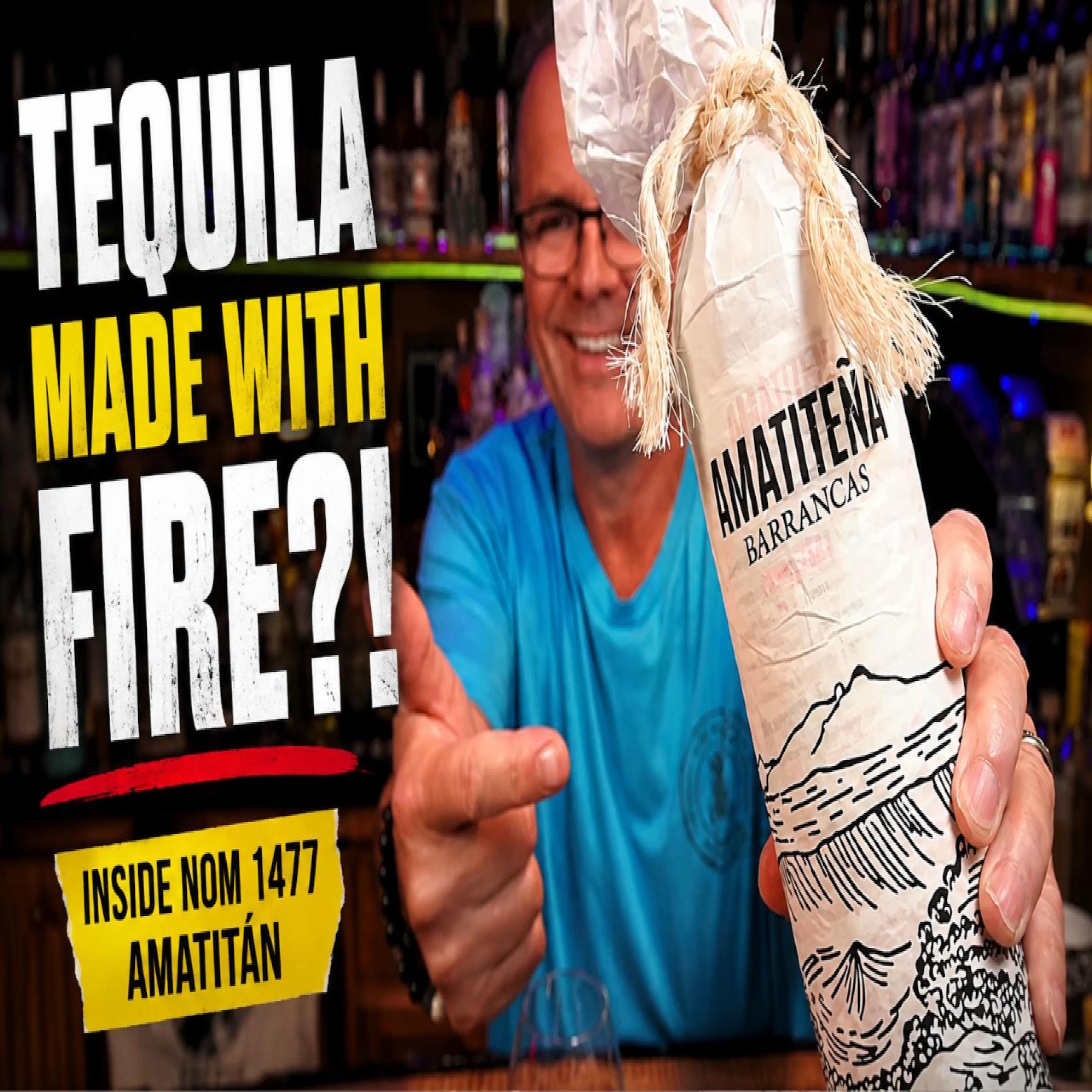
Tequila Made With Fire?! AMATITENA Blanco Review | Inside NOM 1477

September 01, 2026 00:06:41
Tequila Made With Fire?! AMATITENA Blanco Review | Inside NOM 1477
Tasting Tequila with Brad
Tequila Made With Fire?! AMATITENA Blanco Review | Inside NOM 1477

Sep 01 2026 | 00:06:41

/

Show Notes

Tequila Made With Fire?! AMATITENA Blanco Review | Inside NOM 1477

What happens when tequila is made with mesquite wood fire from start to finish?

I recently visited NOM 1477 in Amatitán, Jalisco, with my wife Tony and witnessed firsthand how AMATITENA is produced using an incredibly traditional approach to tequila making.

AMATITENA is made by Maestro Tequilero Alberto Partida at Taller de Laa de Amatitán in the Valley of Jalisco. From cooking the agave with mesquite wood fire to crushing it with a tahona, fermenting it in open wooden vats with agave fibers and wild yeast, and distilling it in copper pot stills heated by wood fire, almost every part of the process connects this tequila to its traditional roots.

In this video, we take a closer look at:

Cooking agave with mesquite wood fire

Valley agave from around Amatitán

Traditional tahona extraction

Open fermentation with agave fibers and wild yeast

Copper pot stills heated by wood fire

Fruit used during distillation

Resting tequila in large glass bottles

NOM 1477 in Amatitán, Jalisco

‍ Maestro Tequilero Alberto Partida

My tasting and review of AMATITENA

The bottle itself also provides detailed information about where and when the agave was planted, the lot, the bottle number, and a QR code with additional information. I love seeing that connection between what's in the bottle and what's in the glass.

After seeing the entire production process firsthand, I wanted to find out whether making tequila this old-school way actually makes a difference in the glass.

On the nose, I get cooked agave, earthiness, minerality, smoke, fruit, and funky fermentation character.

On the palate, I get cooked and caramelized agave, a smoky character, a creamy mouthfeel, earthiness, citrus, pepper, and a long, warm finish.

This tequila doesn't taste like something designed in a boardroom. It tastes like Amatitán. It tastes like fermentation. It tastes like agave. And yes, it tastes like fire.

So, does making tequila in an old-school way make a difference in the glass?

You can bet it does.

Have you had AMATITENA? Let me know your thoughts in the comments.

If you want to learn more about tequila and what's happening in the tequila industry, check out The Tequila Report. It's free and sent to your email every week.

Go to tequilareport.com/subscribe to learn more.

Thanks for watching. Cheers!

© Tasting Tequila with Brad

View Full Transcript

Episode Transcript

[00:00:00] This might be one of the craziest waves I've seen tequila made. They're cooking the agave with mesquite wood fire, crushing it with the tohona, and fermenting it in open wild vats with agave fibers and wild yeast. Then they're distilling it in copper pot stills heated by wood fire, no steam. And I didn't just read about this. I was just at NAM 1477 in the Matatan with my wife Tony, and we watched the entire process firsthand. This is Amatan. And today I want to answer one question. Does making tequila this old school way actually make a difference in the glass? Because after seeing this place, I couldn't wait to get home and taste it again. Amatana is made by maestro tecalero Alberto Partida at Tecalera de la Braca de Amatan in the valley of Jalisco. And I've been fortunate enough to visit a lot of distilleries. And this one immediately felt different. There's nothing polished or industrial of what you're seeing here. It feels raw, hands on, almost like it stepped back in time a little bit. And it all starts here with the agave. They're all using valley agave. It's all around the town of Amatitan, something I absolutely love to see. When the agave is traceable to where it comes from and look at the bottle, you can actually see all of the information. It shows you where and when it was actually planted. It talks about what lot it is. It gives you a bottle number and it gives you all the information. And I love seeing that. There's also a QR code here where you can get even more information about this tequila. It helps you connect what's in the bottle to what's in your glass. Now what happens next is where amate really separates itself. Most tequila distilleries are cooking their agave with steam, either in a brick oven or an autoclave. There's nothing wrong with either one of those methods when they're done properly. But Alberto is doing something completely different here. He's burning mesquite wood underneath the cooking chamber and using the fire to cook the agave. Some of these pinas are sitting near the heat. They get singed and caramelized. Where others stand there and don't get as much heat. You just get this smell of cooked agave when you're standing next to it. And a little bit of that smok, you immediately understand why Amatitania has a distinctive personality. There's roasted agave caramelized agave, and then this smoky character being developed through the fire before fermentation ever begins. Then that cooked agave goes into a tohona. And if you're watching this channel, you know how much I love seeing these things work. It's a massive stone wheel that slowly crushes the agave, extracting those sugars. Alberto engineered a mechanical system to drive the tohola. So. So we're talking about this incredibly traditional attraction method, using a little modern engineering to make it work without animal labor. Is it the fastest way to make tequila? Absolutely not. Is it the easiest way? Probably not. But everything about this place tells me speed isn't the goal. Flavor is. And then we got to visit one of my favorite parts of the distillery, and that's fermentation. Look at these vats. They're open, wooden fermentation tanks. They're fermenting with agave fiber still in there. And they're relying on this natural environment and the wild yeast to get. Get that fermentation going. It isn't about rusting the batch through as quickly as possible. And the smell in this room absolutely blows your mind. Depending on the conditions, the fermentation can take some time. And that's where you start building some of that funky, earthy, fruity, lactic character that makes this tequila taste really interesting. You know those tequilas where you put it to the nose in the glass, you immediately know exactly what you're smelling. This isn't one of those A matatana can make. You go back to the glass a time or two or three and ask, what is this? And I mean that as a compliment. I don't want every tequila to smell and taste the same. I want character. I want complexity. I want something that makes me think. And then when you walk over to the stills and you see the whole production, it gets even crazier. These stills are copper pot stills, but look underneath them. They're using wood fire. So when you think about the journey, we started with agave from the valley. We cooked it with mesquite wood fire. We crushed it with a tohona. We fermented it in these open wood tanks with wild yeast and fibers. And now we're back to fire again. For the distillation, this definitely isn't faster or easier. In fact, the people have to stay through the entire distillation to make sure the fire doesn't get too hot or too cold to make the production even happen. One of the things they're doing that's even cooler with this series is almost like a pachuga. They're hanging fruit in the distillation to give it even more smells and more taste. Let's put this one in the glass. [00:04:05] All right, let's give this one a nose cooked agave, some earthiness and minerality, a little smoke, some fruit, and definitely some funky, funky from that fermentation process. All right, let's take a taste. [00:04:20] This flavor connects you to the process. You get the cooked agave, you get caramelized agave, you get this nice smoky character. You get this great, creamy mouthfeel. The funkiness that was there on the nose, not here in the taste, but the character that the funky smell creates of that viscosity and that mouthfeel is there. There's a nice earthiness here. There's a little bit of a zesty orange and citrus type flavor as well, but it's kind of covered up with that cooked agave, so it's very light. The finish is long, it's peppery, it's warm, it heats up as it goes, and it's an earthy, almost smoky cooked agave finish. This is really good. Now, Matatania is not trying to taste like candy or cake batter or some of those tequilas out there that we know maybe aren't made the way they should be. I got to tell you, this is. This is a crazy when this stuff is wild, knowing that those local fruits and citrus became part of this distillation. And then this spirit rests in glass bottles. Let's check these pictures out. Instead of resting in oak, they put them in these huge glass bottles and let them rest. At 55 ABV, it's really cool to think how glass changes the flavor of tequila resting much like a barrel does. A lot of old school distilleries used to do tequila this way in the glasses, and some still do. A lot of people still do it in the mezcal world. So they're kind of leaning back on the oldest school production of making tequila and bringing it home to you. In this glass, you can read production methods, you can memorize NOM numbers, you can watch videos. But my favorite way of really learning is actually going to visit these distilleries firsthand. Tony and I got to experience NOM 1477. I'm incredibly thankful for Alberto and his team for allowing us to come see it and see how this is done. So does making tequila in an old school way make a difference in a glass? You can bet my a it does. This is really, really incredible. I know not too long ago, the Tequila Report actually did a story about this tequila and if you don't get the Tequila Report, you are missing out. Go check it out at the tequila report.com subscribe. It is free. You should get it to learn more about tequila. After standing there and watching how this is made, I really understand why this tequila tastes like this. And I really understand it a lot better. It doesn't taste like a normal tequila design in a boardroom. It tastes like a a matatam. It tastes like fermentation. It tastes like agave. And yes, it tastes like fire. This is a very interesting bottle. Let me know in the comments if you've had a matatana and let me know your thoughts. This one is up there with one of my favorites. You have to check it out. Thanks for watching tonight. Cheers. Have a fantastic day.

Other Episodes

Episode

March 23, 2025 00:02:48
Episode Cover

Is Tequila Xoloitzcuintle Plata Worth It? Full Review & Tasting Notes!

In this episode of Tasting Tequila with Brad, I review Tequila Xoloitzcuintle Plata, a standout additive-free blanco tequila that truly impressed me! If you're...

Listen

Episode

July 20, 2025 00:03:20
Episode Cover

What Makes Corrido Overproof Tequila So Special?

100 proof tequila? 100 proof tequila? 100 proof tequila?! We’re reviewing Corrido Blanco OverProof Tequila, crafted by master distiller Oscar Vasquez at NOM 1412....

Listen

Episode

October 22, 2025 00:03:28
Episode Cover

Socorro Tequila Reposado Review | The Airline Tequila That Actually Delivers!

I’ve been enjoying Socorro Tequila Blanco every time I fly American Airlines, but today I’m tasting the Socorro Tequila Reposado (NOM 1610) — a...

Listen