Episode Transcript
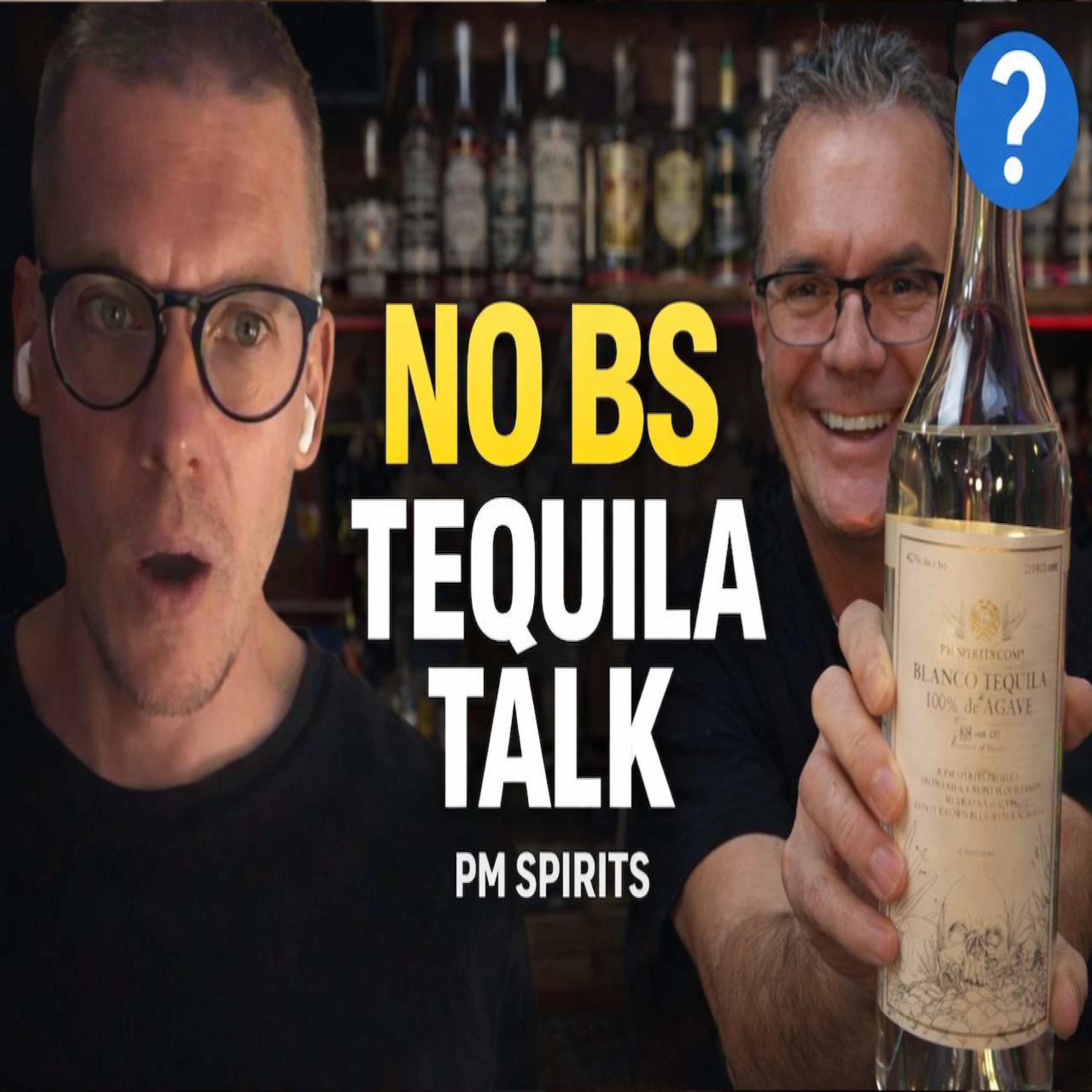
[00:00:00] Speaker A: Have you had PM Spirits? Tonight you're going to learn all about it. I got to sit down with Nicholas Palazzi, the owner and founder of PM Spirits, and learned about how they came up with this tequila and the other businesses that they do in the spirit world. Stick around. This one's pretty cool.
All right, guys, this is going to be a great one. I'm here with Nicholas. Tell everybody who you are.
[00:00:35] Speaker B: Hey, everybody.
My first name is Nicholas. My last name is Palazzi.
I am French, and I run a company out of Brooklyn, New York, called PM Spirits.
[00:00:50] Speaker A: Well, I'm excited to learn about it, and I'm going to go ahead and pour some of this since I have not had it yet, and sip on some of this amazing tequila while we talk.
[00:01:00] Speaker B: All right, so thanks for having me, dude. I very much appreciate it.
[00:01:03] Speaker A: Oh, no worries. I was really excited.
I've never been able to find your brand in Indiana, and I was in Florida running a marathon. Went to the liquor store because, you know, you got to drink a lot of tequila before you run a marathon.
[00:01:15] Speaker B: That's what you do. That's what you do. That's the. That's the. Everyone who runs however many months at 26, 37. How long is a marathon?
[00:01:24] Speaker A: 26.2 miles.
[00:01:25] Speaker B: Yeah, it's the longest. It's the longest time running. And you need. You need. You need booze. 100.
Yeah.
[00:01:30] Speaker A: So I. I didn't drink it while I was there, though, because I wanted to do this interview. So I messaged you that day and thought, okay, I can't get in Indiana, so I'm bringing a bottle home. So I'm really excited. And thanks for taking your time tonight. So tell everybody a little bit of your spirit's background.
[00:01:47] Speaker B: Right.
I started this business in 2011.
Um, and by this business, I mean PM is. It's an importing company first and foremost.
Started to import a bunch of booze was. Started with brandy. Like, cognac is my original love, I guess. And I moved from cognac to Armenia and then expanded over time.
But, yeah, so that's. That's kind of. That's kind of my. My for. Into booze was through that outlet. Prior to that, I was a chemical engineer, and I really like drinking. And. And I was miserable enough as. As an engineer that I was probably drinking too much.
And so, you know, one thing led to another.
Very, very bored, very much into booze and. And sort of decided to quit the job that I wasn't too passionate about to do something that I was a Lot more into.
[00:02:44] Speaker A: Fantastic. So what was the, the move into tequila?
[00:02:48] Speaker B: The move into tequila that happened like it happened a while ago, though. It wasn't, it wasn't immediate. Like obviously I, from a cultural standpoint, I know the French culture and the European culture a lot more intimately. So once I went through the discoveries in, in, in, in the brand new world, I was naturally introduced to agave, but it was mostly mezcal through what was available in New York. I also run a wholesale company based in New York. So we sell to restaurants and bars and retailers in New York State. And through that business I got in touch with really good people. We're making mezcal.
So that's, that was my first foray into agave and mezcal led me to discovering tequila. And like most, like most everything that you do, if you sort of, you kind of, you have a real passion for, you know, what you do, you surround yourself by like minded individuals and then you, you know, meet good people and one thing lead to another and you, you get to find people who make dope tequila and you, you just, yeah, get involved, I guess.
[00:03:57] Speaker A: So what was the first spirit that you brought to market as a PM Spirits product?
[00:04:02] Speaker B: As a PM Spirits product, the first, the first sort of branded thing that we did was a, was something called Cobra Fire. And Cobra Fire was a, it was an unaged armaniac. That's the first time, I think it was 2015, 2016. It's the first time that we said we really like the product. Like, we didn't create white Armagnac or an aged Armagnac. We really liked the stuff. We couldn't sell it for shit. And so we thought, hey, I, how about we kind of tweak the packaging and keep the juice that we really like and we sort of push that and see if we can get more people to discover it. So that was, that was the first PM spirit stuff. Then from there I think we did, we went into bourbon and we probably touched on tequila and a bunch of other things are cognac, Armaniac and whatnot.
[00:05:04] Speaker A: So what was the process like finding the, the person to actually make the juice? Going down and finding for. Is it 1468 or. Yeah, 1468. What was your process like hooking up with an actual distillery and choosing one? Did you, did you talk to a lot before you landed here or did or did you have an in already?
[00:05:23] Speaker B: Well, the, the, the story was what we do is kind of a little counterintuitive. I tend to say that the PM Tequila specifically But it's, it's true with every other stuff that we, that we do under the, the PM projects brand. They're, they're not meant to be brands. So we don't approach that typical brain. We don't say like, all right, this is the business plan and we're going to do this and within the five next, the next five years, we're going to achieve that much and we need to hit that price point and whatever, Whatever. So we have six months to get this done. Like, there's no deck, there's no investor, there's no, there's no business plan or of any kind of. It mostly happens through just randomly meeting people who, you know, like, people who I like, people who have the same sort of a vision as to spirit. So they, you know, no bullshit, well made people will just start, you know, genuine, I guess.
And that giant networking game eventually lead to meeting people and talking to people and be like, all right, this, this person really knows Brandy, let's brainstorm. Is there cool stuff like, can you point me in a direction that that person really knows? Mezcal. Same thing. And so I met, I met someone through friend who's kind of a, like a legend in, in the Rejoic area, like where Sherry is made in Spain. That gentleman introduced me to somebody, to one of his protege, like somebody we thought was really good in the word of tequila, also a Spanish man.
We hit it off and that Spanish gentleman introduced me to some good tequila makers. One of them being the people being behind 1468. I don't know if, I don't know if it's, I don't know if it makes a lot of sense. Like, it's not like what I'm trying to say. There's not like one direction. It wasn't like, it wasn't planned. It just happened organically across like, you know, several years. And just meeting people without having the, like the, the goal to make anything
[00:07:25] Speaker A: happen, that actually makes a lot of sense. I knew that you, you know, worked with exceptional people in, in each industry that you brought a spirit out in. So I figured you probably had a contact that drove you to somebody that's making a fantastic tequila. So did you help with the thought process of how you wanted it made or did they just bring it to you and said, hey, this, this is how we did it?
[00:07:51] Speaker B: I, I like to be involved in stuff. Um, I guess that it might be the, the engineering background or whatever, but I, I, I have a hard time with the idea of slapping a label on something that has been pre made for you. And there is, like, you choose out of, like, four formulas, and you kind of go with it. I mostly have an issue just thinking about it. Like, I'm. If I'm picturing myself telling you about a product that we're doing that has the PM name on it, I need to. I need to truly believe in it, and that needs to be genuine.
And if I come at you and I say, dude, like, we did this and we worked on it, and then you asked me four more questions, and you realize, like, there's fucking three formulas.
This distillery, they do three things. They sell it to like, a hundred people, and you just, like one of, like, many. You just have a. You just have a white label on this shit. It's just not going to. It doesn't feel right, and I wouldn't be able to feel comfortable. So. So that's a long answer to your question.
Yeah, we. We discussed quite a bit throughout 2019 with the gentleman who at the time was running the distillery in connection with my. With Jose Luis, my Spanish friend, who's been my.
Who's been helping out and connecting me with. With the. The right people in the word tequila. So we discussed quite a bit. We had a bunch of. A bunch of samples made like, you know, run small runs of tequilas, played with a few parameters, blended with something that from a flavor profile felt right and said, all right, fuck it. We're gonna. We're gonna. We're gonna try it. But again, not. Not with the mentality of having a brand. The goal is. The goal is not to grow this PM Tequila, which it's not even a brand. Like, there's no brand name if you think about it. The goal is not to grow it to X amount of cases. The goal is to use this as a.
It's like a.
It's like a business card.
It's one of many business cards that says, like, this is kind of what we believe in, and this is what we're about.
We think that we have collectively a good palette, that we can source good shit.
And that's a way for us to say, like, all right, without me spending too much time trying to convince you. Just, you know, try it. If you like it, then you should be somewhat convinced that we're not. We're not, you know, playing.
[00:10:24] Speaker A: So then does that help you on the distribution side for the products that you also probably distribute along with this, or does it help you more on the import side of showing? We do quality and we work with
[00:10:37] Speaker B: quality only, like, Both businesses kind of feed of each other's. Most of it is a giant networking game. I mean it's not really a game, but in the end it's about like the people who you get to meet and who you trust and who trust you on.
Most of what we've been doing is that from the people we sell stuff to, to the people who work with PM to the people who supply us with goods, it's, it's mostly network and, and therefore the, on the wholesale front we, we get to meet a lot of brands, a lot of, a lot of owners, a lot of, a lot of people involved in the business who wants us to represent them in New York State.
So that, that helps widen the network. I mean this is through that, through that, you know, wholesale business that I got my first, I got my, I got in church with, with the first people in the mescal word. I would have never, I would have never been able to. On the, on the import side, like I, I don't speak Spanish, I don't have any Spanish connections or Mexican connection. So like I, I, I would not have been able to meet those quality people and, and, and the reputation that we developed, the import side working with what we want to think are some of the best brand new producers or bum producers and on tequilas or whatnot or V, like this has helped us also like build creds. So again it's, it's a, I can't really say like one business led to this and we could use it for, for the other business. It's just, they're very much, they're very much intertwined.
[00:12:15] Speaker A: So, so since you have such a good palette, do brands have you help them in creating some of the, their tequilas or their spirits that are coming out or want your opinion on them as they're in the production process.
[00:12:28] Speaker B: So I, I didn't say I had a good palette. Okay. I guess that, that would be, that, that, that would be, that would be cocky and, and, and, and, and shitty. So I, I didn't, I didn't say that. I, I think I know what for me is quality.
And so that's, and that's, that's what I want to associate myself with. And so that's what I want to. When I find something that my brain registers as being like a gourmet product, I want to, you know, share it. If I get genuinely excited about it, then I can show it to my team. Hopefully they get excited also and we can spread the word. I have not been approached by any Brand. I've never looked for it. I'm kind of like my, I don't know, my network is very different. Like, I don't navigate in the branded sphere. I don't know anybody in the big, you know, in the world of big brands. I've been asked over the years to look at some decks or like business plans. Just, just, just from a business standpoint, just somebody, somebody who I know we said, hey, like this person wants to create this Tequila brand.
They want to invest X million, they want to do like a, like a thousand X exit in like, like 37 months. What do you, what do you think that, that sort of stuff just based on a, on an operational standpoint. Simply because the, like the experience that I have that we have as a company I think is pretty.
Is not common because we do wholesale, we do import, we do brand building for the, the, the brands that we represent. We're not just like a logistic company and moving cases from A to B. Like we tell stories and help build minds and we also create our own shit. So I think that this is, this is. I want to think, if I'm not lying to myself, I want to think that this is fairly unique.
But I don't know, I never crossed paths with anybody being like, hey, build that for me.
[00:14:36] Speaker A: I mean, I can see somebody coming on the side of how can we make this brand launch or how can we. How can you help us make sure we're going to have a good business plan and do you like what we have? Because they know you're involved with all these brands. So that's would make a lot of sense from the business side of things.
If you were a normal Joe, I got a million bucks and you're thinking, man, I want to start a Tequila company.
What would you tell a person that's coming to you saying, I want to start a Tequila company today?
[00:15:06] Speaker B: My, my first thing would be don't.
My second thing would be to make sure that this person doesn't need that million dollar. If this is all you got, then that's. It's a, it's a dumb move. If, if this is just like, you know, play money, then just, you know, fucking go. Go at it. If you want to, if you want to. You know, if it seems fun, the chances of success or like super duper low, you probably a few years too late. Anyways. In, in 22, I think 22 was the year where I talked to the most.
How would I say, like, you know, finance bros who wanted to, wanted to make it big in the, in the tequila world. And I mean some of them might have done something. I want to think that a lot of them just are either losing money or have already lost a decent amount of money. So. Yeah, not a good idea. I don't think so.
[00:16:06] Speaker A: What do you see in the coming years in tequila?
[00:16:10] Speaker B: I see a lot of brands disappearing. I see. So if I look at the.
You had two things coming intersecting, I guess you had the price of agave coming down when the market looked like it was super hot.
And in fact it just looked hot. But it was kind of. It had started to. It all started to come down like it was, it, it was, it was at its climax, was probably already coming down a little bit.
So the, but we were not or like no one really noticed that that market was, was on its way down or at. Plateaued. So I think that it led to a lot of brands coming to market all at once again because the cost of juices was low and whatnot and felt like people were just spending and spending and drinking so much. And, and now you have this whole new world out there where just people make drinking. They, People tend to drink less right when they, when they, when they drink, they want to make it count. So they're, they're, they're not going to drink shit. They're not going to likely going to pass on that, you know, like weird quote unquote, like red wine where you don't even know what's in that glass. People want to be healthier. People kind of want to be. They seem to want to be connected with the product or the, the, the distillery or whoever is behind the brand. So you put all that together and I think that just a lot of, A lot of products, a lot of brands on the market, like a lot of them have no real story or, or edge or they don't really have a customer. They just, they just, you know, have some depletion, but they're more like mechanical depletion than anything else. And I want to think that this is, this is gonna, this is gonna go away and, and which, which seems normal. Like you, you.
There was, there was a spike in sales. Everybody wanted to. Wanted to cash in and, and yeah, the, the out of 100 million that, that came out in the past, in the past three years, I wouldn't be surprised if 70% were dying.
It's just the normal, the normal way of business, I guess.
[00:18:23] Speaker A: Yeah, it's just a normal cycle of just about any industry.
Do you see like the opportunity for brands to do what, you know, some of the thing that everybody aspires to, the George Clooney, build a brand, sell it for a billion dollars. You know, the, these companies that have came out and then got sold, and I know, you know, Lalo just went through that, that worked for them. But do you see that as a normal exit for somebody in the tequila business? That it'll be a big acquisition at some point?
[00:18:54] Speaker B: How many, how many lalos can you name?
You know?
[00:18:57] Speaker A: Yeah, like three Cabo Wabo cas amigos.
[00:19:00] Speaker B: Lalo. All right, so, so, so this is the, my answer to this is this is not the norm.
One needs to be extremely scaled at the right time with the, the right marketing, the, the, the huge amount of money to spend during that time.
And, and if all of these boxes are checked and if you're lucky, then maybe you'll make such an exit, but that's super duper rare. And then this is just because we, when you and I put our minds to it, we're gonna come out, we're gonna come up with like three or four brands over the past, like, like six or eight years and that's it. So, so most brands will not do that. And I would tend to think that once you can name a couple, then it's, you know, it's not the proof that there is that you can do this. You, you, you, you can repeat that several times. It's probably, it's probably a sign that you should move on and, and find the other business opportunities in which you can make a shit ton of money. I would be surprised if there was many more of these.
[00:20:08] Speaker A: Yeah, I, I, I tend to agree. That's, that's, I hear so many people talk about, you know, that's their end goal. But I'm like, man, they just, I mean, Bacardi is only going to buy so many brands. Diageo is only going to have so many brands. It becomes this question.
When you look back at what it took to do this and the time that you spent putting into it, do you, did you learn anything through that process that you think, okay, if I was going to do it again today, I would, I would do some things differently?
[00:20:38] Speaker B: I don't know. I don't know if I would do things differently really. I like all these projects, whether there's, you know, this tequila or the things that we come up under the PMs, the PM Speech Project, you know, brand. I guess, like, all of these are really cool learning opportunities because you, like, you understand really what it takes to make something happen from Scratch.
And, and that's. It goes way beyond like, sending a purchase order to buy a thousand cases of something.
It's from the, from tweaking the juice itself to, you know, like, stupid shit. Like, okay, well, we, you, you want, you want to make a tequila. Great.
Well, guess what? You need to have a trademark.
And, well, I, I had no idea you needed that. And, and so we were ready to go, and then somebody says, all right, so what's the, what's the brand? And I was like, I don't have a brand. And so I'm saying, all right, we're gonna call it PM Spirits. Okay, cool. So that's not a brand. Doesn't matter.
And, and they say, cool, cool. So is that trademark?
I'm like, I, I don't think so. I don't know. Why, why do you care? Like, no, no, no. We, it has to be trademarked. Otherwise you can't put it as a brand for tequila. And you're like, oh, really? Okay. And so, like, all these things, they're just. I, I, I like them. I genuinely like those things because it feel like you're kind of navigating a maze and, and you just, like, learn how to do things from an intellectual standpoint.
I, I dig that.
So, yeah, I mean, nothing, it's not, it is not, it's not perfect, but by, by any means. Like, the ball that you have in front of you, if you look above blanco tequila, it says PM Spirits.com.
that's. That. It's, it's, it's a stupid brand.
But that's. That's, that's the, that's the only, that's the only trademark that we had.
So you use that one. So, so we're like, all right, so I, you know, I paid for this.
Now I kind of need to sell it because, you know, I'm not like a trust fund baby, so I need to. I, I need to. I, I need to, you know, like, get that product to market, right? Because I just, you know, paid for it.
You know, we, you printed the labels, you have the boxes, they, they made the juice, all that stuff. And, and, and then you have to, like, can I wait a year for a trademark? I. No, I can't. So, you know, whatever the, Whatever the. We got, we. We put it on there.
And so this, this, this stupid thing is called PM.com, which is, it's just, it's, it's lame, but it's, it's what, it's what we got, you know?
[00:23:30] Speaker A: Well, you got, you got great Tequila with a lame name.
[00:23:33] Speaker B: I guess
[00:23:36] Speaker A: so. So speaking of that. So when you think of how hard this CRT is to, to get them to approve a label in the first place, you went to like extra information on your label. And I love this because you know, you talk about the things that a lot of people talk about. You know, blue Weber, four to six years age, but then you get into ripeness and bricks average and, and the height of the cut of the Hema and you know, how close you shaved that Hema, how long it's in the oven, how big the oven was the time for distillation on both Ordinario and Tequila. And sharing all of that information on the label is really awesome. I wish more people did it. How hard was it to get all this approved to go on a label?
[00:24:22] Speaker B: Well, so, so, so here is the, here's what you learn when you have no idea how to, how this thing works is that you, you apply the stuff that, that, that you've been doing in other categories such as Brandy or when we, when we did the American Whiskey project that we call Mic Drop and, and we started to you know, be very transparent with the, with on the back label. Like the idea being like simply when I, when I personally drink something, I, I want to learn about it, but I don't, I don't want to get a PhD in, in this thing. And, and I also have other things to do than just like you know, spending 45 minutes trying to find some sort of information. So, so the, the, the, the idea is like whatever is relevant to the flavor profile of that thing. Whatever is kind of what are the, like the main parameters should be on the damn thing. So you just like it. So it's a self contained sort of product where you should have everything that you need. If you're a retailer, you should not have to know anything about it. And if you tasted it and you kind of like, you know, you, you look at the back, you knew more than, you knew more than most people. So that's kind of the, that's the mindset.
And I would add to that that when I started in spirits, what just was mind bending to me is when I was buying stuff from retail back in New York in 0405 when I moved to the US most of the stuff that was sitting on shelves would be like, like brands. Like there was few artisanal thing that I could think of and, and you, you had no idea who made that shit, what was into like. So, so anyway like this I wasn't, I Wasn't a big fan. So I said, all right, this is it. Feel. It feels normal to explain all that stuff.
And then we realized that it makes your life increasingly painful because that back label, it changed, like, over the. Over time, depending on the releases. Because, of course, since this is. Since it's not meant to be a brand, it's not meant to be replenishable.
It's kind of, again, it's what I think is a very good tequila, but it's something that showcases what we can do in that sphere and what we stand for.
And so these are batches.
They come in oven. So we do like one oven at a time.
And so whenever you do an oven, you need to.
You need to get that label reapproved. And every time you do so somebody is looking at it, and depending on the person, then the criteria kind of change a little bit. On the very, very first batch, that thing was made with three ingredients.
There was nothing added to it. And so we voiced it on the label. That was fine.
Well, it was, you know, batch number three didn't. Didn't work anymore. And then somebody said, well, that's cool. You have the, you have the age of the agave. But apparently on batch number three or four, can. Don't recall. The average age of the agave that was used was. I don't recall. I don't. I don't even know if it's here. I think we. Now we say four to six year, because we had, I think we had six years on the first batch or five year on the first batch. I don't recall. Maybe six years. And it was 5.8 was the average age of the agave for that batch.
And so we, we got told that you can't. You. You can't put 6 if it's 5.8. And we're like, ah.
And. And so we ended up. So we ended up, you know, using averages. So so now, you know, agave, we have like 4 to 6. Because if we say 6 and it happens to be like 5.9, well, you got to reprint those labels. And that cost money, you know, right? If you, if you have, if you, you know, the ripeness, it's. If it needs to be 35, bricks average. Because, you know, the first time it was, you know, we just measured the average brick for. For bricks for that. For that oven, it was 35. But if it's 36 and somebody. Somebody might look at it and, and give. You. Give you a hard time. That costs time. It costs money.
We don't we have neither.
So, so, so we, we kind of made that back label evolved at the same time. Like, I don't want to just uh, I don't want to have some, some know, marketing stuff in the bag that says that, you know, it tastes like, you know, cloud on a, on a, you know, like breezy night because it, you know, so looking forward, not a
[00:29:17] Speaker A: fake cultural story on the back, right?
People have like a story that's been made up, right? So I, I think it's awesome and it's great information and thanks for doing that.
[00:29:28] Speaker B: The, the, the, the, the amount, the amount of labels that I, that, that I see that, that read or feel like a, like a, like a LinkedIn update, you know, where you wanna, you wanna shoot yourself when you, when you, when you read that. So I just, I, I, I don't, I don't want to do that. I'm not, I'm not into that.
[00:29:47] Speaker A: Okay, so you have to give me the story of the three skulls on the agave at the bottom.
[00:29:54] Speaker B: I like skulls. I really, I, I, I like, I like these things. I, I have one, I have one right here. Yeah, I'm aware a good tasting, a really well made, high quality artisanal spirit will sell better if it looks kind of cool. And I've been very fortunate to meet somebody over a decade ago who's a very skilled graphic designer.
His name is William Baron, B A H A And so I've been working with him over the years where he kind of understand well what I have in my mind, even though I'm not very, that's, I'm not able to precisely express what I see in, in my, in my head and, and, and I'm garbage at drawing things.
So he kind of, but he manages to, you know, like interpret what, what I want to see. And, and he's been coming out with was really cool stuff over the years. So I've been very fortunate to be able to team up with them.
[00:31:02] Speaker A: It is a very cool label. That was one of the first things when I seen it in person. I was like, oh, this thing is awesome looking.
What was the decision to not do anything at the top of the bottle? Because so many people have something at the top and then the label.
[00:31:17] Speaker B: I would love for the consumer like the nerd or the, the person who is in two spirits to look at a bottle that has a specific vibe to it and be like, oh yeah, that's a PM Stove. Now I do not have the dough to create my own bottle or to just, you know, I have my own mold and have 350,000 of these made so I can ship pallets all across the world and have different people bottle under that bottle shape.
So I used to, so I've been using a very classic kind of almost everyday bottle shape that is called cognaceise. So like the, the typical bottle that you would find in, in cognac. So the, the, the, the, the stuff that is, that costs the, the least amount of money that any small guy will tend to want a bottle in if they don't want to spend any dough.
I very much like the shape of that cognises and the, the, the I love the glass stopper just because it has like a, like a clean look to it even though a lot of people have no idea how to open it. I've seen people with knives, I've seen, I've seen teeth.
I just, it's, there's some. Exactly. Well I've, I've seen horrifying things. But in any case like the, the, the feel of that ball, like, like there's a simplicity to it that, that I, I would like to, I want it to look simple yet somewhat high end but without being tacky. You know what I'm saying? Like the, the you could, you, you one would, one could use decanters that one could do like fancy shit. I, I, I think that there's a, there is the clean look.
Put the emphasis on the product because obviously it's not, it's not about the packaging itself. The packaging is just a way to kind of trick the consumer to buy this instead of something else. And hopefully the customer likes the juice and it happens to be like high quality artisanal juice. So the least amount of labels and neck tags and whatever could be hanging and whatnot, like the better. I like clean, simple, like a, you know, like this idea of a understated luxury if you will. Like, you know, that sort of stuff where it's not branded, there's not like, like Louis Vuitton logos all over. But you look at this and you're like yeah, that stuff is high quality. Like that's kind of the vibe I want to give to, to the things that we do.
[00:33:58] Speaker A: I, I think it has a very simple elegance to it. Like when you look at it sitting here, you're just, it's so clean and it doesn't need anything up here know. And I think so many bottles like you're talking about, they, they do too much to try to catch the eye. And this is very simple, very elegant and it does, it does say class to me. You know, it's, that's one of the first things I thought when I seen the bottle. So you, you definitely nailed it.
[00:34:24] Speaker B: I, I, I appreciate it. I will tell you that there's, there's, there's something I benefit from something that, that, that some brands might not is absence of, of like money to burn like artificial. I, I don't have that, like, I, I, I need to, I have two businesses where I need to buy inventory, buy the right amount of the right stuff. You know, we have people, we need to pay rent and, and, and make sure that everybody has a, has a decent salary and whatnot. So I can't burn money on, on, on, you know, stuff that are somewhat irrelevant. So the decisions, they're pretty, you know, let's, oftentimes they're pretty easy because even if I would want to do something, oftentimes I just can't afford it. So, you know, that's the decision. The decision is made that way.
[00:35:10] Speaker A: So what states can people buy this? Where can somebody get their hands on this?
[00:35:14] Speaker B: Okay, so my first answer to this is I don't know.
But my next answer is that, and this is, I'm not making enough. Like, like today we like stuff launched like a DTC website on which we can, we're putting things of this nature, like stuff that we import that are hard to find because of their nature.
Like there's whenever, whenever we do an oven of this, we do oven by oven. And because that's kind of when, when I started this project, good people at the distillery at 1468, they were like, all right, how many bottles do you want to make? And I have no idea. So I, I, I, I, I looked at the process and I said, well the, the, the one main parameter is how many gav is that you can fit in an oven. So we started to do buy the oven and so you do an oven and depending on the proof of the stuff, you have anywhere between four and 6,000 bottles. And we'll do maybe a batch of 40% and a batch of 55%, the one with the red top a year at most because just takes time and resources and whatnot. So there's no real schedule. So it's a very long answer to say because of the sheer limited nature that thing, it's hard for me to say it's in that state at that retail. But if that website works, which we have not tasted it yet because literally we did the soft launch this morning and we were like, all right, let's fucking hope it works.
If you go to drink hawks. Drink Hawks like a hawk. Just because I like animation. Drinkhawks.com you should be able to. To find that stuff.
[00:36:54] Speaker A: And that's D R I N K H A W K S. Yes. So you have a still strength as well, right?
[00:37:00] Speaker B: Yeah.
[00:37:01] Speaker A: And do you. So are you doing just like one production a year? Is that what you said you're kind of doing one time a year?
[00:37:07] Speaker B: We, we, we. We would like to do two ovens a year. Okay. And, and ideally if we had our together, we would do each oven would be, you know, some 40 and some 55%.
The 55, it's distilled at 55. Right. So, so the, the, the. The 40 is obviously the 55 brought down to. To. To 40 alcohol. The 55 is just distilled. It's the distillation proof. It hasn't worked out so far. We started this in 2020 and for different reasons from like logistics of getting the, the stoppers on time or to have the right amount of bottles or to get the juice. It's just like it just never worked out.
So on paper, two batches a year. Like in reality it probably is like 1.3 batches a year and they usually land at the worst possible time that you can think of.
The last, the 55% that we've been waiting for for the past like year plus.
I think it landed in our warehouse like November 27th last year. So it's just.
Yeah.
[00:38:31] Speaker A: Anyways, and there's probably a little competition to get some time to create your tequila at that distillery with some of the brands that are there. So I can see that being a challenge as well.
[00:38:42] Speaker B: Oh wait, you, you, you mean, you mean when, when that same distilleries is. Is making like over a hundred thousand cases of something else. Do you think there's a, do you think you're another priority? I've not thought about it. Well, maybe you're right. That's crazy. Oh yeah, of course, of course. The, the.
It's a, it's a, it's a same nom.
That makes that, that makes Lalo.
It is, it is a challenge, I think from the distillery standpoint. Like we do just to make a note that we do import the distilleries on brand Casava, which is, which is also very good. Like It's. That distillery 1468 is owned by two women and, and their, their house. Their house tequila is. Is extremely good. So, so because we started with them in 2020 with the PM stuff then we said it makes a lot of sense to shed the light on that distillery and the people making the juice. So, so we bought Casavia. But yeah, it's, it's as, as I understand it, I'm not privy to any numbers when he's saying. But I can see the, see the, the, the Lalo sales ramping up very quickly. I think they, they probably are way over the six digits in terms of cases moved. So obviously like this is. It must be crazy from a logistics standpoint. And so between our own inorganization and inability to count the same amount of. The right amount of stopper for the right amount of bottles that we have and the fact that you will not have priority when it comes to bottling the stuff.
Yeah, it's a. There could be nine months in between two, two, two ovens of the PM Tequila for sure. Gotcha.
[00:40:25] Speaker A: So is there any plans to do reposado on?
[00:40:28] Speaker B: Yeho.
[00:40:29] Speaker A: You got any of this in barrels anywhere?
[00:40:30] Speaker B: I would, I would like to do that, but I don't think it's wise. And, and the reason is that I really want to be able to bottle something that I think is at its peak.
And if we were starting to do repo or Nero, I think that there would need to be.
I need to be there to go there like every month to go and taste because I don't think you can do that from a distance. My palate is my palate. I trust the people from 1468, but I wouldn't feel comfortable just having a bunch of casks and hoping that the sample comes to you on a regular basis. That then I think it needs to be monitored very closely.
And because we kind of pride ourselves for the quality of the stuff that we touch, whether the brands, whether it's the brand that we import, the one that we wholesale in New York, the stuff that we make ourselves. I think that the logistics are not there to ensure that it would really be the stuff that I feel would be, would be, would be right. So I tooled around with the idea.
I did at some point three years ago, two years ago, bought some prime, prime empty sherry casks.
Like the kind of rare stuff that never gets on the market. I got a call from a funnel and from my friend in Rez and he said there's 20 barrels. Like it's a one in a once in a lifetime opportunity, you should buy them. So I did. My thought process was I'm gonna send them to Mexico. And then I realized like there's no, you need to Be there. Like, that stuff evolves very quickly. It gets, if you have, if you have really good casks, they're gonna affect the, the flavor profile of the tequila, like real fast.
You need to be, you need to be there. You need to be able to walk into the cellar at any point, taste everything and be like, this is ready, this is ready. Let's boil this. This, this is ready next week. That sort of stuff. And I'm, I'm not there.
[00:42:40] Speaker A: Yeah. And I was just thinking with the relationships that you have with some other great spirits that use barrels, you know, my thought was, ooh, you probably have some access to some really good stuff.
[00:42:51] Speaker B: That's the barrels. The barrels for sure. The barrels. Like we have, we, we have, we have dope stuff laying in cellars from, you know, cognac to Massachusetts to, you know, like, like Jamaica or, or things of this nature. But like the, the nature of the spirits that were aging in those used barrels that I bought and shipped to those places. The laws for like being remote and, and getting samples on the regular, but not too, but not too regular. Like, there's something about agave, like, there's something about tequila where there's this elegance, this, the, the, the, the floral quality of the, of the aroma that can really be crushed super quick by the wood. And so I would not feel comfortable there the way I feel comfortable with, you know, like brandy or molasses based rum or that, that sort of stuff. Does that make sense?
[00:43:50] Speaker A: Yeah, 100%. I, I hear that from so many people in the, in the industry that talk about how, you know, you can throw a bourbon, you know, throw. Throw some white corn alcohol in a barrel and leave it there. And the longer it's there, the better it becomes. But it's not the same with agave. And I, I think the people that are doing it well are some of the best at it. You know, when you get some of those really aged blanca or really good aged extra Anejo. Anejo. So I, I completely understand, but there's also.
[00:44:18] Speaker B: I'm sorry, but like, there's also something.
I feel we tend to think from a tequila standpoint that a distillery can make amazing blanco, an amazing reposado, an amazing anejo. I don't necessarily think it's true. Like, I think that the, an amazing repo or nero is not necessarily a fantastic blanco that has been put in the barrel. Like the way, the way you make the weight distill cognac to age the stuff you're going to distill it in very different manner than if you were drinking the stuff unaged. Not that an aged cognac is not. It's not something that's on the market really. There's not belief in for it but like the, the reality is that you. The distillate will be such that coming out of the still it might be less pretty but it's made in a way where the distiller knows that after X series in a cask such and such and such thing will happen and that product will become incredible. But initially it's not as pretty and elegant and appealing as it could be.
And so where I'm going with this long ass explanation is I think that some distilleries could make amazing anero but doesn't necessarily mean that their blanco is superior.
So right now we're trying to. I really like the blanco at Casa Fiera. Their own at 1468. I'm sorry which make the Casablia brand. I really like the Report and Ero under the Casavia brand. I don't feel a need to compete with that to be honest.
That's awesome.
[00:45:56] Speaker A: Well, you're, you know us agave nerds are always looking for what's that next thing that I'm going to get to try that I already like this, so I'll probably like that too. So that's why I asked the question.
So I got, I got a question I ask everybody at the end.
Now that you've created this brand, you've got this tequila, you've gone through the process and all of the pain and this is kind of I, I look at people's tequilas as their children. Right. You, you made this baby. If you could sit down with anybody alive, dead, famous family, whoever, you could sit down with anybody and pour a glass and share with them this tequila and your story, who would you most want to sit down and do that with?
[00:46:43] Speaker B: All right, it's gonna sound corny, but the reason why my business is called PM Spirits and the letter P and the letter M stands for Paul Marie.
And that was the first name of my dad who passed away when my mom was pregnant with me and he was 26 years old. So I never met the dude. Wow. So I think that I would like to do that just to see what that guy is, what he thinks. And that would be. Yeah, I think that would be interesting.
[00:47:17] Speaker A: Yeah, that's really cool.
That'd be a place where you get to learn a lot about him and he would probably sit back and be really proud of all of the things that you've done.
[00:47:25] Speaker B: So that's pretty cool. Maybe. Yeah.
We don't know, but, yeah, I'd be giving foreshadow at that. Yeah.
[00:47:33] Speaker A: You're not hard on yourself at all, are you?
[00:47:37] Speaker B: I don't know. I don't. I don't. I don't know how to answer that.
[00:47:42] Speaker A: I've just noticed through the interview you're a little tough on yourself.
[00:47:45] Speaker B: You. You.
[00:47:46] Speaker A: You make a great product, and you're great Tequila. And I. I think you should be proud of everything that you've done, and it's pretty awesome.
[00:47:51] Speaker B: I appreciate it. Thank you.
[00:47:53] Speaker A: All right, well, I'm going to say cheers and thank you so much for doing this. I'm going to put the website where people can get this.
Dude, thanks so much for doing this. I appreciate you. Cheers.
[00:48:03] Speaker B: Thank you for your time, man. Appreciate it. Thanks.