Episode Transcript
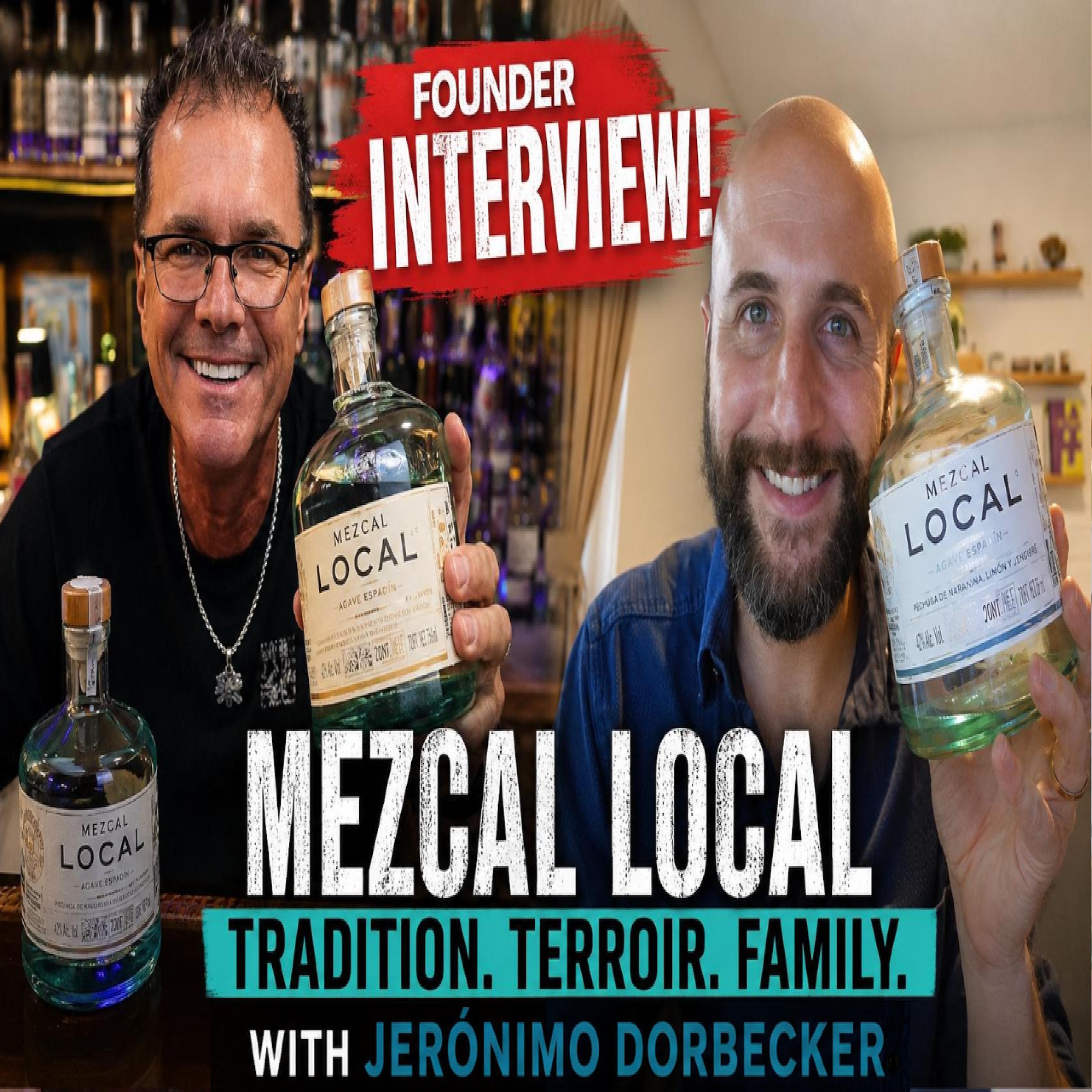
[00:00:00] Speaker A: All right, guys, I got a treat for you tonight. We're going to talk Mezcal instead of tequila. And you're going to meet Geronimo Jarvicher, the founder of Mezcal Local. How are you doing tonight, my friend?
[00:00:12] Speaker B: Hey, Brad. Thank you. Thank you for inviting me to this interview. Let me tell you, I'm a big fan. You've been uploading a lot of videos that I do like.
You talk about the story of the brands, about what is behind of everything. The label, the. The textures in the palate. So thank you. Thank you for the. For the invitation.
[00:00:33] Speaker A: Well, I appreciate that. I appreciate these bottles. I can't wait to have you guide me through tasting these. But before we dive into them, tell everybody a little bit about who you are and your history. What. What. What have you done before starting this Mezcal company? Where are you from? Give everybody some of that. Okay.
[00:00:51] Speaker B: That's crazy. That's crazy. The main thing is I'm an engineering mechatronic. I study in Mexico City, uh, doing robotics. I love robots. Since I was a little kid. And it's crazy. Once you enter to this industry, talking about the spirits industry, you can't get out. There's something.
Well. Well, there's something beautiful about it. Um, and I. I want to jump on that. I started with one of my best friends, this great trip visiting Oaxaca. He was like, hey, hero, we should. We should. We should go to Oaxaca to learn a little bit about Mezcal, what's behind it and everything. And I was like, sure, let's plan a trip. We took his car. It was a small one, probably no more than four people. Just. Yes, a very, very small car. And we took it all the way to Oaxaca, and we started visiting these palenques, the Mezcal factories.
And imagine this. He was driving, I was drinking. So we stopped on more than 20, 23 different Palenques. And the last one, it sounds like a miracle about it, the last one we decided to visit, it was the one of Leonel Hernandez, our current maestro, Mescalero. But I was like, I cannot drink no more copitas. That's enough for me. I cannot have another.
Another Mezcal. And he was like, just, please, let's go to the last one. And even the last one, it was the first address we lined in our. In. In our iPad, like, okay, we need to visit these. These factories. And this one is. It's going to be the first one. And it was the last one.
And we went to that one, and I was starving of course. And Leonel opened the doors of the. Of the Palenque. And he was like, have you eaten yet? No. Come with me. He invite us. He introduces us to his family, talked a little bit of the traditions behind Mezcal, the rituals. And after that, he was like, okay, now you know me. Here is my Mezcal. And he take out a no label bottle.
We start sipping that Mezcal. It was amazing. In that moment, we decided, like, we need to share this with the world.
This feeling of how Leonel make us feel like if we were family, like if we were friends. That's even why we put the name local on it. He make us feel like if we were locals. Let me tell you, I don't have the characteristic face of someone from Oaxaca. So he opens. He saw like we were family. It was beautiful. That's why we decided to start creating Mezcal Local. And let me tell you something else. We started, like, in weddings and, like, private events, showing people about Mezcal turn, letting people know about Mezcal. Even. I tell my family I'm gonna start selling Mezcal. And they were like, what are you doing? You're an engineering mechatronic. You cannot do that. You have to continue doing. Robotics is the future. And I was like, nope, sorry. I'm going to start selling these small things for the parties and weddings and the tables. And when I see the reaction of people or friends or even someone that I have never met in my life, trying Mezcal for the first time and doing like a phase like, wait, wait, what is this? And then I start talking about what is behind it and doing, like, a small tasting that we're going to do after. After a couple of minutes, I start converting. I always say that people that never drink Mezcal to now, so. So, so now they can be their first spirit. They choose whenever they go to a. To a place, to a party, to a restaurant.
[00:04:54] Speaker A: Has Mezcal, like, always been your drink of choice or was there, like, a point where all of a sudden you switched from something else to Mezcal?
[00:05:01] Speaker B: Ramen Tequila was my. My. My first.
Yeah. My first election. And I swiped to Mezcal when. When I was 18. Around that. Yeah. I don't know why. It was because the Mezcalerias started, like, doing a small hype in Mexico City, so it was pretty interesting to try different flavors that I haven't tried in my life. Yeah. 18, 19.
[00:05:30] Speaker A: Yeah. So. So I've been traveling to Mexico for a long time, and the places where I go besides going to Guadalajara and Arandas and the Tequila region, going to the. The regions like Cabo and Puerto Vallarta and Cancun. You know those regions. I never met a lot of Mexicans that drank Mezcal. They mostly drank not, you know, not my favorite tequilas. So was. Was Mexico City more of a hub for really good Mezcal back in the day?
[00:06:01] Speaker B: Yes. We're talking about probably the thing is they started with cocktails, like fancy cocktails. And when we talk about something artisanal, you cannot say Tequila is not something that drinks a veil or rum or whiskey. So when the hype of organic. No other tips. Start growing in, in the like main cities, we can talk about Mezcal. That's why. That's why. Well, that's what I think about.
[00:06:30] Speaker A: Sure.
[00:06:30] Speaker B: I don't know if that's why it started. I think it goes because of that niche.
[00:06:36] Speaker A: You can say gotcha. I mean, I know that it's mega popular now and, and you're starting to see the rise of, you know, rais and SOS and Bacanoras and all these other drinks that none of us talked about a few years ago. So I think it's really amazing. Imagine this.
[00:06:51] Speaker B: I'm Sorry. Imagine this 15 years ago. I started 14 years ago.
[00:06:55] Speaker A: Wow.
[00:06:56] Speaker B: It was like me, what's up? Even my family.
[00:07:00] Speaker A: And now, now it's probably a lot easier though, right? And you've got a much broader expand.
[00:07:04] Speaker B: Yeah. Right now I'm glad to say that we are in the, in the retail industry. We are the 16th most sale mezcal.
[00:07:14] Speaker A: Awesome. That's fantastic. Thank you. Do you have a lot of sales both in America and in Mexico or where's Your primary distribution?
[00:07:21] Speaker B: 70% of my sales are based in Mexico City. In Mexico, not Mexico City. In the whole country. And 25, 20, 25% are for the U.S. the other 5%, Europe.
[00:07:35] Speaker A: Oh, wow. That's fantastic.
So we watched this traditional tequila become very industrial tequila and we've seen this amazing growth in Mezcal. And I've only heard rumors of, you know, industrial made Mezcal. Do you see that in the industry very much or do they just fail? Do they not make it?
[00:07:57] Speaker B: Yes. Well, I don't want to say the name of the brands, but there are some brands that they started doing a long time ago. Industrialized Mezcal. That doesn't even taste like Mezcal. And, and the public or the, the clients or the consumers, they don't really appreciate it.
[00:08:17] Speaker A: So that's good.
[00:08:18] Speaker B: That's what I use. It's like, okay, you try your 15 bucks mezcal. Let me show you my 39 bucks mezcal. Let's do a tasting, a proper tasting, and in the moment, they drink and try the difference. It's like, oh, okay, now I get it. It's been growing. Probably 97% of the brands are artisanal or ancestral. And the other 3%, 5%, would be industrialized. And even the big brands, big brands that they are selling hundreds of. Of thousands of cases, they instead of industrialize the process, they industrialize it artisanal. E. I don't know how to just
[00:09:04] Speaker A: trying to keep some tradition into it instead of totally going like tequila has in some places where there's just nothing about it that's natural.
[00:09:12] Speaker B: Exactly. Exactly. What. What can I say? I. I've seen some facilities palenques, that instead of putting a machine, they add 20 horses in a meal. So that's the way to increase your potential and keep it as quality artisanal capacity as possible.
[00:09:36] Speaker A: Fantastic. That's really good to know. Because my move into Mezcal has been slow. I really struggled with anything that was smoky at first.
My. My daughter's favorite scotch is Lafroy, and I just think that is horrible.
But as I've learned how to taste through some of the flavors and to let the smoke not overpower me and actually learn to taste and.
[00:10:03] Speaker B: Yeah.
[00:10:03] Speaker A: And enjoy. It's taken me a while, and now there's more and more Mezcal that I enjoy. And then learning the different plants has really blown me away. You know, to think we just drink blue agave, but to have all of these different plants that are available and how they taste different. So cool.
So let's talk about a little bit about your production and how you guys make it in your region. I know Oaxaca. Where are you at in Oaxaca?
[00:10:31] Speaker B: Yeah, we're in central Bali, so we're pretty close. Our maestro Mescalero is. Was born from Matatlan. Santiago, Matatlan. That I don't want to say a big number, but probably 60% of the producers from. From the. The brands of Mezcal are from Santiago, Matatlan. 60 might be a little bit high. We're talking about 30, but it's a big number.
[00:10:54] Speaker A: Sure. High percentage.
[00:10:56] Speaker B: We are, like, 15 minutes away from there. That is Mitla. That Mitla is one of the arc archaeological places where you can visit whenever you go to Oaxaca. It's on the way to Yerevelagua. That there are, like, these petrified waterfalls. Beautiful. From Oaxaca that I recommend to go whenever you go. Even I want to do like a commercial about Oaxaca because I, I'm in love.
I, even my wedding was there. I, I, I, I, I think the best representation for Mexico in the world is Oaxaca. Why? You got amazing food. The people, they're the, the, the ones that open the, their doors like if you were one of their relatives. Their architecture. They have won a lot of awards around the world. The, the, the arts, they are the artistic. There are a couple of international painters from, from Oaxaca.
The alebrijes, the folkloric dances, and of course, well, the beaches, the ruins and what I always eat and of course the mezcal. So everything that it's in Oaxaca involves like an amazing representation of what is Mexico.
[00:12:23] Speaker A: I've heard that from many people. I've heard the food is beyond any food you'll eat anywhere in the world. That is just amazing. So that, that is a trip that we, we have, we want to do in the future. We can't wait to go and check it out. Yeah, yeah.
[00:12:37] Speaker B: You're invited to our palenque. Please, please.
[00:12:40] Speaker A: I would love that.
Okay, so you sent me two. We see both of these are made with espadine, right? Yes.
So are these cultivated plants or are they wild plants?
[00:12:51] Speaker B: They, they are cultivated plants.
[00:12:53] Speaker A: Okay.
[00:12:54] Speaker B: They're spade cultivated.
Why we use spadine because of two things. Tradition and sustainability is the most easier to continue sowing plants after you take out the, after you do the harvest. So I, I like to work with espadin. And also the efficiency of negave would be like, if you do it artisanal way would BE for every 10 kilos, we're talking about around 20 pounds.
You have one liter. So yeah, so it's like, like a little bit more than a bottle. So it's a great efficiency for, for, for a plant.
[00:13:40] Speaker A: And it's a very similar plant for, for the sugar contents as a blue agave. Right. Like it's the, probably the closest one. Yeah.
[00:13:47] Speaker B: Cousins.
[00:13:48] Speaker A: Yeah. Yeah. Okay, so same, same time for maturity as a blue Weber agave?
[00:13:54] Speaker B: No, we, we, we, our plants grow until 10 years.
Between 10 and 11 years. So we, we're when.
Around after, after the, you can find that like an espadin have like the best concentration of sugars. That's why we, we wait until that moment.
[00:14:13] Speaker A: And do you, are these like your estate agaves or do you buy the
[00:14:17] Speaker B: agaves we have both, depending on the price.
Yeah. If the industry goes down, we buy it. If we start going up, we use Our own.
[00:14:27] Speaker A: Yeah.
So knowing that we're in the bust cycle of tequila right now, and agaves in the tequila world are very cheap, what is the cycle like for Mezcal right now and for Espadine?
[00:14:41] Speaker B: In the last year it has reduced. It goes to our biggest peak. We bought the kilo for around $0.30 per kilo. And right now we're talking about a dollar and a half. And in the last year it goes around half, 50 cents. It's been changing. Not as heavy as the tequila industry, but it's been changing.
[00:15:09] Speaker A: Gotcha. And so the tequila world, you know, sales for some brands have slowed down. Some of the. The traditional brands are higher and the big brands are lower, but we still see a growth in tequila. And Mezcal's had an amazing growth over the last few years. Are. Is your sales still growing at that rapid rate or has things kind of plateaued a little bit?
[00:15:30] Speaker B: No, it's been growing pretty fast, like double digit every. Every year. So we're happy about that.
[00:15:36] Speaker A: That's fantastic.
[00:15:37] Speaker B: Yes. Still, we're a small company. We're talking about no more than 18 considering factory in my whole team.
[00:15:47] Speaker A: Gotcha. What about Mezcal sales overall? Has there been a slowing in the overall sales of Mezcal versus the last couple years, or is it still on the upscale?
[00:15:56] Speaker B: It's still on the upscale. We're talking about double digit in the whole. In the whole industry around. Well, well, it flattened a little bit. It wasn't at the beginning. We grow like 60% annually. That was crazy. And then it reduces to 2014%. So still good. But it wasn't the way it used to be at the beginning. Of course.
[00:16:21] Speaker A: Still a higher growth cycle than where tequila is right now. So that's good. The steel. Okay, so after we harvest, what's our next step with these agaves?
[00:16:30] Speaker B: Okay, well, we need to cut it in half because we're talking about like £160.
[00:16:39] Speaker A: So.
[00:16:39] Speaker B: So it's not an easy way to. To carry this type of agaves. And we. We cook it in an underground oven. Swarf around three days. We. We put the fire without. I don't know how to say. Yeah, thank you.
The, The. The.
[00:16:58] Speaker A: The.
[00:16:59] Speaker B: The heart of the agave. If you get to that point, you need to watch out because you lose a lot of. Of the, The. The product you can distill. Then we mile it in the. Our miling is pushed by a horse.
[00:17:14] Speaker A: Okay.
[00:17:16] Speaker B: Is the Taona style the classic Egyptian or, or. Or Taona from Chile is a classic one and then we ferment it for three days. Also around depending. Depending on the weather, it's in open barrels. And depending on the humidity or temperature. Temperature. We do it for three to five days. Fermentating. We don't use any additives to increase the. The speed of the fermentation. So we keep it that way. Then we distill it and we add like we. We take apart the. The heads, the body and the tails. The tails are probably the. The heads and the tails are. We. We choose which ones are like less methanol and take just a part of it. And we keep almost purely body. And in the second part, that is what we do. Different than the other espadines. We do a Pechuga style. Have you ever heard about.
[00:18:19] Speaker A: Yes.
[00:18:19] Speaker B: Okay. So I call it this style because we are not allowed to use Pechuga anymore. But in central valleys we call it Pechuga. When you add fruits, you add of course, chicken breast, turkey, snake, any kind of poultry or meat.
You can say petuba. But in central valleys we call it also with fruits with the sweetest part of the fruit.
And that's what we add. In the second distillation, we add. Imagine this is the alembic. And you have like a capote. That is like the neck of the alembic. Here is all the fermented agave. And the fire is down here.
In this neck. We have apple, banana, peach and orange.
And also the heart of the agave.
So all the vapor goes around it and start dropping. The specific way to say it is at the steel width. So it's the steel width agave heart.
[00:19:25] Speaker A: Wow. And you do that. So is that what both of these are here in front of me?
[00:19:29] Speaker B: The first one, that is. That is the blue one. Yeah, that one is agave heart. And the other one we use orange, lime and ginger.
[00:19:38] Speaker A: Oh, wow. Okay.
[00:19:40] Speaker B: Interesting. Let me tell you about that. That label. The grandmother, the great grandmother of my maestro Mescalero, developed this recipe.
So you can close your eyes and imagine you travel to the beach or you trail to an exotic place.
That's why he.
[00:19:56] Speaker A: She.
[00:19:56] Speaker B: She developed it.
[00:19:58] Speaker A: Very cool. Well, I. I can't wait to try it. Now I have a. I have a fermentation question.
[00:20:03] Speaker B: Okay.
[00:20:04] Speaker A: Because I've seen a lot of places when they're doing mezcal or ricea. You take all of the fibers and you put those into the tank.
[00:20:13] Speaker B: Yeah.
[00:20:13] Speaker A: And. And then some places will wait till fermentation starts. And then they'll add water. Some places add water and the Juice right away. Like, what. What's the process of keeping kicking off that fermentation?
[00:20:23] Speaker B: We added right away. It have to be hot water.
[00:20:27] Speaker A: Gotcha. Okay.
[00:20:28] Speaker B: Yeah.
[00:20:28] Speaker A: And when you guys are doing your tohona, are you using, like, spraying water on it like you do in tequila, to extract the juice, or is it all coming from the fermentation tank?
[00:20:38] Speaker B: It coming from the fermentation. Yeah. We don't use water in the. In the Tajona.
[00:20:43] Speaker A: Yeah. So that's a different. That's a really different way that, you know, we don't see normally in Tequila. Tequila. It's very cool. Yeah.
[00:20:49] Speaker B: Yeah, that's. That's amazing. Yeah. And let me tell you, we need to learn a lot of. About tequila. Also. There are some things that in Mezcal, we're afraid of taking that shots.
We've tried, and I can be completely honest, we've tried to use machines instead of horses. Or if instead of the Taona, the horse, I'm gonna. I'm gonna take him away. Aurelio is the name of the horse. But, yeah, I think that's enough for. For him to.
[00:21:20] Speaker A: To work. You could use an electric horse.
[00:21:21] Speaker B: Yeah, we want to do with an electric horse. Yes. We tried to do it with that, and it didn't. We. We lose quality. So it was a nice try.
And that's it. So that's why we're a little bit aseptic with the decision of.
So. So we decided to continue doing it the way my Maestro Mescalo have been doing it for a little bit more than 80 years.
[00:21:46] Speaker A: Sure.
[00:21:46] Speaker B: 112 years.
[00:21:48] Speaker A: Yeah. Wow. Okay, so I have a cooking question.
[00:21:51] Speaker B: Yes.
[00:21:52] Speaker A: Because Mezcals, I'm so interested in how the things that are different. Right. Amazing. So when you. When you do the fire in the pit, you load different wood in there to burn, to heat the rocks, right?
[00:22:06] Speaker B: Yeah.
[00:22:07] Speaker A: And then does the agave go right on that fire, or does the fire go out and then you stack it on the rocks? Like, how. How. How do you do that?
[00:22:15] Speaker B: That's a great question, because I did the same one to my Maestro Mescalero.
[00:22:21] Speaker A: Good.
[00:22:22] Speaker B: Yeah, yeah, yeah. No, no, no. It was.
So, yeah, the stones start, get to the proper heat, and whenever it cools a little bit down that you don't see the fire, you put the agave on it.
[00:22:38] Speaker A: Okay.
And then I. I've been told you. You stack it all in there, but you leave like a. A tree or a pole in the middle. So once you stack it, you pull the pole out, then Dump water down inside of it. Is that right? To get the hydrolysis in there.
[00:22:51] Speaker B: I've never seen that process. On doing that, in our case, we don't.
[00:22:56] Speaker A: We don't do it, but don't do it that way. Okay.
[00:22:58] Speaker B: Yeah, it makes sense. It makes sense. I. I'm gonna ask also about that, but. No, no, no. I. I've never seen the. Like, they put water in the. In the process.
[00:23:08] Speaker A: Yeah, just a regular cook. Not like regular.
[00:23:12] Speaker B: Yeah, okay.
[00:23:12] Speaker A: Yeah, yeah.
[00:23:13] Speaker B: We. We add the. The pink as the. The agave leaves, like to.
[00:23:17] Speaker A: To.
[00:23:18] Speaker B: To cover the whole.
The whole oven.
[00:23:22] Speaker A: Very cool. Okay. And then this still. Is the Still. Is it wood fired or how do you still wood fire? That's awesome.
[00:23:31] Speaker B: Yes.
And so you need to. Yeah, I've done just one.
Just one whole batch to make, like, to keep an eye of the fire. It's a very, very tough job to do because you need to see how the, like, the string of mezcal is ripping. And you have to be constant and tight. If it goes a little bit bigger, you need to take out some wood, and if it goes too slow, you need to add some wood. So it's interesting. Yeah.
[00:24:08] Speaker A: So maintaining a constant fire temperature, which is a lot harder than doing with a steam and a still because you just turn the dials. Okay. Yeah, yeah.
So I have this question about tequila a lot. From the day that you chop the agave out of the ground to the day that it goes in the bottle, how long does that take? What's the.
What's a normal process from. From field to bottom?
[00:24:32] Speaker B: Two weeks, 15 days. Yeah. The first day of harvesting, we took around four days harvesting, then. Then three days from the cooking, another three days for the fermentation, and a couple of days for. Yeah, we're talking about less than two weeks, but around 12 to 17 days.
[00:24:53] Speaker A: Gotcha.
[00:24:53] Speaker B: Depending on. Of the size of the batch and
[00:24:56] Speaker A: probably this time of year and the weather, that's. Yeah, yeah, yeah, yeah. And then so before bottling, do you rest it, like, in some stainless steel or glass or anything? Or do you just go straight to bottle?
[00:25:08] Speaker B: No, just directly. Sometimes we've been doing, like, these interiors that is like, putting underground bottles. And let me tell you. And the next batch, it's going to be for the other muertos. I hope I can send you a bottle.
[00:25:27] Speaker A: Oh, wow.
[00:25:27] Speaker B: It's amazing. It's like a reposado, but in glass.
[00:25:31] Speaker A: Wow. Okay. Very cool.
[00:25:33] Speaker B: Has, like, this earth sweet flavor.
[00:25:37] Speaker A: Okay, easy.
[00:25:38] Speaker B: Crazy. Crazy one.
[00:25:38] Speaker A: Pretty good. Okay.
[00:25:40] Speaker B: And it's not that Common. We're going to start to doing that like a special batch for that. But that's not in another interview.
[00:25:48] Speaker A: Well, let's. Okay, I'm gonna pour both of these.
[00:25:50] Speaker B: Okay.
[00:25:52] Speaker A: And I'm gonna. I'm gonna use these little.
The. The company that sent these to me is called Villa318. Or just like these really cool little Capitas.
[00:26:02] Speaker B: Oh, they're nice.
[00:26:04] Speaker A: Yeah. And they're very easy to hold.
And I wanted to do something that's probably a little more. A little more mezcal related than drinking out of my normal Glen Karen or my biggest brandy sniffer.
[00:26:17] Speaker B: Love. I love it. I love it. And thank you. That's. I always say like they ask me like what's the best way of drinking mezcal? Or even they ask me what's the best mezcal you have ever tried?
When I'm not talking about Mezcalocal, of course. But the best mezcal I've ever tried is drinking it with the people you like. It's. The conversation is it's not about the mescaline, indeed is about who are you drinking it with. Sometimes it's been a pretty bad Mezcal. But if it's a good company, it's one of the best I've ever drink.
[00:26:51] Speaker A: So I take that same thought process for me. People like what's your favorite Tequila? And it's always the one that I picked today to drink.
And sometimes what makes it better is the people I chose to drink it with. So it's the same theory.
Okay.
You said you had a special way to do this.
You are my teacher, my friend.
[00:27:13] Speaker B: Amazing. Amazing. What I do is to take out a drop and rub it between the fingers.
[00:27:19] Speaker A: Do this one first.
[00:27:20] Speaker B: Yes. That one first. Yes. Sorry.
[00:27:22] Speaker A: Yeah.
[00:27:24] Speaker B: Can you feel the like the oiliness?
[00:27:26] Speaker A: Yeah. It's gotten like really cool too.
[00:27:29] Speaker B: Yeah. Have to be. So this is like a first way to see if it doesn't have like a lot of water or other alcohol added if it like doesn't feel like oily enough and start like a little bit hard to. To rough is. I don't recommend that Mezcal.
[00:27:52] Speaker A: Okay.
[00:27:53] Speaker B: Like have something that is not the proper way to do a mezcal.
[00:27:57] Speaker A: Okay.
[00:27:58] Speaker B: That's one another drop and like rub it in this part of the hand until it's completely dry.
[00:28:06] Speaker A: Okay.
[00:28:10] Speaker B: You can do it also like that's common in the hands.
[00:28:13] Speaker A: Like I got it dry there but
[00:28:14] Speaker B: I like it here because normally we don't like wash pretty good in this part of. Sure it doesn't have lotion or soap or whatever. And now smell it.
Have, like this.
What. What's.
What's in your notes?
[00:28:34] Speaker A: I guess some smoke.
[00:28:35] Speaker B: Yes. Like the classic way, if you do it with a whiskey, with a vodka, with a tequila, it's going to have different notes.
[00:28:42] Speaker A: Yeah.
[00:28:43] Speaker B: For a Mezcal, of course, is the smoky. The smoky part.
[00:28:46] Speaker A: There's a citrus
[00:28:49] Speaker B: gest
[00:28:52] Speaker A: and almost like an earthiness.
[00:28:57] Speaker B: Yep. Yes.
[00:29:00] Speaker A: Yeah, that's very cool.
[00:29:02] Speaker B: Nice. Now that we're smelling, smell it from the copita.
[00:29:08] Speaker A: Ooh. I got a lot of lime zest and citrus.
[00:29:11] Speaker B: Nice.
[00:29:12] Speaker A: And I don't get that smoke that I got on my hand.
[00:29:16] Speaker B: There's something about the petuga or the petuga style. Normally they filter a little bit. The smokiness. So our mezcal, it's a great recommendation for those like you that doesn't love the smokiness. The toughness of the smokiness.
[00:29:30] Speaker A: There was a lot more smoke on my hand than what there is in the glass. And almost like it prepared me for it and it took it away.
[00:29:37] Speaker B: Yes. Yeah.
Also, you can do that in every Mezcal. You. You try. I recommend to burn it in the hand and then smell it.
[00:29:48] Speaker A: Okay. A lot of minerality at the bottom of the glass, but a lot more citrus and fruity at the top of the glass.
[00:29:57] Speaker B: Yes.
You can catch in here, like the apple.
[00:30:05] Speaker A: Like green apple.
[00:30:06] Speaker B: Like the green apple, exactly. Yes.
Isn't it like the citrusy of an espadin is a classic. And then the apple. Because we use green apple, but.
[00:30:16] Speaker A: Okay, so juniper or pine?
[00:30:22] Speaker B: Pine. Yeah.
Yeah, a little bit of juniper. You're right. You're right.
[00:30:29] Speaker A: Yeah. It's like a blend between. Is it subtle Christmas tree or juniper? Like, it's pine, but there's like a little leans. Just a little juniper.
This very subtle kind of went away, and I got. I was picking that up more on the mid glass versus front or back?
[00:30:48] Speaker B: Yes.
[00:30:48] Speaker A: Okay. That. That's pretty amazing. That's a lot there.
So what? So, like, when I think of agave in blue, Weber agave, I think of roasted pineapple, sweet potato. That's kind of like a what that tequila cooked agave to me. What? When you grab espadine and you. You taste espadine that's been cooked. What's the flavor profile of an espadine agave?
[00:31:16] Speaker B: Okay. It would be like sweet potato.
[00:31:21] Speaker A: Okay.
[00:31:21] Speaker B: And a sugar cane.
[00:31:23] Speaker A: Okay. So it's sweeter.
[00:31:25] Speaker B: Yes.
[00:31:26] Speaker A: Okay, it's sweeter. It's even changed the more I smell It. The more it changes, I get like an orange, almost like a flower, floral, orange blossom type note and a little bit more lime for this.
[00:31:38] Speaker B: This mezcal is a completely. I'm gonna say imperfect Mezcal.
[00:31:43] Speaker A: Okay.
[00:31:43] Speaker B: Unperfect mezcal. A perfect Mezcal would be. You smell it right away. You get the pineapple, the orange.
This one, it evolves continuously. It's not the same. The one you smell at the beginning and the end.
[00:31:57] Speaker A: If I stay at the bottom here, it stays the most consistent. If you. If I'm sniffing at the very bottom of the glass is the most consistent smell. It's when I dance around the other sides that I pick up all of these different, other notes and smells. Change, Change.
[00:32:13] Speaker B: Nice.
[00:32:13] Speaker A: Nice. Okay, do we get to taste this thing?
[00:32:15] Speaker B: Yes to the best part. We start salivating. Right. So, okay, now the first one, it has to be like a small. We call it kiss.
[00:32:24] Speaker A: Sure.
[00:32:24] Speaker B: So small kiss.
Just no more than two drops to your tongue.
[00:32:30] Speaker A: Okay.
[00:32:31] Speaker B: This one might be the most important one of the whole tasting because it let the mouth know you're receiving Mezcal.
[00:32:37] Speaker A: Sure, sure.
[00:32:38] Speaker B: Sometimes it have to be this. It might be an amazing Mezcal, but if you have a big sip, it's going to be complex and complicated to drink. So the first one, the second one, another one a little bit bigger and had to get to the throat. And now here. Here is something also pretty important. If you feel like a heat, like a warmth thing in your throat, it's going to be a good Mezcal. If you feel like this cold acid mezcal, watch out, because it's going to be one of the worst hangovers of a mezcal, even if it normally, if it's not regulated.
[00:33:22] Speaker A: So. So a little bit of heat here is good. Yeah, I. I mean, and I feel that. I mean, it's not. It's not overwhelming.
Like, we're kind of the opposite in tequila. If you have a. If you take tequila and it's all here and nothing here, then it's probably not a good tequila. It should be heat here. This has a nice balance of heat here, but it has a nice little throat peppery heat there as well without
[00:33:48] Speaker B: being too overwhelming, isn't it?
[00:33:49] Speaker A: Yeah, not at all. Yeah. It's just a nice little.
[00:33:53] Speaker B: And now the third one. And at the end, exhale, like if you want to take out vapor from your mouth.
[00:33:58] Speaker A: Okay.
[00:34:00] Speaker B: And now the mouth starts up elevating. You can even. You can get like the notes of the peach in the back tongue.
[00:34:09] Speaker A: It's very balanced, too. It gets you right in the back.
Tongue on each side.
The citrus is there. That pineapple is there.
There's a teeny hint of smoke. I mean, it is so small.
Like it's. And it's more finish smoke than it is in the beginning.
[00:34:26] Speaker B: Yes.
[00:34:27] Speaker A: That lime is there. There's an interesting earthiness that. I don't know what that is.
[00:34:32] Speaker B: Like, it's. It's a cooked agave.
[00:34:36] Speaker A: Yeah.
[00:34:37] Speaker B: It's not earthy flavor.
[00:34:39] Speaker A: Yeah.
It's not like a petrichor. It's not like minerality. It's just like a.
Almost a little vegetal earthiness that I can't say this tastes like that. It tastes like something different than what I've had before.
[00:34:54] Speaker B: A little bit of minerals, but. But. But wet minerals, isn't it?
[00:34:59] Speaker A: Yeah. Different than, like, we're like.
[00:35:02] Speaker B: A lot of.
[00:35:02] Speaker A: A lot of times you get like. Like a minerality from the well water. Right. We're like a. Like when you drink well water or like that petrichor that's like wet limestone or sometimes it's like a deep dirt, like wet earth. This is different. This is like a.
It's earthy, but it's more vegetal along with that. Earthy. I don't know how to really explain
[00:35:25] Speaker B: that, but I don't know if it rings a bell with.
Might be that we use the. The peel of the fruits in it.
[00:35:36] Speaker A: Okay.
[00:35:37] Speaker B: That have like these flavors.
That is not like a common one.
The only one that might be common is a apple, orange, peach.
[00:35:48] Speaker A: Yeah. I was checking the ABV. That doesn't even drink, like, it's 42. That's.
That's very good. That is very good.
[00:35:56] Speaker B: Thank you.
[00:35:56] Speaker A: Thank you. That is very good.
That's pretty incredible. And now. And this one.
This one is not distilled with any fruit in it. Is this just also is the heart agave.
Oh, yeah, you heard of agave?
[00:36:10] Speaker B: Banana, peach and orange.
Those five things.
[00:36:13] Speaker A: Now I'm going to look for banana.
[00:36:15] Speaker B: The banana is the most complex one to find because the flavor of banana has, like. It's very overwhelming, isn't it?
[00:36:24] Speaker A: Yes.
[00:36:24] Speaker B: But here you can feel like the sweetness. Sweet. Sweeteness of a banana.
[00:36:32] Speaker A: If anything, that vegetableness that I'm talking about could be almost like cooked plantain. Like not quite ripe banana, but like a cooked plantain kind of taste.
And that's probably just in my brain.
[00:36:51] Speaker B: No, it's. It's complex.
I completely understand. It's not.
It's. It's not an easy way to do it. It's not. That's why it's a non perfect mezcal.
[00:37:03] Speaker A: And knowing that those other flavors are there, that it's. For me, it's really fun to go look for them. Like, you say there's apple there. Okay, well, I want to find that apple. I want to. And I. I found that in the nose. Green apple was there in the nose.
[00:37:18] Speaker B: The flavor, it's like peer. Like. Like a cooked apple is in it. Yeah.
[00:37:23] Speaker A: But the, the peach was evident in the back. Peach was all in the back. It's like, boom, I got peach. And I. I wasn't knowing why. I knew you said heart and Bugatti, but I didn't know apple with peach, too, so that's impressive. Okay. That's fun. Amazing. This is gonna be fun to share with people, too. Like, it's. It's fun to have bottles on your shelf and it's fun to come out and drink something nice, but it's way more fun to do this with other people and share it with people. So. Thanks for showing me this. This is awesome.
[00:37:51] Speaker B: No, I'm glad. Thank you. Thank you, Brad. And let's go. Let's go to the other one. Let me.
[00:37:56] Speaker A: Okay.
Grab another.
I'm gonna do the same thing, right. A little bit on my fingers.
[00:38:02] Speaker B: The same thing. And it's going to be probably less. Well, I won't. I won't say I. Yeah, we'll just see what happens. Yeah.
[00:38:10] Speaker A: Okay.
[00:38:10] Speaker B: So, yeah, the first step, you're gonna feel the oiliness. It's a little bit.
[00:38:16] Speaker A: This one is more oily than this one.
[00:38:19] Speaker B: Do you think so?
[00:38:20] Speaker A: Yeah, I mean, yeah, just a little bit. A little more. A little more viscous.
[00:38:27] Speaker B: You're right. It has like this constant oiliness. Isn't it even.
[00:38:33] Speaker A: Yeah, yeah,
[00:38:37] Speaker B: yeah. It's. It's because of the peel of the orange and the lime of the oranges.
[00:38:41] Speaker A: Okay. Yeah.
[00:38:43] Speaker B: Now another drop. Yes. In the other hand, I can't.
[00:38:48] Speaker A: You know what I'm doing? As soon as we're done tonight, my wife is going to come out here and try this. I can't wait.
[00:38:55] Speaker B: And this one is less smoky, isn't it?
[00:38:57] Speaker A: Yeah. A lot less smoke than what the
[00:38:59] Speaker B: other one was because we don't use the heart of Daga in this one.
[00:39:03] Speaker A: Gotcha. So this one's just those fruits. So you're taking out that cooked part away from it.
[00:39:08] Speaker B: Exactly.
[00:39:10] Speaker A: And maybe it's my brain, but I get a lot of orange peel. Like.
[00:39:14] Speaker B: No, it's. It's. Yeah. This one is a big one. This one is citrus all in. In your face.
[00:39:21] Speaker A: Yeah. Like, I still get smoke. Like, that's where the smoke is the.
Where it shows up like it did here, but. But not as strong. But that citrus is more that subtle, isn't it? Yes.
[00:39:33] Speaker B: This one is going to be a crazy flavor. So that's why I always recommend it. To try it after the first one.
[00:39:39] Speaker A: Sure.
[00:39:40] Speaker B: And now when you smell it, now you find some.
[00:39:47] Speaker A: So this one's. This one smells more like agave.
It's floral. Like, I get some real floral type notes and. And there's lots of citrus that I can't. I wouldn't be able to tell you what citrus it was. It's just very citrusy.
[00:40:01] Speaker B: Very citrusy. And it's very, like, exotic, isn't it? Like.
[00:40:06] Speaker A: Yes.
[00:40:06] Speaker B: If you close your eyes, it's like a tropical forest or.
[00:40:12] Speaker A: It is. There's. You get.
Gosh, I want to say grapefruit, pineapple, mango, like all of these different fruits.
[00:40:22] Speaker B: It's like a Disney movie of fruits.
[00:40:24] Speaker A: It's even more fruitier at the top. That's crazy.
When I tell people to sniff different places of the glass in a tasting, they always look at me like it's going to smell the same. And then they're always like, why does it smell different? And I. I never can really answer why. I don't know why, but it does.
[00:40:42] Speaker B: I also don't know why I've never. Yeah. Asked that question.
[00:40:47] Speaker A: It seems. I think it's the. There's a different weight in different aromas, and those are going to show up in different places of the glass is probably the best explanation I've heard. But. Yeah. I don't know.
[00:40:58] Speaker B: And even to open your mouth while.
[00:41:01] Speaker A: Oh, yeah. Just a little bit change, isn't it?
Yeah. When you do that at the bottom of the glass, I do pick up some. Some earthiness.
The. Some of the same minerality that I got here, but definitely a lot more bright citrus.
[00:41:17] Speaker B: That might be also the. The classic espadine.
The classic flavor of an espadine.
[00:41:23] Speaker A: Sure. Just some of the terroir coming through.
[00:41:25] Speaker B: Yeah.
[00:41:26] Speaker A: There's more pineapple in this one. Like, I really get pineapple in there.
[00:41:32] Speaker B: Yeah, all the citrusy.
[00:41:35] Speaker A: And there's a nice grapefruit note, too. And what's funny is I love the smell of grapefruit, but I don't like the. Like, I would never eat a grapefruit, but I love the smell of grapefruit. And I like squirt. So there you go.
We ready yes, please.
[00:41:52] Speaker B: So, again, just a small sip.
[00:41:59] Speaker A: Wow. Just that little sip was. Wow.
[00:42:02] Speaker B: Wow. It opens, like, a lot of parts of the mouth, isn't it?
[00:42:06] Speaker A: Yeah. And there's a really nice.
I, I, I'm gonna say bitterness and not in a negative way. There's a really nice, like, bitter complexity that, like, coated the top of my tongue just with that little teeny sip.
[00:42:21] Speaker B: Let's see in the second one, if you catch a little bit of a spiciness.
[00:42:25] Speaker A: Okay.
Yeah.
[00:42:28] Speaker B: That one is because of the ginger.
[00:42:31] Speaker A: Okay. So I was gonna say it's almost like it feels like jalapeno almost.
[00:42:36] Speaker B: Yep.
[00:42:37] Speaker A: But that would make sense. Ginger. And it's. It has a nice, like, tingle, like a.
Yeah. And that finish it, like, hangs around. There's a really nice flavor there in.
[00:42:48] Speaker B: Yeah. In the front of the. Of the mouth, isn't it?
[00:42:51] Speaker A: I don't know if this is fun to watch me drink this, but it is sure fun to do it. I'm telling you that right now.
[00:42:58] Speaker B: I know, I know. Sometimes I put some of your videos or, like, hearing it, and I'm like, I need to try that. That thing, that new thing.
I don't have it right here.
[00:43:12] Speaker A: Well, I do that a lot with other people's videos too. Then I spend my time online ordering bottles that I.
Yeah, yeah. Okay. I'm going in for that bigger sip. Yeah.
[00:43:23] Speaker B: And exhale.
This one might be a little bit more perfect. Mezcal. You can say that that is, like, right on the mouth. It shows you what you need to be shown it. It shows the. The way of trying a mezcal with citrusy. It's not like, doesn't makes a complex and evolving product. It's just right ahead, isn't it?
[00:43:52] Speaker A: Yeah. You. You get that agave flavor that, you know, that sweet potato that. And I get a really nice pineapple on the exhale. That, like a roasted pineapple almost more like what I would picture tasting, you know, Cooked agave.
[00:44:05] Speaker B: Yeah.
[00:44:05] Speaker A: So I get a nice cooked agave note, but there was a, A citrus. And then also, like, I think it's that ginger that. That heat that, like, comes in. And this one is much warmer in the mouth than it is in the throat. Like, it has that nice, like, finish that kind of warms up. And then that's where the finish, to me, has a touch of smoke and then a little bit of minerality. That almost more of a description of earthiness than what I got out of this one. Less of a vegetal earth, just more of a nice Earthy minerality. That's. God, these are both delicious.
[00:44:44] Speaker B: Nice, Nice. I'm glad. I'm glad you like it.
And for your. For your followers, I have a. If you're okay with that, I have a 15 off in our store.
[00:44:57] Speaker A: Oh, absolutely.
[00:44:59] Speaker B: I have a. Like a promo code that is Brad local.
I'm gonna send it to you. So.
[00:45:07] Speaker A: Well, thank you for doing that. We'll put that in the description of the video too.
I think showing people that in tasting Mezcal is important. I've never had anybody show me that, and that's really. Is incredible.
[00:45:19] Speaker B: And it's easier, isn't it? Yeah, yeah. You say it perfectly. It's easier for someone to try a Mezcal if you do, like, these small steps. Even I do it in every restaurant I go without feeling like this poshiness, like, or something. It's like. Just do it for me. Smell it right away, the three sips, and it's like a perfect way to know what's behind of me scan.
[00:45:46] Speaker A: That's amazing. Okay, so let me ask you. So we got both of these at 42. Do you ever do anything at a higher proof than these at 42?
[00:45:54] Speaker B: Oh, just special editions for now.
[00:45:57] Speaker A: Okay.
[00:45:57] Speaker B: Yes. We have one in our palenque that is 55.
[00:46:02] Speaker A: Oh, wow.
Now, high proof tequila can only go 55. mezcal. You can go as high as you want, right?
[00:46:09] Speaker B: Yes, I. I've tried the. The. We. We don't do it commercially speaking, but my maestro Mescalero have done a 62%, 63 around that. And it's amazing. Amazing.
[00:46:24] Speaker A: I bet. Yeah. The higher the proof, the better.
[00:46:26] Speaker B: The five. Yeah, higher the proof is.
They call it the. The five.
Five. I. I don't know how to translate it, but, like five steps.
[00:46:38] Speaker A: Okay.
[00:46:39] Speaker B: Because you have one of those, you walk five steps and fell down.
[00:46:44] Speaker A: There you go. The five steps is all you get.
[00:46:47] Speaker B: Is all you get. That's why you need to be seated while drinking that kind of mescal.
[00:46:53] Speaker A: So I know that aging Mezcal is not a super popular thing, but we do see it in some. Is there ever a thought of doing a reposado and aging it in some wood?
[00:47:04] Speaker B: Not in wood, but in glass. We. We want to. Yeah, we're gonna do like, big batches for glass reposados.
[00:47:14] Speaker A: An aging in the glass lets it stabilize without it being affected by the wood. Correct.
[00:47:20] Speaker B: Yeah. It tastes like, sweeter and even takes a little bit of the flavors of the ground. It's.
[00:47:27] Speaker A: Oh, wow.
[00:47:28] Speaker B: Yeah.
[00:47:28] Speaker A: Yeah, it's.
[00:47:29] Speaker B: Is not a.
It's not an easy way to explain it. I don't know why. That's why right now I'm very passionate about the.
The. The anejos and reposados in glass.
[00:47:46] Speaker A: Okay, Well, I can't wait to try those. I.
My finish as. As I'm sitting here, letting the flavors just kind of disappear.
Tell me if I'm crazy, but I almost get like a chocolate to a dark chocolate finish flavor in my mouth.
[00:48:01] Speaker B: Yeah. In the one of citrus, you find. You find a dark chocolate, like a 70% cacao chocolate.
[00:48:09] Speaker A: Yeah. And that's. I mean, it's been a while since I had a taste. As we were talking, all of a sudden I'm getting this.
Why does it taste like I just had dark chocolate? This just keeps evolving. This is really. Thank you so much. No, no, no, I'm glad. I'm. Thank you so much for taking me through that and having me taste these. This is absolutely amazing.
So tell everybody where they can find you on social media.
[00:48:33] Speaker B: Okay, so our social media Instagram, it's Mezcal, lower dash local.
[00:48:42] Speaker A: Okay.
[00:48:42] Speaker B: Also for Facebook, mezcalogal, and Twitter, TikTok. And our webpage, you can find all our products.
Next time, I need to send you the third one. That is the steel with herbs.
[00:48:58] Speaker A: Okay.
[00:48:59] Speaker B: That is herbal. Herbal.
[00:49:01] Speaker A: Herbal. And that one, that's probably leaning almost into a gin type botanical flavor kind of. Yes.
[00:49:08] Speaker B: But without the. The.
[00:49:11] Speaker A: Without the gin, it's more fresh.
[00:49:13] Speaker B: It's more fresh. Like more fresh.
[00:49:15] Speaker A: Okay.
[00:49:15] Speaker B: Because we use mint and two endemic plants from Oaxaca.
[00:49:20] Speaker A: Oh, wow.
[00:49:20] Speaker B: Oh, it's like that mezcal was developed that recipe. So we can have a bottle and start talking about ourselves, like, in a deeper way.
So it depends on for what situation.
[00:49:37] Speaker A: Yeah. We may have to do a video with that one. I'm just saying we may have to. You may have to try that out.
Okay. So what's your. What's your website? What.
[00:49:46] Speaker B: Where can people find you at www.mescalocal mezcalogo.com.
[00:49:52] Speaker A: okay. And you sell from the website so people can buy in a bunch of states in America. Exactly.
[00:49:59] Speaker B: Almost for the. The whole country. I think the only ones we can't see is the control states, but sure.
[00:50:06] Speaker A: Yeah. And what are our price points here on these?
[00:50:09] Speaker B: So the. The first one is 49, the second one 59, and the third one 69. So we have like this range.
[00:50:19] Speaker A: There's so many Mezcals that are on the shelf at a hundred dollars. These are such great prices. Such I mean, this. This was a great experience and amazing.
Geronimo. I want to say thank you so much for sharing these with me, taking me through that tasting and really letting me learn how to taste this. And I can't wait to share this with so many people. Thank you. Thank you so much, my friend.
[00:50:41] Speaker B: Thank you. Thank you, Brad, for the invitation.
Continue doing these kind of things for us that love the. The. The part behind of the brands. Thank you.
[00:50:54] Speaker A: Well, cheers. Have a great night. I've got a little left of this one. I'm going to say salute.
[00:50:59] Speaker B: Salute. Even. Let's do something ritual and very something pack.
So with the left hand, right, say yeah.
[00:51:09] Speaker A: Dishbe dish
[00:51:14] Speaker B: that is choose in Zapotec.
[00:51:17] Speaker A: Oh, awesome.
[00:51:18] Speaker B: That is an indigenous language from Oaxaca.
[00:51:20] Speaker A: Okay.
[00:51:21] Speaker B: Dishbe disbelief.