Episode Transcript
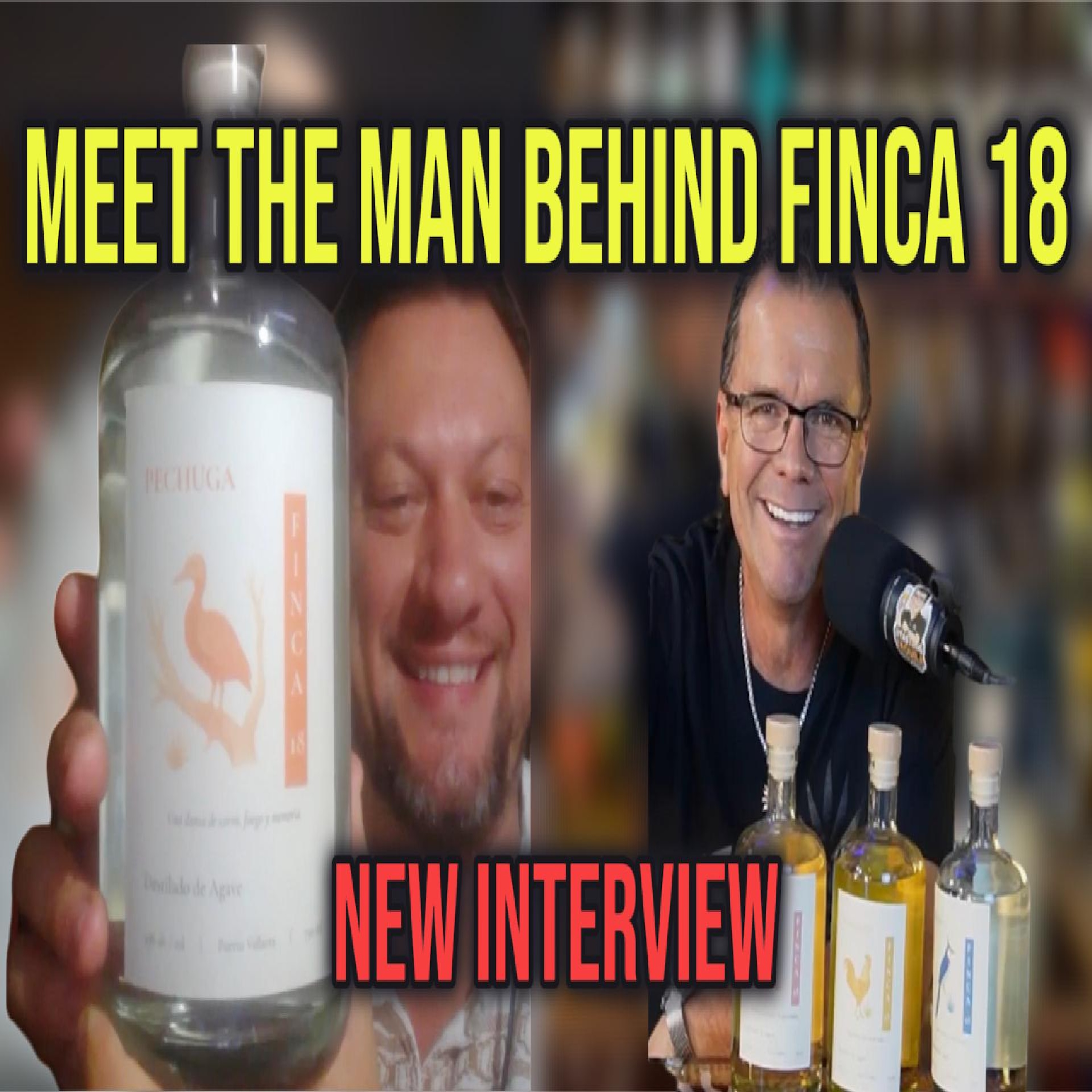
[00:00:00] Speaker A: Tonight we're going to do something a little different. We're going to talk about a tequila that's not a tequila. This right here is finca18, and this is destalado de agave. Not part of the crt, but they're making very artisanal tequila. And today you're going to meet Greg, the master distiller and the brains behind this brand. And not just a brand, but a phenomenal destination in Puerto Vallarta. So next time you're taking a trip to Puerto Vallarta, we're going to give you a place where you can go see how they make sure extremely artisanal agave spirits. You're gonna dig this one. It's pretty awesome.
[00:00:36] Speaker B: It's tasting tequila with bread.
[00:00:46] Speaker A: All right, guys, I'm fired up today to have Greg Rakowski here. We are going to bring a little bit of Puerto Vallarta to the tequila world. Greg, how you doing tonight?
[00:00:57] Speaker B: Good. Brad, how are you?
[00:00:59] Speaker A: I'm fantastic. I got a Monday night and we're going to talk about tequila. How can I go wrong?
[00:01:04] Speaker B: That's my favorite subject.
[00:01:06] Speaker A: Well, and actually want to clarify tonight, we're actually talking about destalado d', agave, Right. Because we're not talking about a CRT product.
So I'm excited about this. Tell everybody a little bit about who you are and what you do.
[00:01:22] Speaker B: So my name is Gregor Kowski, and I'm the master distiller of Finca Diesiocho.
We started the distillery about three years ago, and we've been going strong ever since.
The property that the distillery is on has been in my girlfriend's family for about 150 years.
And when I moved to Puerto Vallarta, I did it for love.
And I also fell in love with tequila, too, while I was here. So I fell backwards into this whole thing. I used to give tours for Racia and tequila, and that. That kind of evolved into me running my own distillery. And basically it was the suggestion of the riceros that. That were like, hey, dude, you have a really nice setup. I think you guys should start doing something there. And we. We kind of bounced the idea off back and forth for a while. And the. The project was supposed to be like, a really small distillery, and it completely exploded in scope by the time we got done with it.
Now we're producing about. We're still, like, small and artisanal. We're doing about 6,000 liters per month right now, which is very small.
And our batches are anywhere from like 400 to 600 bottles per batch.
[00:02:37] Speaker A: Wow. So you're making quite a bit, quite a bit of spirit there.
[00:02:42] Speaker B: We're, you know, little by little, every season the production has been increasing.
[00:02:48] Speaker A: So the ones that I have in front of me, these are primarily blue agave. These, these would fall into the tequila world, just not part of the crt.
[00:02:58] Speaker B: They're not just blue agave, but they're CRT certified blue agave.
[00:03:03] Speaker A: Okay.
[00:03:05] Speaker B: And also in the denomination of origin for tequila, we just can't call it tequila because we don't participate with the consejo. We don't, we're not certified right now.
[00:03:19] Speaker A: Are you making other spirits as well, like, like ricea?
[00:03:23] Speaker B: Yeah, we, we do and we have, and we're going to continue doing so. We like our freedom as of right now.
And unless maybe the market or, or kind of the way we see things going dictates otherwise, we're probably going to stay uncertified.
[00:03:41] Speaker A: Gotcha. Okay, well let's, let's dive into the, I'm gonna pour some of the blanco while we're talking.
Nice fresh pop too. And let's talk about the production method that you're doing for the blanco.
[00:03:55] Speaker B: Yeah. So the blanco that you're about to drink dictates pretty much all of the rest of the spirits that you have on the table. And, and that we, we produce on at the ranch. And the agaves themselves, they come from a town called Ixlan del Rio Nayarit, which is a few hours away from us.
The agaves are growing right next to a volcano called Cebaruco. And also the closest ruins or like you could almost call them pyramids to Puerto Vallarta. So the region that the agaves are growing in is not a typical tequila producing region, but you are seeing a couple brands or even distilleries popping up around there too.
But, but it is a strong agave growing region.
You just don't hear a lot of people talking about it.
So the batches are about 6,6000 kilos per batch. And, and they get delivered to the distillery.
We chop them in half, we remove the bitter part called the cogollo and we start the oven. It's an underground pit. We start at about five o' clock in the morning.
And this is like the cooking days are always a big ritual. It requires like eight to eight to ten people to, to do it right without anybody getting too, too tired or too burnt out. But after we light the oak wood on fire at 5 in the morning, we put volcanic stone on top of that fire and the volcanic stone is basically from the same area that the agaves are from. And that volcanic stone is going to really help retain the heat in the oven. Also the oak wood as well. Oak creates a really nice charcoal. If you try to use any other kind of wood, it's not going to work out. And believe me, we've, we've tried.
So it's super important to use oak wood. It's super important to use volcanic stone. You don't want to be using river rocks, they'll explode on you and you don't want to lose an eye. And they don't really retain the heat that well either.
So at about 4:00 in the afternoon, after the agaves have been Baking around around 10 hours is when, when we load them in the underground pit, we cover it up for three days and then after three days we'll take it out and, and you get this like super delicious sweet agave. The sugar, the sugar content in the agave is kind of interesting because it could be like 25 to 30% brix when we put it in the oven. But after you, it jumps up to like 45, 50% Brix, it gets sweeter after you cook it which is, which is super interesting.
And we just let it sit outside the oven for a day and it's just getting its natural yeast, ambient yeast in the area. We do a spontaneous fermentation. Fermentation basically starts when the agaves reach about 30, 30 degrees Celsius.
And that second day is when we'll start to chop them up with machetes into about like fist size pieces and we have to chop them to about this small so we could pass it through our shredder.
We have a tahona a tona on, on site but we don't really use it too much because we're, we're saving up to get an electrical motor. We tried moving it with the four wheeler and it was a little bit difficult. So we use this mulcher. Basically it's a really small farm equipment that, that shreds the agave and it's this kind of type of mulcher is very famous in our, our area where, where they make ricea.
After that it gets passed through our fermentation tanks. We use stainless steel, wooden, plastic. We're phasing out our plastic tanks and, and we bought a humongous wooden wooden tank. It's, it's a oak wood and it smells super delicious. Like I can't wait to do the first batch of this year with that wooden tank, it's 4,000 liters, so it's pretty big. But we ferment with fiber and we distill with fiber too.
So once we put the fiber in the fermentation tanks, it takes like maybe three days to really start smelling like alcohol. We do, we do like a dry fermentation in the beginning and then after three days we'll add our deep well water to the fermentation tanks when the alcohol smell is really strong and we know at that point the yeast, the yeast has been propagated enough to where we could add water.
Now if you try adding water too early and you don't have like a yeast colony, that's, that's not sufficient, you're going to have a lot slower fermentation and you don't want to have a stuck or stop fermentation because that's just going to be your worst nightmare. If you're in like an artisanal distillery, it's really hard to heat up fermentation tanks and things like that. You don't really have some luxuries like maybe some bigger producers might have, you know. So after about, after about 14 to 27 days is, is how long fermentation takes.
We actually start distilling it a little bit early because we don't want to like sour our fermentation. So even before it's ready, we'll start distilling that. That way by the time we finish, we finish at a really good point in, in the fermentation. And we have three, three copper stills. They're, they're hand powdered copp, kind of the more old school way to do it. And it takes about five to seven days to distill through a full oven load of agave. I guess there is a couple pieces of process after that too.
For example, the blanco that you're drinking right now has been rested in glass for six months. So we rest in glass and we also age in barrel. Aging in barrel is a little bit newer for us. We didn't really start it at the beginning. We were a little bit more purist. But the people who come to the ranch are just starting to get into agave spirits, just starting to get to know tequila. Maybe they've never even tried a mezcal or racia before. The wooden, all the spirits that are aged in wood are a nice introduction for those people.
And in reality, I feel like the purist in me kind of has gone now because I'm starting to appreciate spirits and beryl a lot more too.
[00:10:16] Speaker A: You know, I do Too. But I'm still a high proof blanco guy to the core. I want to taste that agave. I want to taste the core. But there are evenings where it's like, okay, I think I just want some dessert, right? Just a nice crim, creme brulee ano that just is like a dessert. And, and so many of the anejos are like that for me. And repos, you know, I, that's, I'm glad it's in the middle because I drink it probably the, the least amount. If I'm going for something aged, I grab it on yejo. If I'm not, I'm drinking a blanco and then every once in a while I grab a repo, you know, so. But this, I opened the Rosa first because the Rosa craze has kind of got me hooked on a couple of brands that are making fantastic roses. And I've never been a wine guy, but the tequilas that are rested in French oak or they're done in these Rosa barrels give me a piece of the wine that I like, that tannic, that floral, a little bit of that dryness that I like about wine. It's the syrupy part of wine and the deep red part of wine that I like the finishes more than I like the flavor. So I really like this. This gave me like a Rosa smoky, like a really different play to what a Rosa tastes like. So it was almost like a Rosa mezcal to me or a Rosa ricea, because I have that oven cooked, ground oven cooked. So I really like that. So that, that's a good touch. And I can see how you're bringing your people that are visiting in with these for sure.
[00:11:57] Speaker B: And the Rosa is our best seller right now. We weren't expecting that. We, we kind of did it just to help bridge the gap for some of the people coming to the ranch that were like wine drinkers and weren't big tequila drinkers because sometimes you'll get like, you know, like a husband wife duo coming through and, and the wife's just kind of tagging along because the, the husband likes to drink tequila, you know, so.
But what we found is that the, the women do enjoy it, but the men enjoy it more. We weren't, and that's something we weren't really expecting, but I, I love experimenting and, and I love seeing what, what is like the potential you can get out of a barrel.
The Rosa was only aged for 17 days, so we were tasting it pretty much every, every couple days.
And, and as we're tasting it, I'M also sharing it with our, our tour, our tour groups and, and our staff just to kind of gauge feedback, you know, and if, if I get some feedback to where they're like, hey, I know you don't have that in a bottle, but I really want to like buy, buy some. Like, can you like sneak me some from the barrel? Like, I know I'm on to something with that, you know. Yeah.
[00:13:10] Speaker A: I want to, I want to sling back to two things. One, I want to go back to your agave. So is this, this blanco that you're doing here, is it 100 blue agave or are you using other agaves as well?
[00:13:21] Speaker B: It's 100 blue agave. Now. We have 12 different varieties on the ranch. It's just that our, our agave that are estate grown are so young right now. It's probably going to be another four more years before, before we could even use any, anything. We are growing the blue agave from seed at the ranch too, which you don't see a ton. So it'll be cool to see maybe in about five or six more years. An old all seed batch. But the seeds were really hard to, to, to get actually because most of the, the blue Weber agaves, they, they don't, the quotes don't convert into seeds. They'll convert into the, the puffs, the balls. Yeah.
So we actually had to get the tequilana seeds from Oaxaca.
Gotcha.
[00:14:05] Speaker A: Very cool.
[00:14:06] Speaker B: Yeah. So it was a cool experiment and those agaves are doing well and I can't wait to see how the estate grown stuff tastes.
[00:14:17] Speaker A: Plus, that's pretty cool to know that you grew it from seed and that's pretty awesome.
So in your cook.
So I've seen a lot of pictures and I've seen a couple of demonstrations.
So you pack everything in the ground and you get it covered and it's cooking in there. But I've seen a lot of places will put a post or a tree down the center and they pull that out of things stacked and then they pour a bunch of water down inside that doing that same process. And that's where your steam cooking comes from. From the water you add.
[00:14:46] Speaker B: Yeah. So the guys who taught us how to cook underground are the riceros from the coast. And they were super generous and we're very thankful for them to come out and show us how, how they do their process. And they showed us we have to put the stick in the middle and then once everything's pretty much covered, we take the stick out and pour three buckets of water. The water is going to help cool the oven down a little bit because it's, it's really, really hot. It's like 800 to 1,000 degrees Celsius. So you're also going to get a little bit of moisture obviously from those three buckets of water.
But typically the agaves have a lot of water in them too. Like if, if, if they're coming in at. At like 25% bricks, you know that there it's going to be around like 75% water.
[00:15:33] Speaker A: So. Right, okay, that's, that's the picture I had was the water going in. So the, the.
[00:15:41] Speaker B: The intent is, is hydrolysis is what you're doing. So, so that moisture is incredibly important.
[00:15:50] Speaker A: So after you've gone through the process, you, you said you're using both stainless steel, wood and plastic, like Tanakas to age in.
[00:15:57] Speaker B: Right.
[00:15:58] Speaker A: And then the new. And that. That's considered a pone, right, Being that big and all wood.
[00:16:04] Speaker B: Yeah. I mean it's.
Yeah. I would probably call. Call it a pippon. Yeah.
Our other wooden tanks are only like 500 to a thousand leaders in capacity. So they're. They would be more like tinas. They would be called like, like smaller tanks. Yeah. Very cool.
[00:16:26] Speaker A: And then what are you doing for the resting of your repo here? What are you doing with this one?
[00:16:33] Speaker B: Reposalo. Seven months in ex bourbon barrels.
Well, every. Everything's a single barrel batch. We do, we don't do any, we don't mix any barrels.
[00:16:43] Speaker A: That barrel goes in that bottle.
[00:16:45] Speaker B: Yeah, exactly. So anytime, any, at least right now, anytime you buy a spirit from us, you're. You're tasting only one barrel. And in the case of the, the bourbon, the bourbon barrel, this one is seven months and it took a little bit longer for it to get to the point where we wanted it.
And, and once we felt like it was ready, like, we, we took it out. But it was a, a pretty strenuous time because we didn't have any age spirits in our lineup when we were aging the repo. So like everybody was asking us, hey, we really wanted to try the barrel age stuff. It's like, well, you gotta wait like it's not ready yet. So we didn't pull it early. Yeah, we were getting nervous there for a while.
That was for sure.
That's. That's our second repo that we came out with. We did another repo that was a little bit higher proof. We used to do a lot higher proof spirits, but we realized the people that were coming to the property were a Little bit more on the introductory side, but I think, I think we appeal to both crowds, the aficionado and the people just getting into it just because of our processes is on the artisanal side, you know, and we always keep the high proof stuff to the side in case people want to crack those open.
[00:18:01] Speaker A: You see some nerd like me come in, it's like, oh no, get the high proof out.
[00:18:06] Speaker B: Yeah. That's when we start bringing out the, the covered jugs that, that, you know, that, that have like 63 or you know, something around there.
[00:18:16] Speaker A: Sounds like I gotta make a trip to Puerto Vallarta soon.
[00:18:19] Speaker B: Yeah.
[00:18:19] Speaker A: Tell me, tell me about the facility that you're at.
[00:18:24] Speaker B: It's a five hectare ranch which is about 12 acres, I would say 80% of it is, is agave. Now at this point and we're right next to a river that kind of surrounds the entire property. The distillery itself was retrofitted into this abandoned restaurant that was on the property.
So you kind of get this cool rustic old hacienda vibe with a distillery kind of just plopped in the middle of it, you know, which, which like it looks really, really cool. Decoratively speaking and visually speaking it looks amazing.
There's just, it lacks some function, functionality that we could have had if we started the distillery from, from scratch, if you know what I mean.
[00:19:09] Speaker A: Sure.
[00:19:11] Speaker B: Yeah.
[00:19:12] Speaker A: Some design may have been a little different.
[00:19:14] Speaker B: Yeah. Agave fiber is really, really heavy. Right. And we're doing everything with wheelbarrows and pitchforks. So like imagine lifting 6,000 kilos of agave over your head for a full day. It's, it's not fun, but we all enjoy and we're, we're all a lot skinnier and, and a little bit more muscular because of it too.
[00:19:38] Speaker A: Maybe I need to come lift some agave for a little while.
[00:19:42] Speaker B: It's good exercise. I fattened up over the, the summer during the rainy season and I'll probably, I'll probably be back, be back to where I want to be after the production season.
[00:19:54] Speaker A: So when people come to Puerto Vallarta, where, where would you describe your located to? Like the beaches or downtown Centro of Puerto Vallarta.
[00:20:04] Speaker B: So we're about 45 minutes from downtown Puerto Vallarta and you gotta head east and there's this road that will take you to, it's called Pueblo Mexico, called San Sebastian del L Este. And then there's another Pueblo Mexico called Mascota after that. That's the, the road you're going to take. It's a very beautiful Road, especially when you start climbing the mountain after our distillery, it turns into this.
Lots of canyons, lots of waterfalls, and, and the, the views are just amazing on this road.
And it's nice too, because it gets you a little bit out of the tourist area and you get to see a little bit more of how, like, the real locals live and, and all of that good stuff.
[00:20:51] Speaker A: A lot of people don't realize when you start leaving out of Puerto Vallarta, to me, it becomes very much like Hawaii's visual. The, the aesthetic, the plant material, the mountains, the waterfalls. To me, it looks like, like you're in Hawaii. And I was really impressed with that last time I was there.
We were driving, we headed from. Now they're over to Tequila. And there was a point on the highway where I was like, this is just like coming from one side of Honolulu to the other. Like, the mountains were the same, the plants were the same. It's very beautiful and it's really was unexpected for me to see that beauty like that.
[00:21:31] Speaker B: And when I first moved here, I thought that very same thing. I, I did a, a Hawaii trip like, 10 years ago. I'm like, wow. There's like, certain parts, certain, like, views. I'm like, wow, that's like identical.
[00:21:43] Speaker A: Yeah, it really was.
So what do people expect? Like, okay, I signed up for a tour and I'm on the road heading out to your facility. What, what, like, describe the, what the tourists or the person coming to visit describe what their, their process is like that they're going to see.
[00:22:03] Speaker B: The experience is more. If, if you, if you're looking for something more intimate, more private, where you want to get a little bit more education, there's. There's some other places around Vallarta where will. They'll kind of like, like shuttle you in through cat, like, like, like cattles almost. But most of the time you're going to get like, a really private experience.
And, you know, you might be with another couple or something like that. But all of our tour guides are, are specialized in agave spirits.
They know their stuff. They're always studying.
In some cases, they know more than me in, in some areas too. And, and I love that. I love, I love being surrounded by people who, who are better than me and just being able to share knowledge off of each other, you know, like, you know, if I go to a certain distillery or whatever, and I see them doing something different, you know, to be able to tell them so they have another tool in their tool chest to talk with the people about, you know, and once you get to the ranch, we give you a welcome drink.
And the reason why we do this is I've been on a few tours in Tequila in particular, where I had to wait like three hours just to get a little liquid on my lips and I was like, I do not want to be like those guys. And so we're going to, we're going to serve a drink right away and it just kind of helps people relax a little bit, loosen up and be able to enjoy this, the experience as best as I can. With our pairings. We do a chocolate pairing that's included in the tour too by an award winning chocolatier that, that's pretty close to our ranch.
And people are just obsessed with the chocolate pairing. Like they, they don't expect chocolate and tequila to go together and the chocolatier made, made these chocolates that, that fit our, our spirits. Right. Um, so it's, it's an incredible pairing and I think everybody just has an amazing time. We've got I think almost 400 five star reviews on TripAdvisor. There's only like one. One star review that happened when we were kind of first starting out and, and just like a, there's two other like lesser reviews that happened a long time ago. But we have a pretty good track record right now and I'm, I'm super proud of the, the staff, the team there. We wouldn't be anything without the people working at the ranch, that, that's for sure.
[00:24:27] Speaker A: Sure.
Now, do you guys arrange transportation for people too? So if they come to Puerto Vallarta and they want to come out, is there a place for them to come like a website and figure all that out?
[00:24:37] Speaker B: Yeah, they can go to finca, the sc ocho.com or finca18.com and we can handle the transportation for you or we could help you figure it out.
The transportation situation in Vallarta is really dynamic and interesting because you have a lot of moving pieces.
You have two different states that are right next to each other, Nayarit and Jalisco, that share this tourist area. And, and there's a lot of different transportation laws and things like that depending on your group size and all that. We can help you figure out the best way to get to the ranch.
[00:25:11] Speaker A: Now you're on the Nayarit side, right?
[00:25:14] Speaker B: Well, if you, we're, we're in Jalisco and if you threw a rock across the, the river that we're next to, you'll, you'll end up in Nayarit. Yeah.
[00:25:22] Speaker A: Okay. I Guess I thought you were on the N side, so. Yeah, no, before this trip that we just had to Puerto Vallarta, the last time we were there was when they had daylight savings time still in Mexico, and we were staying on the Nayarit side. And our cabbie, the first thing he said is, don't miss your flight home. We're going to fall back and you're going to be on the wrong side of time if you don't know the time change. We're like, oh, thank you for telling us, because we would have missed our flight for sure.
[00:25:50] Speaker B: And they call it the world that bridge.
Yeah, yeah.
That bridge that you cross from. From Jalisco to Nay, they call it the world's longest bridge because it takes an hour to cross it. But I mean, literally, just because of the time change.
Yeah, exactly.
[00:26:06] Speaker A: It's a very beautiful region. And for people who haven't been. And just to add to this, because of the things that have been being said lately about traveling to Mexico, I travel to Mexico a lot. I've traveled to Mexico a lot over the last 20 years. And these people that are telling you that it's not safe, please, please don't let fear keep you from going to see something beautiful and meaning beautiful people.
I say every time I talk about it, there's crime everywhere. There's crime in Mexico. There's crime in America. There's. There's places in Indianapolis that I don't feel safe.
But I have to say I haven't been to a place in Mexico where I haven't felt safe. And that's really pretty amazing to me. I know stupid people win stupid prizes for doing stupid. So when you go to Mexico, don't do stupid stuff and you're going to be okay. And, you know, have. Have some guides that can help you. But please don't let some of this Internet fear keep you from going to meet beautiful people and see a beautiful place and have a beautiful spirit.
Mention some of the safety aspects of.
[00:27:12] Speaker B: PTO V.
It's interesting how 1.1Pose can, like, disrupt an industry.
[00:27:23] Speaker A: It's crazy.
[00:27:25] Speaker B: It's crazy how, how, like, misinformation gets amplified.
And here in Vallarta, we receive 6 million tourists every year, and the majority of that is from the United States. And the people who have been here before know that they could always come here and feel safe. Like the, you know, once you come here once, you're going to probably start coming, you know, a few times, a few more times throughout your life. And. And in some instances, you Might stay here. Like me.
Yeah.
But I, I do recommend going with a guide if you're going to just travel around rural Mexico just because the guide's going to help you just kind of get around.
Not, not, not more so for safety. But if there ever was a, like a situation, they'll be able to help you get out of it.
They know where everything is. And, and just like you, Brad, like, I've, I've never felt unsafe in Mexico. And just like some of the stuff that I've been seeing online lately, I just, you know, I've got some, like, family members sending me some videos and stuff. And the reality is like, you know, Vallarta, Cabo and all these places, they live on, on, on, on tourism. It's not, I would take, I would, I would think it would take a lot to, to disrupt that chain. But even outside of that, just traveling around Mexico in general is, it's incredible. And, and you know, you, you might not be accustomed to seeing like, military and things like that on the road, but if everybody around you is looking comfortable, you could also be comfortable, you know, by the fact that they're comfortable.
[00:29:13] Speaker A: Yeah, that's so true. Like in a, in when we go to say, Cabo San Lucas, there's. This year was the first time I've seen the actual army there. I had to Google what the word was on the side of their car because it doesn't sound like army. There's always Marines. Exactly.
There's always Marines in town. There's always National Guard in town. And what people don't understand is we have different police forces in America. We have FBI, we have people that you don't see. We have Homeland Security that you wouldn't know. They're there watching. And we have plainclothes police officers in Mexico. Their military is part of that police force to keep people safe. And people see that and they get worried. And I'm sorry, when I see, you know, 10 guys standing around with machine guns, I know that someone's not about to do something stupid in that area because these guys have machine guns. Right.
So a lot of times, you know, if you think in America, our police forces are way under armed to some of the things that go on here, and they're there to protect us. And I read a statistic not too long ago, I don't, don't know how true the number is, but it said over 3 million Americans travel to Mexico a month.
And if there were people being snatched and killed in Mexico that were Americans, the news loves to exploit Things, that's all we would hear on the news every day, all day long. And instead we hear about some drunk that fell off of a balcony or something.
We hear about something crazy. We don't hear about just Americans being snatched up by the cartel. You know, that's not what we hear. So that's, I just wanted to put that in this video to know that if you want to go visit this facility in Puerto Vallarta, don't let fear stop you. And it's such a beautiful area. I've been there a few times and we're planning on coming back. We just got to figure out when we're going to make that trip happen. But we want to come back again. It's so beautiful. So I thank you for talking about it and tell us about where you're from and how the heck did you end up in Mexico. What's the story there?
[00:31:23] Speaker B: Yeah, so I'm from Chicago originally and I come from a civil engineering background, which is kind of hilarious because a lot of the, the, the tequila distillers that I know also are former engineers.
I don't know what it is about, about the engineer career path that turns people into making alcohol, but there's, there's, there's plenty, there's plenty of guys like me doing it.
[00:31:52] Speaker A: There's a lot.
[00:31:56] Speaker B: I'd say it helped out too, with getting the distillery set up and getting process and things like that like that figured out. But I, I come from a Mexican and Polish background. I'm mainly Polish, but my grandma's originally from Guadalajara.
My mom was a Spanish teacher and I was so stubborn growing up that I didn't want to learn Spanish. I'm like, mom, I'm never going to need it.
And now she has the last laugh. Well, after four years now, I speak pretty good Spanish. I might even be better than my mom at this point. But you really have to immerse yourself if, if you want to learn. Like, I had the privilege to work with our, our ranch hands that don't speak any English at all.
Like my right hand man, Don Arturo, the, the only words he knows is come on, baby, come on, baby.
And he, he comes from a more.
I don't really like using the word native or indigenous too much because I, I think that word is kind of exploited here in Mexico. But he does have background of like, native roots and he knows a lot of, of these like, words that, that the natives use.
And so he weaves them into his Spanish.
He's my main Spanish teacher. So I start using some of these words, and people are like, what are you talking about, man?
[00:33:24] Speaker A: There is a lot of different dialects that, like. Cause some of the words to mean different things to different people.
[00:33:30] Speaker B: And that. That is.
[00:33:31] Speaker A: I've been focusing on Guadalajara around us. Tequila Spanish.
[00:33:37] Speaker B: Hey, well, if you focus on that, you're gonna be. You're gonna be really good.
Awesome.
It's cool being in Mexico and. And hearing the different accents, like, of people. Like, you could pick it up, like, after. After a while. And I think the way people speak in Guadalajara is very beautiful compared to some other parts.
[00:34:02] Speaker A: All right, so. So lived in Chicago. What. What got you to go to Puerto Vallarto?
[00:34:07] Speaker B: How.
[00:34:07] Speaker A: How did you end up.
How did you end up there?
[00:34:11] Speaker B: Well, I came here on vacation, and I got bored hanging out with my friends, and I'm like, hey, I'm gonna. I'm gonna go try to meet a local and. And see more of, like, the.
Not only the tourist side, but the not so tourist stuff, you know? And so I was on. On Bumble at the time, and I matched with Ileana Sanchez, and we went on a few dates. We really hit it off, and I promised her I would be back in four months.
I quit my job, sold everything, and moved to Mexico for love, man.
[00:34:46] Speaker A: Wow. That's a romantic at heart right there.
[00:34:51] Speaker B: I was looking for a change.
[00:34:54] Speaker A: We had to figure out how to come down and create not only a nice commercial about the facility, but make, like, a whole romance movie and how you can come down and find love and agave spirits. I think that's the next Telemundo television show right there.
[00:35:12] Speaker B: Yeah. And as you can imagine, when. When you move to another country, you quit your job and all these things like that, you need to figure out what you're going to do for work.
And, yeah, I was helping Ileana out for a while with. With her family's business. And it was interesting. Like, over a couple years, agave spirits kept entering into my life. They were always kind of a part of my life just because of my. My. The Mexican side of my family.
We're always drinking tequila in mezcal. And when I. When I moved into Mexico, like, moved to Mexico, I was just kind of ripe to absorb all of the things that. That Racia and Tequila had to offer, because I was kind of an aficionado already at the time, before even moving down here. So having access to all of the agave fields and distilleries, like, you know, for somebody like you, Brad, you would just. It would be. It would be Your playground. You know what I mean?
[00:36:12] Speaker A: Yeah, I would love it.
So let's talk about the. Where can people get this? Is this someplace. Is this something they only can get when they come to Puerto Vallarta and visit the distillery?
[00:36:24] Speaker B: No. So that's a great question, because we, we started shipping all around the Mexican Republic.
So if you wanted to get your hands on. On some of our. Our spirits, if, if you're in Tijuana or Oaxaca, we can get them to you really easily, actually.
And shipping all over Mexico is incredibly easy for us to do. We don't ship to the United States. But if you want to enjoy the spirits in person, obviously coming to the ranch would be the best thing to do that.
There's nothing better than being at the distillery, tasting the spirits, seeing the production, the smells and everything going on.
It just makes the experience so much more special. And when you come back to that bottle after you get home, you have a story to tell. And I'm going to. I'm going to tear up because I'm just so passionate about this. You have a story to tell, and there's just nothing better than being at the distillery itself while you're having the spirits.
[00:37:27] Speaker A: I totally agree with you.
There's a part where you come home with a part of it being a part of you and sharing that bottle and having it when you're home, it transcends you right back to where you were when you. When you first tasted it. So I. I completely know what you're.
[00:37:43] Speaker B: Saying, you know, and there's a lot of tequila lovers that haven't even been to an agave spirits distillery before. And. And it's. It needs to be like a bucket list item for people because it'll really change. It'll change your life.
[00:37:58] Speaker A: Like, for real.
[00:38:01] Speaker B: It.
[00:38:01] Speaker A: And it's totally on mine. Like, I. I've only been to, you know, major distilleries throughout the tequila region, and one racia Taberna, where I seen something different than what I'd seen, you know, in these larger distilleries. And when I say large distilleries, people in America have a picture of what factories look like and how big factories are. And some of these distilleries that are making phenomenal tequila would. Would fit in some people's barns in their backyard. Like, it's not this massive facility, but when you turn that into, you know, the, the more romantic side of a taberna and a palinke, and you see it made, the way you're making it changes that even More. It makes it so much more about the hands and the. And the people and that I appreciate that. I understand where that emotion comes from.
[00:38:50] Speaker B: Yeah.
And it's incredible to be able to identify with these distilleries and the people there and everywhere, all over Mexico.
The distillery families are so hospitable. You and I were talking before we started recording, Brad, about the hospitality here. You're going to get that same hospitality, I think, of the eco too. Whether you're a tour guest or somebody doing podcasts, you're going to get that. We roll out the red carpet for everybody and even people in the industry. If you're like a bartender, especially if you're in Mexico, if you're like a Mexican person in the industry, the tours are free, which is super cool. And if you want to come help us out a couple days, like, if you want to get your hands on in production and stuff like that, we have cabins here and, and it's. We're all about education. We're all about guiding. If you go on our social media, we talk more about other people's distilleries more than our own, you know, so we just think it's incredibly important to, to be able to guide people and provide the, the, the education because there's so much like, misinformation and things like that out there. And, and we're happy to be a part of. A part of that world for sure.
[00:40:07] Speaker A: Well, we, we appreciate you doing that. And I can't wait to come. And I'm going to sign up for. I want to come when you're, when you're cooking a batch. I want to come to work. I think it'd be really.
[00:40:16] Speaker B: Yeah, Cooking day is the best day to come, man. It's crazy.
[00:40:19] Speaker A: Cool.
Okay, so I already got your emotions up. I'm going to hit you with my most emotional question I love to ask people.
And that is when, when I see these tequila brands and agave distillates and races and mezcals, I know that these are a person's heart, blood, soul, everything. And, and it's your baby. It's. It's what you've worked really hard to create.
And now what I want you to do is think of who would be the person that you would most want to sit down with and share your spirits with and talk through them in your. Your story of how you've got here and really hear what they have to say. And it can be someone famous. Not famous. Alive, not alive. Family, whatever. Who's someone that you'd really love the opportunity to sit down and just really share this story with.
[00:41:10] Speaker B: That's a, that's a really, really good question. And this is going to sound crazy, but the first name, the first name that came to mind would be Jose Cuervo himself. Before, like, back in the day, there's a book called Tequila wars and it was, it's a pretty newer book. And Jose Cuervo was like the first proponent of like unbastardized tequila. Like, he was the guy who was like the additive free God. You know, he started it like up until the 1900s, they had over, over 100 below ground pits at their distillery.
And that shows you how much alcohol they were making back in the day. And they were doing it the right way, you know.
And so I would like to get in that guy's head who was probably the biggest.
Even if you talk about in today's terms, and his processes were so artisanal back in the day, he would probably be the biggest artisanal producer today.
Had. Had the Industrial revolution not come, you know. Yeah. And just the, the, the political environment in Mexico during that time and, and all the things going on in the world, I think would be the, the. That would be the coolest dinner to have with somebody, Somebody like that.
[00:42:41] Speaker A: Would it be cool to be able to have Jose and Sabono at the same table?
Yeah, maybe a day, one of the days that they didn't want to kill each other, like, that would have been cool. That, that book that you speak of is an absolutely amazing book and somebody needs to make that into.
Somebody said a movie. And I was like, no, a movie wouldn't do it justice. It needs to be at like a Netflix series that lasts a few years.
Because there's so much that happens and that you're the first person to say Jose Cuervo. And I, I totally agree with you. I would think that'd be really neat to be able to hear what his perspective was. If he's seen Today's Time and was able to talk to the perspective of when he did this, that, that would be amazing. I, I did tequila. Dave sent me some 1976 Cuervo that we just drank together on a show.
[00:43:34] Speaker B: Oh, how was it?
[00:43:35] Speaker A: Yeah, it was just a little bottle right here.
He poured me a little bottle of 1976 Jose Cuervo and sent it to me from his restaurant.
It is the mixto, but it's delicious. Like, you're like, this is really good.
He sent me 1986 Tapatio and I think it was 1981, Don Julio.
[00:44:02] Speaker B: I'm sure it's really rare to find, like, those old bottles. Right. It's not like the wine world where people are holding on to them.
Right. Yeah.
[00:44:12] Speaker A: A 76 Mixto is used to get college girls drunk, I'm pretty sure.
[00:44:19] Speaker B: Yeah.
[00:44:19] Speaker A: But it has the.
[00:44:20] Speaker B: We actually do a.
We do a mixto at the ranch, too, under a different brand called Trenta Topes. And we use piloncillo, 80% blue Weber Agave, 20 piloncillo. And, you know, just kind of goes to show that mixos can be really good if you're using quality ingredients.
[00:44:39] Speaker A: Sure. I believe everything can be good if it's using quality, quality ingredients. And, you know, I think the whole fight hasn't been about that the additives are bad. It's about the transparency of telling us that it's there. Tell us what's in there. Sure. If you're making a mixto, put that it's a mixto. Right. That's.
That's what I think we really all are striving the most for, is tell us what we're drinking.
[00:45:00] Speaker B: So, you know, I think a lot. There's something that a lot of people don't realize that I might be able to add value to this conversation.
When we're talking about fermentation, a lot of people say that it's like agave, water and yeast and things, you know, like those are the three ingredients. But there's actually so many other things that.
That can contribute naturally or unnaturally. Like, for example, there's distilleries that control the ph of their fermentation. They might put, like, bagasso in their fermentation or even cooked agave, depending on how they want to adjust their ph. Or they might put, like, oyster shells or there's. There's potentially there are other ingredients that. That are coming into to the process, and some people are putting, like, yeast nutrients. And I don't think there's anything wrong with that. I think people have the problem of what are people doing to it after it gets distilled. Right, right.
What glycerin and how much glycerin are you putting in there? Or what are you. How are you handling this liquid after it's coming out of the. Still is the main question. But I just think that that topic is really interesting because there. There is a lot more to the story than. Than just agave, water and yeast in. In a lot of cases, so.
[00:46:19] Speaker A: Sure.
And that process changes. You know, you guys are doing a really Long fermentation, you're doing a pure natural fermentation where others are maybe using an accelerant to get their yeast to go quick. And a propagated yeast that does a certain thing or, you know, speeding up that time, that temperature. Right. It's all about controlling that temperature to control that time to make that all happen faster. And I appreciate the artisanal method. I, I do pick up a.
A really nice earthiness, a really.
And not, not so much in this, but I did in the blanco, a vegetableness that I can't put my finger on.
And I'm somewhere between. It was like an asparagus type vegetable flavor to like some kind of lettuce. Like I, I can't put my finger on.
[00:47:06] Speaker B: Okay.
[00:47:07] Speaker A: It's for me, asparagus for sure. Like, I get this asparagus flavor in it that's really nice. And then I get a real mintiness in the late finish that I really liked as well.
[00:47:18] Speaker B: It is super herbal, isn't it? And there's a, there's a note that I always really like in different mezcals and agave spirits. And it's like this kind of like mustard seed or mustard leaf. And we were able to accomplish that with our blanco. That, that it. It's not for everybody, but it's a note that I really, really look for and like. And I'm glad that we're able to. To get that.
That certain note out of the process because it's something that, that, you know, it's kind of my.
Something I'm looking for in other agave spirits and a touch that, that we're able to. To do with our spirits as well.
[00:47:58] Speaker A: Well, now that's what I want to dive in and look for.
[00:48:00] Speaker B: Like, there's a little bit of placebo effect when it comes to that stuff.
[00:48:05] Speaker A: You know, sometimes it helps put your finger on what you are tasting. Like when I get stuck when it flavor. Like in this one, I get a. There's a nice oakiness, a nice caramel, a nice vanilla. But I get lemongrass as it goes into the finish and this nice lemon citrus. And the finishes that are different than some of the tequilas I've recently been drinking, where they're, they're a little more heat, a little more pepper. Yours. Your finishes are very herbal and very like citrusy in the finishes. And I, I like this one wasn't. This one was kind of tannic and had a little bit more of that wood rosy flavor, you know, rose flavor.
[00:48:43] Speaker B: That I picked up.
[00:48:44] Speaker A: But this One.
[00:48:45] Speaker B: It.
[00:48:45] Speaker A: It's all, like, lemongrass and citrus in the finish with just, like, a little mintiness in the back of the throat, and I really like that. And it's got a nice sweetness to it, too. And it's got good cooked agave and a little bit of smoke there, too. So it. But this one, I got asparagus flavors.
[00:49:02] Speaker B: Asparagus? Yeah, the asparagus and those green flavors that you're probably tasting from. From the barrel. Came. Came from the agave, I'd imagine.
Sure, sure. So it's cool. Well, it's cool that you get to pick up those agave notes still, even after seven months in the barrel.
[00:49:16] Speaker A: Well, that's what we want. I want tequila to be agave forward. I want all. All agave drinks that I drink. I want them to be agave forward. So I really appreciate you taking your time tonight and doing this.
I want to get some videos from you of the facility and pictures so we can put those on here as well. So I want to show people where to come to in Puerto Vallarta, make a trip, go to this place, check it out.
Check out these spirits. And I want to say thanks for doing this for me. This was awesome. I appreciate you.
[00:49:47] Speaker B: No, the pleasure is mine. Thank you for the opportunity. Thank you for sharing your platform, being able to share our story with you, and. And it means so much to us.
[00:49:56] Speaker A: Well, I appreciate it. So you have a fantastic tonight in Puerto Vallarta. It's got to be better no matter what's happening there than it is in Indianapolis tonight.
[00:50:06] Speaker B: It is really nice today. I'm not gonna lie about that.
[00:50:10] Speaker A: All right, well, I appreciate you. Thanks, Greg. Cheers.
[00:50:13] Speaker B: Salute, Brad. Thank you.