Episode Transcript
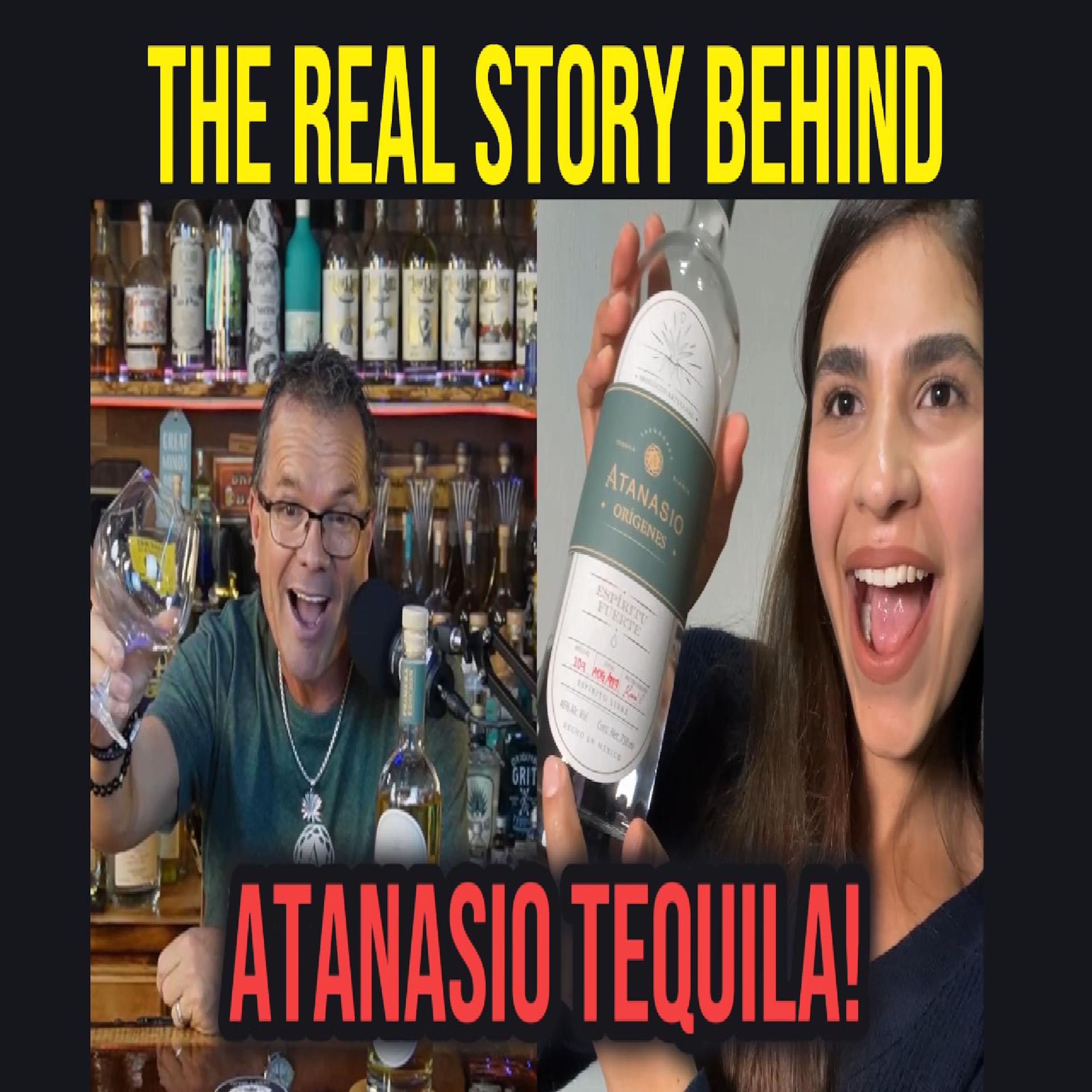
[00:00:00] Speaker A: All right, guys, when it comes to interviews, this is one of my favorite ones. I've been waiting to do it for quite a while. Tonight we're going to sit down with Shah Seed Elizabeth Garranza, one of the people that make Athanasio tequila come to life. She's going to talk about the whole story of how she got into tequila, how her dad, master distiller Rene Carranza, became the master distiller of Athanasio. In fact, Emily Alanderos, the distillery there in San Pedro Los Landeros, just outside of the town of Tequila. Talk about how special their tequila is, what they're doing that makes this so great, and what I believe is the best experience in tequila. Check this one out. You don't want to miss it. It's tasting tequila with bread.
[00:00:52] Speaker A: Okay. Out of all the interviews that I've done, this is one that I am truly one of the most excited ones that I've ever got the opportunity to do. I'm here with one of my favorite families from Tequila. I'm excited to have you here. Shah Seed, how are you doing tonight?
[00:01:07] Speaker B: Oh, that means a lot, amigo. Thank you so much. I'm very happy. I'm very excited to share this little space with you and talk about tequilas and bring some tequilas together. Thank you so much for the invitation.
[00:01:18] Speaker A: Well, I'm going to say this. I want to go ahead and pour some. A fresh pop from this repo. I am so excited. I did get to drink this with your papa at the distillery, but I haven't had it since we've been home.
So I want to hear about you and your story of tequila drinking one of your best tequilas. So tell everybody who you are and your little tequila story.
[00:01:46] Speaker B: Of course. I think I also need a pour of tequila so we can start this conversation flowing. I have my favorite expression, actually, which is Orijenas as well. 46 ABV. But this is blanco.
Let me get my little cup.
[00:02:00] Speaker A: Well, all of the conversation gets flowing after the tequila gets flowing. So glad you brought them to drink as well.
[00:02:07] Speaker B: Like, you. You can't talk about tequila without drinking tequila. Like, it just doesn't make sense. So cheers. First of all, thank you so much.
[00:02:20] Speaker B: So my journey in tequila.
[00:02:25] Speaker B: A lot of people will think that I've been in this industry for many years, same as my. My family. But actually, like, involved with the production of tequila is something that is very recent in our lives.
Like, my family got involved with the distillery where at the moment, we produce Atanasio in 2011.
Then the distillery was certified for tequila production until 2017.
But even in that year, I wasn't like fully involved, participating in the experiences or representing the brand all over the world.
[00:03:00] Speaker B: Knowing that we had a tequila brand and that's it.
So I started to get more in contact with the industry when my father made me the invitation of working with him. First of all, translating the tours that we created at the distillery, that was by 2019, 2020, kind of a thing, and it was just like a. Something temporary. I also did like some previous jobs for Atanasio, like making videos, photos, because I've always been a huge fan of content creation and marketing. So I did that before. But like, what I started, like, really working was through translation.
Like, when you're doing this kind of experiences, you're not just translating, right? Like, you are also understanding new aspects of this industry. I'm from Tequila. I was born here and grew up here. And I've been always been in contact with the industry, but I've never understood their roots and the importance, the importance that tequila has for my culture.
So through these experiences, listening to my dad talking about, you know, the technical sides of the production, but also like the meaning that it has for him and for people and the value that of the farmers, right? And the people that is taking care of the gathers, like, understanding all these little aspects, I was like, so amazed and I couldn't believe that. I never realized that from the beginning. But I guess it's a journey that everyone has to pass through, right? So I think, like, doing that process of translating is where I learned the most. And I fell in love with the industry completely. So I will say that like, truly, truly starting in the tequila business around 2019, and from there I started to now guide the experiences by myself.
And now representing the brand in various events, tastings, and I say that we do a little bit of everything, right, because we're a small company. So it's not like you just focusing one thing. Like you have to. You have to divide the activities. But we love what we do. And I truly feel blessed that life brought me to this path because I think I found my passion through tequila. And that's something that I will never expect. I was like, no, I don't want to do anything that has to do with tequila. I don't want to be here.
And now it's like, it's my passion and it's my life and I love drinking tequila.
[00:05:21] Speaker A: That shows. I've been to your distillery many times with you and the way that you are able to share what you do there and how you do the process. You share it with so much passion that it instantly pulls people in to want to learn and want to listen. Because you're able to really share how this is not just something that you do, but part of your life and part of your passion. I think that's really impressive.
[00:05:45] Speaker B: Oh, thank you so much. I truly. I truly appreciate it and I. That means a lot because that's the whole purpose of the experiences, right? We want you to connect with Tequila, not just coming here and get a shot and get drunk and that's it. Like, we want to change the perspective, the view of this industry. There's so much things to see that even locals we don't know about. So knowing that you have that feeling after you left the distillery means that we are doing a good job with those experiences. So thank you.
[00:06:16] Speaker A: You guys do a fantastic job. Everywhere I go in tequila, when I'm visiting the town, everybody knows Rene Carranza, your father. Like, I think even the tourists know Rene Carranza. When you're walking, that's my cousin, that's my sister, that's my uncle, my brother. Like, everybody is part of this family, and I love that. So growing up, was there always like, tequila around and people talking tequila and it always be there or was really. Did you not notice it as a kid and as you got older, it kind of became a thing?
[00:06:49] Speaker B: I mean, like, definitely there's a contact of tequila in my life because I was born in the city of Tequila, right?
[00:06:57] Speaker A: Sure.
[00:06:57] Speaker B: There's distilleries all over the place, and you see all these trucks with the pinas of agave going to. To these different places to be distilled. Like, there's definitely a contact, but I think there wasn't an appreciation at least, like, from my personal life. I think, like, I never.
That that was something that never called my attention. I think I took it for granted because I was just so familiar with it. And until I started working in it is when I started to understand it. But in terms of my family, like, my family, my grandparents, my father, my mother, like, they.
They never started, like in this industry. Like, they weren't. They didn't born like being mustard Tequila or drinking tequila. Actually, funny thing, my father didn't used to drink anything, like, not even tequila. Like, he wasn't interested at all. He was actually more coming from the farming side because my grandparents were farmers their whole lives. And they farm not only agave, but different types of crops like corn, beans.
[00:08:02] Speaker B: Different types of fruits. Like, it Wasn't they weren't dedicated fully to tequila. But when agave started to become a thing because of this industry, they started to get involved with this business too. Same as my father. He followed the steps of my grandparents by doing his own plantations of agadas. So that was like the first contact. But still same mentality of like, I don't care about the spirit, it's just like I focus on my own thing.
But he's all, he's also my father. He's also been like very interested in businesses, in creating things by himself. Like he's a, he's an innate entrepreneur, right? Like since he was in high school, like he started his own business that was more linked to technology.
And then this company turns into a computer service and then he was teaching how to use computers and now they're doing printing, design, transportation. He's been always into business.
And that's why when he got the opportunity to invest in the distillery where we produced at the mask in 2011, he wanted to participate. Not necessarily because he was someone like passionate about tequila, but it was his dream to become a master tequila. It was more like, okay, like this business idea caused my attention. Like it thrills me. I want to be part of it. I want to understand that.
So in 2011 he started to get like deeper into detail in terms of production of tequila, which at the time wasn't tequila, what we were producing at the distillery. It was, I got a spirit because the distillery wasn't certified, right? So he started getting involved, understanding process. And I think like from there, same as me, he started to realize so many things about this industry, right? Like how complex it is and how rich is the character of tequila, right? Like when you make it, respecting time, respecting the ambience, environment, the surrounding process, and of course the time in the land.
He started realizing a lot of things. Then in 2017, the distillery got certified for tequila production. And in that year is where my father fully immersed himself into, you know, the brand, in taking in, practically managing the distillery.
And it was an eye opening experience for him, right? Like, and now he's.
I swear that he's one of the most passionate persons I know in the, in the tequila industry. But it's so recent. He also found his passion and thanks to his passion, now he trespassed that to me. I think, like, it's very contagious, right? Like the way he shares his story, his vision and he understand the feels because that's how he grew up. But then distillation and production of tequila came After. But there's also so much beauty in it and that why he feels that love for this industry. And I think like, he shares that very well with everyone that surrounds him. And now everyone knows him as tequila, right? As you say, like, everyone knows him in tequila. Like, that's actually like also reason, right? Like, oh, like he's making tequila or how delicious it is Tequila. And that's a beautiful feeling because the work that he's. That it's being put into this project is now paying back. Now people see it. Now there's more people connecting with what we are creating.
[00:11:25] Speaker A: His passion is contagious as well. My wife and I were talking one day when we were, we were riding in a car with him and Cristiana and we were talking about him at one point being a teacher. And Tony's like, well, if, if he was a high school teacher, that was probably distracting to a lot of the girls in school. Your dad's a pretty good looking smile.
[00:11:49] Speaker B: Yeah, he's cute, but very entertaining. That captures. Actually, it's a good thing because you capture attention and you make sure that everyone learns. But funny thing, like, he was giving like classes. He didn't, he wasn't a high school teacher. He. He was teaching computers, right, how to, how to use them. Especially in that time, right, like when computers were like a very new thing for everyone.
But the funny thing is that he didn't know how to use a computer. He was like, I'll figure it out. And then next week I teach the people how to use it. But he was always like one week ahead trying to find something new to teach. And that's how he learned using computers. And same as tequila, right? Like, he's like, by making questions and getting immersed into the process and you know, go in and see the experience of others. I think that's why he's a man that it is today, because he actually.
[00:12:42] Speaker B: He actually immersed himself into the industry. Wasn't just like, oh, I'm. I'm a master tequila and that's it. I'm taking the name. No, he. He earned it.
[00:12:51] Speaker A: Yeah, yeah, completely. And you can taste it in the tequila. Like, you guys turn out some of the best tequila that I enjoy. I share it with everybody that I can. They all say the same thing. They. They grab a glass, they taste it and they're like, wow, I haven't tasted tequila like this or I didn't know tequila could taste like that. I. I get that all the time. Whether it is Athanasio or, or of course, Valar. Which we're all very proud of as well. It's. It's great to see people's faces when they taste a tequila like this. And I love to tell the story of the tequila and the distillery. It's so fun.
And it's. It's one of those stories that, to me, is that rags to riches type story that I'm going to do everything that I can to get started. I'm doing it all my own. We're small production. We're truly traditional and artisanal, and I think people get so excited about that. So I really commend you guys for the work that you do behind that.
[00:13:50] Speaker B: Yeah, no, and it's beautiful to see those reactions in people. And something that is important to understand is this tequila is not just the work on one person. It's not just my dad, it's not just me. It's like the whole team, right? Like, production team, and the people that is doing the labels and the people that is working hard in the fields. Like, this is a teamwork that makes this spirit possible. Like my father, he's like, they're supervising, making sure that everything goes well, but without the people that is doing the production, the distillation, the fermentation, this and be possible. So it's beautiful, like how every. Everyone puts their little efforts together so we can create something so special that gives that reaction to people. So that's the whole. That's the whole goal, right? To make people happy and give something that we feel proud of.
[00:14:38] Speaker A: That's awesome. Okay, let's talk about this Atanasio experience. I. I've been to Mexico a lot. People ask me, what distillery should I visit? And I always tell them, you have to go to Athanasio. Your guys's experience is, bar none, one of the best of all of the distilleries in the region.
So tell people when they sign up for a tour, what all are they gonna see and what is that distillery tour like for them when they come?
[00:15:10] Speaker B: It makes me so happy to know that you have that perception of our experiences. Like, we also put a lot of love and effort in the them. So what are the experiences of Atanasio? Like, if you go to our website, you'll see, like, the different options, but, like the most popular experience, which is the one that you lift, we call it the Hornalero Experience, the farmer experience, practically. Right. And it consists in putting, you know, we're. We're going to wear the boots of the farmers. Like, we're going to get connected to the land and connected to the activities that they have to do in order to take care of the agaves. So at the end, they have all this maturity and quality we require to make a good tequila.
Not a lot of people understand that agaves take 10 years to reach its fullest maturity from when they emerge from the ground. So there's a lot of activities that have to happen in between. And the people that is in charge of doing these activities are the hornalleros by the farmers. There's no automatization, there's no robots supplying like their activities. There's no big machineries, just like the hands of the laborers. And that's surprising, surprisingly. Like the thing that no one knows and understand about this industry. We know a lot about process. We know about this cookie meta, this, like, whatever. But we don't talk about the people that is working hard every day in the fields. So we can get these beautiful agaras of the time, right? So you first arrive to the distillery. We start with this introduction about what are the corneliros? And then I'm like, here in my.
This place, you know, drinking tequila. If you don't work first, like, you have to prove me that you. You deserve it.
So after warning everyone, we all jump in the back of the truck, because that's how the cornaleros go to work to the fields. Sometimes the terrains, the areas are very complicated to get to.
So ideally, you all go once in group together in one truck and in the back, because it's where everyone, everyone fits, right? So you jump. We jump in the back of a truck, we do a little ride, a couple of minutes. We arrive to this beautiful property that you already saw. It's very panoramic. I got a feel that you put, it will be very hard to find in tequila, you know, I said, like, if you want to get immersed into the G fields, like, this is the best experience for you. So we go to the lands and everyone is like, they want to chill under the shade of the tree. They just want to, they. They think it's going to be like a very comfortable experience. And I'm like, I take my little tools, I bring them all to me with me. And I said, like, I wasn't, I wasn't kidding. Like, we. We actually work it. So there's where we start talking about different activities that the hornaderos do. Like, the one I focalize is the harvest of iguelos, which is how we reproduce the agaves. Like, if you want to know more about it, come to us.
So we do the harvest of ijuelos, we plant them. And everyone gets to participate in this activity because it's not the same listening about it or just seeing the activity than actually doing it. I think it changes your mindset completely. So everyone participates in this activity. And after we plant the agaves, we start discussing more about this plant and questions that everyone might have. Because for us, it's very important that this space allows everyone to understand better the tequila culture. That's what we want to promote. That's why our groups are very private.
We want to make sure that when you leave, you change your perspective about tequila completely or you learn something new. So we make a space for everyone to make their questions. So after talking about agaves, we join under the shade of a little tree.
[00:18:57] Speaker B: Where we set up a little fire, a little table with some food, and we all prepare our breakfast, which is also known as a farmer breakfast or the hormone breakfast. Because when the corneliros go to work, they start very early in the morning, 5, 6am they work hard, and there's a moment where you are hungry and tired and you need to rest. So you join under the shade of a tree and you set up your food. Then you heat off your. Your foot, right, to recover. So that's practically the representation that we want to give.
I gotta say that this. This experience parenthesis was created by my father because he grew up like that. Remember that he was always involved with the farming side of the industry because of my grandparents. So when he was a child, he remembers going with my grandfather, working in the fields and just having a little time, like, under the shade so that they could recover. And the food, the food was so delicious because you were actually starving, right? Like, you were tired, you needed the food. Like, nowadays we just eat for pleasure, right? Like, because we want to eat, not because we need it, but so he wanted to do this experience with the. With that same purpose. Like, you work to earn the food and you eat it because you need it, right? You need it to keep going.
So after having these little conversations, right? Like, it's like a little space where everyone relaxes and we can get, like, you know, to the detail in terms of questions about the agaves, the.
And after finishing, we go back to the distillery, and there in the distilleries, where we now start learning about the process, which is also very important to understand, especially when you are in this artisanal side of making tequila, where your fermentation has exposition to the ambience and to microorganisms where your cooking is different and distillation is different. Like, we want to highlight the beauty of the process as well. And of course, like, so you can enjoy better the experience. The little tour, we give you a little cocktail, we call it cantarito, very traditional from Jalisco. So you are all drinking and connecting with production. We also make sure to respond all the questions you might have. And after the distillery tourism is when we finalize with the tequila tasting and we give you the try, of course, like the family of tequila camasio. But the way we do our tastings are also very.
[00:21:23] Speaker B: Interesting. I say because in autonomous philosophies, that we want to highlight the base, you know, we want to highlight the essence, which is the tequila blanco, right? Because in the blanco is where you capture the time that you let the goddess growing in the ground and the beauty and artisanal side of your process. I think, like, that's the letter of presentation of any master tequila.
So the way we do our tasting is by starting by the age expressions, anejo or reposado, and then we finish with the blancos. So we can feel that contrast, right, of going to the essence and understanding that the essence is what makes good the reposados and the anejos, right? But these expressions have, like, something that complements them, something that is additional, which is the barrel. But the essence is the one that has to be good. So I guide you through all these little steps of how to taste tequila, how to undress it, right? And at the end, like, we share our experiences, and you find what you like, you find what you love. And since the tasting goes at the end, after working hard, after having all these conversations, after understanding process, Tequila tastes completely different, you know, like, in a different perspective. You're like, wow, I didn't know that to make this little set of tequila, there was at least 10 years of work.
And there was like, all these fornaleras working hard, and then they were doing this complex production, and here we are, right? Like, I feel that tequila tastes different after living our experience. So if you are around tequila, please listen to Brad and come to visit us.
I would love to share more of a tequila culture with everyone.
[00:23:10] Speaker A: If that description right there doesn't want to make you right now, book a flight to Guadalajara, stay downtown or at Casasayas, or even if you have to pop a tent outside of San Pedro los Landeros to get in early, that that description is the reason people need to come to Atana and do the experience that.
[00:23:35] Speaker B: I'm very glad we filmed this. I'm very glad. Like, I was like, okay, like, I think that's a perfect commercial description.
[00:23:42] Speaker A: Yeah. You're going to use that on your website. It's. That was that good. And, and I can attest to that experience is so amazing to jump in that truck and to head up to the field and to. To watch you talk about that process of the agave growing with the volcano on one side in the background and the sun coming through those agaves and the shade of the tree, having you talk about the process of how that plant grows and then what everybody has to do to do the work.
I learned a lot about how you, you know, can tell if the agave should be replanted, if it's going to be healthy or not. How you guys take that machete and chop the garveys off so everybody doesn't get cut to pieces is amazing. It is such an amazing experience. And then there's something epic about see your dad stand under that tree with the sun behind him and everything cooking like it's. It's so piss.
[00:24:38] Speaker B: Picture the fire part.
[00:24:40] Speaker A: All of us going to put a video during our talking of that whole epic thing of your dad standing there. But it, it is an amazing experience. And then to come back to the distillery and see something that is artisanal, like you talked about, that's smaller than what most people are expecting to see.
But that, that does drive me to a question, because now there's this new little piece of equipment that I got to see. Have you guys done a batch in the new stone brick oven yet?
[00:25:08] Speaker B: Yes, at the moment we produce in the first ever batch with that brick oven. And we are very, very excited to see how it's going to come out. Like, for those who doesn't know, Atanasio regularly produces regularly cooks de agave with a autoclave. The autoclave is made of stainless steel and you cook the agaves with steams and pressure.
So with the brick oven, like now, it's taking us longer time to finalize the cooking process because now we are using the steams by the heat. So it's now taking us an average of three days to get the cabes ready for the next steps. So this first batch of cooking agaves in the brick ovens, like, taught us a lot because actually the agaves came a little bit caramelized.
So we are excited to see what characteristics that is going to provide to our tequila. And my dad is also making some little things on the sides because we are thinking of maybe making something special with this batch. That we first create with a brick oven. So he's making like some fermentation that is different as well to what we typically do. Like he's now doing with fibers of the Gavin. Playing with it. With it. My father is a mad scientist. He likes to go a little bit out of the line. So I'm so looking forward to see how he's going to come out. But yeah, we are very excited because in Atanasio we also want to go back to the, to the old school. You know, we want to little by little bring all of these old processes we used to see in the tequila industry. You know, like brick ovens or maybe like an underground oven in certain places. Point open air fermentation with fibers with a pwn distillation with copper. That's something that we cannot do from one day to another. There's the intention, but people have to understand that there's investment behind. Right. So we want to do it like little by little.
But that doesn't mean that because you don't have that equipment, you cannot make like a good product. My dad is, he always says like, it's not about the tools, it's how you play with the tools. So it's understanding even the modern equipment, right? Like how, how can you create something interesting? And I think that is very good reflected in, in the current line of Atanasa. Like what we all taste is coming from a production with stainless steel and people is like what I thought you were using Atahona. I thought you were using like Pipornes. No, it's stainless steel. But we know how to play with the tools. And now we are after understanding that it's like how can we play more? We want to bring more things. We want to understand better, we want to create more variations. So we'll see, we'll see how it's going to come out. This first batch of tequila tanasi in the breakover.
[00:27:52] Speaker A: So is that batch right now in.
[00:27:54] Speaker B: In fermentation, in fermentation stage? That is correct. And we are cooking another round of agaves at the moment. So let's.
[00:28:03] Speaker A: So looking forward to taste it if it's in fermentation. Now if I booked a ticket to fly down the day after tomorrow, I'm probably getting close to being able to taste that. Coming out of the still.
[00:28:16] Speaker B: Yeah, coming out of the still, yeah. Like it's actually almost finalizing the fermentation, I suppose, like probably in the next couple of days there's gonna be some from that batch. So you better run Brad. You better Run.
[00:28:27] Speaker A: I don't know if I can talk my wife into letting me fly down in two more days.
[00:28:33] Speaker A: Over the last three months, I've been in Mexico as much as I've been in America.
[00:28:36] Speaker B: True. I've seen you more often in Mexico than here.
[00:28:39] Speaker A: No, I love it there. I just want to move there. But that, I mean I'm so excited about tasting that product. Not, not that your product needed any improvement in any way, shape or form.
It's about being able to have another expression, another piece of this fantastic tequila.
[00:28:59] Speaker B: Another toy.
[00:29:00] Speaker A: Exactly.
[00:29:01] Speaker B: Another toy to play. Yeah, definitely. Like we, we're sucks excited and like being a mad scientist like my dad. Like I'm sure that that is going to bring up a lot of new, new stuff in Atanasia.
[00:29:13] Speaker A: So is this going to turn into another, a skew of product where you're going to have Atanasio Blanco brick oven, Athanasio Regular Atanasio high proof brick oven. Like are, are we going to create some special expressions that people are going to be able to buy to know that it's specifically that new one.
[00:29:33] Speaker B: Like the moment we still trying to figure it out what, what are going to be like the purpose of the brick oven? Like of course it's going to be part of our family of Atanasio. Maybe not creating a new label because I think like there's various expressions already, but like giving some extra to maybe the original line. We still don't know at the moment. Like I don't want to lie to you or like invent things that we don't are not precise at the moment. But definitely it's going to be part of our regular productions which is still figuring out like where we're going to focus that production to or maybe for special editions, but it's going to be part of our regular production. You know, like the idea is to keep the brick oven and the autoclave working all the time. So we have a flow, we have a flow of the distilleries. So we'll see. That's why we want to test it. Right? We want to see what kind of test this cooking process has. Right. What has to offer if you want to highlight that and make it like 100% recovery or if we want to combine it.
[00:30:32] Speaker A: So sure.
[00:30:33] Speaker B: We are now in the experimental stage too, like understanding and then we'll see, we'll see. And people will know very soon what we're going to do with this, with this new cooking method.
[00:30:45] Speaker A: Fantastic. Okay, let's dive into this one because this one, uh, this One is, the one that I have is Mexico. Only this one was not put into the States, if I'm. If that's correct. Right.
[00:30:57] Speaker B: And at the moment it is available in the U.S. right.
[00:31:01] Speaker A: So when I got this, it was only in Mexico and now it is available in the States. Correct. So. So mine's all in Spanish, so I can't read any of this one yet. I have to Google lens everything about it. But because that high proof that you held up. Okay, so this is one of my favorite tequilas to drink. This high proof blanco has all of the great atonatio flavor in the purest form.
And of course, over my shoulder is my favorite blanco to drink. This is fantastic. I love it. I wish it was more available in my area because I would have so many more of them at my house.
[00:31:42] Speaker B: I know, I know. We are working on it.
[00:31:45] Speaker A: Let's talk about the differences from your original blanco to this and then talk about the repo product and really what this is all about so people can know to look for these and, and find them and how special they are there.
[00:32:00] Speaker B: Okay? Okay. So of course I can tell you the differences. So the bottle that you hold like the one that is behind you, the.
[00:32:09] Speaker B: This bottle of tequila Blanco, well that expression is at 40 ABV. That's the result of the production that we have in our distillery. We do cooking with autoclave, open air fermentation in stainless steel tanks, we do double distillation in stainless steel steels. And then after we get the tequila or still strength tequila 55, we take down the tequila, the fruit to 40. That's like in generalization, what the process represents in that bottle of tequila pernaso, then origenes, it's a higher proof expression of our process. Like it goes in the same in the same way. Cooking without a clay, open air fermentation, double insulation with the same equipment. But the alcohol content will be higher, which means that it has less illusion, so more concentration of the alcohol that we obtain from the gutter. And like in essence in the process, like they are the same. But since each production of Atanas is made separate, each batch preserves its own characteristics, right? So if you compare that origenes that you have in front of you against the Blanco at 48, like it feels like they are two completely different worlds. First of all for the alcohol content and second of all because they are different batches, right? So it's not the same when we are producing a batch when it's hot, like hot weather to when it's cold weather. Because then there's different exposition to the. To the ambience, different types of fermentation, different type of microorganisms that influence in the taste of your tequila, right? So that gives a uniqueness to each expression of Atar Master, even between the same line of originess. You might taste some green, fresh, peppery characteristics in this one. But the previous batches, we once made one that came out funky, right? That tasted like cheese, yogurt. And that's something like more related to the process, but like to the other factors, the external factors, not equipment itself, but more related to microorganisms.
And the idea behind oborijenes, the reason why we called it as origenes, was to honor the origins of tequila. Because tequilas from the old school were always higher fruit. Actually there used to be a norm that described that tequila is an agave spirit that is from 45 ABV and above.
So there was like no smooth tequilas by that time. And my father, with the idea of going back to the old traditions, you know, to bring people to how tequila used to be, he wanted to make this line of hyper, he wanted to. To be disrupted, right? That you don't have to make something smooth to bring people to the tequila world. Like you can give them something like this intense, but it's so rich in characteristics that compensates the spiciness. So that's the idea behind of this other presentation. But in terms of process, both expressions are the same. It's just different characteristics from the environment and of course different sensations in the palate for the alcohol content. And. Well, the one that is on your right hand, the original reposado, that's a new Release.
It's also a 4680B expression. It's a high proof. But this one, we age it, we make it a reposado, this tequila, we put it inside of American oak barrels. These barrels were used.
Then we char, we did a medium toast to the barrels and we let the tequila, seven months after the seven month aging was done, we took it out, we bottle it, and that's practically it. It preserves, you know, like all this sweetness and pepperiness, greenness from the plant, but very well balanced with the oakiness and this honey characteristics that they, that the barrel has to offer. So that's in generalization what each expression represents.
[00:36:08] Speaker A: The honey and the caramel and the vanilla that shows up in this repo is more intense than your normal repo.
And I think that's because the agave is so much more intense in the flavor as well that like you would think, oh well, this tamed it down, but no, the agave like punches it up. Like the flavor. Yeah, there's more there and more rounded and it's, it's delicious. But I have to tell you if I'm, if I'm going to grab one that that's why this is almost gone and this is.
[00:36:42] Speaker A: Over there.
[00:36:44] Speaker B: You have to get some more origenes. And definitely, like I agree with you. Like I normally drink tequila blanco. Like that's my go to, I always have my bottle of blanco wherever I go. But I think like these repos ao high proof highlights, like the beauty of both sides, the beauty of the character of the agave, like you don't lose it at all. Like actually I feel it's very present. Like it's not like I'm here.
And the vero, I think like gives like that sweet touch that makes this beautiful dance between all these characteristics. And like so far it's been one of my favorite reposados. Like I love the hype groups, I love this light oakiness and like I'm so looking forward for people to, to give it a try. Like we've put so much love into it and as I told you, like, it's now available in the US market and probably very soon in the stores that are closed by all your listeners. So if you have the chance to try it, like definitely do it. It's one of our favorites so far.
[00:37:45] Speaker A: It is so amazing and I actually hung on to it with it unopened on the shelf waiting for this interview. I, I brought this home and back in early August. So it has just been waiting for this interview because I wanted to share it with you when we were on here and it is, it is so good. It is so amazing.
[00:38:03] Speaker B: Thank you, thank you so much for sharing this bottle with me. It truly means a lot. Salucita.
Cheers for that.
[00:38:11] Speaker A: Cheers. Cheers.
[00:38:16] Speaker A: Okay, tell everybody where can they find you? What states are you readily available in that someone can run out and pick you up in a store today?
[00:38:25] Speaker B: Oh my God. It's because we have presence at the moment, if I'm not mistaken, in 20.
In 20, you said countries or states?
[00:38:35] Speaker A: States in the U.S. okay, in 20.
[00:38:38] Speaker B: States in the U.S.
but the ones like of course that the main markets will be California, Florida, we're in Illinois, New York, New Jersey, Texas and then in other states that maybe you won't see the brand like everywhere but you can find it. Like my suggestion is always like go and searching in your Google searcher Like Tequila Panacio in California, in Texas. And then it's going to pop up information about the places where you can find it.
Like some examples of some big stores where you can get Atanasio is Total Wine in California, for example, we are now present in Costco in some, in some stores we are in specs.
And there's also some great, great online Source such as siptequila.com they do shipping all over United States. So if you are in, in a place where you can find tequila tanas in the stores, you can order directly from them.
And there's many, many examples. That's why I always suggest, like, go and give it a search. And I'm sure that you will find like something that connects you with the brand.
And like in bars, restaurants, we also are pushing our presence, but it's hard to tell like from all these different areas where you can find it precisely. Like I always say, like, just pay attention or ask because when you ask also there are tenders. And you know, the people that is taking care of the bars, like, will know that that is there, right? Like is making so present. So we are putting so much love to make Atanasio arrive to more and more places. But we, we still like working on that. We're still pushing it. But if you have the opportunity to search for it, like I'm sure you're going to find it.
[00:40:24] Speaker A: That's very important for everybody to know. If you, if this, if Athanasio is not in your area, when you go into your liquor store, ask for it. Show them how to find Atanasio on their website, atasio.com ask for it. That way that gets that liquor store to know that you're interested in it. Then they're going to start asking their distributors for Atanasio. The distributor is going to look for an importer. The importer is going to find a way to bring Atanascio to your state.
[00:40:51] Speaker B: Wherever you go.
[00:40:53] Speaker A: That's very important. A lot of people don't realize that if, if you walk into a liquor store and what you're looking for is not on a shelf, go ask for it. Because that's the process of getting that tequila here. They're in Illinois, so I can only drive to Chicago to go pick this up. But I do order a lot from siptaquila.com which is a great place to get great tequila. So if you're in a state that you don't have Atanasio, go there, go to their website. You can get a lot of information. At Athanasio's website. And you also can sign up for the Athanasio experience on the website as well. Correct?
[00:41:28] Speaker B: Exactly. Like you will see all the information of the various experiences we offer. Like you book directly and I'll be waiting for you to work in the fields with me.
[00:41:37] Speaker A: There you go. So you also can find them all over social media. Both Shah Seed does a great job. Her dad, Renee Carranza on Instagram, he posts amazing stuff when you're in Tequila. There's an amazing bar to go to when you're in town too. And all I can do is encourage people to find Atanasio, follow you guys on social media and go do this experience. And seriously, if you have a question about the experience or how to do it, please send me a dm, send me an email, call me, I'll help you get this set up so you can go do one of the best experiences in all Tequila and Shiseed. I want to say thank you so much. I know you're incredibly busy. You got all of these fantastic, wonderful things happening in your life that we're going to talk about later.
And you're so amazing. I just really appreciate you doing this for me and taking your time and love you, girl. You guys are amazing. I can't wait to come see you again. And salute.
[00:42:41] Speaker B: Thank you so much for the opportunity, Brad. It's been like such a lovely time to share all of this together. And thank you. Thank you once again for the space. Like, I'm so looking forward to see you back in Tequila and keep going with achievement.
[00:42:57] Speaker A: Who knows, we may be there soon, so thanks a lot.
[00:43:00] Speaker B: You always surprise me.
[00:43:02] Speaker A: We'll surprise you. Exactly. All right. Have a great night, my friend. Cheers.
[00:43:06] Speaker B: Thank you so much. Cheers.