Episode Transcript
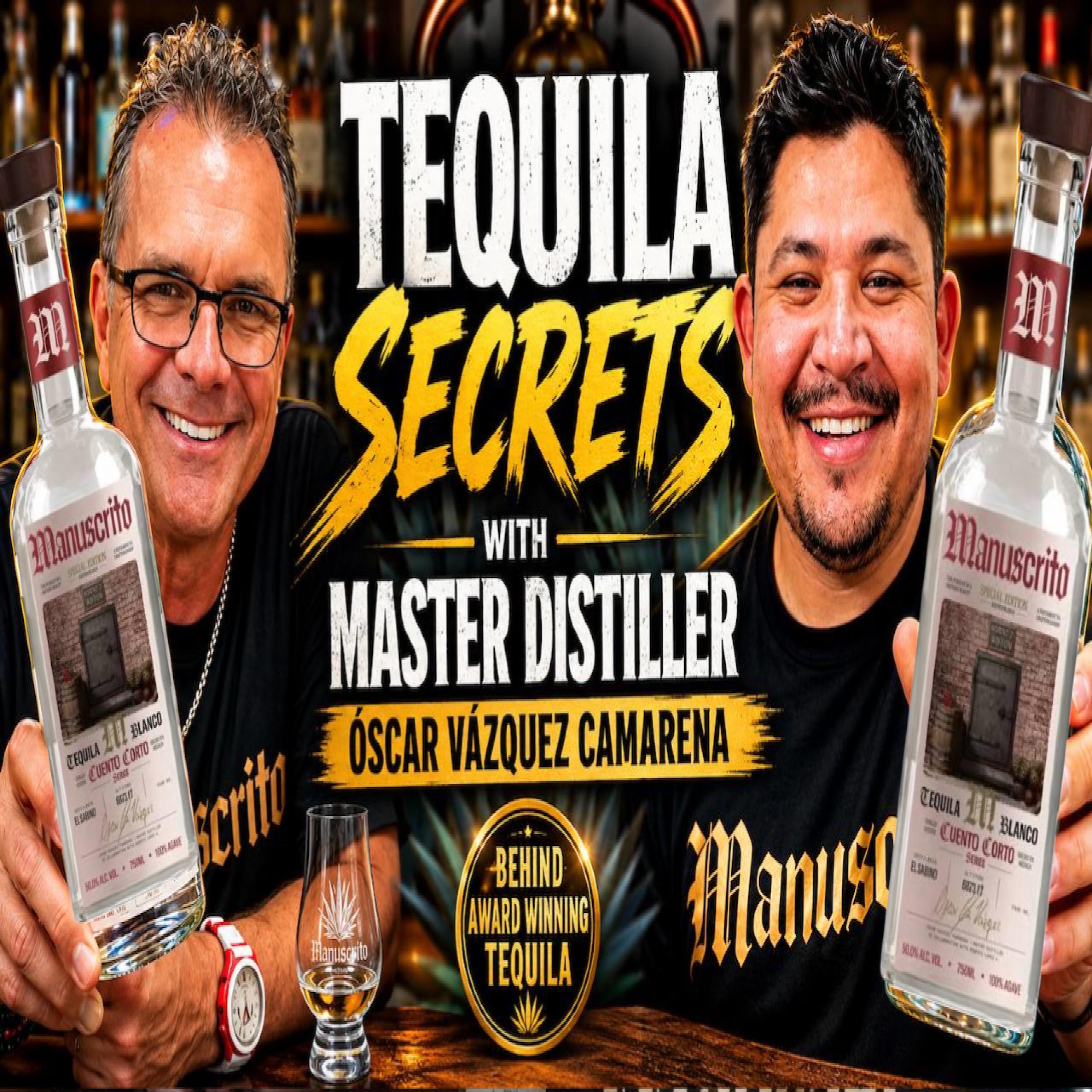
[00:00:00] Speaker A: Time to take a class. Today you're going to learn some new things about the manufacturing process of tequila from one of the best master distillers out there today. Today we're going to interview Oscar Vasquez. Camarena. Stick around. This is a great interview.
All right. I've been waiting for this one for a while. We, we managed to get the wardrobe put together. Oscar Vazquez. How are doing today, my friend?
[00:00:33] Speaker B: Hey, amigo. How's all good, thank you. Thanks to God. So far pretty good. Busy working. The family is good. The my wife, my daughters. So I am not complaining, amigo. Thanks to God, I am getting a good time right now.
[00:00:47] Speaker A: Well, you got a lot of good things going on right now. There's so many brands that you have your fingerprint on that are winning Agavos awards and awards all over the place. So. So let's talk about some of those brands. And while you bring up some of the names, I think I'll pour something that's really delicious here. So tell me about the brands that are winning awards.
[00:01:08] Speaker B: Okay. Yeah, well, first than anything, as you say right now, I am very, very blessed and I feel so proud about all the brands, the distilleries, the people behind me, behind every label, working very hard at the distilleries. Because in several awards, in several competitions, we are getting very, very good recognition between the consumers, right? So as you say, for example, in Agabus Awards, to the Agabos awards, we sent Mosto Ensueno, Manuscrito, Enel, Alma and Zumbador. And thank to God, all of them, all the categories has double world.
To be honest, it was surprising for me. For example, in the case of Manuscrito, we sent chapter one, chapter two, chapter three, chapter four, chapter one, two and four won double gold. And chapter three won only gold. But it's so for me, it's a very, very good recognition, right?
Mosto get double golds and El Alma get double golds. Zumbador get double gold. So very, very, very humble and very, very proud about that.
Also, let me tell you this. For some reason we don't send samples from Corridor to the Gabos awards, but we send some samples to the San Francisco World spread competition with corrido. And with this corrido, we won gold in Reposado. So it's a very good beginning, I can say, in another categories, right? In another competitions, like, like San Francisco World Spirit competition, which is not so easy to get a very good scores of recognition, right? Also Mosto Mosto, these guys they send Mosto Reposado and Mosto Reposado gets double gold. And maybe we are getting another award in San Francisco. World spirit competition with Mosto maybe as a basing class or something like that. So very, very, very, I feel very, very proud and very humble to, to get these, these recognitions from the consumers.
[00:03:21] Speaker A: You are working so hard and I haven't tasted a product that you've made that hasn't blown me away.
So I appreciate your work ethic and you are so young and be able to do so many great things at this early. It's very, it's very impressive, my friend, Very impressive.
[00:03:38] Speaker B: Thank you so much. Let me, let me join you with one.
What do you pour in there, Mapello?
This one?
[00:03:49] Speaker A: Yeah, I drank it with you at El Sabino.
[00:03:53] Speaker B: Yes, it's one of the brands that we are starting to get more focus in the Mexican market, not only in the United States. So here Mexico is always a great opportunity also and into the consumers, right? So for some reason, good or bad, I don't know, to be honest, a lot of Mexicans, we are following the trendies first in the United States and then drinking tequila here in Mexico right now. Looks like the preferences, looks like the way that we are drinking tequila, it's a little bit more similar into the States and we are getting more quality, more good tequilas, more brands that it's only in Mexico and not in the States. So. But this on a separate conversation, amigo.
[00:04:39] Speaker A: Okay, so I, I have a question because we, we talk about all of you master distillers. There's like I, I kind of classify it today as there's celebrity master distillers, right? There's, there's Felipe of course, there's Carlos, there's Chava, there's Renee, there's. I'm forgetting one, his name's Cruz something. There's that guy Sergio Cruz and of course Oscar Vasquez.
So in this group of master distillers, what is the day to day job of an actual master distiller?
What, what do you do on an everyday basis?
[00:05:17] Speaker B: That's a very, very good point, amigo. So first I always tell you, right, thanks so much for the consideration. As an ambassador stealer of my, myself to be honest, I try just to support my family and support my region and my, my things.
So I cannot speak for another guys. I have a lot of respect for sure for Carlos, for Chava, for some, another owners. Because so this is my conversation and this is my point. It is kind of normal. It is kind of every day that people like Carlos, for example, Carlos, he's the owner of Tequila Ocho, he's the master distiller. And also he's the, and also he's the owner of the whole distillery, right? So I'm pretty sure that people like Carlos, he's very, very busy because he is not only focused in the production of tequila, he's also busy trying to support the whole panorama, right? So I have a very good example and I can speak in behalf of this person, Roberto Lopez. Roberto, he's a master distiller and he's also running his own distillery right now. And I can see how busy is Roberto every single day because he's not only focusing the distillery and the production, he's also trying to support the whole business. Right now in my, in my point, in my day, maybe for me it's a little bit more easy. Why? Because for sure I am very, very focused trying to produce a lot of quality of tequila. But at the end of the day, I am not taking care of about the whole distillery, right? For the good or for the bad. That's something that is working very well for me in my, in my professional career trying to make some successful with this, with this industry.
Because for example, I can split my day in two different distilleries, checking the whole production, right? I can for example, wake up kind of early in the morning and go to the agave fields to see the harvesters, to see the jimadores, just to check that they are harvesting the agave and the way that we are looking for the harvest, right? Normal harvest, not too much leaves or so mature agave. And then I have the opportunity to go to the distillery to receive the agave or to keep an eye into the process, right?
How much we are cooking the agave or the milling process, fermentation, distillation process.
So right now, every person, all the person that you mention, we are getting a lot of success for say something. But in a different point, I'm not sure if it makes sense for you because every single one, he's very, very focused in his own things, in his own day to day make sense. Are you following me?
[00:08:11] Speaker A: Yes, sir. Yes, sir. Start with, you're the one that helps create the profile. You pick the ingredients, if you will, and you pick how long you're going to cook and what your process is. And then once that's established, then your job is to make sure that those steps and that recipe is being followed on a day to day basis in each brand that you're working with?
[00:08:35] Speaker B: Yes, Actually, that's mostly of my day. Right. So in the beginning, when we are working in a completely new Tequila brand, there is a lot of. So every day there is a lot of work behind.
In the beginning, we are very, very focused, talking with the consumer or talking with. With the owners of the brand. Okay, what are you looking for in your own tequila? Right? What. What is special in your tequila? Okay, I am looking for these flavors. I am looking for this profile. I am looking for this specific tequila way to produce. So in the beginning, we are creating or we are making the recipe, as you say. Okay. This amount of hours in the cooking process, fermentation, distillation. And once the tequila is already produced or is already done, then there is a lot of work again. Because now we need to check that everything, it is measurable and it is very, very close to the original in order to get the consistency in the tequila. Right?
Right. Now, all the people knows that the small brands or small distilleries, we can get a little bit of differences batch by batch, but at the end of the day, there is no doubt that we are talking about the same DNA, the same brand.
So into my point, we can be very, very focused, producing high quality into the tequilas, but also we need to be very consistent with the flavors, with the aroma, with the label that you already know. Right? So let me use, for example, this brand, right, Ensueno.
All the people know that with Ensueno, we are sending the tequila for a couple of days into the barrels. So it is with experiments that we are making some bottles. We can get the flavor in three days, and with another bottle, we can get the aroma or the colors in, I don't know, three weeks or something like that. So when you are tasting batch by batch, it is a little bit different, every single one. But at the end of the day, there is no doubt that this is the same tequila. Why? Because we are following more or less the same recipe, the same way that we are producing the tequila. That's maybe taking back the.
[00:10:53] Speaker A: Your.
[00:10:54] Speaker B: Your first question. How is a day, a day of every master distiller?
I think that every master or every person who is very, very involved into. Into the industry or. Or the brands, the day a day, it's very different.
So Chava Rosales, for example, from Casca Win, all the people know very well that Chava, he's making a very good products right now in Casca Win. And he's also the owner, right? So to my point, he's taking care about Only one nom. Several products, different labels at the same distillery, at the same kitchen. For the Goodwood, for the bad, my job or my day. A day. I am starting My Day in 1412, for example, in Hacienda Vieja, and I am finishing my day at 1643 at El Savino. So my difference, it's I am visiting different kitchens in my day to day. That. That is not normal in, in, in, in. Into the industry. Right. Sergio Cruz. 1414. Chava Rosales, Cascaguin, Carlos Camarena Tequila, Ocho Jenny Camarena Tequila Tapatio. So they are more focused in only one distillery. I am focused in five different distilleries. Right. So maybe it's also a small difference than I have compared with another guys.
[00:12:14] Speaker A: Yes. That brings me to a question, because I only know of a couple people that are doing like you do in other locations. So I know that Sergio with you at 1580 on ensueno.
[00:12:28] Speaker B: Yes.
[00:12:28] Speaker A: And maybe a couple other little projects here and there.
Jimmy Salza, you know, at 15:22 and then some of the other places where he's, you know, created brands. But you seem to be the one that is in more distilleries.
And it doesn't seem like you're just in this one place that's home. Like you have all of these different homes. How much harder is that for you to be working in these different kitchens and creating this and keeping consistency than the ones that just work at one place every day?
[00:13:04] Speaker B: Actually, it's very hard to be honest. Right.
Because in my personal.
In my personal case. So speaking by myself, again, I am trying to take all the advantage that we have in the distilleries. Let me tell you this. The another day somebody asked me what is a better distillery, what is the best distillery in order to produce tequila? According by myself, to be honest, I know easily 50 different distilleries, right. At Del Valley, here in Arandas and here in Los Altos. And let me tell you this, all the distilleries has some beauty, right? So every distilleries so unique and has different things that they can make a beautiful products if they are more focused or if they have a little bit more knowledge about their own process.
In my case, I am not a smart person, to be honest.
I have a lot of passion to make good tequilas. Right.
That's my thing. I am not smart, but I have a lot of passion to produce. And when you are looking for the things with passion for the good, for the bad, you can realize about that. Small differences that has every distillery in order to take the that differences as an a good advantage and try to represent into the tequila brand. Right. So I am working very two different examples. Maybe with examples it's easy the conversation with you, but 1412, right. Hacienda Vieja. Hacienda Vieja is just five minutes from my house here in Arandas. So right now, Hacienda Vieja is in middle of the city. Right.
So right now, when you are entering into Arandas, you can see Hacienda Vieja into the left. So to my point, the conditions of La Hacienda Vieja right now, it is very, very special. Why? Because that distillery is surrounded by an entire city. Right. So the conditions, the yeast, the water that you can get right now at hacienda Vieja at 1412, it is completely different at 1643 at El Savino. El Savino right now is in middle of agave fields, Right? So the yeast, the condition, the water is completely different.
At Hacienda Vieja, I am using, for example, some yeast commercial brands in order to get as much as possible the same characteristics and the same profiles in the Tequila. Why? Because in that case, I am using the advantage that we can get from the science, right. And trying to replicate the same yeast. For example, why I am using a commercial brand yeast at Hacienda Vieja, because we are around of we have the city around, Right. So if I am not, I am trying to skip the possibilities using a wild yeast fermentation at Hacienda Vieja because is not surrendered, is not surrendered by agave fields. Right.
Adel Olmedo or El Savino, those distilleries, they are. You have been there. So that distilleries, they are surrendered by agave fields. In my opinion, in my knowledge, it's more easy to get, for example, wine yeast came from the agave fields and natural in order to make another kind of fermentation. Right. So I'm not sure you are following me a little bit. How different could be every.
Every distillery?
[00:16:42] Speaker A: Sure. Because if you think of the natural cleaner air and the yeast that's growing in the area of El Sabino, which you say is in the middle agave fields, I'm going to say it's right at the edge of the middle of nowhere. It's way out there. Right. And then when you've got Hacienda Viejo right there in town, that makes perfect sense to me.
[00:17:03] Speaker B: So the main idea that I am trying to get in my own career, in my professional job, every day, it's try to control as much as possible once you are releasing the brand. So once you are releasing the label into the market, you cannot change so much or every batch the same flavor of the agave of the tequila.
Right. Let me explain you very quickly. When we are using a commercial branch yeast, we can expect some flavors or some characteristics very, very similar because we are using the same way of fermentation, right?
Maybe is not over complex and maybe is not over or tasty or whatever you want, but you can predict what kind of results you are getting when you are using. For example, at a wild fermentation, you can produce some tequilas that even you cannot drink it. Why? Because some yeast they are producing maybe bad alcohols or maybe they are producing bad congeneres. I don't know how to name it in English.
So you can create congenital. Congenital. You can create some alcohols that you cannot drink it because maybe they are so, I don't know, stinky or so heavy or so.
So at the end of the day, in my opinion, you need to know your. The kitchen in order to try to control or change a little bit something. That's my main idea.
[00:18:36] Speaker A: Sure.
Okay. That, that leads right into a great question. I just did a video where I talked about how a distillery could make two completely different tequila flavors if they use the same agave, the same cooking time and the exact same fermentation, but they used a different type of still.
So let's say you cooked, you fermented, you used the same agave, and at one distillery you used a 500 liter copper pot still.
And at the other distillery you used a 5000 liter stainless steel still with no copper coils.
So true. Stainless steel. So is that true? How can the flavors vary very much based on the size of the still and the still type that is being used?
[00:19:28] Speaker B: I do believe, yes, I do believe it's a huge differences because. So when for example, you are talking about just the volumes, right? When you are talking about just the volume and the way that you are heating everything, so small volumes, it is the logic or the paper say that in small volumes you can, you can heat everything more faster, right? So in theory or in paper you can burn or you can, you can make steam or you can heat everything quicker, right? Comparing with a 5000, for example, a lambicke or stainless steel or copper or whatever. So you need more power, you need more time in order to heat everything.
So this is, in my opinion, Brad, this is the, the huge challenge that we have when we are making tequila.
When we are making tequila. Talking about distillation process. It doesn't matter about there is a small pot or big or. Or 5,000 or 10,000, whatever. We are evaporating. So we are separating different kinds of alcohols, right? So in the fermentation process, actually in tequila, we are making 15, 16, 17 or even more types of alcohol. Every one of the alcohol get different boiling point and different fusion points. So they have the chemical different things in order to separate, in order to remove all the liquids, all the alcohol from the original liquid.
To my point, when you understand a little bit more how your own distillery is working, then you can start to make a little bit tweaks in the left, in the right or whatever, just to try to get a good balance and try to produce a good tequila. Make sense? Are you following me?
[00:21:22] Speaker A: Yep, absolutely. Okay, so I know that you work in some different distilleries that do have different stills, right? So Hacienda Viejo, I think those are all stainless steel. And El Sabino, those are copper. Let's see, Pink Blanco, 1693, I believe that was stainless steel with copper coils, right? Correct.
[00:21:46] Speaker B: Yes, correct.
[00:21:47] Speaker A: In those three different.
So in those three different distilleries, you're able to make good tequila out of all three of those different stills. So is it the way that you manage your cuts, is it the way that you manage what you're doing in distillation and make sure that you get the flavors that you're looking for with those three different still types?
[00:22:08] Speaker B: You are making only good questions today, Samuel. You are making me think a lot of my answers. You are challenging my English.
So this is the thing, the stainless steel, it's completely different than the copper for sure. Right? And maybe I am starting on a whole conversation in the industry because right now you can see a new tequila brand and they say, oh, yes, my distillation is only in copper. Okay? Just for the fact that you are distilling copper, it doesn't mean, at least to me that you are making a good product, right? Or good quality tequila.
So why? Because you need to handle very well also the copper.
The people say so in the market, the consumers or the geeks, they are talking about right now stainless steel, and they are talking about copper. Okay? I am trying to get a good balance. Not as an consumer, maybe as an. A chemist, that I am very bad chemist. Bad chemist at the end. So the stainless steel. The stainless steel has the ability that don't get interactions. In theory.
In theory, you are using stainless steel in the distillation process, because the stainless steel has no reaction, right? So in theory, if you are making beautiful fermentation and you are producing a lot of alcohols, then you are able to separate, you are able to collect as much as possible all those of alcohols. Because the stainless steel, it's only the way that you are boiling everything and removing everything, right? So if you are making a very, very citrus fermentation, for example, or very sweet fermentation, so in theory, with the stainless steel, you can get a lot of citrus in the. Into the distillation process because you are only collecting, right?
So the copper, the copper actually has an interaction with the alcohols. With the alcohols. When you are making a distillation process, it is more often that, for example, so the chemical compounds of the alembicus of copper, they actually has some interaction with the heavy compounds from the most. When you are boiling everything, when you are heating everything.
So you can remove something when you are using copper, which is also. So if you are, if you are using copper to remove something, it's okay. That's the point. But if you are using copper and you are removing something you would that you want to preserve, then it's an opposite thing because you are not getting the final results that you are looking for. Makes sense. So are you following a little bit?
[00:25:03] Speaker A: Yeah, yeah. So what I read, and you can tell me if this is wrong.
So when you're doing fermentation, there are some flavor compounds that can happen in fermentation. That hopper will help remove some of those maybe compounds in flavor that you don't want.
When you go to the fermentation and you're going to use stainless steel, it's up to you as the distiller to know how to cut that, to remove those same compounds. Because the still is not going to do it yet. You may be able to actually get more of the flavor from fermentation to come out in a stainless steel brighter than what you would in the copper because the copper may have removed a little bit of that flavor that you can keep in the stainless steel. Is that correct?
[00:25:50] Speaker B: Yes, more or less. So in theory. In theory, we are correct, right? Why in theory? Because in theory, or in deeper, everything is matched. Everything, everything match, Right? So that's, that's the beauty. When we are making tequila, there is a lot of. To be honest, amigo, there is a lot of articles and a lot of books and a lot of everything trying to explain a little bit how it's every process that we are making. And at the end, when we are making tequila, right? And then you realize that the possibilities that the combinations that you can make.
To be honest, I don't have a number in order to realize how many combinations we can make playing since the beginning. So we are talking about right now when the agave is at the distillery, right?
But we are not talking about the six or the seven years that the agave spent also into the fields, right?
So how was the way that the agave survived? How many water they have, how much heat, how much cold? Right. So how stressed was the plant was the agave before go to the distillery?
I know maybe we are talking a lot of too many things in order to keep in mind. But there is a good way in order to realize how complicated could be produce a high quality tequila. Because there is a lot of combinations.
And when you get more information and when you get more knowledge in the whole process, again, you realize that every. Every step, every process at the same has a lot of hours, has a lot of knowledge in order to deciding, in order to try to decide a good balance between efficiency, good quality, good flavor, good tequila, good money, good everything make sense. Or maybe I am talking too much.
[00:27:47] Speaker A: Yeah, no, it makes perfect sense. And what it one thing that it shows in my incredibly humble friend here is the fact that you work in different distilleries with all of those different still types and you know how to manage each one of those processes to create good tequila at each distillery. It. And I know you're very humble. I already know that. I know that you are very skilled at what you do to be able to know what that kitchen has to offer and how to make that kitchen produce something that's really good. So when your name's on something, I'm buying it. You already know that.
[00:28:25] Speaker B: Thank you, amigo. The other day I was in a in in the States making a whole presentation about tequila, right? And somebody used a very, very good ideas. And let me share that ideas with you. So in theory, you have a kit in every house has a kitchen, correct?
[00:28:44] Speaker A: Yep.
[00:28:45] Speaker B: So which is the difference when you go to the hike and restaurant to get a very good meal or very good dinner, right? So in theory, the main difference between your kitchen and that kitchen of the hike end restaurant or whatever is the chef. But it's not even the chef. It's a couple of people at the distillery at the kitchen. Focus, focus in something, right? So in theory, a very good chef can go whatever kitchen that they use. And in theory, he can produce a very good meal or a very good dish. Right. Because if he get the minimum things in order to produce something good, it doesn't matter that it's a restaurant or is your kitchen. You know what I mean? Right.
So that's. Yes, I am a little bit agreed with that idea. Because for the good or for the bad, you need to get some maybe skills in order to try to take that possibilities that you have and take the chances. Right. I am not speaking and I am not telling to you that I am a master or I have a very good palette in my mouth or something like that.
So something that I am trying to accept is the challenge to produce different liquids in different distilleries with different people, just expecting about what we can do, just expecting about the results that we are making in the distilleries. Right. So that's something that I am taking the challenge. Me and my. And my people for sure. I always tell you I am not. It's not only me. There is a whole people behind looking for the big, Looking for small differences between the distilleries and the brands, trying to get a good success.
[00:30:32] Speaker A: Yeah, I, I think when you talk about a great chef, a great chef also knows how to pick great sous chefs, great chefs to work with him, a great pastry chef, a great, you know, each position. And I, I know that you've had to do that in what you do to pick the right people to make sure that the day to day, every day is happening the way you want it to and be able to trust those people and that you've trained people to do things the way you want them to do. So I think that's a big skill, especially doing it in multiple distilleries. Not just doing it in one. You're dealing with multiple groups of people.
So two still, we haven't talked about that. I want to get just your opinion on. And I don't think that you work with either of these still types in your current day to day.
But let's touch briefly on the hybrid pot still, that has the column attached to it and the actual column still. What's your just basic opinion of what those two stills can produce?
[00:31:35] Speaker B: Again, everything that I say with you, everything that I say with you, Brad, in your chat, in your channel is only my opinion. Right. Just to don't get a.
[00:31:45] Speaker A: That's what I'm asking.
That's what I'm asking for. Just your bit.
[00:31:52] Speaker B: So a column steel. A column of steel. Column steel. I don't think so. That is so when you are looking for some efficiency, the column steel is Very efficient, right? Because in the same way you can remove all the type of alcohols than you are making in the fermentation process. Since the point of view that you are thinking in safe resources about like water, energy, electricity or something like that. So the column still it is very good because it is very, very efficient, right? In just one distillation, you are separating, you are collecting everything and you are getting a lot of volume. So good volumes in a stainless steel, you need to understand a little bit more how you. How you call them, how your distill, how your Alembica it is working, right?
So how much temperature, how much pressure need the coil in order to heat everything and try to control the boiling point inside into the alembique inside into the pot, still trying to collect all the vapors, right? Both has advantage and the. And not. Not one not good ones. So when you are using, for example, the romantic thing, or when you are thinking as differences tequila, I recommend to use for sure the Galambiques, right? Why? Because the. The techniques, the way it is more romantic and it is more.
You need to get more. You need to understand how he's working your own steel, right? And also why? Because when you are, when you are using an Alembice, when you are using an apoth steel, you are removing heads, body and tails, right? But the heads, the body and tails that you are removing, it's more that your own feelings than another thing, right? Because you can imagine that only with, I don't know, 5% of heads, 5% of tails and 5% of body, it is enough in order to collect a good tequila. It's in order to collect a good liquid in Astanasis in a column, in one column, only by differences of temperature, it is able to recover different alcohols, right? So since the lighter to the haver, it is part of the master distiller, when you are using columns, decide how much of every liquid or how much of every volume you are collecting by separate. It makes sense.
[00:34:44] Speaker A: Yeah, yeah. Because as it goes up through each plate, it's separating each different alcohol type, right? And you can distill to a much higher proof as well. But you end up with less agave flavor, less maybe a lighter, more neutral tequila than you would in a pot still, because of how many times it goes through those plates and removes the different compounds, Correct?
[00:35:12] Speaker B: Correct. So it is. It is depend, in my opinion, it is depend whether you're looking for in that distillery, right? If that distillery, that column still, for example, in my opinion, that distillery is very, very focused in. In quantity. Right. In produce volumes. Why? Because when you are producing volumes, you can get a very high standard or very high level of confidence that everything is the same. Right? Right.
Maybe that tequila is not a tequila like people maybe like you or like me. Because usually those tequilas, they are a little bit more flat, right? Usually I am not speaking by all the industry.
Usually those tequilas are a little bit more flat, are less alcoholic, less flavor, less sweet.
But again, if it is something that you are looking for with that tequila brand is. It is not bad. But that is your niche, right. In the opposite hand, when you are looking for, I don't know, people who is looking for the.
The complexity of the tequilas. It is very con. It is very difficult make a complex tequila using a column. Well, that's. That's my opinion.
[00:36:31] Speaker A: Right.
[00:36:32] Speaker B: So it is. I don't know. I don't know. It is a whole conversation behind. Behind that for sure.
[00:36:38] Speaker A: You know, we were using the kitchen as an example and I think the pot still is the. The really high end fancy restaurant that the chef's making those great ingredient decisions to bring you a great meal. And the column still I think is more of the commercial kitchen or the. The fast food restaurant that's trying to bring you the same hamburger every place you go and it tastes the same and it be less expensive.
They're both feeding people. One's just feeding them in a different way. And I look at tequila that way. I'm not one that says that's a bad tequila. I'm one that says that's not my palate. But it's a reason that tequila is here and people drink it because they like it. So that doesn't make that it. It's good or bad. It's not complex maybe was a great word or balanced is a great word to use. So I. I agree with that.
[00:37:27] Speaker B: And again, I am not speaking for the whole industry. Right.
So in that. In that opinion or in that way, I am trying to think as a guy who has a work. Thanks to the. Thank you to this big industry.
In the beginning in the industry we have everything right. In my personal.
So now speaking like Oscar no last time or something like that. So I don't like the tequilas. To be honest. I don't like the tequilas producer than columns. Right. At least to me in my level of consumption that right now I am in. In this age, I am looking for some characteristics. I am looking for some complexity. I'm looking for some unique things in order to make very, very Special, the tequila. Right. And also in that same way to. To think about in the tequila, I am thinking in, I don't know, 200 years ago, 300 years ago, when the first people, when they start to distill the tequila, they were using something very, very similar to the alembices, right? To the pot stills. They are not using columns 300 years ago.
It is not because they cannot. Because 300 years ago they don't exist. Right?
So there is a whole things in order to understand a brand or a. Or a tequila industry or a tequila brand.
[00:38:58] Speaker A: Okay, well, let's. Since we. Since we dove into this controversy of still types, let's dump into another controversy. And I'm gonna pour some of this because you, you brought it up earlier. You were flexing with the tequila that you had. So I'm gonna pour this one next.
[00:39:14] Speaker B: Okay, it is very funny.
[00:39:18] Speaker A: Let's. Let's talk about one other thing that I believe is probably more romance than it is, than it is actual product. Okay. And that thing that I think is the tohono.
So I love a tequila made with the tone, but I also probably drink more tequila made with a roller mill than I drink with a tohona, because more tequila is made at the roller mill. Do you think that the flavor comes from just that big giant stone that we're rolling around on the agave?
Or really, does the difference in flavor profile come from the process that you have to do when you use a tona?
[00:40:03] Speaker B: You are making very hard questions, amigo. I am not. I am opening the Pandora box maybe right now.
Oh, well, again, in my own opinion, my personal and my humble opinion, the tahona is not a big thing.
Helps, for sure. Helps. But it's not the only thing. Right?
And it's very first. And you are asking that because recently, for example, in several markets, they are using tahona, made it copper, made it brick ovens, made it. Right. As an aspect of thing, as an especial, as an more remarkable things in order to produce the tequila in some point. I am agreeing because those are the romantic or the traditional way to produce tequila. But sometimes the romantic and the traditional is not a good way if you. If you don't understand your own process. Right?
[00:41:08] Speaker A: Yeah.
[00:41:09] Speaker B: To your point, the tahona, at least for me, at least for me, the tahona, the milling process is the less important process in about the production tequila, Right?
Why? Because at the end of the day, you are only getting the juice from the fibers, right? So at that point, it doesn't Matter if you are collecting the juice from the tahona or the roller nails.
When you are using the tahona, the tahona, it's less efficient than in a roller mill, for sure.
So you need to think, you need to understand that the tahona, with the pressure that is making the stone against the bottom and just squeezing the agave, that pressure is now so much in order to extract all the sugar from the fibers, but inconsiente mente unconsciously.
So when you are using tavona, you are sending a lot of solids, a lot of microfibers to the fermentation process, right?
[00:42:18] Speaker A: Why?
[00:42:18] Speaker B: Because it's the same. Because the way that you are using the tahona to. To collect the juices. To collect the juice from the. From the agave. So when you.
When you can taste and when you can see fermentation process came with.
Came when the juice came from the tahona, the liquid, it's a little bit more heavy because they has a lot of solids inside.
So all the solids. It is helping in order to get a different way.
It is helping to produce different ways of the fermentation process. But it's because you can get more agave, more fibers, more because it's not complex, it is not completely squeezed from the agave, right?
I am not telling to you, Brad, that is good or bad. So for marketing, it is amazing, to be honest, right? For marketing purposes, all the people say that they are using tahona and looks like the tequila is selling by itself.
But when you are drinking that tequila and you realize that it's not so good like the people say, then something is not making much, right?
[00:43:29] Speaker A: Right.
[00:43:31] Speaker B: The somebody the sorry for this. I was checking the a lot of comments, right? That a lot of distilleries, they are not using rollers mills. Because with the roller mills, you can break the cellulose or something like that, and you can make bitter tequilas and you can make more acid tequilas. In my opinion, that's not true. It is true that the agave we have cellulose, right? But the cellulose, it's a very, very stable compound by the chemistry. So it is almost impossible break the chains of cellulose in a brick, in a tahona or in a roller mill, right? Because you are using. You are talking about very, very stable components. According by the chemistry, it is different used tahona, yes, it is a little bit different. But at the end of the day, is not the main reason to produce a good tequila or bad tequila, right? I Have the opportunity to try some tequilas, produce it 100 in Tahona.
And sadly they are not good tequilas. Right. Why? Because at the end of the day, it doesn't matter that you are using the Tahona, for example, if you are making a very bad fermentation and also you are collecting a very bad distillation process because every process has. So it's not a change, it's a whole process in the beginning to the end, how much you can control or pretend that you are controlling how much is the quality and the flavor that you are offering into the tequila. Right. And again, we are only talking about him in the process when the agave is at the distillery. We are not talking about again of the agave. Right. We are not talking about the condition of that agave survive in order to. So Brad, we are making tequila in two or three weeks, four weeks maximum. And the distillery, right. Tequila blanco, we need to wait minimum five or six years in order to the agave is ready to be harvested. Right. So I understand my point.
Yeah.
[00:45:42] Speaker A: So here, here's my, I'm not going to say my a counter argument to that, but here, here's my thought to that. Let's say we have great agave coming in then, and we have the same growing cycle and we're going to take this agave, we're going to cook it the same amount of time in the same stone oven. We're going to roller mill, we're going to do open wild fermentation, no fibers, and we're going to twice distill it in copper.
And, and let's say that we're also really good at using the tona. And we're going to, we're going to ferment that in wood, we're going to ferment that with fibers.
Then we're going to distill that maybe with fibers as well and create these two tequilas.
I agree that those tequilas are going to taste different.
And I'll even say that maybe the one that you did with perfect fermentation with fibers, distilled, maybe with fibers has more complexity and a flavor that the, the US geeky guys like better.
But my, my argument is it's not because of just the tahona.
We romance that tahona, but really it's the fact that we fermented in wood, we fermented it with fibers, we fermented it wild, we distilled it with fibers.
Isn't that really where the big difference comes from? If you're going to use a tohona product versus a roller mill product.
[00:47:09] Speaker B: Well, again, in my opinion, in my opinion, sometimes we are making more romantic things, right? Because we cannot, we cannot understand very, very deep how is the, as you say, we are not argument and we are not, we are discussing about one topic. And that's the advantage that be very, very open with the consumers and with the tequila owners and everything, right? Because every single one has his own opinion. This is one point. For example, right now, new tequila producers, we are taking care about the environment and the efficiency, right?
Sometimes only to produce one liter of, of tequila using only the Tahona.
You can go, I don't know, 10, 11, 12 kilos of agave just to produce one liter of tequila, right?
So since that point of view, you need so a lot of resources in order to produce one liter. So at the end of the day, it is make no sense that you are spending too many resources just to produce one liter of tequila. Because in roller mills, for example, with 7 kilos of agave, you can produce the same amount the, the same amount of tequila, right? So right now you have a different conversations in the point of view about the efficiency. 11 kilos or 12 or, or 13 or whatever against 6 or 7 kilos, right? So when you're talking about water, when you are talking about land, when you're talking about agrochemicals, when you're talking about the time, the resources just to produce one and another, it is a whole conversation again, right?
So sometimes I think that the most complicated part to handle is the marketing. Because the marketing, it is so focused sometimes in just a small part of the whole process that they actually believe that that is the most important part or from the whole process. In my opinion, we need to take care about the whole panorama. Maybe it is complicated to be focused just in one step because it is very risky. It is very dangerous just to be focusing something like that make sense
[00:49:28] Speaker A: a hundred percent. I, I agree totally because I. I'm also a guy that knows that you can make a fantastic tequila when you use an autoclave and it doesn't have to be a stone oven. And I, I mean, gosh, some of. Some of the best agave that I've ate have been out of a, out of an autoclave. Juiciest, most flavorful. So yeah, I, I'm not one of those guys. I mean, you know me, I'm not a. It has to be made this way. But I do like talking about the differences because people, hopefully this helps people understand, you know. Sure, there are some great Sahona made tequilas. There are some great stone oven made tequilas. There's also some fantastic autoclave tequilas. I mean, anybody that comes to me and has a glass of Athanasio and tells me that that's bad tequila because it's made of the autoclave. Now I'm going to send Renee's guns after him because that's a great tequila made in an autoclave. Right, exactly. So I just like having these conversations because it teaches people about it. And you know, for you to take your time tonight, I really appreciate it. So this is a fun conversation.
[00:50:41] Speaker B: No, thanks so much, amigo. And again, every time that we can get the opportunity to get more knowledge. Because when you are sharing this passion that you have to produce tequila, the only benefits is that you can get more knowledge from the both sides, right? So in my case, I am a tequila producer. I think that I have an idea how to produce tequila and present to you as an acconcument. And then I have the opportunity to speak with people like you that is very, very involved in different tequilas in different brands with different masters. You only, you just mentioned, for example, Rene.
I truly believe that Rene, he's making a beautiful things for tequila because Rene right now, he's experimenting a lot with different GS, with different fermentations, with different ways to, to ferment, to, to produce the alcohols. Right? And it's a very good experiment and it's a very good example to tell to the people all the differences that we can make that we can produce as an attackina producers, right?
Rene Carranza, Chava Rosales, Jimmy Sousa, Sergio Cruz, Ileana Partida.
I am thinking in the Tony, Tony sagas.
I am thinking in the young people.
Right.
With all the respect for sure, for I don't know, for Enrique Fonseca, for Felipe, for Carlos, for Guillermo. Right? So you say that we are the news. Hopefully we are the new, the new generation. And hopefully we are making good products, amigo. Hopefully.
[00:52:35] Speaker A: Well, the proof is out there for what you're doing, Oscar. And again, I want to say thanks for taking your time.
I always love talking to you. You are one of the sweetest people I've met. One of the nicest people I've met. One of the most humble, hard working people that I know. I'm proud to call you a friend. And I love it when we get to meet up and hang out in the same places. You, you always bring so much happiness and joy around you and uplift the people around you and thanks. Thanks for making great tequila. But more so thanks for being the person you are. I. I really appreciate you.
[00:53:13] Speaker B: Likewise, amigo. Likewise. You know that it's an honor to me call you my friend and receive you here in Arandas and in my distilleries with my people.
So I am very, very open again. And I told you the last time, not only with you, with all the consumers, with all the people that can make and answer a question.
And I do believe that I have a possible answer for that question. Right. In that way. It's also my own knowledge when I am receiving all the questions that the people has. It doesn't matter. That is a very, very good or very deep question. Or the question that how many agaves we use to produce tequila. Right. So it doesn't matter. It is the only way that we can get in order to get a very fresh ideas and keep the elevating the category.
[00:54:04] Speaker A: Yeah, I agree. And I appreciate you always answering the questions. So I'm going to let you go because you have a young family and you've been working probably since early this morning.
I want to say cheers to you, my friend.
Cheers, amigo.
[00:54:17] Speaker B: Salud. Cheers.
Muchas gracias.