Episode Transcript
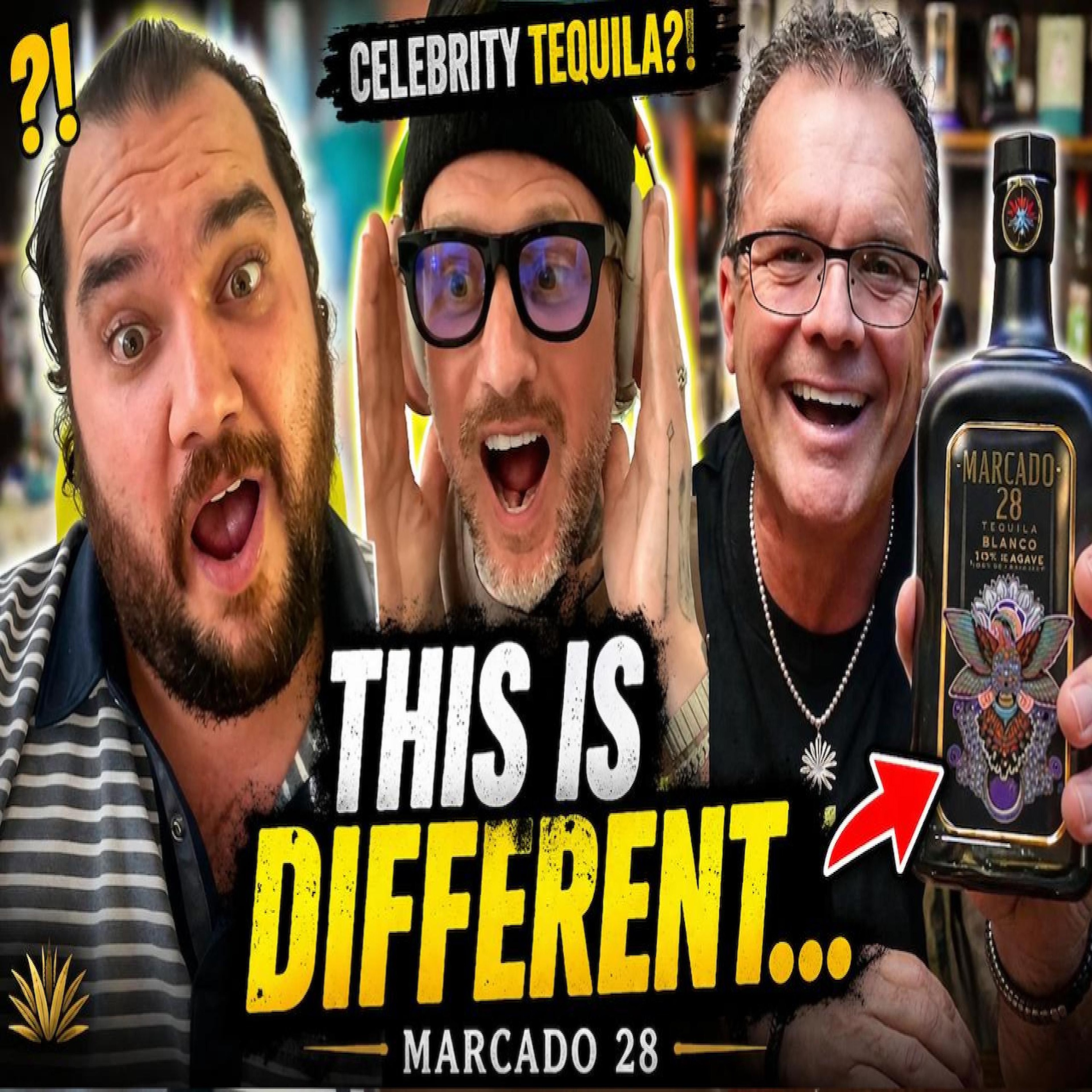
[00:00:00] Speaker A: All right, tonight I got a great one for you here. We're going to talk about this tequila right here, Mercado 28. And you're going to get to meet Bruno Barba and also Michael Batagio. So Bruno brought Michael together to make this tequila. Michael's a celebrity chef. He's all over all of the cooking channels and has some great restaurants. And tonight you're going to hear the story of this tequila coming together. Don't miss it. It's a great one. It's tasting tequila with bread.
All right, guys, I got a treat for you today. These two people, one a celebrity television chef who's got all of these accolades of being a fantastic chef. I got to go to one of his restaurants and eat. And Bruno on the other side over here has been making tequila for a long time and knows a lot of fantastic people in the business. How are you guys doing tonight?
[00:00:52] Speaker B: Doing well, Brad. Thanks for having us. Hi, Bruno.
[00:00:56] Speaker C: Hello. Hello, Brad. Hi, Michael. Nice to see you again. Thanks for having us here, Brad. Happy to participate in your channel and interviews.
[00:01:04] Speaker A: Well, I'm excited to have you. I know you're coming to us from Guadalajara. Michael, where are you at today?
[00:01:10] Speaker B: I am in Los Angeles.
[00:01:12] Speaker A: Yeah, this is.
[00:01:13] Speaker B: I got to come home for a few days and hang with the family. So if you hear some residual noise in the background, that's our soon to be two year old.
[00:01:21] Speaker A: Oh, fantastic. Yeah, it's a youngster. Mine are all in their 30s. My youngest turns 34 next Saturday or 33 next Saturday. So they're all growing up so fast. All right, let's do this. First, Bruno, tell a little bit about your background and your, like, journey in tequila and who you are.
[00:01:40] Speaker C: Perfect.
[00:01:40] Speaker B: Sure.
[00:01:41] Speaker C: So basically, I was born into tequila. My family has been doing tequila for more than 10 generations, even before it was called Tequila, you know. So my grandma did a big effort and started to research about our family many years behind us. So one of her oldest findings is around the 1680, more or less with the first, we cannot say he's a patriarch because I am sure there was somebody before him, the first of the Rosales family in El Arenal.
And he is the one that inherited some mezcales, which is a nickname for the agaves, to his sons and daughters.
So basically what she did is that in her research, she tracks wills, Marriott files and baptism files. So you know who was married with whom and with the will, what they did for a living. And that's how we find out that for more than 10 generations, we have been involved in activities related to the production of what we know today as tequila. Not only in this family, but it's the Rosales family, the Gomez family, and the Cuero family that they all come together in. My great great grandmother, and from her is my great grandmother, Gabriela de la Pena Rosales.
She is actually the first woman, well, not only woman, the first person to sell a commercial reposado through her brand, and one of the four pilots of the moen tequila industry recognized by the crt. So we are proud of that. I've been in the fields my whole life.
Like two, three weeks ago, I was doing another interview and they were asking me how I was going to pass this passion to my children. And I told them it's very easy because what I do for a living, people pay to have that kind of experience.
So I go to the fields for free. I go to distilleries and I work there. I have horses in the fields, so that's my real life. So it's very easy to share that passion.
[00:04:08] Speaker A: That's fantastic. Michael, tell everybody who you are and where you're at today.
[00:04:13] Speaker B: I'm Michael Voltaggio. I'm just a cook, and I don't have the same legacy story as Bruno, but, you know, I love food. I met Bruno through some mutual friends and, you know, we put this, this project together because I think I built my career sort of classically trained chef who kind of colors outside the lines a little bit. And I think getting to link up with somebody like Bruno and his family and just get to have this, I mean, just what you just learned in the first 90 seconds of this interview is those are the conversations that I get to have with Bruno in perpetuity as we continue to develop and evolve this brand. And I just think that that's what we're all in this business for. Right? We're all here to share and I think not hanging on to the information and being generous with it so that our industry just continues to grow and evolve together and, and ultimately the hospitality industry sticks around because of how well we all share with each other. That's what this experience has been all about. I mean, yes, I cook food in my restaurants, sometimes on people's televisions, but projects like this are the ones that just I, I, I get to be, I get to be a student. And I'm so grateful to get to work with somebody like Bruno.
[00:05:22] Speaker A: So what was the first thought of making a tequila brand? Where did that kind of come from?
[00:05:27] Speaker B: So we, we, we both sort of, I Met the. The guys behind wines that rock and Spirits that rock. And we had a lot in common as it related to our lifestyles, things that we were passionate about and interested in.
They've done a lot of work in creating sort of good novelty brands, meaning, you know, taking a story and connecting it to a good juice and putting it into nice glass. And when. When they approached us with wanting to do that with tequila, I asked a lot of questions about, you know, h. How it was going to get made and where and all that sort of stuff. And it ultimately evolved into a trip to Guadalajara, where I got to experience Bruno and his family, go to the distilleries, go out onto the agave fields, cook with his mother and his family, have dinner at the hacienda, and just really sort of get to become friends. Right. And I think ultimately you're drinking the reposado right now.
Like Bruno just humbly mentioned, it's. It's. It's sort of known that his great grandmother created reposado as a category. So what you're drinking right now is something that is from the source in which created it. And I think there's not many times in life where you get to have that experiences like that where something has that type of lineage. And so mercado. The word mercado means mark. Mercado 28 is referring to a Bible verse, Leviticus 28, which talks about not marking your body.
So this whole thing sort of came about based on that. And I.
It's too late for me. I've already pretty much marked up myself. But the real genesis is that.
That this thing leaves a mark that sort of. And I think when you taste specifically the repo, even after you get past that little bit of age, what Bruno's managed to do so well is still leave that finish of agave. And I think that. That ultimately what that word means to me is that taste that lingers on your palate when you drink both the blanco or the repo. And right now, currently working on an inejo, still even finishes with that fresh. Like, you taste the plant. And I just. How we got here, you know, that was the sort of short story we all ended up meeting through a group of friends. We put the brand together, spent some time with Bruno and his family, and now Bruno has been and stayed at my house here in L. A. And we all just get to, like, make and drink tequila together. And that's like, you know, what, what. What else would you want to do when you're thinking about something like tequila Tequila. But when you really get into the anthropology behind it and sort of how Bruno is, is a voice, in my opinion, for tequila, and not just our tequila, but tequila in general, we're very lucky to be able to have, I think, something that is one of the most authentic things to be on a shelf right now.
[00:08:17] Speaker A: Yeah. That's awesome. Did you have, like a real background in tequila? Like, was tequila your, your beverage of choice before you did this?
[00:08:24] Speaker B: I was actually drinking scotch and specifically Islay style scotches. I was a Laphroaig and Lagavulin head. Like, I was constantly needed that, like, savory sort of finish in my mouth. I was, I'm not somebody that really loves sweet liquids, I guess, unless it's dessert. So even in cocktails, like, I, you know, balance is a big word in my world, and I think that that applies obviously to cocktails as well. But tasting tequila with Bruno and really getting to taste good tequila, that hasn't been messed with too much and that has a drier finish. Because what I thought about when I thought about tequila, you know, first there was like the high school tequila, and then we all sort of got on the Casamigo style tequila train. And so there was this residual sweetness that always came with the drinking experience. And I often mistake that for that's what tequila was. And then when I got to learn more about this style of, or the proper way to make tequila, I should say, I, I, I, I became obsessed with it like everyone is right now. And I think that, that it's, for me, it's also the versatility of being able to. If you have a small bar at your house, as long as you have Mezcal Blanco reposado, you could have one spirit worth of liquor in your house. And you can pretty much make any classic cocktail on the list. And I think that there's something to say about a spirit that is as good in every single category. And you could replace vodka with blanco. You could replace, you know, not replace, but I think in cocktails, if you were to take a basic cocktail book and take lighter spirits and darker spirits and swap them out with the various different tequilas or agave spirits, you could make delicious cocktails. Only having those bottles in your house. And I just, that's fascinating to me as somebody who's a student of their craft. And I just, I know those are long winded chefy answers, but I had to say something to compete with that beautiful statement that Bruno gave us.
[00:10:19] Speaker A: That's awesome. I agree with you too. One of my Best friends, A great mixologist here in town. If you went to his bar and you ordered a espresso martini, you would get an espresso martini. And everybody doesn't know that it is made with a reposado tequila, period. That's the only espresso martinis with. So I agree. It swaps out with everything. So, Bruno, what was it like having somebody that has such a background in cooking as a chef coming to learn from you the process of making tequila? Did he understand, like, some of the things you talked about and talk about through the process better than, say, somebody that isn't a chef?
[00:10:57] Speaker C: Yes, definitely. The experience was very different.
And before all the team came down to Alajara in December, two years ago already, we started working in development of. Of Mercado for almost one year. Like, since January. No, the same year.
And we were working in a completely different direction, different ideas that we had during that year. One of my businesses, what we do for a living, is that we create and develop brands and operate brands for third parties. So Marcado started as a customer for us. And then in December, when Michael and John and Howard came back, came to see us and to really.
We did intense tequila days. No, the. The main target was first for them to really to live what tequila means, because it's a way of living. You know, it's like going to the fields, smelling the aromas in the fields, the earth, the raw agave, the herbs, you know, the cows over there and the mineral.
[00:12:08] Speaker B: We had cheese from the cow on his property that he. We're walking through the hacienda, and he goes, michael, remember. Remember that cheese that you had earlier? I'm like, yeah. He goes, that's the cow where the cheese came from. And I thought he was messing with me, bro. And I was just like, are you being for real? And it's funny because this just came back up again. I just asked him again recently, a year later, hey, remember that time that you told me the cheese came from that cow? Was that a joke? And he's like, no, cheese came from the cow.
[00:12:36] Speaker C: We have some cows also.
But yes. So that part was very important for us and also for them to go for the first time to a distillery and feel all, like, the cooked agave, the crushed agave, fermentation, distillation. The first one, the second one, like, to really see all the varieties of aromas or. Yeah, the quantity of aromas that we can reach in tequila. So that's why tequila is one of the richest spirits out there, thanks to the agave and to the seven years on the field that the agave takes. But going more directly to your question is that when we were sitting in the big table tasting tequila, and the way how Michael was able to describe what he was thinking about how the tequila should taste was like. I mean, the description was perfect. The words were perfect. You know, like, it was very easy to understand what he wanted, because sometimes it happened to us. Like, I love this aroma of a candy shop in la. Okay, which candy shop? And which aroma do you mean?
[00:13:52] Speaker B: No.
[00:13:53] Speaker C: Or the.
My grandpa's perfume. Okay. I don't know your grandpa. Sorry. No, it's difficult. But the way Michael did it and I. I still remember it and never forget it, is. We need to start with the best part of tequila, and that is the cooked agave flavor. No, is the sweet. Is friendly.
Let's have that at the beginning, but not overwhelming. Just sweet. But a little bit sweet. It doesn't have to be very sweet. And then slow transitions to citric and herbs and notes from the raw from the fields so that you feel this refreshment. And then go to the dryer nose. Peppermint. No, pepper. Sweet. And, like, the spices to dry your mouth. So you are ready for the next sip. And you want to start again. The trip or the flight with the sweets. Beginning of the agave.
[00:14:49] Speaker B: No.
[00:14:49] Speaker C: I was like, okay, perfect.
[00:14:50] Speaker B: Which is. Which is what the experience was when. When I went out with his family down there and with everyone that he works with, we tasted it that way. The plant itself in the various stages from raw through different levels of cooking. And just. I really believe that what we created was a flavor profile that articulated the emotion and the physical experience that I had. We all had together when. When I really got to tour that area in the entire process. And so it was a bit more intentional than just making really good tequila. It was trying to make something that could communicate the memory that we had from that. Those days we spent together doing that part of the process.
So it's a lot more. I know a lot of people are like, we're making an authentic brand, and this is what it tastes like for us.
It naturally came to this based on the experience that we shared with each other. And I think that, you know, as you're tasting it, I don't. I don't want to tell you what it should taste like, but I can certainly say that that's the experience that we have.
[00:15:54] Speaker A: But I will say one thing that I noticed about it is it has a nice, gentle sweetness, and there's A great balance to the pepper in the finish and just a nice balance of bitterness to sweet. And I get not only the hints of cooked agave, but the finish is more like the vegetalness of the clean agave or a fresh cut agave. And for anybody that hasn't been there, if you've never stood in front of an autoclave or a stone oven and smelled ag cooking and smelled agave laying on the ground that just came in from the fields, it's hard to explain to somebody. But once you've smelled that and you've been there, that I. That's what I pick up here. The vegetal clean and a nice cooked agave with a nice pepper in there.
[00:16:39] Speaker B: And that's the mark that we hope to leave. And that night. And again, this isn't like. This wasn't like a. We're not all doing like a rehearsed interview right now. I mean, this is just naturally like what we've experienced through this particular process and even into our friendships through it as well. And it's just been, you know, even in time where people are very intentional about what they're drinking, people aren't consuming as much right now. I think that it's really, really important to have a seat at that table and put something on the table that you can stand behind and that people can feel good about consuming in a time where it's tough. I mean, people just aren't as interested right now. And I think that that part of the story, yes, we could drive the marketing of what we're trying to do, and we can get out there with, you know, like, we have two incredible tattoo artists, Billy Baca and El Sando, who did these labels. I mean, that's a part of our story too, but marketing, marketing something, but standing behind how the marketing or what the marketing communicates. You know, even the artists themselves specialize in very specific, traditional style of tattoo. And I think everyone that has a piece of this story or contributed. Contributed a piece of this story has some similar authenticity about them.
That is. That is like that. All of us hoping to leave a mark in some capacity. And I think that, you know, you noticed us, and we got to have this conversation with you, and if that's the only thing that comes out of it is that, you know, you got to tell us what that finish was, then we can go to sleep tonight knowing that Bruno did exactly what he set out to do with this.
[00:18:11] Speaker A: That's fantastic. Okay, let's. Let's jump into the nerdy piece a Little bit. So I'm assuming agaves are all from the Valles, the Matatan area, is that right?
[00:18:21] Speaker C: Correct? Yes.
[00:18:22] Speaker A: And then what's your cut? Are you doing like Kima? Are you going tighter cut or a looser cut on the pinkus?
[00:18:30] Speaker C: No, we do regular like Kima normal.
[00:18:35] Speaker A: Okay. Yeah. And then from there, what's your cooking method?
[00:18:39] Speaker C: Autoclave. Stainless steel autoclave, but we use it without pressure.
[00:18:44] Speaker A: Okay.
[00:18:44] Speaker C: So the idea here is that we can do some type of slow cooked similar to what you get from the brick ovens. But having for me, what I love about this, this technique is that you can have the almost the best of world of both worlds. You know, the brick ovens are amazing, are great. They are very difficult to handle and very difficult to replicate the process every time. Autoclaves. Also, when you remove the or you don't use the benefit of the pressure, then you can do a slow cook, but you can control your temperature, you can control your hydrolysis, you can clean every time the autoclave. So that's something that really helps to be more consistent in the batches.
[00:19:30] Speaker A: So starting the cook, low pressure, cooking for a few hours, turning it off, draining the tank, getting rid of the bitter honeys and then kicking it back for your second cook. What's your total cook time?
[00:19:43] Speaker C: It's about 2. 2. A little bit more than two days before taking the out the adave.
[00:19:50] Speaker A: That's a long. That's a long cook for autoclave. That's awesome.
[00:19:53] Speaker C: Yes. Because we do it pretty much as if it was a brick oven.
[00:19:57] Speaker A: Sure. So from there, macerating with a roller mill, is that right?
[00:20:01] Speaker C: Correct. Roller mill is. Well, as you know, we produce in La Authentica because maybe I am going to another topic, but we can go deeper there.
Orendine families and my family have also been friends for generations and we like a lot how they work in their distillery. So that's why we choose to work with La Authentica for Maricado in specific. But yes. So we use their roller mill that they have, which is an old roller mill. So it's kind of different also. No.
[00:20:37] Speaker A: Yeah, yeah. I'll show some pictures in some videos. I think it's a six pass. I think, isn't it five or six pass roller mill.
[00:20:44] Speaker C: Five or five. I am not sure.
[00:20:47] Speaker A: Yeah. And then from there, going into.
What type of fermentation are you doing?
[00:20:51] Speaker C: We use open fermentation.
[00:20:53] Speaker A: Okay.
[00:20:55] Speaker C: With yeast, we. We use yeast.
[00:20:57] Speaker A: Do you have a propagated yeast that you use or a specific yeast?
[00:21:01] Speaker C: It's a special Yeast that we have.
[00:21:02] Speaker A: Okay, perfect. And then what's your basic fermentation time? Let's say in the middle of summer?
[00:21:08] Speaker C: That's a good question, because we haven't done many batches.
[00:21:12] Speaker A: Okay.
[00:21:12] Speaker C: But around four days? Okay, yes, around four days.
[00:21:17] Speaker A: And then twice distilled. What. What stills are you using there?
[00:21:20] Speaker C: We use the stainless steel pots, and the. The first One is at 24, 23, and the second one 53, 54. That's where we cut.
[00:21:32] Speaker A: Are they all stainless steel, or do they have copper coils inside?
[00:21:35] Speaker C: I am not 100% sure about it, but I guess the. The.
The second pass does have a. The copper inside, but I am not 100% sure. It's also something that. I mean, it does change the flavor. But when. When you work the whole process and you take care of the whole process, this is a very small detail, you know?
[00:22:00] Speaker A: Yeah, absolutely.
Once you finish with your second, you know, second distillation tequila, are you then resting it for a period of time before you go to bottling on the blanco?
[00:22:12] Speaker C: Yes, we rest the blanco. We don't have any specific time that we say, like, we need to rest it for 95 days and three hours.
We do rest it because it's needed to be rested because you never have the line ready. But what I like is that I always rest my liquids for at least two, three weeks, because you need to stabilize a little bit before going into the bottle. And usually that's what. The time that you need for these batches after you produce, then you have the bottles ready, the line is ready to bottle. So it's difficult to be faster. But if we are faster for somehow we will wait. And these two, three weeks with more than the time, because that's something very important, more than the time. With tequila, like, we can speak about hours, about days, about temperatures, about the. These details. No, but it's the experience and the flavors and the aromas that you are feeling. And the result. No, you can have, maybe just to use example, no, if you tell me, cook your agave 90 degrees for 12 hours, maybe that's okay. But maybe some agaves that have more or less a sugar content, your hydrolysis won't be the same at that time, you know, so it's like in the kitchen. So you need to be versatile and open and flexible to know exactly when your tequila is ready. And what we do is before bottling, we taste it and we do our quality check. If it's not ready to bottle, we wait longer, even though if it's been Two months.
[00:23:59] Speaker A: Oh, yeah. I wasn't going to go into the depth of what temperatures you do your ordinarily and what temperatures you distill on your factor. And all of those deep things that are fun to talk about that sometimes loses most people.
So.
[00:24:13] Speaker B: But I think the simplest way to put it is. Is, you know, when you're making tomato sauce at home, you got to adjust based on what the flavor of the tomato is that you're starting with. And I think that that's ultimately what the easiest way to sort of explain all the science behind it is, specifically that, um, and that's what I appreciate about their process, is that it isn't follow this recipe every single time. It's. You have to be touching and tasting to make sure that you're going to net and yield a consistent thing in the bottle as close to the exact same thing over and over again in perpetuity. And I just think that that's ultimately, you know, having the chef's touch, in this case, obviously, Bruno, and the people in the distillery, that's the difference here. And that's. It's not fundamentally that difficult. It is and it isn't. But at the end of the day, for me as a cook, it was very easy to sort of go in there and understand the conversation going to that point.
[00:25:12] Speaker C: Michael Umbrella is like, what you said, like, Daniel Tuesta, who is at the distiller, and he's using. Using his tools and everything. And at the end, he has the. The final words. You know, it's like, okay, are we ready or not? We will check it and we will see. But he's the one who knows the. The tools that he has, like, and he works with these tools every day. We do it some days per year.
[00:25:36] Speaker A: Yeah. Yeah. Okay. I have a question for you, Michael, because this was probably the first time when you went to the distillery and you smelled and you tasted cooked agave for the first time. If you had to go on a game show and to win, you had to explain to people what cooked agave smells and tastes like, because they ask me all the time, and I'm not good at explaining it. What would be the flavor profile that you would give for cooked agave?
[00:26:05] Speaker B: I would say for me, it's. It's sort of cooked under ripe pineapples. So if you took, like, an unripe pineapple and cooked it, that's what I got from it. Where just there was just enough sugar in it to sort of caramelize and create that caramel flavor, that vanilla all Those things that sort of start to develop when you take something from raw form to cooked form.
[00:26:31] Speaker A: Yeah. I say cooked under ripe, cooked pineapple a lot. And then I say somehow mixed with sweet potato. Because there to me, there's a little bit of like a sweet potato, a
[00:26:41] Speaker B: little tannin to it.
[00:26:42] Speaker A: Yeah. And it's such a hard thing that somebody that hasn't been. Someone who hasn't smelled it or tasted is really a. I would, I would just get cooked agave and have that along with any tequila that I had. It's so good.
[00:26:55] Speaker C: Yeah.
[00:26:56] Speaker B: And that's the funny thing is I tasted it right before when it was. When it, before it was fermented. And I thought even that was like a delicious fruit juice. I couldn't believe how I like, like that. That wasn't a thing. That was common and out there in a can for people that you just drank.
[00:27:12] Speaker A: Yeah, I've. I've asked many times if somebody could make it because that would be such a great drink to grab out of the fridge ice cold, wouldn't it?
[00:27:19] Speaker B: Yeah, for sure.
[00:27:20] Speaker C: Yes.
[00:27:21] Speaker A: Okay, so let's talk about the repo. What are you putting the. What are you putting the tequila in to make the repo?
[00:27:26] Speaker C: So for the repo, we used American oak barrels, used at different levels. So. But all of them are. Or maybe yes, all of them are. Are used and more. Some are older, some are younger, but all used. And basically what we do, there is a blend between six to eight months on the barrel to reach this profile. Again, what we like to have in our tequilas is that the agave needs to be the king of the glass. You know, here what we wanted is to keep the exactly the same experience that you have with the blanco. But now it evolves to the reposado. So the wood won't take over, but it will help the blanco to evolve. So basically you see more caramel, like the sweet part is a little bit more caramel. The raw part, it's a little bit more like orange and maybe orange feel a little bit more bitter.
And the spicy part is a little bit more like cinnamon cooked pepper, you know, so it's the same direction, but just in a second step without letting the wood take control over the agave or the blanco.
[00:28:51] Speaker A: Yeah. And one thing to note for people is it has a great color, but you can tell that it's not being over oaked, that it is right at that level that I like, you know, my repos to be, or even, you know, an anejo not to be a Whole lot darker than that. And you, you do get some hint of those caramels and the oak. But the agave is still the star of the show. So that, that's really cool. All right, tell me about the anejo you have coming up.
[00:29:15] Speaker C: That's a top secret still.
[00:29:17] Speaker B: Yeah, it is.
[00:29:18] Speaker A: This is where top secrets get revealed right here.
[00:29:22] Speaker C: Top secret. Just a small hin. We will have 10 barrels. Okay. Is ready soon.
[00:29:27] Speaker B: But I, when we first started, everyone was asking where the anejo is and I, and I found that to be a kind of a weird question to ask at the beginning. If you think about the fact that we're taking Marcado and running it all the way through to an. Yeah, like it just wasn't ready at the same pace. You know what I mean?
And that's what I, that's why I really fuck with Bruno is that he wanted to make sure this was right before it continued to that. And even this, this first run is pretty small.
[00:29:58] Speaker A: Yeah, I seen this is like bottle 596 of the Blanco.
That's, that's pretty, pretty cool. I'm always suspect of a brand that launches a Blanco repo on Yeho and extra on Yeho at the same time. How'd you get a one year and three year old bottle at the same time? See, Right. But people don't know. That's why these are good. People learn that there's time, there's a lot of hands and there's a lot of process and if you're going to do it right, you're not going to punch them all out at the same time.
[00:30:25] Speaker B: But also we, we, we wouldn't. We're not sticking labels on things that aren't part of our sort of little ecosystem. I guess our little bubble, you know what I mean? It's very. You can find juice and label it. But I think it was, you know, everything that's being done here is intentional and that's why the timeline sort of matches what is coming out and when.
[00:30:46] Speaker C: And that's, that's the main, the main difference that, that we didn't go in at the beginning of the interview, but when I was telling you that the whole team came down to Guadalajara and all that Mercado was a customer, I was a supplier and that's it. But after that visit and when we saw that, we, the, at least from my part, I know the Michael's part and Howard's part because we spoke about it later, but basically we all saw that we were going in the same direction. That the project was authentic, genuine. That because many, many people wants to do this private labeling, which is not bad. No, it's just a different type of project and the killer. But that's why I really decided we all did from our perspective.
[00:31:36] Speaker B: That way we were going to be
[00:31:37] Speaker C: partnering as a partner and not just as a supplier. You know, it's like the target is doing good tequila at a fair price with a nice bottle, with a great team. So we are authentic.
It sounds easy. No, but it's very difficult to find all these things coming together.
[00:31:56] Speaker A: Yeah, Yeah, I bet. I understand that. And I want to dive into the bottle. But I've got another question for Michael. As a chef, do you see a point where you get more involved in creating special releases and coming up with different fermentation ideas and. And different ways to change the flavor in traditional ways to do special things that you want to do? Is that something you've thought about?
[00:32:19] Speaker B: I mean, I'll always ask the questions and challenge the process, but I think what's so great about the way our hours is currently getting produced is that it's. It's sort of, again, part of 300 some plus years of making tequila. So it's hard to be like, hey, guys, you ever think about, you know. Know what I mean? Questions. And, and I'll ask stupid questions. And, and, and. And I think those are the most important ones to ask because when we had that conversation about recreating that experience of eating the various levels of agave from the ground to the point of getting sort of smashed in the roller mill, they did that because of that conversation. So I feel like, in a way, I already am a part of that because.
And it just so happens that it, it was the way. It wasn't like I created anything new.
[00:33:15] Speaker A: It was.
[00:33:16] Speaker B: I again wanted to share that experience that I had or we had together over, over. Over our time there. And I think that that's. That's the best way I. As far as, like, the ano is concerned, to me, what we're already doing is so good. The most important thing was that we would still be able to maintain that lingering finish of the agave at the end, even if we were to put something on age for a longer period of time. And so I think that that sort of is our mark in a sense, where that's what we want you to remember when you're done where you started. And I think even with the inejo, when we get that finished, we'll be able to have that as well. Present in that flavor.
[00:33:56] Speaker A: Very cool. Very cool. Okay, let's. Let's talk of this bottle and how you came up with meeting these two amazing tattoo artists to create the label and how that idea came to be.
It is one of the things. When the bottles came here, the first thing I did was shot pictures of them and showed everybody, Damn, these are like super cool looking bottles.
If you could tell a little bit about story of how those came to be, that would be awesome.
[00:34:20] Speaker B: The glass was sourced by Howard, who's one of the founding partners of the company. He found this particular glass, and then we challenged. We all sort of were wondering if there was this hombre effect, if that was possible. And so even Bruno and his team got involved in trying to help solve that problem because we all saw the vision. It's very easy to, like, make one or two, but when you need to make, you know, hopefully tens of thousands of those bottles, you know, getting that process going and being able to maintain that is pretty challenging in itself. And then as far as the art is concerned, I saw the art after I. I joined the team and. And it was. It was. It had already gotten down to the final selections. And I said, well, I want to meet these artists and I want to hang out with them and I want to go drink tequila with them and I want to get tattooed by them. So I went to Austin, we hung out with them. I got tattooed by both of them, not. Not the labels that are on the bottles. And again, I think what they tattooed on me very much like what they did with those labels was, if we tell you about this, what does that mean to you? And just draw it. And that's ultimately how both the Blanco and Reposado got their artwork, was these artists drew things that were important to them and that connected and had a conduit to the history and to the legacy of tequila and more specifically, Mexico in general. And so I just wanted to go be friends with them.
You know, I didn't know anything really about.
About how their process was specifically to getting these labels on these bottles, because that's ultimately when they found them was basically when I came into the picture. And this was before us going to Guadalajara. So I. I went, yeah. And so I went and hung, like I said, hung out with them. And we all just. We went out and we just did what you do when you get together with a few bottles of tequila. And we had a blast.
We had food together, we drank together. They tattooed me, and they're still very much, you know, a part of our story. In a way that, like, again, we all know each other. It wasn't, you know, flipping through some media company or marketing companies like logo designs, and we're like, 38, looks good. Lighten up the purple like this. This was art done by artists and,
[00:36:33] Speaker C: and the artist just very quick, because I think this is important.
It's not just tattoos. No, it's the blanco. The art is inspired by the alebrijes, which is a Mexican handcraft that basically is your two animals that will be helping you to go to heaven.
And the other one, the reposado, is inspired in Mayahuel, the goddess. So it also has some meaning. It's just. It's not only nice art, but it's nice. It's a tattoo. It's meaningful and is also inspired in Mexican roots, which. Which I think, again, goes back to the authenticity what we have in the bottle.
[00:37:15] Speaker A: Yeah, when I seen that, the both of the artwork, the first thing it is, I went and Googled and read about, you know, both of the stories behind them, and it's. I love Mexican culture and Mexican people in it. It's so cool, you know, so the anejo, do we have a different artist that's going to do something different on that label?
[00:37:35] Speaker B: Where we are.
[00:37:36] Speaker C: Where.
[00:37:36] Speaker B: That's a. That's a longer conversation.
We. We. We may give. We may give a little more glimpse of what's in the bottle on the next. On the next for the inejo, because I think once you start to develop a little bit more of that. Of that caramel color naturally, you know, and hitting it to that point, I think.
I think we're going to make that a bit more visible.
Once we get that in the bottle, whatever that means to us, we'll. We'll see.
[00:38:05] Speaker A: Okay. Dare to be defiant. Where. Where did that come from?
[00:38:08] Speaker B: You know, I, I think that when you.
So connecting the 28 and. And. And the fact about, you know, this and all this is. Is sort of challenging, I guess. What. What is challenging? Things that are being done for the sake of doing them versus things that are being done right. Which I think is, you know, we sort of came to market without anyone really knowing who. Who. What our brand is and. And what. What was behind the brand and the people that are behind it and the tradition that's behind it. And I think that sometimes just going back to the basics is. Is being. Not. Not that there's anything basic about our process, but there's. There's a little bit of defiance in saying we can just be a really Good tequila.
I'm just a. I'm a chef. Like these, they. When they first started out and they wanted to start a brand, they could have very much gone after. Go gone after a plethora of different creatives. But they, prior to getting the process of actually curating the juice, they made a decision on as to who, what type of partner was going to come on board, and to have the foresight to bring in somebody that works in hospitality and then specifically finding me, that part of it made it, I think, super cool, because that is a bit different than this isn't. Again, this kind of backs up the fact that this isn't like some marketing play. I'm sure they could have gone. Gone out and found somebody that is a lot more, you know, relevant and whatever things that they do. But what does that have to do with making tequila? And I think for me to be able to go down there and contribute to the conversation of what it tasted like and us to connect. Bruno and I, like you mentioned that room, that tasting, when he says it was intense, it was intense because they basically put us to a test and made us, with our palates with, With. With our questions, get ourselves to the destination that we asked for, but they made us drive ourselves there. You know, they gave us a little road map, but we drove ourselves there. They didn't just give us the destination. And I think that that was cool.
Yeah, so that's a little defiant, I think, in the sense that, like, it doesn't. What matters is, is what's inside that bottle. And I think that that is being defiant. I think in. In a market where a lot of things become massive just solely based on the fact that they tell a really good story.
[00:40:26] Speaker A: Yeah. You know, so there's a lot of celebrity tequilas out there and most of the content creators. I'm guilty of this too. We. We usually trash celebrity tequilas, but in, you know, in the last couple of years, there are some great tequilas that fall into that celebrity tag that are great tequilas. You know, from El Bandido Yankee to. To Santo, with another great chef involved there.
There's. There's some quality tequilas. And when I seen that you were attached to this, I believe your brother. Your brother's a chef too. He's a part of it as well. Correct.
[00:41:00] Speaker B: So he's a part. We're a part of everything that each other does, so.
[00:41:03] Speaker A: Yes, so. So when I see two chefs and knowing a little bit of your history as a chef, you're not putting garbage in the food that you eat and the food that you cook. So I instantly expected that the tequila would taste clean and. And that you wouldn't put garbage in the tequila. It's a manipulative flavor. So for me, as a chef, you brought the credibility to the celebrity side of what I see in the tequila. And I appreciate that. I really do.
[00:41:32] Speaker B: And I didn't fully know how to ask for that until, again, they took me out onto the field and they said, we're going to start here, and before we get to there, we're going to go through every step of the way.
[00:41:43] Speaker A: That's awesome. Okay, so I. I have a question I'd love to ask people. I'm going to ask you first, Michael, and then it's going to give Bruno the cheat. He's going to be able to think about his answer the whole time, since I don't have a way to mute him so he can't hear me.
Now that you've created this tequila, this is kind of your. Your new baby. And you, you've helped in the process, and you're proud of it. If you could sit down with anybody and share your tequila, the story behind it and the flavors, and have a conversation with somebody, anybody, history, current, alive, dead, famous, not famous, who would you most want to sit down, share a glass with this, and tell the story of the tequila and how it's been made in the. In the story of the brand.
[00:42:25] Speaker B: I would want to sit down with Bruno's great grandmother just so I could ask her if we're still doing it the right way.
[00:42:32] Speaker A: Yeah, that's a great answer. Okay, Bruno, you get the same question.
[00:42:36] Speaker C: That's a great, great answer, Michael.
So there is this guy who was president of Mexico, Portofirio Diaz, in the beginning of the last century.
And every time I get this question, I always refer to him because I would like to hear the part of the history from his mouth personally, you know, because what we know now, very different. There are two sides of the coin. But I would really want to understand what he did and why he did it. Of course, sharing a good tequila will be nice for the talk.
[00:43:14] Speaker A: Heck, yeah, it would. Have you. Have you listened to or read the book Tequila Wars?
[00:43:18] Speaker C: I just heard about it last week and I ordered it. So I will take a look on that.
[00:43:24] Speaker A: It's unbelievable. And jump to my YouTube channel. Go back a few weeks. I did an interview with Ted Genoais, the author of Tequila wars, and we were with him in Tequila back in January. And what a great book, but what an amazing story of how tequila and the country and the revolution and the people behind this went through that. And then how there's still a traditional vein of tequila still there. That's really, really impressive.
[00:43:51] Speaker C: Yes. The history, the Mexican. Maybe it's to say Mexico is a lot, but the regional history of Jalisco and Nova Galicia, that was at the times of the Spanish colony. The influence of Vino Mezcal had at that time is huge because of economical reasons, social reasons, political reasons, indigenous reasons. So, yes, we are sitting in a small treasure here. Big treasure.
[00:44:17] Speaker A: Well, I want to say thanks for coming on, guys. I know both of you are incredibly busy, and I appreciate you taking time out of your important schedules to do this, and I do really enjoy the tequila. And I just. I want to say salute. And thank you so much for doing this tonight.
[00:44:32] Speaker C: Thank you for having me. Thank you for thinking on us.
[00:44:36] Speaker A: I can't wait to come hang out with you at the distillery.
[00:44:38] Speaker C: Please, the next time you're here, text me and. And save a morning for me, or a day if you want, and we will go get some cheese and the.
[00:44:46] Speaker B: I'll meet you down there. I'll meet you down there.
[00:44:48] Speaker A: That would be fantastic. All right, guys, well, thanks. Cheers.
[00:44:50] Speaker B: Have a great day. Thank you. Cheers, Brad. Appreciate it.