Episode Transcript
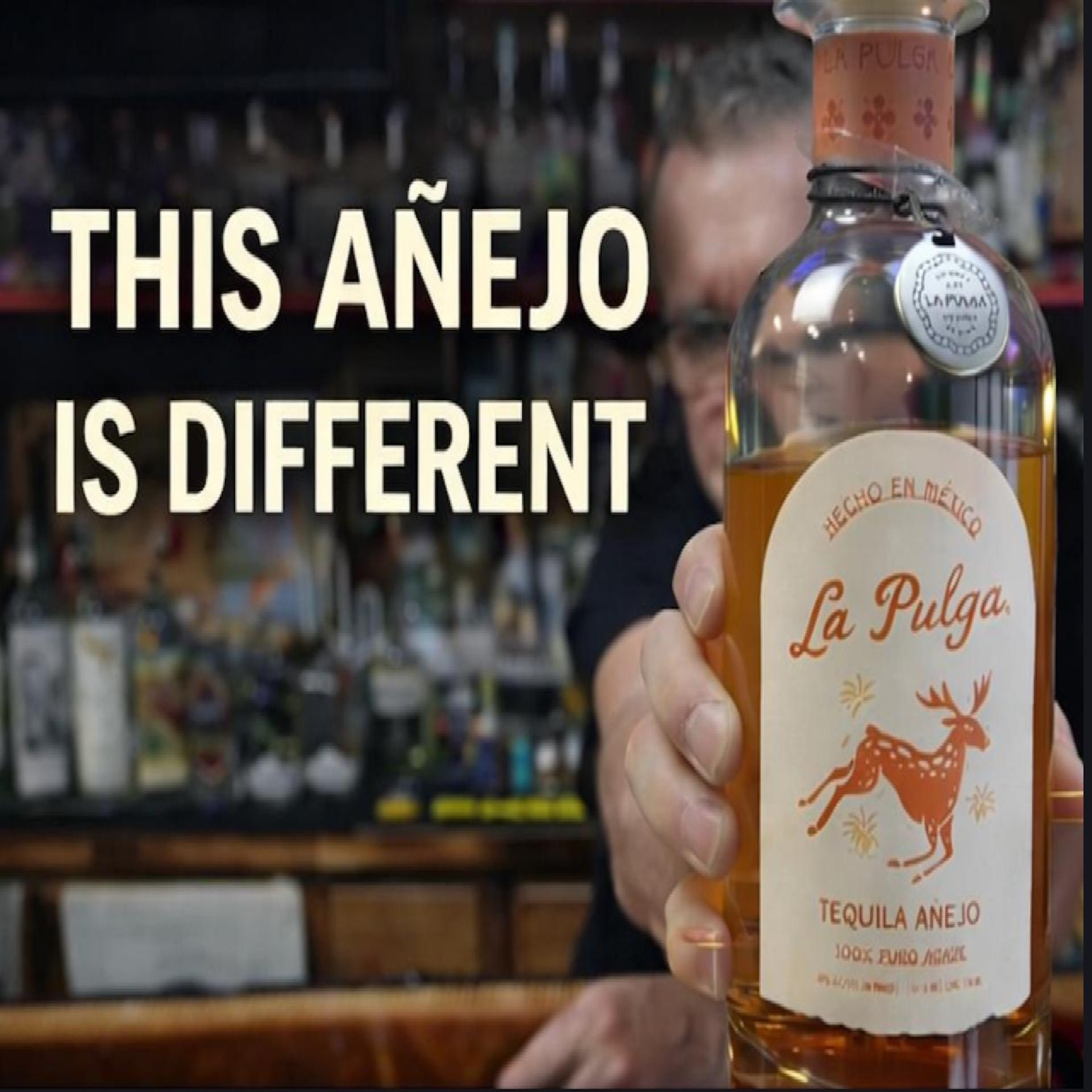
[00:00:00] What if I told you this tequila was cooked two different ways, fermented with a citrus orchard yeast while rock music played and aged nearly two years to sip like a fine whiskey. Today we're going to dive into La Pulga Spirits Anejo, a meticulously crafted additive free tequila produced at NAM 1068 using 100% blue Weber agaves that are grown at 6400ft in the Highlands of Jalisco. This anejo is built on process, patience and intention and you can taste it with every sip. As you can see, I've been enjoying it already. If you watched my interview with co founder Sarah Castillo and marketing mastermind David Wiley, you already know this brand isn't chasing shortcuts or trends. Lapuga is all about transparency, craft, and they're really excited about honoring tradition, yet still pushing technique. That philosophy shows up clearly in this anejo. Let's talk about how this tequila is made. Agave. 100% blue Weber agave. Grown sustainably without any chemicals or pesticides. Harvested at brix level, not age, meaning checking the sugar content to make sure that the agave is ripe, not just because of how old it is. Surrounding the distillery at a 6400ft elevation. Cooking on this one is big. La pulga uses 50% dual cooking method, meaning half roasted 36 hours in a stone oven for that caramelized depth and then half cooked for 24 hours in a steam autoclave for that brightness and clarity. The balance is key to what you'll taste later. Extraction is a four pass roller mill and fermentation on this one is one of my favorite details. Open air fermentation, a proprietary yeast that's cultured from a neighboring citrus orchard. Fermented for three to six days depending on the temperature, the time of year and what's going on in the atmosphere. So some days it may be even longer than that. And yes, rock music is played to, you know, keep that yeast happy and rocking. The rock music isn't marketing fluff. Whenever you have noise and sound, it makes the the yeast that is a living spirit move and change and really affect how things are going to taste. We've seen it in person and rock and roll probably to me is better than playing classical music. This is Double distilled in 3500 liter pot stills. The first cut's pretty wide, the second cut is refined to 110 proof and then they go into the barrels and proof it down afterwards. This tequila is rested in some stainless steel before it goes to the barrels. It's chilled down to 4 degrees Celsius. It's oxygenated for 19 hours, which enhances the viscosity, the texture with minimal dilution. Okay, let's talk about the aging on this one. 18 to 22 months in second use, American oak barrels sourced from Kentucky and Tennessee. Second use is crucial because the time frame, the agave doesn't get diluted. It stays in the forefront. But the barrel being aged and used before also gives you a little more balance in the flavor. All right, let's get this one in a glass.
[00:03:12] You know, it's cold out, and right now, anos and extra anos are really helping me get through these 8 degree temperatures and the 12 inches of snow that are outside. Let's dive into the nose of this one right away. Roasted agave, like red fruit, maybe a little plum, little cherry, some black pepper. You get a little bit of that oak influence, a little caramel, but it's not really overpowering. Let's. Let's dive into the taste of this one. Vanilla, that warm oak. I get a little cocoa or, or chocolate that, that red fruit turns into like a ripe fruit sweetness. There's a nice whiskey influence. There's a little bit of warmth, a little bit of pepper, some minerality there. But you. You don't lose the agave. The cooked agave is the. The star of the show on this one. The finish itself is long. It's complex. There's a lot of different flavors and sweetness and vanilla and caramels in there. It's kind of dry like a wine, but the sweetness just kind of just. Just hangs on. This is one that I think I'm just going to sip on for the rest of the evening while I edit videos. Every one of their bottles, it features an El Brije. I think I said it right. It's a spirit animal. And the anejo showcases the stag, symbolizing nobility, grace, and strength. The medallion itself isn't just a decoration. This really represents community, craft, and a commitment to quality. All of that fits perfect with this tequila. At 40% ABV or 80 proof, this tequila is perfect for sipping. It's an excellent, neat tequila. Some people may want to do a cube in it personally. Not for me. It would also work really great in some classic cocktails like a Negroni, an Old Fashioned, or even a Manhattan. Since there's a little bit of that cherry in the nose, I think that would transfer over great in a Manhattan. La Puga Anejo. This one is amazing. This is one that deserves some respect. This they are really respecting the agave process and time. There's no additives here, you don't need it. If you haven't yet, go watch my interview with Sarah Castile and David Wiley. It adds even more context to what's in this class. If this review helped you hit the like button, the subscribe button, let me know in the comments. Do you prefer a bold on Yeho or a refined agave forward one like this one? Cheers. Stay warm everybody.