Episode Transcript
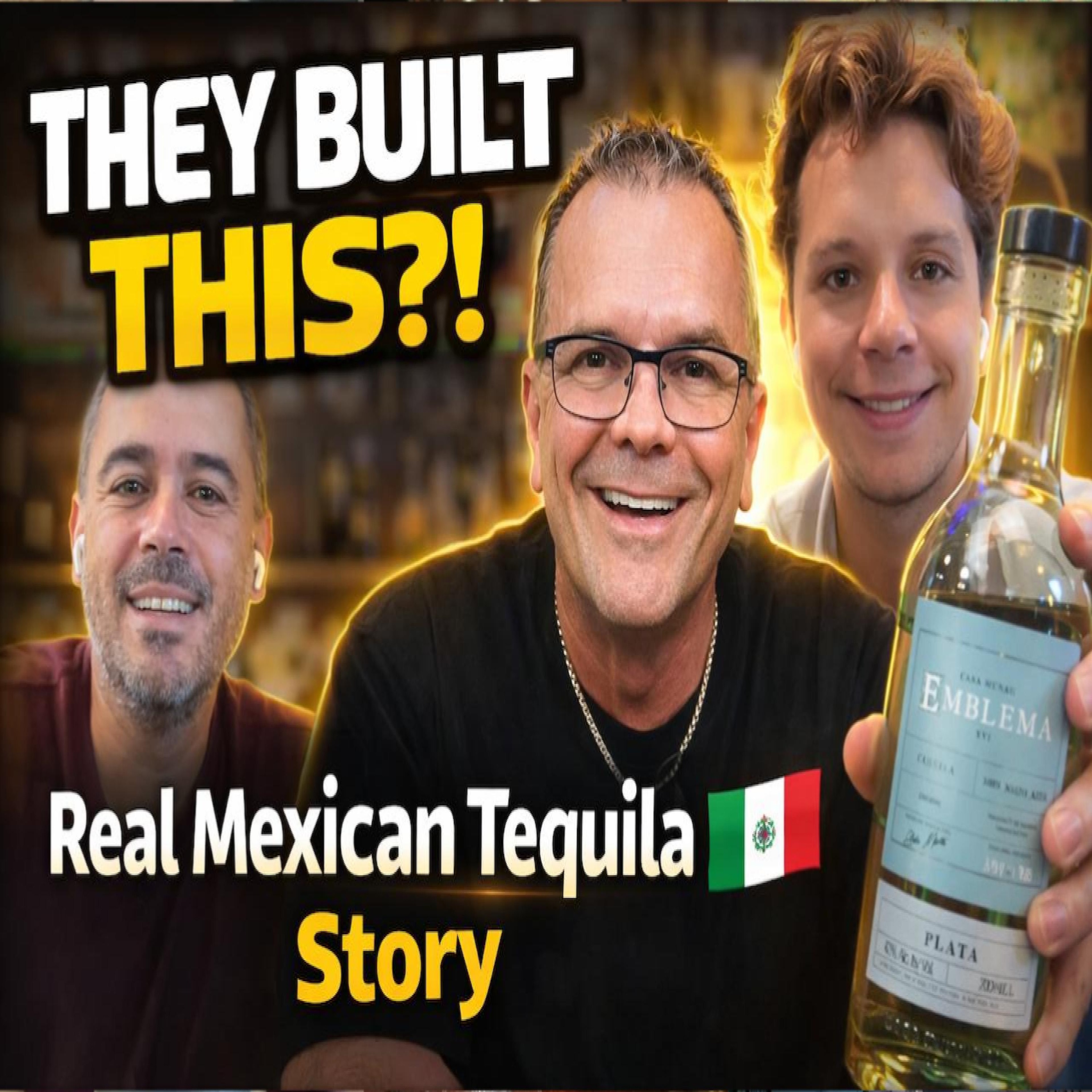
[00:00:00] Speaker A: All right, guys, tonight I'm excited to introduce you to a brand new Tequila. You're going to meet Alex and John, the owners of Embelma Tequila. They're going to talk about their whole process of bringing this tequila to market and really the tradition behind it. So stick around. This is a great one. It's tasting tequila with bread.
All right, guys, I got a treat for you tonight. We're going to talk about a brand new tequila, Imbell. And we are here with Jean and Alex. How are you guys doing today?
[00:00:36] Speaker B: Hi, how are you? Bradley? Fantastic. We're just so happy to see you. Thank you for having us.
[00:00:42] Speaker C: Thank you. Thank you. A pleasure.
[00:00:45] Speaker A: Well, I'm. I'm excited about having you guys here and really learning this story.
So what I'd like to do first is let everybody know a little bit of who you are.
So John, let's start with you. Tell everybody who you are and kind of where you're from.
[00:01:00] Speaker C: Yeah. We are from a small town here in Mexico called Queretaro. We are like around four hours from Tequila where we make our tequila. And well, here is one of my partners that is Alejandro. We have been in this project for around five to six years. We have been in the US for around one year because we wanted first to have a step forward in Mexico because our brand is, is really focused in the culture and the history of Mexico. So we really wanted to firstly start here, get to know people, get to get it tasted from people that know a lot about tequila and then start selling in the US like we are doing nowadays.
[00:01:42] Speaker B: Yeah. Hi, I'm Alex. I'm from Guadalajara. I live all my life near the Arenal in Jalisco.
So I have been drinking tequila since I was pretty young. For who, who am I? I'm a guy that wanted to have the best tequila in the world. Who is Emblema? It's our histories, trying to do history in Mexico. That's our lead in everything in this bottle. We have been working in small batches. We will profound in in our history. We have been doing everything to do the best tequila in the world for the world, for Mexico.
[00:02:19] Speaker A: So what was your process of deciding to start the brand? Like, whose idea was it to say, okay, we need a tequila brand?
[00:02:25] Speaker B: I think it was three of the main partners. We love tequila.
That's the first point in our dreams. Each one of us wanted to do dream with a tequila.
The family of Jan has a museum that has an enormous history in Mexico.
Jan will talk about a little bit from the museum, but we wanted to do something with the museum to the world to show it, to show all the pieces. I think this was the kickoff for showing the Mexican art that I think that we have.
We have the three most special things in. I think that the world knows three very special things from Mexico. Our food, tequila and probably mariachi and woman. No, because the mariachi, the party, the girls, the people is really nice. The history and the art is very important. So to the world to see who we are. Because we are the. The very small. I'm talking about distillery in tequilas that we have to process. Seven or eight years since you finally take a sip of a tequila. And probably people doesn't know about how hard is to get a fine tequila or a very bad Tequila. It doesn't matter. It's just to take too long. No, I don't know. Jan, can you talk about.
Yes.
[00:03:51] Speaker C: From what Alex was talking? Yes. My family, my grandfather was an enthusiast and really wanted to get to. His museum is the National Museum of Graphic Arts.
He was exposed a lot of time in Mexico City. Then we changed it to queretaro for around 10 years. And nowadays we wanted to make a tequila from the family to get it to know to all the world. So it was like this family thing that we wanted to embrace our. Our grandparents work of all the time that they take it to get all the pieces, to get all the things going on. So this special thing or the nice thing of this tequila is that it comes from a really old generation of people that worked hard here in Mexico in order to embrace this history around the world now. So for us to make a really good tequila with a really special history was something that we really wanted. And now we are having this. This dream coming true and wanted to people to taste it and have it a try.
[00:04:59] Speaker A: What was your process of starting working with nom 1480?
[00:05:03] Speaker B: Well, we probably wanted to start with the most with the primary region. Because if we want to find the best Tequila, we have to taste all the tequilas, no?
So what we decided is that we will start with Amatitan or Tequila. I have very good friends from there.
So we start trying different noms, different distilleries, so they can think big. No, what we ask them is we want to do the best tequila. Is it possible? It doesn't matter how much it is. We just want to do different process. Do you have anything in mind? And we start talking to different guys and we find out that with Delario we can have the.
The most unique because it was an organic tequila can do Small different process than most of people because we can. We could go early in the morning, cut all the agaves and cook them. As soon as they. We put it in the truck, maybe 9, 10am we were cooking them.
So all these comes because Eladio Montes, it's a.
It's a third generation tequila man. And I asked him, remember your grandfather, your father, how did they did it? How what's like the best tequila you have tried in your own factory?
And he told me that as it was done long time ago, where everything was in the minute, there was no chemicals on it, it can pass through it very easy with a strong flavor of the fold, this native area, that it's a tequila and of the valley and the mattitan.
So he really nailed it. We did it some very specific few things. And that's why we stopped there, because for us it was the best that we tried in Amatitan.
[00:06:58] Speaker A: And did you visit a lot of different distilleries before you made that choice?
[00:07:02] Speaker B: Yeah, it was very hard. Seriously, it was very hard because as. As a tequila fan, every distillery and every tequila has the uniqueness. Every. Every brand of Nome has very unique details. So getting it was very, very hard.
But again, the organic, the.
The single state, it was very, very important for making a decision. Because if you have the same state every time, the consistency, it's going to be very, very close what you buy the first time to the second time to the third time. Because it's all from the same place. We don't mixture agaves. You know, everything comes from the earth. So if I buy agave that it's permitted from maybe San Juan de los Lagos or from another region, it's not gonna be what amatitanis.
So we need to accomplish that.
Everything in this tequila right now, this emblema is full Amatitan.
[00:08:14] Speaker A: Okay. So living in the tequila region like you have, have you worked in the tequila business before having this brand in any part of tequila manufacturing?
[00:08:24] Speaker B: No, never, Never work in the manufacturer, entrepreneur in restaurants. Okay. Oh, I have been working in the after sale. No, in the, in the market.
I have tried probably, I don't know, most of tequilas. Most of the tequilas that are in Mexico, because they try to sell it to us, Our brand is, our group is a little bit. It's big or medium. It's in Jalisco, San Luis Potosi, Aguascalientes, Guanajuato.
[00:08:54] Speaker A: So.
[00:08:54] Speaker B: So it's like the main place of tequila drinkers, I would say. So I have taste a lot So I can say that I kind of enjoy, not work, enjoy the tequila.
[00:09:06] Speaker A: Now, what about you, John? Were you a big tequila drinker and have you had any work in the industry at all before you started this?
[00:09:15] Speaker C: Before I started this. Not working in the tequila industry as well, but since I was 18 years old, permitted here in Mexico to try tequila.
I have always loved tequila. Actually, the idea of making this tequila was because in a restaurant I was with my dad and my family and I ordered a glass of tequila. So it was like the start of the dream where it all came through. I remember that that night my dad called Alex to tell him that he had this idea and that he wanted to do it and that we wanted to do it with Alex because he had a lot of experience in the industry and living there with all the contacts and people involved in this industry. So, yes, I have always loved tequila. I really like the way you can, like Alex says, I think all the process that goes behind it.
Many people normally don't see it. They see only like the last thing in the bottle and they just like to try it and have fun. But I think getting to know the industry, the process and how old people, all the Mexican people really put a lot of effort in. In this, in this industry of tequila is what made me get in love with this. So it was like this part of. Of me loving tequila and then having a friend of my dad that also really was engaged with this, that we started this. This brand.
[00:10:43] Speaker A: Awesome. So tell me, what does the name mean?
[00:10:46] Speaker B: The emblem of Mexico.
[00:10:48] Speaker A: Very cool.
[00:10:49] Speaker B: Okay. Uh, it's a fusion because it's a Casa Munag. Munag. It's as I told. Well, as a. Jan told you the name of the museum? No. So it's the home of Munag emblema.
And it has something very special. And I. I really like to ask, if you see your bottle, There is a 16 number. Yeah. From the 16th century.
[00:11:14] Speaker C: Yeah.
[00:11:14] Speaker B: One of the most special pieces in the museum. It is the first press that arrived to North America 1539, when the fathers arrived to start to colonizing and to all the Mexican towns, tribes. And it's very strange because the tequila born in 1539 with the same fathers.
So there is a very nice story. So that's why we put the 16 there.
[00:11:47] Speaker A: Okay.
[00:11:48] Speaker B: And we put the Casa Monac name because we felt. We felt that it's very important.
So when people see it and dig in our web, they can find so much history on it.
All the stickers that you're going to See, they change every edition. And these stickers, Jan, if you want to dig in about it.
[00:12:15] Speaker C: Yes.
Here in the back of the bottle, as you were having the bottle here in the camera, we have some engravables of one of the most important artists of Mexico. This artist is called Jose Guadalupe Posada.
He was the creator of all the Katrina's arts in Mexico. Here Alex has the other one we have already made.
[00:12:43] Speaker A: Very cool.
[00:12:45] Speaker C: And my grandfather was a lover of Jose Guadalupe Posada. We have one of the biggest collections of him in the world.
So for us, being someone Mexican, doing art, making Mexico look like a place really enjoyable really of people of culture to the world. That's why we, we wanted him to be in our bottle in order to have that history, have that place of. Of him that all. All his work during the Katrinas, he really made death look like a party in Mexico. He. He really celebrated death.
So I think it's part of our legacy. It's part of we want. What we want to do here. We also have another slogan that we said is Agamos Historia. Let's make history.
Because we think that since we are born, we make history with the people we hang around with, the people we do see with the brands or the things we do, the businesses, having, traveling, everything we do makes something of the history of the world. So we also wanted to have these like, dead thing in our. In our brand.
So when you are dead, you also keep making history. You want to be someone that when you die, people remember you as someone honorable, someone that made things the right way and someone that made good for their country, you know. So that's why we also wanted to have him in our bottle and make this party of what he already made.
[00:14:20] Speaker A: Yeah, I love that. That's really cool. That's one of the first things I seen when I got the bottles. It was like, wow, I wonder what that is about. Like, it's very cool and, and you have a great, you know, very elegant label, very elegant looking bottle, you know. So you're doing a great job portraying, you know, that elegance of your culture. So what was your thinking in launching in Mexico first? Because so many brands that I talk to, launching in Mexico is like their, their second thought. They're always launching for America first. So what was your thoughts in putting it together to go Mexico first?
[00:14:55] Speaker B: Well, there is the. I just want to tell you one more thing that it's really important.
[00:14:59] Speaker A: Sure.
[00:15:00] Speaker B: Can you see the numbers here? Yes. Okay. These numbers are. Were done by a family member of one of our partners in tequila in the emblema that she is considered one of the three best calligraphers in the world.
[00:15:19] Speaker A: Wow.
[00:15:19] Speaker B: So we put them a little bit more.
More art on the.
On the label.
[00:15:27] Speaker A: Very cool.
[00:15:28] Speaker B: Well, we put all our important stuff in there. That's it. We don't need to put any more out.
Why start in Mexico? I mean, that's gorgeous.
It was a question of the million. No, I hope it was the correct.
The correct way. When we started, we knew that because Eladio told us and my friends, the owners of tequila, as we were talking about Eduardo and different people, they. They told me, you have. The market is outside.
The market with the money is outside. The taxes kill you in Mexico.
But for us, if we are showing the world the.
The emblem of Mexico, the legacy, the culture, we didn't want that. When Mexicans tried our tequila in the United States, they would say that that's. That is not a Mexican tequila. That's like. I would say, I'm sorry, but maybe patron. No, that's. That's a United States tequila. It's not a Mexican tequila. No.
So we wanted to make sure that in Mexico the most important cities will try it. Just the people that really love tequila.
It's not like for everybody, it's like a really fine tequila. We put our. We said three years, we take four because we wanted to more people taste it. And also there is so many things to.
To learn about it. You don't want to mess it up, to mess. To mess bad in the market that you see that it has very potential. You want to mess up whenever you mess it up in small places. So when we start, we only start family and friends for one year, just in my restaurants to see what could go wrong. And then the second and the third and the fourth year, we start to put it in vinoteca. We put it online. There was all these learning the first year, so the third, the fourth year, it was to do just better marketing to. To learn how the consumers act, what they wanted to hear in what events they wanted to taste and to understand what kind of people really like. Because I love tequila, but not everybody wants to pay a good tequila. Because at the end, as I'm a tequila fan, I can tell you that there is a lot of good tequilas.
So how do I do the best tequila? So we have to close to a very small region to see which one it was. The better taste, the specific things we can get from them. And so that's why we didn't get into United States as soon as possible.
[00:18:19] Speaker A: So how has it gone in Mexico? Has it gone over very well there?
[00:18:22] Speaker B: Jan wanna yes.
[00:18:24] Speaker C: Well, here in Mexico is a complicated market. We have a lot of brands of many, many years. We have been, as Alex says, in some places, some restaurants of each city. We wanted to for example, make some tasting in the. In the places. We wanted to make experiences where people came to also have food and taste our tequila, have someone really explain the product. So these experiences I think have been our game changer here in Mexico. For us to really compete with big brands was those special things, those details that really are making that our tequila has been consumed here in Mexico.
But as we know, the United States is an amazing place to sell. That's why we also wanted to make it not the perfect way because we also always are going to have some mistakes, but we wanted to really detail all things here in Mexico. Also to go to United States and have like many things sorted out and things that we really wanted to first see here in Mexico, that we are new in this world.
We have never had a tequila before.
All themes of some permissions, where we can sell, where we cannot sell, all these type of things. We really wanted to taste it here in Mexico, have this tasting of people in good restaurants in for example Monterrey in Guadalajara, in Queretaro, in Mexico City, in Cancun, Rivara, Maya, and also try what people were thinking about our tequila. And when we had everything correct, we said it's time to go to the United States and let's do it.
[00:20:07] Speaker B: For an example, we, as Jan just said, it will start in our first year only Guadalajara, Monterrey, San Luis, that there was the most Mexican X factor who would say and after we went to San Miguel, Cancun and Mexico City, there is more, more different, more tourists, tourists around. So this is one of the things that we start doing. If you can see. Yeah. Here in Europe you have we. We started with a only cork like as wine as they did it as they did the tequila. Eladio told us that 140 years ago, the only way to pop the tequila was with a cork and then just put a little bit of wax, original wax from the letters. So we tried to do the same as soon as we did the. The first drive from Guadalajara or Amatitan to Monterey with the heat, maybe 20% pop.
So. So all those amazing details and characteristics that we have, we wanted to put in the tequila, in the art because it was made handmade, everything. Well, that's the first thing we. The first mistake and the first Thing we learned after the process.
[00:21:28] Speaker A: Sure. So you probably learned a lot by bringing the product to Mexico first. That's helped you with your launch into the US and you know, there's plenty of people from the US And Cancun and the areas in Riviera Maya like you're speaking of. So you probably were starting to get it in front of a lot of Americans while it was here as well. So that's a good idea. I understand why a bunch of Americans that go create a brand, turn around and launch in America right away.
And I love hearing about Mexican brands, Mexican owned brands. And to see that you guys did this and then launched in Mexico first says a lot about what you were trying to make and that you were trying to make something authentic enough that people from your country are going to drink your tequila. Before you came to my country and got a all, you know, you got two groups in America. You got people that just want shots and something that tastes like cotton candy. And then you got us nerds that want really good tequila. So I like that you went about it that way. That's pretty awesome. That's good thinking.
[00:22:28] Speaker B: Yeah. And you just say it. No, it.
We want that. If a Mexican goes to Houston to bail or whatever, a nerd like you ask him, hey, what do you think is the pesticula? He can think about it in the planet.
You know, I don't. If you speak about it, it's really good. Or if we have our pro. Our Mexicans are ambassadors of the best tequila. We. We win. We win. Because if a Mexican say that the best tequila is in blema, we're in the other side. No.
[00:23:04] Speaker A: Yes. Nope. I agree with that. So let, let's talk about production method a little bit. So tell me, you know, we know the agaves are coming from the Valles. Are these like a state agaves? Are they like a single estate where you guys know where they're coming from?
[00:23:18] Speaker B: Yeah, we're. We have a single estate agaves. We let them grow between seven and eight years. Actually, we're. We are doing different stuff, you know, like geek and nerd stuff to get better agaves. We are trying now with quyote agaves, a tequila with quote, things like that, to see how it works. But definitely it's a single state agave. It's from amatitan only.
[00:23:41] Speaker A: Okay.
[00:23:43] Speaker B: We himar, as we say in Mexico, we cut it very early between 4am, 5am and we get it to the, to the stone oven maybe 10am so those are things that make it More expensive, but really worth it in the, in the flavor because you have a really very.
Like the fruit, you know, if you cut it in the tree, it's gonna be juicy. Better. Yeah, Better fresher. Exactly. Fresh than if. Maybe two, three days after that. Huh.
So let's.
[00:24:20] Speaker A: Let's talk about Hema a little bit. Some people don't get into this as much, but when you are doing Hema, are you doing Hema Baja, Hema medium or Hemalark?
[00:24:30] Speaker B: We do Hema medium. Okay.
[00:24:32] Speaker A: And then once you get that back to the distillery, they're probably cutting them in half. And are they removing the cogoya before they go into the oven as well?
[00:24:40] Speaker B: Yes, of course.
[00:24:41] Speaker A: Okay, and then you're stacking into a stone oven?
[00:24:45] Speaker B: Yes, we have a stone oven. We cook it for 12 hours, slow cook, and then we let them rest for between 12 and 18 hours. It depends the climate outside.
[00:25:01] Speaker A: Okay.
[00:25:02] Speaker B: Then we take it and peel it a little bit. We have Eladio or his dad always told us that if we take the outer peel, we can get some flavors that aren't as what we wanted. Unique. It's part of our unique process. We don't have Taoana. We have like a press.
[00:25:24] Speaker A: Okay. Like a screw press.
[00:25:26] Speaker B: Yeah, exactly.
And then we pass it to. To our tunnels for fermentation.
[00:25:32] Speaker A: The.
[00:25:33] Speaker B: The bacteria we have there is an organic bacteria that has been there with our biologist, well, the biologist of the nome for a long time. And every time it goes a little bit down, then the biologists try to change the mood to. To start it a little bit. You know, it takes about.
It depends on the hot outside, the faster of the fermentation is going to be, but it takes usually between five to six, seven days after we pass it to our distillation process, as you know, we cut tails, the heads, we have two distillations only, and we keep just the best. We take the most we can of the tails and the head. So the product is just the finest.
[00:26:16] Speaker A: Sure. So both taking heads and tails out for ordinario and then heads and tails out as well for tequila and just keeping just the hearts in both.
[00:26:26] Speaker B: Exactly.
[00:26:27] Speaker A: Okay. And are you copper pots or stainless steel pots with the copper coils or just stainless steel?
[00:26:32] Speaker B: Stainless. Stainless steel.
[00:26:34] Speaker A: Okay, that's what I thought. And they're. They're not doing any autoclave there for you guys. It's all stone oven. Okay. Because I know there's. They are autoclaves there at that facility as well. So I didn't know if you were doing A blend or we are just
[00:26:46] Speaker B: using as it was before, you know, that's a ladio idea.
[00:26:50] Speaker A: Sure.
[00:26:51] Speaker B: There are two places. Yeah, there are two.
Maestro Distiller. Well, Maestro Tequila, Eladio and his brother. We went to Eladio because he was more flexible to do different stuff. It's the same distiller, the same everything. Just Eladio had a little bit most different things to do, so we went with him and.
And yeah, we did the stone oven. It was a little bit more romantic. The flavor, of course, I think it grows, but at least it's the same story we're talking about.
[00:27:23] Speaker A: Yep. And so. So in fermentation, it. It's just a wild open fermentation there.
[00:27:28] Speaker B: Correct.
[00:27:29] Speaker A: In saying the seal tanks. Okay, that's what I thought.
[00:27:32] Speaker B: There is. There are only four tanks. Okay. Each tank has like when they are like for different brands or whatever. No, but yeah, it is a heater right there and it's a. The bacteria is leaving. It's.
It's really happy there. The conditions are fantastic.
[00:27:51] Speaker A: So I have a blanco here. So one of the questions I have is the blanco that you have in Mexico, is it also a 40 ABV or did you do a lower ABV in Mexico?
[00:28:01] Speaker B: Those are some of the new things that we are trying.
[00:28:05] Speaker A: Okay.
[00:28:05] Speaker B: For the first four years it was 40.
[00:28:08] Speaker A: Okay.
[00:28:10] Speaker B: The Blanco, it's exactly the same liquid product, liquid that we put in the anejo and in the extra anejo. So you will always find that it has congruency. But you try in the, in the blanco, when you try the anejo, it's. You'll try the same thing because it's really important because as you know, most of the brands use different liquids. It's the. The cheapest and the fastest way.
But this is a special thing to say.
[00:28:42] Speaker A: Sure. Now, did you. What. I guess what I meant is in. When you launched just in Mexico, did you launch at 40 ABV or did you do us? Okay, so you didn't do like a 38 or 35 in Mexico, which.
[00:28:52] Speaker B: No.
[00:28:53] Speaker A: Which for people who don't know, that's very common that the tequila that comes in the states is 40 ABV, but the tequila you drink in Mexico may be 30, 38.
[00:29:01] Speaker B: That's because of two reasons, taxes.
And remember that here in Mexico we drink for long hours.
I don't know if we don't drink as much as you guys per hour.
But what we do is that we have dates with our friends, start drinking at 3pm you know, put some, some Beers, tequila. And we really stopped drinking at maybe at 6:00am, 5:00am, 4:00am Maybe 12.
So it's a long time drinking. So that's why I think in Mexico, because of the taxes and the long runs of drinking, we usually drink it with 37, 37.5. There are some brands that they are like looking for 35 for selling a little bit cheaper for cocktails, maybe for ladies. A lot of girls didn't drink tequila because it was really hard, strong. I think we have changed a little bit with emblema. It's. You drink it too easy. But yeah, it's, it's, it's truth, as you said, Bradley, that in Mexico the most common proof is between 35 to 37.5 maybe.
[00:30:21] Speaker A: Yep. So can you explain a little bit how the proof tax works in Mexico?
[00:30:26] Speaker B: Yeah, we have. When you have the liquid, we have to pay 53% of taxes from. Yeps.
Plus a 16 from the product that it's Eva, that it's like the product is ready to sell, that is transformed. You know, it's like everybody pays for the EVA. It's a value.
So we pay approximately 68%, 69%.
So it's, that's why we have most of the people go to United States, to Spain, to Germany. And the best product is the most expensive one.
So they have to go and find different places. Because a bottle of $80, 80, 75, 77, 91, 97 in Mexico, it's too expensive for, for, for most of the people.
[00:31:28] Speaker A: I see. I got you. Okay, so we have a blanco, we have an anejo. So did you guys also produce a reposado or did you go straight from blanco to anejo?
[00:31:38] Speaker B: We went straight to blanco to anejo and extra anejo.
[00:31:42] Speaker A: Okay, so what is the process of your anejo? What, what's your aging process?
[00:31:49] Speaker B: And what are.
We have some Jack Daniels, single barrel. I don't know if it was good to say the brand, but we can just put American, American oak.
[00:32:02] Speaker A: They're not going to listen.
[00:32:04] Speaker B: Okay, well, so we put some, as we are organic, we put some characteristics. We put banana, we put nuts, chocolate in the inside the barrel, we cook it, we put it on fire, you know, as usual. Then you turn the barrel so the fire start dying.
So all the,
[00:32:33] Speaker A: the whatever's left over in there has been burned out in the jar.
[00:32:38] Speaker B: Yeah, all like the white stuff. When the steam.
[00:32:41] Speaker C: The steam, the steam.
[00:32:42] Speaker B: All the steam stay and goes with to the wood of the barrel.
So after that we put our white tequila into the barrel. It stays there between one year and a half and three, it has depended. Eladio is the one that say, okay, this one is being so good that we have to see what happens with it. So it has been between one year and a half. A little bit more.
[00:33:10] Speaker A: Okay, so I'm going to back you up a minute.
[00:33:12] Speaker B: Okay. Okay.
[00:33:13] Speaker A: So you're getting the Jack Daniels barrel, and you're gonna rechar it to get it ready for use. Right. So they're gonna resurface the inside the barrel.
[00:33:22] Speaker B: So did you say they're.
[00:33:23] Speaker A: They're putting chocolate and bananas inside the barrel before they start the charring process?
[00:33:27] Speaker B: Exactly. We put some pepper, different kind of stuff that we. Vanilla is the same every time.
[00:33:34] Speaker A: Okay.
[00:33:34] Speaker B: So we can get the same every different batch.
[00:33:38] Speaker A: You could do pretty much duplicate that same flavor going.
[00:33:41] Speaker B: Exactly.
[00:33:42] Speaker A: Okay, so is that something they're doing in a liquid format to coat the barrel before they start the charring, or
[00:33:47] Speaker B: is it just like a pin? Yeah, just like a bean is small portions. It's not like, just big. It's just. You want to get richer flavors in the. In the barrel, in the wood.
[00:33:58] Speaker A: Sure. That's interesting. Like, I've been there, and I've watched the resurfacing process. You know, a guy climbing into the barrel with a grinder and no. No mask on or nothing. Just comes out black, you know, with all the charcoal. And then put it down and get the fire inside of it and spin the barrel by hand. Like, these guys are, like, grabbing this hot barrel by hand and dumping water on it and charring it like that. So I've seen that process. Are you doing, like, a heavy char or are you doing a light char? How much char are they putting on that barrel?
[00:34:30] Speaker B: No, actually, we do it with gas.
Okay.
We put, like.
It's just like a flame of gas that we do it.
[00:34:41] Speaker A: Okay. And then. So you're not aging to time, you're aging to taste and blending those barrels together as each one individually hits that flavor profile that you're looking for.
[00:34:53] Speaker B: Exactly.
[00:34:54] Speaker A: Okay, so then you said you have an XA as well?
[00:34:58] Speaker B: Yeah, we have an extra that it goes between three and five years.
[00:35:02] Speaker A: Okay, so same process there. Tasting it each barrels.
[00:35:07] Speaker C: Right.
[00:35:07] Speaker A: So almost doing, like, a single barrel projects each time and blending those together to. To curate that flavor profile that you're looking for.
[00:35:16] Speaker B: Exactly.
[00:35:17] Speaker A: Okay, very cool. I have not tried this one yet. So I see that's what you guys are sipping on. Both of you, right? You sipping on the nail. So if you were to Say, are. Are you normally a blanco drinker or an anejo drink?
[00:35:29] Speaker B: It depends the mood.
[00:35:30] Speaker A: That's a great answer.
[00:35:32] Speaker B: Yeah.
I mean, the white one for every day, the anejo for every occasion, for a cigarette, for a.
Just when you're chill, you know, not
[00:35:42] Speaker C: for having the extraneko for the most
[00:35:46] Speaker A: special moments, you know, for me. Extra on Niejo, there's always like a dessert on Yego as well. This has got a lot of like a stone fruit.
So I get like some apricot, maybe a little bit of like I get a little banana. But I think you put that in my brain.
I get a little bit of almost a tobacco leather type finish on this. It's of course, a lot more agave, you know, in your blanco. That agave is a little bit hidden under that barrel, you know, in this one. But the barrel flavors are nice. There's a nice vanilla kind of ramped up into that caramel note. And then I get a lot of stone fruit, which, you know, is really, for me more common to get that stone fruit in a French oak or some type of French barrel to get that. So that's interesting that I picked that up.
[00:36:37] Speaker B: That's.
[00:36:38] Speaker A: That's pretty solid. I like it. It's pretty good. It's pretty good. On Yeho. And this, this would be a dessert for me. So this would be, you know, blanco or high proof. And then I'm ready to go to bed. I'm gonna go pour, you know, this on yejo or extra on. Yeah.
[00:36:51] Speaker B: So this is.
[00:36:52] Speaker A: This is very nice. Got a nice body to it.
It's got a really long finish, that pepper and to, you know, I'm gonna say tobacco because it's almost a combination of like a leather and tobacco finish for me. And it just kind of hangs on there. That's. That's really nice.
[00:37:08] Speaker B: It's.
[00:37:09] Speaker A: I like it.
So now I know you guys do a lot of charity work as well, correct?
[00:37:14] Speaker C: Yes.
[00:37:16] Speaker A: So let's talk about that. What, what kind of charity do you guys. What kind of charity work do you do with your tequila?
[00:37:22] Speaker C: Well, the. The charities is going in. In the thing we want to do with the museum. Nowadays, the museum is.
Is closed the here in Mexico. Well, we have a lot of changes in the. The people that is in front of cultural. Cultural things here in Mexico. So things really get really complicated. And at some time the museum needed to go to a place where it is not exhibited.
So every part of the bottles we sell is in order to reopen this museum. To all The Mexicans that live here in Mexico, we're trying to reopen it. But nowadays we also need to have that money in order to wait in to order. In order to have all the money to do it. No, but one of the main causes or the main things we want in our tequila is to reopen that museum in order to people to really see what we are working with and what we are really wanting to sell to the world and have it in our tequila. So there is a percentage of our bottles that we are keeping in order to get it to the foundation of my family and that foundation to reopen our museum.
[00:38:37] Speaker B: That's.
[00:38:37] Speaker A: That's fantastic. No, it's important for museums to maintain and curate our past. Right. For us History so repeats itself over and over again. So be able to go back and see some things in history that are teaching you about your country, your culture.
I think that's a great thing that you're doing. And I'll tell you, I would, I would love to go check out the museum when it's open when we're back in Mexico.
My wife for one, is like a huge history buff. So when we're in Mexico, she's the one that when we're walking, she stops and reads every plaque that you see on a wall and then Google translates the best we can every plaque we see on every wall. And we've learned so much that way. And your guys culture to me is so much more relatable than what some of ours in America kind of washed. Some of our culture or it's so spread apart that it's so many different cultures that we don't have like some of the traditions that you have in Mexico. And that's one of the things I love about visiting your country. And honestly, it's one of the things I love the most about your people. When we never have traveled anywhere in the world where we've felt more welcomed and more a part of something that we're truly not a part of. Like we're just crazy white people from the Midwest. And when we spent September 16th in Arandas for Mexican Independence Day, the people there treated us like we were from there, like we were just family. And that's what I love so much about Mexico. And I press upon so many people here to go visit and go to a museum there and go spend time with the people there.
You guys are amazing and unbelievable and inviting and welcoming and most of you don't know it because you don't have to deal with a whole bunch of us Gringos all the time.
[00:40:26] Speaker B: Yeah.
[00:40:27] Speaker C: And for all the ones that are hearing us and are going to see us, you can check out our webpage of our museum. You can search in Google Museo Nacional de las Artes Graficas in Mexico. And then it's going to appear there and you can see there all the history, all what we have been talking here in this. Talk with you in this podcast. Yeah.
And there you can see all our pieces, all our history. And you can see we have an amazing museum that we want to show to the world.
[00:40:59] Speaker A: Okay, so quick question.
All of these bottles come in this amazing box. What are they? A really amazing display for tequila. Is that museum link listed anywhere on this box?
[00:41:12] Speaker B: Yeah.
[00:41:13] Speaker C: Yep.
[00:41:14] Speaker A: Okay.
[00:41:15] Speaker C: You have it here in the back.
You have here.
And also you have it here in the bottle.
You have it here in the bottom of the label here.
[00:41:31] Speaker B: So.
[00:41:32] Speaker A: And definitely go check out this website. So that. That's really incredible. Alex, you looked like you wanted to say something.
[00:41:39] Speaker B: Yeah. You said something that make that marks me because you say that when you come to Mexico the gringos felt really welcome. And I will tell you something and I think that right now it's a good time to say it.
We also feel most Mexicans that the gringos are our family in such a way because every Mexican has a relative that has gone to United States and every person that go to the United States say the same story.
We were always scared. We live our dream.
The American where we landed, they were very helpful. So I think that in many ways we are closer than we think I think right now. And every time and any year we are really linked together.
We are partners in economics. We have a strong, a very strong relationship with Texas and California.
Even though we sold them to you, you know, we're pint of the same thing.
[00:42:42] Speaker A: Probably not at a fair price either. Is that what I'm going to say?
[00:42:45] Speaker B: Well, let's don't go into the politic way, but in just the human way. You know, I studied in Chico State. Woo hoo in California.
It was amazing. I was really treated in an amazing way.
So I think that what you feel is the same that most of Mexicans that try to do the good thing in United States feel in San Miguel de Allende. We have a small part of the.
Of the museum.
We had a tasting room as well.
[00:43:25] Speaker A: Okay.
[00:43:25] Speaker B: And we had. San Miguel is a very Canadian and gringo place for the winter and in summer there are a lot of Europeans to come and visit to us. And everybody's kind.
You just have to find the, the right way to introduce yourself. No, there is a, I think, I think that I, I, we have to bond. We have to make history. Everybody, we're in the same planet. We have to do and have fun together.
[00:43:57] Speaker A: Totally agree. You know, I, I very, a lot of Mexican American friends, people that have moved here or they're, you know, they're maybe second generation American, they're very good friends. And I have to say sometimes I go out of my way to be welcoming because I feel like when I'm in Mexico, people go out of their way to be welcoming for me. And, you know, so I appreciate that and appreciate the people so much. You know, I, whenever I get a message that I'm invited to another brand trip or we have a plan to come there. I had a friend the other day ask me, why do you go there so much? Is it for business and, or is it just like to vacation? And I, I always answer back with no. It's amazing people and phenomenal tequila. Those are the two things. And not to mention the great food. Like, I don't think people realize how great the food selections are. And the places to eat in Guadalajara are just unbelievable. So thank you for being such amazing people. That's what I'm going to, I'm going to throw that out to you guys. Okay, So I have a question.
So we have the blanco, we have the anejo, we have an xa. Is there any other products or special things that you guys are working on? Are you just going to keep building this core for a while?
[00:45:16] Speaker B: We did a Hoben.
Okay. 42 iProof. It was 80% Blanco, 10% X and 10% Anejo.
[00:45:29] Speaker A: Wow.
[00:45:29] Speaker B: In the label, as you know, Hoben can only present just the white and anejo. But what you really taste in the, in the, it was a little bit of the, of each tequila, let's say it better. It was a very good run. We made, I think Thousand two hundred, sold them very fast. It was a special edition. Let me show it to you.
[00:45:58] Speaker A: Okay.
[00:45:59] Speaker B: Because it was something to do with us in the arts, in the graphic arts. I don't know. Do you follow the F1?
[00:46:08] Speaker A: I do, yes.
Do you realize I live in Indianapolis? We have the greatest spectacle in racing. It's called the Indianapolis 500. Now, maybe it's not F1, but we do have Alex Polo over here in IndyCar Racing instead of F1.
[00:46:28] Speaker B: Okay. Yeah. I follow it. I love it. So what we did, it was a special brand or a special moment for as we Were talking about one of our most important days, that it's the 1st of November, the day of the deaths.
[00:46:44] Speaker A: Yes.
[00:46:44] Speaker B: You know, so we did it with. There is a very important artistic guy that. It's called Fermin. Fermin La Calaca. That's the. The special artist name from him. He paints in.
[00:46:59] Speaker A: In.
[00:47:00] Speaker B: In.
He paints big paints with.
[00:47:04] Speaker A: In.
[00:47:05] Speaker B: With these fluorescent colors.
[00:47:08] Speaker A: Okay.
[00:47:08] Speaker B: So when you put like a dark. Light light it comes really bibbid colors, different stuff. If you go to. Well, if the people go to our Instagram, they will see that the launch was in San Miguel in a very important or the most recognized place, that it's called Atrio and it's right beside the temple. The temple. So he was painting all the boxes as one only paint, but they were all together. So whenever you buy a bottle, you take, you keep one piece of art.
[00:47:42] Speaker A: Okay, so one piece of paint.
[00:47:43] Speaker B: One part of the paint. Yeah, exactly.
So if you put it here, this is the label. It talks about him.
Yeah.
And if you put some black light, it will go all like purple.
[00:47:59] Speaker A: Okay.
[00:48:00] Speaker B: And we have it here as well. No, it says the same thing. Yeah, it was a 42. It was this one. This batch was from 850.
Okay.
And this guy, what he said in his own words, he wrote. He says every time I took a.
A pencil thing, that's for drawing. It's if I was reborn with new ideas coming to my brain. Who am I with art without art?
Who am I without the liberty of being Mexican?
The art is not only an expression, it's an honor of being alive. He's already dead and he honored his life, but he actually is already dead because he always appears in this.
[00:48:55] Speaker A: That's very cool.
[00:48:56] Speaker B: He's Fermin. He has a mariachi suit and he has this mask that he. He has done with his own hands and he painted.
So I asked you in the F1 because the F1 pays him to be as a representative of Mexico in five or seven races. So maybe you have seen them here, seen them there. Well, that was one of our important different kind of stuff. We did 11 organic extra with partners that they are. Bull.
[00:49:29] Speaker A: Okay.
[00:49:30] Speaker B: Bull. It's a vehicle ultralight from Brothers Chevarria Brothers.
They. They are very important because they.
[00:49:41] Speaker C: They make the lightest sports car in the world. They have sell some sports cars to Sebastian Vettel, Carlos Sainz. People all around the world. They wa. They make the fastest track cars in the world. And they are Mexicans. They live here in.
[00:49:57] Speaker A: Wow, that's awesome.
[00:49:59] Speaker B: Yeah.
They have achieved as Jan said, they have break a lot of different records around the United States. Actually. I don't know if you're familiar with the race of champions.
[00:50:12] Speaker A: I am.
[00:50:13] Speaker B: Yes. The race of champions, it's okay, well Betel drive the car and they won. And you know, all the biggest brands go around there to won the race of champions and they won it.
So we did a special edition with them. The box, it was a canister, okay, of carbon fiber and all the. All the box was made from them by hand.
It was amazing. And the product was fantastic. It was a product of the Montes family only for weddings and things like very important to them.
So we have only access to a hundred bottles. Yeah, it was amazing.
Right now we are working with.
We're going to land a premise here. We are going now to the rl.
So we're going to keep doing Emblema. That it's from Atitan. And now we are going and moving to the Arenal. So the, the new, the.
[00:51:19] Speaker A: The.
[00:51:20] Speaker B: The new products from Emblema is going to be a white one from Arenado. We are in the process. We have been with a lot of guys we haven't closed, so I cannot put you some names already there we have. We are in our final three.
[00:51:36] Speaker A: Okay.
[00:51:37] Speaker B: I love the Ranal because the pest tequila for me is Casca win in so much places. In so much.
[00:51:44] Speaker A: So good.
[00:51:45] Speaker B: It's. Yeah, it's really good for me it's way. It's way different. So there is a. And. And there are a lot of them, you know. So we're. We're just about to hopefully in may have the final product and we'll send it to you.
[00:51:59] Speaker A: All right, fantastic. That's awesome. Okay, I want to ask you guys each independently a question. Okay.
So whenever I look at a tequila brand, I look at it as a person's new baby. Right? Baby. Their new child. You will.
Because you work so hard to do this. You put all this into this and now you have, you know, this baby. And if, if we could sit down and have your favorite expression of your tequila and share it with anybody in the world, alive, dead famous family, anybody. Who would you most want to sit down with, share a glass of your favorite expression of your tequila and tell the story of this tequila too.
John, you go first.
[00:52:47] Speaker C: First I will go with the person that made this possible.
That is my grandfather.
Then I didn't get to know him. He died in a car crash.
He work a lot in Mexico City. He took all his family here to Queretaro. So he went to his factory, all the days since the morning.
To work hard in his factories. For me, it will be a pleasure to have a glass of our tequila with my grandfather. Tell him what we are doing with his legacy. And having a sip with him will be amazing.
[00:53:25] Speaker A: Yeah, I think he'd be so proud.
Alex, what about you?
[00:53:29] Speaker B: A tough one.
You'll be surprised, but I think that I am very grateful because I have my father and my mother to drink it with me. And since they are the most important people to me, my wife, it has been a dream, you know, because as I told you at the beginning, it's so funny. My dad, every year, every Christmas, send to her friends different tequilas and make a little label of the family cardones. I have it back there. And he just put it in my mind and I don't know, it's a dream come true. Most people, we stay only the dream.
We don't make it possible. It's really hard to make it possible, but it's not impossible. It's just work, you know? So I. I am very grateful because I have done it with my father and my mom, my wife, that they are everything to me. So I would. I don't need to drink it with any. Anybody else. I have. I have.
[00:54:32] Speaker A: That's beautiful.
[00:54:33] Speaker B: Both.
[00:54:34] Speaker A: Both of those answers are awesome because I. I look back and think about the times I spend with my wife and my children and my mom and family is to me, one of the most important things. Things. And that. That you brought it back to family is always so awesome. And I kind of relate with you, John, on this side. That my grandfather was the most important person in my life, and he passed away when I was like 9 or 10 years old. And I feel like I lost so much time with what I felt was this amazing person. So I relate to that as well. And I really want to say thanks for spending your time with me today. Thanks for sending me your tequila, giving me a piece of what you guys have worked so hard to create. And I. I think what you're doing is fantastic. I can't wait to see the museum someday and definitely hit up your restaurants when I'm in Guadalajara. I can't wait to message you that we're here. We want to eat. So I just want to say thank you so much, guys. I appreciate you. I. I wish we were able to do this in person, and maybe we will someday. So thank you.
[00:55:38] Speaker B: Thank you, Bradley, it was a pleasure. Thank you for all the push and thank you for being so nice, so generous, and we hopefully will meet soon. Sooner than we think.
And we have an amazing meal, a lot of chatting, drinks for long hours. So be prepared.
[00:55:59] Speaker A: I'm ready.
[00:56:02] Speaker B: All right.
[00:56:02] Speaker A: Thank you, Rob. Thanks. I want to say cheers. I got a glass. You got a glass. So cheers. Salute, my friends.
[00:56:09] Speaker B: Salute. Cheers.
[00:56:10] Speaker C: Salute.