Episode Transcript
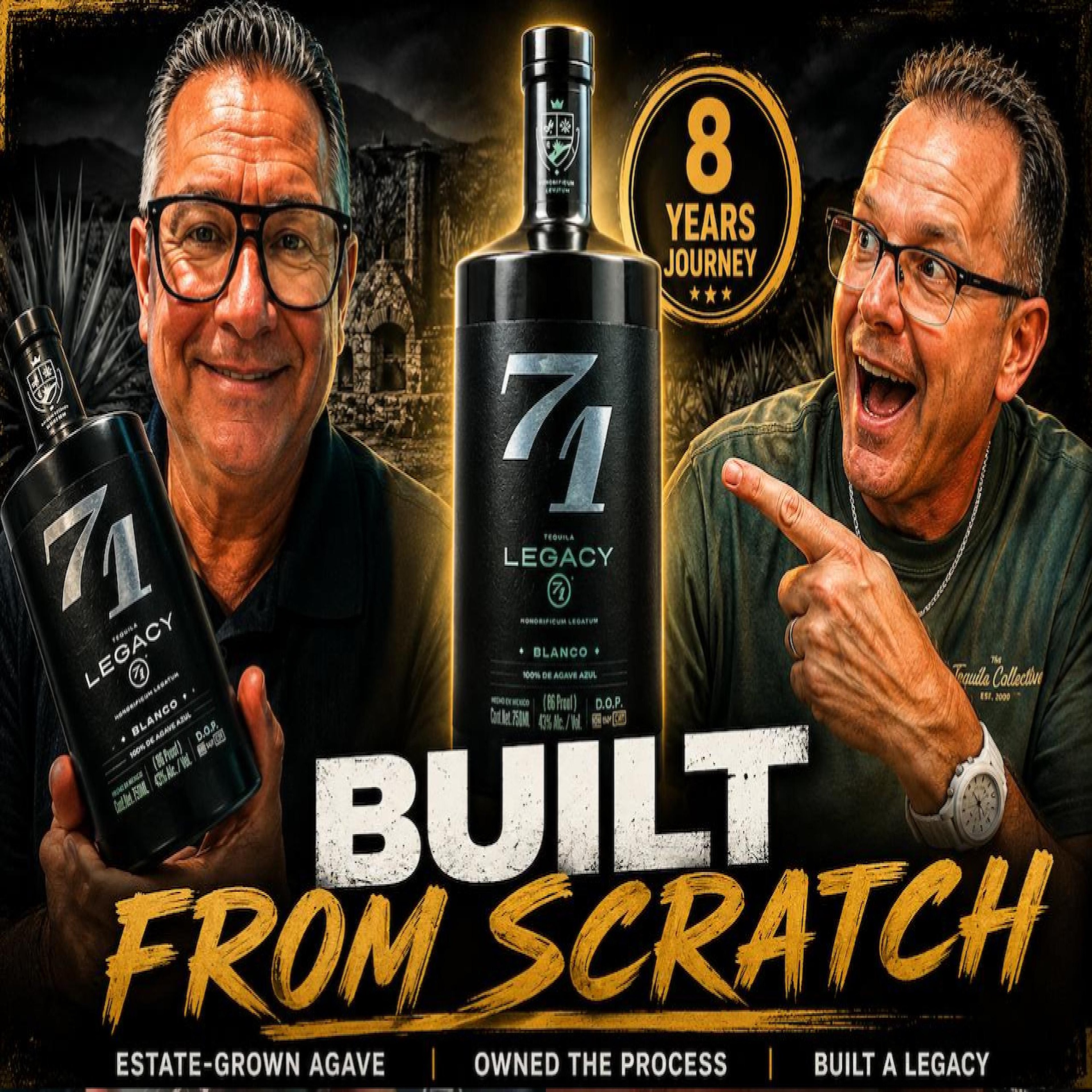
[00:00:00] Speaker A: Tonight, I am fired up for you to learn about this brand right here, Legacy71. This brand has a lot of legacy to it. You're going to meet Felipe Gonzalez. Yes, the Gonzalez name who's been around tequila forever, growing agaves in the tataniko. We're going to talk about Rodrigo, his master distiller, who actually has ties back to the production of Don Julio Tequila. Stick around. This one is pretty awesome.
All right, guys, I am excited tonight because we're going to talk about this brand of tequila right here, Legacy 71. And one of the things that I really want to point out is the amount of legacy that we're going to talk about tonight with Felipe Gonzalez. Felipe, tell everybody. Hey, how you doing tonight, my friend?
[00:00:53] Speaker B: Hi, how you doing, everybody? Saf, Felipe Gonzalez. And thank you, Brad, for the email bite.
[00:00:58] Speaker A: Well, I'm excited. I'm excited about one learning about you and your brand. So if you could take a few minutes to tell everybody who is Felipe Gonzalez, Give a little bit of your story.
[00:01:09] Speaker B: Okay. Felipe Gonzalez was born in a Totonil, Colarto, Calisco, raised in a Totonilco, Alto, Jalisco. And I immigrated to Los Angeles that I've been here over 35 years.
And basically, you know, tequila runs in my veins, I guess. I decided to do this journey about eight years ago and I wanted to have some kind of challenging. This was a challenge for my life.
How can you build a tequila from 0 to 100? Right. So basically it was a journey that I experimented basically since day one, since I decided to do this and to follow this path. So the first thing that I wanted to do at the beginning was studying the lands, studying that agriculture. That is super part of it. I mean, obviously we know good plantation, no good, no good agave. So you're not going to have good product. So I decided that I want to do my own plantation and I wanted to harvest, take it all the way to the distillery, make my own product, put my label on it that it basically designed. And everything is me, obviously, with a good team behind, behind me. Right.
Who's the team behind me? Obviously my family, my wife, my kids, that I'm doing this for them and for the next generations. Right? We planted together the first plan eight years ago, obviously with the help of my agriculture engineer that I hired to help me out and I started learning the process, the process of agriculture, basically that was my first thing at that point. I'm still thinking I'm going to do my own tequila, but I have to go through that Process, the first process. I know that it's a very long journey, but I decided to do this on my own way and myself, obviously. So we started the plantations and after that we start getting familiar with the lands, getting familiar with the landscape, getting familiar with the team that I wanted to put behind me. Obviously, all these is family oriented. I don't want to be with the big brands. This is all family owned business, everybody that I hire. So at the end of the day, now that I have my plantations and everything was going smooth, I said, you know what? Now I had to start learning the tequila. So I started getting some classes, went to Tequila Jalisco, took a couple of seminars, became a catador, me and my wife. And then after that I said, you know what? Yes, I'm going to do my own tequila.
Right after that, we start looking into distilleries. Obviously you get a lot of roadblocks and a lot of people want to do their own thing. They don't want to let, they don't let you do your own thing. So basically most of them, what they sell, they sell the juice, they sell the, the liquid. They don't basically give you a profile. So you choose abc, this is your profile. So that's not what I wanted to do. I wanted to do something that it was created for me, for myself. So you know what? I went. Literally, it took me two years going from distillery to distillery, trying to meet, you know, the right, that right team for, for the brand. And at the end of the day, I mean, it took me two years and finally I found the right combination, the right combination, the right distillery that is going to make me do what I wanted to do, bring my own people to do the tequila. And then I met with Rodrigo. Rodrigo, basically he was, is part of this creation that basically, I mean, he's the master distiller. We click.
I told him my passion, my vision, he's, you know what? Yes, I love it. I have the same passion, I had the same vision. So at the end of the day, you know what? Yeah, it was in 2002. No, 2022, when I say, you know what? Yeah, let's do it. So the good thing about this is that I can bring my own agaves, I can bring my own, my master distiller.
Basically the whole process I can do there with no limitations. We can experiment, do whatever we need to do, but we might have to make it happen. So the first batch that we have, I believe it was in 2025.
That was the first batch.
And now we have it here in the United States. We brought it back. We brought it here September 2025. So, I mean, it's been a journey, obviously, battle design, logo design. But you know what, you have to take your time to do it. Right. I'm not in a hurry. We building a legacy, basically.
Yeah.
[00:05:28] Speaker A: That's awesome. So did you have to acquire land or did you already have some land that you could plant agaves on?
[00:05:36] Speaker B: I have some lands, but obviously, I mean, I have so many agave plantations that I rent a lot of lands as well.
[00:05:42] Speaker A: Okay. I mean, the Gonzalez name has a deep, deep history in tequila. Right. It's been around for a really long time. So the first thing you did was acquired place to grow. And then how did you and Rodrigo get together as a master distiller to work with you?
[00:05:59] Speaker B: So basically, when I was at the journey looking for a master distiller, uh, I mean, actually I didn't. I didn't look for him at the beginning because I knew that he was making his own brand at that time. And I was thinking that he was not open for that.
And then at the end, you know what, I kind of reach out and say, you know what I mean, can you do it for me? He's like, yeah, why not? Let's do it. Let's get together and do it.
So since that day, I mean, we've been working together since then, literally non stop.
[00:06:26] Speaker A: And he has some legacy too, right?
[00:06:29] Speaker B: Of course he has some legacy. I mean, his father, Marco Sedano, he was basically the one that introduced the formula for Don Julio 1942. And he used to be the master distiller for Don Julio in the past. So Rodrigo, obviously second generation, he's been in the agave fields. He's been in the tequila industry for so long. I mean, he's great. I mean, he knows.
[00:06:53] Speaker A: Sure. That's fantastic.
Okay, so you ended at 15:47. Did you talk to a lot of distilleries before you got to there? And what was the thing that really sold you on 1547?
[00:07:06] Speaker B: The thing that sold me on 1547 was that I had that distillery, that it was my own. So basically I can just do everything that I wanted to do. Basically, I rent a whole facility only for my tequila. So during that time, nobody is doing any other brand. So they just focus on my brand. I have my people. Like I said, I have my people, my master steelers, the engineers, everybody there. So basically that's. And the key about it was that I will. I will be able to bring my own agave that's the factor. That was the factor. A lot of companies, obviously, they open up the distilleries because they have their own agave sometimes, and they'll be able to manufacture for a lot of brands. So that was basically that one thing that I was looking in, a distillery. I mean, I'm not gonna say names, but I went to a lot. And basically what they do, just sell you the juice with a private label, and there you go. That was not my intention. I wanted to go more deeper, more personal.
[00:08:06] Speaker A: So what was that process like with Rodrigo, of coming up with your profile? Did you choose your cooking method, your distillation method, and then also the yeast that you're gonna use, along with your agave, to come up with the profile that you wanted? And how. How long did it take?
The one that you went, okay, this is it. This is what we want.
[00:08:26] Speaker B: So you know what? In this case, I mean, sometimes you do the small batches, like very small batches. You know, at the end of the day, you're not going to be able to taste what is going to taste. So what happened? We had a conversation. It took us like a year to come out with a profile that we wanted, especially the tequila that I like the most. My wife is, like I said, part of it. I mean, she's kind of introduced me to the tequila as well. She loves tequila, so that's good.
[00:08:52] Speaker A: That's awesome.
[00:08:53] Speaker B: So at the end of the day, we talk about it. I told him the profiles that I wanted to have, how I wanted to taste. And at the end of the day, it's like when you hire an architect, right? You're not going to tell him how to make your house, how to design the house. And then, you know what, Rodrigo, you're free to do whatever you need to do. Just make it happen. This is what we wanted to accomplish and get it done. When we tasted the first time, he was kind of, like, shy about it. I said, you're going to like it. You're not going to like it, because obviously we produce about 10,000 liters at one shot. So, I mean, I love it. One of the things that we tried, we came out with a 43% and 50%. It was a blind tasting for me, my wife, for him, and a couple of my friends. They I invited to my house, and we started from 55 all the way to 40.
Couple of rounds a couple of days.
We let it sit, we going at it again until we decided, you know what? I think the 50 has a really good character.
Agave at the end, smooth, doesn't burn your throat.
You don't need a lime, you don't need a salt. So that's what I wanted. So we decided to go 50%, 43%. That's what I like. My wife liked it, a couple of my friends liked it. So, yeah, we're happy. We're happy with that profile. At that time, I didn't really see that many high proof tequilas because it was a two year back. You know what I said, well, we're going to take our chances to go a little bit higher than normal now. Looks like that's the train to go. But yeah, we decided to do that. And then it was not intended to sell in Mexico. Mexico, you know, they wanted 40, 38, 35. Very low. Yeah, very low alcohol content. So we decided to go 50, 43 United States, Europe, and we're here.
[00:10:48] Speaker A: Well, I'm sipping on the 50, which is fantastic. I cracked it tonight. I've already finished a bottle of the regular proof. So tonight I wanted to drink the high proof with you. So that Gonzalez name goes all the way back to that brand you talked about a little bit ago.
Yes, Don Julio. So how are you connected family wise, if any, to that brand, that Gonzalez, Don Julio history?
[00:11:13] Speaker B: My great grandfather was the brother of Don Julio Gonzalez, that Carlos. So that's where the family tree is. My family on this family. A tree. They didn't do any tequila at all? No.
[00:11:27] Speaker A: Okay.
[00:11:27] Speaker B: So I can say, I can say that I'm the first generation that I'm creating this. Like I said, I wanted to do it on my own. Obviously, the Gonzalez family, I mean, that's a heritage, right? I mean, it's like.
But yeah, I mean, I love them. I love everybody. I mean, they're good people.
[00:11:43] Speaker A: Sure, sure. So what was your family trees industry that they did? Were they in agriculture or what? What was their primary.
[00:11:51] Speaker B: Actually, my father planted agave long, long time ago when I was a little kid. And then I did plant agave myself, but not like right now. I mean, very, you know, 10,000 plants, 20,000 plants. I mean, not that much. So possibly we tried. My dad tried it, tried to do it at one point, and then I tried to do it, I guess at one point, but we totally failed. So, you know, especially was back in, in 1992, I believe, when it snowed in Mexico. Yeah, Most of the lands kind of like froze. That was during that time. So he said, you know what, I'm going to let it go for a, for a bet. And then I'M going to go back and now I'm going to be. I'm going to study it. I mean, we're going to make a business out of it. We're not going to just try it. We're going to go deep into it. And you have to study the land, you have to study the plantation business, and you have to study, basically, if you want to get. You want to be part of this tequila business, you have to go all in.
[00:12:52] Speaker A: So here's a question. You grew up in a place that I've visited many times. And I love, like, going to a tatanico and seeing this. This heritage of what, you know, as an outsider coming in. I just see, you know, agave farmers in tequila. I know there's so much more there than just that. But what was it like growing up in an area that has become really one of the areas with the biggest tequila brands to ever come out of? A lot of people may not know. Don Julio came out of a tatanico. Sieta leguas comes out of a tatanico. Patron comes out of a tatanico.
You grew up in the growth of that heyday. What was it like? And did you even realize what was going on around you at that time?
[00:13:36] Speaker B: Yeah, I was not really realizing what it was all involved. I mean, I was super young. My father used to take me to the distilleries. I mean, everybody knows each other over there. Pretty much. It's a town in town. Everybody's like, I mean, if I go there, because, I mean, been going there for so long. Every single street I talk with people. They know me. Sometimes, you know, I block the streets. I don't know. Have you seen that? But when you go there, you basically see one of your friends and almost you stop all traffic just to say hi. Unbelievable. My wife used to hate that. But basically, that's how we are in Atotonilco. And I love Atotonilco. And this is giving back to Atotonilco? Pretty much, yeah.
[00:14:17] Speaker A: It's such a beautiful city and it's so cool to visit.
So, okay, let's dive into the name. Tell me about the name. 71. Legacy or Legacy 71. Tell me what it all means.
[00:14:31] Speaker B: So, yes, when I was looking for names, to be honest with you, I didn't really think about that many names. The only name that came to my head was what I'm going to leave behind to my family for generations. What will be the name? The name is legacy. That's basically what I'm leaving behind for my Family and hopefully they can continue to grow the legacy. And at the end of the day, 71 is the year that I was born. 1871.
[00:15:02] Speaker A: Sure.
[00:15:04] Speaker B: So that was a pretty. That was a. That was a pretty simple idea, I guess, but very meaningful to me.
[00:15:10] Speaker A: Yeah. So was it your first try? Did you get that name on the first try?
[00:15:15] Speaker B: Yes. The name on the first try? Yes, I did. The logo?
[00:15:18] Speaker A: No.
[00:15:18] Speaker B: The color of the bottle? No. So basically end up hiring a company in Guadalajara to come out with a. With a brand name. And at the beginning it was legacy with the big letters on the top, the number on the bottom. Smaller at the end of the day when it. When they're making all the designing. So you know what, the number. The number 71 is stronger than the name, and people will see it better than just the name. So that's why they kind of switched the letter on the top and the name on the bottom. They created. I loved it. I mean, obviously it took us at least a year going back and forth, back and forth with different logos and letters, and finally we got it dialed in the way that we wanted to.
[00:16:04] Speaker A: What was the choice on going with a black bottle versus a clear bottle? Because this is not something we normally see in a normal bott.
So what was the thinking behind that?
[00:16:15] Speaker B: You know what? I don't really like to follow what is standard for everybody. I want to be unique and I want to be different. And basically that's the way that I can present the brand that we're not following everybody else. We are ourselves, we are unique. Basically, that's what I wanted, to be a little bit different than everybody else. I'm pretty sure there is black bottles in the market, but obviously I don't see nobody as my competition. I don't see nobody as. You know, I wanted to be like these people. I wanted to do this. I wanted to do this same as these people. Basically, I'm following my own path. Whatever is going to take me is going to take me. I think I'm doing all right after, you know, so many years we had the bottle.
[00:16:54] Speaker A: I think it looks great and it's one that really stands out on my shelf, right. I have lots of clear bottles, lots of colorful bottles, and boom, I can see those black bottles right there with the label, so they stand out well. So let's do this. Let's talk about the production method. So we're starting with your estate grown agave, and we know you're growing those to full maturity.
So what happens after you harvest the agave? What's the next process in making legacy? 71?
[00:17:22] Speaker B: Yeah. So I'm going to take a basic, obviously I'm not going to go into kind of details, very technical stuff because I'm not a master distiller. We can have another section of that that we can go deep into the, the process. Obviously we get a seven year agave, very mature agave, really good sugar content. 35. 37. That's what we're getting right now. 39s. And then from that point, whenever we start doing the hema, we got four trucks. That's basically what I wanted to do, 80 tons a batch. So we have four brick ovens with a each.
[00:17:59] Speaker A: Okay.
[00:18:00] Speaker B: So basically when we put the gathering to the ovens, we cook it for 24 hours low steam. We let it rest for another 24. Right after it's cooked, obviously we have the roller blades. Miller, fourth stage. That's in the fourth. Then the third stage, that's when it start putting that water, deep well water, that's what we use. Have that well in the distillery. So that's pretty good. And after that it gets transferred into the fermentation tanks. We have our own yeast, dried yeast. And we let it sit for 70, 71 hours. Yes. Why? Why 71, right?
[00:18:43] Speaker A: Exactly. No, that's perfect.
[00:18:46] Speaker B: Yes. After that it goes into the steel. We steal twice with steel and copper.
[00:18:51] Speaker A: Perfect. And then after distillation, are you doing any type of resting aeration or filtration?
[00:18:58] Speaker B: We do filtration. We let it rest after that. Actually the first batch, we let it rest for seven months.
[00:19:05] Speaker A: Oh wow.
[00:19:06] Speaker B: We four bottling it. We wanted to, to try that and basically that's how we're going to be following. So it's basically eight months, but we call it seven plus one.
[00:19:16] Speaker A: Okay, perfect.
[00:19:17] Speaker B: So we have to kind of match that. We have to kind of match the number, you know. Sure. So it's, we let it sit for, for eight months.
[00:19:25] Speaker A: So are you doing that in like just stainless steel? Just resting in stainless steel and letting it breathe.
So is there any plan for maybe a seven plus one month reposado coming out in the future?
[00:19:37] Speaker B: Yes, we have it.
And that's seven plus one. So eight months.
I don't know why, but I mean the number is always coming.
Yes. We're going to have a special release, single cast.
It comes 44% French oak. French oak. And we have a very heavy, we call it cocodrillo style.
[00:19:59] Speaker A: Heavy char.
[00:20:00] Speaker B: Yeah, heavy char, Yep.
[00:20:02] Speaker A: Okay, so heavy char, French oak. Are those first time use barrels or were they used for something else before you got them.
[00:20:08] Speaker B: They used for something else before we got them. But basically all these barrels, we opened them up, we cleaned them up, we kind of made a whole thing make it.
[00:20:16] Speaker A: So you resurfaced, recharged and got the barrels ready for you. Okay.
[00:20:21] Speaker B: Yeah. We don't use, we don't use it just like that. I mean we just kind of clean everything up, recharge it and.
[00:20:26] Speaker A: Very cool. Any chance of an anejo coming out in the future? Because I. I have a feeling there's going to be a seven year, one month extra on Yeho.
[00:20:37] Speaker B: But I have to wait. But I had to wait. But yes, ano is there.
[00:20:41] Speaker A: Okay.
[00:20:42] Speaker B: No plans to release yet.
[00:20:44] Speaker A: Gotcha. Okay, that's pretty exciting. So how difficult has this process really been? Like when we're talking here, it sounds like it's been really easy and you just made this happen. But really tell people how hard this process really is to make it all come together.
[00:21:00] Speaker B: Well, especially for a guy like me that I knew very little about that tequila business and the plantation business, I use like tequila, you know, it's like to drink it, but process it is completely different. Like I say, you really have to study what you're going to do. I mean it's like every single business. No, I mean, but it's. I mean it's what, eight years in this process?
[00:21:23] Speaker A: Yeah.
[00:21:24] Speaker B: At least just to get a blanco. Just to do the blanco.
[00:21:27] Speaker A: Yeah.
[00:21:29] Speaker B: Not necessarily took me eight years for my brand. It took. It's a eight year process altogether. From zero to whatever we have right now. Because I wanted to be ready with the plantation before I start anything else. So that's why we waited for so long. But it took me literally like two years to get my, my logo, the bottle designing. I get together with Rodrigo, design the process and basically it was turnaround. Two years with all the legalities that you have to go through in Mexico and the legalities you had to go here as well, the TTB and everything else. But I mean, at the end of the day, I mean I don't consider this as a job is my hobby. I have another job.
So yeah, this is my hobby.
[00:22:17] Speaker A: That's a, that's a great transition because this is my hobby. Right. I've been doing this for a couple of years. I've been drinking tequila and enjoying tequila for over 20 years. But my job, I'm a mortgage guy. I've been, I've been writing mortgages for 30 years. So what is that day to day? What's your. What's your regular job?
[00:22:34] Speaker B: I own an air conditioning business here in Los Angeles area.
[00:22:37] Speaker A: Awesome.
[00:22:37] Speaker B: So basically that's. Basically that's what I do. We do commercial work, residential work. We have the license for electrical license, air conditioning license, and you will be license. So basically we do it all too. It's a one stop shop.
[00:22:50] Speaker A: Here's the question I get all the time, you tell me if this happens to you because I talk about tequila so much, they're like, are you still a mortgage guy? So do you ever get. Hey, you talk about tequila so much, are you still an H Vac guy?
[00:23:04] Speaker B: Yeah, pretty much. That's the question. And a lot of people is like, you're still working for your company? Yeah, I still work, but I delegate, I delegate, I delegate. So I had a little bit of freedom, obviously.
I mean, I've been in this trade at least 30 years. So I've been talking about air conditioning for 30 years. And I'm pretty sure everybody's bored about getting luxury, about air conditioning. Right. It's not that exciting. It's the machines, right?
So, yeah, I mean, most of the time I talk about tequila. I mean, I go to the trade shows, I got my backpack, I give it away. I mean, I'm that show sometimes, you know, Nobody cares about H Vac anymore. Everybody's right here with me drinking. I love it.
[00:23:41] Speaker A: The mortgage business is similar.
[00:23:43] Speaker B: Right.
[00:23:43] Speaker A: Not everybody's really excited about the finance side of world of the world. So I'm so glad that you did this. One of the things that I got the opportunity to do that I really found interesting is a friend of mine sent me a 1979 Don Julio tequila, a couple of samples. And I pulled that 79 sample and I blinded it with the regular blanco and I just put them side by side. And there was a lot of similarities that I have to that original older Don Julio. And I don't know what it just says Don Julio, you know, on the. It was just a sample 1979 sample. And the taste of the two were very similar. And knowing that Rigo is doing this and that his father was the master distiller and some of the probably the what's been passed down in what they do.
[00:24:36] Speaker B: The.
[00:24:37] Speaker A: The flavors to me were very similar. And I thought that was really awesome.
[00:24:41] Speaker B: Yes.
[00:24:41] Speaker A: And.
[00:24:42] Speaker B: Well, one of the.
[00:24:43] Speaker A: Especially knowing how much agave have changed. Like people don't realize that the agave today are different than what the agaves were back then.
But to have the profile be similar now, it was weaker. The. The Don Julio, because it was so old, you know, and it is oxygenated. But there was a profile there that I really liked, that I was like, wow, this is, like, really cool. So that. That's been really neat that I am able to pick that up. And if anybody that has those and can taste them together, it's pretty. It's pretty awesome to taste that.
[00:25:12] Speaker B: Yeah. I mean, everything changed now. I mean, obviously. I mean, all the tequilas in the past, they keep. I mean, it's the same profile, but I mean, it's not the same profile. I mean, you taste it and it's not these.
I mean, if people do the traditional way in the past, the way that it was made, I'm not going to say that a lot of people will have almost the same profile, right. But I mean, they try to go back to the basics to process a good tequila, I believe. I mean, that's the key. Yeah, that's the key.
[00:25:43] Speaker A: And the similarities of tradition are going to show up in your glass, right? It may be different because the. The environment's different, the agaves are different, the yeast is going to be a little bit different, the time is going to be different, but the similarities are going to be there. And I think that's really awesome. Okay, so I got a. I got a good question for you. So now that you have your brand and I look at these as your babies, right? This is.
[00:26:07] Speaker B: Yes, my baby. Basically, when I go to every party, whatever. That's how I like a baby.
[00:26:11] Speaker A: Exactly.
[00:26:12] Speaker B: This is your baby. Yes, my baby.
[00:26:14] Speaker A: You know, so, like, your H Vac business is a baby. Your employees are part of your family. You know, I feel like that in my. In my mortgage business as well. But I've never got to create something that has such a legacy to a family, Right? Like my family, my dad was a fireman. Right. So what can I create that's going to be something that goes back to my family? And you do with tequila because it's ingrained in your family, in your tradition, in your location, right? You talk about.
You're going to talk about tequila. So if you now could take your tequila and sit down with anybody alive, dead, famous, not famous. Pour a glass of this tequila. Pour them a glass of it, share it with them and talk about it. Who would you want to do that with? Who would you want to sit down and share this with?
[00:27:03] Speaker B: Oh, my God.
I wanted to share it with my dad, obviously.
Yeah, My dad passed away already,
[00:27:11] Speaker A: so to sit down and talk about this story and show him what was a Struggle years ago. Now you've. You've made it happen.
[00:27:20] Speaker B: Yeah, I mean, it's actually. I go to the cemetery every time I go. And trust me, I talk to my dad and I sip a glass with him and I leave a glass behind.
[00:27:30] Speaker A: Good for you.
[00:27:31] Speaker B: This is basically. He's so much passionate, and possibly I did it for him as well, you know, that I want to create something.
And basically, the way that we've been talking, I'll be talking to all my friends about it. It's a challenge, but, I mean, somebody has to do it, right?
[00:27:48] Speaker A: That's awesome.
[00:27:49] Speaker B: All right.
[00:27:50] Speaker A: Where can people find this? What states are you guys located in?
[00:27:53] Speaker B: We are located in Los Angeles area, California. That's where you're going to be finding these products. We have it at Blue Wines Spirits. Yep. Thank you for Liz. She helps me out since day one. We have it at Lewis Liquor as well.
We have it only in two stores so far. Just going slow, I guess. Taking. Taking my time, partnering up with the right people. I just don't want to go just anywhere. I believe you have to build your foundation first and then study and possibly go a little bit bigger. And I'm taking my time and, you know, getting the right people with me.
[00:28:28] Speaker A: Well, I want to say the tequila, to me is fantastic. I've heard other people that have reviewed it talk about it too. Long Island Lou gave us some raving reviews as well. And Blue wine, they do a great job. Blue Wine and Spirits does a great job. So I definitely say go there, check it out, grab a bottle. And Felipe, I know we've been trying to do this for a couple of weeks here to get scheduled, but I want to say thanks. Thank you for taking your time. Thank you for the bottles, and thank you most of all for sharing your story and your pass, what you do. I really appreciate you. So thanks for joining me tonight.
[00:29:01] Speaker B: Thank you, Brad. Thank you. Thank you.
[00:29:03] Speaker A: Let's. I got a little bit left in my glass, actually. I'm not going to just sip a little bit. I'm going to pour some more because it's so good. So let's do a salute with some of this high proof.
[00:29:14] Speaker B: Yes.
[00:29:14] Speaker A: Let everybody know this high proof is one they need to go get. So cheers, my friend. Thanks for cheers, my friend.
[00:29:21] Speaker B: And hopefully I see you one of these days in person.
[00:29:23] Speaker A: I wanted to meet you.
[00:29:25] Speaker B: Cheers.
[00:29:25] Speaker A: Cheers. Phone. And give a big old smile.
Okay, perfect.
[00:29:32] Speaker B: Now that's my smile.
[00:29:34] Speaker A: No, that's a perfect smile.
[00:29:36] Speaker B: That much.