Episode Transcript
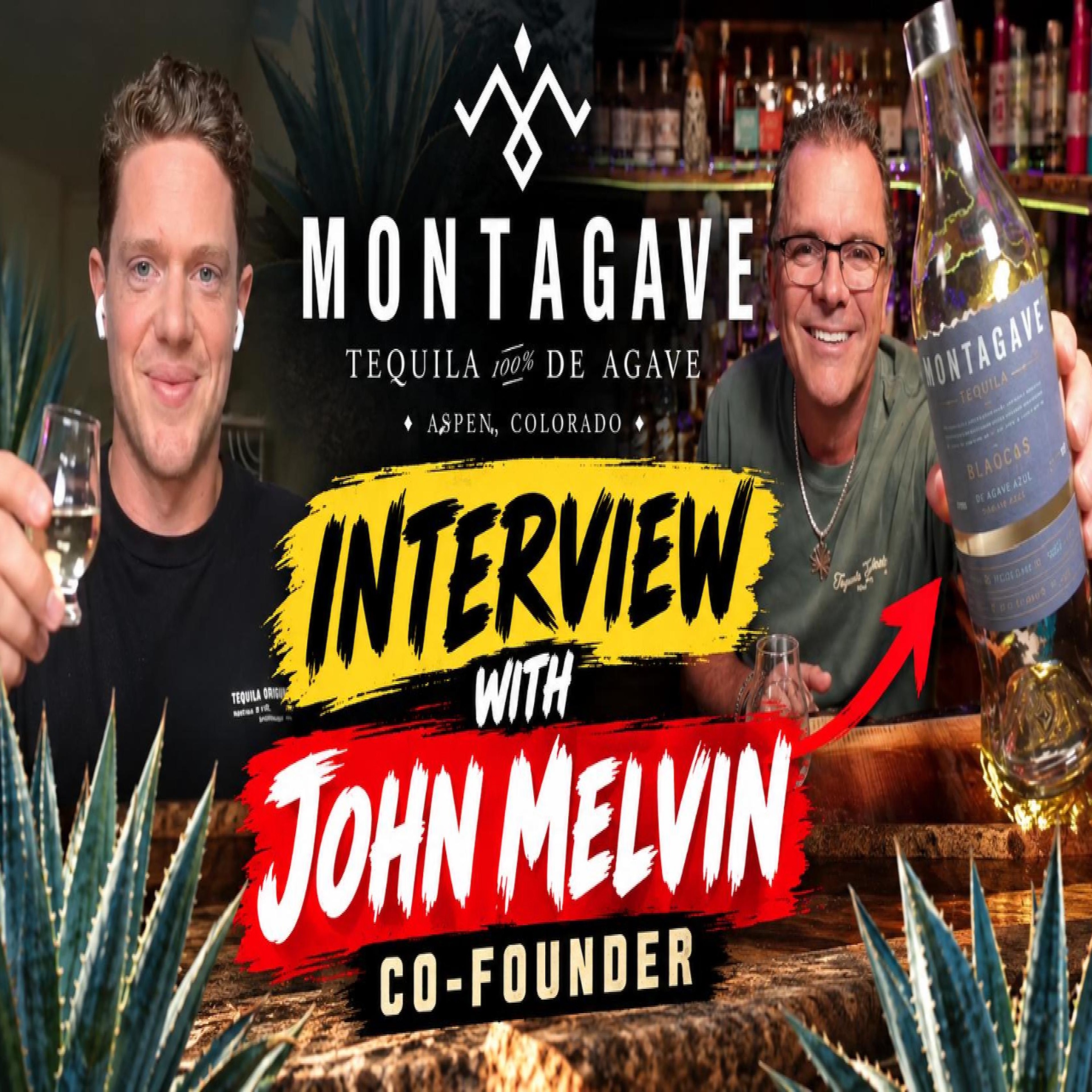
[00:00:00] Speaker A: All right, guys, I just finished this bottle talking to John Melvin, the co founder of Montagave Tequila. And this is an interview that you want to stick around for, finding out the reason why. And the quality of what they make is absolutely so important. So stick around. This was pretty cool.
Okay, guys, this one is gonna rock. Here we are with John Melvin, the co founder of Montagave, and I am fired up about learning about your brand. How you doing tonight, John man?
[00:00:38] Speaker B: Brad, thanks so much for having me. Dude, this is. Yeah, this is a dream come true to come visit with you, brother.
[00:00:44] Speaker A: Well, the honor is all mine. I'm very excited. Love your brand. I can't believe it's taken this long for us to get hooked up, but I want to throw a shout out to Tequila Tim for saying, hey, here's John's number. Call him. You guys together? So thanks to Tim. He's amazing.
[00:01:00] Speaker B: Thanks to Tim. Thanks to Tim. Another legend in our space. Nice. Yeah, he's a good dude.
[00:01:05] Speaker A: And a shout out to our buddy Rob Jarrett at Tequila Collective. I know you guys have done some great single barrels with him, so he. He also always talks about your brand, so I'm fired up to learn about it. So let's do this. Since, I don't know, let's step back in time a little bit and tell me about your journey into tequila before Montagave was even a brand.
[00:01:27] Speaker B: Awesome. Yeah, happy to. Uh, so. So I. I was born in Detroit, Michigan, and moved over to Germany and then England and then back to the US I lived in New York and just outside the city for a little bit, and then moved down, back down to Texas. And then my folks ended up settling out in the hill country about an hour northwest of Austin.
In an area of Burnett County.
Yeah, about an hour northwest. And they were, I think, adopted, maybe a Francophile nature a little bit when they were over in Europe. And so it was, you know, fun, fun bottles of wine and fun balls of spirits and a cigar here and there. And that really turned into long family dinners and kind of appreciation around good food, good wine and spirits, good people, and just kind of the time together. Right. And so I grew up with that. And when we moved out into the hill country, my folks planted grapes out there to make wine, to make garage wine, and they planted Cote Duron variet.
I was initially interested in, you know, in. In the wine world to, I think, to a degree. But shortly thereafter, we got a little keg still and started making some fruit brandy. I worked for a grain of glass whiskey distillery called Andalusia as well. And they were doing some fun things. And in college, I. I went and studied abroad, University of Edinburgh.
There's two, really two reasons for that. One was I was going to graduate early with a math degree.
And my grandfather, who's also named John, he said. He said, dude, I don't know what you're thinking, but you have a long time to work. He's like, and I've seen you go and, you know, get after. In college for three years, but you really haven't done anything. You haven't traveled, you haven't done any of that. He's like, you know, what is stopping you from going and doing something like that? And it caused me to take a step back and really think about it. And we have some Scottish heritage as well. And. And I, you know, at the time was really into single malt and, you know, was. Yeah, was considering, like, hey, this. Yeah, this could be a fun place. So I went and studied at University of Edinburgh for a semester. And while I was there, you know, didn't go to class as much as I visited whiskey distilleries and played golf and, you know, did other fun things like that, you know, visited places in Europe and had toured a bunch of distilleries, 20, 25, 30 distilleries up there and really fell in love with.
Yeah. With the heritage and the legacy of. Of of spirit. And when I came back to Texas and graduated, I was just hanging about with some friends there in Texas, and we were drinking some tequila, and I had made the connection that I didn't really understand where this tequila was made. It was just a brand that I was drinking. This was 2013, and it was just a brand that I was drinking, and I had no idea where it was made. And so that's when I started to dig into how do you know where this stuff is made? And uncovered the nom. And really started to dig into all of that. And then, you know, that was like the heyday where you could uncover beautiful bottles that were dusties on the shelf, and nobody was really interested in any of that, but the flavors were just completely different. It might as well been a completely different spirits category. Right? And then you can start to do a little bit of the work around who's actually making this and hear the stories about that and the generational, know how that's being passed down and, you know, the. The unique families that have really define this space and this category itself and how, you know, the big brands and perhaps, you know, thousands of brands that that are out there in the space that are competing for market share, don't really tune into that as much. And, but me being highly appreciative of Sigma Malt, but also well made, you know, wine and spirits in general, like really latched onto that. And so I was, you know, introducing this quality stuff to, to, to my friends and my family and Lucy and I got together, we met up at a reg jam band show in Aspen, Colorado.
And, and yeah, it was great. And she was, you know, she was born and raised in France and, and we made the connection on kind of our global perspectives in a way and some of my experience living abroad and you know, within a few hours of meeting each other, you know, I think we knew that we wanted to, to be with each other and seemingly had solved all of, you know, all of like our collective problems. And we were like, yeah, we should just keep hanging out together. And, and, and, but she didn't know high quality. Her, her perspective and experience was tequila was salt and lime and it was never a quality experience. And you know, the, the, the stuff that they would drink over in France was, was mixed though. Right. So it was, yeah, not even remotely close to the things that we're drinking today.
But I introduced her to high quality agave and, and she was blown away by it too. And so we would take bottles over to France and introduce her family to high quality agave and find some ocho over there every once in a while. Fortalez know so much about that. And over time there used to, there would be, you know, some more and more things.
And so yeah, so it just became kind of a growing appreciation for, you know, for that in our family. And you know, when I stopped working after I graduated, I went into the commodities business. I was a math major, but went into commodities trading and actually spent some time up in the Midwest working for a merchant trader and then spent some time in Texas working for a fund and then moved to Colorado, the mountains of Colorado, for it was a Texas based hedge fund.
And then I was working in a branch office that they had opened in Aspen, Colorado, which was a pretty sweet deal. Yeah, they said you can choose, you can choose Texas or Aspen. And I thought that was pretty rhetorical. And so I moved up to Colorado and was doing that and having a great time. I worked for just an incredible family and an incredible dude who's a mentor to me, eight, you know, brilliant children and had found a way to, to, to, to work and be a family man. And that was incredibly inspiring to me.
And, and in that time, I was still doing, you know, some of these tinkering projects that I'd taken. Taken on since we were doing projects at the house. And so I would buy bottles of whiskey and double barrel them, you know, add, you know, have a little. Have a little, you know, gallon, you know, five gallon barrel or, you know, whatever it was, and do different barrel projects like that.
And when Lucy and I got married, we decided to do a project that symbolized our two cultures coming together. And that was tequila rested in a French oak wine barrel. And we thought that we could serve that up at our. At our wedding, and it would be a fun way to just symbolize, you know, our two cultures come together. And so we. We initially thought that we might source something over in France and then, you know, mule the tequila over at some point and just rest it there and then bring the barrel to the wedding.
But we were like, okay, this is getting a little too complicated. So we sourced a French oak cabernet barrel from silver oak in Napa, picked it up in Vail, and then. And then brought it back to our living room up, you know, just outside Aspen. And I, at that point, had really, you know, fallen for Cascawine. And so I went out and I was buying, you know, all the Plata 48 that existed in the state.
And we filled up about a third of the barrel, you know, with these balls, just buying it off the shelf and let it rest for six months. And after six months, we pulled it and then muled it over to France for the wedding. And at the wedding, you know, people really loved it and thought that it was just so unique and interesting and curious and cool and. And so we made a few more batches and. And then, you know, somewhere along the way, too, in my day job, I was starting to. To travel and do all these things, and I had young, uh. And we were just looking at it, and it was like, you know, this has been fun. I've been in the, you know, in the investment management space for 10 years, and. And it's cool, and there's good people, smart people, you know, doing their thing. But at my core, I was, I think, had latched onto the. This hospitality, the concept of hospitality, and. And, you know, what I grew up with, which was long family dinners and breaking out something unique and fun and interesting and cool and something that has a story and something that is, in a way, like, you pushed out into the world, right? It's like if you could bot up what you are about and push that out into the world, how cool would that be? And so, you know, my mind was starting to think that I was going to find a new mountain to climb. And I had some conversations with Lucy about this and she's like, you know, this Tequila project is, is cool and it's, and it's interesting and people think that it's unlike anything else that's out there. And so then we had a really kind of long, hard look at what would it require to, to turn this into a business. And it turns out that it's an incredibly difficult and competitive business. And so, you know, how are you, how are you going to differentiate yourself and how are you going to get out there in the world? And you know, we knew that we wanted to bootstrap this thing. We knew that we wanted it to be a family owned deal and a legacy deal. And we knew that the only way that we were going to break into the category and the only way that it was going to be a true representation of us was that if we focused on quality and decided to make the highest possible quality juice that we, that we could, and where does that send us? And that sends us to Cascowine. And so, you know, that was kind of, the thesis was like, hey, if we could work with Cascawine and have what we think is some, if not the best juice in the world, then we could go out and source some of the coolest, finest casts in the world and bring them back to, to Cascowine and lean on relationships in France, lean on other old, old world kind of origins and really find fun, unique things. Because at the time we were looking around and you know, whiskey had done it, single malt had done it for sure.
Some of the experimentation and cast finish, cast finishing and even technique differentiation as well, like in fermentation and resting and some of that. But there really hadn't been so much of that in tequila. And we looked around and 99% of the juice that was being rested in a cask used ex bourbon, American oak. And you know, hey, that's fine, I love that as much as everybody else does. But as far as differentiation, we thought that there was a pretty clear thesis here.
And then we also knew that if we just focused on making the highest possible quality product that we could by focusing on the inputs like so granularly that it was almost crazy that we could end up with a product that was, you know, really nice and interesting and we wouldn't necessarily have to go play this wide market reach, high volume game. You could actually create a little sustainable business that Was family owned and focused on quality and was really a representation of kind of us pushed out into the world.
[00:12:28] Speaker A: That's incredible. It's. Having the finance background's probably helped you in a lot of ways too of knowing how to manage and navigate what you need to do financially to put this together. I'm sure that's been a big help.
[00:12:39] Speaker B: Yeah, it's. Yeah. I mean there, you know, it seems like there's always something lurking behind a corner that you can't see, you know, and so I think there's. Yeah, I think in this, in this space it's been interesting because you know, we're working with multi continent operations and logistics and taxes and you know, all of the fun things that, that come with that. And so it's been throwing, thrown in the deep end. Right. And figure it out. I think the fortunate deal is, you know, my wife is really intelligent and I'm a bit of a hustler and so you can, can lean on the brain trust over there and then, you know, and then I'll go hustle to, to figure it out. She's also an attorney so we, you know, that's our in house counsel. I out kicked my coverage in a big way and yeah, so you know, we've, yeah, we've been, you know, from the beginning really just focusing on. And that was. The other part is like, hey, we don't know, we don't know anything. We're, we're green in this space. Right. And we're trying to go and make something happen and make it sustainable and, and make something that will, that will last. How are we going to do that? And it's by working with the highest possible quality partners as well. Right. Like high integrity people that also have a long view on the world and want to build a business together. And so it's, you know, taken us a little bit of time in the different operations category or logistics or some of these things to find those right partners. But it seems like, you know, the, the, the system has gotten so much better here over the years. You know, once you really make that a priority. Right. Which is like finding and working with high integrity quality people that also have that long term vision.
[00:14:12] Speaker A: Being such a fan of Cascawine, what was it like the first time that you actually made connection and got to talk to Chava?
[00:14:19] Speaker B: Oh man. Yeah, that was, that was unreal. We almost didn't. Yeah, it was, it was a little bit surreal. Right. Like when we, when we chatted on the phone and talked about going down to you Know, and.
And it was definitely a surreal experience.
We're just the biggest fans of. Of Cascowine and think that the. You talk about longevity and. And witnessing all kinds of different market environments and being able to get through all of that and just find a way, right? And that family has found a way. And the Resales family, they're incredibly generous people and incredibly, incredibly talented and gracious as well. And, yeah, it's just been, you know, the biggest honor to work with them.
When we got down to Cascawine, it was certainly surreal because what you drink in the bottle and the nose that you have in that glass when you walk through those doors is the nose that you pick up the transition or the translation of that product into that glass. I mean, it's high efficiency. Like, you're not losing a lot of aroma or flavor or anything, right? Because you are just getting almost everything out of that. And I thought that was incredible. I was like, oh, my gosh. I mean, this is the smell of, you know, some of my favorite juice that cascarina is producing. And you go in there and see the brick ovens and the whole process, and it's a. It's a magical experience to do that. And then, you know, and then the other side of it, right, Is like, you see some other distilleries that are. That are quite a bit bigger, and it's a little bit more.
Yeah, I'd say efficiency focused or industrial. Right. Where, yeah, there's some. Just some different things going on. And, yeah, the. There's a real difference. And to see the focus and the commitment to that, I mean, just also props to the Resales family for having that vision and sticking to it, because it is a beautiful thing, 100%.
[00:16:11] Speaker A: And I have to say that the.
I think it was the third time I went to cascaline. It was raining when we walked down to the ovens, and the smell of the steam coming out of the agave and the smell of the wet concrete all around us was all of a sudden, the smell of 1123 in the glass.
[00:16:33] Speaker B: I was like, glad we got to
[00:16:34] Speaker A: come here while it was raining, because,
[00:16:36] Speaker B: yeah, that petrichor is total. It's the note of cascoine. Yeah.
[00:16:40] Speaker A: Yeah. So amazing. So that. That facility is so cool. And it's. It's great. Every time I go there, it's awesome. And one of my questions is, when you were coming up with the. The profile that you wanted, what was it like being in a, you know, really kind of a kitchen that has every type of tool in a traditional kitchen. Right. I mean, some of these distilleries, you've got a diffuser and column sills and. And a lot more tools that we don't necessarily enjoy. But having those old tanks, you know, those concrete fiberglass tanks to the wood tanks, to the stainless steel tanks and the roller mill and the tono, what was it like figuring out which way you wanted to go to create the profile that you have?
[00:17:21] Speaker B: Yeah, that is a great question. We initially really leaned on. On Chava for that. Right. Like, we. Yeah. Going into this. Going into this relationship, you know, the pitch that, that we made was, look, we know we're. We're a small family owned company that hasn't even actually built the company yet. So, you know, what we're.
[00:17:41] Speaker A: What we're.
[00:17:42] Speaker B: What we're pitching to you is really just this idea. And if you say yes, then we are going full tilt into this thing. Right. Like, we are in it, but we want to make the pitch to you and just see what you think about it. And the pitch was that we think cascarine makes the best juice in the world, and we would like to explore those flavors when they are rested in the best caste in the world. And until this. Until this time, nobody has been as granular as we have around the caste selection. And just the focus on quality that we have when working with some of these partners, we feel that we can go and source these and run through that process in a way that would give the Jews at Cascawine the best vessels, really in the world to be rested in.
And, you know, when they heard that pitch, they said, okay, yeah, sure, let's do this.
And we, you know, did a double take a little bit. And they. They confirmed the yes. And so we said, okay, all right, we're in it. We're launching ourselves in the deep end of this thing. But I think that initial mandate of the focus on what is the barrel bringing to this situation also helps simplify the recipe on the front end. And so, you know, and that was a conversation that we had with Chava in the early days, which was, hey, if we start bringing in other variables and other techniques and, and, you know, to hone a here and extended fermentation here and all of that, and then touch the barrel, like, there's a lot of moving parts there that sometimes it's hard to wrap your head around all of that. And you don't really know until you have kind of this controlled, you know, idea of. Of what just happens when you introduce high quality cast to this. And so what we knew is that with the heritage product, you know, kind of our Rosa Blanco, that we were going to just introduce the barrel and just see what the barrel does. Otherwise we're focusing on brick oven, you know, roasting, of course, that's all that we have at 11:23, and then stainless steel fermentation after roller mill extraction. And so we weren't introducing some of these other variables and tools for this, like flagship, initial flagship. And at the time, that was the only product that we had as well. Right. So on that first batch of barrels that we brought over, I bet we brought. I bet it was something like 10 Bordeaux barrels and 10 Sautern barrels. And that's like, that's about as much money as, like, we had to do this in addition to, you know, the couple hundred grand or whatever that it was going to take to do everything else in the business. And we just said, okay, if we can make this one work, then we can continue flipping this thing into, you know, more and different and all of that. But it was, yeah, it was definitely humble beginnings, but we're super thankful to.
To Chava, Benji and the whole family. The whole family is involved, but the whole family for giving us a shot and believing in the thesis that we had.
But from there it was like, okay, now we have our flagship expression, but we're starting to put some juice into some other cast. And then it was also early days that I had this idea for rokas, which is the expression that you have in front of you, which is that 1123 petrichor bomb minerality, you know, in a glass, right, is just like, it's the best and the, the range and the depth of that experience, and it's earthy and vegetable and briny and mineral and, you know, all of that. And just like, the range of that flavor is so unique. And I. It's the reason I fell in love with 11:23. And what I wanted to do was say, can you. Can you accentuate that? And is there a way that you can create kind of this. This round, rounder mouth feel potentially?
And borrowing some techniques from the wine world, we knew that if you introduce a vessel in the process, whether that be, you know, fermentation or in resting, if you introduce a vessel that's slightly alkaline in nature, so that could be clay or limestone or a mix of the two, which is what we'd use for our cement blend, which is limestone and clay, that alkaline nature will start to pull the ph up a little bit.
The ph of tequila or of wine is acidic and highly acidic. And so when it rests in this alkaline container, it slowly inches up towards neutral.
And you have to watch it. You have to really be in tune with the production process. But as a, as a craft technique to try to enhance some things, it's definitely a viable option. And I wanted to really trial that out. And so we reached out to some folks in Sonoma, California that have been creating these concrete vessels for wineries and said, we've got a crazy idea. And they said, we love crazy ideas. And so we, yes, we went on, you know, doing this, doing this thing. And so we, you know, we made these little concrete, you know, rock cubes basically, and then kind of increased the, the amount of R and D from there. But it took us about eight months. And, and in that time we realized that the ph could come up. But there was a little balancing act that we had to do. We couldn't go too long, go too short. You didn't really pick up anything. And so the focus was finding that balance of like two to four weeks in there and letting the ph come up about 10%.
And so that was a, you know, that was a big.
Yeah, it was a big bet, you know, that we were taking. But we looked around and said, I think, you know, the last thing that we're going to do at Cascawine is, is break the mandate that we had originally, which was to come in as a brand that's always going to provide something unique or collaborate on something that's unique and differentiated to what 1123 doing. And so this is an experimentation, this is innovation, this is collaboration with the Rosales family to try and create something new for the category and push the boundaries of the category a little bit within the realm of respecting what 1123 is doing already.
But this fell, I think, perfectly in that realm. And it was something that we said this could be a flagship, the flagship expression for us, because the logistics of barrels and managing all of that are insane. But we built a 10 foot ton or 10 foot tall, 5 ton concrete egg in California. And it's like that is a, that is a hassle and a half to get down to Mexico once. But hey, if you get it down once, it's like it's staying there, you know, you don't have to move the thing. You don't have to. It's like you don't have to get another one down there for hopefully many, many years. So, yeah, so, you know, that was in my mind, I Was like, there's multiple ways that this thing pays off. One in, you know, in operational friction, and then the other in, hey, this could be a real product that we could lean on as. As our flagship and as a good introduction into the brand as well, to show, I think, you know, people in the community that, hey, this is a. A beautiful expression of traditionally produced blanco with a unique tilt on it that is borrowed from our background in the wine and kind of broader spirit space.
And it was a, I think, a fun way for. Yeah, for us to put our mark on it, too.
[00:24:45] Speaker A: Well, I. I'm embarrassed to say. This Montag that I've had is this bottle.
[00:24:50] Speaker B: And we're fixing that soon here, Brad. Yeah, we're fixing that soon.
[00:24:54] Speaker A: When I first tasted this, I popped it. I let it rest for about 10 minutes. I came out and tasted it and said, I don't want any of their other ones because this one is so good. And I don't know that they could all be this amazing. Like, this had such an amazing flavor to me. It's. It's Gascoigne on steroids. And. And when you think back to some of the oldest school traditions of tequila and mezcal, no resting in glass jars and clay jars are a very common thing in tradition. So taking that giant egg is really taking this back to a heritage of storing tequila and resting tequila and giving it this flavor. And it. I mean, you knocked it just absolutely knocked it out of the park with this. It was. Was. And it's. It's higher proof. Like, I love it. So the reason I got it down, because this is a. A high up on the shelf because I. I'm always like, man, I don't want to finish that one yet, but I thought, I'm pouring this and finishing it with you today.
[00:25:54] Speaker B: So I appreciate it, dude, so much.
[00:25:57] Speaker A: Thank you for doing something like that. Like, I think that is very cool.
[00:26:01] Speaker B: Thank you.
[00:26:01] Speaker A: Okay, so out of all of the things that you've done, and I think of you talking about your.
Her heritage and going back to England and to Edinburgh, how come I've never seen a tequila aged in a Jameson barrel?
[00:26:15] Speaker B: So I. I don't know. I think there may have been. There was probably some experimentation out there. And then, you know, the. The result. The result is, hey, that's maybe not the direction that we're. That we were going for.
[00:26:29] Speaker A: Like, maybe it's happened and it didn't taste good, or maybe no one's been allowed to say it's a Jameson barrel.
[00:26:35] Speaker B: Yeah, maybe there's some of that too. You know, I've had. I've had some stuff in a, in like a. Yeah. In a single. In a single malt cask.
So slightly different because I think it's double distillation versus your Irish triple distilled.
But the.
Yeah, the single, like the single malt stuff I think is good. You know, it's fun. And especially if it's like an Isla cask, you know, that you can pick up a little bit of the. The smokiness and you get a little bit. You get a little bit of that, which is. Which I think is really fun.
I think we're still probably early days of this cask exploration exercise in the industry, and I think there's going to be a lot of different ways to go about this, but I think the maniacal focus on high quality inputs and sourcing these casts from the best places that you possibly can that will result in a better product. But also, you cannot, you cannot underestimate the. What the juice, what the base juice is bringing to this whole situation, which is pretty much everything.
So, you know, like the, you know, the cask cast definitely starts to impact after a few weeks. But what you're talking about is kind of secondary and tertiary flavors, hopefully, right, where you're not masking the agave, you're not masking the hard work that's gone into this base product.
But in fact, you're finding a way where one plus one equals three and you're creating, you know, fun, interesting, unique flavors that are. That really can meld together in a. In a unique way.
[00:28:09] Speaker A: Yeah, I think we're all finding that some of these wine barrels and Bordeaux barrels give more flavor than just a good old American whiskey barrel. And I've had a few that are like, finished in a Scotch barrel that impart these nice stone fruit flavors like, like a French oak wine barrel does. But the Jameson is such a famous name that. Yeah, so we see, we see the famous names thrown around on the whiskey side. And all of these years, I'm like, man, I. I don't believe I've ever seen anybody throw that famous name around with. With an agent of a tequila. So I. That's why I thought I'd ask to see if that's something.
[00:28:49] Speaker B: Absolutely. Yeah. No, definitely. I mean, yeah, we. We're definitely leaning on, like, just from our.
[00:28:56] Speaker A: Yeah.
[00:28:56] Speaker B: I'd say what is the world that. That we know and what's the world that we know? Well, as far as, as far as enhancing flavors. Mouthfeel. Adding a Little bit of that. Yeah. I mean, you called it from a Jameson barrel, but those are. Those tend to be, like, similar notes that you can extract from wine barrels as well. Right. Like, when you think about the.
Yeah. Citrus, stone fruit, apple, pear, you know, berry, like, berry fruit as well. Floral components and a little bit of sweet, like, sweetness and sometimes just helping round things out. The. The wine barrels can be really interesting in that way. One of the things that we're starting to see now is, like, we have a handful of barrels that are on their fourth fill, and some of these barrels are actually just getting better and better. And.
And it's not that it's, you know, it's not that it's contributing oak and tannin and color and. And flavor as much as it is, like an aeration, oxygenation mechanism.
[00:29:53] Speaker A: Right.
[00:29:54] Speaker B: Where, like, it's actually kind of neutralized some of the oak, but it really starts to round out the mouthfeel. And you have some higher ABB expressions in the 50s. In some cases that you're drinking that, you're like, wow, this is just. I mean, it's round and creamy, and there's this fattiness to it, but you're not picking up that vanilla or caramel or kind of classic first or second fill, you know, American or French oak cask. Some of the flavors that you tend to. To associate with that.
[00:30:21] Speaker A: Yeah. So extraction and absorption at the same time, the barrel is taking away some of the things that needs to remove and imparting the things that needs to impart. And that barrel, as it ages, I'm sure creates more of all of that as it goes along. But there's also a point. Do you decide, okay, now I'm going to rechar or refinish this barrel or retoast it to. To bring more of the barrel attributes in.
[00:30:46] Speaker B: Yeah, I think so. I think, you know, like, shout out to Cascanis. You know, like, they do. They. They have a fun program with.
Yeah. With, like, how they retar their cast and, you know, and I think they.
Yeah, they think they think about it in that way, which is we're trying to draw out that. That character, you know, as much as we can. And I think, you know, we view things maybe just a little bit differently, which is like, we're not as focused on bringing that raw, like, bear barrel character as much as some of the finishing or. Yeah. Some of the elements that were embedded in the staves with the juice prior to. Right. So it's like, hey, if you're getting some Bordeaux, you know, Some Bordeaux wine or some Burgundy wine that's embedded in the staves, and you're trying to extract some of that. That's going to give off, you know, some unique flavors on that first fill, maybe on the second fill, but definitely on the first fill, whereas on the third, it's kind of neutralized. Now you're just getting. Getting incredibly high quality French oak. That, by the way, if we were to buy those barrels, it'd be thousands of dollars for those barrels. Right.
You know, but we're able to. To find better value by buying barrels from these producers, but also get the benefit of, hey, there was Premier crew, or, you know, we're using some cast from Armand Rousseau right now for on our Burgundy, you know, wrestling program, where a bottle of that goes for $3,000 a bottle. And. And, you know, and so it's like we get to work with some of this. Yeah, some of this. This juice that is truly out of this world and have been able to source some of these casts that are extremely unique and cool and. And they don't have a ton of them because they don't produce a ton of them. But. But when you can find them, they're. They're really fun.
[00:32:27] Speaker A: Okay, so your first experience really is pouring cascal wean into a barrel that you had and then tasting what that barrel did to it.
So when you got that first opportunity to sit down with Chava and, okay, now we have to blend these. These ten barrels together to. To bring out this batch. How surprised were you at the different tastes of each barrel with the same juice in it? Was that like a revelation to you at that point?
[00:32:55] Speaker B: Yeah, yeah. I mean, we had. I had experienced some of. I had experienced some of this, like, in the. In the whiskey world as well, the single barrel stuff. And seeing, yeah, seeing, you know, hey, same. Same cooperage, same literal filled fill date, and pretty much the same spot in the. In the rack house. And, you know, like, you go down the line and somehow the, you know, there's some variable that impacted. It throws flavors in a. In a different way. And how cool is that? And really, it just requires you to go, you know, do the work, which is a lot of the fun part, which is you get to go try a bunch of these things and find the stuff that's really good. And, and, and, yeah. And so, you know, we kind of knew that there was going to be some of this, but what we've also found is that, you know, these blends tend to be. Not in all cases, but they tend to be Much better than the individual parts.
And you're, you know, when you can start to work with different components. And, you know, thank you to Chava, really, because our first exploration series, you know, there was one single barrel that was from that series.
It was. Or it was an anejo cast that we both tasted it and immediately, you know, we. We started nodding in agreement silently. Right? It was like, you know, it's like you raise your eyebrows, sit back in your chair and be like, wow. You know, that kind of thing. Yeah. And it's like, as soon as you have that experience, like, it doesn't matter. You know, it doesn't matter. Your.
I'd say your background or how much practice. Practice you've done or some of these other things. Right. It's like your body, in your mind, know when something is high quality and tasty, and it will react in a way that lets you know that this is extraordinary. And when we experienced that with that single barrel, we were like, well, that has to be a single barrel. And then there were the other forecasts that you're like, these are all good, but it's not that single barrel quality. But then when you blended them together, you got these parts that were nice on the top end, some of the depth, some of the stuff in the middle that. That, you know, would seem maybe a little bit flat, but actually just helped keep the balance. And when you blended it all together, it actually created something that was really delicious. And so that was, you know, so that was a lot of fun. And, you know, we experienced the same thing in the wine world, you know, where you're playing with these blends, and that's how a lot of these wineries are able to. To make their business work, is by playing with these blends and being able to balance out flavors that, you know, might be too much in one direction in a certain way, and you have to bring them back. And. And that's where a lot of the fun, but a lot of the work happens, for sure. And so that. That was. That was really cool. But yeah, the. These. Yeah, these single barrels that have. That have popped up here in. In the last few years now that we have a little bit more cask inventory. Have been really interesting experiments to see how. Yeah. To see how these flavors are. Are changing, but they're from the same producer, same vintage, you know, same. Same cask, cooperage.
Yeah. Filled at the same time with the same abv, all of that. And you're like, wow, there's real difference here. Yeah.
[00:35:59] Speaker A: One of the things I Want to ask is a lot of people, because of the way the market is today, in single barrels or in limited releases or sometimes, you know, the negative in the market, right? Like, everybody wants this, this their base. And then, you know, we get FOMO and we want to get this next new single barrel. I'm glad that you touched on really how one can be so special. And that's where the average tequila drinker that's never gone and set and tasted 5, 6 barrels in a row of the same juice of the same barrel, of the same time in the same room and. And had that connection and went, this needs to be something special.
[00:36:38] Speaker B: Special.
[00:36:40] Speaker A: How can you lean in and explain as a brand that it's not a money grab, that I'm just throwing this out there as a single barrel and I want you to buy it, that it really is something special? And the word that I learned from Renee Carranza, who you know as well, he said, if you're going to make a single barrel, it has to be disruptive, meaning it's got to taste so good.
How can you, like, if explain to people that it's. It's not a brand philosophy to do this, that it really is something special for folks?
[00:37:11] Speaker B: Well, I think. I think in our case, it is a bit of a brand philosophy in just following our mandate, which is, you know, we're in a. In a way, we're designation agnostic around how we work, right? So, like our Rosa Blancos arrested Blancos, like there. There aren't many people or, you know, weren't many people doing that when we did that.
[00:37:31] Speaker A: That.
[00:37:31] Speaker B: And our volume two Anejo that we put out was 34 months, two months shy of an extra anejo. And we said, you know, we're pulling it. We don't really care about the extra anejo deal.
We're just so stoked on the flavors that are here now, and we know how much can change in two months that we're pulling this right here, right now. And we have that kind of violent commitment to flavor as our brand, right? And what we're trying to find is that. That experience with every bonding that we do, but especially the, you know, the. The single barrels and the Exploration series and the Cuvee de la Familia series that we do that causes us to sit back in our chair and just like, have that emotional experience where you taste it and you're like, this is without a doubt spectacular, right? And you just know it in your soul. And there's not, you know, all of the Other fanfare that to go along with it, you just know that you've created something that is delicious and should be out there in the world. World. And, you know, we're an incredibly small brand, relatively right to. To. To the rest of the industry. And. And so, you know, the. But we have a very clear and focused mandate about how we're exploring these flavors and have done so since the beginning of, you know, when our brand came out, which was that we're going to be using unique barrels, we're going to be exploring different flavors and taking bets in directions that. That other brands have not taken these bets. Right.
There is risk. There's, you know, we're putting. We're putting real money at work to try and make something happen. And it doesn't necessarily always turn out. The reason why that saran cast went 34 months is the pri. Pri. Prior 34 months, it didn't taste good.
You know, it wasn't. It was like, it tasted fine, but it wasn't that emotional reaction that we had that was like, this is incredible. Right?
Yeah. Look, we benefit from working with some of the best to do it in the world of tequila. And so anything that's coming out of 11:23 is going to be outstanding.
But our commitment to doing right by ourselves and our family and putting products out there in the world that are spectacular is our only focus in this business that we have. And so that's our real commitment to our fans in the community, is that when you buy a bottle Montegave, that, you know that there are real people and a real family that's standing behind this product. And it's really just our family pushed out into the world through this product and that we've tasted everything that goes out and really believe in everything that goes out.
And it is that process, right. Like I call it, the, you know, the really fun work that we get to do, which is going down to the distillery and chasing through a bunch of these different barrels and working on these different blends and finding, you know, hey, is there some kind of imbalance here that, you know, benefits from an additional cask over here in this place? And that's really where that Cuvet de la Familia has become such a fun deal, because now we have, you know, we're just over 100 casts in our inventory now. And, you know, that's a huge deal for, you know, for us when we started at, you know, 15 or 20, right.
In the early days, like in 20. 20, 20, 20, 20, 21.
And. Yeah. So it's a huge deal for us to finally have some of these different paint colors in a way where you can go and create something really beautiful.
And it's become a really interesting process for us, and we're excited about the 2026 version that'll be coming out here in a couple months that's taking elements from port, from Burgundy, from our heritage blanco, and.
And blending them in a way that's super unique and delicious. And, yeah, it's red berry fruit, but it's round and. Yeah, fantastic. I'm so excited about this one.
[00:41:28] Speaker A: Okay, what's the favorite Montegave bottle that you have made? What is your, like.
[00:41:34] Speaker B: Oh, my gosh. That's my number one, I think. I think it's so. I think the bottle that you have in front of you, Rocas, is the one that I'm most proud of, because I think it was a real. Yeah. You know, for small brands. And, you know, we. We set out to try and create this expression at a time when we were not flush with cash as a brand. Right. And it was at a time when taking a $60,000 bet was a really big deal for us, you know? Yeah, exactly. And, you know, to throw 60 grand down on this. On this.
On this, you know, cement egg build out and the process to get it down and, you know, to. To run a batch through it and all of that, it was like, wow. There's actually, you know, we won't go out of business if this thing stinks, but this will be painful. And so we really want to make sure that we try to get this right. So that's why we did eight months of R and D, you know, going into it, and really felt strongly about it. But I was just so excited to. To finally see that.
[00:42:40] Speaker A: That.
[00:42:40] Speaker B: That product, that finished product and see that it had done something extraordinary. And then also to hear the perspective and, you know, thank you for the kind words earlier. But it was exciting to. To see that other folks agreed that this was a. A mineral bomb. Right. Like, that this was something that was unique, that was out of Cascawine, but really, in some ways accentuated the elements that we really loved that were coming out of Cascowine. So I think that's probably the one that I'm most proud of.
I will say that there are. Yeah. That there have been a handful of barrels. Volume two, that was an incredible experience.
Yeah. A couple of the river salt casts, you know, we put them into a blend, but a couple of those casts and the volume ended up becoming volume four were outstanding. And I got to taste through those with. With one of my younger brothers. He came down on a trip with me, and we both, like, looked at each other in kind of disbelief, and that was an exciting time. You know, it's. Yeah, it's all. We're always just looking for that emotional reaction at the end of the day. That's. That's really what it's all about.
[00:43:38] Speaker A: Here's a thought. Have you thought about taking this product here and then picking a really special cast and releasing an aged version of this product?
[00:43:50] Speaker B: Yeah, yeah, we have, and we're. Yeah, we're down that path. We. We have some other sautearen cast that have landed recently from a producer called Riosec.
It's in the Rothschild kind of group of wineries. They do a really good job, and I think that's an understatement. They do a great job. And.
And so, yeah, so we, you know, we were able to. To bring a handful of those casts over from France. And that was this idea was we would like to do these haltering casks again, but introduce a little bit more minerality by way of Roca. So we proved down to 47% and then had it go through the egg kind of treatment at 47% and then go into the barrel, and we'll. We'll just. Yeah, that'll be.
We'll just see what happens. Right. Like, we may pull some after three months. We may wait. We may. You know, and it'll just be, hey, we're going to taste a bunch of these from time to time and. And see what happens and really focus on again kind of these. That emotional reaction, these extraordinary flavors, and that'll tell us when we need to bottle something. But definitely, yeah, we're excited about that.
[00:45:01] Speaker A: So have you had anything that you were really stoked about and then it just didn't work?
[00:45:06] Speaker B: Yeah, I mean, the, you know, the. Like that Sautern Volume 2 was kind of a lost cause for a little bit. Right. Like, three years is a long time, especially when you've got, you know, legitimate investment in some of these casks, and you're like, dang. Okay, so that's a lesson. And let's not get over our skis here with the experimentation that we're doing. Right. And. And so that was. Yeah, that was definitely one where, you know, initially it was great as, like, a blanco reposado, early reposado. It was delicious. But then, like, it kind of went tight, and then it was malolactic and funky and just stayed that way for A long time. And it was like, yeah, cheesy and funky and. Yeah. Just kind of bizarre in some ways. Which, in some ways I like. Like there's a handful of distilleries that produce juice like that. And I, and I actually really like that stuff. But it's also not, not, I'd say the, the Montagabe thread that we're. That, you know, that we have. And so, so it'd be a little bit off brand maybe. And you know, I didn't. And it also was not the, you know, the reaction that we're looking for always. And so, yeah, so I was like, okay, so I guess, yeah, these barrels are just going to go and we're going to see where they. See where they go. Because you also hear stories as well in the whiskey world and you know, all across wine and spirits, really. But this is like a living, breathing thing, right? And there's these, all of these volatile compounds that are settling and all these reactions, secondary reactions that are, that are happening in this cask. And you don't know how these things are going to change over time. And so in some ways you just have to keep letting it go, keep letting it ride. And, and so it was a little bit nerve wracking. But you know, when that, after that 34 months when the production manager when, when Danielle walked in with some of these just golden amber vials and I was like, first thing, that is a sexy, beautiful color. Like, it is just, you know, incredible to the eye, you know. Second. Yeah, second thing was as soon as we put it into the glass, it like erupted with these floral saltarin, honey citrus like notes and agave. And I was like, oh my gosh, this is just, this is like the most insane. Yeah, this is the most insane nose ever. And you know, Alexis, who works with Cascaween's, been super helpful, you know, with our process and our, in our story. He was, he was there sitting with me and Chava was having a little discussion just outside and Alexis, like, we both turned to each other and we're like, dude, are you getting what I'm getting out of this thing? Because this is ridiculous. And then we, you know, after the nosing and all that, we tasted it and just kind of sat there in silence for a minute. We're like, oh my gosh. Yeah, we gotta go find Chava and, and get him to. Get him to try this thing. And he was blown away as well. And probably the, you know, the greatest thing that he said was like, dude, this is what I'm going to drink with my family for Christmas. Like, this is amazing. And so. Yeah, and so, you know, that was. That was huge. And it was the nod of approval, you know, from. Yeah. From who we think, you know, is one of the best to ever do it. So. So that was. That was an amazing moment.
[00:48:06] Speaker A: Is it out there? Can people still find it?
[00:48:08] Speaker B: That volume two is hard to find at this point? Yeah, it is out there. I'm sure there's. Yeah, there will be a bottle that surfaces from. From time to time, but it's. Yeah, it's one of the. The really special editions that. That we've done. And yeah, you know, there will be more. I think that's the other fun thing. It's like, there'll be more. It'll be different, but it'll. There'll be stuff that we produce, you know, that we'll be using Sauterne stuff again and try to get some fun, unique flavors that come from that. But I think the other part about this, about doing this is like, in a way, it captures the journey. Right. Like, you remember, like, I'm not measuring time by time. I'm measuring it by the different products that we've released in our journey, you know, in the space, with all of the different people that we've worked with and.
And with our own family. And like, look, we've got three young kids and maybe there's more on the way. And we've got, you know, all kinds of fun. All kinds of fun stuff going on in our own circus and, you know, and so, like. Yeah, so. Yeah, so it's a lot of fun just to see, you know, all the. All the different life things that ultimately get wrapped up in this business, too. Because in some ways, it's like this is all. All what it's about, right? It's about bringing people together and hanging out and, you know, eating great food, having something that you're proud of on the table, whether that's through, you know, food, wine, spirits, or just the people that are around it. And, and, you know, having those conversations and celebrating different moments and doing all that. And we're just trying to find a, you know, find a way to. To create a product that helps enhance some of those things for other people. And it's just been. Been such a blast to do that.
[00:49:42] Speaker A: Before I transition to another set of questions. What states can people find? Montagomet.
[00:49:47] Speaker B: So right now we're distributed in California, Texas, Colorado, Illinois, Georgia, and then the Northeast. So we go Mid Atlantic. Love it. Mid Atlantic up into, like, New York, New Jersey, and Connecticut. There's about a dozen states or so. And on our website, montagave.com, you can see where we have distributors and where you can buy our bott as well. We kind of push some of the different data that we get from distributors to a store locator there, and folks can find that.
And then we also. For the states that we're not in, or if it's just easier to do it, we also work with some retail partners in some of these different states that help us ship bottles to different areas where that's all up to code. And that's been a nice part of our model as well, which is folks will sign up for the email list and kind of have first go at some of these fun releases that we've been doing. And initially we would put stuff out onto our website and just let people go, but now we don't even put it out on the website. We just send everybody an email and say, if you'd like to buy one, here's how you do it.
And just have people run through it that way, just through the email list. And that's been beautiful for our business. And it's been a way to connect directly with. With the folks and the biggest fans of Montegabe and biggest fans of 1123 and the enthusiasts and connoisseurs in the Tequila community and have a direct relationship with them. Because I think in this space, like many spaces, sometimes that relationship gets a little bit too wide and you kind of lose that contact with your customer. And so it's just been a great thing to be able to email people, right? And text people and call people, you know, have. Have real conversations with our customers. Because, you know, really what we're trying to find is like, a thousand true fans, right? It's like just, you know, it's that. That will allow us to sustain ourselves and our business and continue doing really cool things in this space.
[00:51:45] Speaker A: Well, I gotta get on that email list. I don't know why I haven't figured that out already.
[00:51:50] Speaker B: Yeah, but let's do that.
[00:51:52] Speaker A: So I'm gonna swing a little different direction because I found this very interesting. You also are very much involved with. With a Tequila Festival, if you will. Correct?
[00:52:02] Speaker B: Yeah, yeah, yeah, yeah, that's right. That's right. Yeah. So we, a few years ago, started in a, like, an event company called Good Use.
And the. Really, the idea was stemming from a couple of experiences that we had had, one as consumers and the other as a. As a brand, as a Consumer.
Most of the events in the wine and spirit space are poorly curated and you know, it's a difficult business to run. Right. The events business is just, is brutal so it's really difficult to do it. So you end up having to, you know, take a check right. From somebody that, somebody that has a deeper purse. And those tend to be mass market brands and folks that, you know, higher efficiency and some of these things. And as a, as a smaller brand, you know, when we get, you know, not to knock some of these other brands that are out there, but sometimes it was frustrating as a brand to, to go and sit next to another brand that didn't necessarily have the same attention to detail that we had and to have that kind of education dialogue, discussion was difficult to do when it was when you're, you know, trying to talk with. Yeah. Talk with some of the people that you are. Yeah. Experiencing some of these other things too. So from the brand perspective it was like, man, it would be pretty cool if like there was just only good brands here and people didn't have to do any guesswork when they came in the room and actually everything was good and you could just let your palate kind of steer you in the direction and it was all about education, all about connecting with the people behind the brands. Not as much about connecting with like, you know, the really big build out, your marketing build out and you know, and the dozen people that are, are behind a brand and all of that stuff. Right.
[00:53:50] Speaker A: I'm gonna say what he won't say. Having a booth next to Jose Cuervo and then in the middle is Montagave with some good juice and then Casamigos next door and Costamigos is handing out Cancoozies and Mini Coopers and rare bows over handing out trips to Cabo and glasses you don't want to drink. That's what you're trying to say without saying that.
[00:54:14] Speaker B: In some ways, dude, in some ways that's about right. Yeah, that's about right. I mean, yeah, it was that experience as a brand and you know, to do, to. Yeah. To go to these events, it's resource intensive. You're spending a lot of time for small craft growing brands. Like it's a big deal. And when you go to some of these events and you're like, I'm looking for Roi and I'm not sure that I, that I got some of that, like that's, you know, that's not a good thing. So we wanted to, for the brand's perspective, create, you know, create something that you're like, this is an easy win because going, going to, this is one. I'm around all the other brands that are high integrity and doing it the right way and care about the process and the craft. And I'm getting in front of the right people as well, which is, hey, if we were going to build kind of this events deal to create the kid in a candy store moment for the connoisseur or the trade person that just loves the spirit, then I think we'll get people to come to this.
And the other perspective was that of the consumer, which was like, we would go to these events and then talk with people that weren't necessarily informed about their own brands. They were porn because they were a hired brand ambassador and you know, blah, blah, blah. And then the other thing was, hey, we'd go and try some brands that we didn't know of. But then you're always wondering, you're like palette wise, kind of mid or whatever. But I'm really wondering now, like, what is the production process? Like, is this well made? Like, if it's well made, then maybe I respect it a little bit more and look for it on a menu when there's nothing else that's well made on it. Right. But without that transparency and that information as a consumer, it's also so incredibly frustrating. And so, you know, what we wanted was something where there's in a way like this stamp of approval that was like, hey, we are curating only for this, only for high quality, only for something that has been crafted with integrity and the, you know, the willingness to do things kind of the slower way, right. In searching for quality and flavor. And if we can put enough of those things in a room together and then tell the consumer, there's no guesswork here. Let your palate steer you in the direction that you want to go. Find the thing that you love the most. But you don't have to wonder if something is well made or poorly made here because there's nothing that's poorly made here.
[00:56:27] Speaker A: Right.
[00:56:27] Speaker B: And, and that was the experience that we wanted to exist in the world and we're just not seeing enough of that. And so we said, okay, let's just get together with some of our friends in the space and you know, and try to try to create that moment that we think should exist. And you know, super thankful to, to all of the, the brands that have been out to the different good use events for believing in, in that vision. And, and I think a lot of folks in that space from the brand Side have. Have lived a similar experience as well on some of these other events. And so it's been a lot of fun to.
To all come together and it's turned into a little bit of a family reunion, to be honest. Like whenever we get together, it's fun to get to see all these brands catch up on business and family and all the other fun things. But then also on the consumer and trade side, it's become something where people are traveling in from all over the place. And like this year we'll have, I think, folks represented from a handful of countries, including Japan and Canada and Europe and Mexico of course, and the US and people traveling in from 30 plus states around the country.
And you know, hopefully a bunch of Austin shows out for it as well. But, you know, at least we'll have, I think a lot of the. The folks that really care about the, the craft, you know, tequila and agave and you know, plus other. Some other categories space represented there, which will be a lot of fun.
[00:57:50] Speaker A: Well, I'd love to tell you I'm heading to the Austin one, but I have to tell you that every year my wife and I host a charity event at our house that is a casino party party. And it is to raise money for the Hinte Buena Foundation. And so far, the last three years have been on the same November weekend as Good Juice Austin, dude. And it's also made it to where my friend Cristiano Mortons cannot visit our little bitty event because she has to be at a much larger event called Goods Juice. But I want to thank Dude. We need.
[00:58:25] Speaker B: We need a collaboration. We need a collaboration, man. We need a collaboration because. Because Good Juice also benefits the Gente Buena Foundation.
[00:58:31] Speaker A: Exact. I wanted to thank you for doing that. That's been a foundation that my wife and I have been very excited about helping as much as we can. And I say it all the time. I feel like I take from Mexico, you know, I take their hospitality, I take their, their tequila, I take their water. I take from there all the time. I'll be there again in a couple weeks in Cabo San Lucas, which I've been visiting the last 20 years and trying to figure out how to give back to the area has always been important to us and Gente Buena has been a great way for us to do that. So thanks for doing what you do with them.
Even though you. You steal Christiana from our party to your party, we still appreciate so much what you do. That's pretty fantastic.
[00:59:15] Speaker B: Oh, thank you, man. We appreciate it. And yeah, I mean, Christiana with Valor, she does just such an amazing job. And.
And then with the Gente Buena foundation, like, that's so rad. And.
And actually, you know, my wife will be going down. Lucy will be going down here shortly to.
To do some of that work with some of the volunteer work that. That they have going on there in October. And yeah, they're. They're just a wonderful team and doing amazing things, amazing things for the, you know, Jalisco and Tequila specific, you know, region there.
[00:59:49] Speaker A: Yeah, it's really exciting, especially to see some of the brands that have climbed onto the good Agave pledge and. And, you know, being down there and seeing the last cistern installed, everybody had water right after Christmas and seeing how it's really, truly changed those people's lives, it's just so special. So thanks for doing that. I. I would pro. I would definitely catch a good juice. It won't be the one this November will definitely come out. And. And thanks for doing all the work that you do in the community. Thanks for putting so much thought and intention behind. Behind making something so phenomenal.
Not everybody does that. A lot of people come into this as a cash grab. They're not looking at how can I really benefit the community and benefit the consumer with something really, really special? And that. That's what you've done. And just as a connoisseur and enthusiast, thank you for doing that.
[01:00:40] Speaker B: Thank you, man. Seriously, those are incredibly gracious words and I appreciate the opportunity as well to come visit with you and hang out with you, and I'd like to do it in person, too. Yeah. One of these.
Seriously? Yeah. I'm like, that's. That seems like the place to be right there. I think we should. Yeah, we should. We should make that happen.
[01:00:57] Speaker A: Well, I need to make sure that I have more Montegave bottles on this shelf of a thousand bottles in here, but I will make sure that happens. And I'm going to raise a glass. I'm finishing off this. La Rocas. I want to say cheers to you, my friend. Thanks for doing this tonight. And I know you got little kids to tend to, so have a great one. Thank you so much.
[01:01:15] Speaker B: Thank you, Brad. Thanks so much, man.