Episode Transcript
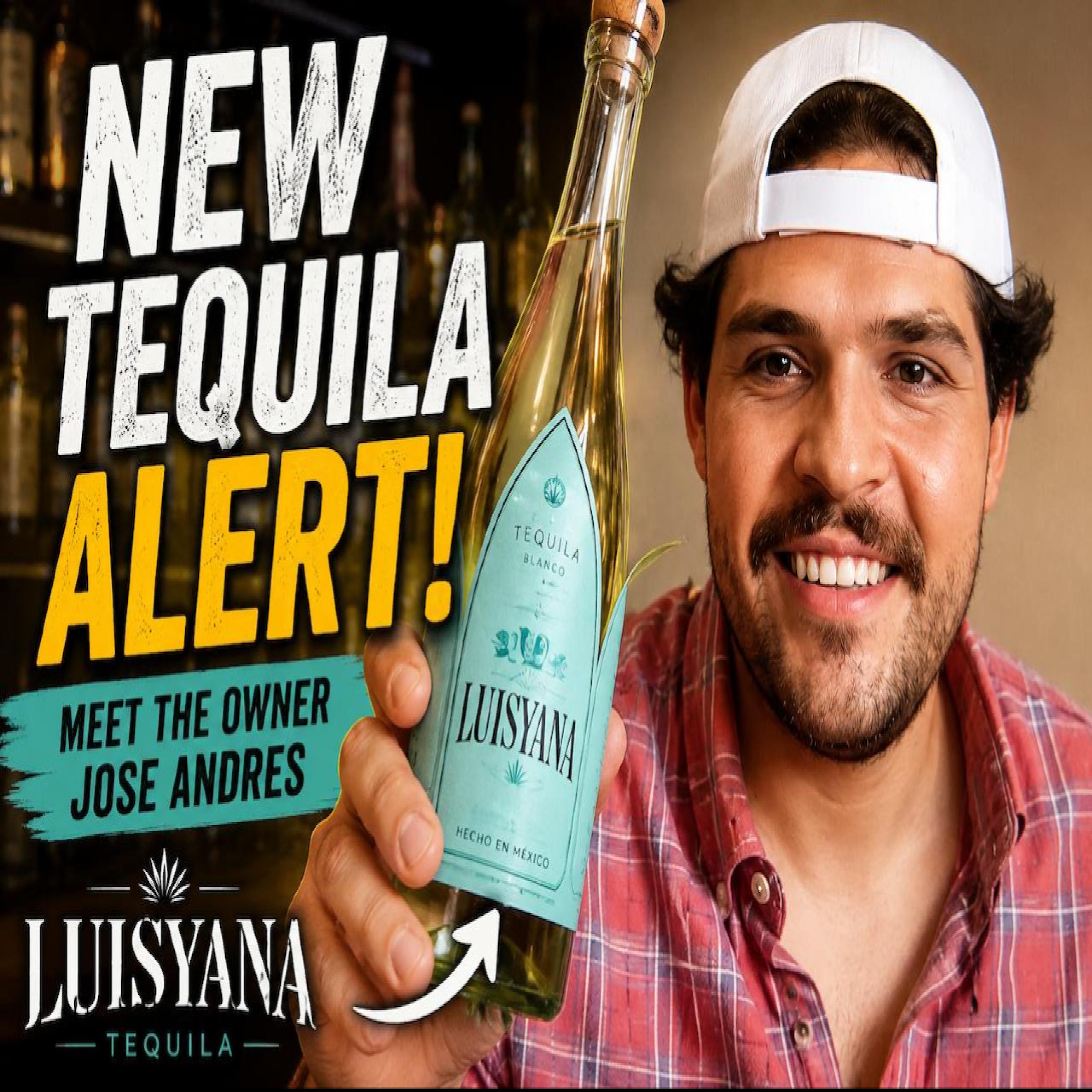
[00:00:00] Speaker A: All right, tonight's interview is really special. When you see a tequila that has the name Louisiana on it, and you're thinking, okay, there's a state in America called Louisiana, and you find out that the name has nothing to do with that, and you get to meet a young man named Jose Andres that's making a fantastic traditional tequila from a Matatan. You just get so excited about really what the future holds in tequila. So stick around for this interview because this one is out of sight. Man, this was really fun. Jose Andres is making some amazing stuff and I hope that someday you get your hands on Luisiana tequila. Stick around. Watch this one. You're going to enjoy it. It's tasting tequila with bread.
It's tasting tequila with bread.
All right, gu guys, we're gonna do it again. We're gonna bring another great brand new brand to you. I'm so excited to be with Jose Andres and we're gonna talk about Louisiana Tequila. Jose, how are you doing tonight, my friend?
[00:01:12] Speaker B: Well, I'm fine and thank you because you invited me to share my own brand. And thanks for what you're doing for the industry. I mean, this is a free for everyone that wants to share their brand. I really like it and really good.
[00:01:28] Speaker A: Well, thank you. I get to taste some of the best tequila, but really the best part is I get to meet amazing people like you and it really makes this a lot of fun. And learning about how tequila is made and the people behind it, I think is so fun. So thank you for, for doing this and being a part of it. I'm gonna pour a glass here before we get started. Of course, I haven't tasted these yet. And, and I can't wait. I've heard nothing but amazing things.
So why don't you tell everybody a little bit about who you are in your.
Your journey into tequila.
[00:02:03] Speaker B: Well, first I'm going to start with my story with the grounds I have.
I'm a fourth generation maestro Tequila.
My. The father of my grandfather used to live at Zacatecas. There were some people that was trying to kill him. And him and his father came down to Guadalajara. So they didn't have anything to do. They, they didn't have any business. So they. He started selling tequila, well, like Granel and by leaders. And he used to sell it to the cantinas, to the shops, I mean everywhere. And that's how he started making money. And then he, he, he bought like several facilities. He bought.
The distiller used to be called Tres Estrellas, but it's like an hacienda now. And some, I don't know if you've heard of, lost to Los Lim. They bought it. And it's like a museum now. It's not ours, but it used to be. So he got killed. My father, the grandfather of my. The. The father of my grandfather got killed. And then he didn't. Taught their sons how to keep going to business. You know, that's a very common history in a lot of families. They don't make their sons their own past. So that's why my. My father saw that the bank, the backgrounds that he had, and he got this idea of building a distillery because literally they get. They got rid of every distillery. My grandfather and my grandmother, the grandfather is the son of the master distiller that. The one that didn't. Wasn't taught to keep the tequila business. And my grandmother, she has roots for. I mean, her family used to be one of the people with most money in. In Amatitan. His father. Her father used to all the agave that the big distilleries needed. He used to provide it. That's one part why Amatitan is called the Cuna del Tequila. Because the. The agave always came from there.
[00:04:26] Speaker A: So.
[00:04:26] Speaker B: So coming back, coming next to my father, he got this idea to start building a distillery. And it took him to build it. Since my. My brother is. My brother is 26 years.
So it took him like 22 years to build it. And we got our gnome like four years ago. So it was a. It was a big journey for. For my father, not so long for us, but it was big thing to. To accomplish. My father isn't even. He's a dentist.
Maxillo Faiga surgeon.
So.
[00:05:06] Speaker A: Wow.
So. So is that the. The nom. That you guys have a 1611. That's your distillery?
Yeah. And so he worked hard to build it. And then you guys have been the ones to figure out how to run it and make the time. Tequila.
[00:05:21] Speaker B: I mean, we were starting making great tequila, but we didn't know how to. How to sell it. I mean, we were thinking, like, how are we gonna sell it? It's not easy. We need money, a lot of money to sell it.
[00:05:34] Speaker A: Yes. So how.
[00:05:35] Speaker B: That's how I. I saw you guys at the US Making videos of tequila and being able to promote other guys tequilas. And I saw the. The future that I always say that the US Is like a big Mexico. What. What happens in the US it's probably gonna happen at Mexico.
So we started making videos. The first video that blowed up Was my brother and I reacting to Don Julio Blanco and we were saying his and then blob and we were like, damn, it's. And we. That's how we started. And since then, we are making great now making videos, but selling our brand also trying to like you, like what you are doing, Giving brands, good brands with good tequila, giving them a spot in our videos and helping the community.
So now I'm going to. I want to talk about our product. This is our product. As you can see also in Bratz.
So Luis, the. The brand is called Luciana Luis because my grandfather was Luis, and Anna because my grandmother was Anna. And they're the ones that helped my father to build it.
And there's. There's. If you see, there's four pancas in it representing the four generations of maestros tequileros.
And here we have the four generations.
[00:07:12] Speaker A: That's beautiful.
[00:07:14] Speaker B: Yeah. And at first it was a mistake that. I mean, if you.
You put the label like this and you.
You stick it, it would get like, crunches there. It wouldn't. It wouldn't be good. I mean, it would look bad.
[00:07:32] Speaker A: Right.
[00:07:33] Speaker B: So we were thinking, like, damn, what do we do? Because we had to do the label like this big so it wouldn't look that good anymore.
So we were with our designer.
That's the importance of a good designer. And he told us, like, well, just let it be. I mean, let it sit like that. And it looks like. I don't know if you. You have heard about the Angostura beers.
Are you seeing it? Yeah, yeah. That doesn't look like fit. And we're like, if they're selling, we can sell.
[00:08:13] Speaker A: It looks like an agave plant. Yeah, that. That is like, it looks like the pinkus of an agave plant. And I think it is so beautiful on the bottle. It's a beautiful bottle.
[00:08:23] Speaker B: Yeah, it's a unique.
[00:08:25] Speaker A: Total, very unique. So tell me the difference between this bottle here, that's clear, and this bottle here, that's a little bit green.
[00:08:32] Speaker B: Well, first I. This is actually a good story.
We were blending our tequila lower and down, and it got a little bit not crystal clear. It was turbid. And I asked my followers, like, what do you prefer? Do you prefer a crystal clear tequila with, I mean, taking out some of the notes? Because if you. It's impossible.
Even any kind of filter you use, you'll get rid of some of the flavors and notes.
So I asked my followers and they.
Everybody said that. Nearly everybody said that.
Let it be as it is. We don't use any filters. We just use, I mean, for sediments, for little particles that. And that's it. And it wouldn't be that.
It would. It wouldn't look good on the shelf if the bottle was crystal clear, you know, so that's how we decided to.
To use this. And besides that, it looks different also, because, my God, it's. It is. Is it a wine? Is it a champagne? What is this? Yeah.
[00:09:49] Speaker A: When I first opened the box, I was like, okay, what is that? Like, this is so cool looking. Like, it just. They both got me like, okay, this is awesome. So.
And I. I had only seen pictures of the bottle, hadn't seen them in person. So opening them up was just like, okay, wow. And then the, the label, like, just jumped out at me. So knowing that the way you've designed that is so cool and that the family members are there, that. That is very cool. You know, tradition and family and tequila, to me is so important.
And it's. It's kind of what makes this spirit so, so unique and so romantic that you have these multiple generations that are continuing, you know, something from their. Their family. I think it's awesome. So let's talk about the. The agave.
[00:10:34] Speaker B: Where.
[00:10:34] Speaker A: Where do your agave come from?
[00:10:36] Speaker B: Where our agave comes from our own lands.
[00:10:40] Speaker A: Okay.
[00:10:41] Speaker B: Lands that were far from our family, from generations I don't even know. So this one is from El Sapotillo. Is one of our brands.
All of them are amatitan. And we only use seven years agave. We got it. And we take the.
The upward apart to not get bitterness. Also, about the process, we were. We made like 20 different samples to get. To get into the perfect profile that we wanted to get. And there were two that stand it out the most. So One is the 51. 50%. The 50% is from a fermentation where. Where we didn't use any yeast at all.
[00:11:28] Speaker A: Okay.
[00:11:29] Speaker B: It was like Sylvester. Totally Sylvester.
[00:11:35] Speaker A: So total wild fermentation. Just what was in the air on the east.
[00:11:39] Speaker B: But we wanted to.
We wanted. Because if you use wild fermentation, some days you're gonna get this profile, some days you're gonna get that profile. I mean, it's gonna change a lot. So we didn't want that to change. And we actually have a Athena down underground of stainless steel. What that does, it doesn't add any flavor to the, to the fermentation. But it's because of the underground that it is. It gives you a more stable tequila because you don't have that highs and lows. Of temperature of the day. I mean, here in Guadalajara, sometimes it's relatively cold and some. And in the day it's really hot. I mean, so it's. And also it's a lot more efficient for fermenting.
[00:12:32] Speaker A: Okay, so, so we. Let's explain this for people who don't know. Don't know those, some of those words. So what you're saying is your tanks that you use for fermentation are in.
Underground in a cellar. So you have a temperature controlled situation. So you're still open air. We still have the ambientness of the air. But you're controlling the temperature by being a little subterranean. Right. And are using stainless steel for those tanks.
[00:12:58] Speaker B: Yeah, stainless steel.
[00:12:59] Speaker A: Okay.
[00:13:00] Speaker B: And for our, our other 50%, we use added yeast.
[00:13:06] Speaker A: Okay.
[00:13:07] Speaker B: To give it a more stable profile also.
[00:13:11] Speaker A: Gotcha. So using like a commercial, just a commercial yeast to add.
[00:13:14] Speaker B: Well, it's our own. We developed it with friends. Yeah.
[00:13:18] Speaker A: Okay.
[00:13:19] Speaker B: And we like them both. I mean, we tried the wild, wild fermentation in the underground tanks and also in the above tanks, and it wasn't
[00:13:29] Speaker A: the same that, so the temperature really made a big difference on your fermentation.
[00:13:33] Speaker B: And we, and we tried it because we only have one tank in the undergrounds. So we tried to replicate it in the, up there, in the upgrounds.
[00:13:44] Speaker A: So how many liters is the, your underground take?
[00:13:47] Speaker B: 30,000.
[00:13:48] Speaker A: Okay, so that's a big tank.
[00:13:50] Speaker B: Yeah, it's a big tank. That's a good thing. Yeah, the, the other tanks that are out, they're 22,000, 2,000. For the added yeast, we have like the, it takes like 12 days to ferment and for the wild, 15 days.
[00:14:13] Speaker A: So you're, you're probably going into a little bit of a malolactic fermentation in that process because I, I get a nice gentle funkiness in both of these.
And that's what I was going to ask you. Are we doing malolactic fermentation?
[00:14:26] Speaker B: Because I pick up like a pellicle. Yeah, Up. And it gives you that flavor. But we also have some other process that is we. Only the producers know that it gives a, does the perfect touch, the final touch in the fermentation.
[00:14:48] Speaker A: It gives it a great mouthfeel. Like both of these have just a nice creamy full mouth feel.
So I was kind of picking up on a little mallow in there. So let's back up a little bit. So when you're harvesting, are you doing Hema large, Hema medium or Hema Baja?
[00:15:07] Speaker B: Well, medium.
[00:15:09] Speaker A: Medium. Okay, so Hema medium and Then what's your. What, what's your standard for cooking? What are you doing for your cooking?
[00:15:15] Speaker B: Well, cooking. We, you always go to tours at the distilleries and they always say 24 hours for cooking and 24 hours for resting. Now, it's not that simple.
[00:15:28] Speaker A: No, it's not.
[00:15:29] Speaker B: If they're doing that, they don't know how to cook.
You, you have to look at the density of the agave. You have to see if how big they are. For, for example, for a smaller agave, it would take not that much. It would take like maybe even 22 hours. I don't know, 24 hours. But for us, we, we use 30 hours.
[00:15:58] Speaker A: Okay.
[00:15:58] Speaker B: For cooking it because we, we have big, big pinas and it also is old.
You have seen also the radish agave.
[00:16:07] Speaker A: Yep.
[00:16:08] Speaker B: Kind of wine. Have you tasted them?
[00:16:11] Speaker A: Yes.
[00:16:12] Speaker B: How do they taste?
[00:16:14] Speaker A: Phenomenal. Sweet and so good.
[00:16:18] Speaker B: That's what I'm saying. But those parts, when they get cooked that a lot more hard. Yeah.
Your machinery has, has to have more maintenance, smaller periods of time because of that.
[00:16:31] Speaker A: So are you doing a stone oven or masonry oven?
[00:16:35] Speaker B: Yeah, it's the brick oven.
[00:16:36] Speaker A: Okay. And then probably cutting them in halfs and quarters, moving the coya before you go into cooking and you're, you're cooking to perfection. Not necessarily to, hey, we're going to cook for this much time. You're, you're basing it on the weight and how big your agaves are. And one cook maybe 30 hours, one cook maybe 40 hours. Right. And. And yeah. See it on your agave that are in there doing the, the standard turn it on, get the steam going, 8, 10 hours, shut it off, drain the bitter honeys and then turn it back on and finish your cook that way. And then when you do the rest, when you're finished cooking and you open up your ovens, do you also have a top that opens up to let the heat rise out of the top or are you just out of the doors?
[00:17:22] Speaker B: We have the one in the top and two doors. Oh, it. If you go to our distillery, when you taste the agave, the cooked agave tastes like caramel. That little hours more also give it like a caramel flavor in it.
[00:17:38] Speaker A: So then we're going out of those stone ovens. And what's our method for extraction?
[00:17:43] Speaker B: Roller meals.
[00:17:44] Speaker A: And how many pass roller mill do you use?
[00:17:47] Speaker B: We have two. Only two. And we pass it through the two three times.
[00:17:52] Speaker A: Three times. Okay.
[00:17:53] Speaker B: Yeah.
[00:17:53] Speaker A: So there's a lot of wheelbarrow action going on in there, isn't there?
[00:17:57] Speaker B: Yeah.
[00:17:57] Speaker A: So when you're using your mill, so water gets sprayed down on each mill to extract the juices. Are you at any time using juice?
[00:18:07] Speaker B: We have a.
[00:18:08] Speaker A: We.
[00:18:09] Speaker B: We have well water.
[00:18:10] Speaker A: Okay, so you. Well water on both. Both mills. Okay.
[00:18:14] Speaker B: Yeah.
[00:18:14] Speaker A: That's a. That's a long. That's a long hard process, isn't it?
[00:18:18] Speaker B: Yeah. And the minerality that gives the well water is way too good.
[00:18:23] Speaker A: So then we're going into fermentation. We're going through this long malactic wild fermentation. And then when you finish fermentation, you're going into distillation. What are you using for your.
[00:18:35] Speaker B: We only have one cup, one copper still. And we only. For Louisiana. We only use that.
[00:18:41] Speaker A: Okay, so. So you're still. That you use for. Ordinarily then you come back and use that same steel for refractor to make tequila.
[00:18:49] Speaker B: But I gotta say, I mean there's a lot of haters with the stainless steel and there's a lot of lovers with the copper. But I mean, I always say that the copper still is like a filter.
It's gonna be a more round profile, but with the stainless steel is gonna give you what it is. I mean, the, the raw flavor of the tequila or the ordinaria.
[00:19:14] Speaker A: Because you know, I. One thing I've learned with meeting with many master distillers, many of the guys that you know, that I know you're friends with as well, and copper removes some flavors and some compounds that come from fermentation. But if you want the fermentation to shine through in your tequila, stainless steel leaves those things in there. So it comes down to your cuts and utilizing the right cuts. So how do you work through the cuts that you do to decide where your flavor profile is going to come out at?
[00:19:49] Speaker B: Well, that's why we this because we were making the tequila at the first we only had stainless steel. We were making samples and it was way too rough. I mean, way too much agave, but not refined. And that's why we decided to.
To buy a copper pot and still both of them in the copper pot.
[00:20:15] Speaker A: Gotcha.
[00:20:16] Speaker B: It was way too much.
[00:20:18] Speaker A: Yeah, A lot of fermentation comes through in all stainless steel. And I've. I've had several tequilas that a great master distiller does a great job with those cuts and, and it's delicious, but it is a much tighter cut.
So you're cutting heads and tails. Are you reusing any heads and tails in second distillation? Are you going hearts and hearts only.
[00:20:41] Speaker B: Yes. We. We reuse some of the heads and the tails.
[00:20:46] Speaker A: Okay. In your second distillation.
[00:20:49] Speaker B: No. For example, if you're making a first batch of ordinaria, okay. You distill it, and you get the heads and the tails, you get them back to.
To another fermenting tank.
[00:21:06] Speaker A: Oh, okay. So you're reintroducing them into fermentation. You're not reintroducing them.
Okay, that makes sense.
[00:21:12] Speaker B: Parts like calf, something like that.
[00:21:15] Speaker A: Some places will reintroduce some of the tails and some of the heads into second distillation. Right.
So reintroducing them into fermentations, adding more alcohol back into fermentation, which then you're cutting those back out the next time you go. That's awesome. That's. So how did you learn to do these processes?
[00:21:36] Speaker B: I. We had some friends of, you know them very well, cascanes, and they wanted to replicate their. Their.
Their hoven. Did you. Have you tasted their hoven? The malolactic one?
[00:21:49] Speaker A: Yes. It's delicious.
[00:21:51] Speaker B: Yeah. So we were trying to replicate it, and like, that. We were getting idea, like, how to do this, how to do that, and we were in. I mean, we were just using natural things like, let's get some cheese fermented and put in the.
In the fermenting tank. And we were making a lot of stuff. So that's how we started. I mean, we. When they got to us, we didn't know that the people from the US Knew that much about tequila.
[00:22:22] Speaker A: So they were. At that time, they were kind of chasing that. The 1599 funk that. That you had at the Nasio.
[00:22:30] Speaker B: Yeah.
[00:22:31] Speaker A: Which is so distinct.
[00:22:34] Speaker B: Yeah. They got to us because when we started the.
When. When we didn't even had the nome, we. We made a batch, and it was like that. I mean, it tasted like queso cotija, literally. So.
So that's how they knew about us. They knew that we did that profile.
[00:22:59] Speaker A: So that. That funk is really coming from a bacteria that shows up in fermentation contamination.
[00:23:06] Speaker B: I mean.
[00:23:07] Speaker A: Yeah, that's second fermentation.
[00:23:09] Speaker B: Yeah. And it is not. Not even second. It's a third fermentation getting out of the. I know fermentation is turning sugar into alcohol, but two more processes, I mean,
[00:23:22] Speaker A: turning alcohol into lactic acid is your next piece to go malolactic. I explain it in a childish way. I. I explain it in the fact that yeast eat sugar and poops out alcohol, Right?
[00:23:34] Speaker B: Yeah.
[00:23:35] Speaker A: And then at some point, a bacteria shows up when yeast is dead, eats Alcohol and poops out lactic acid. That's like how I explained it as a child. Right.
[00:23:44] Speaker B: Then there's some bacteria color called Clostridium butyricum that turns that.
That lactic, like, lactate into butyric acid.
And that's the.
The real malolactic that you see, because.
Yeah, we have done malolactic fermentations from.
We bought some bacteria from companies that sell yeast, and they sell you the malolactic components. But it. I mean, it gets kind of malolactic, but not that much like the other one.
[00:24:25] Speaker A: Yeah, it doesn't work as. As a natural distillery. Has this bacteria that's there and makes it happen. Yeah, right.
[00:24:33] Speaker B: It's. I mean, we have done, like, 20 samples of that, and we only replicated, like, one for real one, because the first one was a mistake.
[00:24:45] Speaker A: And, you know, we're talking about Cascades, which is a great brand. I love everything Cascade does and. And leaning back into 1599 and Atanacio and what Renee does there at Atanasio, there. There is a distinct funk that's. That's there that you. I mean, I can pick those out of a lineup, you know, in a. In a blind. I know that's like that tequila. And so you have a malolactic flavor in both of these that I have. It's not the same funk, but it is a delicious smell. Like.
And the taste is very creamy, like, very viscous in the mouth. Feel both of these, actually. And that. That funk that's there turns into this really nice, creamy depth of flavor. That is very good. So you have. You know, I don't want to say you're doing what they did or you're doing what they did. You. You're doing what you do, and it tastes amazing. You know, I mean, even.
[00:25:41] Speaker B: Even if some people try to replicate what I do, they wouldn't. Done. They wouldn't do it because each distillery has its own flavors. I mean, it's impossible to replicate the flavor from another distillery. Besides additives.
[00:25:59] Speaker A: Exactly.
[00:26:00] Speaker B: Yeah.
[00:26:00] Speaker A: And I have to say, I. I mean, you can taste in your tequila that it's not industrialized. Like.
[00:26:06] Speaker B: Yeah.
[00:26:07] Speaker A: So many brands, you taste them and you. You pick up this process, and with yours, it. It is depth. It's complex. There's a lot of great flavors here. This. So this is really good. This is. Tell me, what. What's next? What else are you working on?
[00:26:22] Speaker B: Well, we are. I mean, we are going. We plan to go out in the U.S. but we.
We want to go deeper. I mean, we want to have batches, like 200 bottles of batches, really different. I mean, if you went to our distillery, you would freak the fountain because we have some profiles that have. There have gone people like, damn, what the is this? Is this tequila? Yeah, all natural.
[00:26:53] Speaker A: So are you doing any aged products, any repos?
[00:26:57] Speaker B: Yeah, we have a reposado.
[00:26:59] Speaker A: Okay.
[00:27:00] Speaker B: Four months in the barrel. We use Four Roses barrels.
[00:27:07] Speaker A: Okay.
[00:27:08] Speaker B: And we are also planning to build some stuff there.
But, but our, our strong path is blankers now because most of the people is trying to innovate with bottles that whiskey Ray, all of that. And we are trying to innovate with the people, with the things that not a lot of people are doing. Because besides, for example, Sergio Cruz is doing great stuff with blancos.
[00:27:40] Speaker A: Yeah, Sergio is amazing, isn't he? Yeah, he's a great guy.
[00:27:45] Speaker B: Yeah.
[00:27:46] Speaker A: So how long has the brand been in existence? How long have you been making this brand?
[00:27:50] Speaker B: I mean, for real? Like, like five months.
[00:27:55] Speaker A: Okay, so I thought you were like brand new.
[00:27:58] Speaker B: Yeah, we are.
[00:27:59] Speaker A: Really.
So, you know, so let's, let's take away all of the part of building the distillery and profile and making the tequila. Right. Because I know that that's a difficult piece in itself. So let's set that, that hard work over here. What's been the hard work of creating a brand beyond the, the profile and making the tequila? Tell us about the difficulty of actually getting your brand name, your, Your logo, your. Your label and bring it to market. How hard has that part been?
[00:28:31] Speaker B: Well, I mean, for us, the hard part was two years ago.
[00:28:38] Speaker A: Okay.
[00:28:40] Speaker B: When we did, we hadn't have. We didn't have a way to sell it.
[00:28:48] Speaker A: Okay.
[00:28:48] Speaker B: I mean, we didn't have this brand.
We didn't have any brand. But two years ago we started making videos and that's how we started selling the first. I mean, the, the most difficult part is to get the people to know your. Your brand.
The. The hardest people to start.
Yeah.
[00:29:09] Speaker A: Okay. So. So really the, the part of getting the CRT and your name and, and picking your bottles and all that, that. That came a lot easier than getting your brand exposed to the public.
[00:29:20] Speaker B: Yeah, definitely.
[00:29:21] Speaker A: Yeah.
[00:29:22] Speaker B: That's fun. I mean, I have the worst part. The worst part is the bureaucracy here in Mexico.
[00:29:27] Speaker A: Okay.
[00:29:28] Speaker B: Yeah.
[00:29:28] Speaker A: I was going to say there, there's got to be a tough part about that. I already know.
[00:29:33] Speaker B: Yeah.
I'm really grateful for my position that I am now, because if, if it wasn't for the socials, we wouldn't. We wouldn't be where we Are for real.
[00:29:47] Speaker A: Okay. So I'm going to ask you the. I'm going to go away from tequila a little bit. You speak really good English.
So where did your good English come from? How did you learn to, to be able to speak English so well?
[00:29:58] Speaker B: Well, we have, we have private teacher at my house and.
[00:30:05] Speaker A: Okay.
[00:30:06] Speaker B: Taught me how to speak English.
[00:30:08] Speaker A: Okay, good. So do you have another education behind this? Do you have.
[00:30:12] Speaker B: Yeah, actually I'm, I'm.
I still studied finance.
[00:30:18] Speaker A: No kidding? No kidding. Well, you, you know what I do for a living, don't you?
[00:30:23] Speaker B: Yeah, I know.
[00:30:24] Speaker A: I'm a mortgage guy. I'm in the finance business. That's been my world for 30 years.
[00:30:28] Speaker B: I have a project of, of.
I use a. I trade. Options. Option trading.
[00:30:35] Speaker A: Yeah, I'm not a, I'm not a good options trader. I, I'm, I, I'm a regular trader and I'm a bond market guy because I'm a mortgage guy. Yeah, options go over my head.
But I do have some great things going on in some AI currency trading platforms. So I'm winning on that side, but the options I, I lose on those. I, I don't figure it out.
Yes.
Just a, Just a small amount.
[00:31:03] Speaker B: Yeah.
[00:31:04] Speaker A: SpaceX, Tesla, big. The, the Mag 7. You know, I'm deep into. I was fortunate to be able to get a friend of mine back in 2019 said dude, you need to look at Nvidia. So I actually was an early investor in Nvidia, so some luck there. But the AI currency trading, not crypto, but just regular currency, is up and giving me some great returns.
But as a mortgage business owner, as a mortgage company, we have to securitize our loans, so we have to play the bond market. So, so I've been playing the bond market for 30 years, so it's given me a good understanding of the regular market.
But options go over my head on winning and winning when you're losing and losing when you're winning. And I just, I can't figure it out. So you, you got me there, my friend.
[00:31:55] Speaker B: That's why I like the most options.
[00:31:57] Speaker A: Yeah.
[00:31:57] Speaker B: Yeah.
[00:31:58] Speaker A: My business partner is a big options trader.
[00:32:01] Speaker B: If the stock doesn't move.
[00:32:03] Speaker A: Yeah, like this. We were leaving the tequila world. But you're betting on where the stock will be in 60 days or 90 days or 180 days. Whether it's up or down, you can win.
[00:32:15] Speaker B: Usually trade at 45. Between 45 and more than 25. That's the range that we are.
[00:32:24] Speaker A: Yeah.
[00:32:24] Speaker B: So it's that we, we have Like a group and we are we all getting to a zoom call and we all trade.
[00:32:33] Speaker A: So I will tell you, one of the things that, that got me drinking was trading bonds and securitizing mortgage backed securities. Because on those days where you lost, you know, 50 basis points on a $10 million bundle are the days that you busted out anything to drink. And those were common, you know, in the late 90s, in the mid 2000s and 2008.
Those were good drinking times for me. So
[00:33:03] Speaker B: you know, why so easy years for me?
[00:33:07] Speaker A: Not that many, but how many years?
[00:33:11] Speaker B: I mean I'm trading like two years.
[00:33:14] Speaker A: Oh, I got you by like 30.
[00:33:17] Speaker B: Yeah, it's been easy for me.
[00:33:20] Speaker A: There's days that you pop the bottle and you pour a glass and there's days you unscrew the bottle and you pour a glass.
[00:33:29] Speaker B: Liberation day.
An easy path for me always when I try to trade bonds, I up.
[00:33:42] Speaker A: Yeah, bonds are hard. I mean, and I don't trade bonds, but I securitize two bonds. So you know, we're writing mortgages that become bonds that we have to then securitize. So we have to, to make it a difficult thing, simple. We have to forecast where the bond rate's going to be when we close the mortgage and write the rate of what that rate's going to be to. Sure, the mortgage backed security is going to cover whatever that mortgage is going to be written at when it closes. And you know, working with the secondary market to decide this is what rates are today based on what the bonds are today, but based on where they're going to be in 30 days when they're closed is a whole, you know, another ball game. And then, and holding carry a lot
[00:34:22] Speaker B: of money for one single.
Correct.
[00:34:26] Speaker A: Yeah, yeah, we're trading, you know, we, we may have a bundle of, you know, $10 million in loans that are on that one bond. Right. So it's, it's securing in bundles. So yeah, it's, it is what it is. Right. It's a fun, it's a fun business and you're living on eighths and quarters and you're losing on halves and three, eight. Yeah, yeah, it's fun thing. But tequila to me is so much more fun. You know, we can talk about, you know, whether how that agave was cooked and all those easier things to talk about and, and to me it's how many different flavors can be created from one plant grown in, in multiple regions and bring us so many different fantastic flavors and get to meet on top of that. So Many amazing people that become friends so fast. So that, that's what I love about this one thing.
[00:35:21] Speaker B: I, I, I have heard there's a lot of people that say like it takes seven years to harvest it. No, it doesn't take seven years. You got, it takes three more years because first the, the mother get, gets their own child, her own child.
[00:35:42] Speaker A: Right.
[00:35:42] Speaker B: You, you have to wait three years to harvest it, to replant it, for it to be a new mother. So it's 10 years, man, or more.
[00:35:51] Speaker A: And a lot of people don't realize the, the whole part of harvesting, you know what, what blows me away of the plant, how sturdy the plant is. And I, I have multiple plants here at my house.
I have a eight year old, a five year old, a six year old. I have four or five that are six month olds. I have some is growing from seed.
So I love this plant. And to know the older ones.
[00:36:18] Speaker B: Vic.
[00:36:19] Speaker A: Oh, I have an 8 year old.
It's Americana. So I have an 8 year old, a 5 year old and a 6 year old Americana. They're huge.
We, we pop them, we bring them in the house.
We, we put one of them in the ground. I'm going to put a, a greenhouse over it this year so it stays alive.
I have some from seed that are this big. I have four off of a Quixote. So they were the pods on the top of the Quixote that are now five years old, now granite. My growing season is not like a growing season in Mexico. So my five year old plant that's this tall is really only about a one year old because of the growing season. Right. You don't get light and sun for eight years, you know, 12 months a year. So my growing season's cut in half or thirds. But there I have one that's like this big, that's you know, four years old from a Quixote.
So it's going to take years for it. And it's blue agave.
So understanding how this plant works, when you harvest those, you can chop the roots off of that and put it and just go put it in a field and let it sit.
[00:37:31] Speaker B: Yeah.
[00:37:32] Speaker A: For months before you put it in the ground. Right. And like.
[00:37:35] Speaker B: Yeah.
[00:37:36] Speaker A: So then once you take this two or three year old and put it in the ground now you have a whole nother growing cycle after you planted that plant. And it's hard to explain the flavor
[00:37:50] Speaker B: that the plant is getting out of the year.
[00:37:54] Speaker A: Yeah.
Some from the mother and then the rest from the earth. Right.
[00:37:58] Speaker B: And we are saying the, the fastest growing agave, because we're not talking about the, the other ones.
[00:38:05] Speaker A: Yeah. Like the Americana or Saviana or Tapasate or Tobala.
[00:38:11] Speaker B: Yeah.
[00:38:11] Speaker A: Is a habali. Is that the longest growing one? Hubbly?
[00:38:15] Speaker B: I think it is.
[00:38:17] Speaker A: Yeah. It's, it's really cool. And this is, this is such a romantic spirit and such a traditional spirit. And I'm so glad that it's indigenous to Mexico. That what it's, in my opinion, even though you can make agave spirits somewhere else in the world, no place does it taste like an agave spirit made from Mexico. And nothing tastes like tequila. Have you made in your region, the
[00:38:47] Speaker B: I, I, I think you told me that when we were at the cascanes about the African.
[00:38:54] Speaker A: I, no, not the African. I've had the Hawaiian.
[00:38:57] Speaker B: Hawaiian.
[00:38:58] Speaker A: I've had the Waikua.
[00:38:59] Speaker B: How was it?
[00:39:01] Speaker A: It's good. It's not the same, though.
It has some similarities.
But it's, if you think of this, right, we have the terroir of the ground that brings us the flavor of the spirit. Right. And we have the production method that brings us the spirit of this, this, the taste of the spirit. But we also have, I believe, part of the terroir isn't just where it's grown. It's the yeast, the bacteria and the water. And you move this to Hawaii or California or these other places where you don't have the yeast, you don't have the water.
So therefore you don't have the base characteristics of tequila. Or in my opinion, most mezcals, right, like mezcal reicia, are coming from a terroir that has the water and the yeast involved.
So the ones that I've had that are made in, in the U.S. california or Hawaii, the Waikua spirits from Hawaii, I think is good. Like, I could drink it. It's delicious, it's tasty, but it's not the same. It's different.
It's completely different from the flavor profile that really brings me home to my favorites Tequila. Like I, I like some mezcalas and RASAs and SOS and Bacanoras, but my home is tequila. And I, I, I want to say that I prefer one over the other. Los Altos or Vas, but I really don't.
For me, it's about the, my, my mood.
Like, there's some days that I'm just like, today is a vias, you know, I want, I want this vegetal, funky minerality. And then there's other days it's like Nope. Today, I want citrus. I want floral, like, so I. I can't say that I have a favorite. I have a mood. And that mood drives me to which tequila I go and grab.
Maybe. I may be a weirdo, but that's just.
[00:41:07] Speaker B: We also like.
I mean, we have a lot of profiles in our distillery, and we sometimes we like the lactic. Always when we make carne asada, like a revise, we are taking this malolactic, or I. I have aged it the malolactic. When you go to the distiller, I will show it to you. You guys, game changer.
[00:41:34] Speaker A: Oh, wow.
[00:41:35] Speaker B: Yeah.
[00:41:36] Speaker A: Well, I can't wait, my friend. I will. I'll be down in August, so I'll shoot you some dates when we get off of here. I'll let you know when we're coming.
Both of these are absolutely delicious.
I kind of. I'm. I'm leaning into the higher proof, but I always lean into higher proof tequila.
[00:41:54] Speaker B: Yeah, me too.
[00:41:55] Speaker A: It just has a little bit more of the. Of the gusto of agave. So I want to say thank you for doing this tonight. Thank you for sending me these bottles. I really appreciate it. I can't wait to hang out with you in person again when we were down there. And I want to say cheers. Do you. Do you have a glass in front of you?
[00:42:13] Speaker B: Well, I don't have a glass.
[00:42:15] Speaker A: You have to drink out of the bottle, then.
Well, I'm gonna say salute to you. Cheers. Thanks for doing this tonight. I really appreciate you, my friend. Thanks.
[00:42:26] Speaker B: And remember, if you go, Lisiana, you never go back.
[00:42:30] Speaker A: Ah, there you go. I agree with you. Cheers.
[00:42:34] Speaker B: Cheers.