Episode Transcript
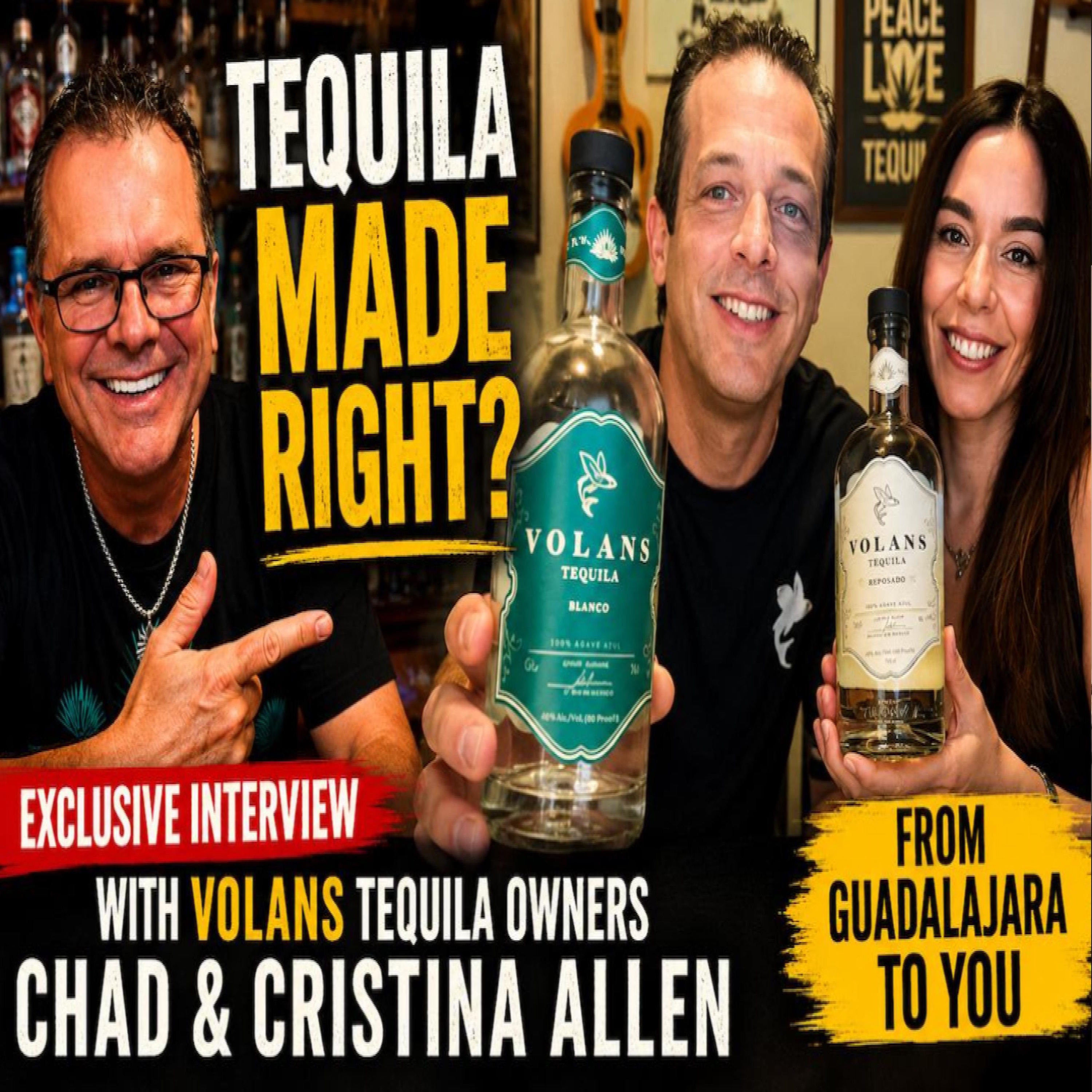
[00:00:00] Speaker A: All right, guys, I have been waiting for this interview for a long time. Tonight we're going to sit down with Chad and Christina Allen, and we're going to talk about this brand right here, and we're going to learn how two amazing musicians have used all of their talents to create such an amazing tequila. And we're going to talk about it right here. Stick around. This is a great one.
[00:00:20] Speaker B: It's tasting tequila with bread.
It's tasting tequila in love with bread.
[00:00:39] Speaker A: All right, guys, I got a treat for you tonight. We're going to talk about this tequila right here with the owners, Chad and Christina. How are you guys doing tonight?
[00:00:49] Speaker B: Doing great.
[00:00:50] Speaker C: We're good. Happy to be here with you.
[00:00:53] Speaker A: Well, I'm excited about having you on. It's been a long journey to get you guys on the show.
So if you could tell everybody a little bit about who you are and where you live today.
[00:01:05] Speaker C: Well, I'm Christina. We live in Guadalajara. Family. We moved from the US To Guadalajara five years ago, but I am from here. I grew up, born and raised in Guadalajara, but I was pursuing a music career in the US 22 years ago, and that's when Chad and I met 22 years ago in Los Angeles, and we married in 2007 here in Guadalajara. We tried a lot of taquiti. We went to distilleries, visit agaves, and basically our relationship, it's always been a toss between music and tequila, and now we're happily living in Guadalajara with our whole family.
[00:01:41] Speaker A: That's fantastic.
[00:01:42] Speaker B: Yeah. Yeah, that's great. For me to move down here and be able to live down here, I couldn't really, seriously, honestly, I couldn't seriously take myself to make a tequila brand and live somewhere other than here. So for me to be able to live close to family, Christina's parents are just. Just really close, far close by, you know, and it's. It's a. It's a amazing experience. So it's. For me, that's what. A special treat to be able. To be able to live here.
[00:02:08] Speaker A: Yes. And we're very. If I'm not mistaken, Chad, you grew up in a place that was very much like Mexico, right?
[00:02:14] Speaker B: Yes, very close. Idaho. But yeah, you know, like, my first time, like, I grew up in Idaho, near. In eastern Idaho, near Yellowstone and Jackson Hole.
And then I moved to Georgia briefly for a couple years, and then I lived in LA for almost 10 years.
But the first. My first experience with Guadalajara was 1999.
And then we first. I started coming regularly here in 2004, and then 2007, got married and it was been living here for five years now. So it's, it's taken me a lot of different places over the life, but my best place I've lived so far is here. Just because of the community that, that we're trying to build around our brand.
[00:02:56] Speaker C: Absolutely. Yeah. I mean living here for us is just kind of like that, kind of like the pride that we carry as a brand to say we're family owned and operated from Guadalajara.
So why is that important? Because as a brand we like to focus on the traditionally made tequila as well as the future friendly message that we have, which is, you know, sustainability, kind of helping the local economy, supporting, you know, just like local artists and bartenders, you know, just stores and just everybody that it's a part of the, the industry in tequila. And you know, obviously we're doing it from Guadalajara.
Yeah. So you're winning.
[00:03:40] Speaker B: Yeah, it's great. It's really fun when you can be able to include the, the community with your brand, you know, as you can.
[00:03:46] Speaker C: Well, and you know, just a quick drive to the distillery, that is just how we run our business. We're not someone that we rely on help. We just do it ourselves somewhat, you know, like we need to be there tomorrow. You know, we get up and go, we have to deliver supplies, we, you know, we grab our car, we go to our warehouse and just run our business, you know, from locally, from Guadalajara. The distillery is a two hour drive but you know, our children go to school here, our families here.
[00:04:19] Speaker A: So I, I see a lot of musical things behind you. There's, there's a guitar on the wall. I, I, I showed this to Chad. I, I have one too. And it has your bottles right on there.
[00:04:31] Speaker C: Yeah, yeah.
[00:04:33] Speaker A: I'm a guitar player too. So tell me about, tell me about the music side of, of you guys. Give me a little bit of that story.
[00:04:40] Speaker B: So, and, and so I started as just a drummer and that's what I would consider myself, a punk rock drummer first and foremost. And, but I also did a time on engineering and in the, in recording studios in LA back in the like 99, 2000.
So I know how to normalize a student tape machine. I've worked on SS 9000 boards and 6000. I've, I've done all of that. I worked with a lot of west coast hip hop artists.
Then I was a drummer in a punk rock band for many years. But Christina and I met in LA and she was, she was in a really popular band in Guadalajara a few
[00:05:22] Speaker C: People know about it because, you know, back in the early 2000s, there was a big musical community here in Guadalajara as well. So if you were part of that. Yes, people knew about our band. It was like, oh, female band here in Guadalajara. I mean, really, like 2000, 2001. It's just so long ago. But I moved to Los Angeles in 2004 after.
Well, I already went to school here in Guadalajara and in Barcelona to run sound. I was just really interested in being part of the production side of music, not so much as a performer, because I was kind of average guitar player.
And I moved to LA. I went to Musicians Institute in 2004, which. Chad went there in 2000, so four years before me. And when we met, that was like the first thing that kind of like, we learned about each other. And then, you know, we became friends. But I was a sound engineer for over 15 years doing live sound music in the US and even there was the crossover between tequila and me running music. So there were bands drinking tequila backstage. You know, that was part of their catering. And I would tell the runner, go buy my bottle at the liquor store. Know, it's so much better than anything that they're asking about. They don't know the name, they don't know the brand, but I'm like, it's. They're gonna like it so much better. So, yeah, there was a. A little bit of the crossover of music and tequila in my experience.
Chad, actually, he left music before, like, years before all this happened to go to college and get his business degree in Boise State. But that's how we learned to build a business. Right, because of Ted.
[00:07:03] Speaker B: Well, and surrounding music.
[00:07:04] Speaker A: So.
[00:07:05] Speaker B: Yeah, yeah, yeah.
[00:07:07] Speaker C: But music is huge for us. We love and love, love music.
[00:07:11] Speaker A: So I'm a lot older than you guys. Okay. So when I was graduated from high school in 1988, I actually applied for a school called the Grove School of Music in LA and got accepted to Grove School of Music, which became the Musicians Institute in la. So, yeah, that almost went, huh?
Yeah, my. My girlfriend got pregnant, so I put the garage. The guitar in the garage and went to work as a bricklayer. And 38 years later, she lets me go play guitar in bars still. So it all worked out the way that it was supposed.
[00:07:44] Speaker C: Were you on the generation of Paul Gilbert?
[00:07:47] Speaker B: Would have been. Yeah. Would have been. Because Paul Gilbert.
[00:07:50] Speaker A: Yes, 100.
[00:07:50] Speaker C: Yeah, because Paul Gilbert.
[00:07:52] Speaker A: So Paul's a teacher there.
[00:07:53] Speaker C: OGMI 80s. You know, all this, I was gonna
[00:07:56] Speaker B: say, you might not want to know about the people that were in that school at that time, because that was a pre. Legendary moment.
[00:08:03] Speaker C: I didn't have anyone being a big rock star. But you did.
[00:08:06] Speaker B: I did, yeah. Yeah. So my drum teacherianni was there at the time, Satriani and, and Gilbert and.
[00:08:13] Speaker C: Well, I would go see like the Steve Vai. Steve Vai. I one time I saw Tom Morello, Steve Vai, Josetriani, Steve Luke.
[00:08:22] Speaker B: All guitar.
[00:08:23] Speaker C: All guitar, you know, like clinics and mi. But even in Mexico, like before I moved there, I would go to Mexico City and see like Gary Hoy, you know, remember, near all the session musicians. Yeah. It's so old school. He was one day doing some class there. I knock on the window and I'm like, hi, I'm a big fan. Can I take a photo or something?
Yeah.
[00:08:44] Speaker A: Biggest name you said the, the biggest name you said that most people don't know Steve Luther. I mean that guy is. Yeah, that guy's the studio musician. Probably one of the best guys out there. And people look at his band, you know, and think, oh, he's just in Toto. No, now he's played on every major record ever made in the 80s and early 90s.
[00:09:03] Speaker B: 1. We. We went to our dear friend Remy's house yesterday, two days ago, and they brought up Jeff Picaro and, and I was like, man, that guy's a beast. That whole band's a beast, you know?
[00:09:20] Speaker A: Yes. So. Yeah, yeah.
[00:09:22] Speaker B: But for, for me, the, the best drummer that was in my, in my. I went to the percussion, the pit that was, it was Ray Luzier, but now he plays with Korn. So the, the. The drummer core now. But back then I was like, man, this is the level of how good you have to be, man. I'm. I need to up my practice hours as it's, it's.
[00:09:45] Speaker C: It was lovely, you know, and those years in, in Hollywood, it was really cool, like early 2000s, because they were trying to like, fix it up and like make it a little more tourist friendly.
[00:09:56] Speaker B: And you know, when the tie in the tequila. So back then, when we met, 2004 tequila, as you know, that was a different, different time altogether. So we would be. We would come down to Guadalajara and bring up a bottle. Christina would, would share some traditional tequila that was originally from here and we would try to find it. Could ever find it.
And, and it was a, it was a growing experience back then, so we weren't ever seriously thinking about tequila. But just being tequila fans, you know, like.
[00:10:27] Speaker C: Yeah, I always consider myself somewhat a tequila ambassador. Wherever I went traveling and going to School and all these things because I was at Tequila, you know, from years and years ago because my father was an agave producer. He was in the industry selling his plants to like large name, you know, brands. And. But my dad was always very, very like picky with the tequila that he was drinking. And I learned how to like enjoy tequila and to this thing, which one quality tequila versus something that was just like, you know, I'd rather have another drink than drink this.
So whenever someone would say I hate tequila or it makes me sick or you know, I would say, you know what, give it another chance. Maybe you just haven't tried the right tequila that tastes good, you know. And so it was just meant to be for me, part of my life because I always genuinely loved it and try to make people understand that you have to appreciate the tequila that is well made. So I think that the, that's what it led us like into this business because we have an authentic appreciation and love for tequila.
[00:11:34] Speaker A: What was the point of coming out of music and going, okay, this is it, we just have to do our own brand. Like the heck with trying to find brands.
What was that point and how did you come to that decision?
[00:11:47] Speaker B: So every Christmas tends to surround by a lot of holidays. So on the holidays we'd come down here and hang out with Christina's family at the Posadas and different things like that. And so Christina's dad also has a love of music. So we would share different, different music and listen to music, drink tequila. It was really a fun, fun time over the last 25 years maybe. And, and at one point I had finished, I went to school, went back to school as a 30 year old non traditional student.
Got my bachelor's in entrepreneurship management. And once I did that, Christina's dad's like, you could start a tequila brand.
I'll help you find a distillery. And I was like, whoa, that's never thought of that. But I latched on the idea. Just, you know, we were passionate about tequila and for our, for our honey or for our, our wedding in Guadalajara, we went to distilleries and we traveled agave fields and we did the, the tours. That was what we, we did. It was really fun experience. And so at that point I'd help my, some of my family business, but I wanted to start my own thing. But it, that took also probably three years to go from that idea to, to actually, actually get something because it was a, it was a learning curve for us.
[00:13:05] Speaker A: Sure. Now how did you land with Felipe in 1579 because I know you probably visited a lot of places. You probably have some valley experiences, some highland experiences before.
[00:13:17] Speaker B: Before Christina starts. Because I want her to tell this, but you gotta remember this was before the agave matchmaker was what he. What it was.
[00:13:27] Speaker C: Taste Tequila.
[00:13:28] Speaker B: Yeah, taste tequila.
[00:13:29] Speaker A: Right.
[00:13:30] Speaker C: But we didn't know who Grover was or anything. But there was some videos that, after we heard about Pandillo being interested in partner with us, uh, we looked at the YouTube video of Grover explaining the deepest, like 2015.
[00:13:45] Speaker B: Ish. Yeah, maybe early 2015.
[00:13:49] Speaker C: But what happened is that. So we, we said, oh, yeah, let's do that. And to be honest, we didn't think it was going to be, you know, like full time or huge because, you know, you're always wondering, is this going to work? So we went in just trying our best and sticking to the idea which we wanted. Traditionally made tequila inspired by one of my dad's friend's brand that sadly, he passed away at age 41. Like too young. You know, he was gone too young. And. And the brand just kind of took another route and stuff. And we thought, you know, if we could have something family owned like his, that is a brick oven, cook agaves and town natural fermentation, copper pot stills, like that was kind of like, can we find this?
And while we were still living in the U.S. my father said, you know what, I'd love to do that. He's just a go getter type of personality. And we were still having our young children around the house, so we appreciated the help so much. So one day he calls and he's like, I found it. I found it. After one year of searching, we actually thought that it was not gonna happen because at the end of the day we wanted to stick to that idea. We didn't just wanna say, hey, Cofradilla, can you just make us a tequila? You know, because they would have done it. It had to be exactly what we had in mind. And my dad was just kind of tasting and going to different places. And when he tasted G4 at some point or it was Terralta, it was
[00:15:17] Speaker B: one of the two during the fair in Aranda's.
[00:15:19] Speaker C: Yeah. That we weren't necessarily like too familiar with the brands back then. And. And he just tasted and he's like, this is exactly what I'm looking for. I'm telling you, my dad just had that developed palette.
[00:15:31] Speaker B: But you got to realize this was 2015. G4 was not what it was today.
It was relatively unknown old school Classico label. And at that time it was Just a random brand for us. So he had tried it and it
[00:15:49] Speaker C: was because he thought it tasted so good that he said, can I meet with the producer? And they said, yeah, the distillery is open for visitors, so you could go and speak with him. So now imagine my dad just, you know, a Mexican man that had years and years of experience with tequila, kind of spoke the same language with Felipe. I always give him credit for that because I do believe that that was just kind of the way that Felipe, the introduction, he felt like, okay, these people are serious and they know what they're. Because it's one thing to come up with the idea of you making the best tequila because you haven't found the best tequila yet. You know, rather than just saying, hey, I would love to partner with you to create that match the story in our family. Right. And so I think he said that my daughter and her husband's family would like to start a company with someone that would partner about.
[00:16:45] Speaker B: And one thing that he did ask was, do you guys own agaves? And we said yes, because we did. So that was the first thing we ever did was plant agaves. Before we had this was even before we had volunteer the name, we had agaves and a dream and that, that was basically all we had. But that's what, that's what Felipe wanted is had actually roots also. So we did have 13 hectares or like 13,000 plants growing. So that's the first thing we ever did.
[00:17:17] Speaker A: Yeah. So are we still using your plants in your tequila?
[00:17:20] Speaker B: There's a different story. Yeah, that was a really hard story. Learning curve.
But we are not agave producers.
[00:17:27] Speaker C: We are brand owners.
[00:17:29] Speaker B: Yeah, yeah. But you know, everything has zero to make a tequila.
[00:17:32] Speaker A: They'd be a farmer.
[00:17:33] Speaker B: You know, there's, there's, there's situations that, that arise that are unknowns. Unknowns out of our control. Out of your control. And so Christina's dad is an agave grower. He's a, he's an agronomist. But for us there's things that we can focus on for, for us, once we made Felipe a partner, we don' us as a maquila, but as a, as a house brand. And you can ask Felipe, but this because he's an actual partner, but he has, he has, I don't know, 13 or 3 million agave plants at any one time. So he, he has enough.
He's an eight generation agave producer. So he, he knows I'm not going to pretend to tell him on how to grow tequila or grow agaves or
[00:18:20] Speaker C: Anything like that also, or agaves were in the valley. And you know, Felipe, his profile, his flavor profile is like all highland agaves.
[00:18:30] Speaker A: Well, I did just get an amazing experience last week when I was actually there. Sergio Bavanka and Felipe are very good friends.
[00:18:39] Speaker C: Yes.
[00:18:40] Speaker A: And we were at an event where 14, 14 and 1579 played soccer against each other.
[00:18:46] Speaker C: Yeah.
[00:18:48] Speaker A: And I got to sit at the foot of Felipe and Sergio and talk for probably two hours and let them just tell stories about growing agave and making tequila and doing things they shouldn't have done in school and the most amazing stories. And it was so fun to get to see that side of Felipe because I haven't spent time with Felipe like I have Sergio. And it was a treat to get to spend time with him and hear his stories. And we brought up your brand and we talked about it a little bit as well. And he was beaming like he was talking about one of his children. So that was really cool to get
[00:19:29] Speaker B: to see, like, the family. And Sergio, he's the Swedish guy and.
And I've got to. Got to know him a little bit and. And yeah, Felipe and him went to grade school together. So they have. They have some really cool stories and. And a lot of tips and. And things to tell. And it's important to take those stories and record them down if we can. I think it's really fun thing to do, but.
[00:19:54] Speaker C: Yeah. Well, thanks for sharing that because I always wonder if he brings happiness when he talks about. I'm sure he does, Alan. Yeah. His sons, they really appreciate or, you know, like kind of transparency of what kind of family we are and what are our intentions with them. I think that is a very important factor. How can you work with somebody for such long time? Right. Ten years together means that we've constantly prove ourselves to be doing the work that represents him well. And he's proud of that. I am so proud of him and all the growth that he's had with G4. And, you know, we're just proud of each other and we feel very happy to come across in our life and that we can do this for many, many more years ahead, because this is just the beginning. We are excited for the future. We feel like finally I. Our brand has kind of like, you know, when. When you start a brand, you have the years of, like, everybody's interested because it's new, but then to keep in the level of interest in the consumers and distribution and bars. That is the second step of, like, how do you actually build something that is going to Last.
And I feel like that moment has actually worked really well for us. And now we're on the third level of like expansion, you know, and momentum.
[00:21:19] Speaker B: It's like an onion, if you will.
[00:21:21] Speaker C: Yes.
[00:21:21] Speaker B: Or Inception.
[00:21:22] Speaker A: That's a great segue. I still have.
I still have a great question for Chad, but you've segued into something that I want to dive into a little bit because this has been a brand that I have to like, climb mountains and traverse rivers to find. But I hear now you're available in Indiana.
[00:21:40] Speaker B: Yeah, we. We made a deal with Johnson Brothers. So that was. It has been a difficult year for distributors because of a number of external factors. When we first started finding distributors, it was really interesting to try to find someone that's small to take you seriously, but also had the logistics, power to be able to distribute things evenly because a lot of the times what they're you're trying to do is if someone orders your tequila on, on one Monday or Wednesday or something like that for the weekend, they have to have it delivered. And if it doesn't, then no matter. No matter how good your sales sheets are, no matter how good your story is or how many interviews or how many influencers have shared yet, if they don't physically get that tequila to that bar or that liquor store on time, it's. You've lost. And so what happened was Victory ended up get gotten bought and taken over through Maverick and Maverick sold the Johnson Brothers. And now we became part of Johnson Brothers inadvertently. And they're a great family. And there's been a lot of different movements. So a lot of the smaller brands may have gotten forgotten a little bit during this time.
But we are lucky enough to be able to add in with Johnson Brothers on several states we're working on opening up right now. Indiana, north and South Dakota. There's West Virginia and Virginia. Virginia we got picked up. It's a control state. More difficult, but we're in. In the. The still strength. And a reposado is a. Is a.
[00:23:15] Speaker C: All the liquor stores.
[00:23:16] Speaker B: Yeah, it's on all the liquor stores in Virginia. So we're happy about that.
We added in Nevada and Hawaii and, and Nebraska. So it's a lot. It's a. It's a lot to add to do. But we also added in. In a control state in Utah, picked us up with our blanc on repo. So if you're in Utah, you can find volants too. So it's.
[00:23:37] Speaker C: I feel like one of the secrets of like how we've been able to continue to grow the brand without, you know, losing our mind. And, you know, it's patience, because when you're patient, you just wait for the right time, right Partner, right. Distribution. Rather than, like, put all your money into, like, let's, you know, make it so popular. And one, you have to make sure you have the product to supply to all the markets that you're growing. So it's just like, you can't just open one door without being done with the last one, you know, so patience for us being able to just keep their family owned pretty much has been Chad And I, for 10 years, you know, kind of finding our way into the market right now. We are lucky to have a team, but for so many years, it was just him and I. And it took us three years to open California. Not because there wasn't people asking us for if we wanted to partner with a distributor, but we're like, you know what? Let's just wait for the right one. Because when you sign up for the wrong distributor, then like Chad was saying, your product might not even make it. So. Yeah.
[00:24:39] Speaker B: And it's really awkward to you. You know, you. You don't want to move into a distributor knowing you're going to move, because then, no, you know, you have to. It's a relationship and you have to grow together or with each other so that they support you, you support them. It's a. Has to be a give and take.
At least that's. That's the way I take it.
[00:24:57] Speaker C: I mean, anyway, boring part of the, you know, the tequila world, you know, how do you make the sales and everything?
[00:25:05] Speaker B: Yeah.
[00:25:05] Speaker C: Yes.
[00:25:07] Speaker B: But we are in Indiana.
[00:25:11] Speaker A: Not boring at all. And I really can see a tie in from the music industry to what everything that you just explained. Because when you're doing music, you're putting something out there as a dreamer, hoping that somebody else picks it up and hoping that somebody else likes it. And when you're going to pick a studio to record it, it's about a vibe, it's about a feeling. It's about how they record. If you're a producer of that music, it's about learning how to adjust to what that artist is trying to put out there and how to really relate what they're saying.
And if you think about what you've done as a brand, you've become part of the production process to make sure it's done the way that you want it done, and you're looking for the right places to share it that are going to pick it up and have the same vibe and agree with what you're trying to do. And I think that's just a great
[00:26:03] Speaker B: time, you know, and there's a lesson to be learned with as a. Than a, you know, the music analogy, if you will. But as you release in any tequila or. Or music, there's no real wrong music or art to release. You just have to release your music. And for us, what Vallon's is, is. Is an extension of Pandio and Felipe, because I'm not. I'm not the maestro, I'm not Felipe. He knows what he knows, but we're an extension of that. I've. I've. We've made this good partnership and released the lawns out in the world. That's something that we want to drink. And every time I find Vallons, I can.
It's really special. It feels. Well, it's like a. Our release to the world, and that's what we're trying to do. It's not necessarily solid.
[00:26:51] Speaker C: I just feel like we have, like, the perfect partnership because I never once open a bottle of Volanta and feel like, you know, this lot just came a little off. Never, never, never. And that's not going to happen. By the way, we do taste all of our barrels. So when I talk about, like, working directly with the distillery, you know, like, we do run our. Yeah. Or our inventory with our barrels or like our special releases and things like this. So we like to feel like we're part of the process because we are at the distillery, like, making sure that, you know, our ideas are heard or, like, we're not, like, sending a third person to speak in behalf of us. It's just us, us, Felipe, the team, and then from us to our distributors and to consumers. Another thing that I mention most of the time when I'm having a presentation is that our focus is on the consumer experience, because we are consumers ourselves. We do drink tequila, we do love tequila. We understand what someone that is spending a good, fair, you know, amount of money, what the expectations are when they open that bottle, when they pour and they taste it, they're like, you know, my money was well spent on this. And I feel like if you go on the, like, little groups and chats about Bolanz and, you know, the tequila that, you know, they. They can get really passionate about. They support us because we have been consistent on. On that, you know, producing something well made. But also I feel like since we kind of, like, tell our stories and see how passionate we are about it, they see the authenticity in our brand as well, so we're happy that we just made a good team, you know, brand producer.
[00:28:41] Speaker A: Every bottle I've opened, it's. It is like the marriage of Van Halen and Ted Templeton. There's been a great production and a great band behind every single, so.
And I, when I seen this in Denver, I was out there visiting my son. I was walking through the aisle and I was like, okay, I've got to buy one of these. And then a great restaurant had you guys on the bar. So I had the Seven Year on Yeho. It was fantastic. And reached out and said we got to do a video. So I've been really impressed with what you guys have done from the very beginning. So I'm gonna, I'm gonna go backwards a little bit with this question because I understand Christina's love of tequila.
So how much tequila did you drink in Idaho?
[00:29:21] Speaker B: Well, I moved away from Idaho when I was 17 and I moved to, you know, so, okay, I, I consider Idaho my home, but also Los angeles, really my second home, because I, I lived there my entire 20s, from sometimes a teenager till 30 almost. But then that's basically where I started to do it. When I was playing gigs and different things like that. You'd get free drinks and I would choose tequila. And, and, and because at one point whiskey wasn't sitting well with me. I'd, you know, get some gin blossoms or get a little itchy. And so I never drank, never drank whiskey at all. And, and vodka was boring. I didn't really enjoy gin at the time. But so tequila was a perfect match. And so I would just start drinking tequila and, and beer. And that's kind of what I, what I, what I drank when Christina came along and started showing better tequila because we'd get to come down here to Guadalaj. That's when we started really tasting good tequila. And you, you know, you kind of go back to some of this other stuff and it was, you know, you could start identifying more and more differences as time went on through maybe 2010, you know, processes changed, maybe industrialization took over a little bit more additives were added into different things. And so you'd, you start, like, it was odd, you know, odd things were. Were popping up. And so you maybe hone in on certain, certain different types of tequila. So that's where the love of came from.
From growing up, really, my 20s through LA, coming down here so many years, because, you know, and then you just start, then you start developing your taste buds. And that was thanks to Christina and her dad.
[00:31:12] Speaker C: Yeah.
[00:31:13] Speaker B: And. And actually her. And actually a friend that sadly passed away, you know.
[00:31:19] Speaker A: Okay, so now we have a brand we're growing in lots of states. You've put out some great single barrels, some amazing on yehos and extra on yehosh. What is happening new today? What can we expect?
[00:31:31] Speaker C: Yeah, well, we have, by the way, we have a fabulous. Yeah, fabulous core lineup. So first, you know, I want to make sure that people appreciate what is being produced constantly, multiple times a year, which is. Or blanco reposado and steel strength. The anejo comes once a year. Actually, the steel strength is about once a year as well, but. Or blanco and reposado. Just, you know, it is, to me, some of the most delicious and, well, kind of representation of each expression. Fabulous Blanco, which is made, by the way, with three tequilas. I don't know if people understand the difficulty that it is to make or volant flavor profile. This was, by the way, Felipe's kind of, like, suggestion in the beginning when we met. He's like, I never made a tequila with all three water sources that I distill here in Pandillo. One with the well, spring water and rainwater. And these are distilled separately and then blended together to make or blanco profile.
So if anything, I like to point that out because, yes, we do single barrels and we do, like, we're actually working on our limited release for the end of the year right now, which is a fabulous blend of three different barrels. French oak, it's a Armagnac cognac and Calvados barrels. But that's coming at the end of the year. But, yeah, the fact that our blanco is that unique and that special, the reposado you're drinking right now, I mean, it's just like a beautiful kiss of wood.
Not overly aged. It's nothing. There's no notes that are kind of distracting you from the cooked agave.
And that's what I love about our brand now, our steel strength. When people say. Or Mescalero say that tequila is too flat or there's not enough nuances, they try our still strength, and they're like, oh, my gosh, this is amazing. This just a mouthfeel, then creaminess, and it's just all this flavor still. And I'm like, yeah, yeah, yeah, exactly. You know, just. Those are the core lineups that you're always going to find. So why not support the things that we are constantly working on? Because as we've said with the constant, you know, messaging about additives, that instead of talking about the things that we don't do, which is we don't add any additives. Clearly. We want to talk about the things that we do, which is we're making tequila with three different tequilas.
[00:33:58] Speaker B: And not only that, but it's three. Three tahona crushed tequilas blended together. That's our normal blanco. Right. So it's three tonish crusticulas blended together, and that's our core lineup. And that's the basis of the. What volant is. It's a giant pain to make, but it's worth it, I think.
[00:34:17] Speaker C: Yeah. And the anejo was actually. Yeah.
[00:34:20] Speaker A: I have to say it. I haven't had the blanco. Okay. I've. I've had the repo. And as you can see, you know, I just bought it recently. It's almost gone. I literally saved this to make sure it wasn't gone for the video.
And then I'm. I'm so glad to say that I drank your still strength at extete.
[00:34:38] Speaker B: Ah, nice.
[00:34:38] Speaker A: In tequila with a very good friend of mine named Renee.
[00:34:45] Speaker C: And we love him.
[00:34:46] Speaker A: And Renee and I were talking, and I said, I haven't had that still strength from valance. And he looked at me like, you haven't? And I was like, no, it's not Indiana. And it's. It hasn't been anywhere that I've traveled that I could grab a bottle. And he's, like, poured two glasses.
And we spent probably 40 minutes drinking and tasting your tequila and listening to Rene talk about it. And I always find it impressive when a tequila producer talks so highly of a tequila that they don't produce.
Right. Like, when you hear Renee talk about Athanasio, you expect this answer about Athanasio. But when he.
But when he has the same passion for somebody else's tequila or the same that I've had with Sergio Cruz, talking about your tequila, it is so cool. And it's. It's one of the things that you guys have come up in so many conversations I've had with other tequila makers. It's been. It's crazy that it's taken this long for us to talk, because so many of my friends have talked about you guys, and I just think that's incredibly impressive, and it really lays out the reputation that you've built.
[00:35:58] Speaker B: Well, you know, the thing is.
Well, Renee, if you haven't been to exete, go see Rene and Shah seed and at the Nelson. They're great people. You'll have a great time.
You know, probably Renee will sing for you, and it's he's amazing.
The thing is, is what we're trying to. Our whole goal is to build community. And what we mean by that is that we're not in, like, in it ourselves.
[00:36:24] Speaker A: We're.
[00:36:24] Speaker B: We're in it with all the. These other people that have this passion and. And. And have done it for not only many years, but many generations. And so what I'm trying to bring to that is, is we want to share the passion of making tequila. And it's three simple ingredients. But there's a lot of complications involved in all these things. But it's all that journey that's the fun part. And meeting people, going nextete, going to Tequila, going to Los Altos, you know, Sergio, the Vivancos. There's so many brands and so many good people that work for the distilleries, that work in, let's say, restaurants and bars here in Guadalajara that are trying to be. Tell this fun story, and it's really exciting to be a part of that. And. And if we, you know, connect with people, it's. It's flattering because for us, we're just on this journey. And I'm learning every day. Christina, I know, is doing the same, but she can speak, you know, for yourself.
[00:37:23] Speaker C: Well, yeah, no, the community part, I think that is a very important thing because. And also in my presentation, I. I mentioned the fact that there's a lot of great tequila. A lot that I also love. Love, love, love. I love Atanasio. I love Cascaruin for Dalesa Jacuatro. Viva Mexico. I love all these friends and Don Fulano. They're really good friends.
I am lucky to call them friends, you know, because, oh, my gosh, they're just. Is the best community.
Now, what makes one tequila, you know, like, what would you spend and why would you support a brand versus the other one? First of all, like, if you don't know, like, how it's made, that should be someone, like, people should look it up. I think that my suggestion is, like, if you're into tequila, look up, you know how, like, tequila, it's made. First understand that and then understand the differences between one brand to the other, but also the people behind it. I usually go to bars, and if they don't have Hollands, then I look at all the brands, and I'm like, one of my friends I'm gonna support today. Ah. You know, today I'm gonna Sofia Kobek. And then I get.
And I take a photo and I'm like, amiga. You know, I'm cheering to you today.
And. And that's really how I feel. Like there's. I don't wanna ever feel like I'm coming this business with an ego because that's what destroys brands.
Because I'm not the only one that has a good brand. There's a lot of them. And if you understand the fact that you are lucky to be in this industry and you should be grateful for that, then people receive you with that kindness, just like you described Rene.
So, yeah, I feel like community for us is extremely important. It's part of our philosophy. It's part of our future friendly messaging.
It's part of like, or every day, like, why am I doing this in the first place? Because life is hard. There's a lot of pain, you know, all around us. So if you're toasting to somebody, if you're, you know, drinking tequila, you should feel happy that you're supporting a brand that is also supporting other people that are directly working towards making tequila better every single day.
[00:39:47] Speaker A: You hit the nail on the head of what I've learned about doing this, because I. I started doing this to talk about tequila that I liked, and now it's. It's about friends, it's about community, you know, it's about the people. It is.
Sometimes it's not even that much about the tequila. Sure, that label's pretty, but the people behind it made so much more. And it. It's completely changed my wife and I's life doing this, like, it transformed it. And the focuses that we have are on the people. And I feel the same way. When I go to a restaurant or a bar, it's like, whose friends?
[00:40:26] Speaker B: Yeah, it makes a difference.
[00:40:28] Speaker A: Yeah, yeah, yeah, for sure.
[00:40:35] Speaker B: I wanted to.
So we talked about our new Anejo coming up.
One interesting thing about these barrels is that we bought a bunch of barrels, brought them to Pendio. They were, as Christina said, French oak that we sourced from a wonderful guy that we trusted wholly. But they're freshly dumped but reconditioned, so they're taken apart. Putting them together. There's a whole story in it. I'll write it up into a giant PDF. Probably because it goes back to 2020. Because I talked to this guy. His name's Alain Royer. He's a cognac. What are they called? The.
Like a blender. A blender. Cognac blender. Like a. He's amazing. Master blender.
You Google him. His reputation precedes him.
But he ended up suggesting these certain barrels during COVID But we couldn't get them. So a few years later, we finally could get a shipment. We brought in 70 barrels. Was it 70? 70 barrels from France. It took forever and it cost a national debt to get here. But once it was here, once we're here, we filled them with. We filled them with tequila, with Volan's profile and hope for the best. But what it is is cognac, calvados and Armagnac. But these barrels. The fun part about with Alan and Felipe's work together on different projects before. And so for us, we're trying to figure out, like, how we can tell the stories bay homage to Felipe and, and the maestro that he is and release something really unique. This is part of one of the barrels. This is raw. You'll probably see floaters from the barrel rolling around, but it's just, you know, it's raw tequila from, from the taste. But our goal is to release this before the end of the year. It's a blend of these three different, different French oak, you know, Brandy influenced
[00:42:37] Speaker C: by the way you're getting the. What is it? The first reveal, I guess.
[00:42:43] Speaker B: Yeah, we haven't told anybody.
[00:42:44] Speaker C: Yeah, we haven't told anybody about it, so.
[00:42:46] Speaker B: But it's a fun project and we're so excited because, man, it's so unique and so different, so interesting. The story goes back well at least to like 2020 to when I met Alain, but before that, those, the stories that he's worked before the other projects, cities worked before was interesting and we're excited to do it. Something that's definitely different than what we've done, but our goal is to take what we know and experiment and release fun stuff.
With the kitchen of Pandio and the knowledge that Felipe has, it's really exciting to be able to do stuff like this and it's really fun to be able to work with Felipe, to be able to tell these stories and through the barrels. So anyway, we're excited. Coming up, coming soon.
[00:43:41] Speaker A: So is that going to be a special
[00:43:46] Speaker B: that will come out And a lot of the things, the reason why we redesign stuff and do different things is because when we're working on a special project, it'll be really hard to recreate some of these things.
And so not even hard, but it's, it's each lot of elan's, even just our normal blanco. If you try this latest lot, I think it was 16, lot 16 or 15. Lot 15.
[00:44:11] Speaker C: Is this from May? It's.
No, this is from October.
[00:44:15] Speaker B: Yeah. So that's 12, 13, 13 lot 13.
Try it.
Each lot Is different. There'll be a little bit of a. Now there's a little etch mark at the bottom of the. Of the bottle that you can kind of tell each lot's different. That's the fun part about different, smaller brands that you can. You can taste the different.
[00:44:37] Speaker C: So by the way, we're on, you know, 40 some minutes, and I want to also tell everyone that, you know is going to see this video to come to our cantina.
We have a cantina in Guadalajara in Colonia Americana, where you can learn more about, like, the barrel use that we do.
We. I mean, even the steel strength has a completely different flavor profile. I always say it's not just our blanco with a higher alcohol content. It is a blend of two tequilas instead of three deep well water fermented without the agave fibers, and spring water fermented with agave fibers. But come to a little cantina. It's so fun. We were there last night.
We were tasting all the single barrels we're releasing this year. We just kind of bring community again there. We have sometimes musicians come in and play.
We did your birthday party there, and I. It's just a place where we just kind of like, after we want to learn something new. We just kind of, you know, say I support you, what you're up to, but let's do something.
[00:45:42] Speaker B: Hang out cantina and. And then walk to Gallo Atanero. It's great. So walkable. Yeah, it's not too bad.
[00:45:49] Speaker C: So, yeah, no. Or cantina violence.
[00:45:52] Speaker A: Okay, so next Friday.
Next Friday evening, I will take you up on that. My wife and I, my daughter and her boyfriend will be leaving tequila to head to the Guadalajara airport hotel.
We're going to come there before we
[00:46:06] Speaker B: go to the hotel.
[00:46:07] Speaker C: Fabulous.
[00:46:08] Speaker B: It's a date.
[00:46:08] Speaker C: We'll see you there.
It's really cool. It has a cool vibe.
[00:46:12] Speaker A: Can't wait. That's going to be a blast.
[00:46:15] Speaker C: We'll play music.
[00:46:16] Speaker A: Well, I'm excited, man. I. I want to say yes. Okay, we'll play music. You get some Indiana. Well, we do Indiana country music there.
Guys, I want to say I appreciate it very much.
[00:46:28] Speaker B: No, we have a pearl. Go ahead. For you to play so you can do a. If you're there next Friday, come in and watch Bradley play, man. Let's. Let's do it.
[00:46:38] Speaker C: We'll take your video.
You're on camera.
[00:46:43] Speaker A: Don't come for that. Come for the tequila.
[00:46:44] Speaker C: Okay.
[00:46:45] Speaker A: Come for the tequila.
[00:46:46] Speaker B: We'll bring pracho and his. And his bongos.
[00:46:49] Speaker A: Guys, I want to say thanks so much.
[00:46:52] Speaker B: Yeah. Yeah.
[00:46:53] Speaker A: You play the bongos. That'd be great.
[00:46:55] Speaker B: Well.
[00:46:57] Speaker A: Well, I appreciate you guys taking your time tonight. I really appreciate your story and what you've done. Making a great tequila. And obviously, I'm gonna have to go find another bottle. I'm glad you're in Indiana. So now I can head down to a liquor store, pick it up.
Thanks for your passion. Thanks for your hard work. And thanks for taking your time tonight to do.
[00:47:14] Speaker B: I really appreciate you, too.
[00:47:16] Speaker C: Thank you so much for the invitation. And we'll see you next Friday. How cool is that?
[00:47:25] Speaker A: Cheers.
[00:47:26] Speaker B: Tequila. We really appreciate it.
[00:47:28] Speaker C: Bye. Muchos gracias.
[00:47:31] Speaker B: Okay.
[00:47:32] Speaker A: See you now.