Episode Transcript
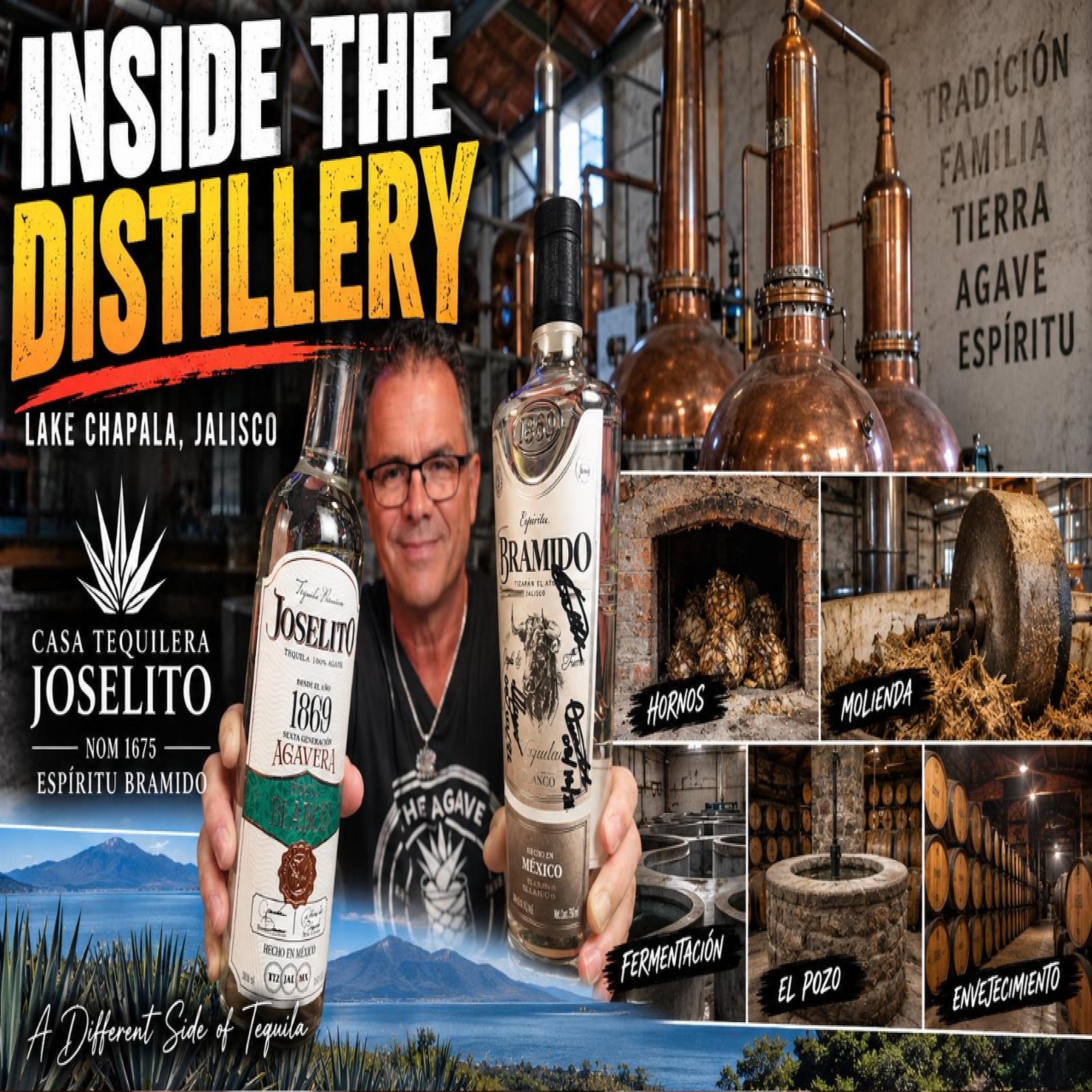
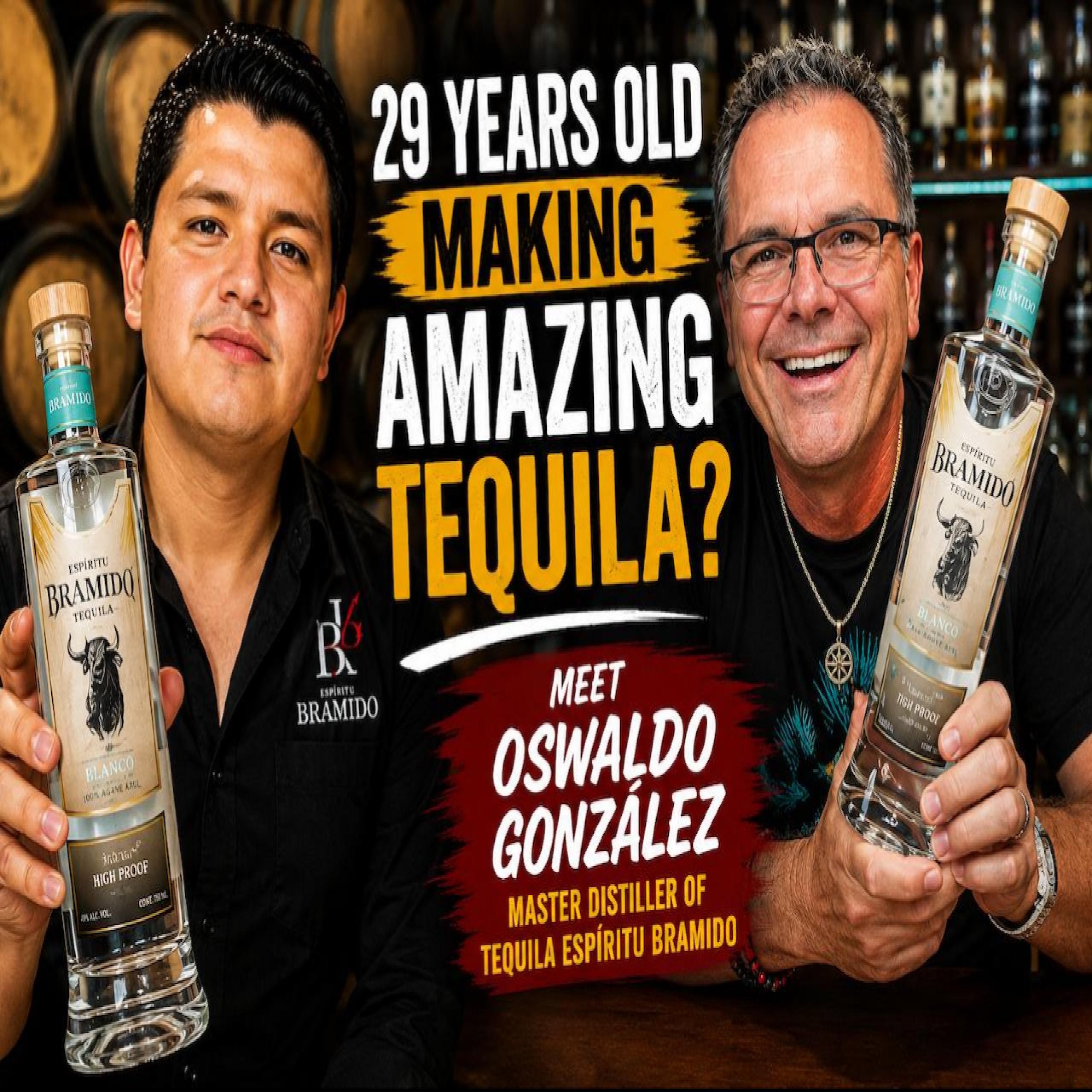
[00:00:00] Speaker A: All right, guys, tonight you're going to learn about a tequila that's not from the highlands, it's not from the valley. It's from Chapalas, right next to the lake, close to Guadalajara in the midlands. So it's an area that's completely different than any of the other areas. It's a lot more agriculture. The water source is right there by the lake. It's one of the best climates you'll find. And you're going to meet a 29 year old who's making this tequila, Oswaldo Gonzalez. He's going to talk about the name, the brand and everything about it. This young man is really amazing. You're going to have to check this video out. Thanks for watching. It's tasting tequila with bread.
All right, guys, I'm excited to share this new tequila with you and this 29 year old that's making amazing tequila. Oswaldo Gonzalez Barrero. Oswaldo, how are you doing today, my friend?
[00:00:55] Speaker B: Well, thank you so much for the, for the invite. I mean, as you can see, I'm sorry if I'm a little bit, you know, sweating a little bit. We just got off from. From work, you know, like distillation process. So I'm doing great. You know, it's Monday. Such a good way to start, you know, the week.
So, yeah, I'm doing great. And, you know, we're just finishing off the day with some remedo. I mean, that's a good day for me. Oh, yeah, doing good. Thank you.
[00:01:18] Speaker A: Well, I'm finishing my day off with some too. So I've got the high proof here. Which one are you drinking there?
[00:01:23] Speaker B: The one that I'm drinking right now, it's the Blanco.
[00:01:26] Speaker A: The blanco. All right, well, let's start off with a cheers and I can't wait to hear your story.
[00:01:32] Speaker B: Thank you.
[00:01:34] Speaker A: And so good.
[00:01:35] Speaker B: Love it.
[00:01:37] Speaker A: Every time I come back to it, it's better and better. So if you could, for people who don't know who you are, go ahead and tell a little bit about your story and who you are and how you started making tequila at such a young age.
[00:01:50] Speaker B: Okay. Yeah, of course. Well, hello, everybody. I would like to introduce myself as Osvaldo Gonzalez. I am the master distiller at Tequila Bramido. You know, Tequila Bramido is a new brand that just came on to the market. So actually on February, the first week of February, it was like our very first time we officially showed up, you know, in the US As a brand, the wswa, when it Wholesale wholesalers. Wswa. I don't remember the whole acronym, you know. But this, this Expo of Alcohol, which was great, was amazing. I liked it a lot.
Well, I'm currently the master distiller at Tequila Bramido. We are coming up with the very first tequila from the Terrar of Lago de Chapala. So that's our main product in here. And it's just pretty much based on our family, our heritage, right? Like what we represent or what we got from the inheritance. So as you guys can see in the bottle, we have the. The year of 1869. So that, that's when our old ancestors, they used to work with the. They started to work with the gabis, right?
They used to work with fibers themselves. Maybe not the core to make tequila yet, but they started with the fibers. We can say that here in Tisapanel Alto, Jalisco, it's a small town. So, you know, like some years ago it was a little bit more, can I say, not too advanced technology and things like that. So yeah, we can say that that was the main source of income, you know, using the fibers to create some handcrafts, you know, like hats, some belts, even little bags, you know, for people to take the tools to the agave fields. So that, that lasted for a long time, you know. So we learned everything about agave, you know, because pretty much we used to cultivate them and use that. That was our main thing in that moment. I mean, in those years it was not a. Like a big deal, you know, even tequila was not that much of, how can I say, maybe like a high spirit or a high quality brand, you know, it was seen like some, something normal. It was not a big deal. So our family started there until the fifth generation, which is my dad, his name is Jose Gonzalez Vargas. He decided to bring this, this heritage, you know, the family, but. And bring it to the next level. But here's the thing. He wanted to create something different, something unique. And that's why he decided to bring, you know, like let's create a distillery here in Tisa Panel Alto. Because that's where we're from. Our family comes from here and then make it tequila, but from the region, right?
You know, because a long time, of course, if you work in the cab, you for sure know and start to hear about the tequila industry because they are so tight.
So then we started to learn about, you know, these tequilas from terroir. You know, it was like the very first time, I mean like a long time ago that we heard that tequila of terroir. Then we make some research and yeah, pretty much. I mean, that's what I know. You know, let's might be wrong, please. If I am correct me. It's pretty much a tequila that uses resources from the region. Right, Right. And even the profile itself is related to the region. So, yeah, we have a lot of. From the highlands and the valley, you know, in tequila. But what about Chapala? You know, Chapala, it's the biggest lake in Mexico and it's so. So it's beautiful. I love this. This area, you know, and it's representative of Jalisco. Like, it's what, like Chapala region. It's like an hour, you know, from the Guadalajara city and maybe 30 minutes from the airport. It's. It's beautiful, it's unique, and I think it has the second best climate all over the world. So a tequila made in there has to be something good, something different. So that's what we're doing here. Pretty much. We're just a mean or a certain way to deliver the, you know, this profile, this message, this tequila. That's what we're trying to do here, right? Just pretty much doing everything as we. As we have to do it, like in an artisanal way. I mean, we believe that if you want something done well, then just do things as you are supposed to. Don't mess it up, don't do anything else. That's all you have to do. So especially if we have to, or if we want to create a tequila from Chapala that we want to, then we want to keep all of the soul of the region that comes through the agaves. So our agaves are.
All the gabs that we use, are exclusively from the shores of Lake Chapala, nowhere else. That's one of the main differentiators because, yeah, agaves and the soil matters a lot. You know, depending on the soil, it depends on the agave quality that you would get, or even the brix, right. The sugar in this case. I wouldn't say the Chapala ones are like incredibly big or something, but those are different and unique on their kind because, you know, like, we have the lake next to it low. So, you know, even though the agave, it's a pretty. How can I say, Noble.
Noble. It's a pretty.
Let's say it's resistant plant. Right. It can resist very, very long seasons with no water.
However, we have lake in here, so we have like certain water or humidity in the. In the ecosystem. So that helps a lot. So we found that the gabas that we get from the region, those are like hiding sugars, which is great, you know, like, we know that the better the sugar, the better the alcohol. So then there's no need for us to add anything else or play with it, right? Because then everything comes out naturally. We also, you guys can see we're in the distillery. We also have our own spring in the distillery. So. So Amrentisa panelato. It's between Chapalo Lake and the La Sierra del Tierre, which are the mountains from Masamitla. So we're just like in the middle of the best of two worlds, right? We have the very beautiful lake with an awesome climate or weather. Then we have the mountain. So this spring is coming all the way from the mountains. So the water that comes with it has a lot of minerality, right? And it's such a. Such an amazing thing.
And when it comes to the cooking, also, we use masonry ovens, right? We use with. We cook. Sorry, with some steam. Why steam? I mean, I am not an expert yet, as many other people in the industry, but we know for sure and we have been doing some experiments that everything matters in the process. And every single step that you take in your process will actually affect the final flavor. So, for example, if you cook some agaves with fire, or if the agave has contact with fire, you may get a tequila with a kind of a smoky type of flavor. Something like an aftertaste burn.
I don't know how to say that. Like something like it was burnt or something. That's delicious. But that was not the. The profile that we were looking at, right? We were looking for something that preserves our own agave flavor because those are unique and those are part of our, you know, recipe. So we want that pure flavor to come out just like that. And also, I don't know, that provides a certain, I mean, if you tried it, a certain sweetness to the flavor because you can taste the cooked agave. But it's. It's pretty. I mean, it's kind of redundant. But you can taste the actual agave, right? It's not like burn or anything like that. That would change the notes or anything. And also kind of the most important part, it comes. I mean, it is, for me, the most important. It is the fermentation process.
So we use a spontaneous fermentation process pretty much. We use the yeast or the wild yeast from the region of Lake Chapala to. To work towards this unique and one of a kind tequila. Also, our fermentation tanks, those are stainless steel tanks, but those are sunk under concrete. So part of the tank you know, it's above in the. In the factory, so you can easily check. How is the process going? Everything, it's good, but part. The other part, it's sunk underground. So that. That allows the. The fermentation tanks to preserve a natural climate balance, you know, or temperature balance. So the fermentation process doesn't die. So pretty much it starts by itself, then it dies by itself. So it takes like, around four days. But in those four days, like, all of the, you know, like, elements from the area are contributing towards this unique tequila, pretty much. You know, these are. These are panel alto. It's not like a big city, so we don't have, like, a lot of smoke or anything like that. Like all the opposite. We have a lot of plantations. They do a lot of berries, onions, and there's a lot of vegetation in the area. So you might get some kind of herbal notes, you know, some floral, some sweetness. It all depends because even though once I was in a. In a. In a life, you know, in a cigarette life with someone, and I was talking about the. The product itself, then I mentioned that, yeah, around the area, sometimes they plant chile verde. So, you know, even the batch or the tequila itself, it's seasonal. Even though it's the same process, it's the same product, the same quality. But flavor sometimes might change because, of course, you know, like, the agricultural is changing. So then they say, yeah, I do feel like a chile verde type of thing. You guys put some flavor. No, just all coming from the region. Right. And we're so blessed. So that's. That's bramido. You know, it's a tequila that. It's not just. It's not a result of chance, you know, it's not out of luck. It's a result of certain vision, concrete vision, you know, with a certain statement. We want to do the very first tequila from the terrar of Lago de Chapala, which I'm not aware that there's another one. And if there are more in the future, please, you know, we will be happy to be the pioneers and. And bring this ecosystem to people and show them that it has a lot of potential. You know, it has a unique flavor, and it's delicious. Like, come on, Jalisco. It's huge, right? And this part, it's privileged. So, yeah, I mean, that's a little bit of what Ramido is. And my role at Tequila Ramito, where
[00:11:19] Speaker A: did this personal passion come from? What point, what age were you when you said, I want to make tequila?
[00:11:26] Speaker B: Okay, that's.
That's an amazing question that a lot of people do to me. So I was. I would lie to you if I say, oh, yeah, since I was a kid, I wanted to be. To do tequila, right? Of course not.
Pretty much. The things that I learned, I just learned by doing, you know, by trial, by error.
Luckily, we are blessed to that. We were able to build the distillery. And that helped me a lot, you know, because people say, oh, yeah, this is your first year and you're already creating an amazing tequila app. Like, what about your learning, your learning process? Well, that's the thing. There was a learning process before, as I mentioned, we just presented this this year, but we've been working on. On it, like, from before. Like, what, 20, 23, 2024, 2025, you know, and it was a whole process of, you know, testing another type of gist, you know, and this gist, if we're using something else, what kind of profile does it give, you know, or even the alcohol percentage? Because a lot of people are in love with our high proof, right? But it's not like 55, because I know that the highest alcohol percentage that you can do in tequila is 55. So a lot of people ask me, right, why don't you do higher than that? You know, if you can do up to 55 and the more alcohol percentage, the more concentrate the flavor is. We need to have a balance. You know, for us, everything, it's about balance, natural balance. So we do, for example, this high proof, we just pretty much do steel strength, right? We just pretty much cut it at 49. We don't want to go higher because of two factors. The first one, we noticed that our tequila was getting a little bit bitter, A little bit of bitter notes. You know, it starts to change the flavor. Of course it changes. And also doesn't matter if we give you more and more and more flavor, you know, because also if the alcohol percentage, it's higher, your tongue. Your tongue and popules will still to. Will start to numb. So in a certain point, you know, you're sacrificing some perception of the flavor by some flavor. I mean, we didn't like that, so we just said it to go to the 49. But sorry, just deviated a little bit. But to your question, I would say that this passion began from the agaves, right? Because we used to work in the agaves.
Like, this whole project is. It's beyond myself and my future family, you know, because it all started with my older. With my older generations before working in the garbage. And it was Such a beautiful thing. But then, you know, we had to bring. Bring it and bring it back to life because it was kind of not relevant. You know, let's be honest. If we start doing that, you know, creating the fibers and doing some handcrafts may not have the same impact as before, you know, because before it was the main source of income, but not nowadays. So we want. Now we want to use the same agaves, you know, from the. From the region. But now making tequila and this passion comes because when I was working in the fields, you know, it was not an easy thing. You know, I started to actually value the tequila industry overall, you know, because of course, when you're in college, everything everybody thinks, oh yeah, tequila, it's kind of the. The chug type of thing. You know, you just have to shot it and whatever, take it fast, whatever. I don't know. It's not. If you think it clearly, it takes up to seven years or depends you the edge of the agave. But let's say a good agave from five to seven years to grow, right? And then if you do a good tequila, it takes time for the cooking process, for the fermentation process. And then if you want to make it repo or anejo, then it takes years, months, right? It's a piece of art. So me being able to be involved in the earlier process, you know, in the agave fields, whenever we were doing the plantation process, you know, we used to call this. We had this measured tub, it was called a cuarta, which pretty much was like this, right? We had to measure the agaves. You know, how. How far are we going to separate them from each of them? It was like long, long days at the, at the agave field. So I have a lot of respect for the people in the fields because I know it's not easy, you know, waking up at what, like five by. To be already working by 6:30, then be done maybe by two. But then you guess what, you need to do another shift, you know, from what, three to seven. So it was a whole day.
So now being able to see all of that of my work, then being able to keep going with the process, then creating a tequila that people like, I would say that's the main, the main reward, right? That's where my passion comes from. Because I know that the love and dedication we put to the agaves, and I know the actual respect that we have for the people, for the customers. So that's why we want to do or to create this tequila, you know, like Something additive free that it's something that you would be proud of calling Tequila. And of course, from Chapala, if we're the very first tequila from Chapala, we have a big responsibility behind us. You know, we need to do something good so people don't think, oh, yeah, that's. That's not a good profile. Of course not. We're trying our best. Yeah, sure.
[00:16:21] Speaker A: Okay, so you guys built your own distillery and you probably weren't in the distillery building business and you didn't have a big background in making tequila.
And I've been to a lot of distilleries, but I don't think I could build one. So what was your process of building the distillery? Did you have. Did you like, enlisted some help from people who have distilleries to give advice and like, what. How did you come up with the idea of putting the fermentation tanks in the ground? Because I've been to 25 different distilleries throughout Jalisco and I'm. I haven't seen fermentation tanks buried like I have yours. So how. How did those ideas come up? How did you do that?
[00:17:03] Speaker B: Okay. Yeah. So since.
Well, this is the little spoiler for everybody, you know, for anyone, even if you. You want to come visit us, like the invitation. It's open. We have our own cellar, but that one is underground. So whatever we have above, you know, the distillery, we also have it above. I mean, below. My bad. So the seller will have the same area but underground for the seller. So of course, since we have some construction underground, we cannot have that much weight, you know, above. So we also had to do some engineering and civil engineering thought, you know, because of course we have some machine. We have the roller mill and, you know, all of that pretty much it's heavy, heavy machinery and just moving pretty much constantly. So that. And then, I don't know, having something on the ground could be dangerous. So then when we have the fermentation tanks, those used to be up, I mean, the distillery was not running yet. Then we thought, you know, this is heavy already. You know, it's a 20,000. I mean, one.
One of those fermentators tanks, fermentation tanks, it's what, 20,000 liters, right? So just imagine now being full now multiplied by six. Then they have the. We have the copper stills, right? And then we have the roll mill. And then we have all the, all the material that we use. You know, that's important. That's a good amount of weight. So then we decided to actually, to open Part of our cellar and sunk them in. So that way we can distribute some of the weight, you know, we can relieve some of the weight up, up, you know, above. But then we thought about it, right, because when we were going up and down, we noticed this change of climate. Because of course then it makes sense if you think it like it happened without really us trying it. Does that make sense? Like happened because we had to do something about it, about the weight that we had above. And it worked perfectly, right? Just things accommodate in such an amazing way.
So, yeah, when we came here in the cellar, of course it is underground, the temperature, it's always the same. It is steady, right. But it is fresher. It's better than upstairs. Upstairs, since we have the. Also the orno or the cooking, the ovens, the steam ovens, of course it gets a little bit hot upstairs. So then we thought that that was perfect because of course, now talking about chemistry, of course, if the fermentation process pretty much, you know, it's a exothermic type of reaction that just releases heat. So if it, if it heats up a lot by itself, it is gonna die. So we need to. We need it to find a way. But now we have it, right, because half of it, it sunk and it is naturally under a different temperature, which totally affects. And the above part is on their different temperature, which are totally different, to be honest, because upstairs gets really hot. I do not have the actual measure specifically, but I know it's a lot because sometimes I'm sweating. You know, when we began this interview, I was sweating a lot, but now it just is cooling down because here it's a little bit more fresh, to be honest. So that's how it came. But the whole process, I wouldn't lie and say, oh, yeah, everything was so. Was so easy. We knew everything. Of course, not like everything. We learn everything pretty much with the people that we're helping to build. For example, when we bought the copper steels, right, People, I mean, these people already have knowledge in the industry. They know what they're doing, they know why they do things, right. So they also explained to us, okay, why do you. Why would you want or rather have a all copper steel rather than stainless steel steel, Right. What's the difference?
So then if you think about it, yeah, after it is explained to you, that matters, you know, and let's be honest, before when we were building the distillery, we just thought that it was just about putting steam into the things and it'll run, but it is way more complicated than that. So we had to learn it right. And then contact the right people. And these right people, of course they know their business. They will explain to us. Okay, I see your distillery, this is going to help you. You know, you are wrong if you're. If you just think that you just have to put steam and things and it'll run. Of course, not everything gets calculated. Everything needs to have a specific output and input. Right. So they. They helped a lot. So it was like the billing process, it was like about six years. So it was. It was a good amount of time of learning. And of course, in the same time, we're learning from people, you know, on the team. Why do you have to put some so.
So many kilograms of steam? Right. It all depends. It's not just of put steam. And that's it. Of course not. We need to know exactly how much is the steam input if we're going to cook. And then this distillation process, right, because it is based on the same source of energy, so we need to be able to distribute it well, so we don't have low efficiency either in one, one site or the other. So it was all due to the people that help and the, let's say, the providers.
Yeah. For example, the ones that. The one. The guys that built the Alembicus, I think they also built some old copper stills for Patron. So they know their business and we were blessed with that experience.
I mean, that they shared the experience.
[00:22:08] Speaker A: So were there any other master distillers that you worked with to learn from, to learn from?
[00:22:15] Speaker B: Maybe not the one that. I think it's totally going to be best, and I hope so, and I can learn more from him. It's my brother, you know, my little brother. His name is Ulises. He grew up in this industry as well. But unlike me, he's actually doing the full college major, you know, so I'm just learning empirically and it works. But of course I need to get better. I'm actually planning to, you know, study more in depth, like the house. And why be more specific? Because it is a complete art. So I am blessed to have this creation, you know, just in prickly. And I think part of the thing that helped me is having the distillery, right? Pretty much. Maybe my dad may get a little bit upset at me if I mess it up. But hey, you know, just we're learning. This is for everybody. But yeah, I think my brother, because he has been, you know, he's currently studying that, so he also has been explaining some, some stuff to me and things like that so. Which is great. But yeah, I think that he's going to be amazing at that. But yeah, I mean, besides that, we've been talking to people, right?
Because of course, we, we've been to some tequila tours and maybe me asking a little bit, maybe not like publicly saying I'm doing a tequila, would you share some thoughts with me? Maybe not, but, you know, maybe asking, hey, what about this? I have read about this. I have heard about this. What do you think about it? Right. Those type of things. And yeah, I mean, I've been able to learn, but no, my actual major was international business.
So, you know, it's something different. So when people ask me if I always dreamed about it, not it's something, I love doing it. Yes. You know, it's. It's amazing the, the, the different variables. If you change some, you know, if you cut your, your product even though it's the same thing, but if you cut it in a different alcohol percentage, it may change the whole flavor, you know, or even from the Gabes, you know, if you don't, if you don't do the Jima Baja, like, if you let it, leave it a little bit longer, it'll give you more bitter, more type of herbal notes, but it gets bitter. So we don't like that. You may get more juice, whatever, but the flavor itself changes, you know, so, yeah, just those type of little things that have been blowing my mind so far. But I love what I learned. I mean, and we love that it's a good product, that people like it. Right? Of course, it's approved by the crt, so that's good to know.
[00:24:30] Speaker A: Yeah.
[00:24:31] Speaker B: Yeah.
[00:24:31] Speaker A: So are you, Are you doing Hema Baja or Hema Media on your cut?
[00:24:35] Speaker B: Oh, Hema Baja.
[00:24:36] Speaker A: Yeah, Hema Baja. So that's. That's nice. That's.
[00:24:38] Speaker B: Yes.
[00:24:39] Speaker A: That explains some of the flavor profile to me as well.
Here's a question for you.
[00:24:43] Speaker B: Tequila, you can, you can sell that, right?
[00:24:45] Speaker A: Usually, yeah. I'm getting better and better. I did finish the Level 3 Sommelier ITA class, so I do have that.
And I read as much and watch as many videos, and I watch more videos than I do, and I try to learn from all of you guys who make tequila. So to me, it's. It's wanting to know more and more and more. Not because I'm ever going to try to make it, just because I love it and learning about these processes. So I appreciate you sharing this stuff. Where did this English come from? You have amazing English.
[00:25:15] Speaker B: Thank you. Well, as I said, I studied international business management, but I started in the. In the U.S. so, yeah, I was able to pick up a little bit. I was never able to kind of erase my accent. I tried, but then I was like, you know what? I kind of like that. You know, it kind of gives a little bit of my background that I'm. English is my second language. But that's the thing. Whenever I love something, I do my best to. To.
To work. To work on it. Right. And the same, you know, is with tequila. I just fell in love with it. I just, you know, to see that people like something you created, it just. I don't know. Sorry. I'm just getting a little bit excited because, I mean, I'm new to the industry and the brand has been receiving an amazing response. So it just gives me motivation to go for more. Then go innovate. You have something good, what are you going to do with it? How can you make it even better? Right? I don't know. We're just full of possibilities. And maybe that's a good thing. Since I'm kind of a young. I mean, I wouldn't say if I'm a master yet, but I will be. You know, I'll do my best to become an actual master distiller with a lot of experience, but I would like to innovate with things. You know, I would say that's my main. My main thing. And I'm going to specialize on my side on the tequila from the Terrier of Chapala. Right. I may not be able to compete with another brands with people have a lot of experience, and that's not my intention. I just rather specialize on my own thing because we're pioneers on it. So that's what I'll be focusing on.
[00:26:39] Speaker A: Well, I can't wait to visit. About four weeks ago, we were in Tequila, and instead of coming home through Guadalajara and going to Ramatatan, we took the other road, the other freeway, and went around the backside of the lake and then crossed over into the airport. And it was awesome going that way, knowing that you are on that side of the lake. And I got to see where the mountains really come to the lake almost. And then you've got that valley before the lake. And there was so much different agriculture. So it went from just being agave fields to being all kinds of different fields and different orchards and trees and seeing really the amount of agriculture there that is different than where I've been, you know, coming from Nayarit or coming from around us and seeing a much more Diverse agriculture. And I read about that and I knew that that was a big influence in your terroir. So it was really cool to see it and I can't wait to come and actually visit the distillery. That'll be awesome. So we have the high proofs. The high proofs available now, right? Like people can go order it. Where do they go to get it?
[00:27:45] Speaker B: Yeah, so the first store that will be. I mean, it is available. Sorry that it is available. It is a blue one C Spirits.
[00:27:52] Speaker A: Okay, that's what I thought.
[00:27:53] Speaker B: The product has been ready, you know, for a long time ago. However, we just had a little bit of delay on getting the product there because of course, as I said, we're learning everything. Right. So it was our first export export process. So again, people helped us, you know, the, the importer, how things work. But of course, after all, we are the distillery. We need to take charge or take care of some stuff. So it was a little bit more complicated than that. However, I am happy because of that. You know, I was able to see all the requirements and certifications. Right. That you need. That makes me feel good because then people, they need to be sure that what you're taking, it's, it's, it's a good tequila or it's something, I mean, I don't know good tequila, but it's authentic tequila. That's the thing. Right. So we're proud of that.
It took us a little bit of time, but yeah, it is. I mean, last week is when we actually hit the market. So right now, one of the stores, the main ones that will have it, it's a BL Spirits at Realto California. They are actually doing this bundle. It is for limited time though. They're doing a. This bundle of the blancos. Those are, those are blancos. This is the high proof, the 49 and this is the Blanco 40. So they are doing a bundle of two of the two bottles for less than a hundred dollars, ninety something. I don't, I don't recall at the top of my head, but yeah, they're doing this, that bundle, you know, because a lot of people were expecting it. Right. And we don't want to put people like, hey, which one would you prefer to buy? Right, just. Or that. No, we have the brahmido started pack. Right. Just go with two bottles. Because at the end of the day it all depends on the palates. Right. People have been loving it. A lot of people likes our blanco because some people are afraid of the high proof. But when they try to high proof they're like, this is not strong. You know, it is dangerous because it is, it is delicious, but it doesn't feel like it is that strong. So yeah, you can get more flavor with it, but it's not like burning or anything like that. So yeah, we're just, both of those, of those, of these versions are available. So yeah, we're actually talking with more stores and we will be having some in person tasting mainly in California. We're also looking to open market in Texas. We had a couple of trips there and we're already in the process. Right. But these stores in California, if you guys are from different states, you guys should be able to get them there. Just order online and get it delivered to your house, which is amazing. While we keep on growing and opening market for sure. Because that's our, our main goal, you know, to have Ramido, that everybody can try this tequila. If they like tequila, they need to try Ramido. It's like for us, right, it all depends on the palate, but for us it's a different tequila that is worth trying for. Right. The very first from Lake Chapala. Not highlands, not, not Valley Chapala, like the Midlands. It is something worth trying. So.
[00:30:44] Speaker A: Yeah, yeah, I totally agree. And, and Maria and the people that blue, blue wine spirits do a great job. So ordering from them is pretty seamless. They make sure you get your bottles. They do an awesome job. So it's definitely something to check out. I haven't had the blanco, I've only had the high proof. The high proof is amazing. I love the bottle layout. I love the, the quixote on the agave on the back, back there. That is very cool. So tell me, tell me about the name and the label. What's the name mean and how did you come up with the design label?
[00:31:15] Speaker B: So a lot of people ask us this question. Why? Because the, the actual distillery, the NOM 1675, it's called Casa Tequilera Joselito, right? So Joselito, the name comes, I mean, a lot of people in my family have the name Jose, but El Tio Jose or the Uncle Jose is the one who started with the agave fibers. You know, Mito Jose, he passed away like a long time ago. But we remember that name with a lot of affection, right? So our first tequila was Tequila Joselito.
That's how we started in Mexico. However, when we wanted to register that in the US it was already taken. So then we thought of something else. You know, Joselito was using this bull image, you know, it represents like Like a bull, It's a. It's a beautiful animal, you know, which, you see, it already inspired respect, right? And it's. I would say it's the perfect balance between beauty and respect, you know, something that, you know it's not gonna hurt you as long as you don't mess with it, so just let it do its own thing, right? So in this case, that's why Joselito was always with the bull. It was like the main image, it was already taken, so we had to think about something else. And then when we were giving this tequila to the people, they had like this expression that we call a bramido, you know, because a brahmido, it's pretty much means a bellow, right? It's the sound of the bowl, like the, Sorry, I'm not the best in percentage of babul, but that's, That's a sound. But for all, for us, the actual name, it's Espiritu Bramido, which means the. The bellow spirit, you know? So for us, a bellow, it's also whatever expression that comes direct from your heart, but it's honest, it's sincere, and a lot of people, when trying to articulate, they're like, wow, holy crap, for nothing. Something else, you know, something unique and sincere, like this expression that was like, that's a bramido right there. So we thought about bramido, right? We don't really go fully for the bull right now, or anymore, as Joselito did, but now we go for the actual, the bramido. So that's why our main image is just the. This part of the pool, you know, the beauty itself and the sound that comes with it. So that's where the name came from, Spiritu Bramido, which, after all, in Mexico you won't find it because then it's Tequila Joselito in Mexico. But yeah, that's where the name came from. But if you, if you see the bottle, it has all, all of the elements that represent the brand or the distinct distillery. As I mentioned, we have the 1869, as you can see, we have the kilt, as you already mentioned. So the important part for us is that determines time, you know, because for us, time is a very important, we can say, factor on all of this project, because the time is that kind of, how can I say, it's that currency that you will spend but you will never get back, right? Money you do goes out, comes in, but time, you will never get it back. So you better know what are you investing it or wasting it on, Right, Sure. We want to invest our time in this distillery, building this distillery, cultivating these amazing agaves, you know, cooking these amazing pinas or the quartz of tequila, fermenting these amazing.
The most, you know, the juice to create this amazing tequila, to also build a distillery that I hope, you know, at the end of the day it remains for more generations, not just one or two, because I am the second tequila generation. My dad is the first one because he built all of this. Right.
So, yeah, that's, that's really important for us, the time. So that's why we have the, the. The Kyoto in here. Because it represents the time that it takes or that the process takes. Right. There's no shortcut, shortcut or easy way for things. Just have to do, go with it. Time is not. It's not bad, but you better know what you're doing with your time.
The other element, if you go down the bottle, it has the shape of a hoof of the bull. Has the shape of it. Yes. And in the middle there's a little bowl. Yeah. So that little bowl, it was the Tequila Joselito symbol or the logo, that little bull.
Afterwards, we learned that it was kind of a type of a public dominion logo, so we couldn't really use it. But it has a lot of meaning to us. Right. So that's why we decided to put it there.
So, yeah, pretty much talks about the history. And if you look at the bottle, it's not just beautiful, like, it also has like some of the shoulders, you know, that represents some. Something unique. So it's this bottle that whatever you put it on, it'll stand out, you know, and looks amazing. It. I'm in the same way as the bowl. It represents some respect, you know, it's just, I mean, not just because if my. It's my tequila bottle. Right. I just think it's. It's beautiful. And also the hook, whatever you put it in or you extend it in, it's going to be, you know, strong, firm, whenever you put it.
[00:36:09] Speaker A: So, yeah, I think it's great. And it usually sits right over my shoulder. Right there's the empty spot where it usually is. So it's always right behind me all
[00:36:18] Speaker B: the time in the video. So. Looks great.
[00:36:20] Speaker A: Okay, so we've got a blanco, we've got a high proof, yet you're sitting in a room with a bunch of barrels behind you. So what is coming next?
[00:36:29] Speaker B: Yeah, right now we are thinking of the repo. We're doing a reposado.
Should be releasing maybe. I mean, no spoilers. But maybe by the next two months, you know, because, of course, I mean, Bramido, I know it just hit the market, but, you know, it's been in the process from what, like January, you know, the barrels and all of that. So, you know, I mean, some of the barrels are already good. So we're doing. We have some American oak barrels and French oak barrels. Right. In this case, we're using French oak from wine and American oak from bourbon. So the profiles we're getting are something amazing. It's. It's delicious. Have to say. But we already had even some. A couple of bottles out there, because, you know, there. There were some bottles, but those were just a taste, like testing profiles, you know, different profiles for different people. So they give us some feedback. Right. It's just.
This is something, I think. I mean, if I like it, yeah, that's good. But not just because I like it, somebody will like it or they don't have to like it, of course. So I want to, you know, so do some market research. I want to know what people likes, what people don't like, if we can do something better. Because after all, we're doing all of this for them. So we want to. To be able to keep our brahmido experience. That's how we call the. The tequila process, or the experience of tasting it. Right. But with this unique type of.
How can I say, like, taste or profile? Because the blanco, it's unique itself. But of course, once that it touches the barrel, the profile may change a little bit. So we're doing our best. We already have something, and we will be releasing it, like two months. Should be out in two months.
[00:38:10] Speaker A: Are you doing a blend of the two barrels, or are you releasing two separate. Where you've got an American.
[00:38:16] Speaker B: Yeah, no, in this case, we have a blend for the Anejo. Yes, yes. That's why we have two different barrels. Yeah, that. That's a good question. For Anejo, it'll be a blend of the two of them. So, yeah, we are aging those. Those tequilas, but separately, you know, because some people, they want to do blends, they kind of put together two different barrels in one, and they do this. This type of process. We don't like that. We want everything to grow and evolve by itself. Because, of course, not all the profiles on the barrels are the same. So, you know, out of the barrels we have. We need to do some test testing on the profiles. You know, what's good what to profiles of two different barrels are, you know, matching where some of them, they don't taste that great and some of them taste. Tastes amazing. So we need to do some testing. But, yeah, we're going to do a blend for the Anejo, which would be a blend between French and American, but for the repo, it'll be purely the French.
That's the goal. Have just French oak for the repo. Anejo will be something.
I mean, the one that I tried, it's delicious. Have to say that, but I don't want to give too much spoilers. Some people have tried it already, or at least the profiles that we were testing, and the feedback is really positive. Right. So, yeah, just a little bit of a spoiler of what's coming up. But, yeah, repo and anejo are in the works. As you guys can see, I'm in the cellar and we are blessed to have that, to have our own distillery. So you guys can be sure that the process we're following, it's always the same, you know, same quality, same process. We're striving and we have a lot of respect for the people, as I mentioned before, so we're doing things with a lot of passion and love for the customers.
[00:39:56] Speaker A: Are you going to release the repos as a 80 proof or are you going to do a high proof?
[00:40:04] Speaker B: Because, you know, I mean, we just released these blank high proof and people have loving it. And I know that if we have a repo hype proof, it may, you know, it is for a different type of.
Of customer section, you know, like the, the connoisseurs, the people that they know or they want to taste more, have like these elevate palates. We're thinking of that. That was not the initial plan. We had the initial plan for the blanco but not for the repo. But I won't discard it. Right. We're actually talking with. I mean, because it's not just my decision, it's like the whole family, you know, what do you guys like? Right? It's a. It's about everybody. I think we're all going, going to go that way, but later, because of course, again, when it comes to the barrels, it is a different process, Right? It's not just about cutting the, you know, you know, doing your cuts on the tila blanco and there you go. No, it's having different barrels with different profiles and different, you know, alcohol percentages and different tastes. So we want to bring something good. We need to do something standardized, right? And then also for the. For the high proof, so it may take a little bit of more Time, but it's in the, it's in the plants already. Not sure if it'll be released in two months. Maybe the one that will be released will be the poly.
Because we're already working on it. The high proof is just right now being discussed, and we're, we're also working on it. But can assure it yet?
[00:41:24] Speaker A: Well, I gotta say, the high proof went. The very first time I had it. I had that experience.
I thought it was delicious.
So much so that I, I literally stopped what I was doing, went inside, got my wife, and said, come taste this, because she tastes a lot of tequila too, and she's a little more picky, I guess you'd say. I, I, I like tequila, right? You, you bring me five tequilas, I'm gonna like all five. I'm gonna like them in different sequences, but I like all of them. You know what I mean? Like, I love tequila. She's not that same way. She's like, I don't like that one. You know, she came out, I said, you gotta taste this. And she tasted it, she sat there for a second, and then she was like, wow, this one's really good. And so you, like, pass like, a level with her? For me, it blew me away the first taste. I think it's delicious. I did a review on it. I gotta get. I haven't done my tequila matchmaker agave matchmaker review, but I'll get that done too. And I think you're making a great tequila. You, you impressed me when I first read about your story and heard a couple people talk about you. So I want to say thank you for taking your time tonight on a Monday. You've been working all day and it's been hot, I'm sure. And you're willing to sit and talk with a goofy guy on the Internet. So I definitely appreciate you very much. Thanks for doing this. And do you have some in a glass? We can do a little salute here at the end, of course. Cheers, my friend. Thank you so much for taking your time and doing this with me. I appreciate you so much.
[00:42:50] Speaker B: Well, I want to thank you also, Brad. I want to thank you for your time, for the invitation. You know, I am honored to be here. So, you know, that's fine. It's Monday, you know, it's just another thing that adds up to my day. You know, Mondays are amazing, especially, you know, when someone wants to know about the product. We were just creating it, so please.
That's, you know, that's no effort at all. I mean, I like it I really appreciate the invite. And you know, as I said, the invitation is open for you to come visit. Like, let us know the doors are open, we'll show you, you know, we'll give you the whole tour. And I mean, I hope you can get to know this. The Cellar. You know, it's. It's a beautiful place. It's amazing. And I would say a lot of people are just driving outside. They may not know exactly what is behind or what it's inside the distillery. Right. It's something different. A lot of people are just amazed by. By that. So, yeah. Thank you for your time. Once again, invitation, it's open. And thank you for your viewers, you know, your audience that they had the chance to learn more about the brand. And if you guys have any more questions, please send us any messages on the social media or even we'll be, you know, working on opening more market in the US and maybe, you know, who knows, getting us doing some trips right to the US and different states to get to know people. And if they want to ask something, they can. We can meet an inventor or they can come and visit us. You know, we're located in. This is a panel Alto here in Jalisco. It is pretty close from Masamitla. A lot of people knows Masamitla, so it's pretty close from there. It's like 30 minutes, not too far.
But I really appreciate your time, so thank you, Brad.
[00:44:29] Speaker A: Well, thank you. If you do have questions or you want information, you can always leave it in the comments. You can always send me a dm. I'll make sure that your question gets to the right place to get an answer. And thank you so much, Oswaldo. Have a great night tonight. And we will be seeing each other soon, I'm sure.
[00:44:46] Speaker B: Okay, thank you, Brad. Likewise.