Episode Transcript
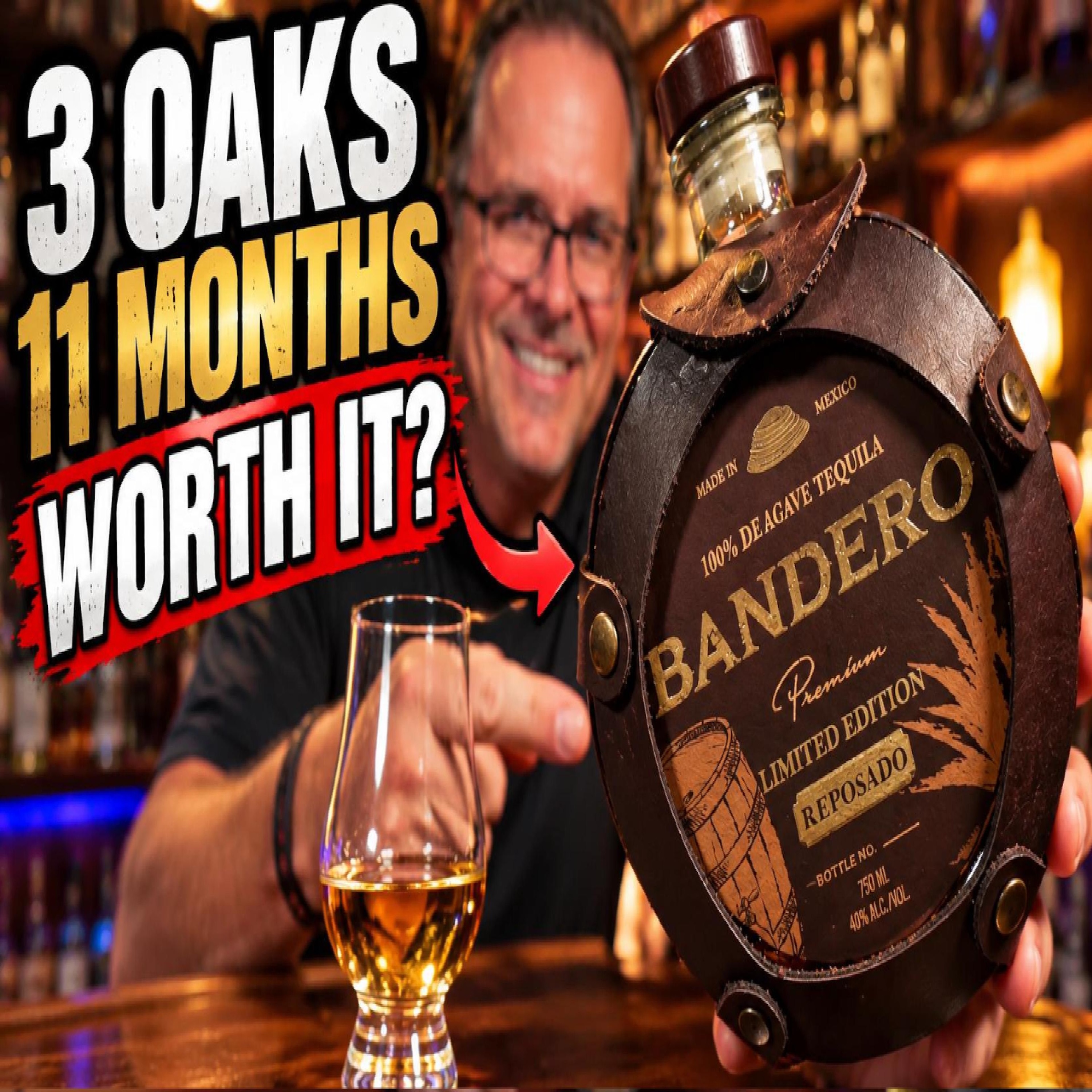
[00:00:00] What happens when you take a tequila that's triple distilled, age it for nearly a year in three completely different types of oak, and then hand select the best barrels to create one final reposado? Well, that's exactly what we're going to find out today. This is the Bandero limited release reposado. And they've been working on this tequila since about 2003. Now, what's interesting about this one is that they're using Hungarian oak, French oak and American white oak, aging the tequila separately before blending it all together. And there's another interesting connection here. John Paul Dejoria, the guy who founded Petrone, he's involved with Bandera. So we've got some pretty interesting history, some unusual production methods and a reposado that's aged for at least 11 months. But the question is, with all of that different stuff we just mentioned, is it still going to taste like agave in the bottle today? We'll find out. Now, Bandero was originally created by co founder Jonathan Kindred, and John Paul later became involved in the brand along with his daughters, Alexis and Mika Lime, of course, digiorio is best known in the tequila world for co founding patron back in 1989, which eventually sold to Bacardi in 2018. So there's definitely some history there. But what really interests me isn't necessarily who's behind the brand, it's how they're making the tequila, because you can have all of the money and famous names in the world behind the bottle. But ultimately, what happens at the distillery is what matters. Bandero sources all of its blue Weber agave from the foothills of Huachamentones in the Los Valles region of Jalisco, Mexico. It's near the town of Techitland, where you will find the really cool circle pyramids. If you've never been there, check it out. It's absolutely amazing. Bandera is selecting very mature plants that have been growing between six and seven years. Now, the agave itself is important, but what happens after they harvest it is where everything starts to get really interesting. After those agaves are harvest, they take them to NAM 1627, which is a distillery in the Valles in the Matatan. And this brand has been at a few distilleries starting, I think at 16:48, then bouncing over to 15:67 and landing here today at 16:27, a distillery that I have not visited and I don't know a whole lot about. But from the information I received, the agaves cooked in traditional stone brick ovens for approximately 20 to 30 hours. They don't immediately pull those agaves out when they're done cooking, according to Bandero, they let it rest for another 24 hours, so they can cool for approximately four hours more before crushing it. From there, they're going into a raw mill for crushing and then into open fermentation. Now, here's another thing that caught my attention. Bandero says they manage and propagate their own natural occurring agave yeast strain. And that's interesting because yeast play such a big role in the final flavor of the tequila. A lot of people focus on agave and barrels, but fermentation really can have more influence over aromas and flavors that we experience than anything else. Bandero says their particular yeast strain helps create a natural floral character. They use a long, slow fermentation process along with purified water from their own well. So I'm curious if I'm going to pick up any of those unique floral characteristics. Now here's another thing that I found a little different in their production. Bandero is triple distilled. Most tequila is only distilled twice. So that third distillation is worth talking about. Depending on how it's done, additional distillation can produce a lighter spirit. It can also reduce some of those heavy agave characteristics. And if you've watched my reviews, you know I really enjoy big, bold cooked agave flavors. Now, that's not necessarily what everybody wants in their tequila, But Bandera also chill filters this tequila after distillation. Chill filtering is used to remove certain compounds that can cause cloudiness, but it also influences texture and potentially removes some of the flavor compounds. So between triple distillation and chill filtration, I really interested to see how much original agave character remains. Now let's jump on the barrels just real quick because that's really what makes this a limited release. Bandero takes its blanco tequila, ages it in separate lots, and three different barrel types, Hungarian, French and American white oak. And then they're letting the rest 11 months for aging. And what I read, they only have 28 barrels. So I read that in a couple of pieces, so don't know for sure if that's true. Remember, reposado can be less than a year. They're pretty close to an Anejo with 11 months. So let's see what flavors show up in this one with these three unique barrel types. I love Hungarian oak tequilas. I love French oak tequilas. Of course, we all love American white oak tequilas. One thing worth mentioning before we put it in the Glass. This thing, depending on where you are, it's a reposado for 11 months and three barrels. All of these things we're talking about between 30 and $40. So that is a great price. Let's pour in here.
[00:04:17] Nice color. You know, for me, I would say for a repo that's really dark, but for one that's been in there 11 months. Well, now we're almost talking about an anejo. So an 11 month in three different types of oak is definitely going to give us some color. Okay, let's jump on the nose here. I do actually get a little bit of a floral note. I do get some cooked agave, a lot of barrel notes, caramel, vanilla, baking spice. Definitely a lot of wood influence in the nose. Okay, let's take a sip.
[00:04:43] A lot of barrel spice. Definitely a lot of these different wood flavors, some different fruity flavors. I do pick up some, some stone fruit, some banana. The cooked agave, though, to me is lighter than what I was hoping for. But that triple distillation is going to probably remove a little bit of that agave character. It's there. I pick a little bit of cooked agave, probably a little more here as it starts to go into the finish than I did in the front. It's a lot of different baking spices, though. I'm picking up some, some green, some clove, some cinnamon, some pepper. Gosh, I almost want to say like a paprika, like a, like a warm, spicy paprika. So lots of different flavors that are coming out of this. So at the end of the day, nice sipper sips like an anejo as a reposado, which you would expect at that age. A lot of different barrel components. A fantastic bottle like this Mexican cantina that has this leather bound around it. This is really cool. So the presentation is awesome. I do have a little blanco over here to try. Give that a shot here in a little bit. So at the end of the day, I really appreciate a brand that's willing to put something out there to do something different. Try some different types of oaks, some different types of flavors, Make a tequila that maybe somebody new to tequila will like it and then dive in and want to learn more about it. Is this a tequila that I would sip on? Absolutely. These three different types of oak automatically make it have some different flavors. Do I wish it had a little more cooked agave in it, but it's still one that I would sip on and I would share with some friends. So if you've had bandero, especially this limited release reposado. Let me know down in the comments what you think of it. And if you've had the blanco, let me know how it compares. I haven't tasted that one yet. Thanks for watching. Until next time. Know what you're drinking. Cheers.